8 Reasons Your New Jersey Watermelons Are Cracking On The Vine
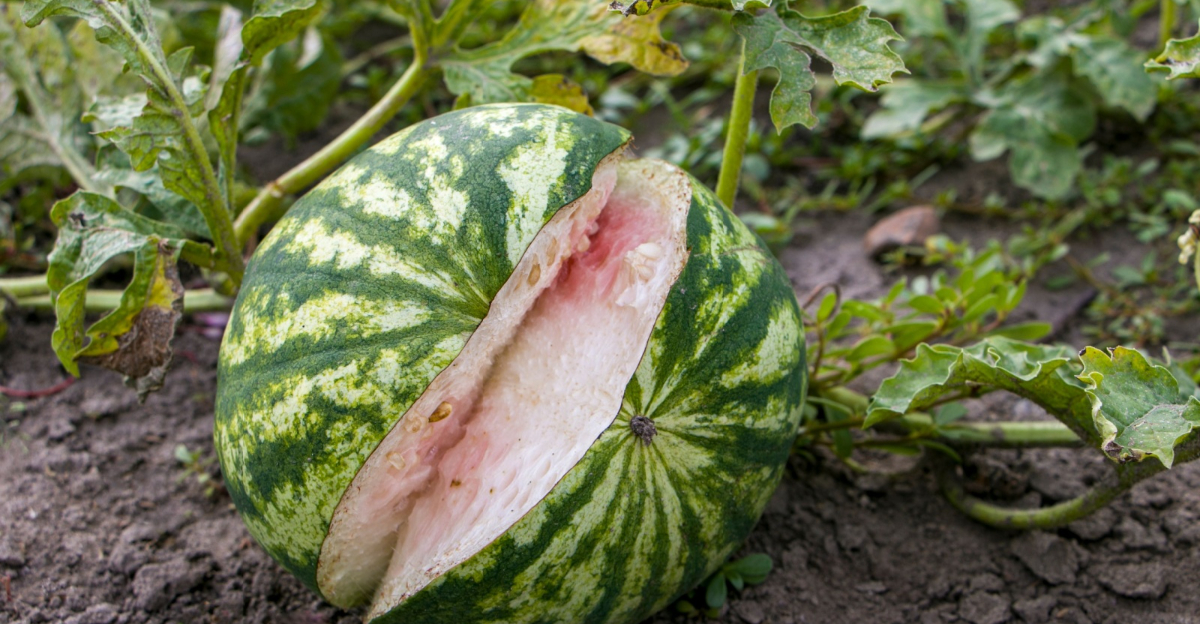
There is nothing quite like walking out to your garden with your morning coffee, only to find your watermelons have basically exploded overnight.
The damage is already done by the time you get there.
If you grow watermelons in New Jersey, you have probably met this particular heartbreak at least once. The good news is that cracking is not random bad luck.
It is your watermelon telling you something specific went wrong, and once you know what to listen for, it is surprisingly preventable.
New Jersey throws a lot at your garden: unpredictable rain, sticky humid summers, and soil that holds water like a grudge.
Watermelons are sensitive enough to react to all of it. But that sensitivity works in your favor once you understand it.
Here is what is actually causing your watermelons to split before you can get to them, and what you can do about it.
1. Inconsistent Watering Schedules
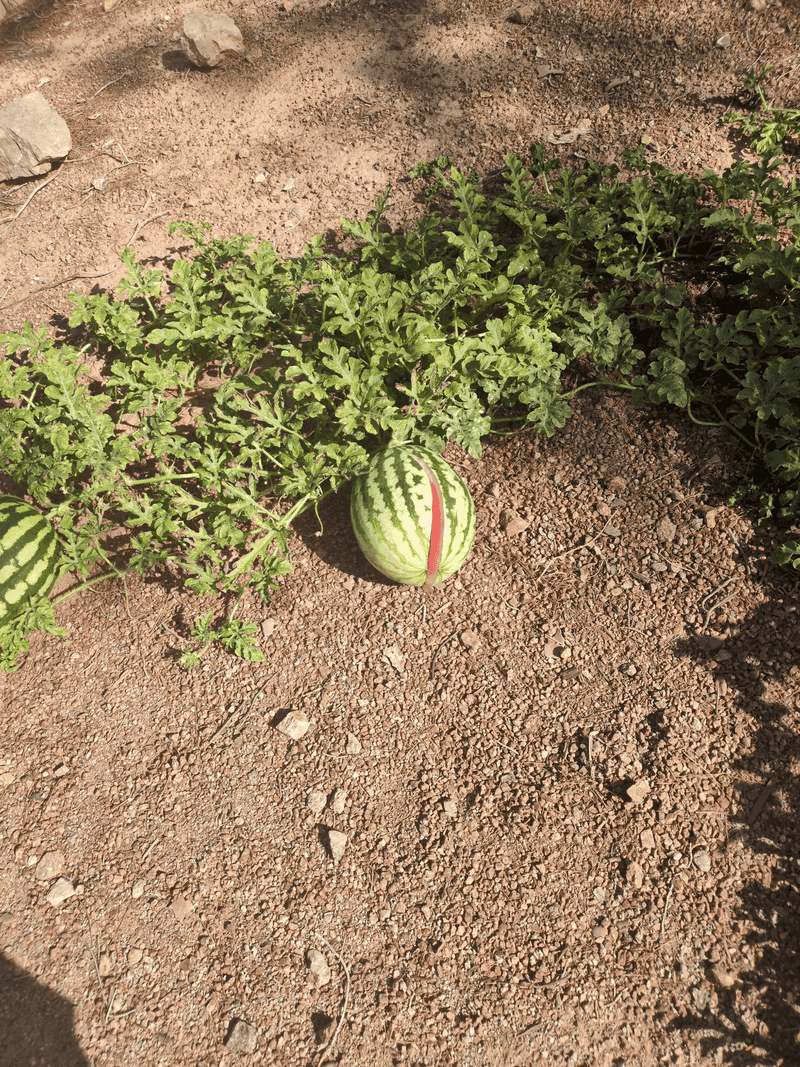
Watermelons are drama queens when it comes to water.
Give them too little one week and flood them the next, and they will punish you with cracked fruit. The rapid uptake of water after a dry period causes the inside of the fruit to expand faster than the rind can handle.
Think of the rind like a tight pair of jeans after Thanksgiving dinner. There is only so much stretch before something gives.
When the flesh swells quickly, the outer skin simply cannot keep up, and that pressure causes visible splits along the surface.
Keeping a consistent watering schedule is the single most effective thing you can do to prevent this problem. Aim for deep, even watering about one to two inches per week.
Drip irrigation is worth the investment, it delivers moisture slowly and steadily right at the root zone.
Mulching around your plants also helps lock in soil moisture between watering sessions. A thick layer of straw or wood chips keeps the ground from drying out too fast on hot days.
Consistency is what your watermelons are silently begging for all season long. Set a watering reminder on your phone if you have to.
Your garden will not remind you, but your cracked fruit definitely will.
Once you nail down a steady routine, you will be amazed at how much smoother your harvest goes.
2. Heavy Rainfall After A Dry Spell
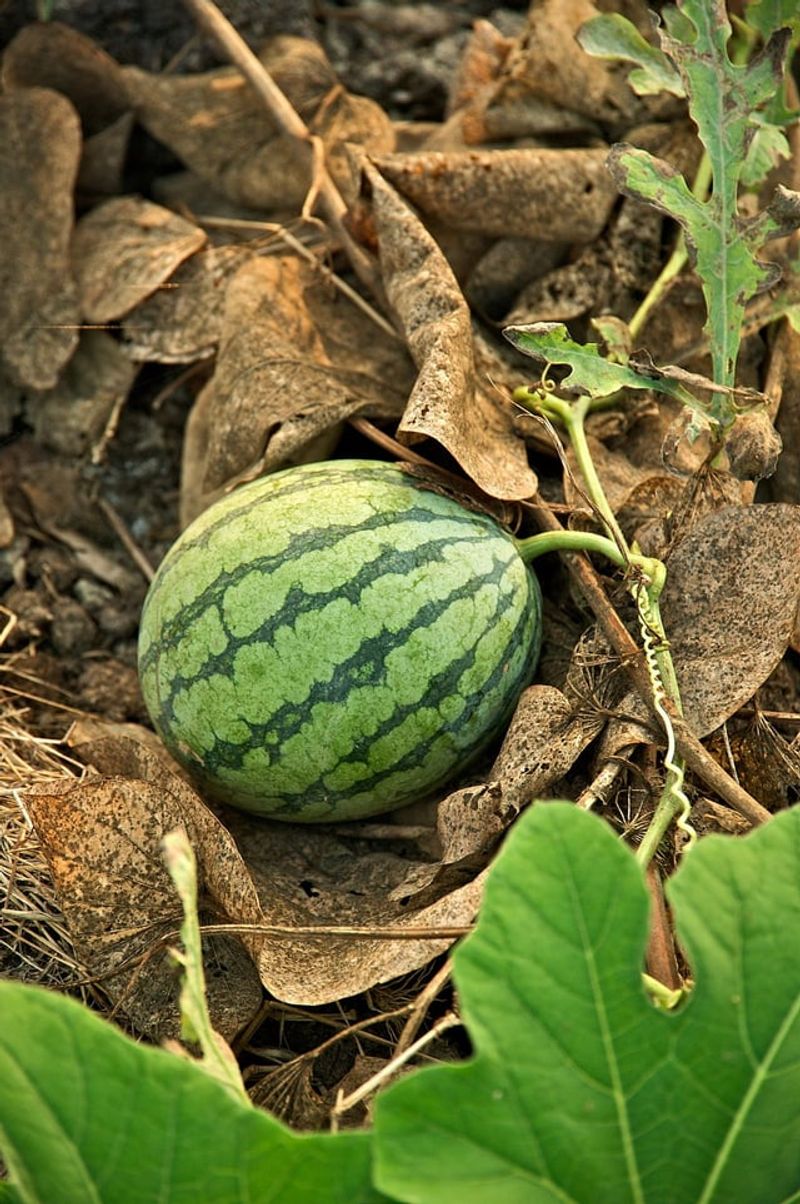
Nothing tests a watermelon like a soaking rainstorm after two weeks of dry heat.
One afternoon of heavy downpours can undo weeks of careful, measured watering. The sudden flood of moisture rushes into the roots and gets absorbed by the fruit almost immediately.
New Jersey summers are notorious for this exact pattern. A dry stretch in late July followed by a thunderstorm in early August is practically a state tradition.
Unfortunately, your watermelons have no way to pump the brakes on water absorption when the soil gets saturated all at once. The fruit takes in that surge of moisture and expands from the inside out.
The rind, which has been toughening up during the dry period, cannot stretch fast enough. The result is a clean split or a series of cracks that run along the fruit’s natural lines.
Your New Jersey Garden Changes Every Week. Your Plan Should Too.
Gardening in New Jersey changes quickly throughout the season. Every Friday you’ll receive a simple weekly plan showing exactly what to plant, prune, fertilize, harvest, and protect so you never miss the right timing.
You cannot control the rain, but you can manage its impact. Raised beds with well-draining soil help excess water move away from roots faster.
Covering your plants with a row cover or garden fabric during a predicted heavy storm can help reduce the direct impact of heavy rain on the soil surface.
Monitoring your local forecast and adjusting your watering schedule in anticipation of rain is a smart habit to build. If rain is coming, skip your scheduled watering that day.
Giving the soil a little breathing room before a storm can make a real difference in protecting your fruit from cracking on the vine.
3. Overripeness At Harvest
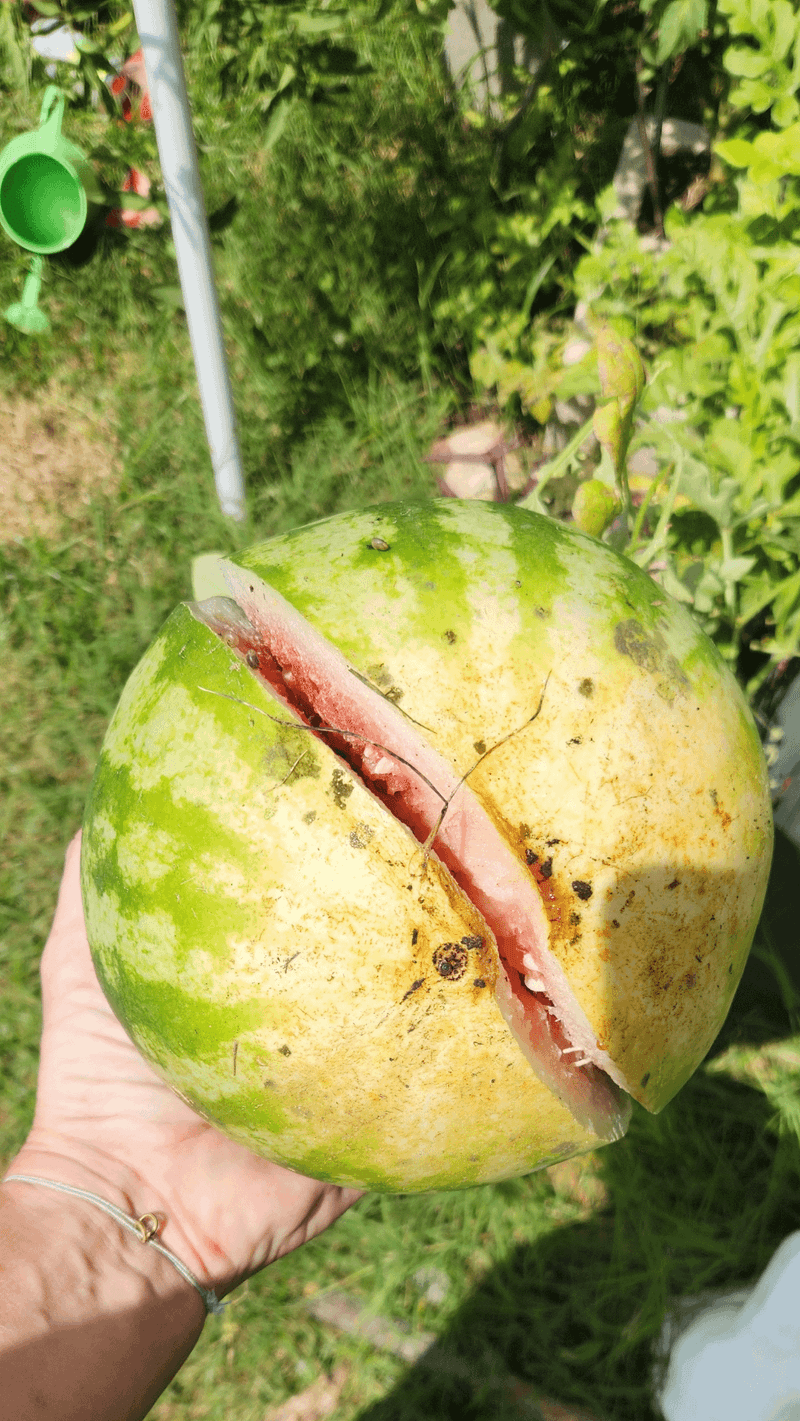
Leaving a watermelon on the vine too long is like forgetting a balloon at a birthday party for three extra days. It gets bigger, tighter, and eventually something pops.
Overripe watermelons crack because the flesh inside keeps growing even after the rind has stopped expanding. Most home gardeners wait too long to harvest because they want to be absolutely sure the fruit is ready.
That hesitation is completely understandable. Nobody wants to cut into a white, underripe watermelon after months of effort.
But waiting just a few extra days past peak ripeness can cost you the whole fruit.
Knowing when to harvest is a skill worth practicing. Check the tendril closest to the fruit on the vine.
When that small curly stem turns brown and dry, the watermelon is ready to pick.
The underside of the fruit should also have shifted from white to a creamy yellow color where it rests on the ground. Thumping the melon is another old-school method that actually works.
A ripe watermelon gives a deep, hollow sound when knocked. An overripe one sounds dull and flat, almost like tapping a wet towel.
Trust your ears on this one.
Once you spot those ripeness signals, harvest promptly. Watermelons do not improve on the vine after they reach peak maturity.
Getting them off the plant at the right moment means you protect all that hard work from ending in a cracked, soggy mess right before the finish line.
4. Extreme Heat And Sun Exposure
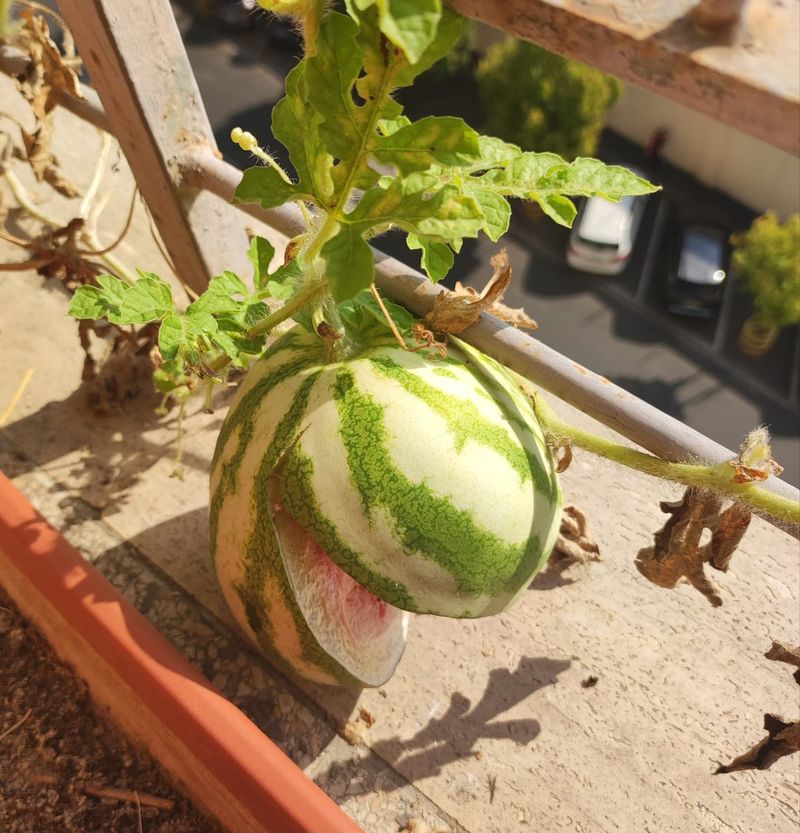
Summer heat in New Jersey can feel relentless, especially during a heat wave in August.
When temperatures push past 95 degrees Fahrenheit, watermelons get stressed. And a stressed watermelon cracks.
High heat speeds up the fruit’s internal development while the rind struggles to keep pace. Direct sun exposure on the fruit itself adds another layer of trouble.
When sunlight beats down on a watermelon for hours without any shade, the surface heats up unevenly. That uneven heating creates tension across the rind, making it more prone to splitting under pressure from the growing flesh inside.
Protecting your crop during extreme heat takes some creativity. Shade cloth stretched above your garden bed can reduce direct sun intensity without blocking the airflow your plants need.
Even draping a light cotton cloth over individual fruits during the hottest part of the afternoon can offer meaningful protection.
Keeping the soil consistently moist during a heat wave is equally important. Hot, dry conditions cause plants to pull moisture aggressively from any available source, including the fruit itself.
That rapid internal movement of water increases pressure inside the melon and raises the cracking risk significantly. Planting your watermelons where they get morning sun but some afternoon shade is a smart strategy for gardens in warmer parts of the state.
A little planning at the start of the season goes a long way. When temperatures spike in mid-summer, you will be glad you did it.
5. High Humidity Levels
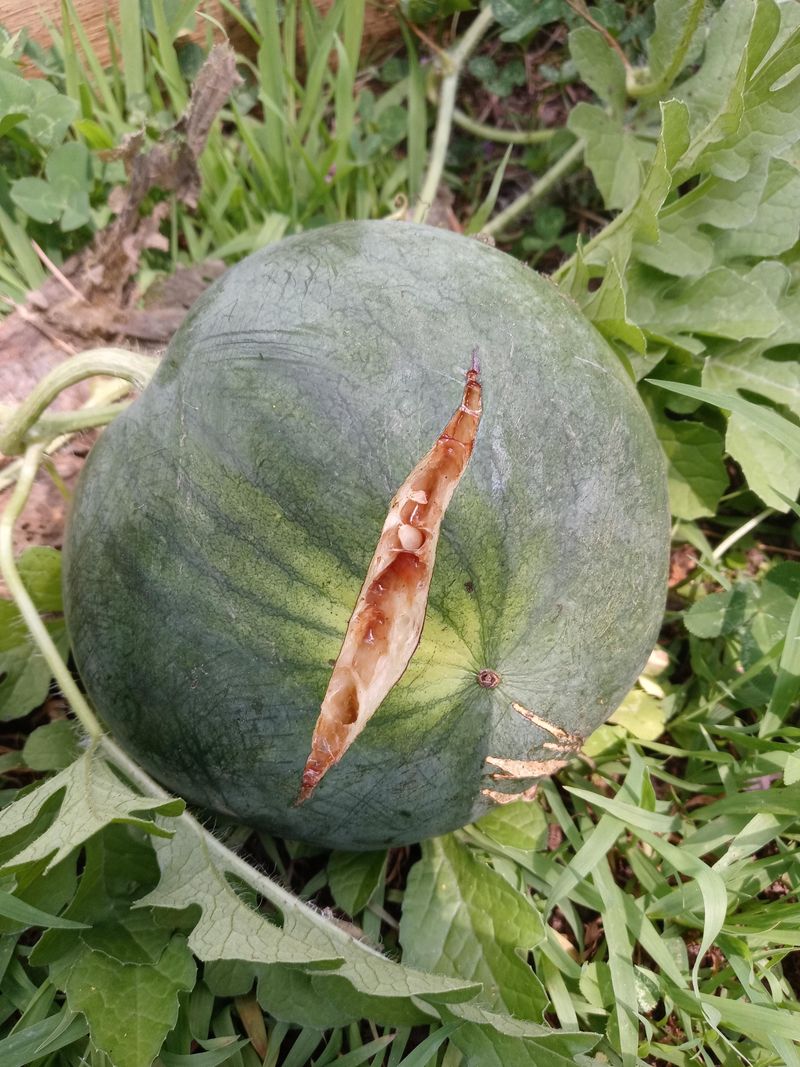
New Jersey summers are famously sticky. That thick, muggy air that makes your shirt cling to your back by 9 a.m. is the same humidity that creates problems for watermelons growing in your backyard.
High humidity affects how the fruit develops by slowing down evaporation from the soil. When moisture lingers around the roots longer than it should, the plant keeps absorbing water even when it does not need it.
Combined with water coming up through the roots, the fruit can end up taking on more moisture than it can hold. The pressure builds from multiple directions at once, and the rind gives way.
Fungal issues also tend to spike when humidity stays high for extended periods. Soft spots can develop on the rind, weakening it structurally before any internal pressure even builds.
A weakened rind cracks far more easily than a healthy, firm one. Good airflow around your plants is one of the best defenses against humidity-related problems.
Spacing your watermelon vines further apart than you might think necessary allows air to circulate between the plants. This reduces the moisture that lingers on the surface of the fruit and the soil underneath.
Avoid overhead watering whenever possible in humid conditions. Watering at the base of the plant keeps the foliage and fruit drier.
Good airflow does not sound exciting. But combined with proper spacing and well-draining soil, it is one of the simplest ways to keep New Jersey’s summer humidity from wrecking your crop year after year.
6. The Wrong Variety For Your Climate
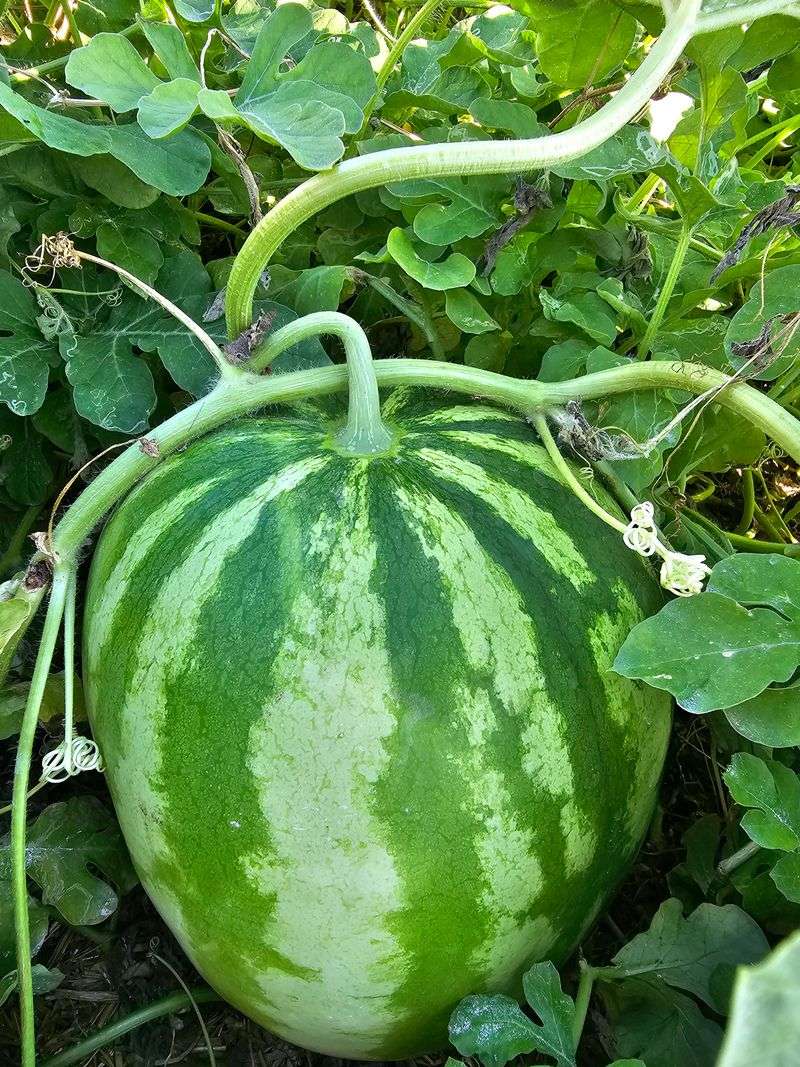
Not all watermelons are built the same. Some varieties have thick, tough rinds that handle moisture swings and heat like champions.
Others have thin, delicate skins that crack if you look at them sideways on a humid afternoon.
Choosing the wrong variety for your local conditions is one of the most overlooked reasons for cracking problems. Thin-skinned varieties tend to produce sweeter, more tender flesh, which is why they are popular.
But that same delicate quality makes them far more vulnerable to the weather swings that are common throughout the growing season here. A variety bred for dry, desert climates is going to struggle in a Mid-Atlantic summer.
Look for varieties specifically noted for crack resistance when shopping for seeds or transplants. Options like Sugar Baby, Crimson Sweet, and Charleston Gray have reputations for holding up well under variable conditions.
Reading seed catalog descriptions carefully can save you a lot of frustration come harvest time. Seedless varieties can also be trickier in this regard.
They often require precise pollination conditions and can be more sensitive to environmental stress than seeded types. If you are new to growing watermelons or have had repeated cracking issues, starting with a hardy seeded variety is a smarter move.
Talking to other local gardeners or visiting a nearby nursery and asking what grows well in your specific area is always a solid approach.
The right variety choice at planting time stops the problem before it starts. That is regional knowledge worth having.
7. Soil That Drains Poorly
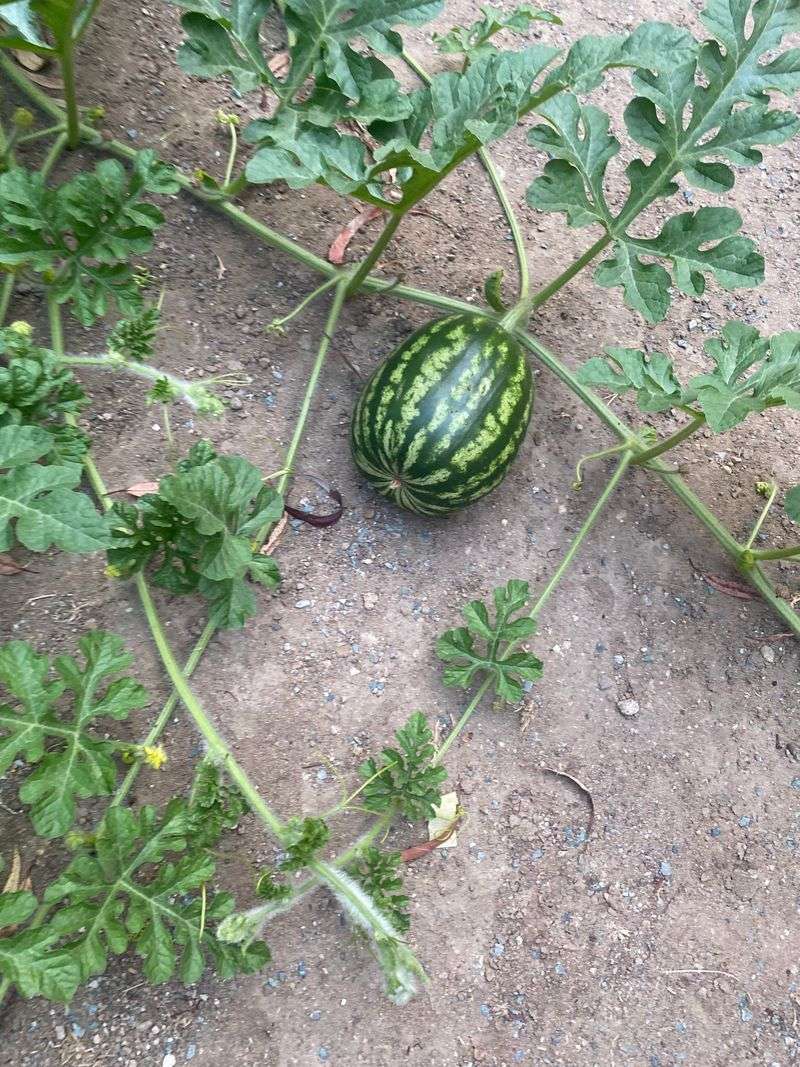
Soggy soil is a silent saboteur in the garden. When water pools around the roots of your watermelon plants instead of draining away, the roots absorb far more moisture than the plant needs.
That excess water travels up through the vine and straight into the fruit, building pressure inside the rind until something splits.
New Jersey has a lot of heavy clay soils, especially in older suburban neighborhoods and areas near rivers. Clay holds water like a sponge and drains slowly, creating exactly the kind of waterlogged conditions that watermelons hate.
Even after a moderate rain, clay soil can stay saturated for days. Testing your soil drainage before planting is a simple step that pays off enormously.
Dig a hole about one foot deep, fill it with water, and watch how quickly it drains. If water is still sitting in that hole after an hour, you have a drainage problem that needs fixing before you plant anything.
Amending your soil with compost, perlite, or coarse sand improves drainage significantly. Raised beds are another excellent option because they allow you to control the soil composition entirely.
Building your watermelon patch in a raised bed is one of the smartest investments a home gardener can make. Fill it with a loamy, well-draining mix and you are already ahead.
Proper drainage keeps moisture levels steady around the roots and reduces the dramatic swings that lead to cracking.
Get the foundation right and your watermelons have a fighting chance. New Jersey’s growing season will still test you, but at least cracking before harvest will not be the thing that beats you.
8. Poor Mulching Habits
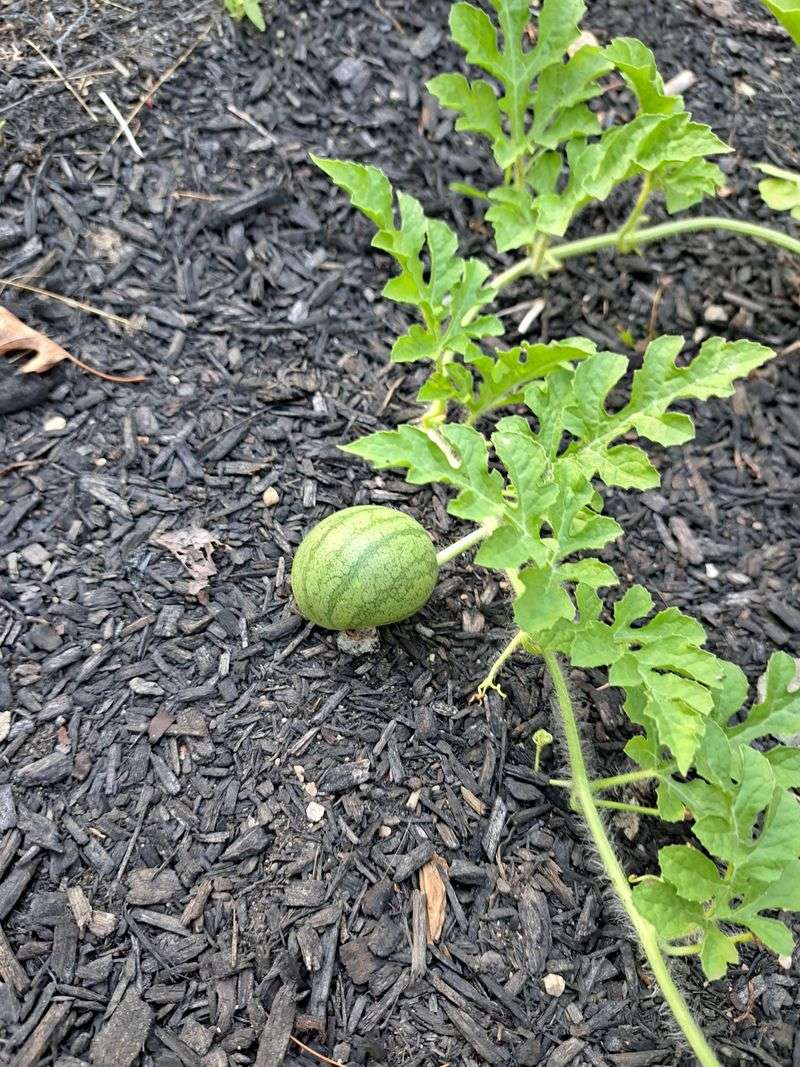
Most gardeners think of mulch as a set-it-and-forget-it solution. It is not.
What you put down, how much of it, and when you do it all affect how your watermelons handle moisture and heat.
Get it wrong and you are quietly setting up the conditions for cracking without realizing it.
Too little mulch leaves the soil exposed to New Jersey’s summer sun. The ground dries out fast, temperatures spike at the root, and your watermelon struggles to compensate.
Too much mulch traps moisture against the stem. That creates soggy, inconsistent soil conditions where the skin expands faster than the flesh inside can keep up.
The sweet spot is around two to three inches of organic mulch. Straw or wood chips work well, laid a few inches away from the base of the plant.
Check it through the season. Mulch breaks down, shifts, and thins out, especially after heavy rain.
Mulch is not glamorous. But it might be the cheapest fix in your garden.