Rose Rosette Is Wiping Out Ohio Knock Out Roses – What To Plant In Their Place
A mite smaller than a dust speck can ride a summer breeze from one rose bush to another.
Those tiny hitchhikers carry a virus that turns fresh canes bright red and covers them in soft thorns.
Shoots bunch into odd clusters called witches’ brooms, and the flowers start looking warped and stunted. Sadly, no spray or clever pruning trick cures an infected bush, so experts in Ohio recommend removing it quickly.
I have to admit, watching those tough, carefree landscape roses struggle in yards across Ohio stings a little. You probably planted them because they bloomed for months and asked for almost nothing in return.
Pulling out a beloved shrub hurts, but an empty bed also offers a rare chance for something fresh and exciting. Plenty of hardy, colorful shrubs can step into that space and keep your yard blooming without the same worry next summer.
1. Pinky Winky Hydrangea
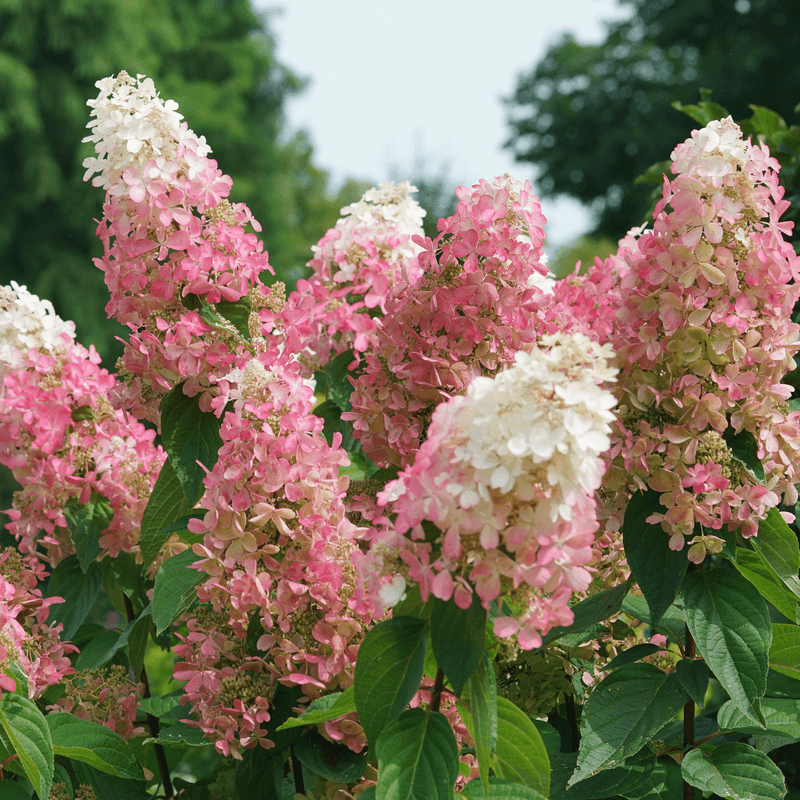
Pinky Winky panicles start out snowy white, then blush pink from the bottom up like slow ice cream. I love walking past one in August because every cone looks like it got dipped in raspberry sauce.
This shrub, Hydrangea paniculata ‘Pinky Winky’, reaches about six to eight feet tall and wide at maturity. It handles USDA zones 3 through 8, so cold winters in every corner of Ohio pose no real problem.
Unlike bigleaf hydrangeas, panicle types bloom on new wood, so a harsh winter rarely steals your flowers. You can prune in late winter or early spring, and fresh stems will still carry big summer blooms.
Give it at least six hours of sun for the strongest stems and the richest pink color later. A little afternoon shade helps during heat waves, especially when the plant sits near hot pavement or siding.
Moist, well-drained soil keeps it happiest, though it tolerates clay better than many flowering shrubs do. Water deeply during the first summer, then mostly during long dry spells once the roots settle in.
The flower heads fade to a warm tan by late fall and often hold on well into winter. Personally, I leave them standing because frosty cones look lovely against a gray January sky.
Plant it where the old roses grew, but first remove every root piece left behind by the infected bushes. Pollinators visit the open flowers, and you get months of color with far less worry.
2. Wine And Roses Weigela
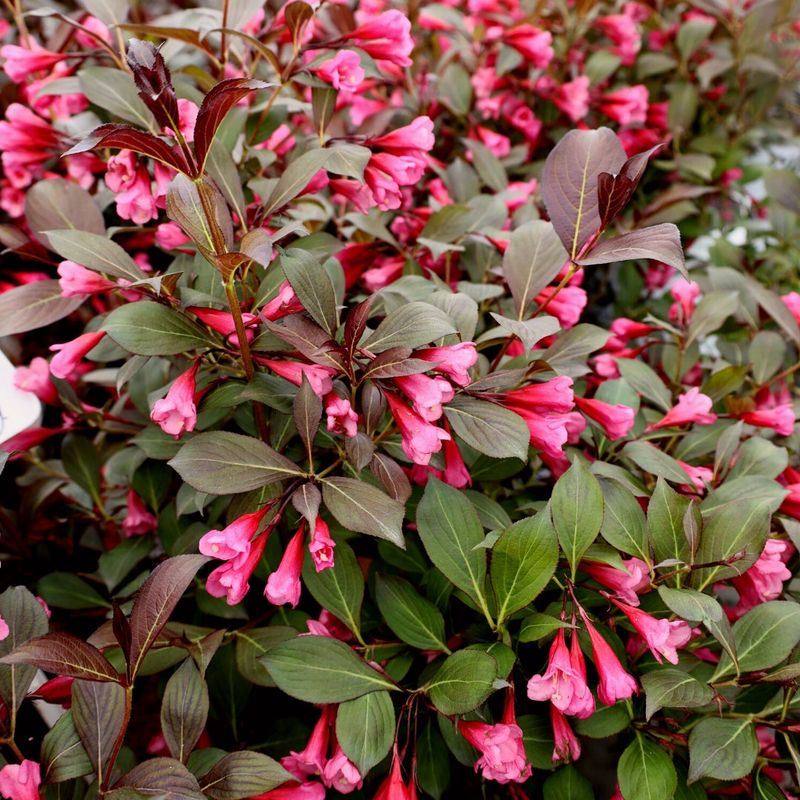
Dark burgundy leaves make the hot pink trumpets on this weigela practically glow on a sunny June morning. Hummingbirds seem to agree, because they zip in for a sip almost as soon as the flowers open.
Sold as Wine and Roses, this shrub is Weigela florida ‘Alexandra’, a Proven Winners selection with serious staying power. It grows roughly four to five feet tall and wide, filling an old rose spot quite nicely.
Main blooming happens in late spring, and you may notice a lighter round of flowers later in summer. Even without blooms, the purple foliage keeps the bed colorful for the whole growing season.
Full sun matters here, since shade turns those moody leaves a dull green and cuts flower numbers. Aim for six or more hours of direct light, and the foliage will hold its rich deep tone.
Weigela likes average, well-drained soil and handles clay reasonably well if water does not puddle around it. Hardy in zones 4 through 8, it fits comfortably into home landscapes across the Buckeye State.
Prune right after the spring flush ends, because next year’s flowers form on the stems grown this summer. I like trimming just the oldest canes at the base to keep the shrub open and lively.
Deer often leave weigela alone, though hungry animals in a snowy winter may nibble almost anything green. Pair it with silver foliage plants, and you will love how that dark color really pops.
3. Edward Goucher Abelia
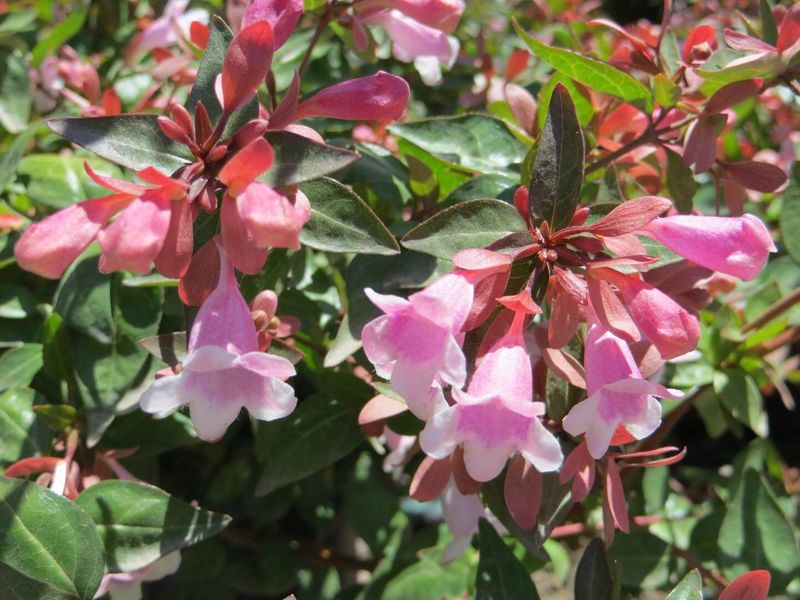
Bumblebees treat Edward Goucher abelia like an all-day diner, buzzing around its lavender-pink bells from summer into fall. I can’t imagine a friendlier shrub for a sunny walkway where you want gentle motion and steady color.
This hybrid was created in 1911 by Edward Goucher at a USDA plant station in Maryland. It typically grows three to five feet tall and wide, with arching stems and small glossy leaves.
Hardiness is the one catch, since it is rated for zones 6 through 9 and prefers milder winters. Southern and river valley gardens suit it best, while colder northern yards may see winter stem damage.
Even when stems freeze back, the plant often regrows from the base and still flowers on new growth. A thick layer of mulch in late fall gives the roots extra protection during deep cold snaps.
Plant it in full sun to light shade, where blooms appear most heavily on the brightest sides. Well-drained soil is important, and once established the shrub copes surprisingly well with short dry spells.
In autumn the leaves pick up bronze and purple tints that look lovely next to late perennials. Leftover pinkish sepals linger after petals drop, so the shrub keeps a soft blush for weeks.
Prune lightly in early spring, removing winter-damaged tips and a few older stems to refresh the shape. You get a long flowering season without heavy spraying, which feels like a real win after roses.
4. Dwarf Korean Lilac
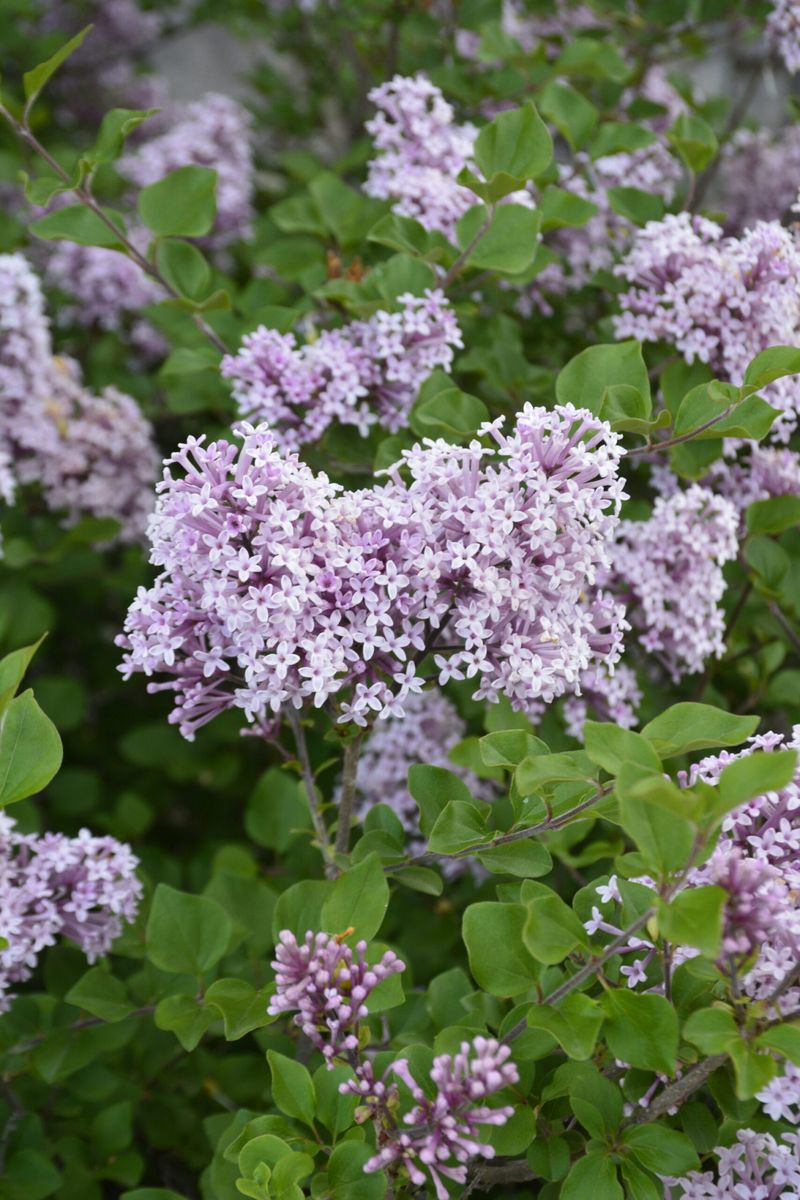
One whiff of a blooming Palibin lilac in May can stop curious neighbors right in their tracks on the sidewalk. Its pale lilac-pink clusters smell sweet and old-fashioned, yet the shrub stays much smaller than grandma’s version.
Botanists call it Syringa meyeri ‘Palibin’, and it usually reaches four to five feet tall at maturity. The spread runs a bit wider, often five to seven feet, so leave a little elbow room.
Hardy in zones 3 through 7, it shrugs off the cold winters lilacs need to set strong flower buds. That makes it a reliable bloomer from Lake Erie shorelines down through central farm country.
Plant it in full sun, because shady spots lead to sparse blooms and leaves prone to powdery mildew. Personally, I find this variety handles mildew far better than common lilacs in humid summers.
Well-drained soil is a must, and lilacs tolerate neutral to slightly alkaline ground quite happily. Avoid low spots where water sits after storms, since soggy roots make the plant sulk and decline.
Timing your pruning matters a lot, because next spring’s buds form shortly after this year’s flowers fade. Trim within a few weeks of bloom, or you may cut off the whole show by accident.
Butterflies drift in for nectar, and swallowtails especially seem to love those fragrant purple clusters. Plant one near a window or patio, and you will catch that perfume every time a breeze passes.
5. Blue Muffin Viburnum
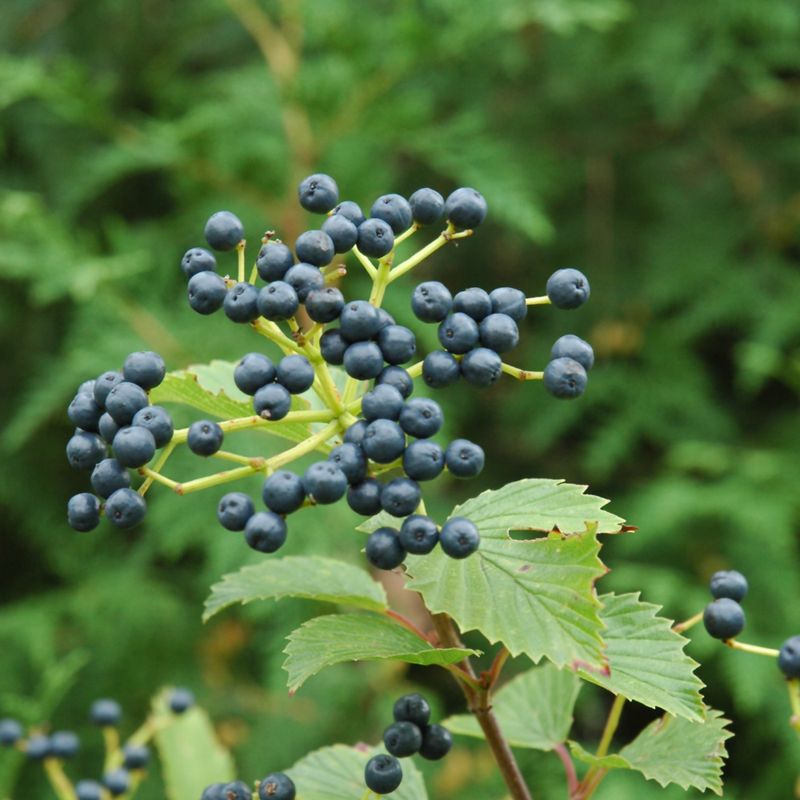
Robins and catbirds will thank you for planting Blue Muffin, because those late summer berries vanish fast. I love how the clusters shine a deep blue, almost like someone sprinkled blueberries across the leaves.
This compact selection of arrowwood viburnum, Viburnum dentatum, is native to eastern North America, including Ohio woodlands. It usually stays around five to seven feet tall, much smaller than the wild species growing along streams.
Flat clusters of creamy white flowers appear in late spring and draw plenty of small native bees. You need another arrowwood variety nearby for good pollination, otherwise berry production can be pretty disappointing.
Full sun to part shade works, but more sunlight brings heavier flowering and a bigger berry crop. In fall the glossy leaves shift to red and purple shades that glow on cool mornings.
Soil flexibility is a big plus, since it handles clay and average garden ground without much complaint. Keep it watered through its first summer, then rely mostly on rainfall unless a drought settles in.
Watch for viburnum leaf beetle, a pest that chews leaves into lace and has spread across the region. Prune out twigs with egg sites during winter, since that step can greatly reduce next spring’s larvae.
Pruning needs are light, so just remove crossing branches right after flowering if the shape gets messy. You get spring flowers and autumn berries from one tidy native shrub, which feels like a great trade.
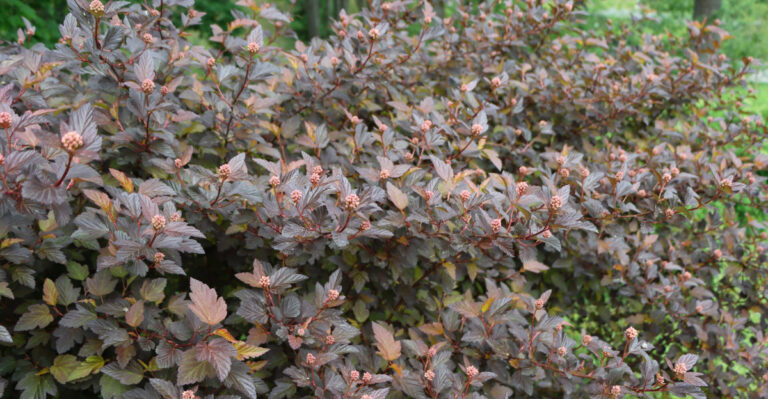
6. Summer Wine Ninebark
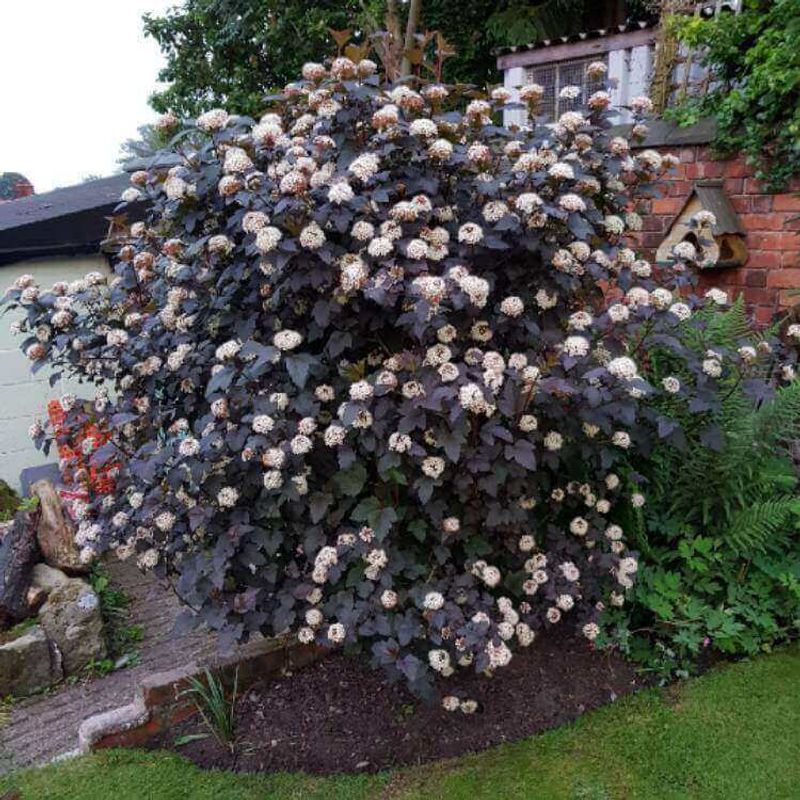
Few native shrubs dress as boldly as Summer Wine ninebark, with leaves the color of ripe black cherries. Personally, I think it gives a garden the same punch of color that red roses once delivered.
Its botanical name is Physocarpus opulifolius ‘Seward’, a compact form of a shrub native to much of Ohio. Mature plants reach roughly five to six feet tall and wide, with arching stems and finely cut leaves.
In late spring, rounded clusters of tiny pinkish-white flowers cover the branches and pull in busy pollinators. Small reddish seed capsules follow, adding a subtle extra layer of color through the middle of summer.
The name ninebark comes from the peeling bark on older stems, which flakes off in thin layers. You might notice that shaggy texture most in winter, when bare branches finally get a chance to show it off.
Hardy in zones 3 through 7, it handles bitter cold and bounces back nicely after rough winters. Full sun keeps the foliage darkest, while too much shade fades leaves toward a muddy green.
Ninebark adapts to many soils, from clay to rocky ground, as long as roots do not stay soggy. Good airflow helps prevent powdery mildew, so avoid crowding it tightly against fences or other shrubs.
Prune right after flowering, removing a few of the oldest stems at ground level every couple of years. That simple habit keeps fresh red growth coming and stops the center from getting thin and woody.
7. Dark Knight Caryopteris
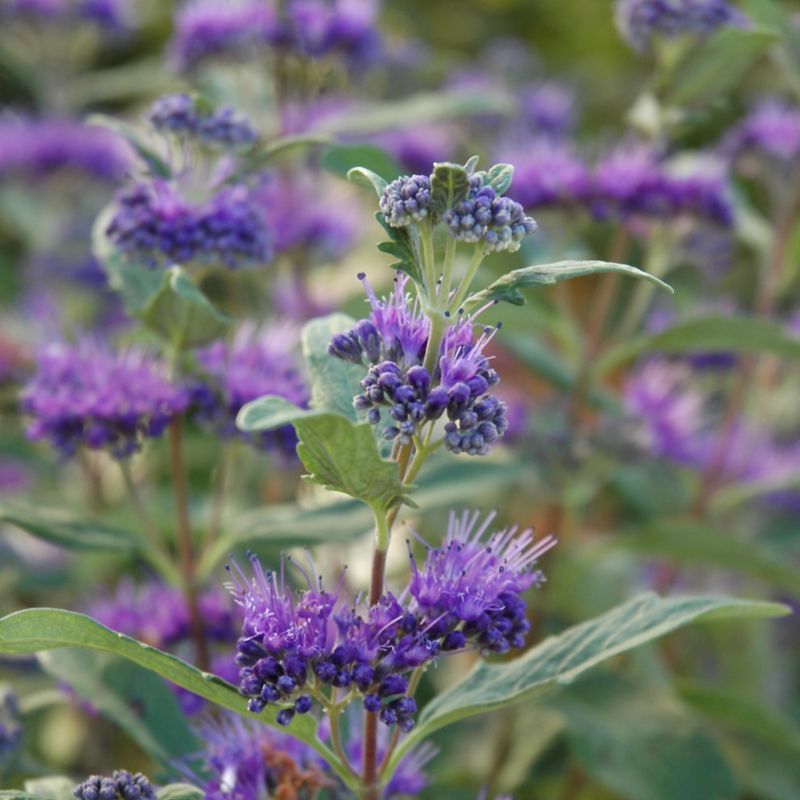
Blue flowers in late summer feel rare, and Dark Knight caryopteris delivers them right when gardens start fading. I love how bees practically crowd each other off the deep violet spikes on warm September afternoons.
Often called bluebeard, this plant is Caryopteris x clandonensis ‘Dark Knight’, a small woody shrub from hybrid parents. It grows about two to three feet tall and wide, making it handy for front borders and sunny corners.
Brush past the silvery gray leaves and you will catch a pleasant scent, a little like fresh herbs. That aromatic foliage helps explain why deer and rabbits usually wander off to find tastier snacks elsewhere.
Hardy in zones 5 through 9, it handles typical winters but appreciates a protected spot in colder pockets. Stems may freeze back in winter, yet the plant regrows quickly because it blooms on new wood.
Drainage makes or breaks this shrub, since heavy wet clay can cause crown rot over cold months. Mix in compost or plant on a gentle slope if your yard stays muddy after spring rains.
Wait until new buds swell in spring, then cut stems back to about six to twelve inches tall. Hard pruning sounds scary, but it keeps the plant compact and loaded with flowers later in the season.
Full sun and modest watering suit it best, and established plants tolerate dry summer stretches pretty well. Skip heavy fertilizer, because rich feeding produces floppy stems instead of a tidy mound of blue.
8. Goldfinger Potentilla
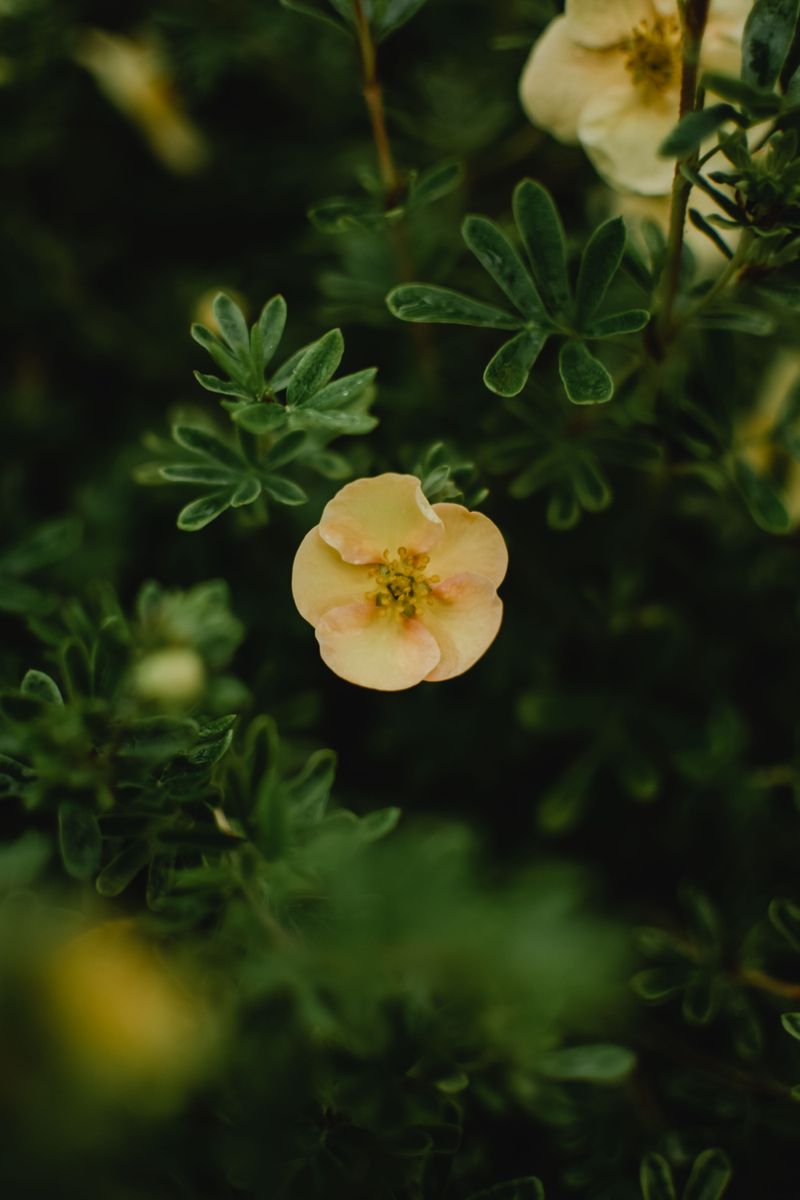
Bright buttercup yellow blooms keep popping open on Goldfinger potentilla from early summer almost until the first frost. You might notice how cheerful it looks even on gloomy days, like a small patch of sunshine.
Shrubby cinquefoil is the common name, and botanists now place it in the genus Dasiphora as Dasiphora fruticosa. The species grows wild across cool northern regions on several continents, including parts of North America.
Goldfinger stays small, usually two to three feet tall and a bit wider, with fine, feathery green leaves. Its flowers are larger than many older potentillas, often reaching a full inch or more across.
Hardy in zones 2 through 7, this tough little shrub laughs at cold winters and icy winds. It does sulk a bit during long humid heat waves, so good airflow helps it stay fresh.
Give it at least six hours of sun, because shade leads to thin growth and fewer flowers overall. Well-drained soil is key, and it tolerates rocky or slightly alkaline ground better than wet spots.
In late winter, cut about a third of the oldest stems to the ground to encourage vigorous new shoots. I also shear the tips lightly, which keeps the mound neat and helps prevent a twiggy, tired look.
Deer usually ignore potentilla, which is a relief if your roses used to become browsing targets. Plant a short row along a driveway, and you get a low golden hedge with very little fuss.
9. Ruby Spice Clethra
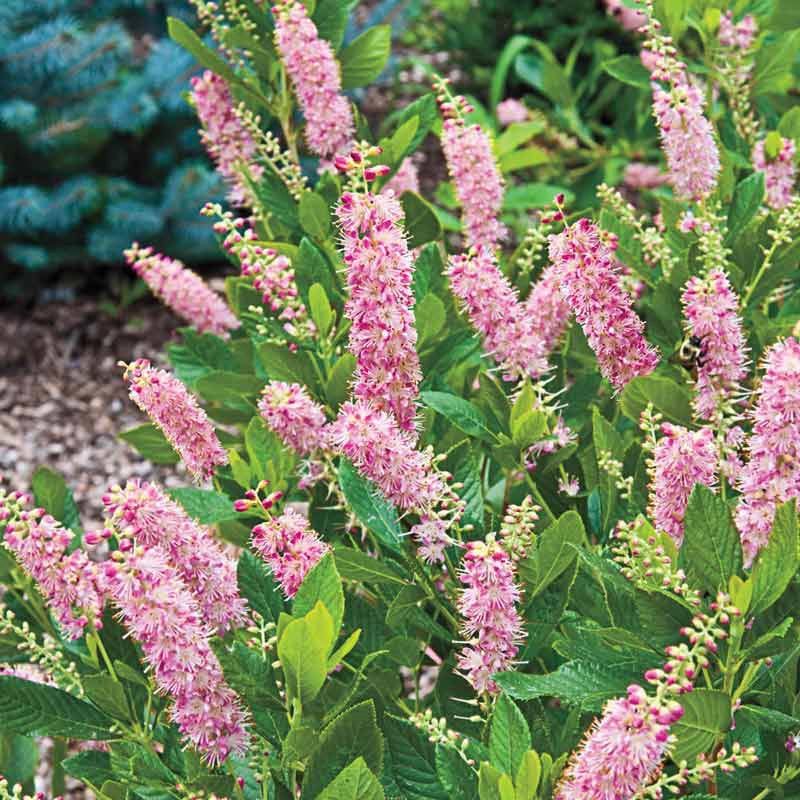
Walk past a blooming Ruby Spice clethra in late July, and the spicy-sweet fragrance hits before you spot it. Bees and butterflies swarm the rosy pink spikes, turning the whole shrub into a buzzing summer party.
Known as summersweet, Clethra alnifolia is native to the eastern United States, mainly along wet coastal areas. Ruby Spice stands out because its flowers hold a deep rosy color instead of fading to pale pink.
Mature plants usually reach four to six feet tall, spreading slowly by suckers into a loose clump. That gentle spreading habit works nicely for filling a gap where several old rose bushes once stood.
Moist, acidic soil suits it best, and it handles heavy clay or low wet spots better than most shrubs. If your yard has alkaline soil, add organic matter and watch for yellowing leaves that signal trouble.
Part shade to full sun works, though plants in bright sun need steady water during dry spells. I have to admit, few shrubs handle a soggy corner as gracefully as this fragrant one does.
Hardy in zones 4 through 9, it fits Ohio winters easily and wakes up late in spring. Stay calm if new leaves appear weeks after other shrubs, because that slow start is perfectly normal.
Golden yellow fall color arrives in autumn, giving the plant one more reason to earn its space. Prune in early spring if needed, since flowers form on the current season’s fresh new growth.
10. Little Henry Virginia Sweetspire
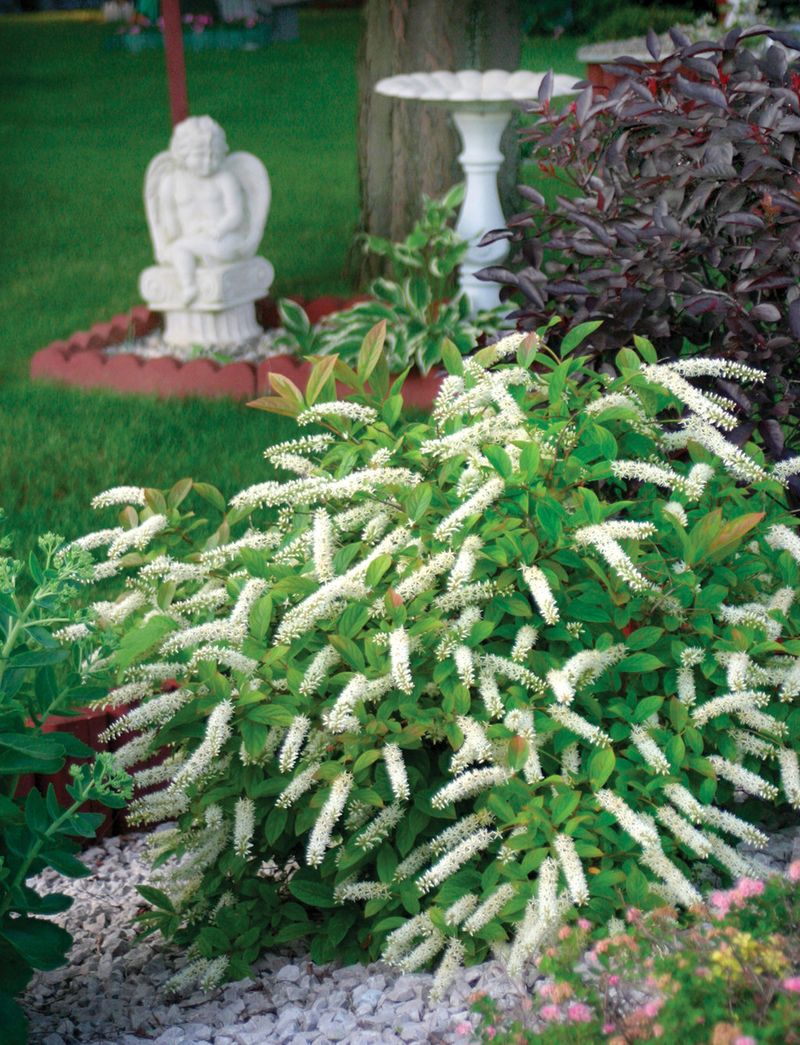
Arching white flower tails on Little Henry sweetspire look like tiny fireworks frozen mid-sparkle in early summer. Then autumn arrives, and the leaves flare into crimson and orange shades that rival any maple nearby.
Virginia sweetspire, or Itea virginica, is native to the southeastern United States, often growing along streams and swamps. Little Henry is a compact selection that stays around two to three feet tall and slightly wider.
Its fragrant flowers appear in early summer, offering nectar to bees during a busy stretch of the season. You might notice a light honey scent drifting up on humid evenings when the blooms are fresh.
Hardy in zones 5 through 9, it handles most local winters and keeps some leaves late into fall. Soil flexibility is impressive, since it tolerates wet clay and even handles occasional short dry spells.
Sun brings the best flowers and fall color, but it also grows reasonably well in partial shade. Slightly acidic soil keeps leaves dark green, so mix in compost if your ground runs alkaline.
Plants spread gently by underground runners, forming a low colony that looks great on banks and slopes. Personally, I love using a group of three along a foundation where tall roses used to crowd windows.
Pruning is simple, so trim a few older stems right after flowering to keep the mound tidy. With this native shrub in place of a sick rose, your yard gains color without the constant worry.