The Ohio Snake Gardeners May Find Under Boards, Mulch and Landscape Stones
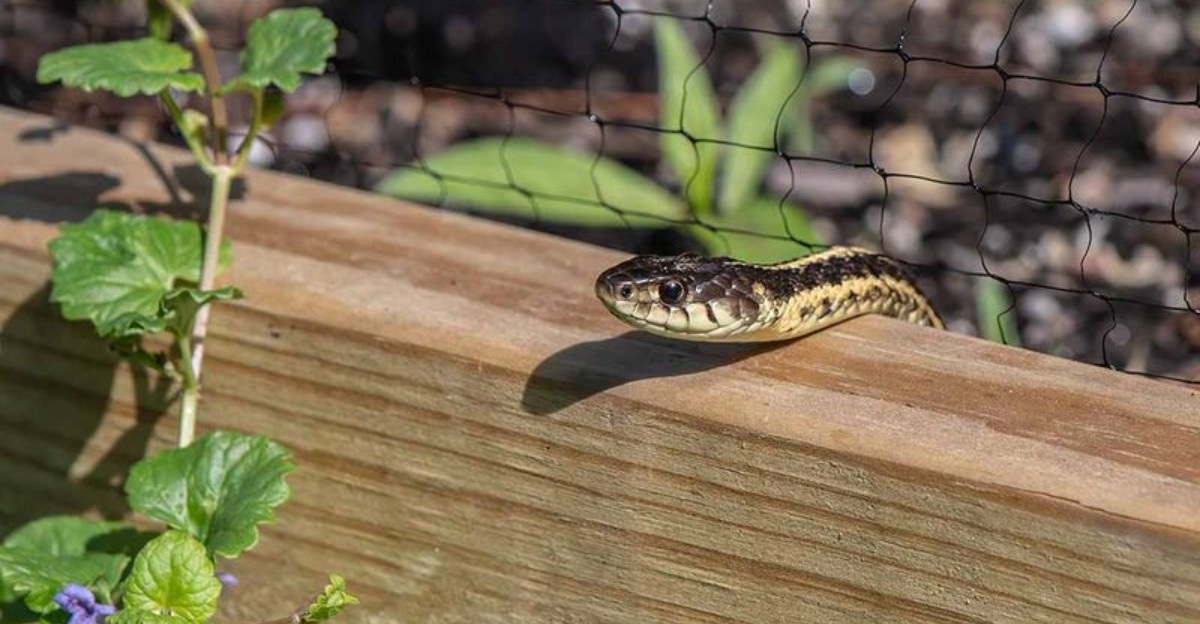
A small snake may spend much of its time hiding beneath boards, stones, or other sheltered spots in your backyard. It eats slugs and worms, stays out of sight, and rarely bothers anyone.
I flipped an old plank near my compost bin one June morning and found three of them curled together like striped shoelaces. My coffee nearly went flying, but my curiosity won.
I stayed and watched them slide away.
Ohio has 25 kinds of snakes, and only three are venomous. Most of those three live far from typical home gardens, in rocky hills or wet prairies.
The ones hiding in your flower beds are usually small, shy, and hungry for the same pests you battle all summer.
Who is really living under your stepping stones? You might be surprised how familiar that little visitor already is to gardeners across the state.
1. That Striped Snake Under Your Old Board Has a Familiar Name
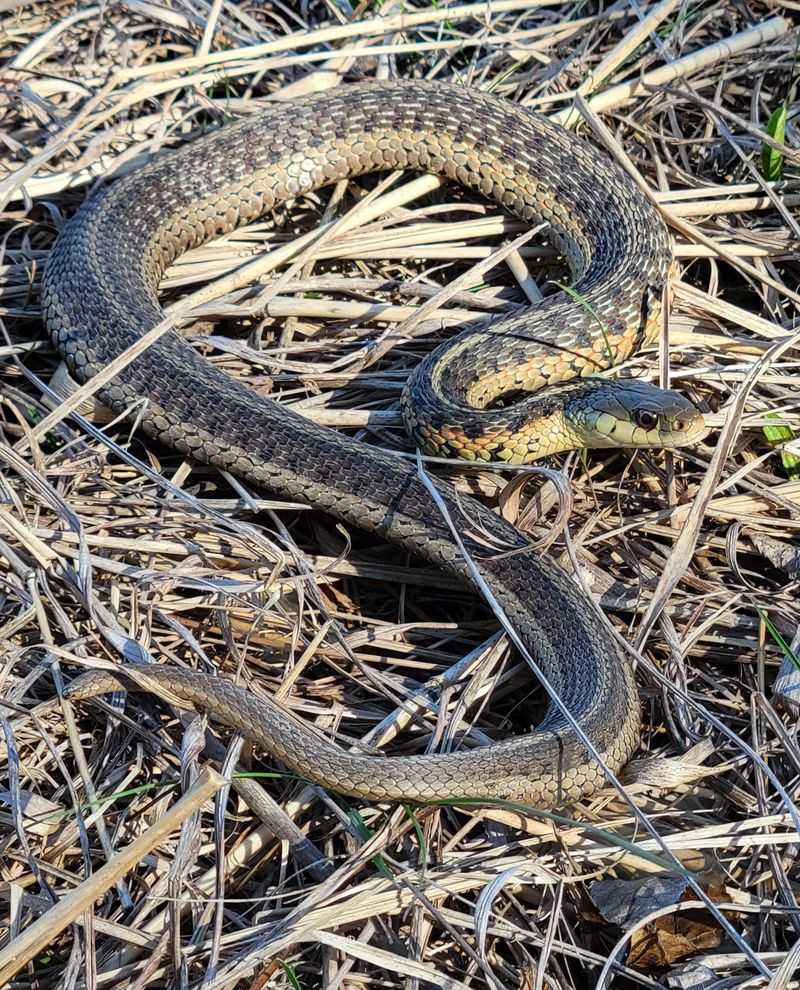
Lift a damp board in almost any Ohio yard, and odds are good you will spot yellow stripes running down a dark body. That is the eastern garter snake, the most common snake in the state.
Garter snakes live in cities, suburbs, farms, and woods. They love boards because the wood holds moisture and warmth underneath.
A flat board soaks up sun during the day and stays cozy into the evening, which suits a cold-blooded animal well.
Most adults measure about 18 to 26 inches long. Their color can vary from greenish to brown to nearly black, but the three light stripes are the giveaway.
One stripe runs down the back, and one runs along each side.
Personally, I think garter snakes are the best roommates a vegetable garden can have. They eat earthworms, slugs, frogs, and insects.
They are active from spring into fall and often gather in groups to spend winter underground.
If you pick one up, expect a smelly musk and maybe a nip. A garter snake bite is usually minor, but it can break the skin and should be washed thoroughly with soap and water.
Better yet, just admire it and set the board back gently.
2. Tiny Brown Snakes in Your Mulch Are Slug Hunters
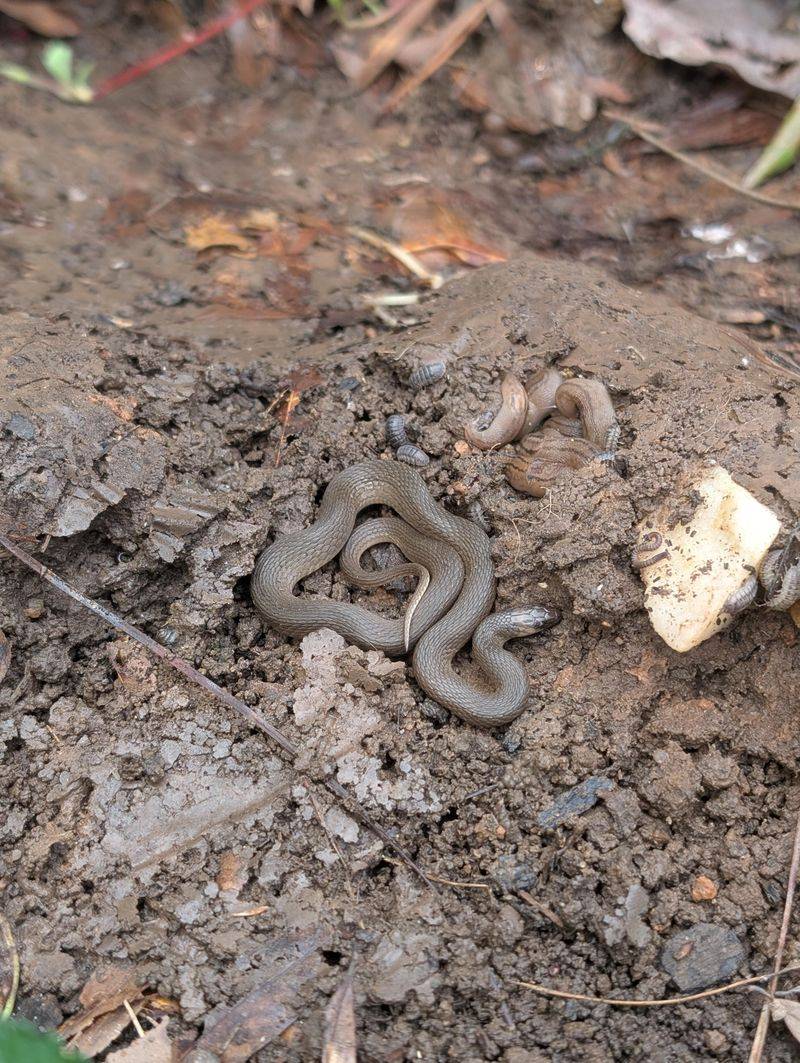
Ever pulled back a handful of mulch and found a little brown snake that looked like a twig with a tongue? Meet DeKay’s brownsnake, one of the most frequent mulch dwellers in Ohio.
Brownsnakes are small, usually 9 to 13 inches long. They are tan or brown with two rows of dark spots down the back.
Their bellies are pale, often pinkish or cream.
Mulch is perfect for them. It stays moist, holds plenty of slugs and earthworms, and gives them a soft place to hide from birds.
They are common in towns and cities, which makes them a regular surprise for suburban gardeners.
I like to think of brownsnakes as the quiet cleanup crew under my hostas. Slugs chew holes in leaves overnight, and these snakes help keep those numbers down.
They also eat snails, which few other animals bother with.
A brownsnake will often flatten its body or release musk if handled. It is harmless to people and pets.
If you find one while spreading fresh mulch in spring, just let it wiggle away and keep working nearby.
These small snakes are best left undisturbed, since they play a useful role in the garden without needing any help from you.
3. A Ring-Necked Snake Might Be Hiding Beneath Landscape Stones
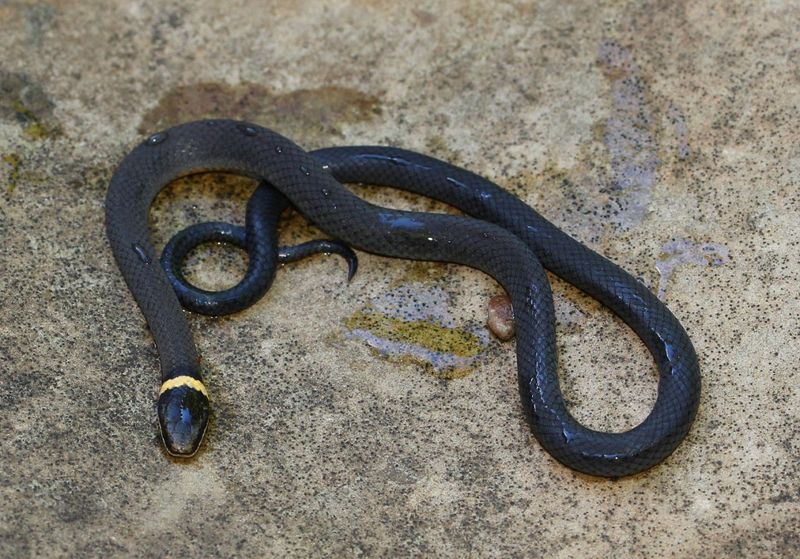
Flip a flat stepping stone and you may see a flash of gold. A slim, slate-gray snake with a bright yellow ring around its neck is a northern ring-necked snake.
These snakes are secretive and mostly come out at night. Adults are about 10 to 15 inches long.
Their bellies are a striking yellow or orange, which you may glimpse if one curls its tail upward when nervous.
Stones are their favorite hideouts. The rock keeps the soil below cool and damp, which ring-necked snakes need.
They are found statewide in Ohio but prefer spots near woods, rock walls, and leaf litter.
Fun fact time. Ring-necked snakes have very mild saliva that helps them handle prey, but it poses no real concern for people.
Their mouths are too small to bite anyone in a meaningful way.
They eat salamanders, earthworms, and small insects. If you see one under a stone, you are looking at proof your garden has healthy, moist soil.
Lower the stone slowly so you do not pinch the little snake as it settles back in.
4. Bigger Snakes Like Milk Snakes and Ratsnakes Follow the Mice
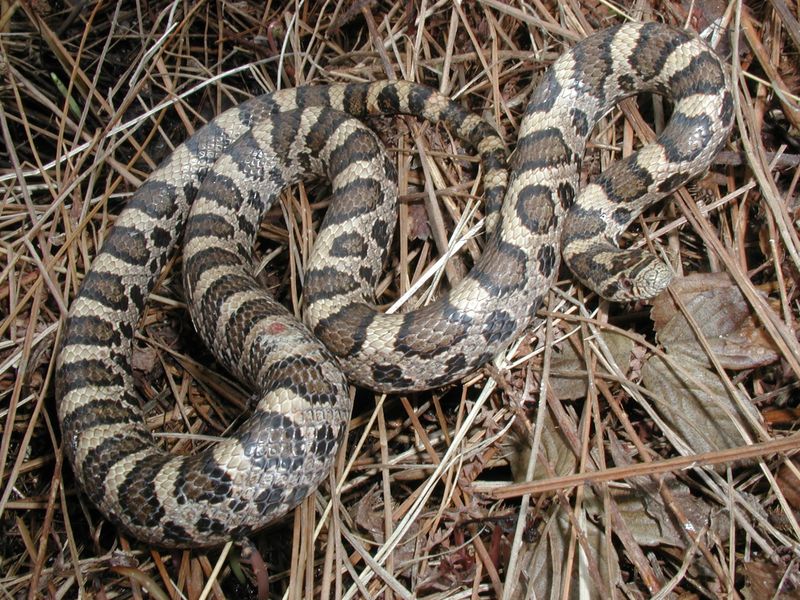
Mice love woodpiles, sheds, and stone walls. Where mice go, larger snakes tend to follow, and two Ohio species stand out.
The eastern milk snake has reddish-brown blotches outlined in black on a gray or tan body. It grows about 2 to 3 feet long.
Despite old farm tales, it does not drink milk from cows. It visits barns for the rodents.
The gray ratsnake is the largest snake in Ohio, sometimes reaching more than 6 feet. Adults are dark gray to black with faint patterns.
They climb trees and buildings with ease and are most common in the southern and eastern parts of the state.
You need to know both are nonvenomous. A nervous milk snake or ratsnake may shake its tail in dry leaves, making a buzzing sound.
That trick fools plenty of people into thinking they found a rattlesnake.
Spotting one of these bigger snakes near your stone wall usually means rodents are around. Instead of panicking, check for spilled birdseed, open trash, or pet food left outside.
Fewer mice often means fewer large snake visits.
5. Telling a Harmless Garden Snake From a Copperhead
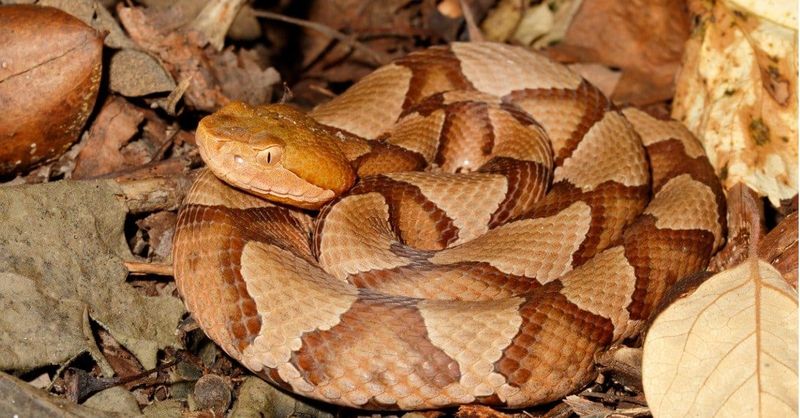
Ohio has just three venomous snakes. They are the eastern copperhead, the timber rattlesnake, and the eastern massasauga.
Copperheads are the ones a few gardeners might meet. They live mostly in the hilly, wooded southeastern and south-central parts of the state.
Look for a copper-colored head and tan body with darker bands shaped like hourglasses, wide on the sides and narrow on top.
Both rattlesnakes are rare and protected as endangered species in Ohio. Timber rattlesnakes live in a handful of rugged southern counties.
Massasaugas live in wet prairies and fens in scattered areas, mostly in the glaciated west and north. Neither one is a typical backyard visitor.
Venomous snakes here have a heat-sensing pit between the eye and nostril and pupils shaped like a cat’s. Still, you should not get close enough to check those details.
Patterns and location are safer clues.
Personally, I keep a field guide photo on my phone. The Ohio Division of Wildlife offers a free snake guide online.
A quick comparison from several feet away clears up most worries fast.
6. Stay Calm When a Snake Slides Out From Under the Mulch
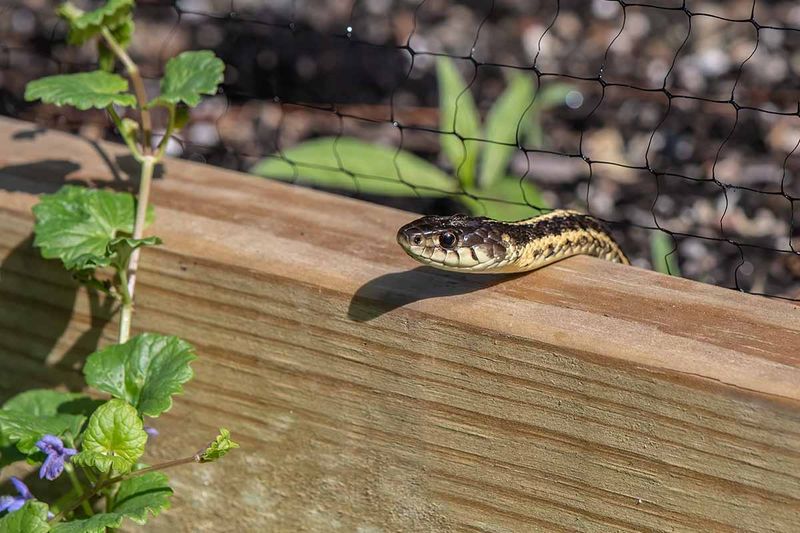
Surprise encounters happen. A snake shoots out from under a board, and your heart jumps.
Take a breath and step back about six feet.
Snakes rarely chase people. They usually want to escape and hide again.
Give it room, and it will often leave on its own within minutes.
Gloves and closed shoes help a lot during garden chores. Use a rake or hoe to lift boards and stones instead of your bare hands.
Lift the far edge first so the opening faces away from you.
If a harmless snake is in a spot you need, a gentle spray of water from a hose usually sends it moving. Keep kids and pets inside until it goes.
Ohio law protects native wildlife, and the state’s two rattlesnakes are endangered. Harming them can bring legal trouble.
If you suspect a venomous snake or one gets into your house, call a licensed nuisance wildlife control operator or your local Ohio Division of Wildlife office.
Snap a photo from a safe distance for identification. Experts can often name the species from one clear picture.
7. Decide How Snake-Friendly You Want Your Boards and Stones to Be
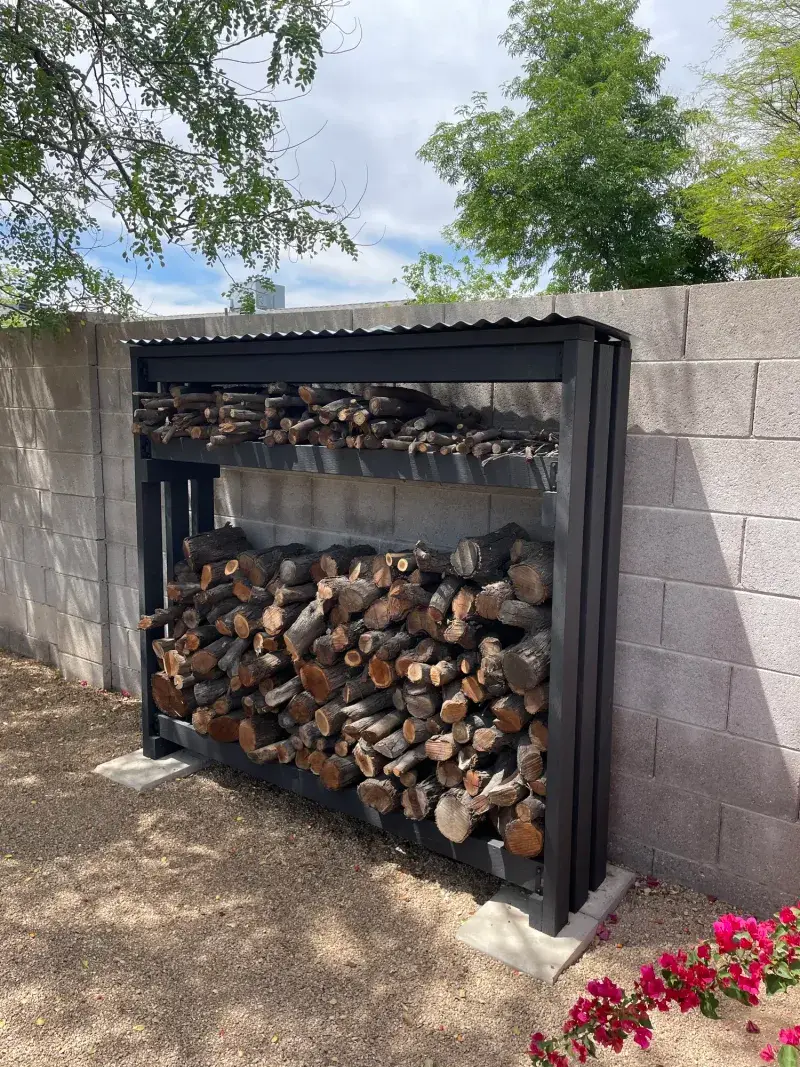
Every gardener gets to choose. Some of us welcome snakes as free pest control, while others want fewer surprises near the patio.
If you want fewer snakes, clean up hiding spots near doors and play areas. Stack firewood on racks off the ground.
Remove old boards, scrap lumber, and stone piles you do not need. Keep mulch to about 2 to 3 inches deep, which is good for plants anyway.
Mow grass regularly and trim tall weeds around beds. Snakes feel exposed in short grass.
Control mice by sealing trash bins and cleaning up spilled birdseed.
Snake repellent products and mothballs have little proof of working. Mothballs used outdoors also break pesticide label rules, so skip them.
If you enjoy wildlife, try the opposite. Place one old board or flat stone in a quiet corner far from the house.
Peek under it once a week in late spring and early fall, when snakes are most active.
I believe that little corner teaches more about garden health than any soil test. Healthy snakes usually mean plenty of insects, worms, and life working for you.