Shade Trees Planted Too Close To Georgia Homes Cause Trouble Years Later
A young oak planted ten feet from the house looks reasonable when it is barely taller than the gutters.
At that size, it is hard to picture how far the branches and roots will spread. Many shade trees grow for decades, and the space they need grows with them.
That gap between planting day and the years that follow is where many problems start.
By the time you notice the issue, the tree is often too big to move and costly to remove.
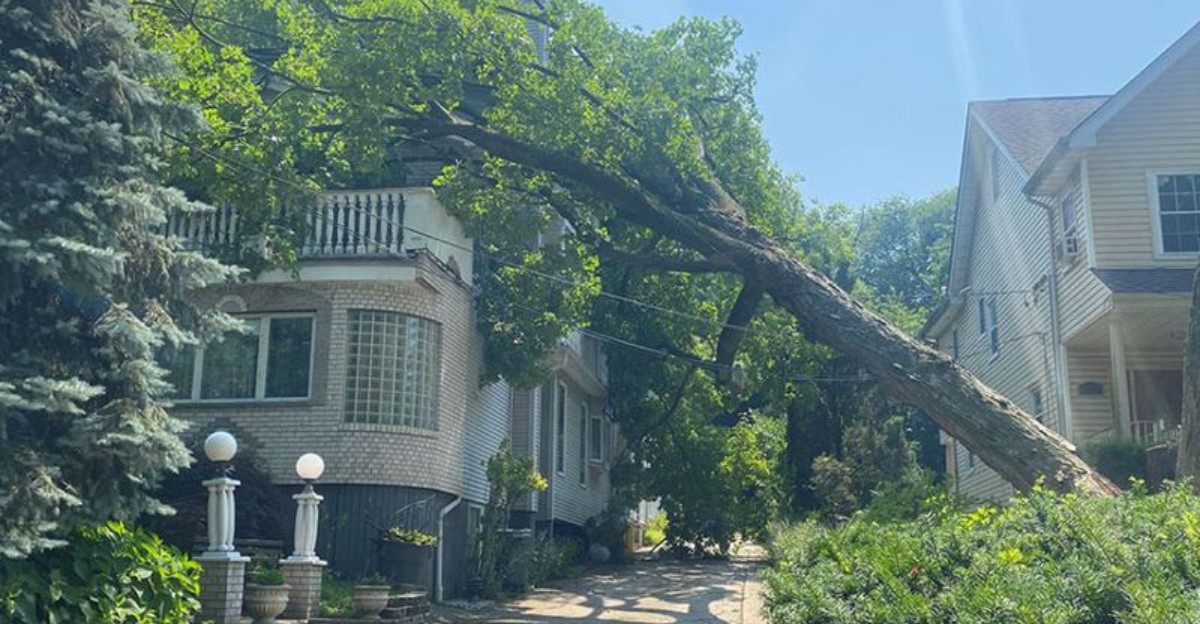
In Georgia, fast-growing shade trees and frequent summer storms make spacing even more important. A tree that crowds the roofline can become a bigger concern whenever strong winds hit.
If you plan to plant this fall, measure the distance from the house before settling on a spot.
1. A Small Sapling Can Eventually Need Much More Room
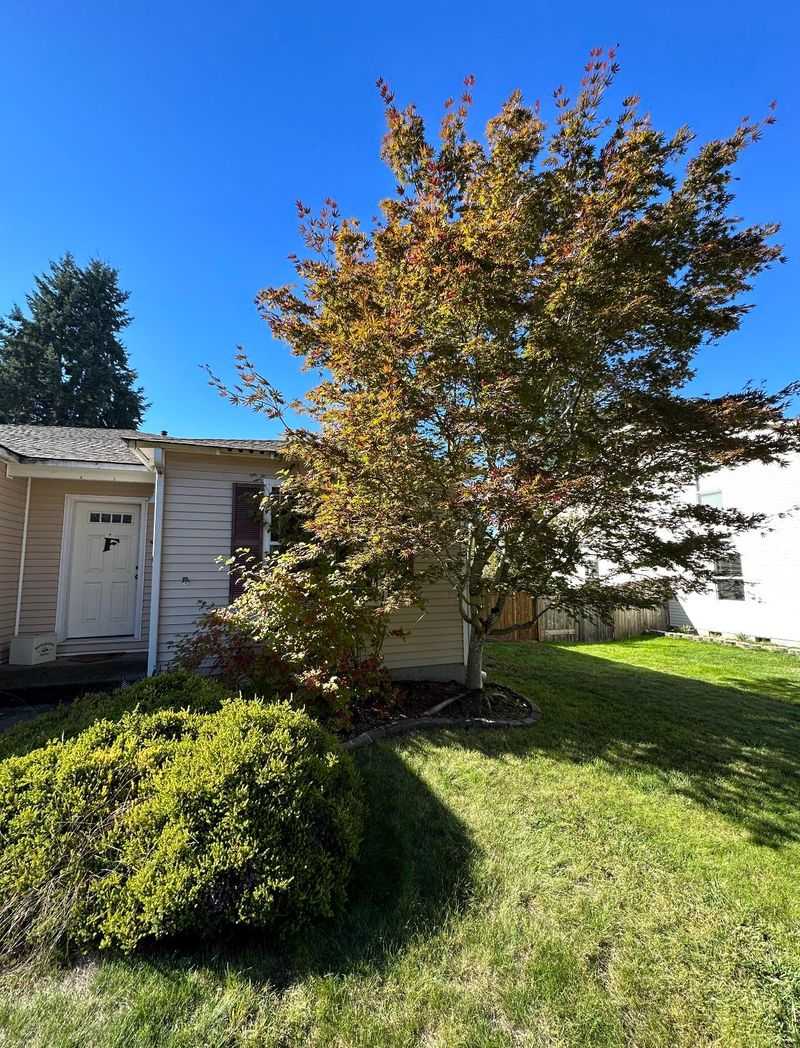
Ten feet looks like plenty of space on planting day. A skinny trunk and a handful of leaves make it easy to forget what that tree is built to become.
Nursery tags often list mature height and spread, but those numbers get ignored when the sapling is only waist high.
Willow oaks, red maples, and southern magnolias can grow into large trees over the decades. In the right spot, some of them may spread forty feet wide or more, though soil and care play a big role.
Growth speed varies a lot from tree to tree.
Fast growers like some maples can change a yard within ten to fifteen years. Slower trees take longer, yet they still keep adding size year after year.
Before digging, picture the tree at full size rather than its current shape. A simple trick is to mark the expected canopy width on the ground with string or spray paint.
If that circle bumps into the house, the driveway, or a fence, the spot may be too tight.
Moving the hole a little farther out costs nothing today. Fixing a crowded tree later can mean pruning bills, damaged gutters, or even removal, so a few extra steps on planting day can pay off in the long run.
2. Mature Canopies Can Reach Far Beyond The Original Planting Spot
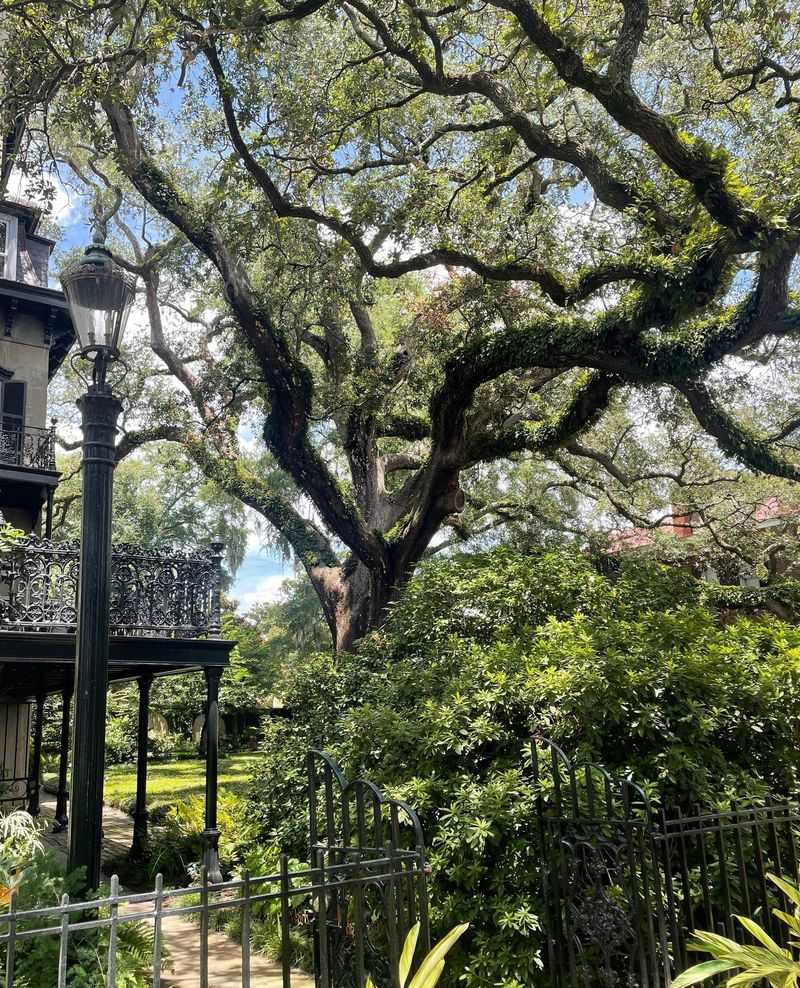
Look up at an old oak and notice how far its limbs travel from the trunk. Branches tend to reach toward open sunlight, which often means right over your roof.
Trees planted close to a house usually grow lopsided, with heavy growth on the side away from the walls.
Uneven growth like that can stress the trunk and make the tree harder to manage. It may also leave the house side shaded, damp, and slow to dry after rain.
In coastal Georgia, live oaks are a classic example of how wide a canopy can become.
Their limbs can stretch outward much farther than they climb upward. A live oak placed near a home may eventually shade the whole lot, which sounds nice until it starts scraping shingles and siding.
Shade itself is not the enemy here. Trouble comes when the canopy has nowhere to grow except into your house.
Your Georgia Garden Changes Every Week. Your Plan Should Too.
Gardening in Georgia changes quickly throughout the season. Every Friday you’ll receive a simple weekly plan showing exactly what to plant, prune, fertilize, harvest, and protect so you never miss the right timing.
Watch for branches pressing against walls or bending around the roofline as warning signs.
Light pruning while a tree is young can help guide its shape away from the building. Waiting until limbs are thick usually means bigger cuts, more stress for the tree, and a larger bill from whoever does the work.
3. Branches Near The Roof Can Rub Surfaces And Drop Debris
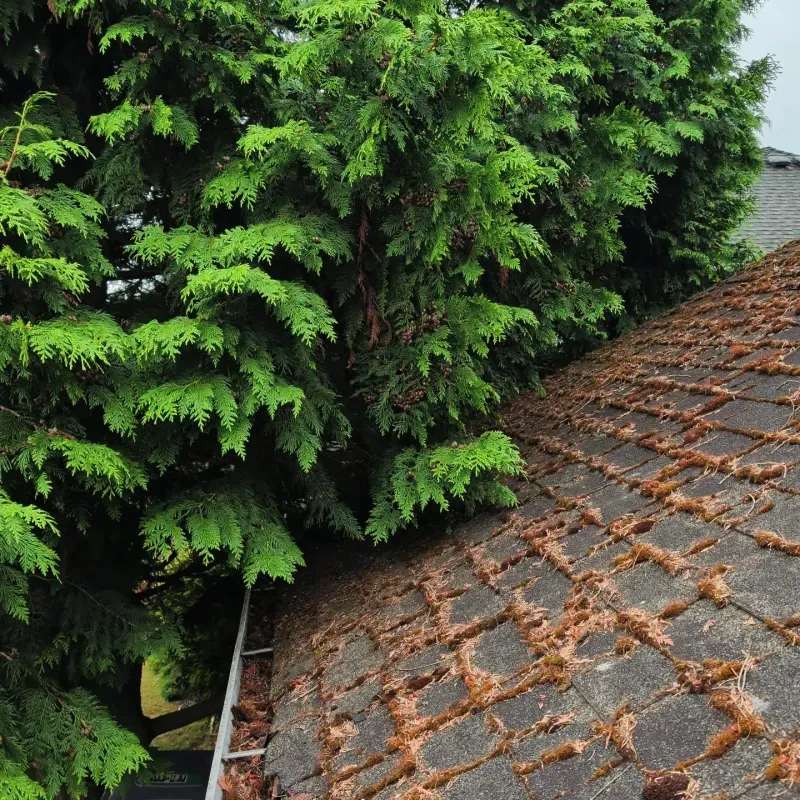
Gutters packed with leaves every November tell a story. Somewhere above them, a tree is probably hanging too close.
Limbs that brush the roof can wear away shingle granules as they sway in the wind. Over time, that rubbing may shorten roof life and open small spots where water can slip in.
Debris adds a second layer of trouble.
Across Georgia, pine needles, oak leaves, and spring pollen pile up quickly on roofs and in gutters. When gutters clog, rainwater can spill over the edges and soak the ground near your foundation.
Shaded roofs also stay damp longer, which can encourage moss or algae in some spots.
Squirrels like overhanging branches too. A limb near the roofline can work like a bridge into attics and soffits.
Trimming branches back several feet from the roof is a common recommendation from tree care pros, though the exact distance depends on the tree and the house.
Gutter guards may cut down on cleanup, yet they rarely stop every needle or seed pod. Checking the roof and gutters at least twice a year, especially after fall leaf drop, helps you catch small problems before they turn into costly repairs.
4. Roots Can Create Problems Around Pavement And Underground Lines
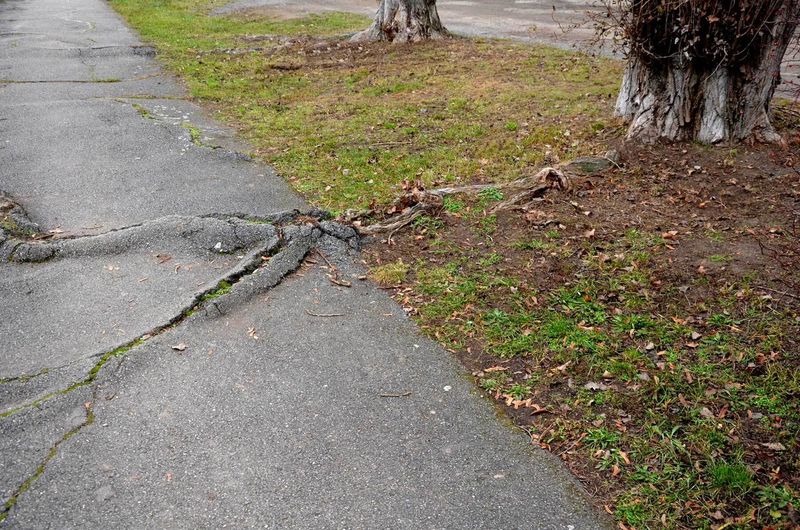
Cracked sidewalks rarely happen overnight. Slow, steady root growth can lift concrete an inch at a time until a trip hazard appears.
Most tree roots live in the top foot or two of soil, and they often spread far past the edge of the canopy.
Dense red clay, which is common in much of Georgia, can push roots to stay even closer to the surface. Driveways, patios, and walkways sitting on top of that zone may crack or heave as roots thicken.
Underground pipes are a related concern.
Roots generally do not break into healthy, sealed pipes on their own. They are drawn to moisture, so older sewer lines with small leaks or loose joints can attract them and become clogged.
Foundation damage is more debated and depends heavily on soil type, moisture, and how the house was built. A tree near a home does not automatically mean foundation trouble.
Before planting, call 811 to have buried utility lines marked for free.
Choosing a spot well away from sewer lines, septic fields, and paved areas reduces risk. Root barriers can help in some cases, but cutting large roots on an existing tree can weaken it, so get professional advice first.
5. Overhanging Limbs Become A Bigger Concern During Severe Weather
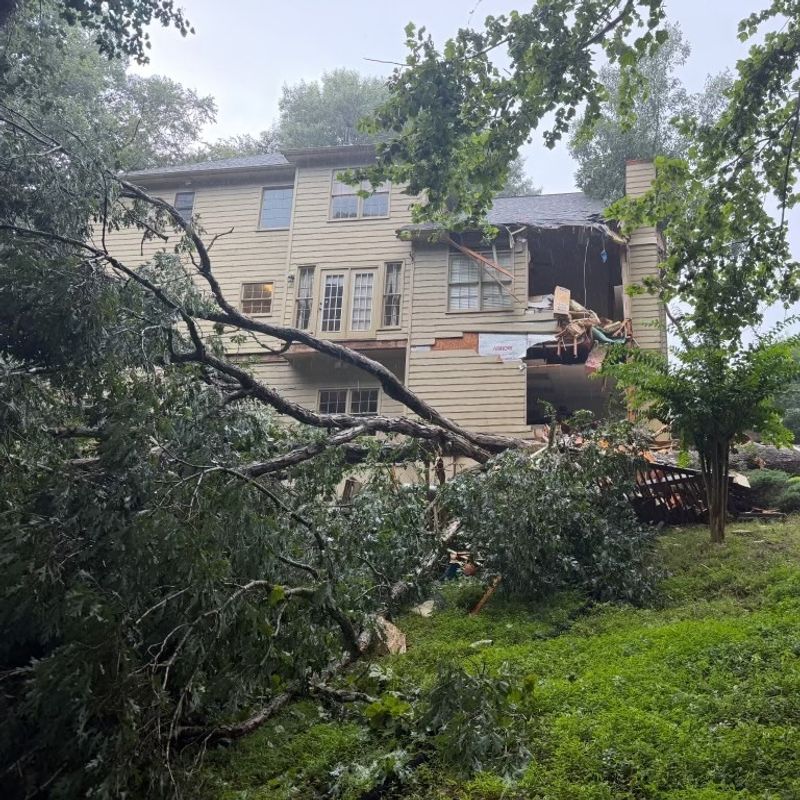
Calm days hide a tree’s weak spots. A strong summer thunderstorm can reveal them in seconds.
Georgia sees plenty of severe weather, from afternoon storms with gusty winds to ice events in the north and tropical systems along the coast.
Healthy trees handle a lot, yet heavy limbs over a roof leave little room for error. When a branch fails, gravity points it straight at the house.
Some trees carry a higher risk than others.
Water oaks and Bradford pears are often mentioned for weak wood or poor branch structure as they age. Pines can snap in strong winds, especially if they have been damaged or crowded.
Warning signs include deep cracks, hollow areas, mushrooms at the base, or large damaged branches. Leaning that suddenly gets worse is another red flag worth checking soon.
No tree is storm proof, and even sound ones can fail in extreme wind.
Thinning the canopy and removing weak limbs can lower the chance of damage, but heavy cutting may backfire. Topping a tree, for example, often leads to weak new growth.
Plan inspections before hurricane season or winter storms, when tree crews are less busy and easier to book.
6. Mature Tree Size Should Guide The Original Planting Distance
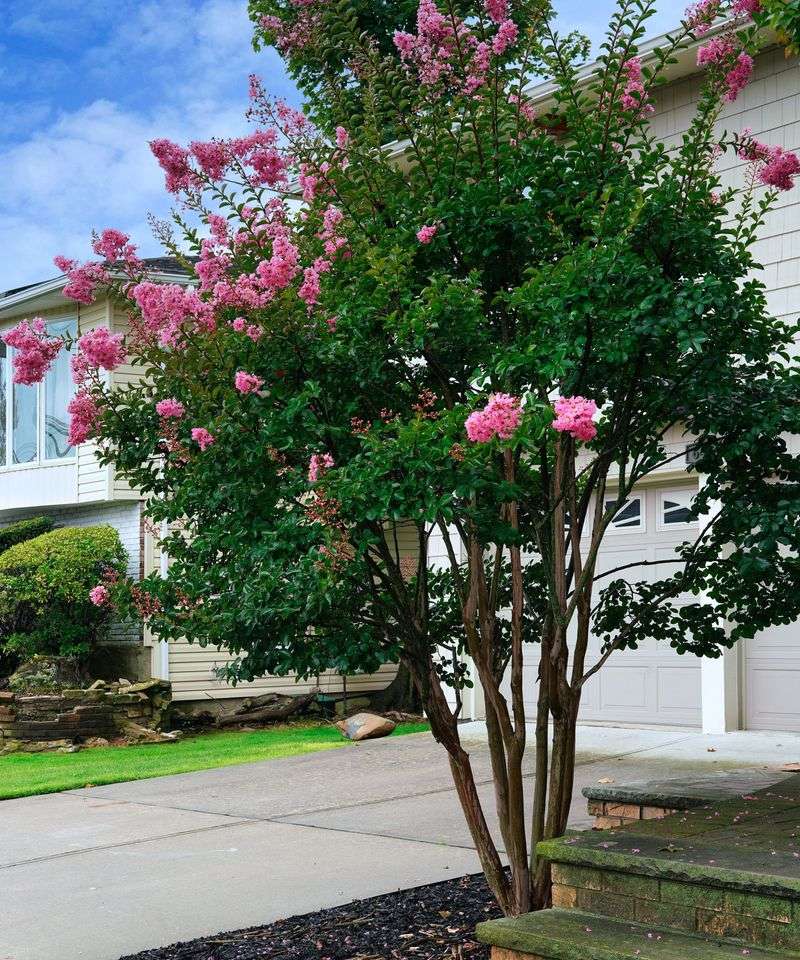
Want a simple rule that saves years of hassle? Plant based on the size the tree will reach, not the size it is today.
Large shade trees like oaks are often placed at least twenty feet from a house, and some arborists suggest even more.
Medium trees can sit a bit closer, while small ornamental trees such as dogwoods or redbuds may fit within ten to fifteen feet. These are general guidelines, so check the specific tree and your site conditions.
Spread matters as much as height.
A tree expected to grow forty feet wide needs roughly twenty feet of clearance on every side. Measuring half the mature spread from the house gives you a starting point.
Local extension offices, such as UGA Cooperative Extension in Georgia, offer free planting guides. Their staff can suggest trees that suit your soil and space.
Consider overhead power lines before you dig as well.
Tall trees under wires usually face heavy trimming from utility crews later. Choosing a shorter tree for tight spots and saving the big shade trees for open areas keeps both the house and the tree healthier over time.
7. An Arborist Can Help Decide Whether Pruning Is Enough
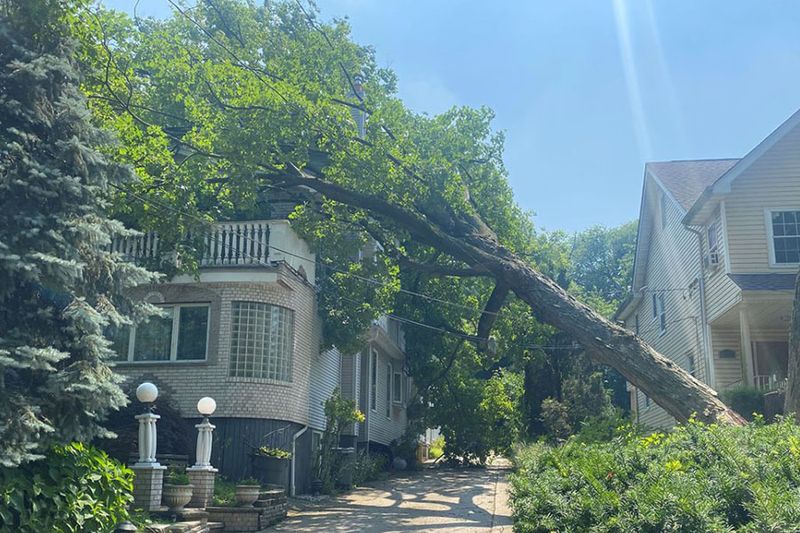
Cutting down a big tree feels drastic, and it often is. Plenty of crowded trees can stay with the right care.
A certified arborist looks at the trunk, branches, roots, and overall health before recommending anything.
Sometimes careful pruning is all that is needed to pull limbs away from the roof. Other times, the tree may have decay or structural flaws that make removal the safer choice.
Credentials matter here.
Look for an ISA Certified Arborist, and ask for proof of insurance before any work begins. Homeowners in Georgia can search the International Society of Arboriculture website to find certified pros nearby.
Be cautious with anyone who knocks on your door after a storm offering cheap removal.
A good arborist will explain options clearly and avoid pushing topping, which can harm the tree. Getting two or three estimates helps you compare both prices and advice.
Timing can affect results too. Many trees are pruned in late winter, though oaks may need special timing in some areas due to disease concerns.
Asking questions during the visit helps you understand the tree’s future and plan your budget, whether that means trimming now or preparing for bigger work later.