Should You Cover Tulips During Cold Nights In April In Ohio?

One warm April afternoon in Ohio can feel like spring has fully arrived, and by the next morning, a frost warning is back in the forecast. That sudden shift catches many gardeners right when tulips are at their peak.
Those bright blooms can look sturdy, yet a cold night can still take a toll depending on the timing and temperature. It leaves a lot of people wondering whether covering them is worth the effort or not.
Understanding how tulips respond to chilly nights and when simple protection can help makes it easier to keep that spring display looking its best.
1. How Cold April Nights Affect Tulip Buds And Blooms

On a calm April evening in Ohio, temperatures can slide downward faster than most gardeners expect, especially in the hours just before sunrise.
Tulip buds and open blooms sit exposed at the top of their stems, which means they feel every degree of that temperature drop without much natural shelter around them.
When temperatures fall close to or below 32 degrees Fahrenheit, the water inside tulip cells can begin to freeze.
This freezing causes the cell walls to break down, which leads to soft, mushy petals or bent, drooping stems once temperatures rise again in the morning.
Open blooms tend to show this damage more quickly than tight buds.
Foliage that has just pushed through the soil usually handles light cold better than flowers that have already opened. The leaves contain less water relative to their structure, so they bounce back more easily after a mild frost.
Blooms, however, are far more delicate and may not recover well from even a brief cold snap.
Ohio gardeners who pay attention to nighttime forecasts during April often catch these temperature drops early enough to take action before any real harm sets in.
2. When Temperatures Drop Low Enough To Cause Damage

Most tulip gardeners in Ohio are surprised to learn that not every cold night poses the same level of risk.
A temperature of 29 to 32 degrees Fahrenheit is considered a light frost, and tulips in early growth stages can often get through that without noticeable harm.
The real concern starts when temperatures drop below 28 degrees Fahrenheit and hold there for more than a few hours.
Extended exposure to temperatures in that lower range causes more serious cellular damage inside the blooms. The longer the cold lasts, the less likely the flowers are to recover their shape and color once the sun comes back out.
A brief dip below freezing that quickly rebounds may leave your tulips looking a little tired, but they often perk up by midday.
Ohio weather forecasts in April can shift rapidly, so checking the overnight low is only part of the picture. Wind chill and moisture in the air can make conditions feel harsher than the thermometer suggests.
A damp, windy night at 30 degrees may be harder on tulips than a calm, dry night at the same temperature.
Gardeners who track both temperature and wind conditions tend to make better decisions about when to take action and when to leave their tulips uncovered.
Your Ohio Garden Changes Every Week. Your Plan Should Too.
Gardening in Ohio changes quickly throughout the season. Every Friday you’ll receive a simple weekly plan showing exactly what to plant, prune, fertilize, harvest, and protect so you never miss the right timing.
3. Differences Between Frost And Hard Freeze Conditions

Gardeners often use the words frost and freeze interchangeably, but they actually describe two different weather events that carry different levels of risk for tulips.
Understanding the gap between them helps you decide how urgently you need to act when a cold night is in the forecast.
A frost event typically occurs when surface temperatures drop to between 28 and 32 degrees Fahrenheit, often on calm, clear nights when heat escapes from the ground quickly.
During a light frost, a thin layer of ice crystals may form on leaves and petals.
Tulips in bud stage can often handle this without much lasting trouble, though open blooms may show some softening or color change by morning.
A hard freeze, on the other hand, brings temperatures at or below 28 degrees Fahrenheit, sometimes dropping into the low 20s or teens during a particularly rough Ohio spring.
At those temperatures, ice forms inside plant tissue rather than just on the surface, and the damage goes much deeper.
Petals can turn translucent, collapse, or become streaked with brown. Stems may lose their ability to hold the flower upright.
When a hard freeze is in the forecast for an Ohio spring night, covering your tulips is worth serious consideration, especially if they are already showing color or are fully open.
4. Which Tulip Stages Are Most Vulnerable To Cold

Tulips move through several distinct growth stages during spring, and each one responds to cold temperatures a little differently.
Knowing where your plants are in that progression makes it much easier to judge how much protection they actually need on a given night.
When tulip shoots are just breaking through the soil, they tend to be surprisingly tough. At this early stage, the plant is still compact and low to the ground, and the foliage has a waxy coating that offers some natural resistance to light frost.
Ohio gardeners often notice that these early shoots can brush off a chilly night without any intervention at all.
Tight buds that have formed but not yet opened sit in a middle zone of vulnerability. They carry more moisture than emerging foliage, but the outer petals still wrap around the inner flower and provide a small buffer against cold air.
Once a bud begins to crack open or a bloom is fully unfurled, the risk jumps considerably.
Open flowers expose their delicate inner petals and reproductive parts directly to cold air, making them the most sensitive stage of all.
A tulip that is showing full color and wide-open petals on an evening when Ohio temperatures are expected to drop sharply is the one that deserves the most attention and care from the gardener.
5. When Covering Tulips Can Help Protect Blooms
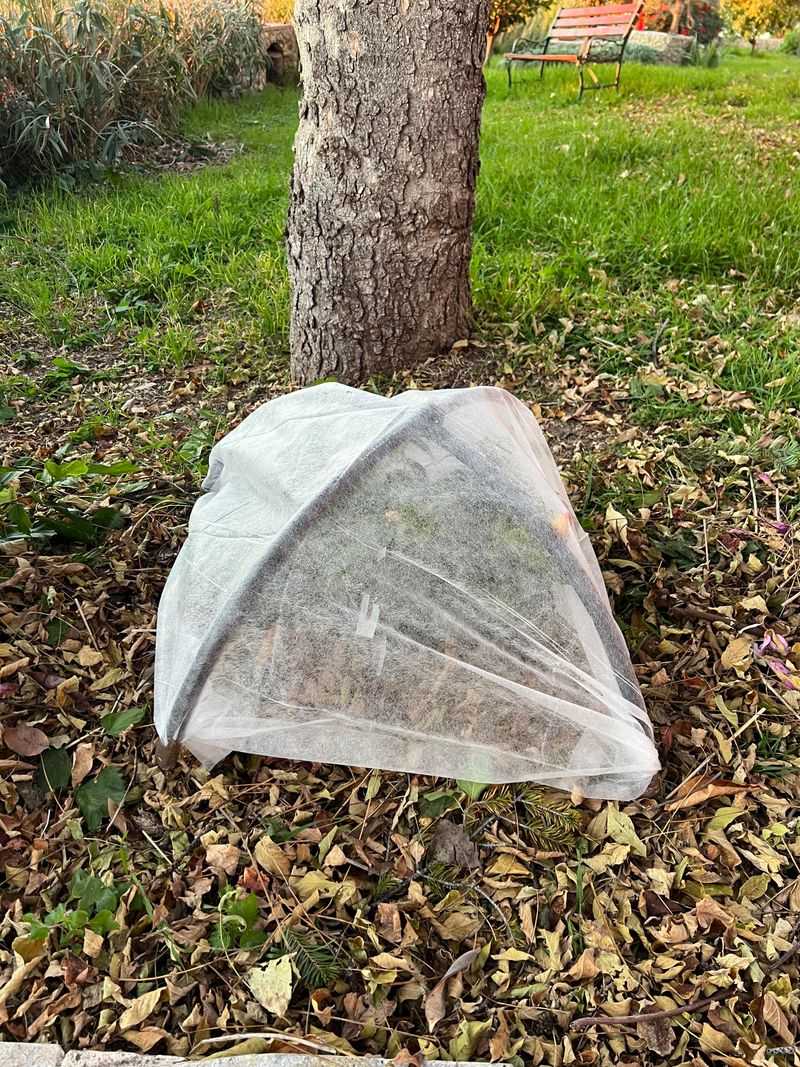
Covering tulips works best when you time it right and use the correct materials for the conditions.
Tossing a cover over your flowers an hour or two before sunset gives the ground and plants time to trap some of the day’s warmth underneath the fabric before temperatures start falling.
That trapped warmth acts like a small buffer that keeps conditions under the cover slightly milder than the open air around it.
The biggest benefit of covering comes during those nights when temperatures are forecast to drop into the upper 20s or when a hard freeze warning has been issued for your part of Ohio.
In those situations, even a modest cover can raise the temperature under the fabric by a few degrees, which may be just enough to keep blooms from suffering serious damage.
The protection is not absolute, but it shifts the odds in your favor.
Timing also matters when you remove the cover in the morning. Leaving it on too long after sunrise can cause heat to build up underneath, which stresses the plants in a different way.
Removing the cover gradually as temperatures rise allows the tulips to adjust without going from cold protection to direct sun all at once.
Ohio mornings in April can warm up quickly, so checking on your covered plants early in the day is a good habit to build during the peak bloom season.
6. Materials That Provide Light Frost Protection

Old bed sheets are one of the most popular choices among Ohio gardeners for covering tulips on cold nights, and for good reason. They are lightweight, breathable, and easy to drape over a row of blooms without pressing too hard on the petals.
Cotton sheets in particular allow some air circulation, which helps prevent moisture from building up under the cover and causing other problems.
Burlap is another solid option that many gardeners already have on hand from fall planting season. It provides a bit more insulation than a thin sheet and holds its shape reasonably well over taller tulip stems.
The loose weave still lets enough air pass through to keep conditions under the cover from becoming too humid or warm during mild nights.
Horticultural fleece, sometimes called row cover fabric, is designed specifically for this kind of plant protection and can be found at most garden centers across Ohio.
It is light enough that it can rest gently on the tops of blooms without crushing them, and it traps warmth effectively during light frost events.
Avoid using plastic sheeting as a cover, since plastic does not breathe and can cause condensation and heat buildup that may harm the plants.
Whatever material you choose, make sure the edges reach the ground so warm air stays trapped underneath throughout the night.
7. When Covering Is Not Necessary In Ohio Spring Weather

Not every cool April night in Ohio calls for the same level of concern.
Plenty of spring evenings bring temperatures that dip into the mid-30s or even the low 30s but stay just above the frost threshold, and on those nights, established tulips usually handle the chill without any help from the gardener.
Covering plants every time the temperature drops slightly can actually become more disruptive than helpful if done too frequently.
When tulips are still in the early foliage stage and no blooms have formed yet, the plants carry more natural resilience.
A night forecast at 33 or 34 degrees Fahrenheit with no wind and low humidity is unlikely to cause any meaningful damage, even to plants that are a little further along in their development.
Watching the forecast for a few days in a row gives you a much clearer picture of whether a genuine cold event is coming or whether the overnight dip is just a normal Ohio spring night.
Gardeners who cover their tulips every slightly cool night may also find that the repeated handling of stems and blooms causes its own kind of wear.
Brushing against petals, accidentally bending stems, or disturbing the soil around the base of the plant can add up over the course of a busy spring.
Save the covering routine for nights when the forecast calls for genuine frost or freeze conditions, and let your tulips breathe freely on the milder nights that Ohio April usually brings.
8. How To Remove Covers Without Stressing Plants

Removing covers the right way matters just as much as putting them on in the first place. After a cold night, tulips under a cover have been sitting in a slightly warmer, more sheltered environment for several hours.
Pulling the cover off abruptly and exposing them to cold morning air or direct early sunlight can create a sudden shift that puts unnecessary strain on the blooms.
The best approach is to wait until the sun has been up for at least an hour and outdoor temperatures have started climbing before you lift the cover.
Gently folding it back rather than yanking it off gives the plants a moment to adjust to the change in conditions.
If the morning is still quite cool and the sun is not yet strong, you can leave the cover loosely in place for a little longer and check back in 30 minutes or so.
Ohio mornings in April can shift from chilly to warm within just a couple of hours, so staying attentive during that window makes the process much smoother.
Once the cover is off, take a quick look at the blooms and foliage to check for any signs of cold stress, such as softened petals or bent stems.
In many cases, tulips that were covered overnight will look fresh and upright by mid-morning, which makes the small effort of covering and uncovering them well worth the time spent in the garden.