Should You Prune Yellowing Hydrangea Leaves In Your Ohio Garden Before The Rain
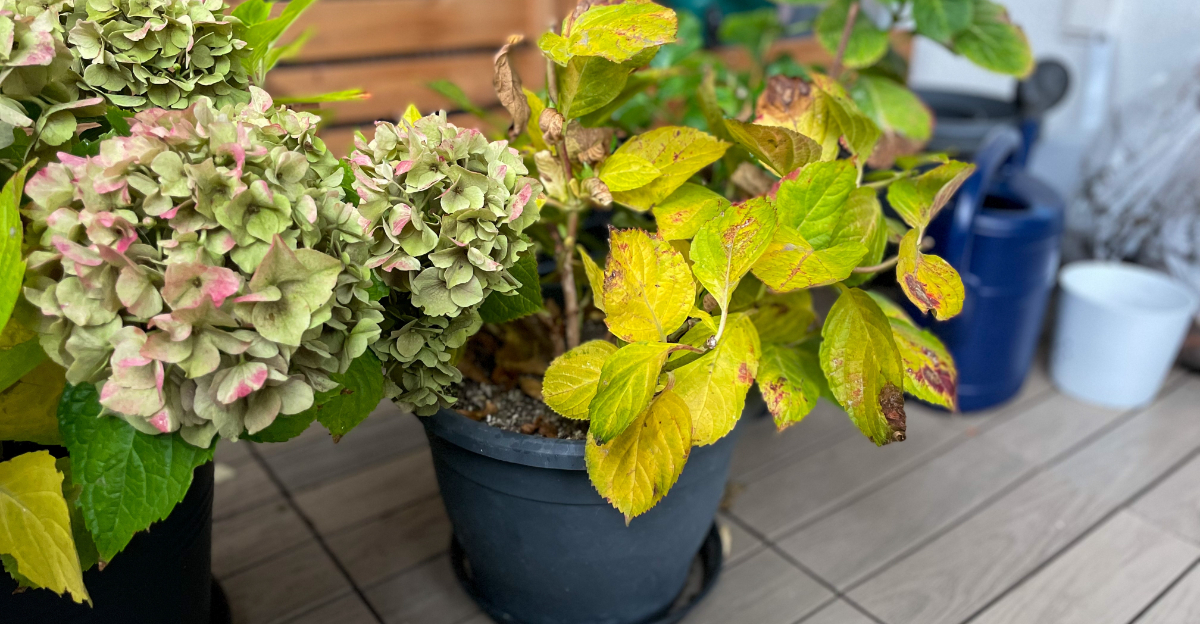
Yellowing hydrangea leaves before a rain event put Ohio gardeners in a decision that feels urgent and turns out to be more consequential than it looks. Pull them now or leave them.
The answer changes depending on what caused the yellow, and the cause is not always obvious from the outside. Not every yellow hydrangea leaf is a sick one.
Some are finishing a natural cycle. Others are signaling something that rain is about to make significantly worse if nobody intervenes before it arrives.
Pruning the wrong leaves at the wrong moment removes what the plant was still using. Leaving the wrong ones in place ahead of wet conditions invites problems that dry weather would have contained.
Rain is coming. The hydrangea is showing something.
The decision made in the next hour either helps the plant through what follows or adds one more variable to a situation that was already complicated.
Yellow Leaves Are Not A Reason To Grab The Pruners
Spotting a handful of pale leaves on your hydrangea on a warm August afternoon can feel like a problem that needs immediate action. Before anything gets cut, though, it is worth slowing down and reading the pattern more carefully.
Foliage changes color for many different reasons, and the location of those changes often carries more useful information than the color itself.
Start by noticing which leaves are affected. Older leaves lower on the stem behave differently than fresh growth near the tips.
If the discoloration is concentrated on older, lower leaves, that can point toward natural aging or stress rather than a spreading disease. If newer growth at the top looks pale or washed out, that shifts the picture toward something else entirely.
Ask a few more questions before doing anything. Is the soil soggy or bone dry?
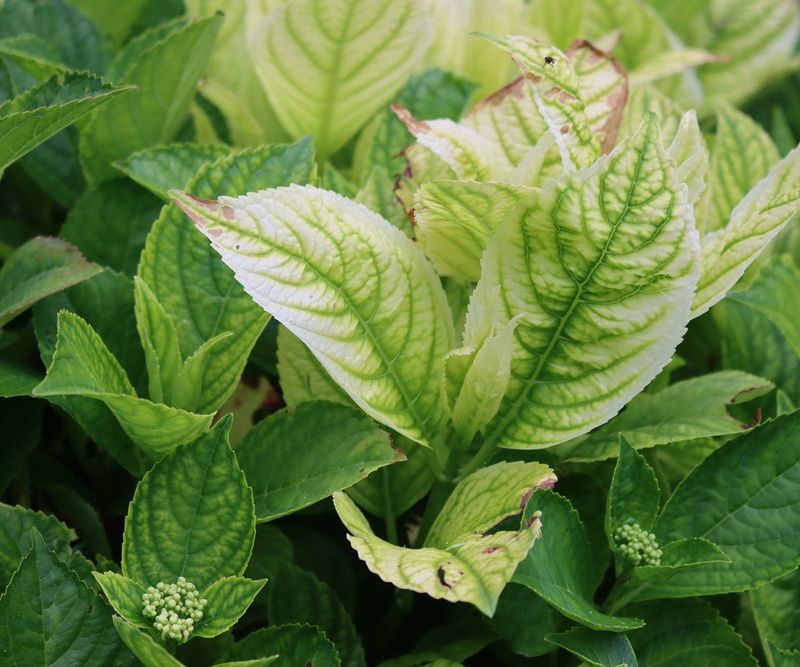
Are the veins inside the pale leaf still green? Are there spots, lesions, or dark tissue anywhere on the blade?
Are other stems showing similar signs? Each detail narrows the possibilities.
Cutting away discolored leaves does not correct poor drainage, dry roots, or nutrient availability problems. Removing visible symptoms while the real cause remains means the shrub will likely keep producing more of them.
Figure out what the foliage is telling you before removing anything substantial.
Brown Spots Turn Yellowing Into A Different Kind Of Clue
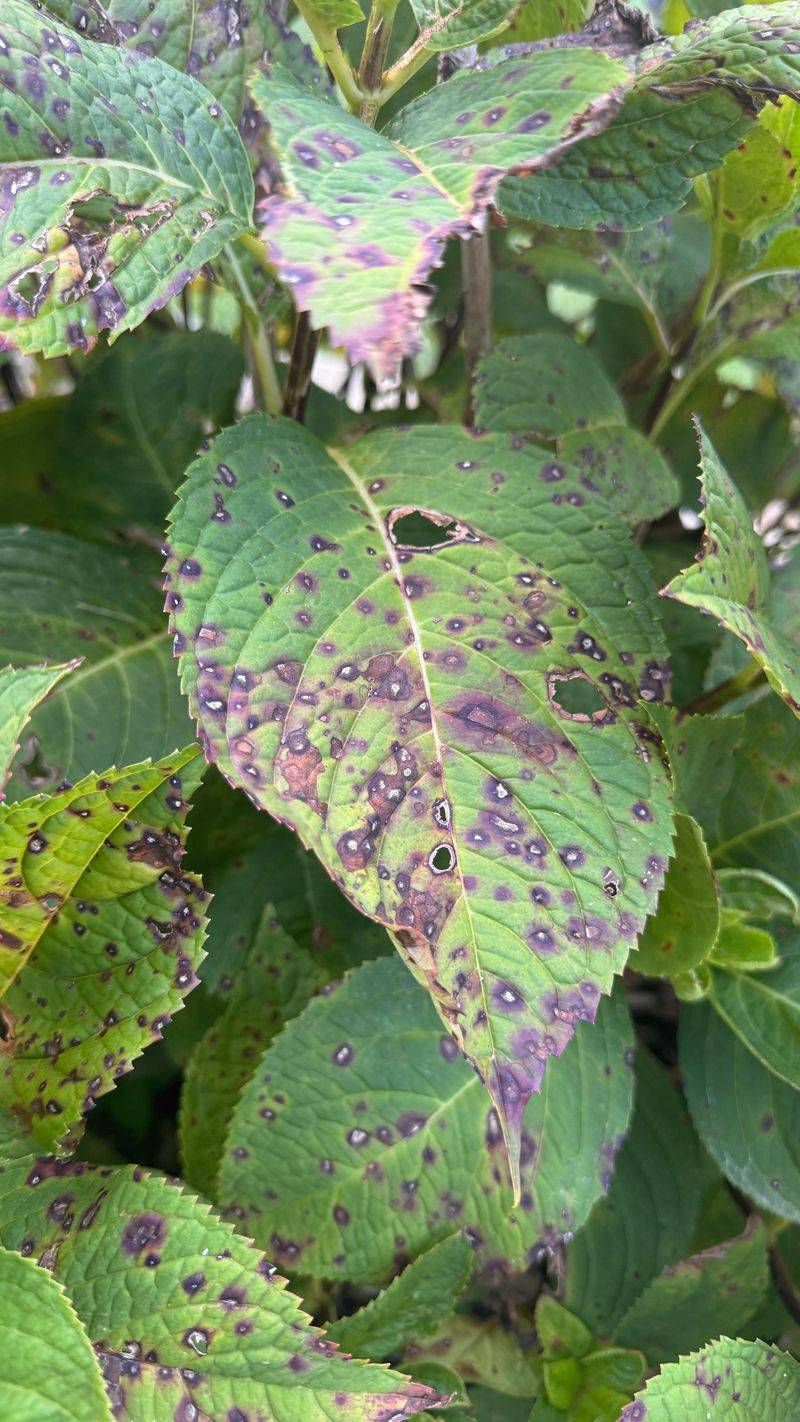
A pale leaf with no other markings tells one story. A pale leaf with distinct brown spots in the middle tells a different one.
When discrete lesions appear inside discolored tissue, disease becomes a more serious possibility worth investigating.
Cercospora leaf spot is one fungal disease that can affect hydrangeas. According to plant pathology resources from land grant universities, Cercospora infections often appear as circular to irregular lesions.
They may have a tan or brown center surrounded by a yellow border. Older, lower leaves tend to show symptoms first, and the disease is more common in warm, humid late-summer conditions in Ohio.
Not every brown spot is Cercospora, though. Other fungal pathogens, bacterial issues, and even physical damage from sun or wind can create brown tissue.
Your Ohio Garden Changes Every Week. Your Plan Should Too.
Gardening in Ohio changes quickly throughout the season. Every Friday you’ll receive a simple weekly plan showing exactly what to plant, prune, fertilize, harvest, and protect so you never miss the right timing.
Diagnosing from a single spot is not reliable. Look at multiple leaves across the shrub before drawing conclusions.
The distinction between general yellowing and yellowing that surrounds a defined lesion matters because it changes what you might do next. General pale foliage usually points toward environmental or nutritional causes.
Spotting with yellow halos is more likely to involve a pathogen. If a few leaves are heavily affected, selective removal of those specific leaves is a sanitation step, not a pruning session.
Healthy green leaves nearby should stay on the plant.
Rain Makes Wet Foliage A Bad Time For Cleanup
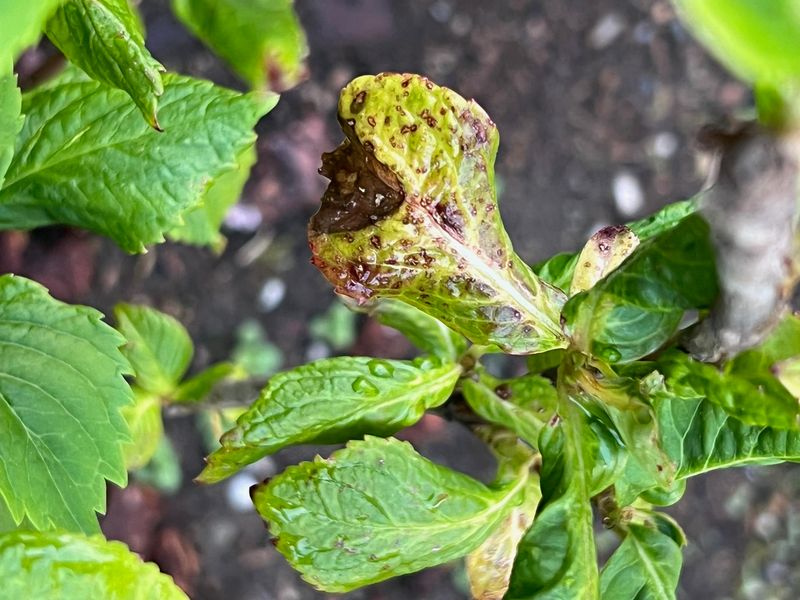
Rainwater still clinging to every leaf surface creates conditions worth thinking about before you head outside with pruning tools. Some foliar pathogens that affect hydrangeas can move through splashing water or through contact with contaminated plant material.
Handling wet, diseased foliage may spread spores or bacteria to other parts of the shrub or to nearby plants.
University plant pathology guidance generally recommends working with plants when foliage is dry. That advice exists because wet conditions can make sanitation less effective and potentially counterproductive when a pathogen is involved.
Waiting until leaves have dried out after a rain event is a reasonable approach when disease is suspected.
None of this means rainfall itself infects a hydrangea. The pathogen has to already be present.
Prolonged leaf wetness and warm temperatures can favor the development and spread of certain diseases. One rainstorm, however, does not automatically create a leaf spot problem.
The disease organism still has to be there.
The practical takeaway is about timing rather than urgency. If you have identified leaves that genuinely need removal for sanitation reasons, waiting for a dry stretch of weather makes that task more sensible.
Rain does not mean you must rush outside and strip foliage before the first drop falls. Quite the opposite: incoming Ohio wet weather is often a good reason to postpone cleanup, not accelerate it.
Soggy Soil May Be The Real Problem Below The Leaves
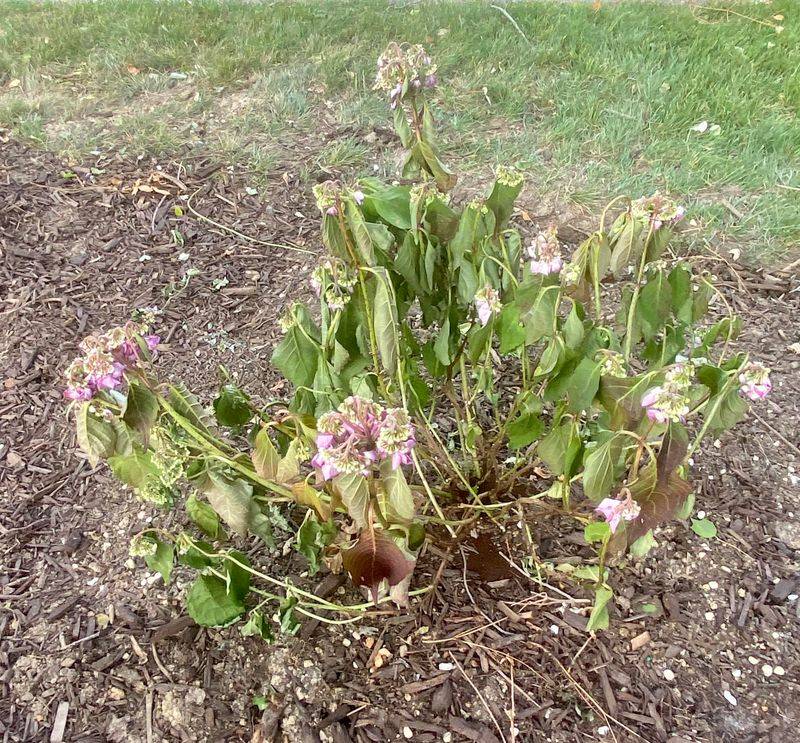
Muddy, compacted soil sitting around the base of a hydrangea after repeated Ohio summer rains can affect the plant in ways that show up in the foliage first. Roots need oxygen as well as moisture.
When the soil stays saturated for extended periods, air pockets in the root zone collapse, and root function can decline even without a named disease being present.
Reduced root function affects the plant’s ability to take up water and nutrients. That stress can appear in the leaves as discoloration, reduced vigor, or wilting that seems strange given how wet the ground is.
A shrub wilting in soggy soil is not asking for more water. It may be telling you that its roots are struggling to work properly.
Before assuming a foliage problem is the main issue, check the soil. Press your fingers into the bed near the base of the shrub.
If water pools immediately or the soil feels more like mud than moist earth, drainage is worth examining. Poor drainage can result from compacted soil, heavy clay content, low-lying topography, or the way the bed was originally constructed.
Removing yellow leaves from a waterlogged shrub does not address what is happening underground. The foliage change is a signal from the root zone.
Improving drainage or adjusting the planting site over time is a more useful response than any amount of leaf cleanup.
Dry Roots Can Cause Trouble Before The Rain Arrives
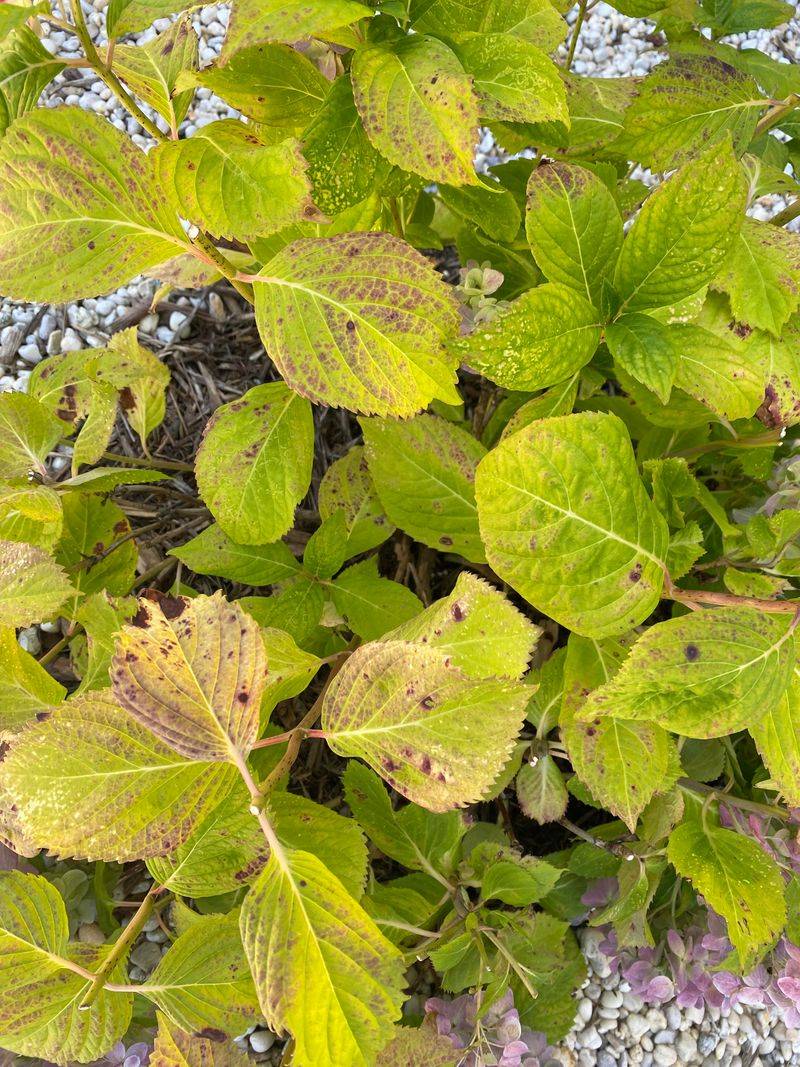
Cracked soil pulling away from the base of a hydrangea tells its own story, even when rain is in the forecast. A predicted storm later in the week does not mean the root zone has enough moisture right now.
Late summer heat in Ohio can draw moisture from soil quickly, and hydrangeas can begin showing stress before the situation becomes severe.
Possible signs of dry soil stress in hydrangeas may include wilting, browning along leaf edges, curling, and in cases of prolonged stress, some discoloration. Not all of these symptoms appear together, and some can overlap with other problems.
Midday wilt can sometimes happen even when soil moisture is reasonable, because transpiration demand from heat temporarily outpaces water uptake.
Checking the soil directly is more informative than waiting for a forecast. Push a finger or a screwdriver a few inches into the bed.
If the soil is dry well below the surface, the plant may need water now rather than later. Do not assume a coming storm will deliver enough to fully rehydrate the root zone.
Leaf removal does not help a thirsty root system. Once leaf tissue is badly damaged from drought stress, its appearance may not fully recover even after conditions improve.
The focus should be on soil conditions, not on tidying up foliage that reflects a problem still present underground.
Green Veins On Pale Leaves Point Toward Iron Chlorosis
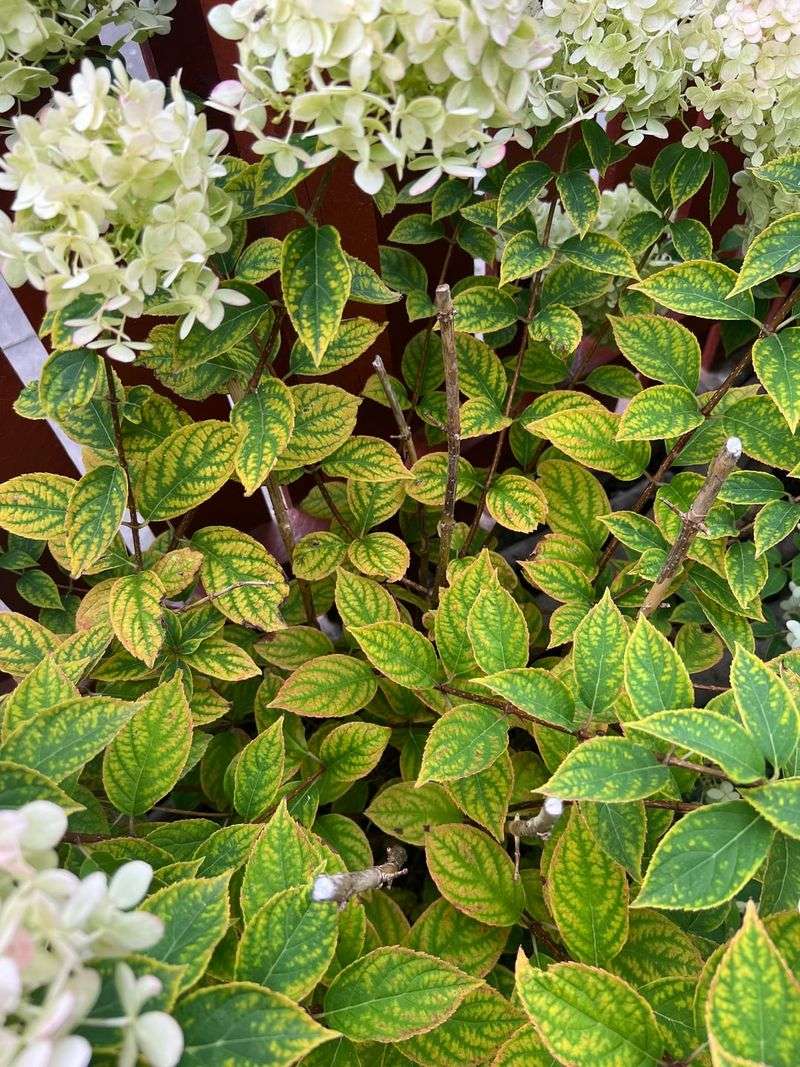
Pale new growth crossed by darker green veins is one of the more distinctive patterns a hydrangea can display. When the tissue between the veins fades to a light yellow or cream while the veins themselves stay green, that pattern is associated with iron chlorosis.
It tends to show up more noticeably on younger leaves near the growing tips.
Iron chlorosis does not always mean the soil lacks iron. More often, iron is present but unavailable to the plant.
High soil pH is a common reason. When soil pH rises above the range where iron remains soluble, roots cannot absorb it effectively even when it exists in the soil.
The result is foliage that looks pale and undernourished despite adequate fertilizing.
Soil and pH conditions vary across local landscapes, and what causes chlorosis in one garden bed may not apply to the next. A soil test is the most reliable way to understand what is actually happening below the surface.
Adding iron products or acidifying amendments without knowing current pH can create new problems rather than solving existing ones.
Removing chlorotic leaves does not correct the soil chemistry behind them. New growth will continue to look pale if the underlying availability issue is not addressed.
The interveinal pattern is the clue worth paying attention to, and a soil test is the logical next step before reaching for any amendment or product.
Cutting Healthy Stems Can Risk Future Flowers
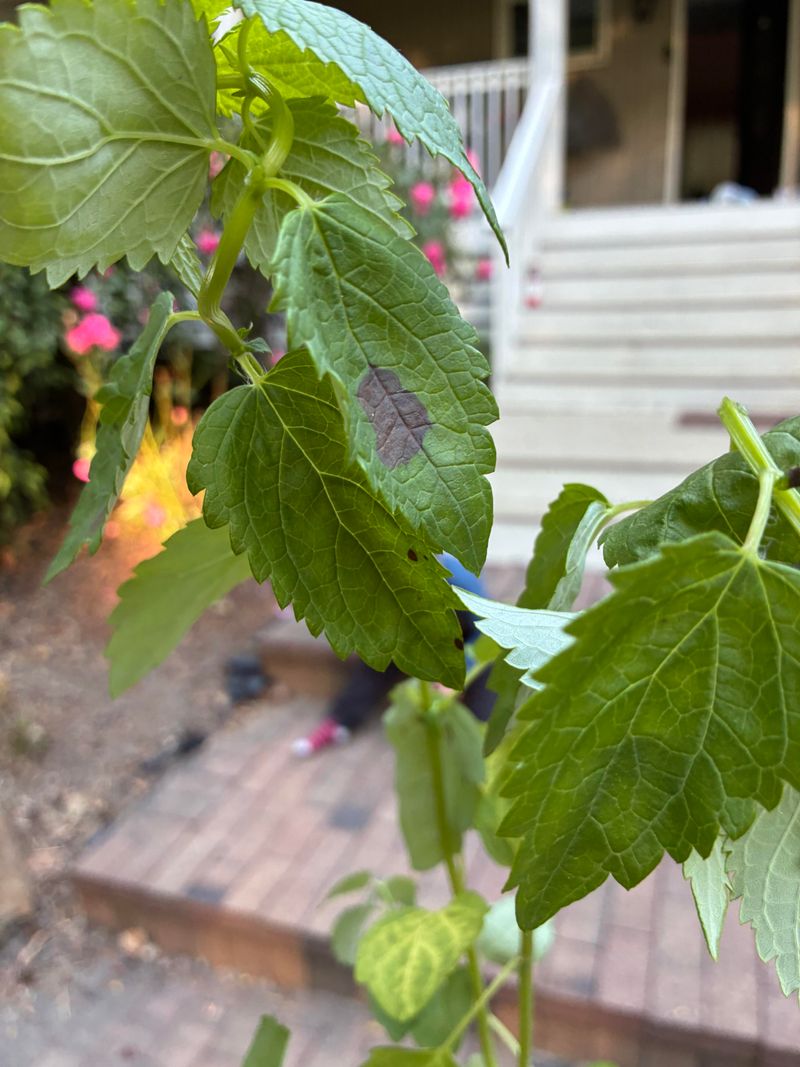
One spotted leaf sitting on an otherwise healthy stem creates a specific decision point. Removing that single leaf is a targeted, minimal action.
Cutting the stem it grows on is something else entirely. In late summer, that distinction can have real consequences depending on which type of hydrangea you are growing.
Bigleaf hydrangeas, known botanically as Hydrangea macrophylla, bloom on old wood. Flower buds for the following season can begin forming on current-year stems as summer moves into fall.
Extension guidance from several land grant universities supports the idea that these buds may be present by late summer or early autumn. Removing healthy stems now could mean removing next year’s flowers along with them.
Smooth hydrangeas (Hydrangea arborescens) and panicle hydrangeas (Hydrangea paniculata) bloom on new wood produced the same season. Their pruning biology is different, and late summer stem removal carries less risk for next year’s bloom.
Reblooming bigleaf cultivars can set buds on both old and new wood, which gives them more flexibility, though unnecessary stem cutting is still not advisable.
The practical point is straightforward. Do not shorten healthy stems just because some leaves look off.
If a leaf needs to come off, remove the leaf. Leave the stem it grew from intact unless there is a clear structural or disease reason to cut it.
Cosmetic appearance is not a sufficient reason to prune in August.
Knowing Your Hydrangea Type Changes Every Pruning Decision
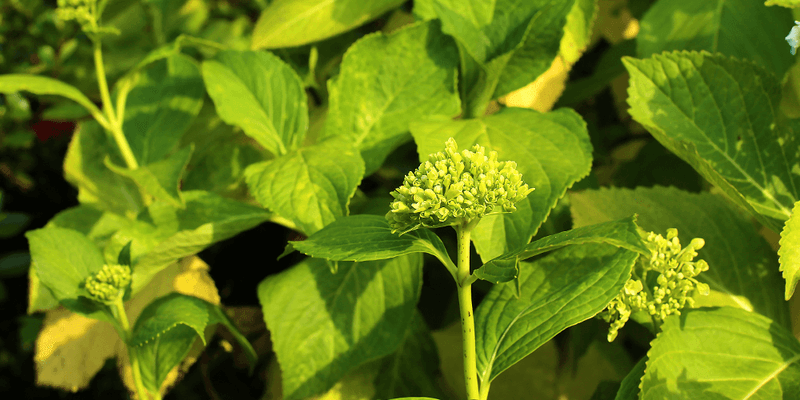
Not all hydrangeas in Ohio share the same pruning biology, and a rule that works well for one species can cause real setbacks in another.
Understanding which type you have growing in your garden is one of the most practical things you can do before making any cutting decision in late summer.
Bigleaf hydrangeas (Hydrangea macrophylla) and oakleaf hydrangeas (Hydrangea quercifolia) typically bloom on old wood. That means stems that grew last year carry this year’s flowers.
Cutting those stems in August removes the wood that holds next season’s potential buds. Even removing leaves from those stems should be done carefully to avoid snapping or damaging the bud sites.
Panicle hydrangeas (Hydrangea paniculata) and smooth hydrangeas (Hydrangea arborescens) bloom on new wood produced in the current growing season.
They are generally pruned in late winter or early spring before new growth begins, and late summer leaf cleanup on these types carries less risk to next year’s flowers.
That said, unnecessary stem removal is still not recommended just because foliage looks imperfect.
Reblooming bigleaf cultivars can produce flowers on both old and new wood, which gives them a wider window of tolerance. Even so, they benefit from minimal late-season cutting.
Identify your specific hydrangea type before deciding whether to remove leaves or cut stems. That helps prevent you from applying the wrong approach to the wrong plant.