Native Ohio Ground Covers That Fill In Bare Spots Before Fall
Bare spots in an Ohio garden have a short window left before the season closes out and whatever fills them does so on its own terms. Weeds are already making their case.
The question is whether something worth having gets there first. Native Ohio ground covers planted now have enough warm weeks to establish before fall arrives and root development slows.
They will not fill completely by October. But they will claim the ground, hold it through winter, and arrive at spring already ahead of whatever was competing for that space.
That head start is worth more than it sounds in an Ohio garden bed that has been losing the bare spot battle for multiple seasons. The right native ground cover for a bare spot depends on what surrounds it.
Sun, shade, moisture, soil type. Several natives cover that range and do it without demanding anything complicated from the gardener putting them in.
1. Wild Strawberry Sends Runners Into Sunny Gaps
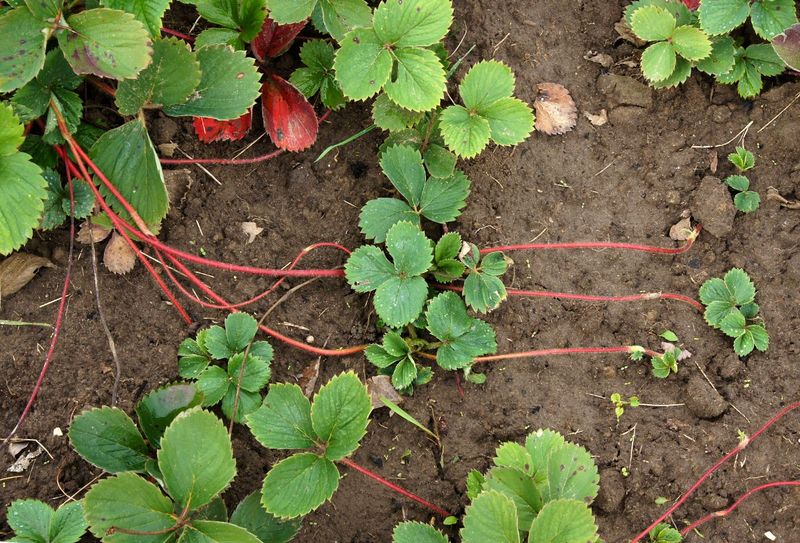
A sunny border with open soil between established perennials is exactly where wild strawberry, Fragaria virginiana, earns its place.
This Ohio native spreads by sending out horizontal runners that root at nodes, producing new plants wherever they make contact with soil.
Under favorable conditions, healthy plugs can begin extending runners within a few weeks of planting.
Spacing plugs about 12 inches apart gives each plant room to spread while still producing visible coverage relatively quickly. Closer spacing, around 8 to 10 inches, can create a denser look before fall without overcrowding.
Each plant stays low, typically under 6 inches tall, with a spread that widens as runners take hold across open ground.
The three-part, toothed leaves are easy to recognize, and white flowers appear in spring. Late-summer planting will not produce flowers right away, so the focus here is on foliage and runner production.
Small red fruit may appear the following season, though birds tend to reach it before people do.
Wild strawberry works well along sunny slopes, meadow edges, and open spaces between larger native plants. Runners can wander beyond their intended area, so check the edges periodically and redirect or trim any growth heading toward paths or neighboring beds.
New plugs need consistent moisture even though established plants can handle occasional dry spells. Purchase only from reputable native plant nurseries.
2. Golden Ragwort Builds A Leafy Shade Carpet
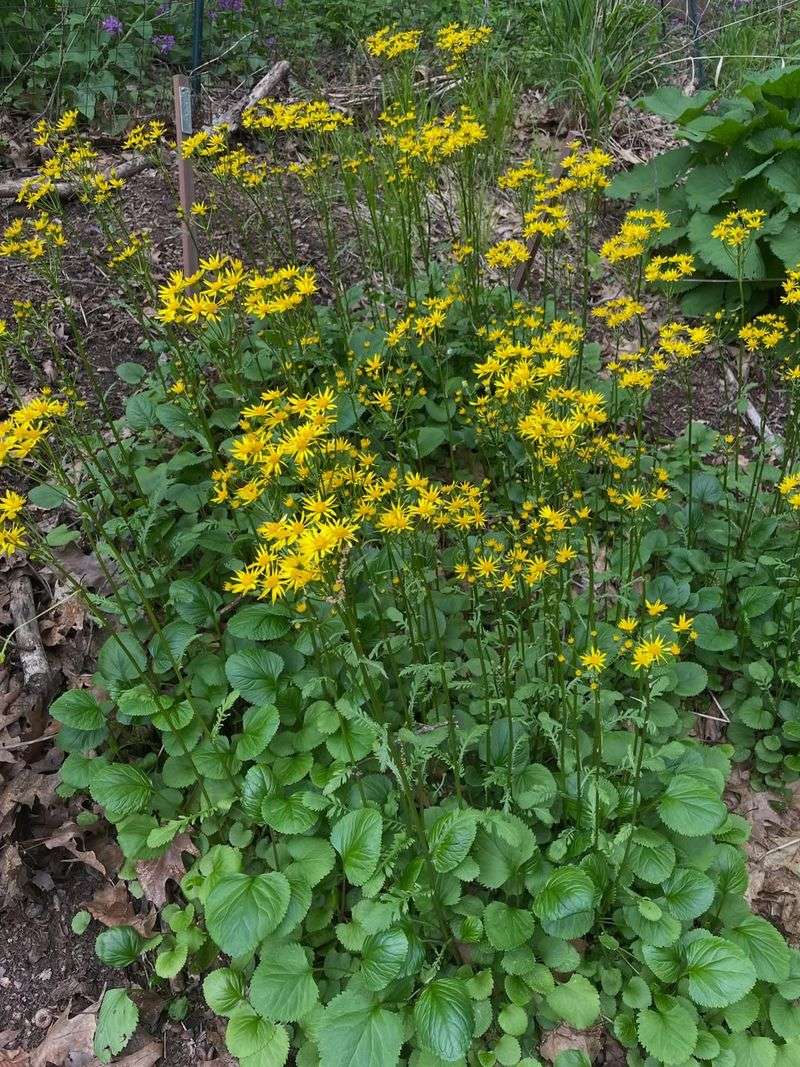
A shaded bed where thin mulch has broken down and bare soil shows through is a practical candidate for golden ragwort, Packera aurea.
This Ohio native forms low rosettes of rounded, dark green leaves that hug the ground and spread through a combination of rhizomes and self-seeding.
Under favorable conditions, established colonies can expand noticeably from one season to the next.
The bright yellow flower stalks that rise in spring are a well-known feature, but by late summer the focus shifts to the ground-level foliage. Those basal rosettes persist after flowering and continue to cover soil through the growing season.
Planting divisions or plugs now means readers can expect leafy rosettes to fill small gaps before frost arrives, though a connected colony takes more time.
Your Ohio Garden Changes Every Week. Your Plan Should Too.
Gardening in Ohio changes quickly throughout the season. Every Friday you’ll receive a simple weekly plan showing exactly what to plant, prune, fertilize, harvest, and protect so you never miss the right timing.
Part shade suits golden ragwort well. Woodland edges, areas beneath high-canopy trees, and shaded foundation beds all provide appropriate conditions.
Reliable soil moisture improves its appearance during hot stretches, and it may look stressed during extended dry periods in exposed spots.
Space transplants about 12 inches apart and water them consistently while roots develop. Golden ragwort can spread more freely than expected in moist, fertile soil, so place it where that habit is welcome rather than in a tightly controlled bed.
Thin unwanted seedlings or rhizome extensions each spring to keep the planting within its intended boundaries.
3. Common Blue Violet Softens Bare Corners
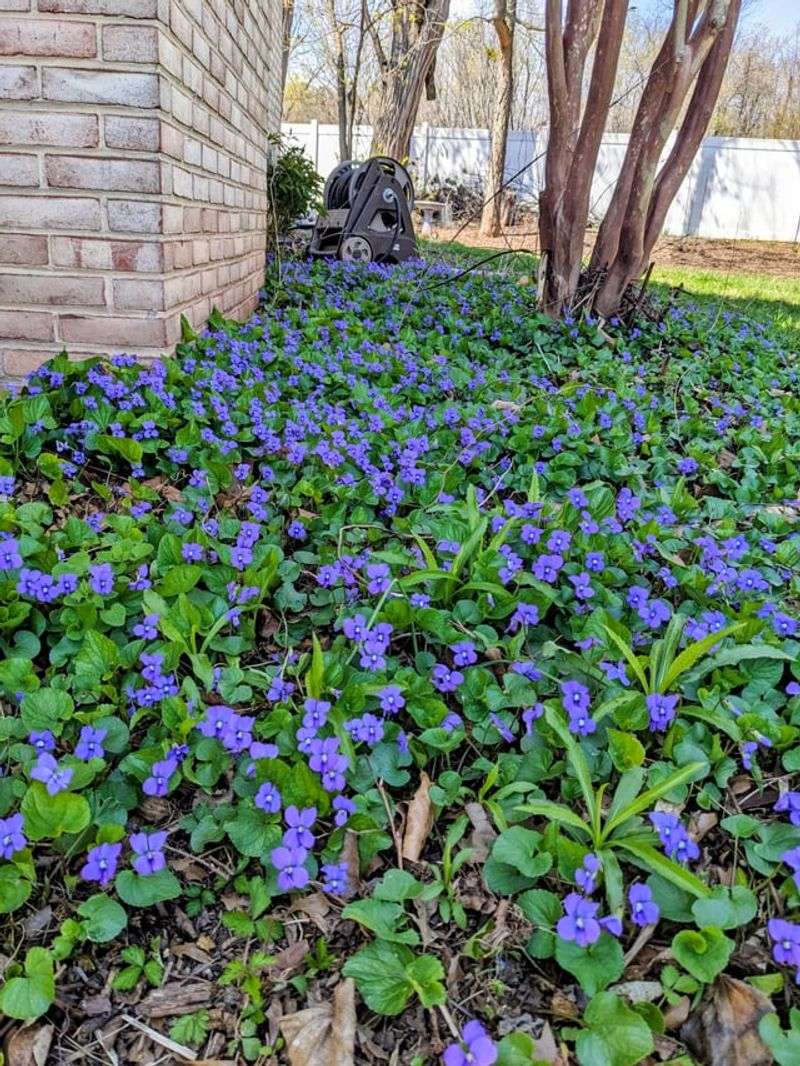
An informal border or lightly shaded corner is a place where a rigid, uniform ground cover would look stiff and out of place. That’s exactly where common blue violet, Viola sororia, fits naturally.
Its heart-shaped leaves form low clumps that settle into small gaps between larger plants, giving a bed a relaxed, layered appearance. Short rhizomes and self-sowing allow it to establish small colonies over time.
The violet-blue flowers that appear in spring are a familiar sight in regional gardens, but late-summer planting shifts the focus to foliage and clump development.
Leaves can look tired or sparse during a dry, hot August, especially in sites without supplemental moisture.
Providing consistent water after planting helps new transplants establish before temperatures drop.
Common blue violet tolerates a range of light conditions, from full sun to part shade. It often performs best under open-canopy trees or along informal Ohio woodland edges.
It works well in spaces among taller native plants where a softer, lower layer is needed. Rich, somewhat moist soil supports stronger growth, but average garden soil is usually acceptable.
Seedlings can appear outside the original planting area, and readers who prefer a tidy garden may need to remove unwanted volunteers each spring.
Its relationship with fritillary butterfly caterpillars, which rely on violets as a host plant, adds ecological value that goes beyond simple soil coverage.
Source plants from a reputable native nursery rather than collecting from natural areas.
4. Wild Ginger Links Shady Patches With Broad Leaves
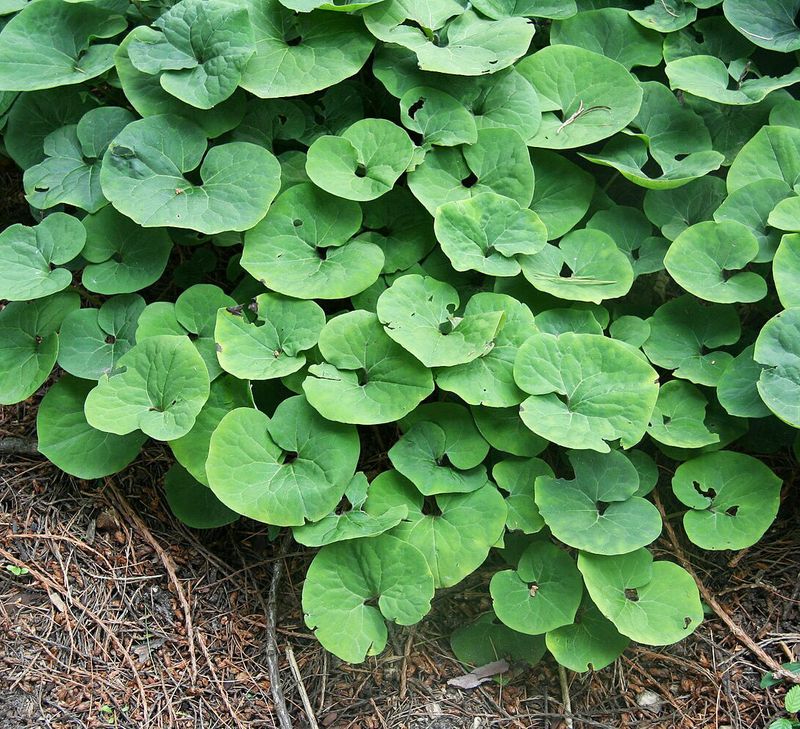
Deeply shaded spaces where turf thins out and sun-loving plants cannot survive are exactly the kind of spots where wild ginger, Asarum canadense, earns its place.
Its broad, heart-shaped leaves form a low canopy close to the ground, covering soil in a way that few other shade plants can match.
Underground rhizomes allow established plants to expand gradually into neighboring open areas.
Gradual is the right word here. Wild ginger is not a rapid solution for covering a large bare area before fall.
Closely spaced plugs, planted about 6 to 8 inches apart, may provide visible foliage coverage sooner than widely spaced plants. A fully connected colony, however, can take two or more growing seasons to develop.
Setting realistic expectations helps avoid disappointment.
Moist, well-drained soil with organic matter suits it best. Fallen leaves from deciduous trees serve as natural mulch and improve soil texture over time.
Avoid piling heavy mulch directly over the crowns, as that can hinder growth rather than support it.
Wild ginger is not the culinary ginger used in cooking, and no medicinal or edible use should be assumed. It is well suited to shaded foundation beds, woodland gardens, and spaces beneath deciduous trees.
New plugs need consistent moisture even after planting in a naturally cool, shaded site. Source plants from a reputable Ohio nursery that propagates them responsibly.
5. Creeping Phlox Trails Across Open Ground
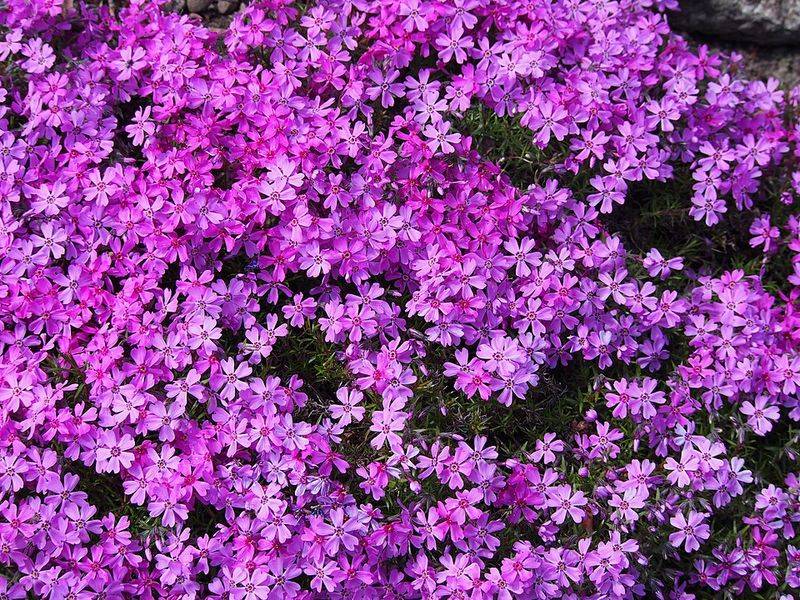
Along a sunny edge, low foliage often needs to soften stone borders, pathway edges, or patches of exposed soil. Creeping phlox, Phlox subulata, offers a mat-forming option with real staying power.
Its trailing stems spread outward and create a low, dense layer of narrow, evergreen foliage. Stems can root where they contact soil, gradually extending the plant’s footprint across open ground.
Full sun and sharp drainage are non-negotiable for this species. Soggy soil, areas where water pools, and dense shade will not support healthy growth.
Slopes, rock gardens, and sunny borders with gritty or sandy soil suit it well. Late-summer planting can work, but the mat will not expand dramatically before fall.
Expect the plant to root in and begin extending slowly as temperatures cool.
Spacing plugs about 12 to 18 inches apart gives each plant enough room without leaving too much bare ground between them. Keeping competing weeds away while new plants establish is one of the most practical things a gardener can do during this period.
Weeds grow faster than newly planted ground covers, especially in warm August soil.
Creeping phlox produces a strong spring floral display, but late-summer planting will not trigger new blooms. The dense foliage is the primary contribution at this stage.
Named garden cultivars are widely available, but the straight native species offers the most reliable ecological fit for regional plantings. Purchase from a nursery that sources responsibly propagated native stock.
6. Wild Stonecrop Tucks Into Rocky Gaps
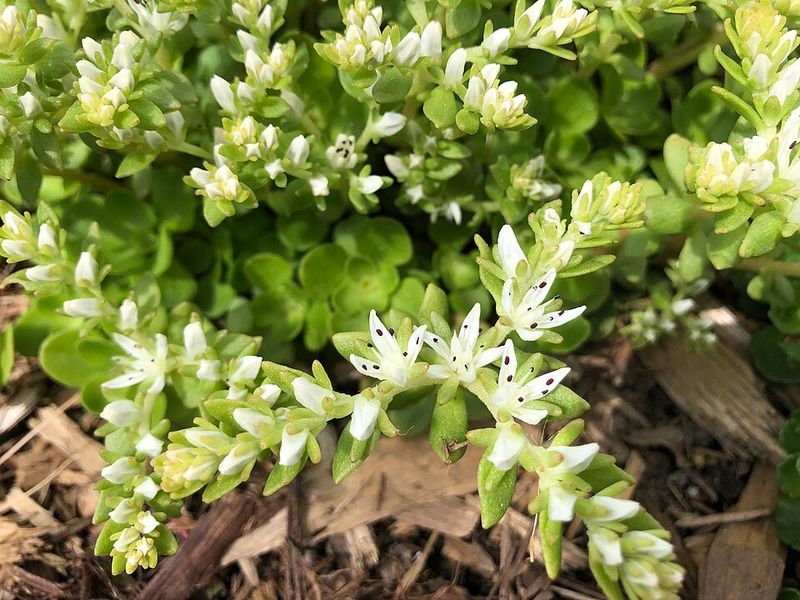
Rocky crevices, uneven shaded patches, and the edges of stone walls are spaces where most ground covers simply cannot get a foothold. Wild stonecrop, Sedum ternatum, handles those conditions with a compact, creeping habit that suits irregular terrain.
Its fleshy, rounded leaves form low clusters that spread by creeping stems, which can root at nodes and gradually fill small gaps.
Unlike many ornamental sedums sold at garden centers, wild stonecrop prefers light shade and consistent moisture rather than full sun and dry soil. Woodland edges, shaded rock gardens, and the bases of north-facing slopes are appropriate placements.
Avoid putting it in a hot, south-facing bed that dries out quickly in summer, as that setting does not match its natural habitat.
White star-shaped flowers appear in spring, but late-summer planting puts the focus on foliage and establishment rather than blooms. The fleshy leaves do retain some moisture, but that does not eliminate the need for regular watering after planting.
Shallow, rocky soil can dry out faster than it appears, especially during warm August days.
Space plugs about 8 to 10 inches apart and keep the soil evenly moist while roots develop. Wild stonecrop is not built for foot traffic, so place it where people will not walk across it.
Stepping stone paths, shaded rock gardens, and the edges of woodland beds are all practical locations. Source plants from a reputable Ohio native nursery.
7. Plantain Leaf Pussytoes Mats Over Dry Soil
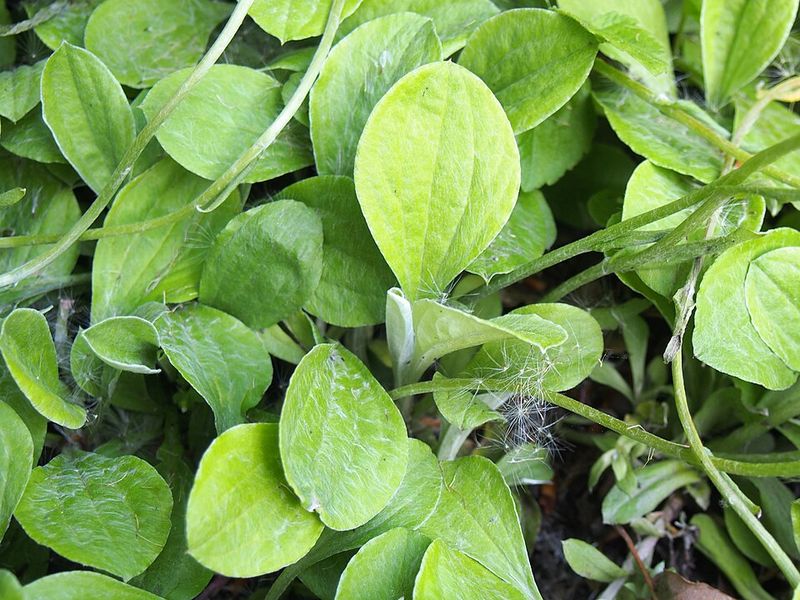
Dry, sunny patches where richer soil and frequent watering are neither practical nor possible call for a plant that genuinely tolerates lean conditions. Plantain-leaved pussytoes, Antennaria plantaginifolia, fits that description well.
Its gray-green basal leaves form a low mat close to the ground, and creeping stolons allow established plants to extend outward and colonize open areas over time.
The silvery, spoon-shaped leaves have a soft, slightly woolly texture that stands out against bare or gravelly soil. Small, fuzzy white flower clusters appear on upright stalks in spring, but late-summer planting will not produce a flowering display.
The value at this stage comes from the mat-forming foliage and the plant’s ability to begin spreading across exposed ground before frost.
Wet, rich, or heavily fertilized soil does not suit plantain-leaved pussytoes. It performs best where drainage is sharp and fertility is low.
Dry slopes, sunny rock gardens, edges of gravel paths, and open areas with minimal competition are appropriate placements. Competing grasses and aggressive weeds can crowd it out, so clearing the planting area thoroughly before setting plugs is a worthwhile step.
Space plugs about 10 to 12 inches apart for reasonable coverage over time. A small number of plugs will not close a wide gap within a single season, so set realistic expectations.
Even though established plants handle dry conditions well, newly planted plugs need consistent moisture while their roots develop in late-summer heat.
8. Canada Anemone Claims Room To Roam
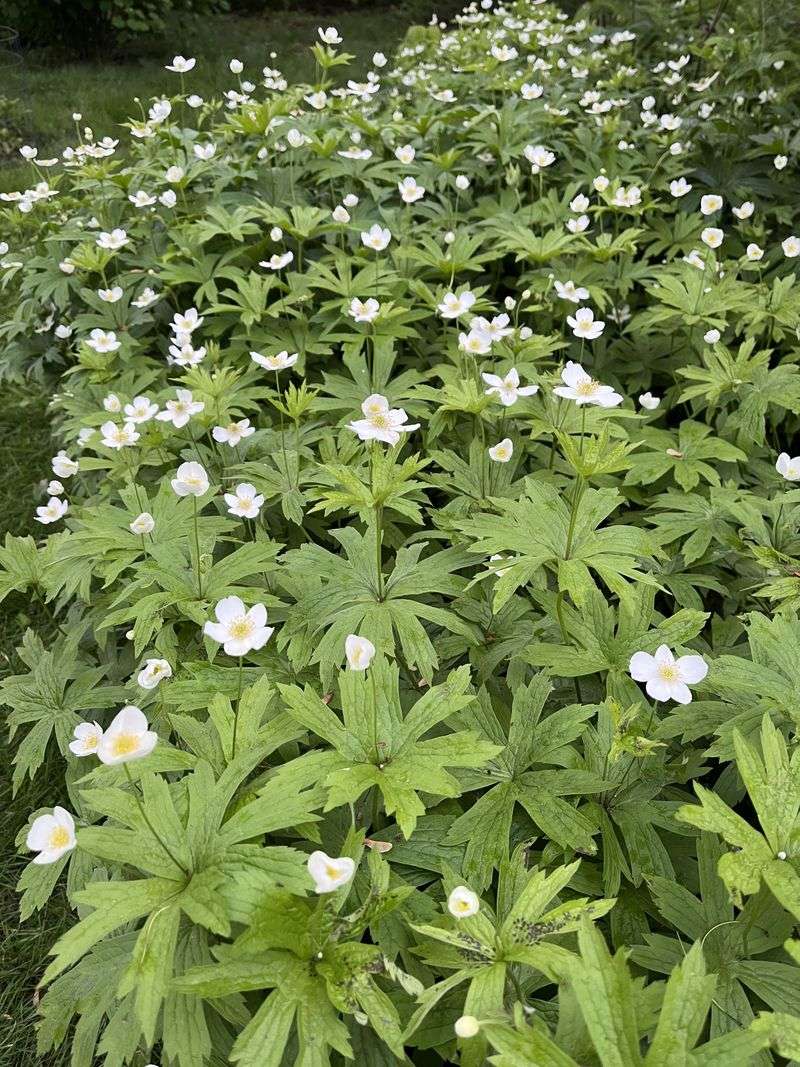
Broad naturalized areas, moist meadow edges, and rain-garden margins are the right setting for Canada anemone, Anemone canadensis. This plant needs space to express its full character.
Rhizomes spread steadily underground, producing new shoots and extending the colony across open ground with real determination. Its divided, deeply lobed leaves create a mid-height layer that covers soil more like a living thicket than a flat carpet.
At 12 to 24 inches tall, Canada anemone sits higher than conventional carpet-style ground covers. That height makes it a better fit for naturalistic plantings than for a formal front border.
White flowers with yellow centers appear in late spring and early summer, but late-summer planting will not trigger blooms. The focus now is on rhizome expansion and foliage coverage before the season changes.
Moist soil suits it well, and it can handle periodic flooding in rain-garden settings. Dry, well-drained soil slows its spread considerably.
Avoid placing it beside slow-growing or delicate species, because its rhizomes can overtake neighbors that cannot keep pace. Spacing plants about 18 to 24 inches apart and installing a physical root barrier along bed edges can help contain future spread.
Plan for annual thinning once the colony establishes. Removing outer rhizomes in spring keeps the planting within its intended boundaries without much effort.
Canada anemone is a strong performer in the right location. Placing it thoughtfully from the start prevents the kind of management headaches that come from planting it somewhere too small or too structured.