7 Signs A Raccoon Has Been Visiting Your Georgia Yard While You Sleep
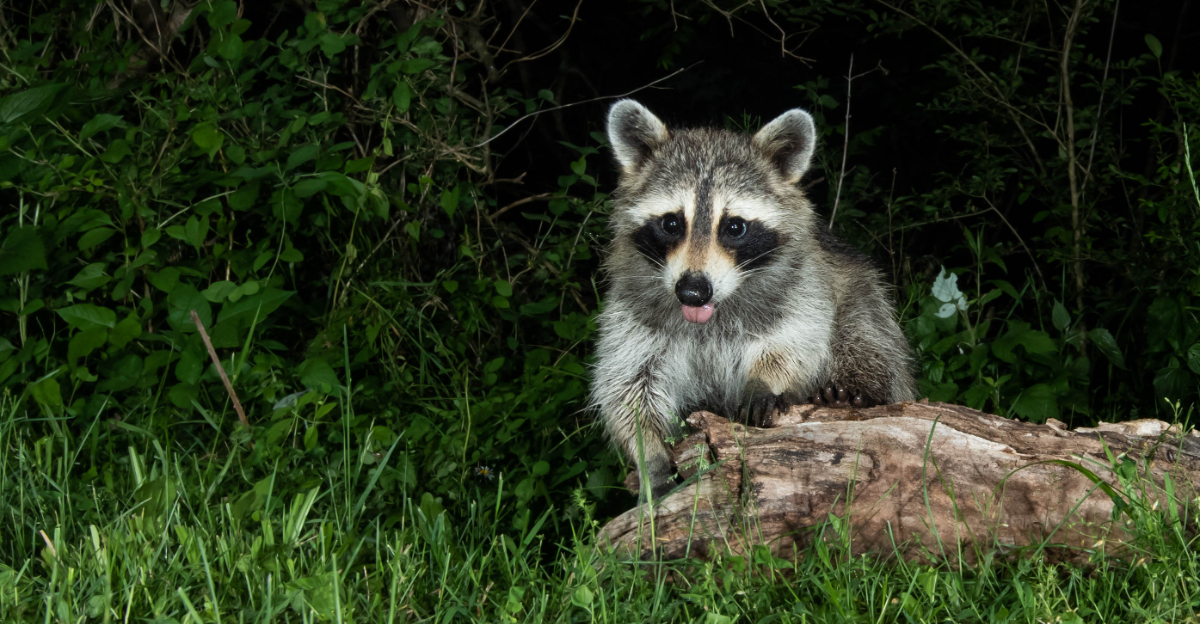
Messed up trash cans, scattered mulch, and holes showing up overnight usually point to raccoons in a Georgia yard. These visits often happen quietly, so the only clues are what gets left behind by morning.
Raccoons tend to return to the same spots once they find an easy food source. Small disturbances can turn into a pattern, especially around gardens, compost, or pet feeding areas where they keep checking back.
Noticing those signs early makes it easier to deal with before the damage spreads or becomes a routine.
Once the clues start to repeat, it becomes clear what has been visiting and why it keeps coming back.
1. Trash Cans Tipped Over Or Lids Pulled Off Overnight
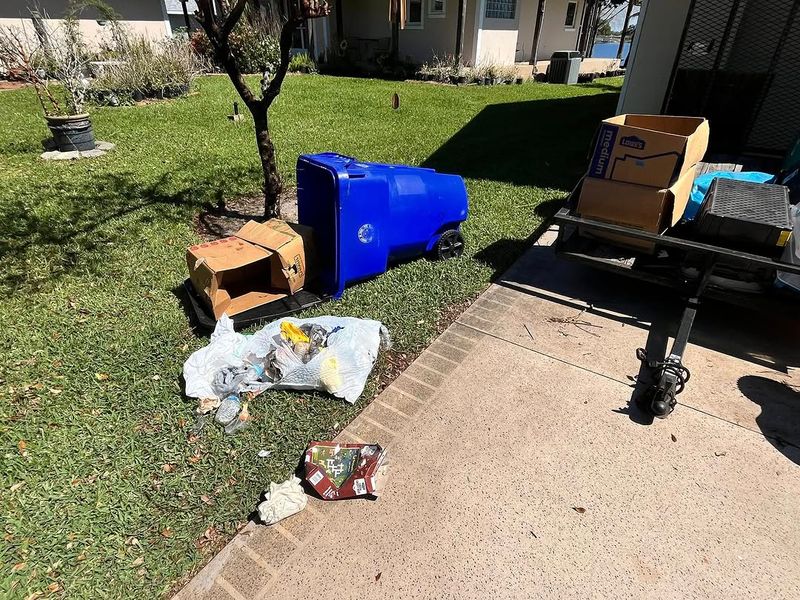
Nothing starts a morning off worse than stepping outside to find your trash can flipped on its side with garbage spread across the driveway. Raccoons are remarkably strong for their size, and pulling a lid off a standard trash can takes almost no effort for them.
Georgia homeowners deal with this particular problem constantly, especially in neighborhoods that border wooded areas or parks.
What makes raccoons so effective at raiding trash is their hand-like front paws. Those paws allow them to grip, twist, and pry open containers in ways most people would not expect from a wild animal.
Bungee cords and basic clip-on lids rarely stop a determined raccoon, especially one that has already learned your garbage schedule.
Raccoons are creatures of habit. Once they find a reliable food source, they come back to it night after night until something changes.
If your trash can has been tipped even once, expect a return visit. Switching to a heavy-duty can with a locking lid is one of the most effective ways to break the cycle.
Storing your bins in a garage or shed until collection morning is another solid option for Georgia residents.
2. Scattered Food Scraps Left Around The Yard
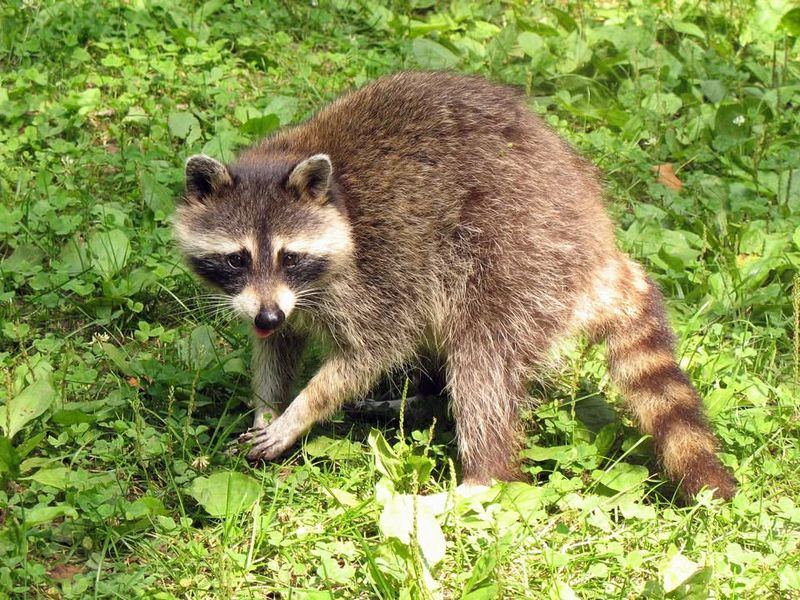
Waking up to random pieces of food scattered across your lawn is a pretty reliable sign something was foraging in your yard overnight. Raccoons are opportunistic eaters, meaning they will eat almost anything they come across, from fruit that fell off a tree to leftover crumbs near an outdoor grill.
Across Georgia, this kind of mess is especially common in late summer and fall when natural food sources start to thin out.
One thing that sets raccoon feeding behavior apart from other animals is how scattered the scraps tend to be. Raccoons do not sit in one spot and eat neatly.
They grab food, move around, drop pieces, pick up something else, and leave a wide trail of evidence across a yard. You might find a chicken bone near the garden bed and a bread crust by the fence, all from the same visit.
If you have fruit trees, compost bins, or an outdoor grill in your Georgia yard, those are the biggest attractants. Raccoons can smell fermenting fruit from a significant distance, and an uncovered compost pile is basically an open invitation.
Your Georgia Garden Changes Every Week. Your Plan Should Too.
Gardening in Georgia changes quickly throughout the season. Every Friday you’ll receive a simple weekly plan showing exactly what to plant, prune, fertilize, harvest, and protect so you never miss the right timing.
Securing compost containers with tight-fitting lids and cleaning your grill grates regularly can make a noticeable difference.
3. Small Hand Shaped Tracks Near Soil Or Mud
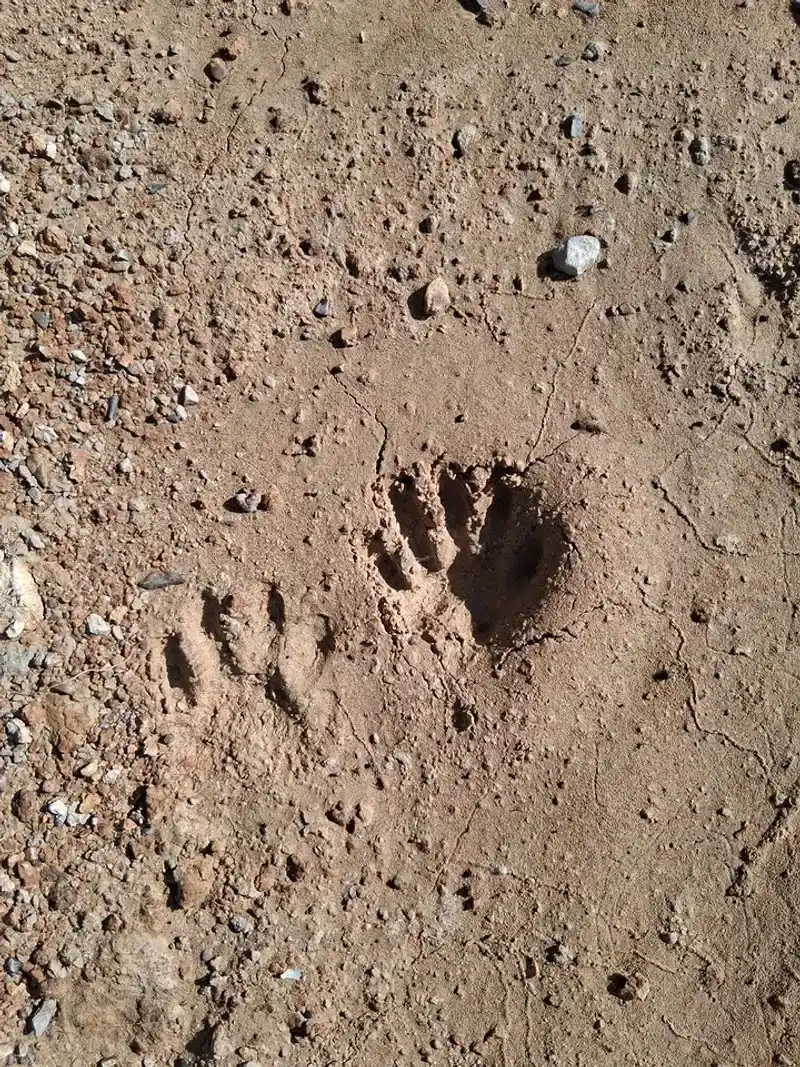
Raccoon tracks are genuinely one of the most distinctive animal prints you will ever see in a Georgia yard. Unlike dog or cat prints that look round and compact, raccoon tracks have five long, spread-out toes that look almost exactly like tiny human hands.
Front prints typically measure around two to three inches, while the back prints are slightly longer and more foot-shaped.
Soft soil near garden beds, muddy spots after rain, and areas around water features are the best places to spot these tracks. Georgia gets plenty of rain throughout the year, which means there are frequent opportunities for raccoons to leave clear impressions in softened ground.
If you find a set of these prints near your fence line or along a garden border, a raccoon was almost certainly moving through that area recently.
Tracks can tell you more than just whether a raccoon visited. The pattern of the prints reveals how the animal was moving.
A walking raccoon places its back foot near where its front foot just was, creating a paired print pattern. A running raccoon leaves a more clustered grouping of all four feet together, which looks almost like a bounding rabbit pattern.
Photographing the tracks can be helpful if you decide to contact a Georgia wildlife professional for advice. Knowing the size and pattern of the prints helps confirm the species and gives experts a clearer picture of what you are dealing with.
4. Holes Dug In Lawns While Searching For Grubs
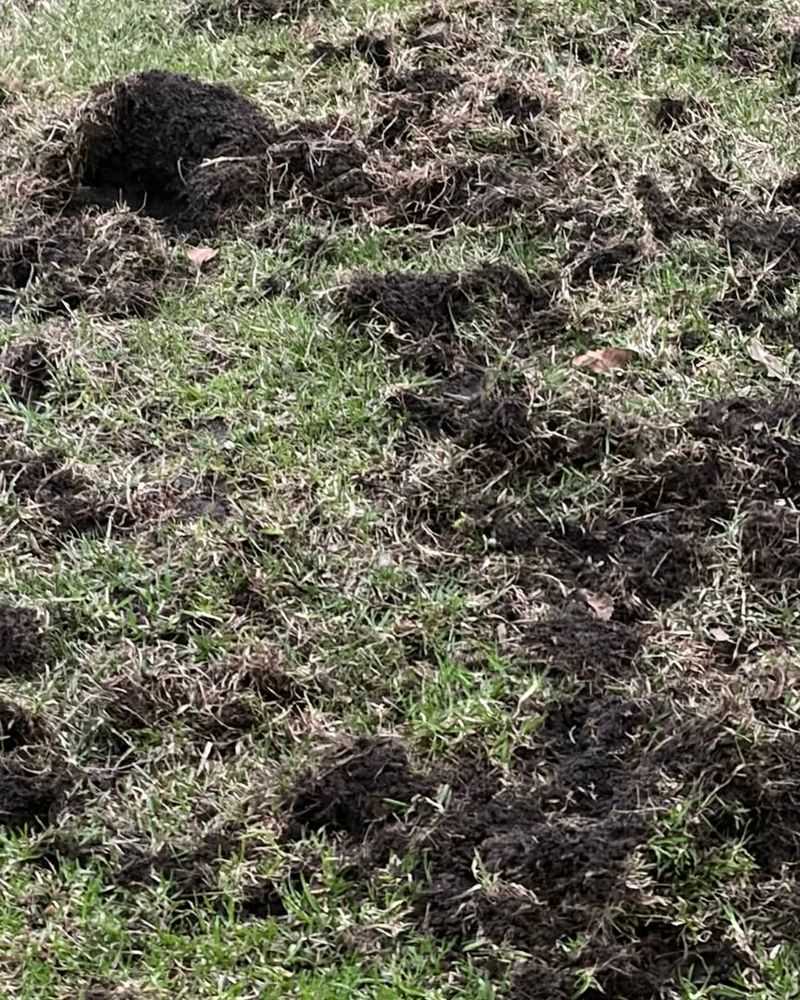
Patches of torn-up turf and small, irregular holes scattered across a lawn are a frustrating sight, but they are actually a very telling sign. Raccoons are excellent at detecting grubs and earthworms just below the soil surface, and they will roll back chunks of sod or dig shallow holes to get to them.
Georgia lawns, especially those with bermudagrass or zoysia, are particularly vulnerable during late summer when grub populations peak close to the surface.
What makes this behavior so destructive is that raccoons do not stop after one or two holes. A single animal can tear up a surprisingly large section of lawn in one night if the grub activity is dense.
Homeowners in suburban Georgia neighborhoods often mistake this damage for armadillo activity, but raccoon digging tends to be shallower and more widespread rather than concentrated in a single area.
Treating your lawn for grubs removes the food source that draws raccoons in the first place. Several grub control products are available at garden centers across Georgia, and applying them in early to mid-summer can significantly reduce the grub population before raccoons start actively foraging.
It is worth checking with a local extension office to confirm timing for your specific region.
Watering your lawn less frequently in late summer can also help, since dry soil pushes grubs deeper where raccoons have a harder time reaching them.
5. Pet Food Bowls Emptied Or Moved Overnight
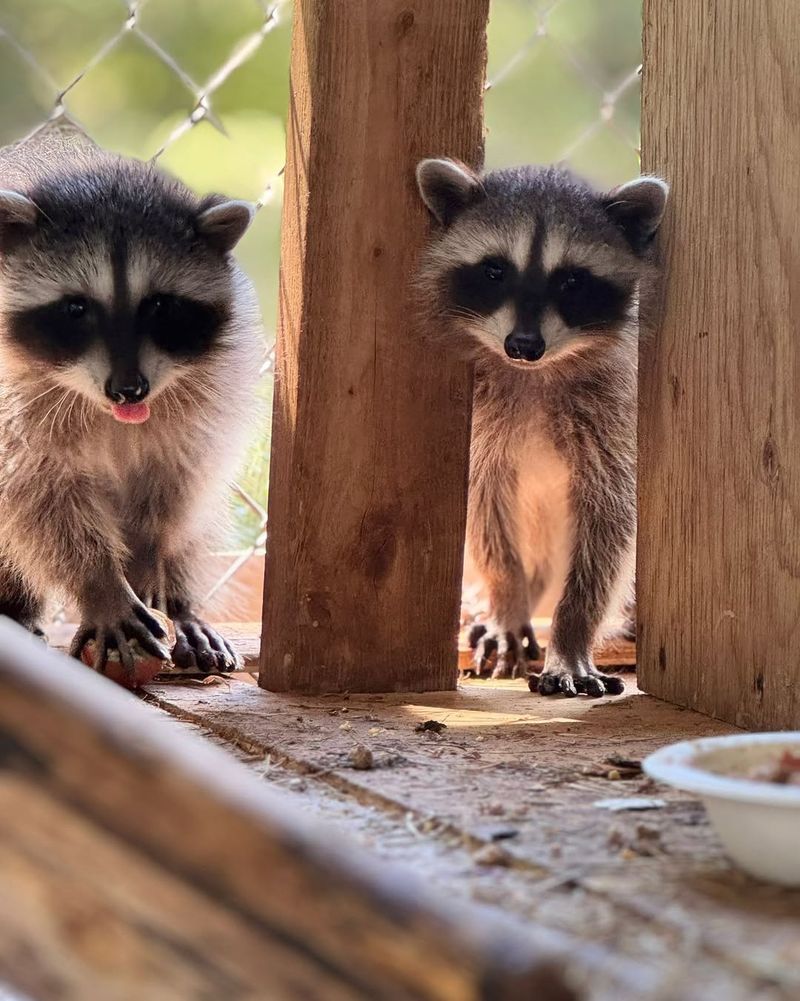
Leaving pet food outside overnight is one of the most reliable ways to attract raccoons to a Georgia yard. Cat food and dog food both carry strong, meaty smells that raccoons can detect from a long distance.
If you walk out in the morning and find an empty bowl that you know had food in it the night before, a raccoon is near the top of the suspect list.
Raccoons do not just eat the food and leave quietly. They often drag bowls around, tip them over, or push them off porches entirely while trying to get every last piece.
Lightweight plastic bowls are especially easy for them to move. Homeowners sometimes find their pet’s bowl in a completely different part of the yard, which can seem confusing until you understand how physically capable raccoons actually are with their front paws.
Bringing pet food bowls inside before dark is the single most effective way to eliminate this problem. Even if your pet is an outdoor cat that grazes throughout the night, switching to a timed feeder that stays closed between feedings can dramatically reduce raccoon access.
Motion-activated lights near feeding areas also tend to startle raccoons and interrupt their visits.
Georgia has a large population of feral and outdoor cats, and many well-meaning residents put out community cat food stations that inadvertently attract raccoons in large numbers.
6. Scratch Marks On Fences Or Wooden Surfaces
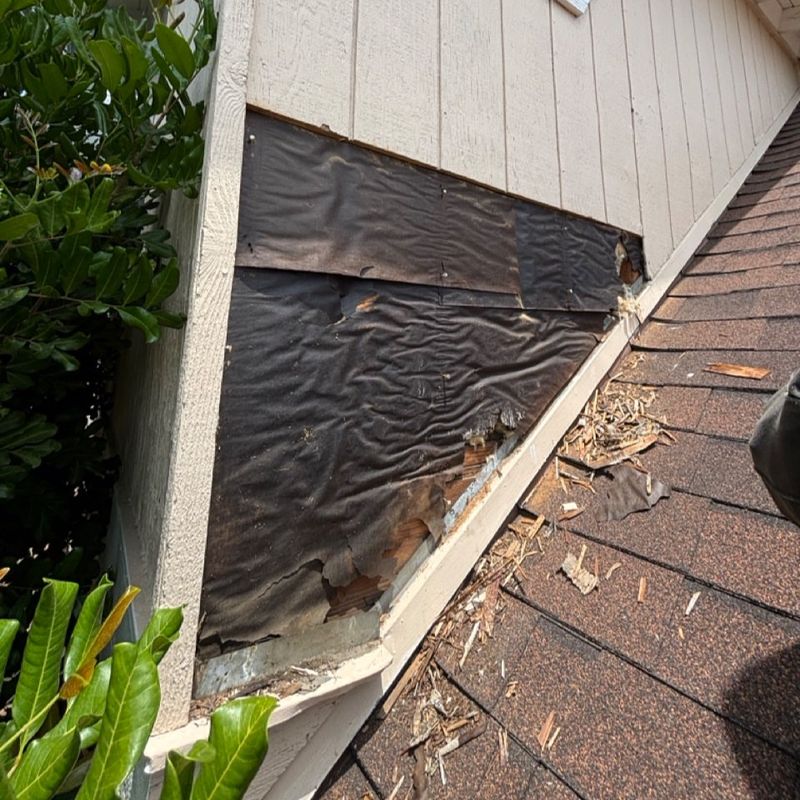
Scratch marks on fences, deck railings, and wooden posts are easy to overlook, but they can be a clear sign that a raccoon has been climbing through your yard. Raccoons are surprisingly agile climbers, and they use their sharp claws to grip rough surfaces as they scale fences, trees, and even the sides of sheds.
Georgia yards with wooden privacy fences are especially prone to showing this kind of wear over time.
Fresh scratch marks look different from old weathered wood. They tend to appear brighter in color because the top layer of wood has been scraped away, exposing the lighter grain underneath.
Running your hand across the surface will often reveal the direction of the scratches, which typically run vertically since raccoons drag their claws downward as they climb. Groupings of four or five parallel lines are a strong indicator of animal claw marks rather than tool damage.
Beyond fences, check the base of trees near your yard perimeter and the edges of wooden deck boards. Raccoons frequently use tree trunks as pathways between your yard and neighboring properties, leaving visible claw marks along the bark.
In Georgia, large hardwood trees like oaks and pecans are common climbing routes for raccoons moving between yards at night.
7. Droppings Found In The Same Spot Repeatedly
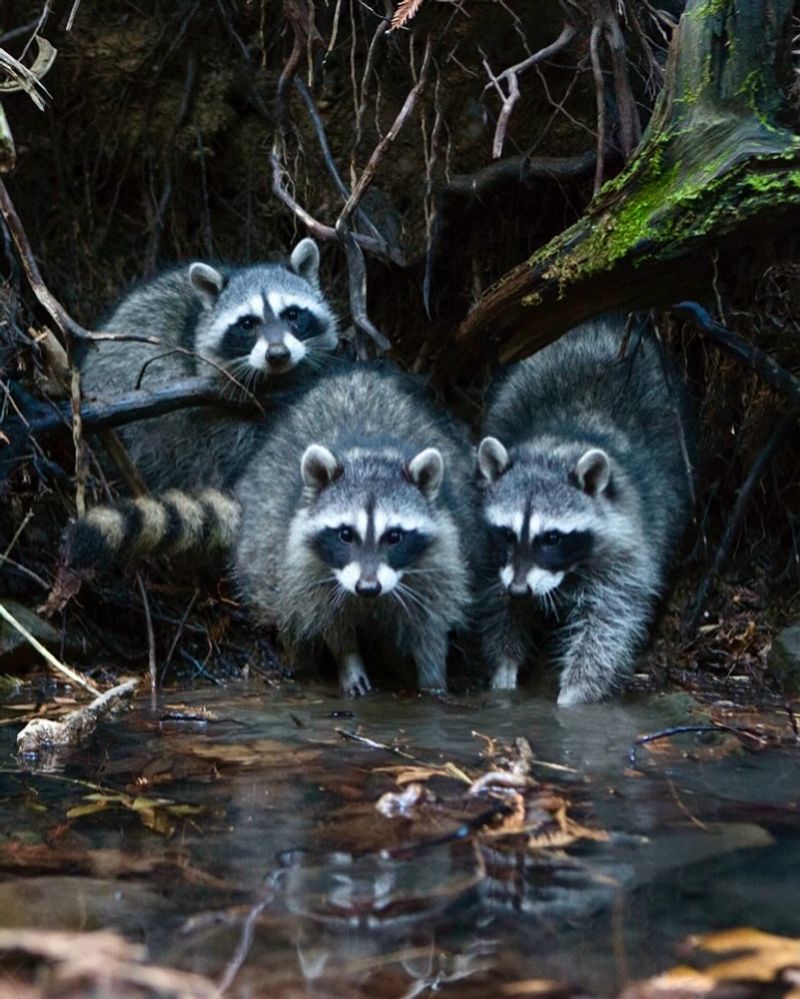
Finding droppings in your yard is unpleasant, but finding them in the exact same spot multiple mornings in a row is actually a very specific behavioral sign. Raccoons establish what wildlife professionals call latrines, which are designated areas where they return repeatedly to deposit waste.
Georgia homeowners who notice a consistent pile building up near a fence corner, tree base, or on top of a flat surface like a deck railing or woodpile should take it seriously.
Raccoon droppings are typically dark, tubular, and roughly two to three inches long. They often contain visible remnants of what the animal ate, such as berry seeds, insect parts, or small bone fragments.
Fresh droppings tend to have a strong odor, while older ones dry out and become crumbly. Finding multiple droppings of varying ages in the same location confirms the site is being used as a regular latrine rather than a one-time accident.
Cleaning up raccoon droppings requires more caution than most people realize. Raccoon feces can carry parasites that pose health risks to people and pets, so wearing gloves and a mask during cleanup is strongly recommended.
Avoid dry-sweeping the area, as that can disturb particles into the air. Damp disposal methods are safer and more thorough.