8 Signs Your Store-Bought Mums Won’t Come Back Next Year
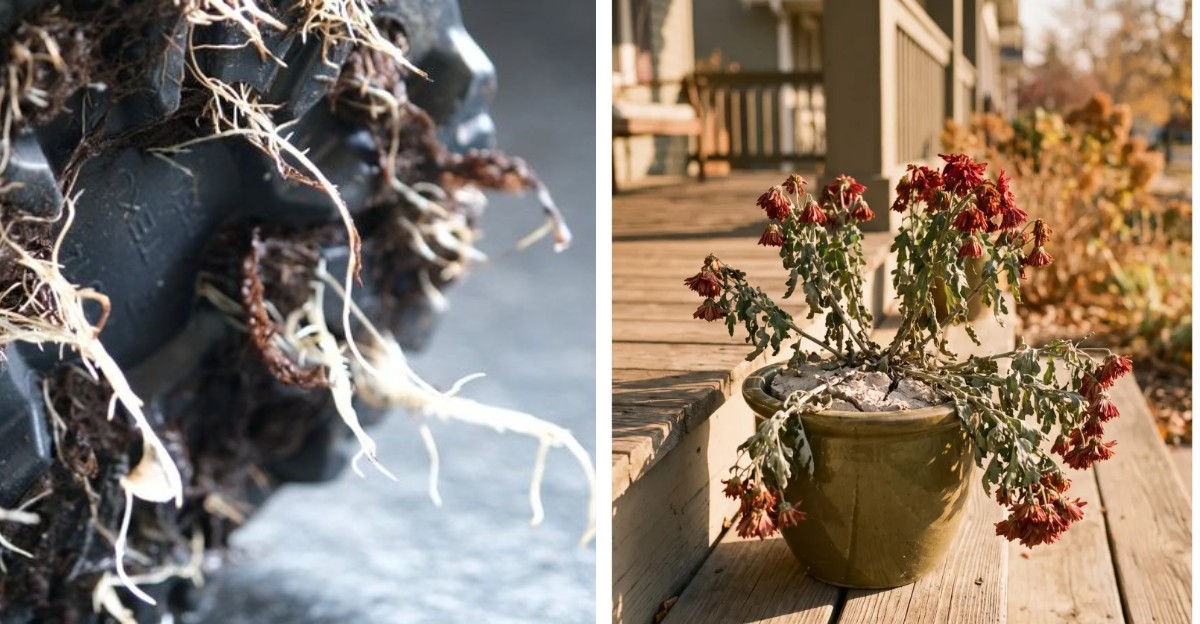
Those perfect flower domes outside the grocery store were often timed in greenhouses with blackout cloth to bloom on cue. Growers trick them with long nights, so every bud opens right when shoppers start craving autumn color.
Many of those plants were bred for one dazzling show, not for surviving a long, cold winter outdoors. Even the hardy types need strong roots and good timing before frost, which surprises plenty of gardeners.
I once tucked six bargain pots into my border in late October and felt very proud. Only one came back that spring, and you can probably guess how quiet that flower bed looked in May.
You might notice small clues long before winter arrives, if you know where to look on each plant. Which warning signs is your porch favorite quietly showing you as the nights grow cooler?
1. Your Grocery Store Mum Is A Florist Variety

Those flawless orange cushions at the checkout often belong to florist types, bred mostly for looks and quick sales. Their whole job is putting on one big show, and they handle that job beautifully for several weeks.
Florist chrysanthemums usually put their energy into flowers instead of roots, which leaves them weak against hard freezes. Garden mums, sometimes labeled hardy mums, are selected to handle cold and return in many regions each spring.
I learned to read plant tags like cereal boxes, hunting for words such as hardy or perennial before buying. If the tag only lists bloom color and a cheerful slogan, I treat that plant as seasonal decor.
Shape can offer another hint, since florist types often look extra tight and perfectly domed from the greenhouse. Big-box stores sometimes stock both kinds side by side, so a quick question to staff can help a lot.
Garden centers usually know their sources and can tell you which plants handle winters in your area. Local growers often carry hardy selections that have already proven themselves in similar soil and weather conditions.
Enjoy a florist mum on the porch without guilt, but expect it to act more like an annual. Toss it into the compost pile once frost browns the blooms, and let it feed next year’s garden.
For a plant that returns, shop hardy varieties and plan to get them in the ground much earlier. Your future self will thank you when fresh green shoots poke up beside the walkway next spring.
2. Your Blooming Mum Went Into The Ground Too Late

Mums planted in full bloom during late fall are racing a clock they rarely beat before the ground freezes. Shorter days push them toward flowers, so root growth slows right when the plant needs it most.
Experts often suggest giving garden mums at least six weeks in the soil before a hard freeze arrives. Spring planting works even better, because the plant gets a whole growing season to build deep anchoring roots.
I used to wait until my porch pots faded before moving them into beds, and results were disappointing. Now I plant hardy mums in spring or early fall, and the difference shows up every single April.
In many regions, the first hard freeze often arrives between late October and early December, depending on location. Mountain areas chill sooner, while coastal gardens usually get a little extra time to settle new plants in.
If your mum went in after Halloween, keep realistic hopes and treat any spring return as a happy bonus. Late plantings can still succeed during mild winters, but the odds lean against them in colder spots.
Pinching off some fading blooms after planting may help the plant shift a bit of energy toward its roots. Steady watering until the ground cools also supports whatever new root growth can happen during those final weeks.
Mark your calendar now and shop for hardy mums in spring, when nurseries stock young plants without flowers. Those humble green starters may look plain, yet they often become the toughest clumps in the neighborhood.
3. Tangled White Roots Are Circling The Nursery Pot
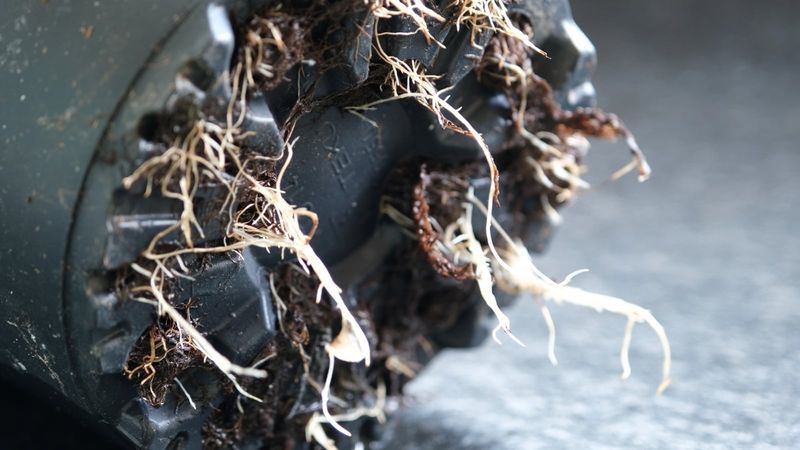
Slide a store-bought mum out of its pot, and you might find a solid brick of white roots. Those roots often wrap around and around, copying the shape of the plastic like a tangled ball of yarn.
Growers pack plants tightly to produce full domes quickly, so many arrive at stores already badly root-bound. Crowded roots struggle to pull in water and nutrients, and they may keep circling instead of reaching outward.
I was honestly shocked the first time I saw one, because the top looked so healthy and lush. Underneath, there was barely any soil left, just a dense mat of roots gasping for space and moisture.
Before planting, gently loosen the outer roots with your fingers, or make a few shallow vertical cuts with a knife. That small bit of roughing up encourages fresh roots to spread into the surrounding garden soil more easily.
Dig the planting hole about twice as wide as the root ball, but keep the depth roughly the same. Setting the crown too deep can invite rot, while a wider hole gives new roots loose soil to explore.
Water the plant thoroughly right after planting, so soil settles around the roots and removes any large air pockets. Check moisture every few days afterward, since a tight root ball can dry out faster than the surrounding bed.
A mum that stays root-bound through fall usually enters winter weak and poorly anchored in its new home. Spending five extra minutes on those roots is one of the smartest favors you can give your plant.
4. Your Mum Wobbles Loosely In The Garden Soil
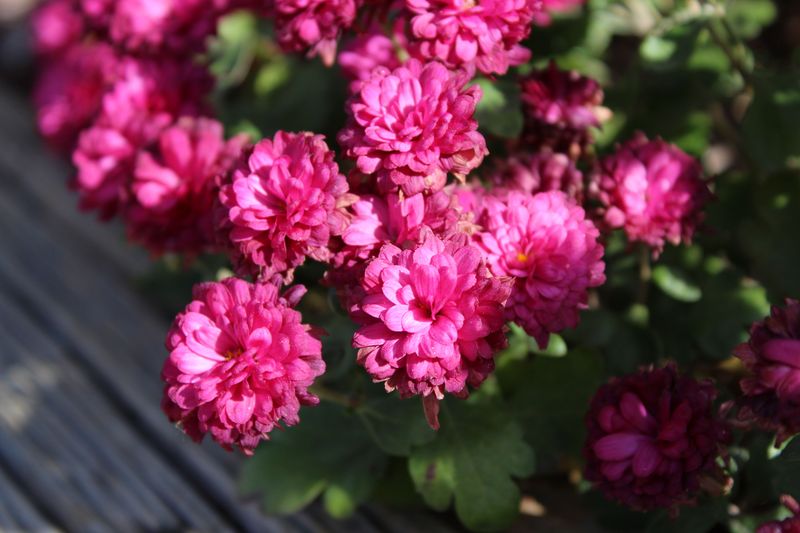
Give your mum a gentle tug a few weeks after planting, and notice whether it resists or simply slides upward. A plant that wiggles loosely like a tooth ready to fall out is telling you something important.
Mums bought in full flower pour most of their energy into keeping those blooms bright for as long as possible. That leaves little fuel for new roots, so the plant may sit in the soil without truly settling.
Weakly anchored mums face a sneaky winter problem called frost heaving, which pushes plants up as soil freezes and thaws. Exposed crowns and roots then dry out in the wind, and recovery becomes much harder by early spring.
I check my newer plantings after every big temperature swing, especially during those odd warm spells in January. When a crown has lifted, I gently press it back down with my hand and add a little soil.
Trimming spent flowers soon after planting can redirect a portion of energy toward growth happening below the surface. Some gardeners even remove a few buds on purpose, trading a little color now for stronger plants later.
Feeding with heavy fertilizer in late fall is not a fix, because tender new growth can be damaged by cold. Steady moisture and loose, healthy soil support root development far better than a last-minute dose of plant food.
A plant that feels firmly rooted by late fall stands a much better chance of greeting you next spring. If it still wobbles, focus on mulch and gentle care, and keep your expectations pleasantly modest.
5. Water Puddles Around Your Mum After Every Rain
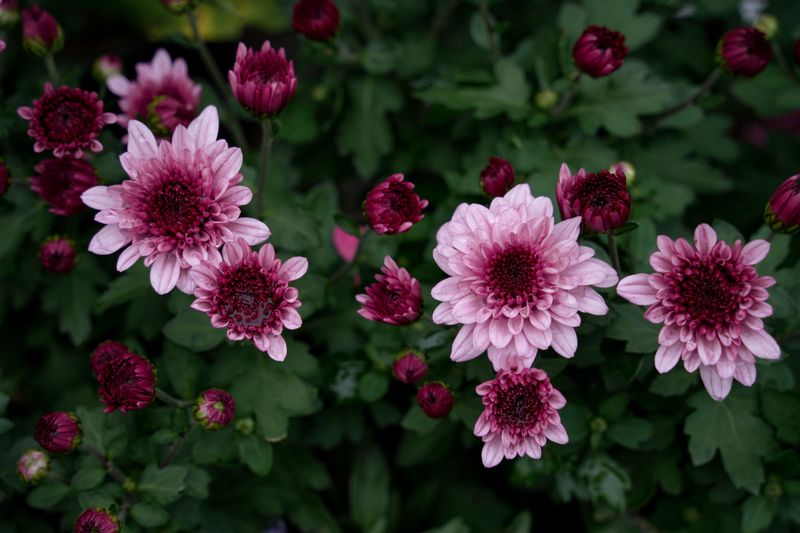
Walk outside right after a heavy rain, and watch where the water lingers in your flower beds. If puddles sit around your mum for hours, its roots are likely sitting in a cold, soggy bath.
Mums need well-drained soil, and wet winter conditions often harm them more than the cold temperatures themselves. Soggy ground starves roots of air and invites root rot, which can quietly weaken a plant over several months.
My own heavy clay beds taught me this lesson, since water stays in them far longer than I expected. Mums tucked into the lowest corner of that yard faded away, while plants on a gentle slope thrived.
Red clay soil is common in many regions, so many gardeners need to improve drainage before planting. Mixing compost into the planting area loosens heavy soil and helps excess water move down and away from roots.
Raised beds or slightly mounded planting spots also help, because water drains off rather than collecting around the crown. Avoid spots near downspouts, since roof runoff can flood a small area every time a storm rolls through town.
Yellowing lower leaves and soft, dark stems near the soil line can point toward trouble with too much moisture. Pull back mulch from the crown a little, and let the surface breathe between rains whenever possible.
Choosing a sunny, well-drained site before you plant saves a lot of worry once the chilly season arrives. Good drainage may sound boring, yet it often decides which plants return and which ones quietly disappear.
6. Crispy Brown Mum Leaves Droop In Dry Soil
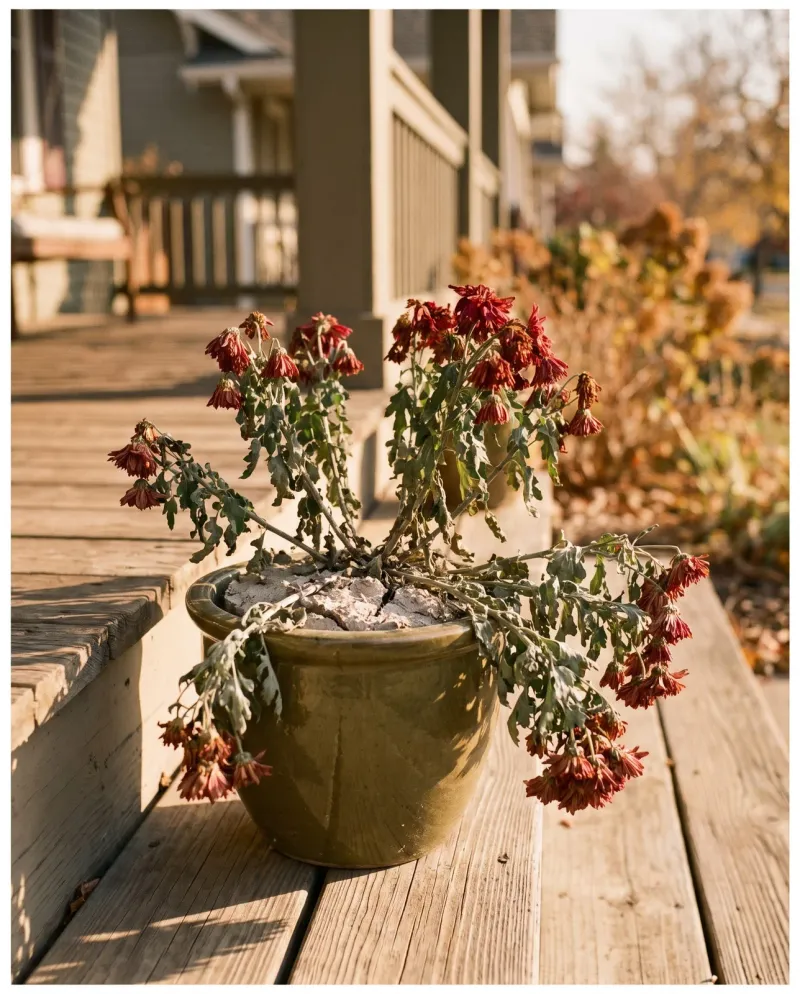
A mum can go from perky to pitiful in a single breezy afternoon, especially when sitting in a small pot. Those dense, shallow roots dry out surprisingly fast, and the drooping leaves usually show it before you notice.
Fall weather can be sneaky, with bright sun and steady wind pulling moisture away even when temperatures feel mild. Repeated wilting stresses the plant, and stressed mums often enter winter with fewer reserves to handle cold.
I keep a watering can right by the front steps during fall, simply because my porch mums demand attention. Some days they need a drink in the morning and another check by late afternoon, depending on the breeze.
Push a finger about an inch into the soil, and water when that layer feels dry to the touch. Aim at the base rather than the blooms, and keep going until water starts running from the drainage holes.
Wet foliage overnight can encourage leaf diseases, so morning watering at soil level usually works best for mums. Balance matters too, since constantly soggy roots bring their own problems, as the previous sign clearly showed.
Crispy brown leaf edges and flowers that fade early are common clues that a mum has gone thirsty. One bad wilt rarely ruins a plant, but repeated dry spells can leave it noticeably weaker heading into winter.
Before the ground freezes, give in-ground mums a deep soaking if fall rainfall has been light in your area. Moist soil holds warmth better than dry soil, which gives roots a slightly kinder start to the cold months.
7. Bare Soil Surrounds Your Mum With No Winter Mulch
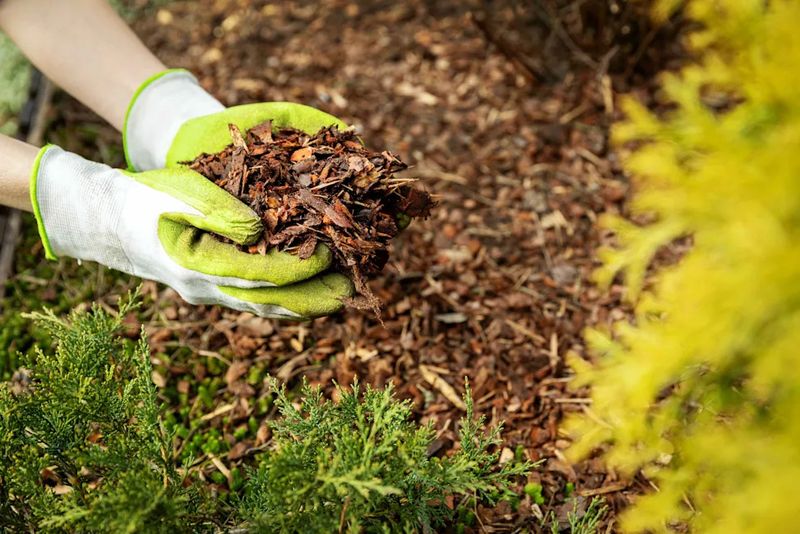
Bare soil around a shallow-rooted mum works a bit like leaving your front door open during a snowstorm. Without a cozy blanket on top, the ground freezes and thaws over and over across the winter months.
Those cycles can heave plants upward, exposing the crown and roots to drying winds and harsh cold. Mums sit close to the surface, so they feel this push and pull more than many deeper-rooted perennials.
Experts commonly recommend a layer of light mulch about three to four inches deep after the first hard frost. Pine needles or straw work well because they insulate the soil without packing down into a soggy mat.
I skipped mulching one year out of pure laziness, and only my most sheltered mum came back strong. The next fall, I mulched every plant, and the spring results honestly made me laugh out loud with relief.
Leaving the old stems standing through winter can also help, since they trap leaves and shield the crown. Plenty of gardeners wait until spring to cut stems back, once fresh green growth appears near the base.
Avoid heaping heavy, wet leaves directly on the crown, because trapped moisture can encourage rot instead of protection. Fluff the mulch around the plant, and pull it back gradually once the danger of hard freezes has passed.
A few bags of straw cost very little compared with replacing a whole row of fall mums each year. Spend twenty minutes on mulch this season, and you may enjoy a much bigger payoff next autumn.
8. Your Potted Mum Is Still Sitting On The Porch

That gorgeous pot of bronze blooms beside the door may look happy now, but its roots feel every chill. Container soil freezes much faster and deeper than garden soil, offering very little protection when temperatures really drop.
In the ground, roots enjoy the earth’s stored warmth, which keeps their surroundings far steadier than any pot can. Above ground, cold air surrounds the container on every side, so the root ball can freeze solid quickly.
I once left a pair of potted mums on my steps all winter, hoping they would tough it out. By March, the soil was a frozen block, and neither plant showed even a hint of new green growth.
One easy rescue is sinking the whole pot into a garden bed, so the soil line matches the ground. The surrounding earth then insulates the roots, and you can lift the container back out once spring arrives.
Another option is moving pots into an unheated garage or shed, where temperatures stay cold yet above freezing. Check the soil every few weeks and water lightly, since dormant roots still need a little moisture to survive.
Winters in many regions can swing from mild to bitter within days, so container plants benefit from extra shelter. Grouping pots against a warm wall and wrapping them in burlap may help a bit during milder spells.
Of course, florist mums in containers may still fade, since they were not bred for winter survival anyway. For hardy types, a little shelter turns a one-season decoration into a plant you can enjoy for years.