Signs Your Zucchini Plant Is Healthy In Michigan And The Warning Signs It’s About To Crash
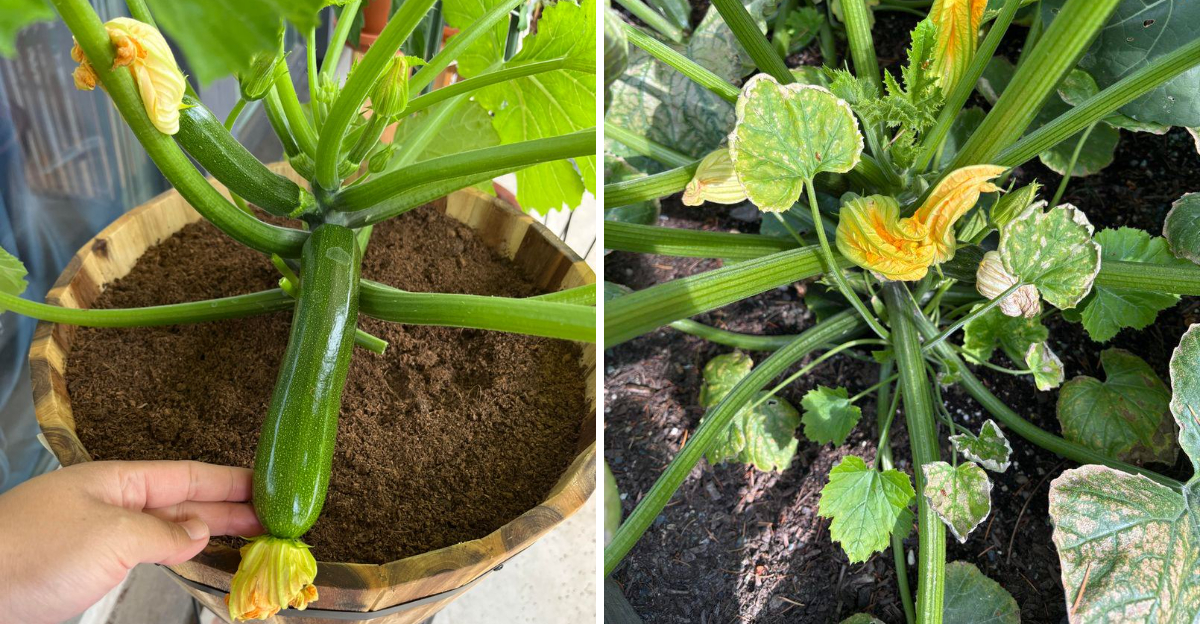
Healthy zucchini and struggling zucchini can look surprisingly similar during a Michigan July, and the gap between them closes faster than most gardeners expect once the plant crosses from manageable stress into genuine decline.
A thriving plant sends specific signals through its leaf color, stem texture, flower production pattern, and the way new growth emerges at the vine tips that are readable once you know what genuine health looks like in this climate.
The warning signs that precede a crash are equally specific, showing up in the same locations days before the plant’s performance drops in any obvious way.
Recognizing both sides of that comparison gives Michigan gardeners the earliest possible window to intervene before a productive vine becomes a loss.
1. Healthy Sign: Leaves Stay Broad, Upright, And Evenly Green
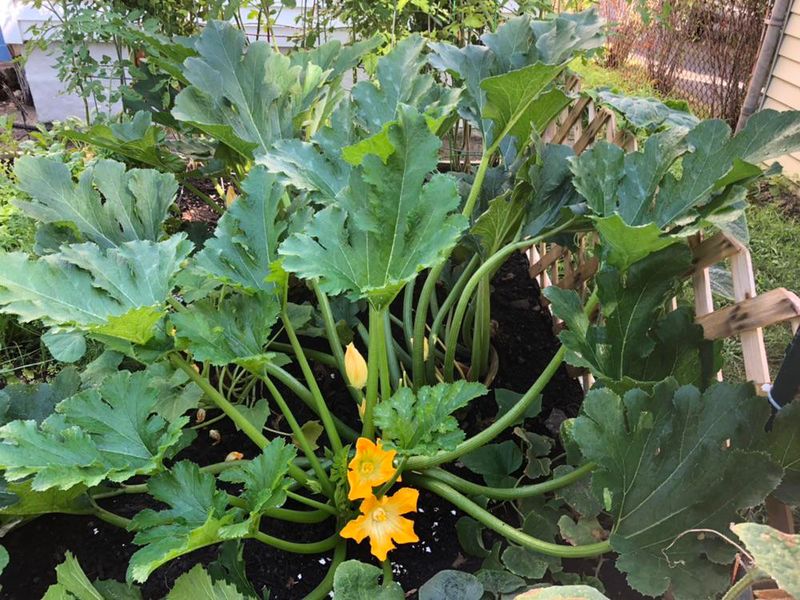
There is something satisfying about walking out to your garden and seeing big, bold zucchini leaves standing tall in the summer sun.
Broad, upright, and evenly green leaves are one of the clearest signs that your plant is doing exactly what it should.
When the foliage looks strong and consistent in color, you know the roots are pulling water efficiently and nutrients are moving through the plant the way they need to.
In Michigan summers, heat and humidity push zucchini plants hard. Leaves that hold their shape and stay a rich, deep green show that the plant is handling those conditions without breaking a sweat.
The large leaf surface area also plays an important role in shading developing fruit below, which helps keep young zucchini from getting sunscald during those blazing afternoon hours.
Some zucchini varieties naturally have silver or pale green markings on the leaves, and that is completely normal. What you want to watch for is whether the green areas look full and consistent rather than patchy or faded.
Strong leaves also mean the plant has enough energy stored to keep pushing out new growth, new flowers, and new fruit.
Healthy foliage is the engine behind a productive summer harvest in Michigan, so keeping your plants well watered and fed goes a long way toward maintaining that lush, upright look you want to see.
2. Healthy Sign: Soil Stays Moist But Not Soggy
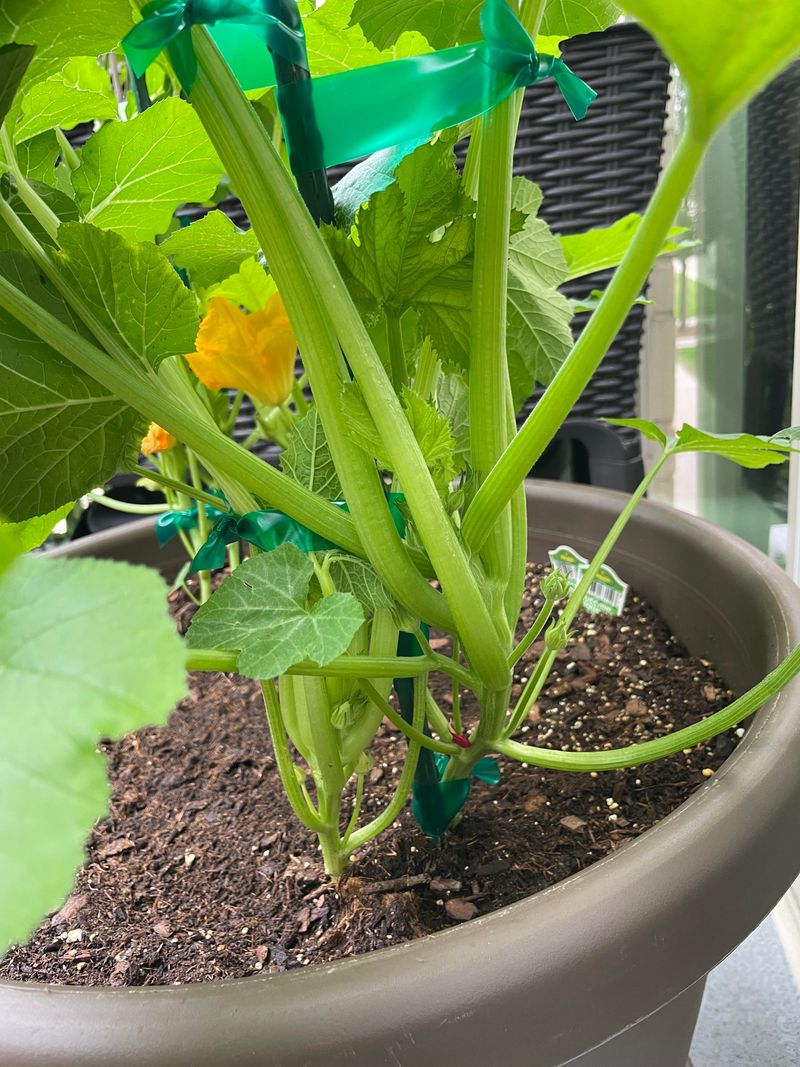
Stick your finger about two inches into the soil near your zucchini plant. If it feels like a wrung-out sponge, consistently damp but not dripping, your plant is sitting in ideal conditions.
Zucchini is a thirsty crop, especially during Michigan’s hot, dry stretches in July and August, and steady soil moisture is what keeps growth moving at a steady pace.
The tricky part is finding that sweet spot between too dry and too wet. Soil that dries out completely between waterings puts stress on the root system and slows fruit development noticeably.
On the other hand, soil that stays waterlogged after heavy rain or overwatering can suffocate roots and create the perfect environment for fungal problems to take hold. Good drainage matters just as much as regular watering.
Mulching around the base of your zucchini plant with straw or wood chips is one of the smartest moves you can make in a garden.
Your Michigan Garden Changes Every Week. Your Plan Should Too.
Gardening in Michigan changes quickly throughout the season. Every Friday you’ll receive a simple weekly plan showing exactly what to plant, prune, fertilize, harvest, and protect so you never miss the right timing.
A two to three inch layer of mulch slows evaporation, keeps soil temperature more stable during heat waves, and reduces how often you need to water.
Drip irrigation or soaker hoses work better than overhead watering because they deliver moisture directly to the root zone without wetting the leaves, which helps cut down on powdery mildew risk later in the season.
Consistent soil moisture is a quiet but powerful sign that your setup is working.
3. Healthy Sign: New Flowers Keep Opening
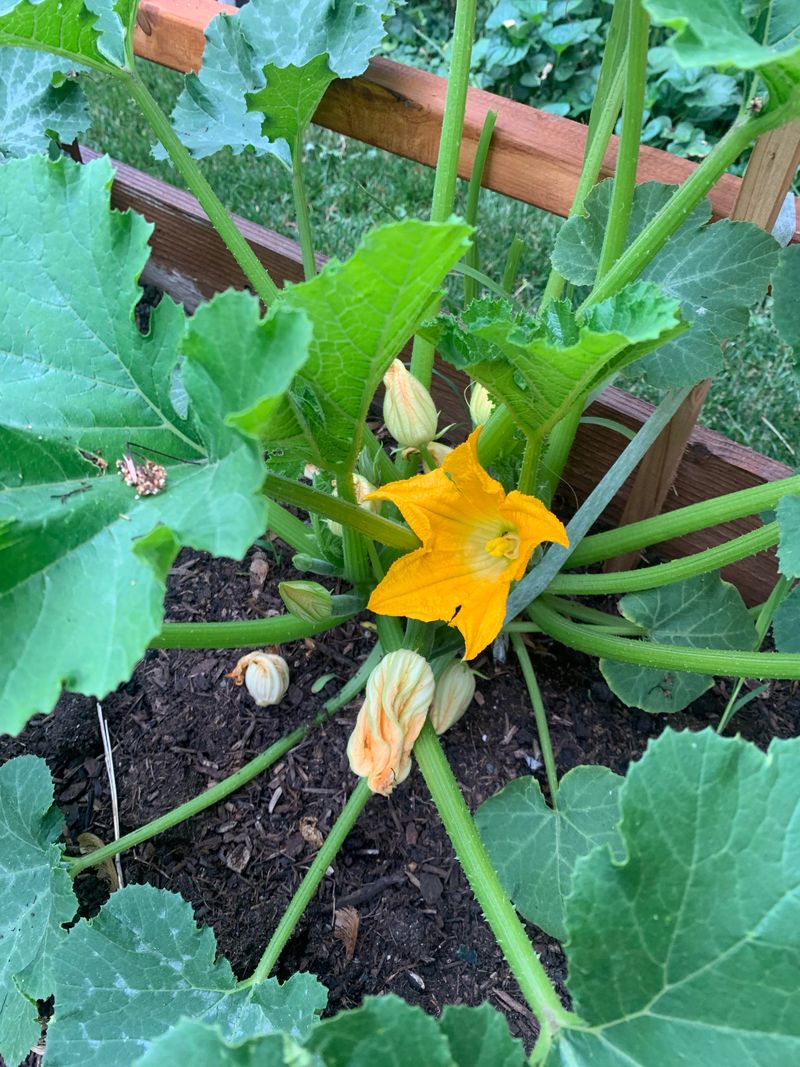
Few things in the garden feel as cheerful as bright yellow zucchini flowers popping open on a warm morning. Regular flower production is one of the best signals that your plant still has plenty of energy and is actively working toward making more fruit.
When flowers keep appearing week after week, it means the plant is not under serious stress and has the resources it needs to keep going.
Zucchini plants produce two types of flowers, and understanding the difference helps a lot. Male flowers appear first and grow on long, thin stems.
Female flowers come along a little later and have a tiny swollen base that will eventually become a zucchini if pollination goes well. You need both types present and bees or other pollinators visiting regularly for fruit to set successfully.
A garden buzzing with bee activity during the morning hours is a genuinely good sign.
If flowers keep opening but fruit is not forming, the issue is usually poor pollination rather than a sick plant.
Try hand-pollinating by using a small paintbrush or cotton swab to transfer pollen from a male flower directly to the center of a female flower.
This works especially well during stretches of wet or cloudy weather when bees are less active.
Steady flower production combined with good pollinator visits is a reliable indicator that your zucchini plant is healthy, happy, and still producing with plenty of momentum behind it.
4. Healthy Sign: Small Zucchini Keep Sizing Up
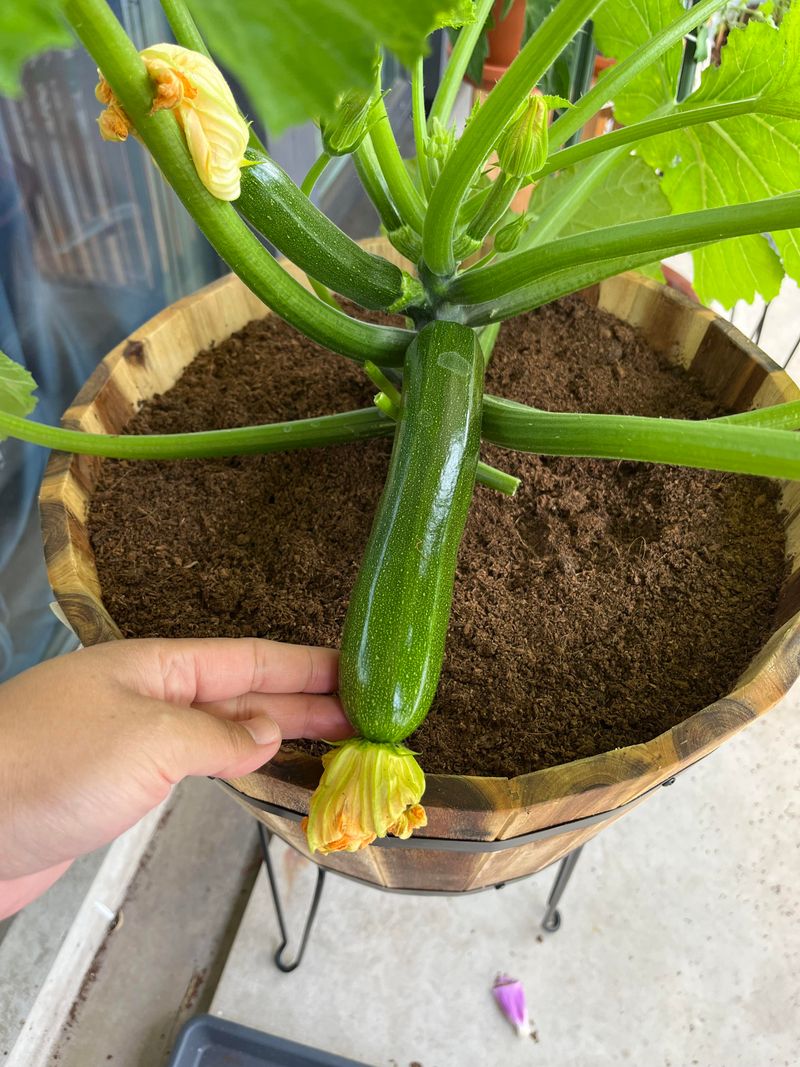
Watching a tiny zucchini go from finger-sized to harvest-ready in just a few days is one of those genuinely fun moments that keeps Michigan gardeners coming back every season.
When young fruit sizes up quickly and smoothly, it tells you that everything the plant needs is lined up correctly.
Water, sunlight, root health, and pollination are all working together, and the result shows up in the fruit itself.
A healthy zucchini grows fast. Under good conditions, a well-pollinated fruit can go from a few inches to eight or ten inches in less than a week.
Fruit that stalls out, turns yellow, or shrivels at the blossom end usually points to incomplete pollination or inconsistent watering.
Blossom end rot, which shows up as a soft, darkened tip, often comes from calcium uptake issues tied to irregular soil moisture rather than a lack of calcium in the soil itself.
Checking your plants every single day during peak summer production is genuinely worth the effort.
Zucchini that gets too large becomes seedy, tough, and much less flavorful, so catching fruit at the right size keeps quality high and also encourages the plant to keep producing.
Harvesting regularly actually signals the plant to push out more fruit rather than putting all its energy into maturing one oversized squash. Smooth, firm, fast-growing zucchini is your clearest sign that the whole system is running the way it should.
5. Healthy Sign: The Stem Base Looks Firm And Clean
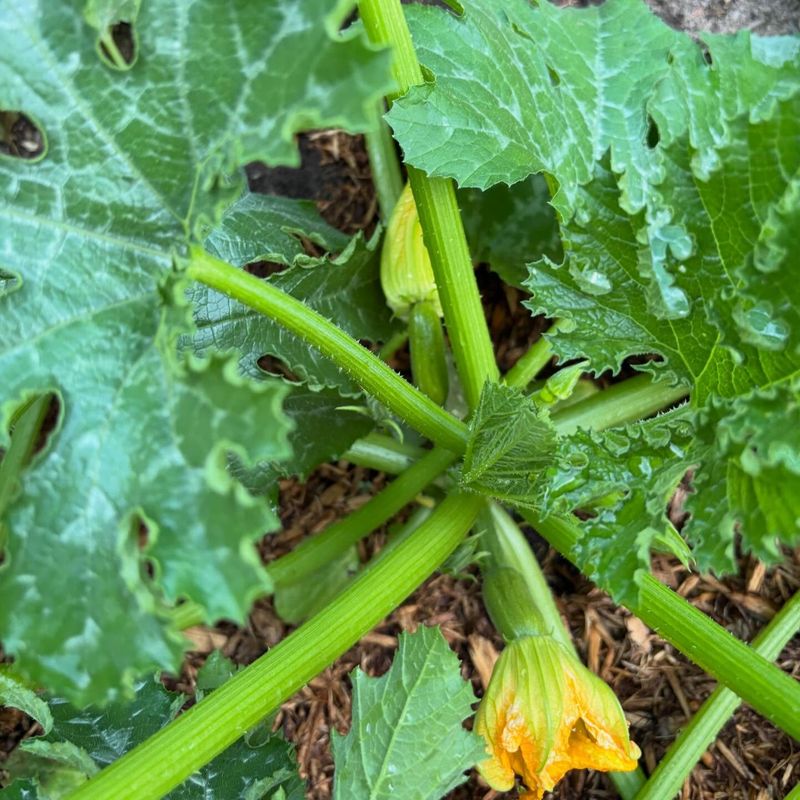
Most gardeners in Michigan spend a lot of time looking at the leaves and fruit of their zucchini plants, but the stem base deserves just as much attention.
A firm, clean crown at the soil line is one of the most reassuring things you can find when you do a quick inspection.
It tells you the plant is structurally sound and that no hidden pest activity has started compromising the inner tissue of the stem.
Squash vine borers are one of the most frustrating pests in Michigan gardens, and they do their damage from the inside out.
The adult moth lays eggs near the base of the plant in early summer, and once the larvae hatch, they burrow directly into the stem and feed on the tissue inside.
A plant can look completely fine from a distance while the damage is already progressing inside. That is why checking the base up close and regularly is so important.
What you want to see is a solid, greenish stem with no soft spots, no small entry holes, and no wet or powdery material that looks like compressed sawdust sitting near the crown.
Row covers placed over young plants before the moths start flying in late June can prevent egg-laying entirely.
Checking the base every few days during midsummer takes only seconds and can save your entire plant. A clean, firm stem base means your zucchini is standing on solid ground and ready to keep producing.
6. Warning Sign: Leaves Stay Limp After The Day Cools
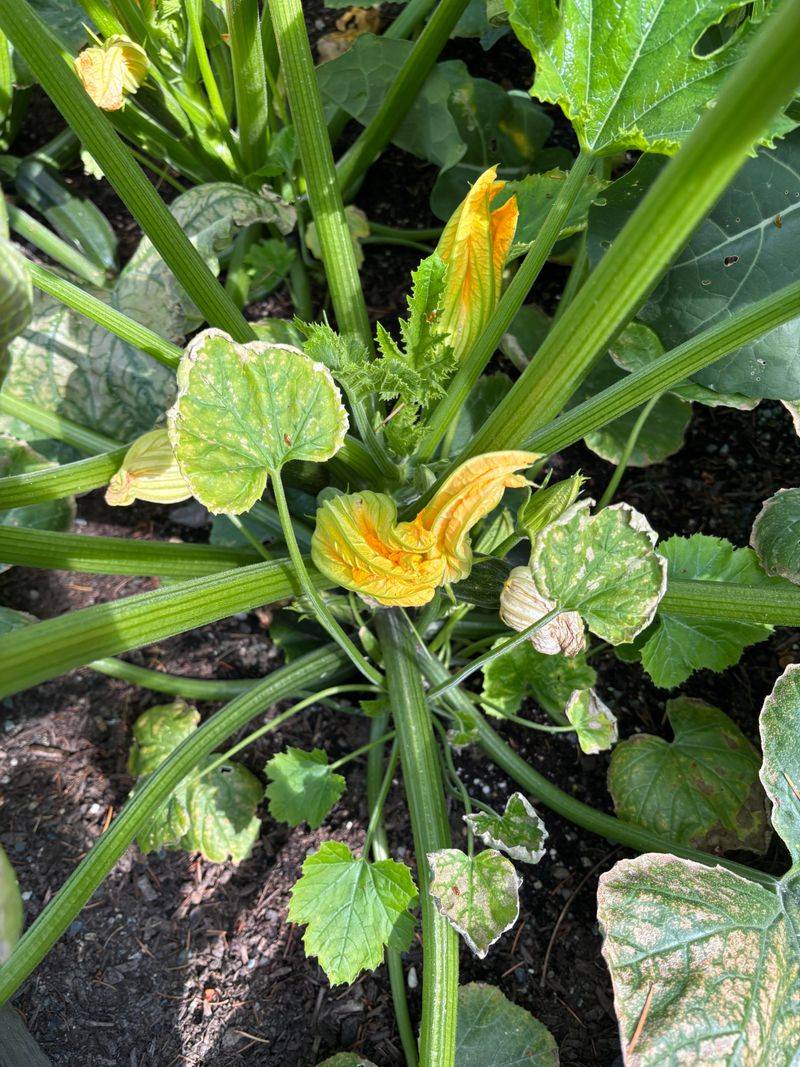
Zucchini leaves wilting in the middle of a blazing afternoon is not automatically a cause for alarm.
Plants naturally lose water through their leaves faster than roots can replace it during peak heat, and a little midday droop is a normal response to intense summer temperatures.
The real warning comes when those same leaves are still limp and hanging by the time evening arrives and the air starts to cool down.
Leaves that recover after sunset are usually just responding to temporary heat stress. Leaves that stay wilted after dark are telling you something more serious is happening below the surface.
Dry soil is the first thing to check, because a plant that has not received enough water will struggle to bounce back even when temperatures drop.
Push your finger several inches into the soil to see if moisture is actually present at root depth rather than just on the surface.
If the soil feels adequately moist but wilting continues into the evening, the problem may be coming from inside the stem.
Squash vine borers feeding inside the stem disrupt the plant’s ability to move water from the roots up to the leaves, which causes wilting that looks just like drought stress from the outside.
Checking the stem base for entry holes and wet frass is the next logical step. Catching this early and acting quickly, whether through hand-removal of larvae or burying the stem to encourage new roots, gives the plant its best shot at recovery.
7. Warning Sign: White Powdery Patches Spread On Leaves
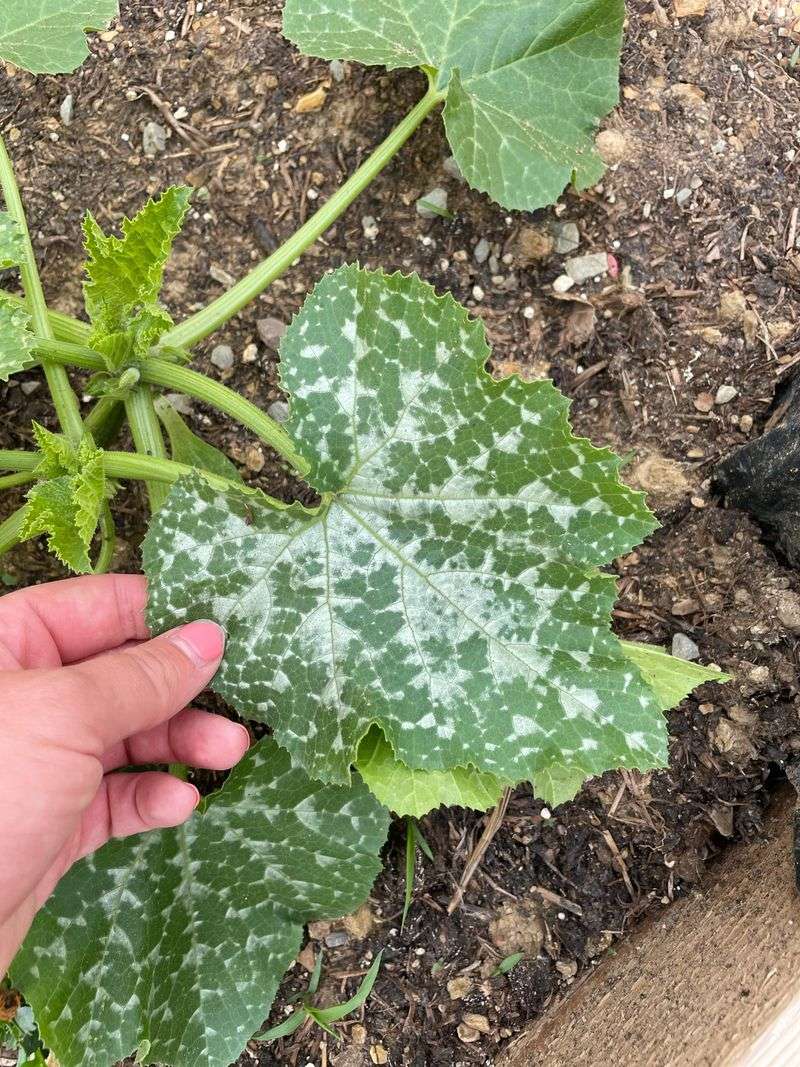
White patches on zucchini leaves can stop a gardener in their tracks, and for good reason.
Powdery mildew is one of the most common fungal problems that shows up in Michigan gardens, especially as summer moves into late July and August when nights get cooler but days stay warm and humid.
The fungus spreads through airborne spores and does not need wet leaves to take hold, which makes it particularly stubborn once it gets started.
The early signs look like small, chalky white spots on the upper surface of older leaves near the base of the plant. Over time those spots expand and merge into large powdery patches that make the leaf look like it has been dusted with flour.
Affected leaves gradually lose their ability to photosynthesize efficiently, which means the plant produces less energy for fruit development. A heavily infected plant starts to look tired and worn out even if it is still technically alive and growing.
Catching powdery mildew early gives you the best chance of slowing it down. Removing heavily infected leaves and improving airflow around the plant by pruning crowded foliage helps reduce how quickly spores spread.
A simple spray made from one tablespoon of baking soda mixed with a gallon of water and a few drops of dish soap can help protect healthy leaves when applied early in the morning.
Consistent monitoring every few days is the most effective way to stay ahead of this persistent problem before it overtakes the entire plant.
8. Warning Sign: Holes Or Frass Appear Near The Stem Base
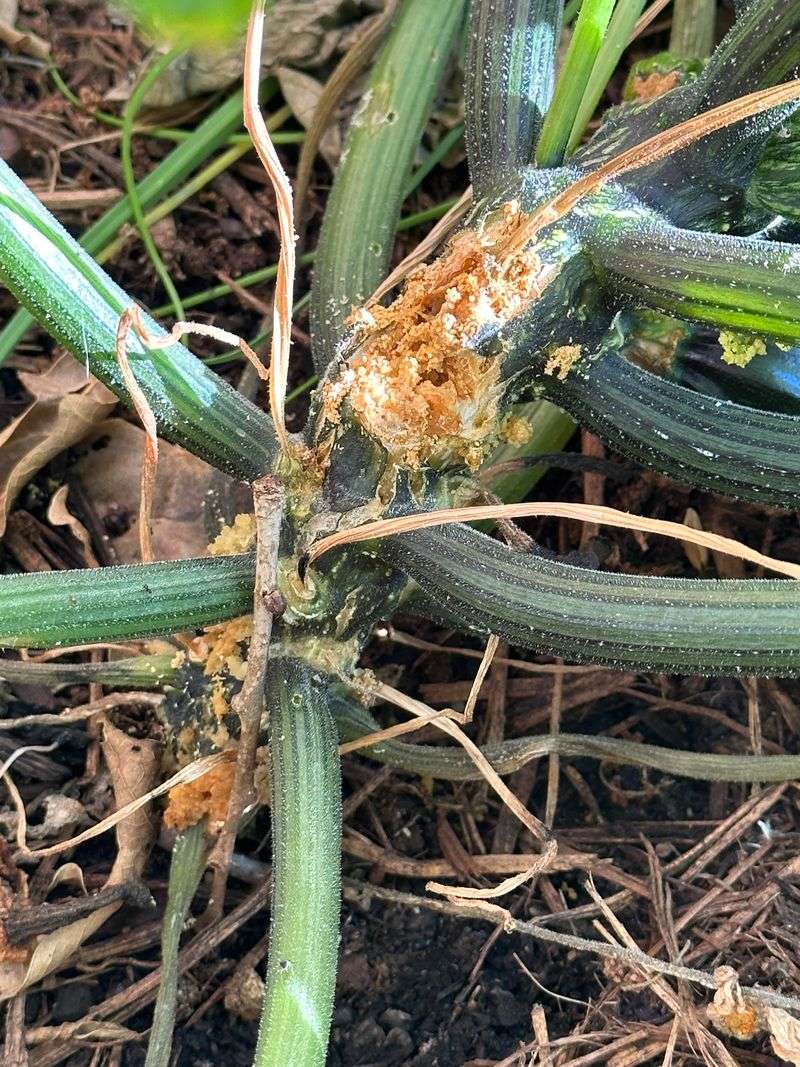
Finding small holes surrounded by what looks like wet, greenish sawdust near the base of your zucchini plant is one of those discoveries that calls for immediate action.
That material is called frass, and it is the waste left behind by squash vine borer larvae feeding inside the stem.
By the time you can see it on the outside, the larvae have already been tunneling through the inner stem tissue for at least a few days.
The squash vine borer moth is a striking insect with red and black markings that resembles a wasp, and it is active in Michigan from late June through midsummer.
Females lay flat, reddish-brown eggs individually on the lower stem and leaf stalks. Once the eggs hatch, the tiny larvae immediately bore into the stem and begin feeding.
A single plant can host multiple larvae at once, and the damage compounds quickly as they grow larger inside the stem. Acting fast when you spot frass gives the plant a real fighting chance.
Some Michigan gardeners carefully slit the stem lengthwise with a clean knife, remove the larvae by hand, and then bury that section of stem under moist soil to encourage the plant to grow new roots above the damage.
Wrapping the injured area loosely and keeping it consistently moist helps support recovery.
Checking the base of your plants every few days during midsummer takes almost no time and makes a significant difference in catching this pest before the damage becomes overwhelming.
9. Warning Sign: Leaf Undersides Show Eggs, Nymphs, Or Clusters Of Bugs
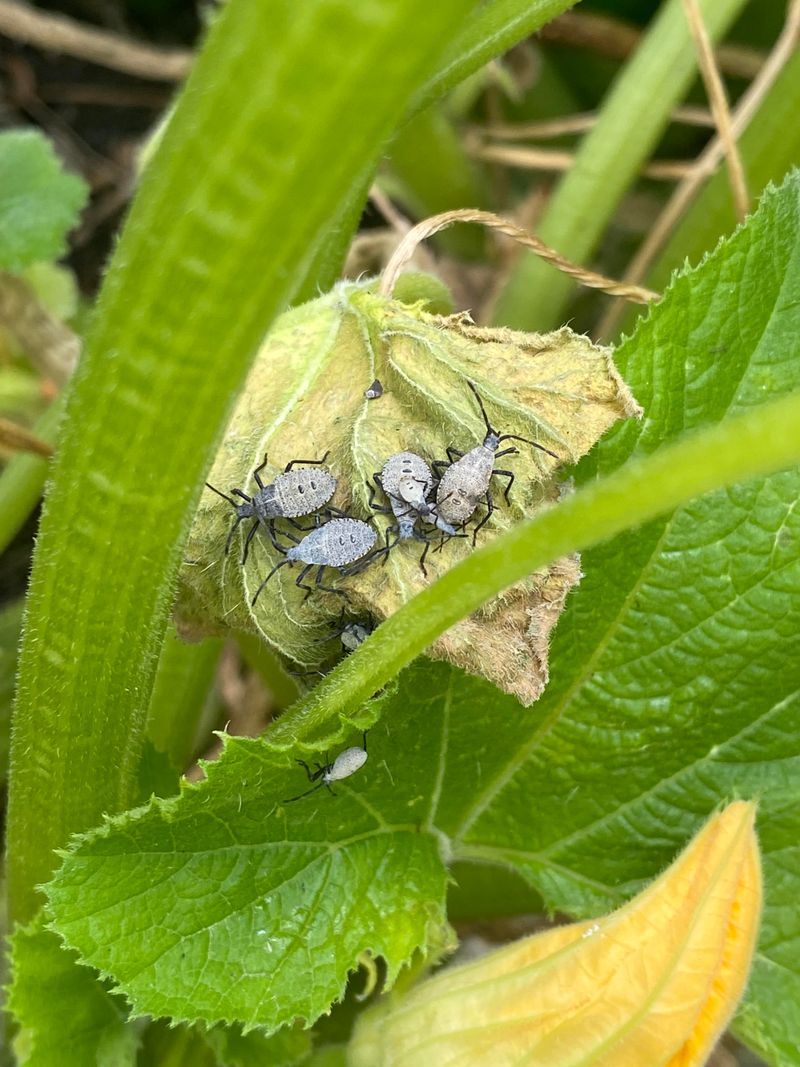
Flipping over a zucchini leaf and finding a tight cluster of shiny bronze eggs or a group of small gray bugs moving around is a moment that signals real trouble is already underway.
Squash bugs are one of the most damaging pests for cucurbit crops around here, and they are sneaky about where they hide.
The underside of leaves, especially near the base of the plant and along the main stem, is where they spend most of their time and where eggs are almost always laid.
Adult squash bugs are brownish-gray, flat, and about five-eighths of an inch long. They produce a noticeable unpleasant odor when disturbed, which is one way to identify them quickly.
The eggs are laid in neat diamond-shaped clusters and are a distinctive coppery bronze color. Nymphs hatch within one to two weeks and start out pale green before turning gray as they mature.
Both nymphs and adults feed by piercing plant tissue and sucking out the sap, which causes yellow spots, wilting, and a rapid loss of plant vigor.
Catching squash bugs early, before populations build up, is the most effective strategy available to home gardeners. Check leaf undersides at least twice a week starting in late June.
Eggs can be removed by hand or scraped off with a piece of tape. Nymphs are much easier to manage than adults, so acting early matters enormously.
Removing plant debris at the end of the season also eliminates overwintering sites and reduces how many bugs show up the following year.