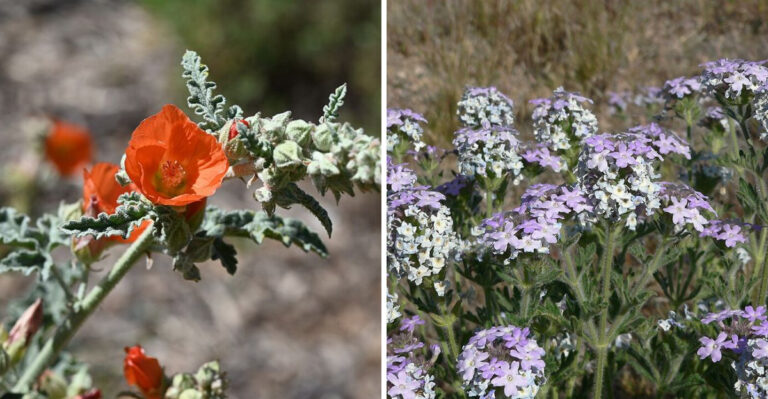
8 Simple Border Plants That Thrive In Arizona Gardens With Less Work
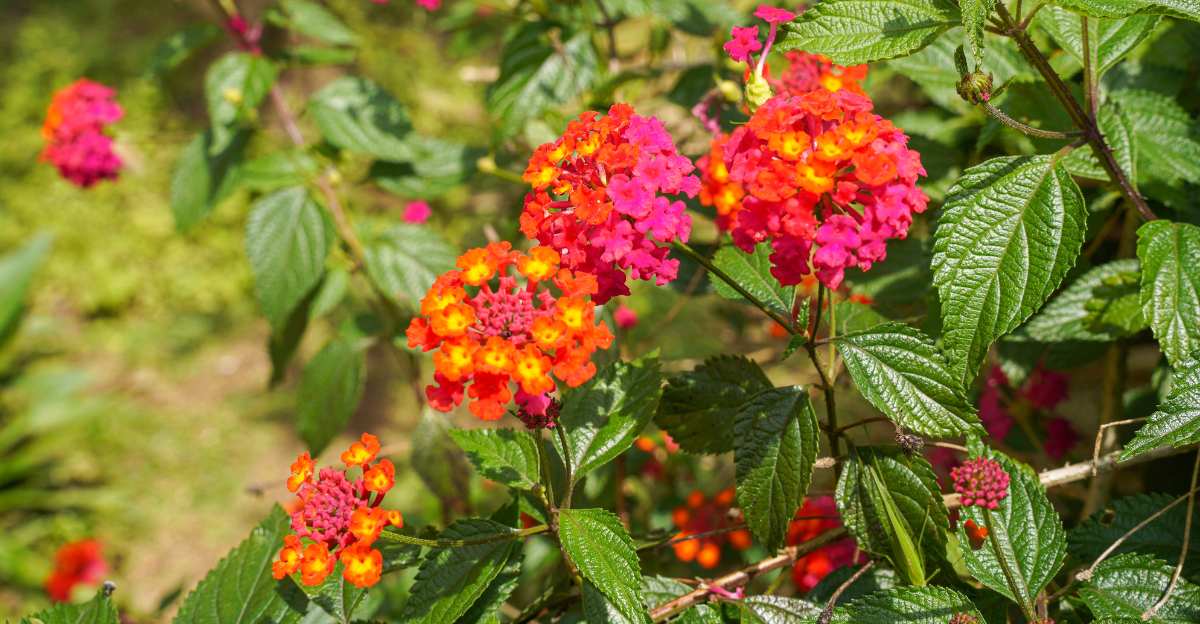
Edges can make a yard feel finished or completely off, and in Arizona they often show wear before anything else. Harsh sun, dry soil, and reflected heat push border plants harder than most expect.
One week the line looks clean, then it starts to lose shape and breaks the whole look.
A strong border does not need constant fixing to stay in place. Certain plants hold their form, stay compact, and keep that edge looking intentional even when conditions get rough.
You notice it right away when a border works. The yard feels more put together, paths look clearer, and everything has a sense of structure without extra effort.
Not every plant can do that here, and that is where the right picks start to matter. A few reliable choices can keep those edges sharp and steady without turning it into another thing you have to stay on top of.
1. Desert Marigold Handles Heat And Dry Soil Easily
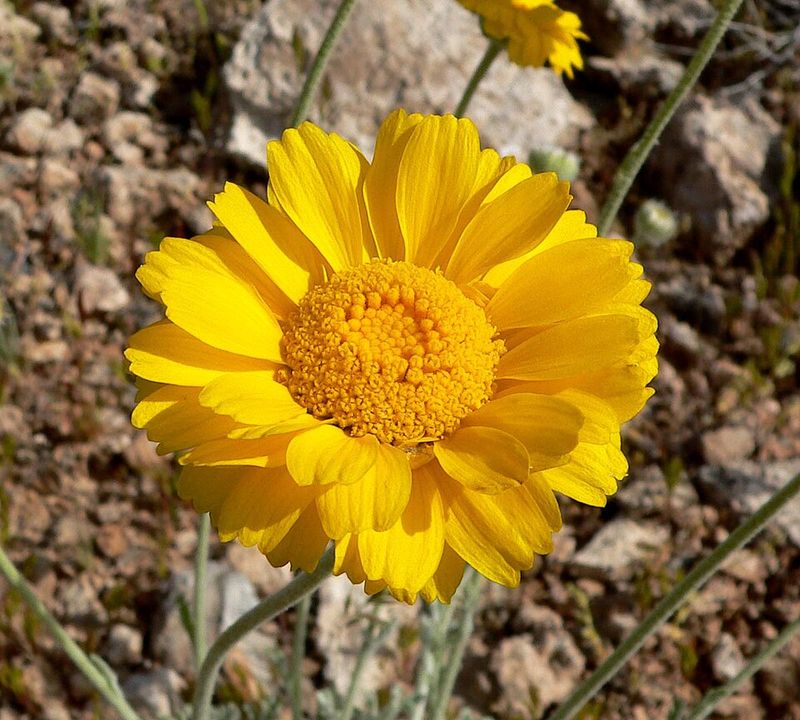
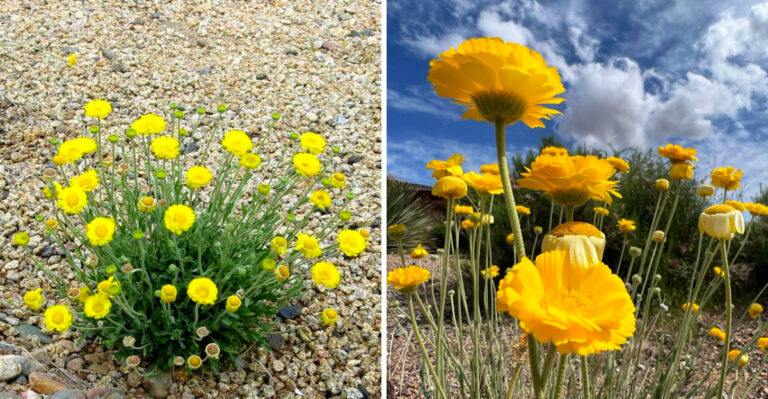
Few wildflowers handle Arizona summers as casually as Desert Marigold. Bright yellow blooms pop up almost year-round in the low desert, and the plant does not seem to care much about poor, rocky soil.
Sandy or gravelly ground is actually where it tends to do best.
Baileya multiradiata grows about one to two feet tall, spreading into a tidy clump that fits neatly along a border edge. In Phoenix and Tucson gardens, it tends to bloom heavily in spring and again in fall, with scattered flowers through the warmer months in between.
Rainfall timing can affect bloom cycles, but established plants are generally resilient.
Watering deeply every two to three weeks during summer is usually enough once roots are settled in. Avoid overwatering, because soggy soil is harder on this plant than dry spells.
Snipping off spent blooms can encourage fresh flowers, though skipping that step will not hurt much.
Hummingbirds and native bees visit the flowers regularly, so it pulls double duty as habitat. Pair it with other low-water perennials for a border that looks intentional without demanding constant upkeep.
If you want reliable color with very little effort in Arizona, Desert Marigold is worth starting with.
It often reseeds lightly in place, so over time it can fill in gaps along the border without needing much extra planting or effort.
2. Lantana Blooms Constantly With Minimal Water
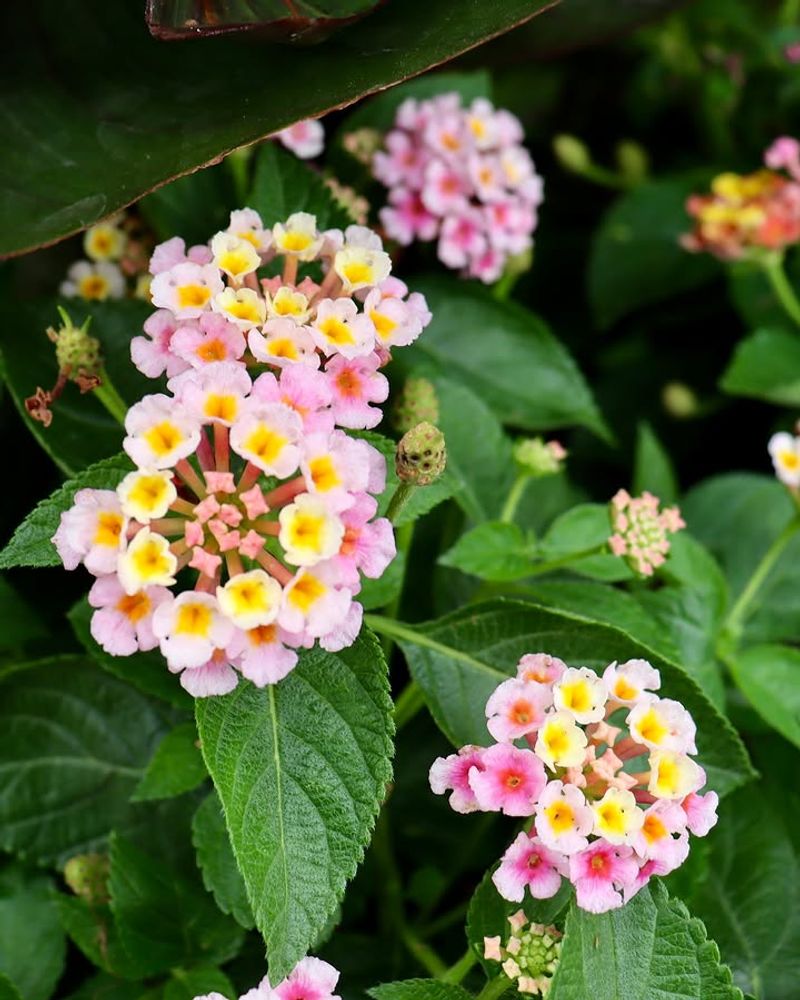
Lantana might be the most dependable color plant in an Arizona border. Clusters of tiny flowers in orange, red, yellow, and pink keep coming from spring through late fall, and the plant barely slows down even when temperatures climb past 110 degrees.
Butterflies absolutely flock to it. If you want pollinators in your yard, planting even one or two lantana shrubs along a border edge can make a noticeable difference through the season.
Hummingbirds occasionally visit too, especially the red and orange varieties.
Water needs are low after the plant settles in. Deep watering every week or two during peak summer heat is usually adequate, though sandy soils may dry faster and need more frequent attention.
Your Arizona Garden Changes Every Week. Your Plan Should Too.
Gardening in Arizona changes quickly throughout the season. Every Friday you’ll receive a simple weekly plan showing exactly what to plant, prune, fertilize, harvest, and protect so you never miss the right timing.
In Tucson and the Phoenix valley, lantana often survives mild winters and regrows from the base when cut back in late winter.
It spreads fairly wide, sometimes three to four feet across, so give it room. Overly tight spacing leads to poor airflow, which can invite fungal issues during humid monsoon periods.
Trim it back hard after the monsoon season wraps up to keep the shape tidy and encourage another round of blooming before temperatures drop. Lantana is not fussy, but giving it good drainage and full sun keeps it performing at its best in Arizona gardens.
Once established, it handles reflected heat from gravel or walls surprisingly well, making it a reliable choice for tough border spots where other plants struggle.
3. Red Yucca Adds Structure Without Frequent Care
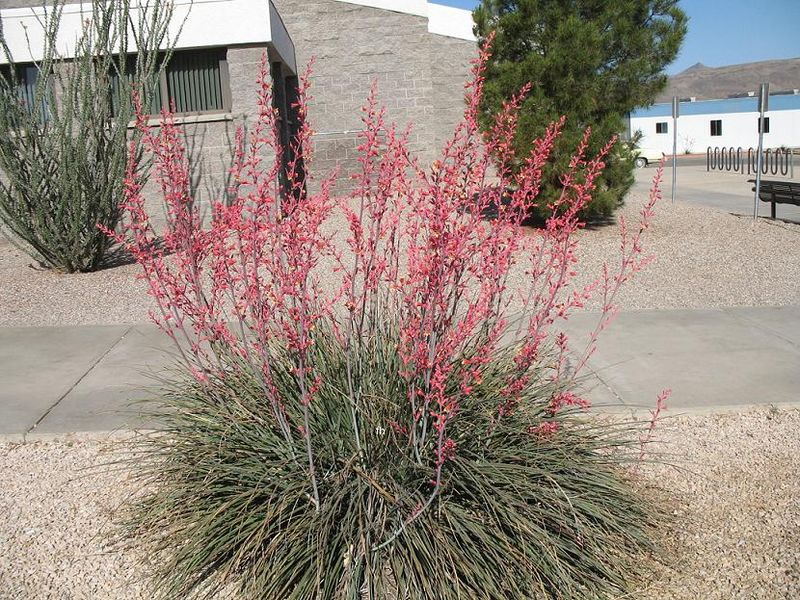
Red Yucca is one of those plants that looks like it should be hard to grow, but is actually surprisingly forgiving.
Tall coral-red flower spikes shoot up from a fountain of grass-like leaves, and the whole thing looks architectural without any sculpting or pruning on your part.
Despite the name, it is not a true yucca. Hesperaloe parviflora is a closer relative of agave, which means it handles Arizona heat and drought without much complaint.
Flower spikes appear in late spring and can persist well into summer, attracting hummingbirds throughout the season.
Planting in full sun with excellent drainage gives the best results. Heavy clay soil that holds moisture for long periods can cause root problems, so amending with gravel or decomposed granite before planting helps in spots where drainage is questionable.
Once settled, it rarely needs supplemental water beyond summer monsoons in many parts of Arizona.
A single plant grows into a clump about three to four feet wide over several years. Older clumps may produce offshoots at the base, which can be separated and replanted.
The foliage stays evergreen through winter, so the border never looks completely bare. For gardeners in Scottsdale, Mesa, or anywhere across the Phoenix metro, Red Yucca earns its spot in almost any border layout.
4. Damianita Stays Compact And Blooms Bright Yellow
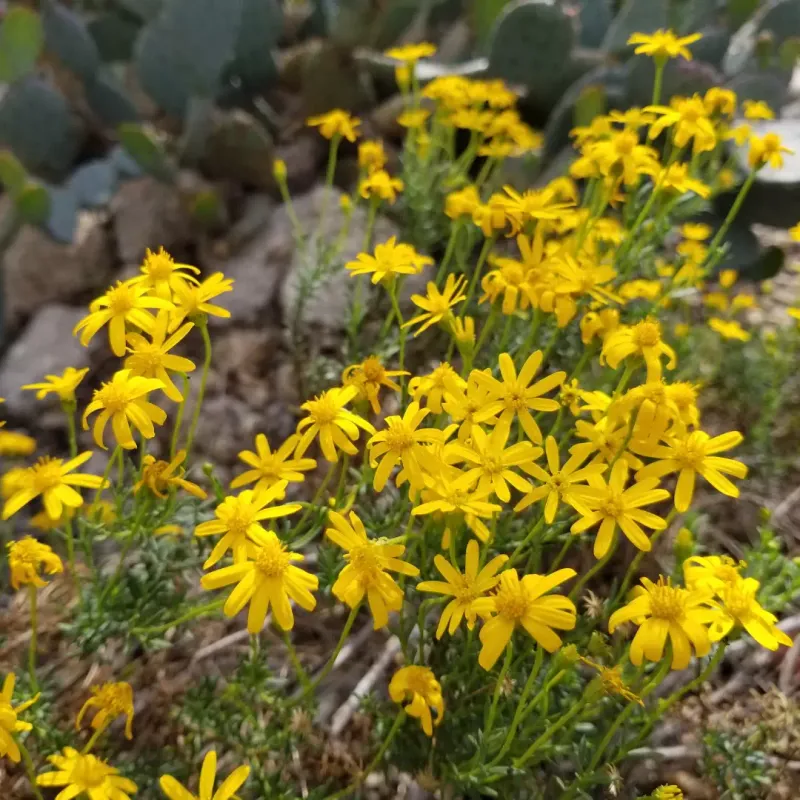
Compact, tidy, and covered in cheerful yellow flowers — Damianita is the kind of plant that earns its space without asking for much in return.
It forms a dense, rounded mound about one to two feet tall and wide, which makes it a natural fit for border edges where you want something that does not sprawl or take over.
Chrysactinia mexicana blooms heavily in spring, slows down during the hottest part of summer, then often produces another flush of flowers in fall.
The timing varies depending on rainfall and temperatures, but the pattern holds fairly consistently across southern and central Arizona.
Bright yellow daisy-like flowers cover the plant when conditions are right.
One thing worth knowing is that the foliage has a strong herbal scent when brushed or crushed. Some people find it pleasant; others less so.
Either way, deer tend to avoid it, which is a practical bonus in areas where browsing pressure is a real concern.
Soil drainage matters more than soil quality for this plant. Rocky, lean ground suits it well.
Overwatering is the most common mistake — Damianita in soggy soil will struggle far more than one left to dry out between waterings.
In Tucson and surrounding areas, supplemental irrigation every two to three weeks during summer heat is typically enough to keep it looking healthy and ready to bloom.
5. Angelita Daisy Thrives In Full Sun With Little Water
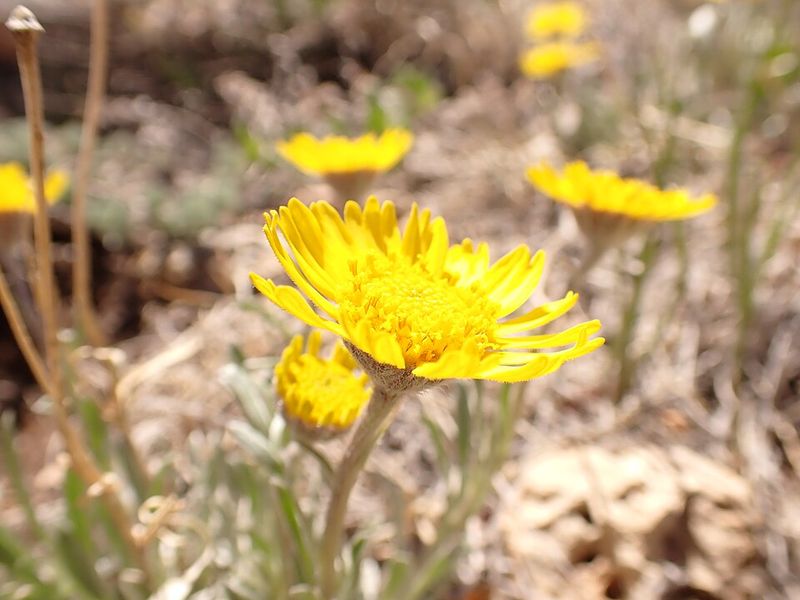
Small but surprisingly tough, Angelita Daisy punches above its weight in an Arizona border.
Tetraneuris acaulis stays low to the ground, rarely exceeding one foot in height, but it produces cheerful yellow flowers consistently from late winter through spring and often again in fall when temperatures cool slightly.
Full sun is non-negotiable for this one. Shade or even partial shade tends to reduce flowering and can make the plant look sparse and leggy.
In the intense Arizona sun, planted in well-draining soil, it settles in and holds its shape well without needing much from you.
Water requirements are genuinely low. During the cooler months, rainfall alone is often enough.
Summer heat calls for deep watering every two to three weeks, though frequency depends on your specific soil type and exposure. Sandy or gravelly soils drain quickly and may need slightly more frequent attention than decomposed granite beds.
Angelita Daisy works especially well when grouped in clusters of three or five along a border edge, creating a sweep of yellow that reads clearly from a distance. It also pairs naturally with desert grasses or low-growing succulents for a layered, textural look.
Gardeners across the Tucson and Phoenix areas have found it reliable in rock gardens, xeriscapes, and traditional landscape borders where water conservation is a priority.
6. Blackfoot Daisy Performs Well In Dry Border Edges
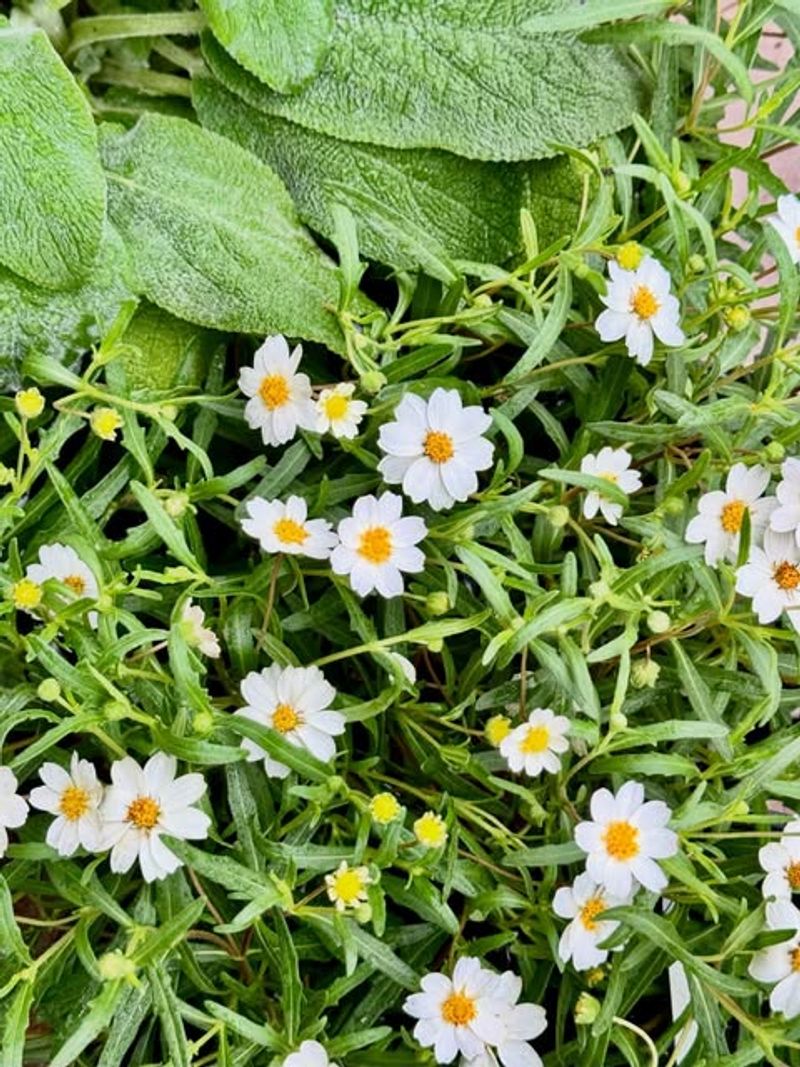
White petals, yellow centers, and a spreading habit that hugs the ground — Blackfoot Daisy has a clean, simple look that fits naturally along dry border edges.
Melampodium leucanthum stays low, usually under one foot tall, and spreads into a tidy mat that fills gaps without crowding out neighboring plants.
Blooming runs from spring through fall in most Arizona locations, with heavier flushes of flowers in the cooler parts of that range. Hot midsummer stretches can slow things down, but the plant holds on and resumes blooming when temperatures moderate even slightly.
Monsoon rains often trigger a fresh round of flowers in late summer.
Lean soil actually suits Blackfoot Daisy better than rich, amended ground. Nitrogen-heavy soil encourages leafy growth at the expense of flowers, so skip the fertilizer and let the plant grow on its own terms.
Drainage is the real priority — standing water after rain or irrigation is harder on this plant than a dry spell.
Watering every ten to fourteen days during summer heat is a reasonable baseline, though local conditions vary. In established plantings across the Phoenix and Tucson metro areas, many gardeners cut back supplemental water significantly after the first growing season.
Pair it with desert marigold or globe mallow for a border that feels cohesive and handles Arizona conditions without constant monitoring.
7. Trailing Rosemary Works Along Borders With Low Water Needs
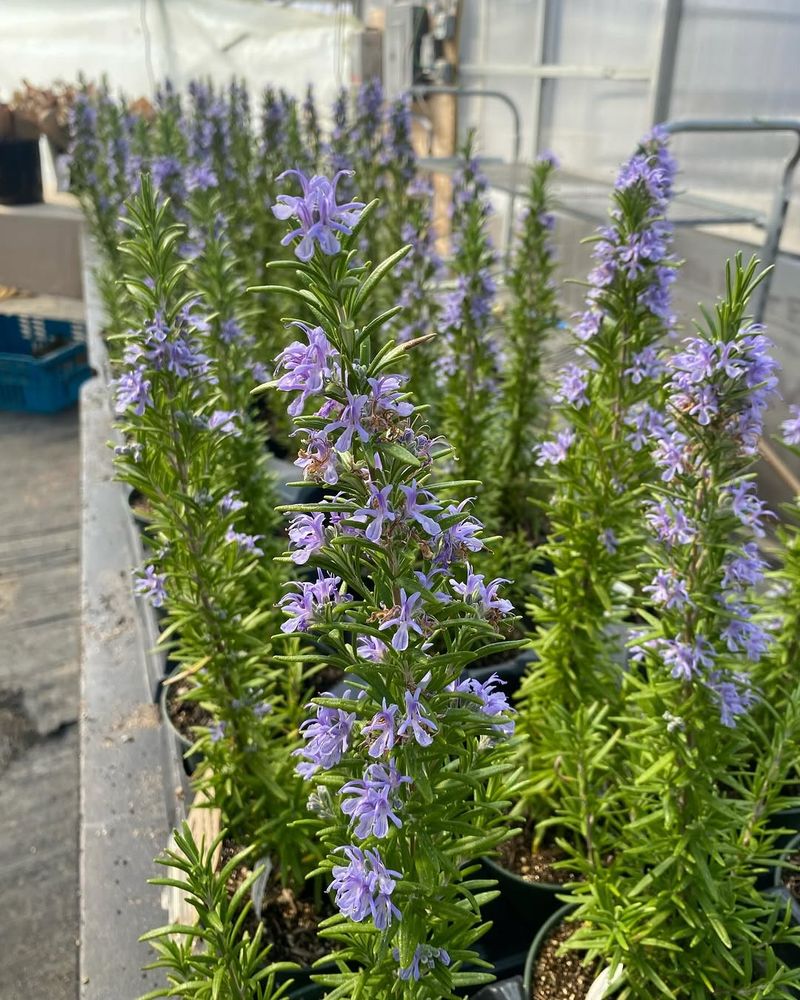
Trailing Rosemary does something most border plants cannot — it spills over edges and softens hard lines while staying drought-adapted enough for Arizona conditions.
The low, spreading form works especially well along raised borders, retaining walls, or pathways where you want a plant that flows rather than mounds.
Prostratus varieties stay under two feet tall but spread three to four feet wide over time. Small blue-purple flowers appear in late winter and spring, covering the plant in color when most of the yard is still waking up.
Pollinators, especially native bees, visit the flowers heavily during that early-season bloom period.
Full sun and excellent drainage are the two things this plant genuinely needs. In parts of Arizona with heavier clay soils, planting on a slight slope or in a raised bed with amended, fast-draining soil makes a meaningful difference.
Root rot from poorly draining ground is the most common issue gardeners run into with rosemary in general.
Once the plant is settled and showing new growth, watering every two weeks during summer is typically enough.
Avoid wetting the foliage when irrigating, since prolonged moisture on the leaves can invite fungal problems, particularly during humid monsoon stretches.
Trailing Rosemary also does double duty as a culinary herb, so planting it along a kitchen-side border in Scottsdale or Mesa gives you beauty and practical use in one spot.
8. Globe Mallow Thrives In Harsh Sun And Poor Soil
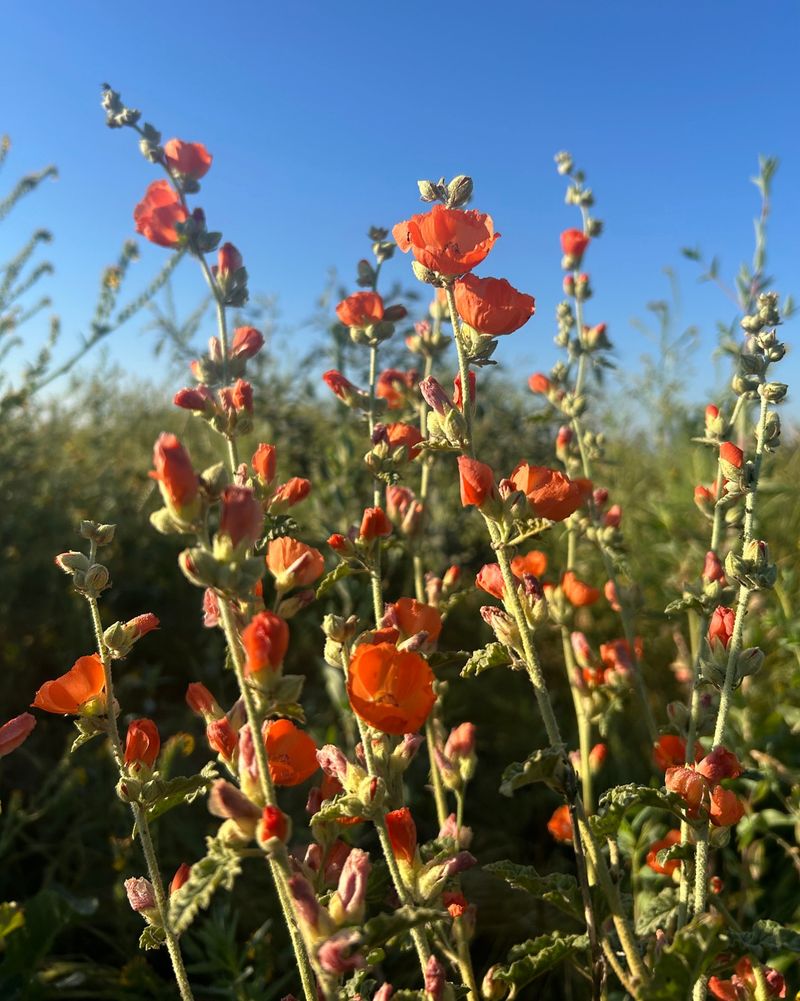
Orange is not a color most people expect to see thriving in a baked, rocky Arizona border, but Globe Mallow delivers it reliably.
Sphaeralcea ambigua produces bright cup-shaped flowers in orange, and occasionally coral or lavender, on upright stems that reach two to three feet tall.
It blooms heavily in spring and can rebloom after monsoon moisture kicks in.
Poor, rocky soil is not a drawback for this plant — it is practically a requirement. Rich soil with heavy fertilization pushes leafy growth and can reduce flowering.
Lean ground, full sun, and minimal water is the combination Globe Mallow actually prefers, which makes it a natural fit for the toughest spots in an Arizona yard.
One heads-up worth mentioning: the fine hairs on the leaves and stems can irritate skin for some people. Wearing gloves when handling or trimming is a simple precaution.
Beyond that, it is a low-fuss plant that handles neglect better than excessive attention.
Cutting the plant back by about half in late winter encourages fresh, vigorous growth before spring flowering begins. Without that occasional trim, older stems get woody and the plant can look tired.
Watering deeply but infrequently during summer — every two to three weeks depending on soil type — keeps it going through the heat.
Across Tucson, Phoenix, and the surrounding desert communities, Globe Mallow earns its place in borders that need color without constant care.