Skip Liriope Along Your North Carolina Walkway And Plant These Natives That Feed Pollinators Instead
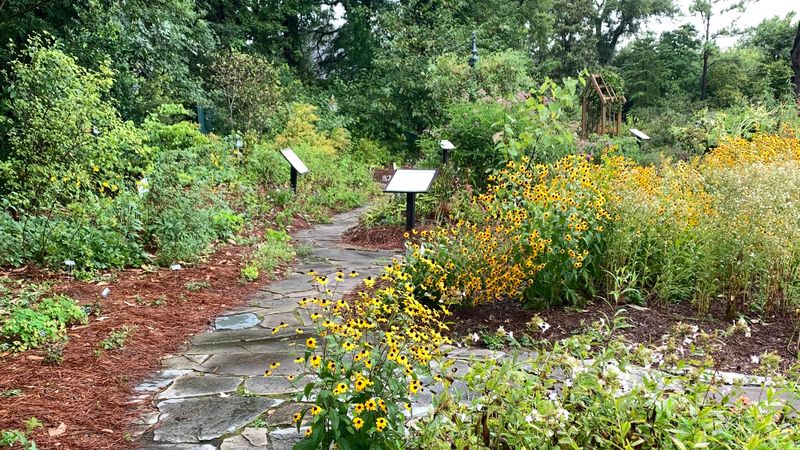
You walk the front path on a warm April evening in the Piedmont, coffee in hand, and there it is again. That thick green ribbon of liriope you planted years ago, spreading past its line, feeding nothing but itself. It looks tidy enough, but it does not work for a single bee, butterfly, or bird. The good news is that North Carolina gives you native plants that edge a walkway just as neatly and actually feed the pollinators drifting through your yard.
1. Creeping Phlox Carpets The Edge In Spring
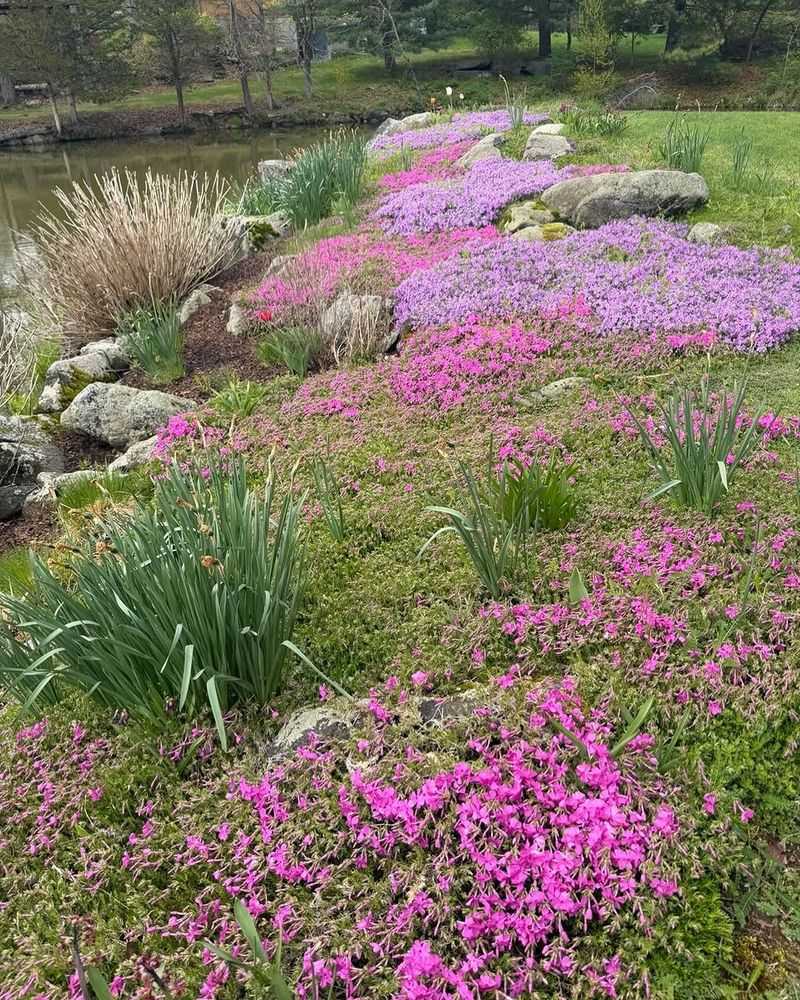
Picture the first mild week of March in the Piedmont, when the last frost has not quite let go and you crave color. Creeping phlox (Phlox subulata) answers early, spilling over a walkway edge in a low mat of pink, lavender, or white.
Liriope just sits there green and mute in spring. Phlox, on the other hand, throws an early nectar party right when native bees wake up hungry and food is scarce. Early emerging bees and small butterflies work the blooms for weeks.
Here is where it gets easy. Space plants about 12 to 18 inches apart in full sun, and they knit together into a solid carpet within two seasons. It handles our red clay if you loosen the top few inches, and it wants good drainage more than rich soil.
Plant in fall or very early spring so roots settle before summer heat arrives. After the bloom fades in April, a light shearing keeps it dense and tidy along the path. It only climbs a few inches tall, so it never swallows the walkway the way liriope creeps over the concrete.
Come next March, you get a low river of color instead of a green fringe, and the bees find you first.
2. Wild Columbine Thrives In The Shady Stretch
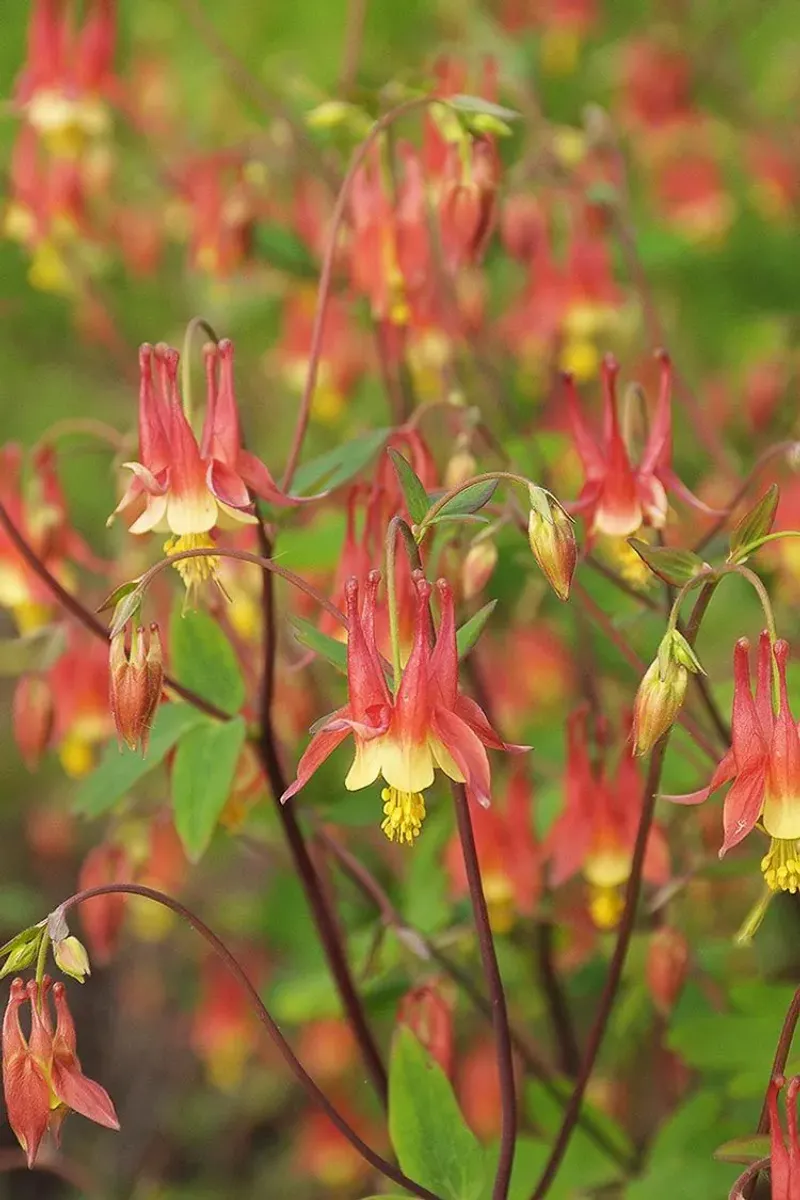
Most walkways have that awkward shaded run beside the house where liriope gets planted by default because nothing else seems to want it. Wild columbine (Aquilegia canadensis) genuinely likes that spot, nodding red and yellow lanterns in part shade.
The turn is in the timing. Columbine blooms in April and May, exactly when ruby-throated hummingbirds return to North Carolina from their long flight north. Those dangling flowers are built for a hummingbird’s beak, and native bees crawl right in behind them.
Set plants 12 to 15 inches apart in soil that drains after our afternoon storms. It reaches about 1 to 2 feet tall, so tuck it just behind a lower edging plant rather than at the very lip of the path.
It is a short-lived perennial, meaning individual plants fade after a few years. But it reseeds gently, so a patch keeps itself going without taking over the yard like liriope does.
You get living color in the exact corner everyone writes off as a problem, and hummingbirds start treating your side path as a regular stop.
3. Butterfly Weed Glows Orange All Summer
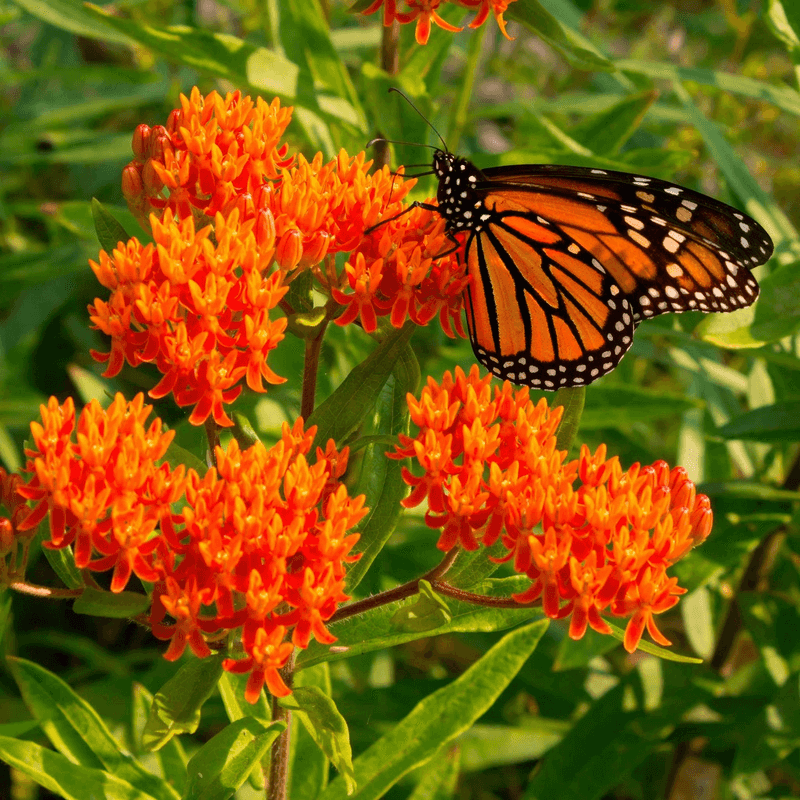
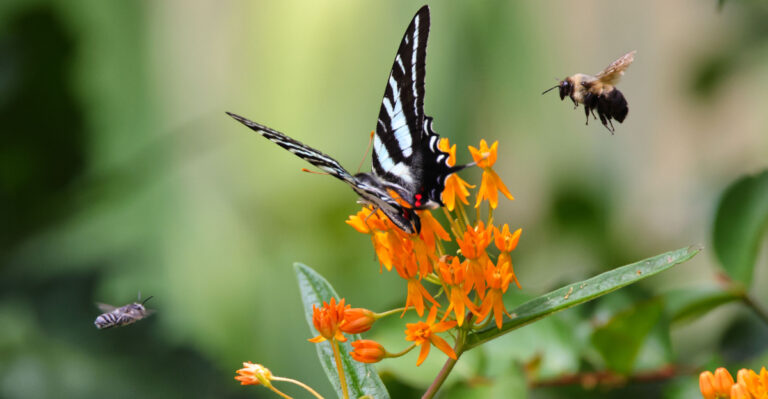
Flip liriope’s biggest weakness on its head. It stays evergreen but never once feeds a monarch, while butterfly weed (Asclepias tuberosa) blazes orange from June into August and hands hungry caterpillars a meal.
Your North Carolina Garden Changes Every Week. Your Plan Should Too.
Gardening in North Carolina changes quickly throughout the season. Every Friday you’ll receive a simple weekly plan showing exactly what to plant, prune, fertilize, harvest, and protect so you never miss the right timing.
Monarch butterflies lay eggs only on milkweeds, and this is the tidiest, best-behaved milkweed for a formal walkway. It stands about 1 to 2 feet tall in a neat clump instead of flopping across the path.
Full sun is the rule here, and it truly wants poor, sandy, well-drained ground, which makes it a natural fit for the Coastal Plain and the Sandhills. It resents rich, wet soil, so do not baby it or overwater.
Space plants 18 inches apart and leave them alone. That deep taproot means it dislikes being moved, so pick the spot once and commit.
Through a muggy Carolina summer, you get fiery orange, swallowtails, and the odd chance of finding a striped monarch caterpillar chewing away three feet from your front door.
4. Eastern Bluestar Turns Gold In Autumn
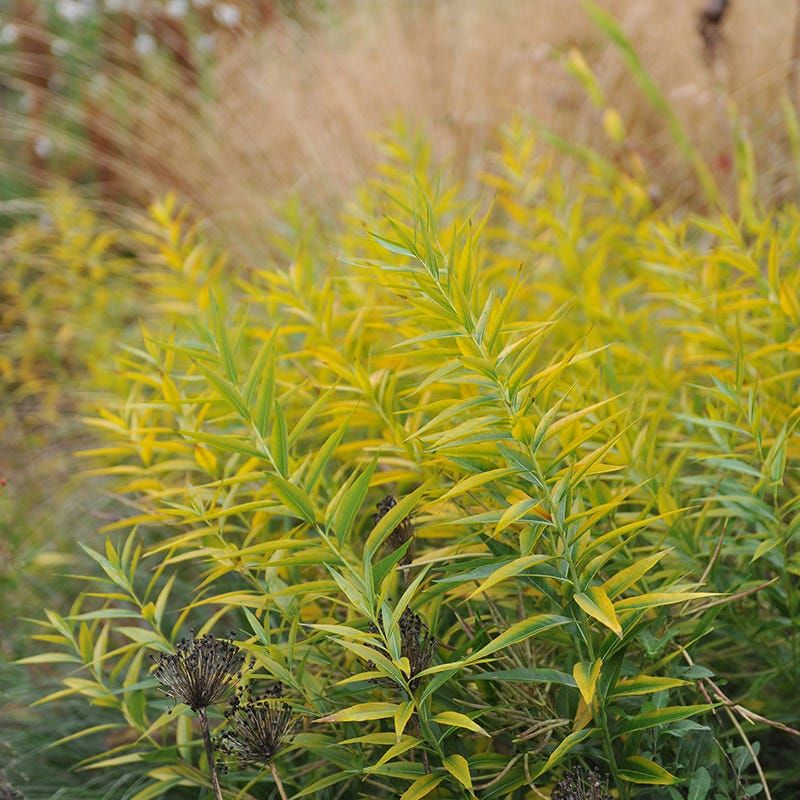
Gardeners who worry that a native edge looks scruffy have not met eastern bluestar (Amsonia tabernaemontana). It grows as a rounded, shrubby mound of fine leaves that reads as clean and intentional along any path.
Spring brings clusters of soft steel-blue star flowers that feed early butterflies and bees. Then autumn delivers the real showstopper, as the whole plant turns a glowing butter-yellow that lasts for weeks.
So you get three seasons of structure from one plant. It reaches about 2 to 3 feet tall and wide, so give it 24 to 30 inches of room and let it fill in as a soft anchor at a walkway corner.
It handles Piedmont clay better than most natives and shrugs off deer, which is no small thing here. Full sun keeps it dense, though it tolerates a little afternoon shade.
Cut it back by about a third after flowering if you want an even tighter mound. Otherwise it minds its manners, feeds the pollinators, and closes out the year in gold while liriope just sits there flat and green.
5. Coneflower Feeds Bees Then Feeds Finches
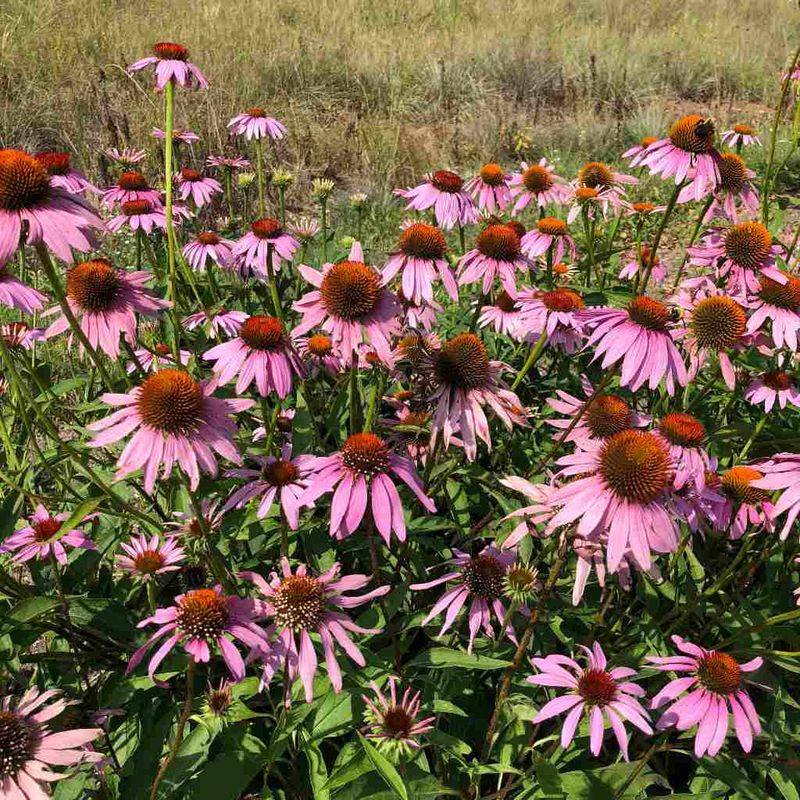
Few natives pull double duty like purple coneflower (Echinacea purpurea). Through July and August its daisy-shaped blooms swarm with bees and butterflies, and then the spent seedheads become a winter diner for goldfinches.
That is the trick liriope can never manage. One plant works both ends of the calendar, so your walkway keeps giving after the flowers fade.
Blunt truth about placement. It grows 2 to 4 feet tall, so this belongs behind a shorter edging plant, not right on the lip of the path. Space plants about 18 to 24 inches apart in full sun and average, well-drained soil.
It laughs off our humid summers and bounces back after those afternoon thunderstorms roll through the Piedmont. NC State Extension lists it among the reliable native perennials for pollinator plantings across the state.
Leave the seedheads standing through winter instead of cutting them down. On a gray January morning you will spot goldfinches clinging to the stalks outside your window, and that quiet payoff is worth the mess.
6. Woodland Phlox Perfumes The Evening Path
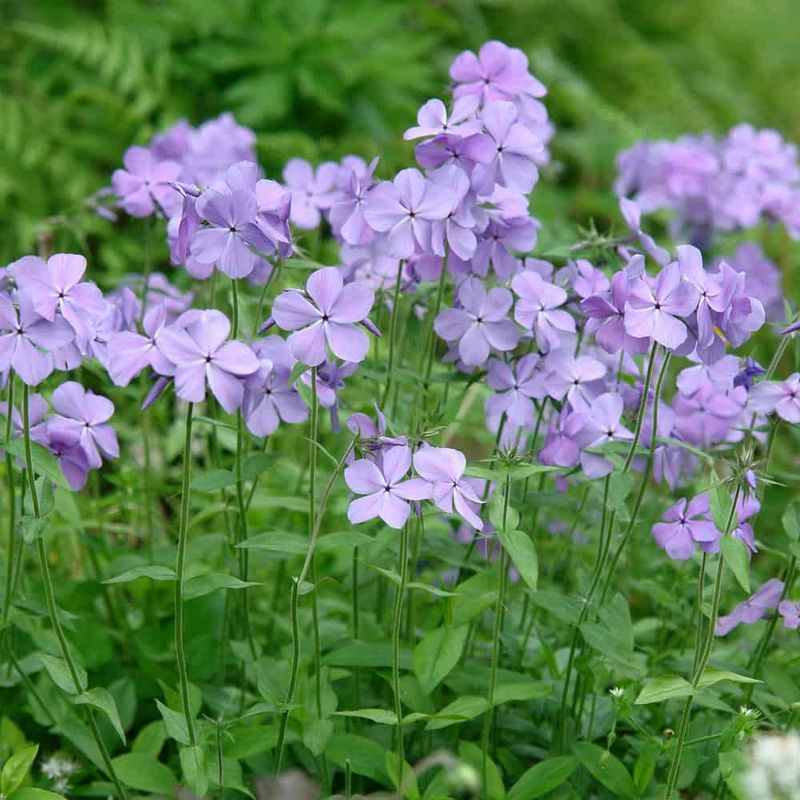
Step onto the porch on a mild May evening and catch a sweet drift of scent on the air. Woodland phlox (Phlox divaricata) does that, sending up loose clusters of pale blue-lavender flowers that perfume the walkway after dusk.
Where creeping phlox loves sun, this cousin prefers the dappled shade under a dogwood or at the woodland edge. That fragrance is not for you alone. It draws in evening moths and long-tongued native bees that pass right by a strip of liriope.
It stands about 12 to 15 inches tall and spreads slowly by runners, filling a shaded border without staging a hostile takeover. Space plants 12 inches apart in soil rich with leaf litter, which mimics its natural forest floor home.
Plant in fall so it roots through our mild winter, then watch it bloom the following spring. A light trim after flowering keeps it neat.
You end up with a shaded stretch that smells wonderful at dusk and hums quietly with pollinators, right where liriope would have just sat in silence.
7. Little Bluestem Adds Motion And Winter Color
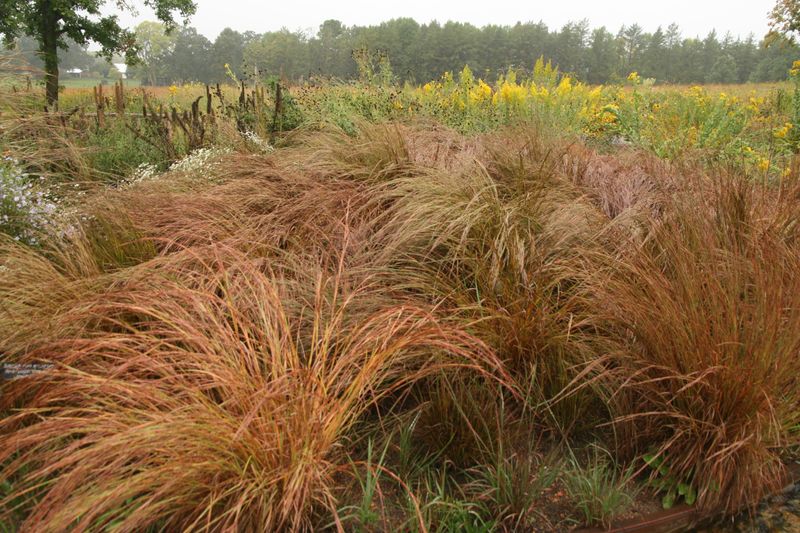
People reach for liriope because they want that grassy line along the path. Little bluestem (Schizachyrium scoparium) gives you the grass look and then some, swapping a static green fringe for something that moves and changes.
Summer brings blue-green upright blades. Then fall flips the whole clump to coppery orange and russet, holding that color straight through winter while the seed catches the low December light.
Here is the wildlife layer most folks miss. It is a host plant for several native skipper butterflies, and songbirds pick at the seed through the cold months. The clumps also shelter overwintering insects when you leave them standing.
It grows 2 to 3 feet tall in a tight, well-behaved bunch. Space plants 18 inches apart in full sun and lean, well-drained soil, which suits both Sandhills sand and amended Piedmont clay.
Cut the clumps back to a few inches in late February, right before new growth pushes up. All winter long, though, that copper glow and gentle sway earns its keep in a way an evergreen strip of liriope never could.
8. Golden Ragwort Blankets Damp Shade Early
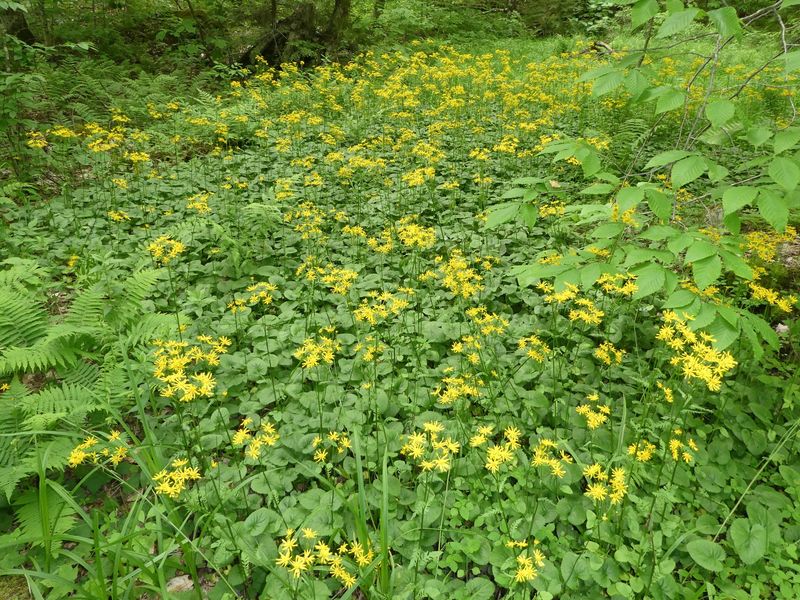
That soggy patch along the path where water pools after a storm defeats most edging plants. Golden ragwort (Packera aurea) treats it as prime real estate, forming a low green groundcover in the exact damp shade where liriope only limps along.
Come April, it lifts up airy clusters of small yellow daisies on stems above the foliage. Those early blooms feed emerging native bees and small butterflies weeks before the summer flowers open.
It works as a true groundcover, staying only a few inches tall as foliage and spreading to fill bare ground. That means it crowds out weeds the way liriope does, but with a spring flower show and a food source attached.
Space plants 12 to 18 inches apart in part to full shade with consistently moist soil. It naturalizes well along the Piedmont and mountain regions where damp, shaded ground is common.
After bloom, the flower stalks fade and the tidy green mat carries the rest of the year. You solve the wet-corner headache and feed the earliest bees in one move, which feels like getting away with something.
9. What Else Actually Helps Your Walkway Work
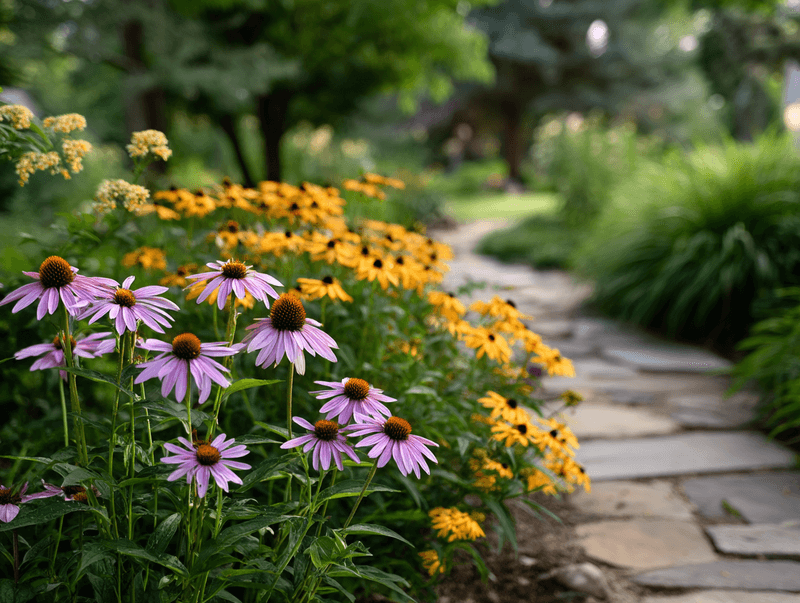
Swapping in natives is one layer, not a magic fix, so a few habits make the whole path pull its weight. Group three or more of the same plant together instead of dotting singles down the walkway. Pollinators find a cluster far faster than a lonely bloom.
Aim for something flowering in every season. Pair spring phlox and columbine with summer coneflower and butterfly weed, then let bluestar and little bluestem carry the color into fall and winter. That overlap keeps food coming as monarchs pass through in September and October.
Skip the broad pesticide sprays near these beds, since they kill the very bees and caterpillars you are trying to invite. And leave the seedheads and grass clumps standing through winter, because they shelter overwintering insects and feed goldfinches on cold mornings.
Match each plant to its real spot. Butterfly weed wants dry sun, golden ragwort wants damp shade, and forcing either into the wrong ground just wastes your money. NC State Extension keeps region-specific native plant lists worth checking before you buy.
Give it two seasons to settle in. By the second spring, your walkway will hum with life, ask less of you than liriope ever did, and you will feel a little proud every time you walk it.