Skip Privet Hedges In North Carolina Yards And Plant This Bird-Friendly Native Screen Instead
Privet is everywhere in North Carolina, and its ubiquity is a significant part of the problem. It screens well, grows fast, and stays green through winter in ways that make it appear to be a practical choice right up until its ecological costs become impossible to ignore.
It spreads aggressively into natural areas, forms monocultures that displace native vegetation, and produces almost nothing of value for the birds and insects that a healthy North Carolina yard should be supporting.
A native alternative delivers the same dense screening and fast establishment while turning that hedge line into one of the most active wildlife corridors on the entire property.
Making the switch is one of the highest-return plant replacements available to a North Carolina homeowner.
1. Privet Is Listed As Invasive In North Carolina
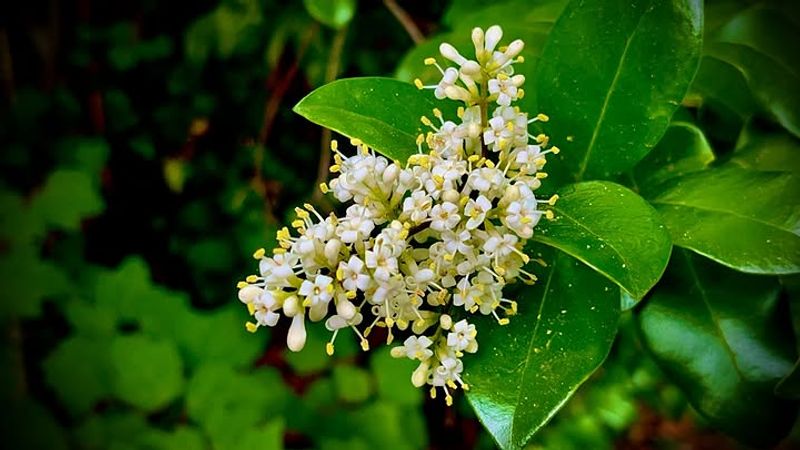
Not every fast-growing shrub is a good neighbor. NC State Extension lists Japanese privet as invasive in North Carolina, describing it as a problematic plant where gardeners should consider alternatives before planting.
That label carries real weight, especially for homeowners who care about their local environment.
Privet earns that reputation partly because of how aggressively it grows. It fills in quickly, which makes it look like a smart choice for a privacy screen.
But that same rapid growth rate is exactly what makes it so hard to contain once it gets going in your landscape.
Plenty of North Carolina gardeners have planted privet thinking it would be a low-effort solution, only to find themselves dealing with a shrub that keeps pushing beyond its boundaries.
NC State Extension specifically notes that alternatives should be considered, which is a clear signal that this plant comes with strings attached.
Choosing a plant that is flagged as invasive is a bit like hiring someone who always causes problems at their last job. You might get short-term results, but the long-term headaches are not worth it.
North Carolina has a rich palette of native plants that can do everything privet does, without the baggage that comes with an invasive label.
Swapping out privet for a native alternative is one of the smartest decisions a North Carolina gardener can make.
Your yard will look just as good, and you will not have to worry about what happens when that hedge starts reaching beyond your property line.
2. Privet Can Escape Into Natural Areas
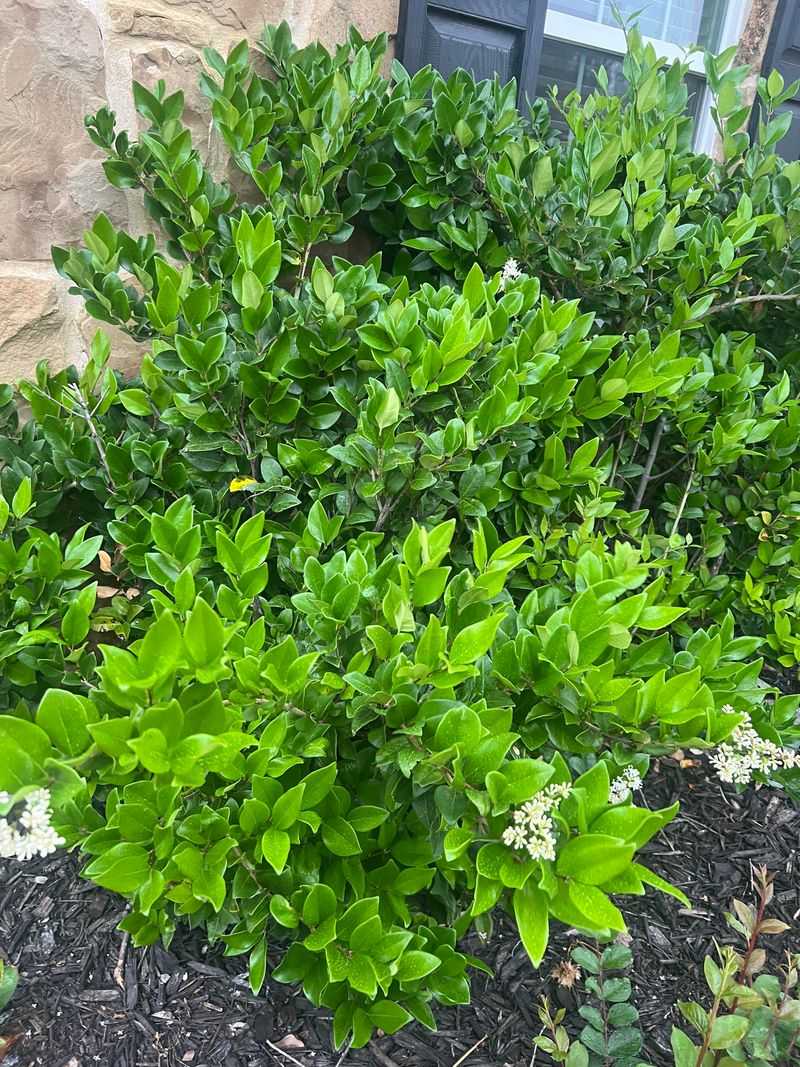
A hedge planted for backyard privacy can quietly become something much bigger than a yard plant.
Japanese privet has a well-documented ability to escape cultivation, spreading naturally into disturbed areas, woodland edges, and moist spots near streams and creeks.
What starts as a tidy row of shrubs can become a problem far beyond your fence line.
This spreading happens because privet is incredibly adaptable. It thrives in the kinds of moist, disturbed environments that are common along roadsides and natural area borders throughout North Carolina.
Once it gets a foothold outside a maintained garden, it can naturalize quickly, crowding out the native plants that local wildlife depend on.
For gardeners who love spending time outdoors and care about the health of nearby parks, greenways, or natural spaces, this is a serious concern. Planting privet in your yard is not just a personal gardening choice.
Your North Carolina Garden Changes Every Week. Your Plan Should Too.
Gardening in North Carolina changes quickly throughout the season. Every Friday you’ll receive a simple weekly plan showing exactly what to plant, prune, fertilize, harvest, and protect so you never miss the right timing.
It can have ripple effects that reach well beyond your property. Naturalized privet colonies can shade out native wildflowers, native shrubs, and tree seedlings that would otherwise support local birds and insects.
Over time, that kind of displacement changes the character of entire natural areas, making them less diverse and less functional for wildlife.
Knowing that a common hedge plant can contribute to that kind of spread is a good reason to rethink the plan.
North Carolina has beautiful native alternatives that stay where you plant them and support the surrounding environment rather than working against it.
3. Privet Fruits Can Be Spread By Birds
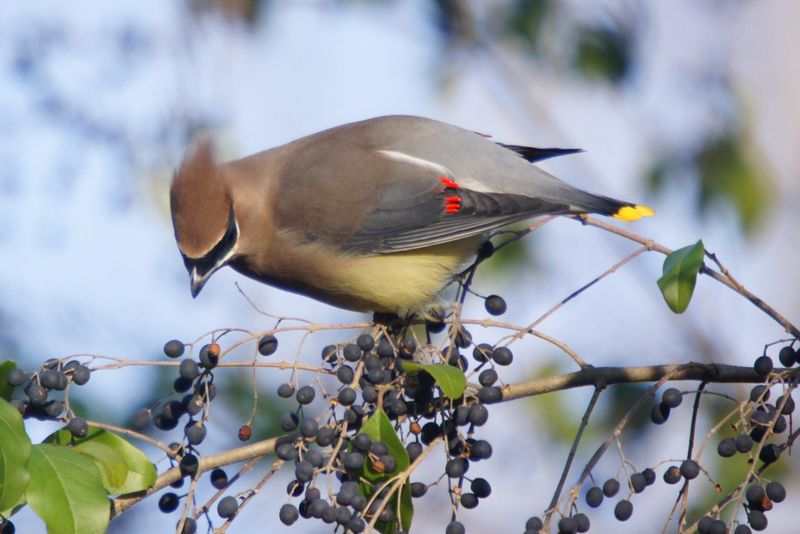
Here is something most gardeners never think about when they plant a privet hedge: the berries. Japanese privet produces small dark fruits that birds find attractive and eat readily.
When birds consume those fruits and fly off to perch somewhere else, they carry the seeds with them, effectively planting new privet far from the original hedge.
This is exactly why privet is so effective at spreading beyond cultivated areas. Birds are efficient seed dispersers, and they do not stick to property lines.
A hedge planted in a suburban yard can end up contributing seeds to a nearby park, a greenway buffer, or a natural woodland edge, all without the homeowner ever realizing it.
For gardeners who genuinely want to support birds in their yard, this creates a real conflict.
You might be putting out feeders, planting flowers for pollinators, and doing everything right, but a privet hedge quietly undermines those efforts by helping a problematic invasive plant spread through the landscape.
A truly bird-friendly yard works with native plant communities rather than against them. Native plants support the insects that birds need for feeding their young, and they provide fruits and seeds that local wildlife have evolved to use.
Privet fruit does not offer that same ecological value, even though birds will eat it.
Choosing a native fruiting shrub instead of privet means the birds visiting your yard become helpers rather than spreaders. That small shift makes a big difference for the health of the broader landscape around your home.
4. Privet Can Bring More Maintenance Than Gardeners Expect
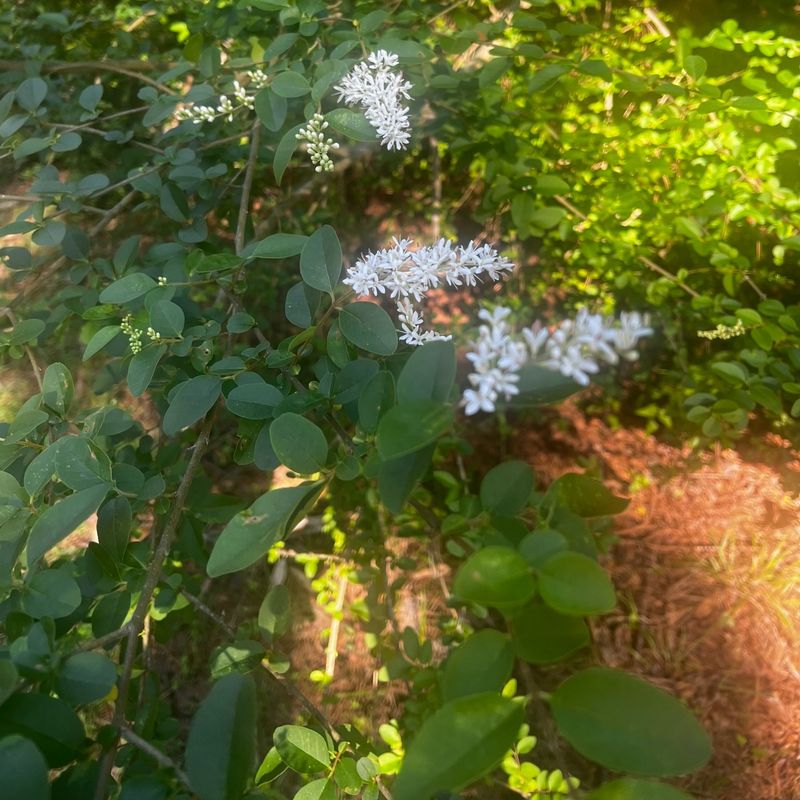
Privet has a reputation as an easy hedge, but that reputation does not always hold up in real yards. Because it grows so fast, privet often needs pruning multiple times a year just to keep its shape.
What looks like a low-maintenance solution at the nursery can quickly turn into a recurring chore that eats up your weekends.
NC State Extension also notes several common pest and disease problems associated with privet. Anthracnose, a fungal disease, can affect stems and leaves.
Privet is also susceptible to various other issues depending on site conditions and local pest pressure. These problems add another layer of maintenance that many gardeners do not anticipate when they first plant a hedge.
Speed is appealing when you want a screen fast, but fast growth in a shrub almost always means more work to keep things looking tidy.
Privet can put on several feet of new growth in a single season, which means your neat hedge can start looking shaggy again before you have even put the pruning shears away.
Over the long term, a plant that demands constant attention and occasional treatment for pests or disease is not the easy win it seemed to be. Gardening should be enjoyable, not a constant battle with a shrub that keeps outgrowing its space.
A native alternative that grows at a more manageable pace, resists local pests, and holds its shape naturally is a much smarter investment of your time and energy. The best long-term screen is one that works with your schedule, not against it.
5. Yaupon Holly Is A Native Evergreen Screen
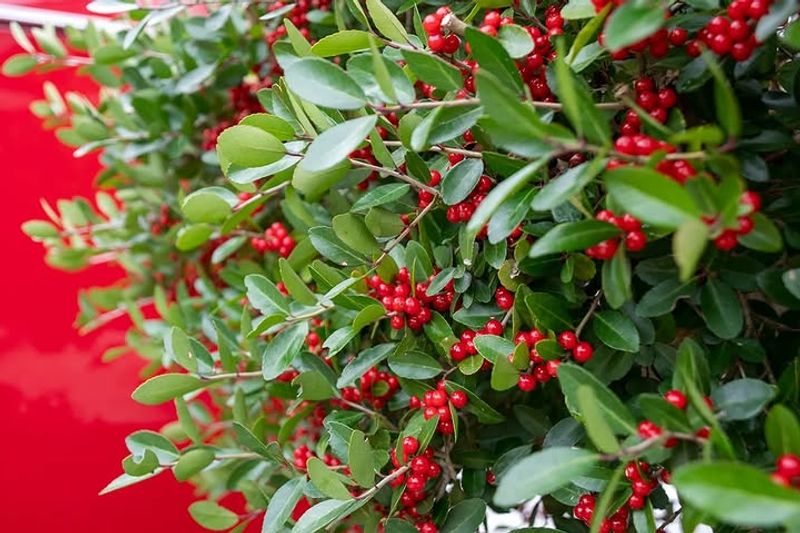
Meet the native shrub that can do everything privet does and then some. Yaupon holly, known botanically as Ilex vomitoria, is a broadleaf evergreen native to the southeastern United States, including North Carolina.
It grows naturally in a wide range of conditions and has been thriving in this region long before anyone thought to plant privet as a hedge.
As a privacy screen, yaupon holly is outstanding. Its naturally dense branching habit creates a thick, full barrier that blocks views and reduces noise without needing constant shaping to look good.
The small, glossy, dark green leaves stay on the plant year-round, so you get a solid green screen through every season, including the middle of winter when deciduous plants leave you exposed.
Yaupon holly works beautifully as a hedge, windbreak, or barrier planting. It can be grown as a large shrub or trained into a small multi-stemmed tree, depending on how much space you have and what kind of look you want.
That flexibility makes it useful in a wide range of yard sizes and landscape styles.
Because it is native to North Carolina, yaupon holly is already adapted to the local climate, soils, and seasonal patterns. It does not need to be babied through its first few years the way some non-native plants do.
Once established, it settles in and handles conditions that would stress out less adapted plants.
Replacing privet with yaupon holly is not a compromise. It is a genuine upgrade that gives you privacy, beauty, and ecological value all in one plant.
6. Yaupon Holly Supports Birds With Winter Fruit
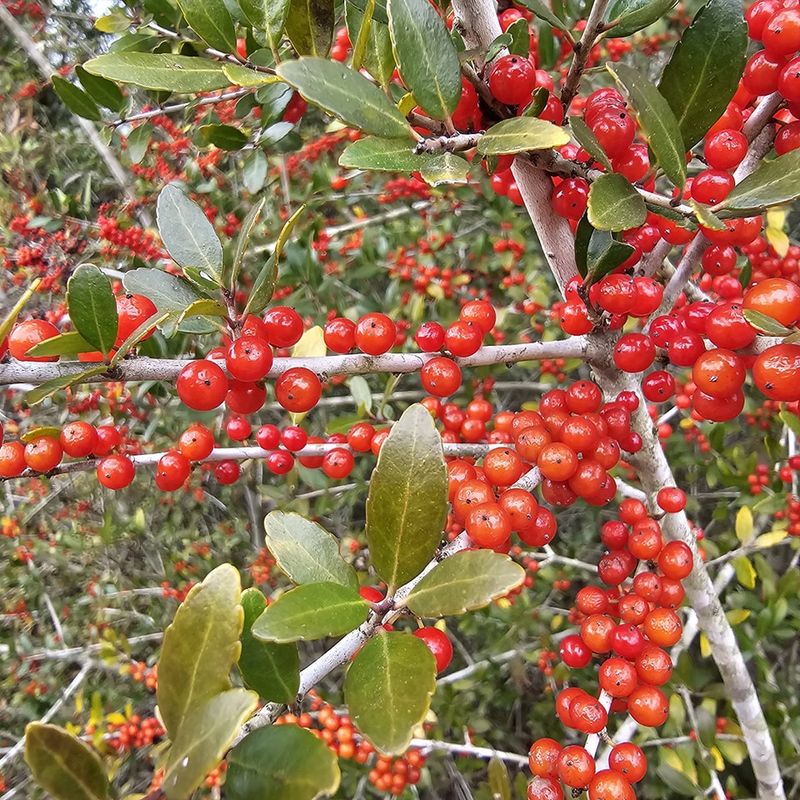
Winter can be a tough time for birds in North Carolina. Natural food sources thin out, temperatures drop, and finding enough to eat becomes a daily challenge. That is exactly when yaupon holly steps up in a way that privet simply cannot match.
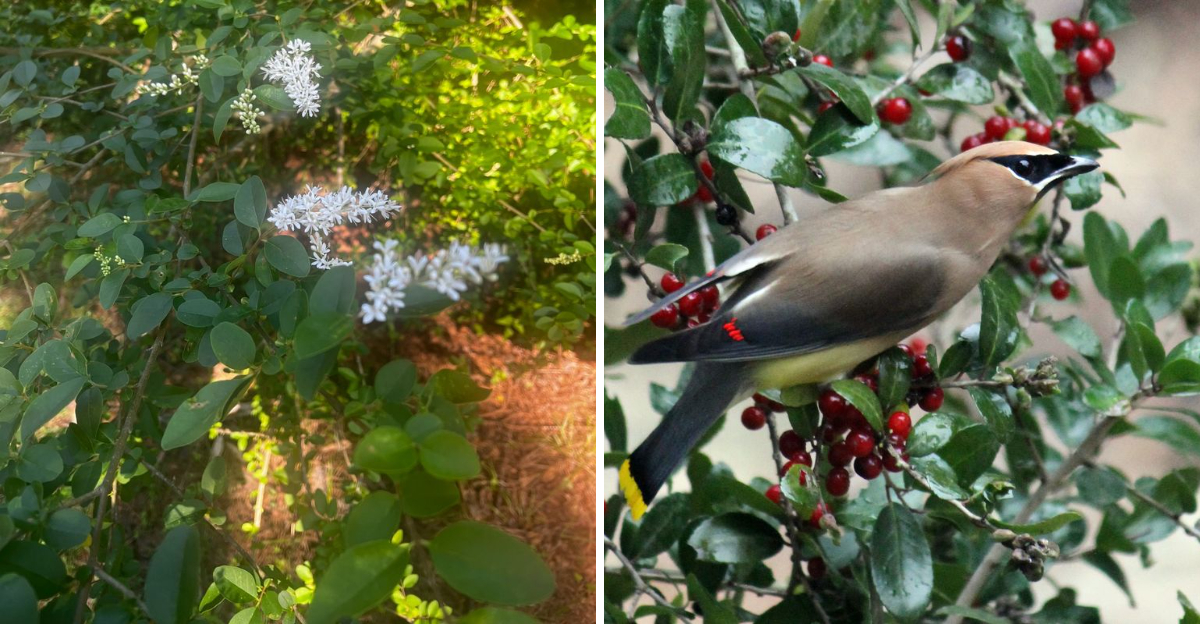
Female yaupon plants produce showy clusters of bright red berries that ripen in fall and persist through winter, giving local songbirds and small mammals a reliable food source when they need it most.
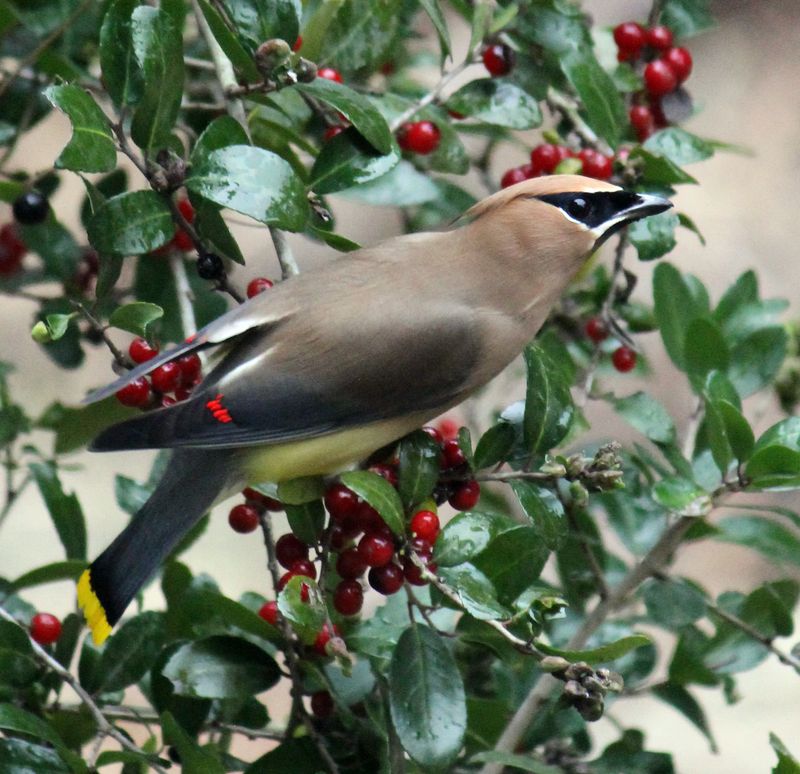
Mockingbirds, cedar waxwings, robins, and other fruit-eating birds are drawn to yaupon holly berries and will visit repeatedly throughout the cold months.
Watching a flock of cedar waxwings work through a yaupon holly on a crisp winter morning is one of those backyard moments that makes all the effort of good gardening feel completely worthwhile.
There is one important detail to keep in mind if you want consistent fruit production. Yaupon holly is dioecious, which means individual plants are either male or female.
Only female plants produce berries, but they need a male plant nearby to pollinate the flowers first. Without a male plant blooming at the same time, fruit set will be poor or nonexistent.
When you shop for yaupon holly, look for plants labeled as female if you want berries, and make sure at least one male plant is included nearby. Most nurseries that carry yaupon holly can help you select the right combination.
Getting that pairing right is a small step that pays off every winter with a yard full of berries and the birds that come to enjoy them.
7. Yaupon Holly Handles Tough North Carolina Conditions
One of the most impressive things about yaupon holly is how little it complains. This is a plant that has spent thousands of years adapting to the varied and sometimes harsh conditions found across the southeastern United States, and it shows.
North Carolina yards can throw a lot at a plant, from summer drought to coastal salt spray to occasional flooding after heavy rain, and yaupon holly handles all of it with ease.
Sun exposure is rarely a limiting factor with this shrub. Yaupon holly grows in full sun, partial shade, and even deep shade, which makes it one of the most flexible native plants available for North Carolina landscapes.
That said, plants grown in more sun tend to develop a denser canopy and produce more fruit, so a sunny spot is worth choosing if you have the option.
Soil type is also flexible. Yaupon holly tolerates clay, sand, loam, and everything in between.
It handles both dry upland sites and periodically wet areas, which is a rare combination in the shrub world. Coastal gardeners especially appreciate its tolerance for salt spray, a condition that limits the options for many other plants.
Once established, yaupon holly requires very little supplemental watering. That drought tolerance makes it a smart choice for gardeners who want a beautiful, functional landscape without running up a high water bill during dry summers.
Few native plants check as many boxes as yaupon holly when it comes to adaptability. It truly fits the wide range of conditions that North Carolina gardeners encounter across the state.
8. Yaupon Holly Can Be Pruned Like A Hedge
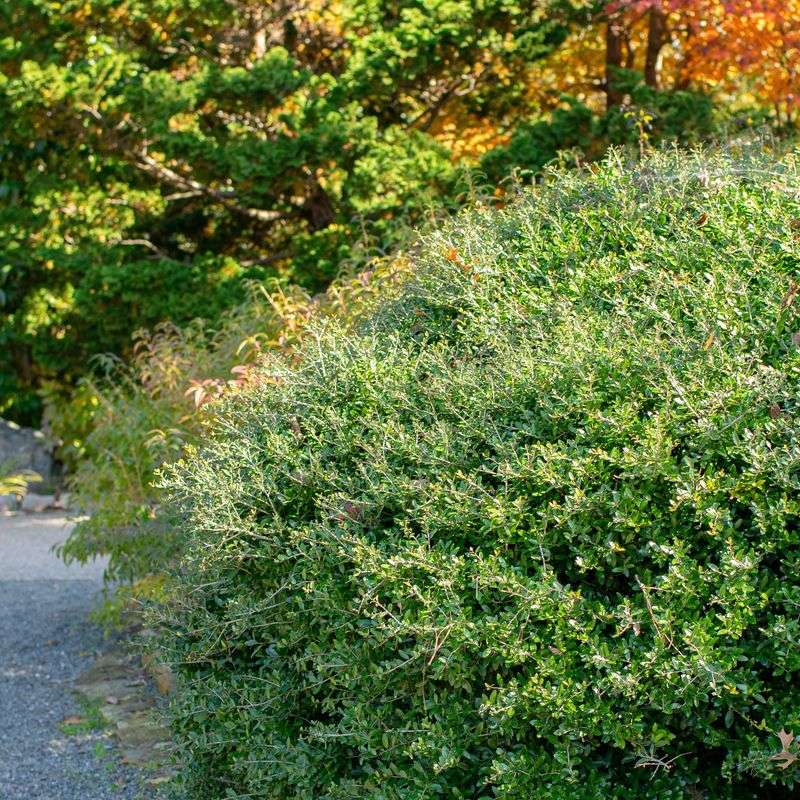
If you love the clean, structured look of a clipped hedge, yaupon holly will not disappoint. This native shrub takes heavy pruning extremely well, bouncing back quickly and filling in with fresh dense growth after each cut.
Gardeners who want a formal, tidy appearance can shear yaupon holly into a tight hedge just like they would with privet, without any of the invasive baggage that comes with that choice.
Mass planting yaupon holly as a screen or hedge is a common and effective approach in North Carolina landscapes.
A row of yaupon hollies planted at the right spacing creates a solid, evergreen barrier that provides year-round privacy and looks polished in any season.
Whether you want a low border, a mid-height screen, or a tall windbreak, there is a yaupon holly form that fits the job.
Spacing matters more than many gardeners realize, and it is worth getting right from the start. Mature yaupon holly plants can reach roughly ten to twenty feet tall and eight to twelve feet wide, depending on the specific cultivar and growing conditions.
Planting too close together can create crowding and airflow problems down the road, while planting too far apart leaves gaps that take years to fill in.
Many nurseries carry compact cultivars of yaupon holly that stay naturally smaller, which can be a great fit for tighter spaces or lower hedges. Checking the mature size on the plant tag before you buy saves a lot of future pruning effort.
With the right spacing and a little shaping, a yaupon holly hedge can look every bit as sharp as a privet hedge, while doing so much more for your yard and the wildlife that visits it.