Skip The Mums This Fall And Plant These Florida Natives Instead
Mums are the plastic flamingos of fall. Every porch on the block has a pair, and every pair throws in the towel before Thanksgiving.
You pay good money for color that quits before the turkey hits the table. Meanwhile, a few Florida natives laugh at the same weather and keep the party going well into winter.
No yearly trip to the garden center, no babying, no replacing.
They also feed the bees and butterflies that mums never bother to help. Your wallet and your yard both come out ahead.
The catch? Nurseries stack the mums front and center and tuck the good stuff in a back corner.
You have to know what to ask for.
Walk past those pumpkin-orange pots this year. Your porch can stand apart from the crowd, and it costs less than another flat of mums.
1. Swamp Sunflower Lights Up The Fall Garden
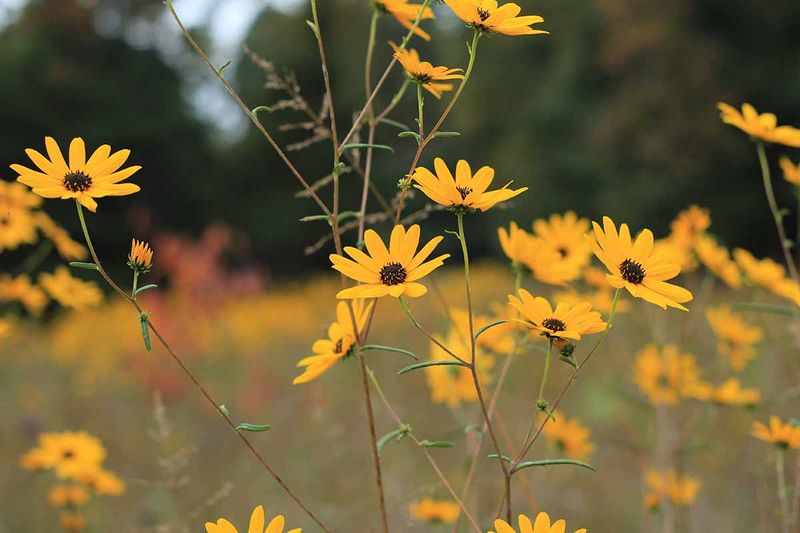
Picture a wall of sunshine standing taller than your neighbor. In October, swamp sunflower bursts open with so many yellow blooms that the leaves almost disappear.
Known to plant fans as Helianthus angustifolius, it grows wild in every part of Florida. Plants form big mounds that reach 2 to 8 feet tall and just as wide.
Its rough, narrow leaves stay dark green, which makes the golden flowers pop even more.
Out in nature, this sunflower loves soggy, low spots. Good news, though, it also does well in regular garden soil if you give it a drink during dry spells.
Full sun brings the best show, while partial shade can make stems lean and stretch.
Here is a handy trick for a fuller plant. Pinch the tips back in early summer, and you will get a bushier clump with even more flowers.
It fits nicely in USDA Zones 8B to 10.
Fair warning, it spreads fast by underground stems called rhizomes. Give it room at the back of a bed or along a fence line.
Few pests or diseases bother it, so care stays simple.
Bees and butterflies flock to it, including Monarchs passing through on their long trip south. It even serves as a host plant for the Silvery Checkerspot butterfly.
2. Elliott’s Aster Fills Gaps With Lavender Blooms
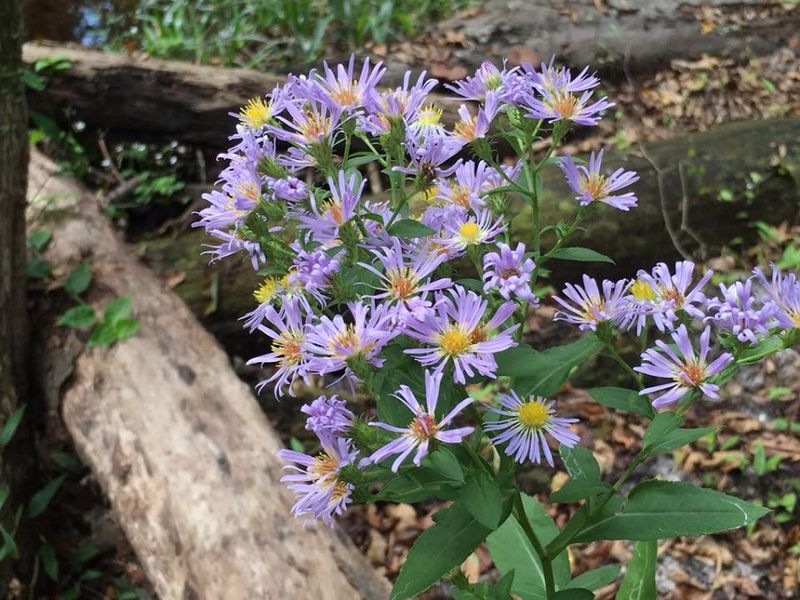
Got a bare, soggy corner that nothing seems to like? Elliott’s aster might just be the roommate it has been waiting for.
This sturdy Florida perennial, Symphyotrichum elliottii, covers itself in fragrant lavender to purple flowers. Each bloom is a little over an inch wide with a sunny yellow center.
Once in a while, you may even spot a white one.
Plants usually grow 3 to 4 feet tall. Give them a fence or neighbor plant to lean on, and they can stretch to 6 or 8 feet.
Their loose, sprawling shape fills empty spaces in a pollinator bed in no time.
Timing is the real star here. Flowers open in late summer and can keep going into mid-December.
That gives bees and butterflies a snack bar when most other plants have closed shop.
Your Florida Garden Changes Every Week. Your Plan Should Too.
Gardening in Florida changes quickly throughout the season. Every Friday you’ll receive a simple weekly plan showing exactly what to plant, prune, fertilize, harvest, and protect so you never miss the right timing.
In the wild, you will find it in ditches, swamps, and other wet places. Moist to wet soil suits it best, along with full sun or part shade.
Too much shade, however, can make it flop over.
One thing to know before planting is that it travels. Underground runners help it spread quickly, so a rain garden, wet edge, or large container works well.
As a bonus, deer tend to leave it alone.
3. Seaside Goldenrod Thrives Near The Coast
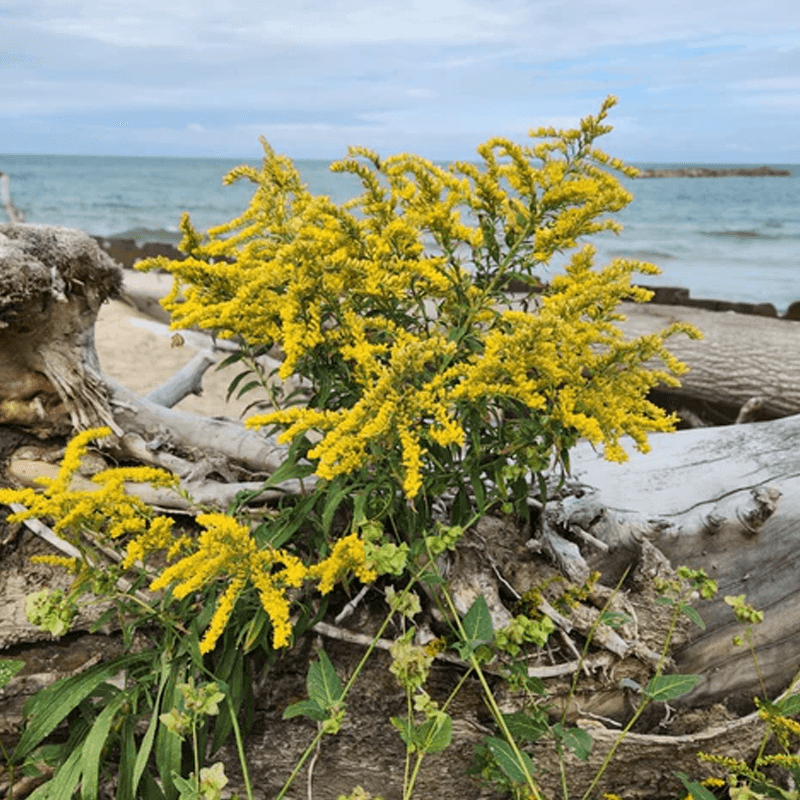
Salty wind, blowing sand, and the odd splash of seawater would wreck most garden flowers. Seaside goldenrod simply waves its golden plumes and carries on.
Solidago sempervirens grows naturally along Florida’s coast, from the Panhandle down the peninsula. It handles salty soil, salt spray, and even short floods of saltwater.
That makes it a smart pick for dunes, beachfront yards, and marsh edges.
Look closely and you will notice its thick, slightly juicy leaves. That fleshy texture helps the plant hold water in tough spots.
Above them rise feathery sprays of tiny yellow flowers.
This is a tall one, reaching 4 to 9 feet. Blooms show up in late summer, last through fall, and sometimes linger into winter.
Want a shorter plant? Pinch or prune it back in June for a tidier shape.
Full sun and sandy soil that drains well keep it happiest. Still, it adapts to most yards unless the shade is deep.
Over time, it forms thick clumps by seed and new shoots.
Fun fact: goldenrod often gets blamed for fall sneezes, but its pollen is heavy and sticky. Ragweed is usually the true troublemaker.
Meanwhile, migrating Monarchs and busy bees treat this plant like a beachside diner.
4. Climbing Aster Keeps Flowering Into Winter
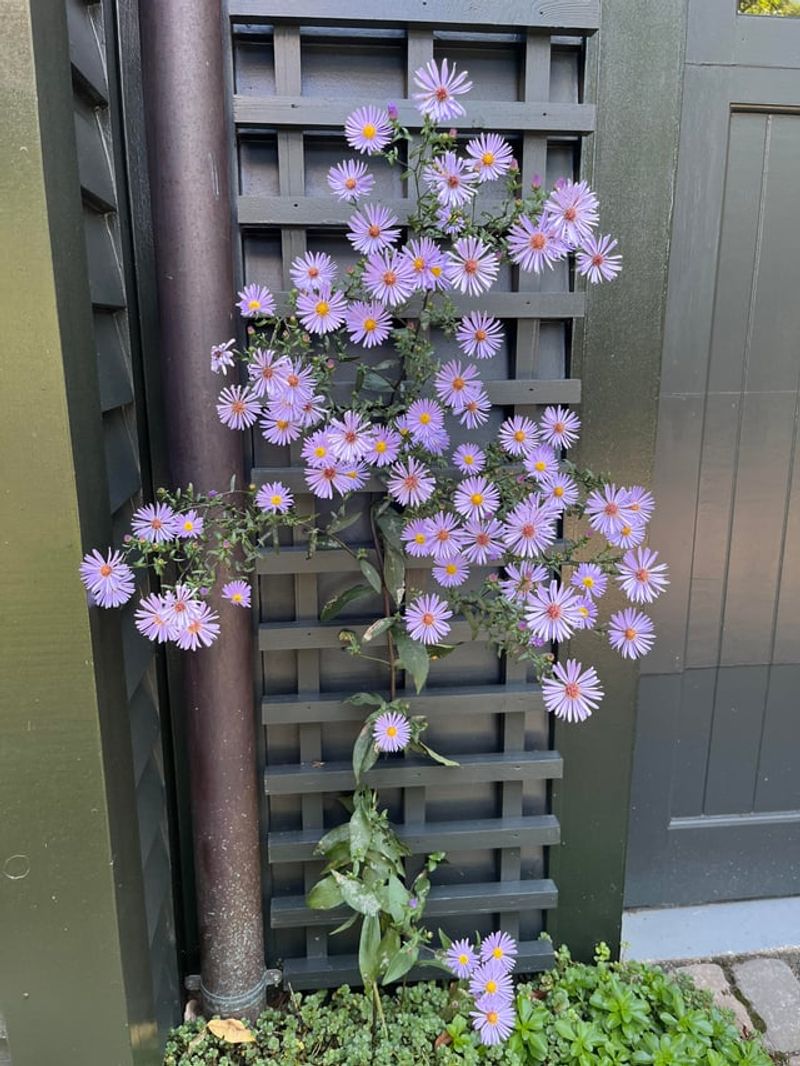
December in many gardens looks quiet and brown. Along a fence in a yard, though, climbing aster may still be throwing a purple party.
Known as Ampelaster carolinianus or Symphyotrichum carolinianum, this plant acts like part vine and part shrub. Its fragrant flowers are 1 to 2 inches wide.
Petals range from lavender to purplish pink, with warm yellow-orange centers.
Give it a trellis, and it can scramble more than 8 feet long. Left on its own, it forms a loose shrub about 5 feet tall and wide.
You can even let it climb through other woody shrubs for a natural look.
Blooms start in late summer and roll right into early winter. Few wildflowers offer nectar and pollen in December, which makes this one extra valuable.
Native bees, butterflies, and moths count on it when food runs low.
In the wild, it grows in coastal hammocks, wet flatwoods, and along wetland edges. Moist soil and full sun to part shade will keep it thriving at home.
It is a strong grower, so plan on some pruning to keep it in shape.
Try trimming right after the big bloom ends. That keeps it neat without cutting off next season’s flowers.
5. Azure Blue Sage Brings Blue To Dry Spots
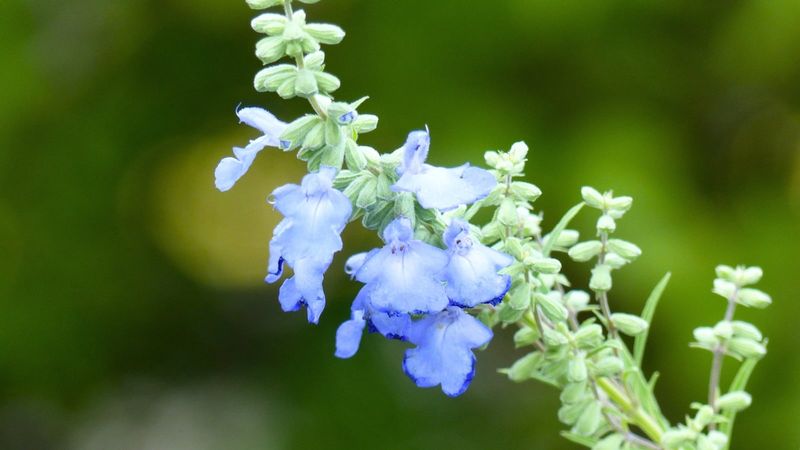
True blue flowers are surprisingly rare in nature. That is why azure blue sage feels like finding a piece of the sky planted in your yard.
Salvia azurea grows tall spikes of two-lipped flowers in a clear, cerulean blue. Plants reach about 3 to 5 feet, with slender stems and narrow, grayish-green leaves.
The whole look is airy and graceful.
From August through November, those blue spikes put on their best show. Down in South Florida, the blooms can keep going into winter.
It pairs beautifully with yellow fall flowers for a bold color contrast.
Got a hot, sandy patch where the hose barely reaches? Perfect.
This sage comes from flatwoods and sandhills, so it loves dry, well-drained soil and full sun. Sandy, gravelly, or loamy ground all work.
After it settles in, it needs very little extra water. That makes it a great choice for busy gardeners or anyone trying to cut back on watering.
Tall stems may lean a bit, so plant it near sturdy neighbors for support.
Hummingbirds, bees, and butterflies zip in for its nectar. Deer and rabbits, on the other hand, usually pass it by.
That combo makes it a friendly, low-fuss winner for natural-style beds.
6. Blue Mistflower Blooms From Summer Into Fall
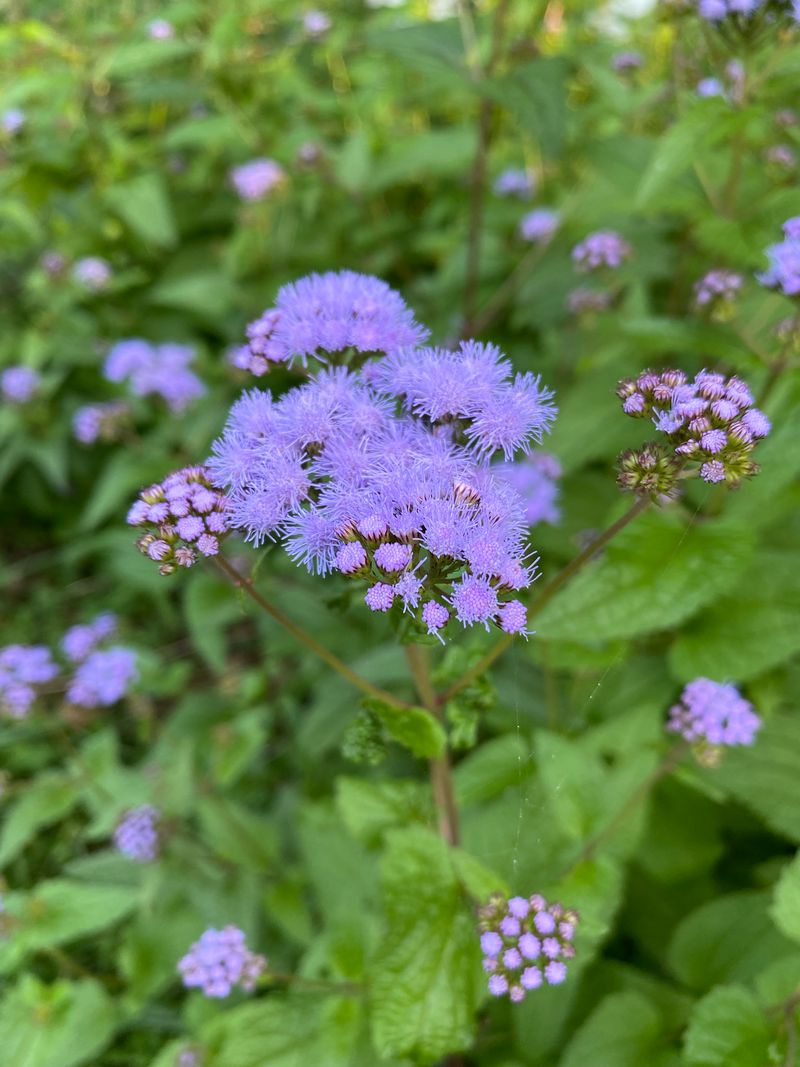
Imagine little puffs of blue cotton candy floating over your garden. That soft, fuzzy look is the charm of blue mistflower.
Conoclinium coelestinum makes clusters of tiny powder-blue flowers, each about half an inch across. Many people mix it up with the annual ageratum sold in stores.
Unlike that cousin, this one comes back year after year.
The plant grows bushy and upright, usually 1 to 3 feet tall. Its stems are downy and purplish, and the leaves have coarse teeth along the edges.
Flowers often appear from July to October and may last until frost.
Soil that stays moist and rich keeps it happiest, though average soil works too. Full sun to part shade is fine.
Rain gardens, meadows, and wild corners are natural fits.
Here is the honest part. Blue mistflower spreads with gusto, both by underground stems and by dropping seeds.
In a tidy formal bed, it can wander into places you did not plan.
So think of it as a happy filler for spaces you want covered. Pull extra sprouts in spring if it roams too far.
In return, you get a late-season buffet for bees and butterflies, including Monarchs fueling up for their long journey.
7. Spiked Blazing Star Draws Butterflies And Hummingbirds
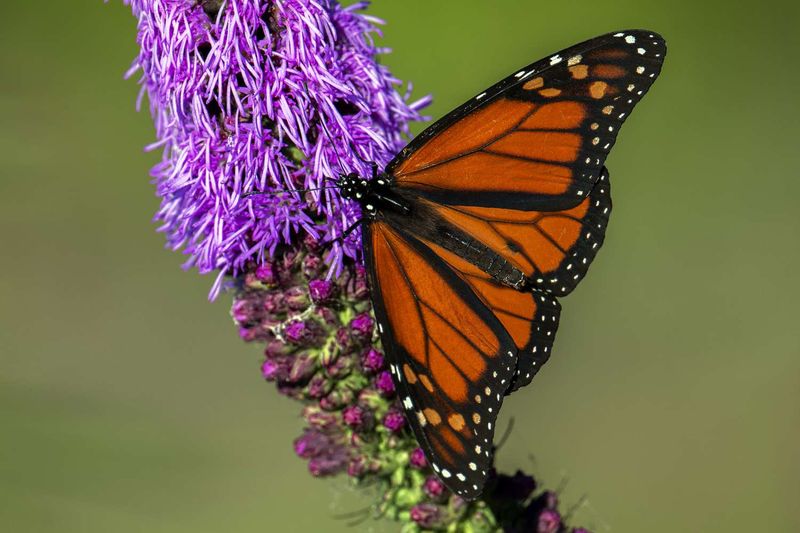
Most flower spikes open from the bottom up. Spiked blazing star does the opposite, starting at the tip and working its way down like a slow purple fuse.
That quirky habit is rare in the plant world. Liatris spicata, sometimes called dense blazing star, grows tall wands of fluffy, bright purple flowers.
Its base is a tuft of leafy, grass-like foliage.
Heights vary a lot, from 1 foot up to 6 feet. Blooms arrive in late summer and stretch into early fall.
In Florida, it grows wild in wet flatwoods, bogs, and savannas.
At home, give it full sun or just a touch of shade. Sandy soil that stays a little moist but drains well is ideal.
Once it settles in, it can handle some dry stretches too.
Care is easy. The plant returns each year from underground bulbs called corms and also spreads by seed.
Very tall stems might need a stake, or you can cut them back a bit in midsummer for shorter growth.
Pollinators cannot resist those purple torches. Butterflies, bees, and hummingbirds all stop by for a sip.
Plant a cluster of five or more, and you will get a bold vertical burst that looks great beside rounded plants.
8. Frostweed Feeds Butterflies Into Fall
On a hard freezing morning, frostweed pulls off a magic trick. Water inside its stems pushes out and freezes into curly ribbons of ice that look like delicate sculptures.
People call these frost flowers, and they give the plant its name. Even without the ice show, Verbesina virginica is a standout.
It can tower over six feet with big, rough leaves.
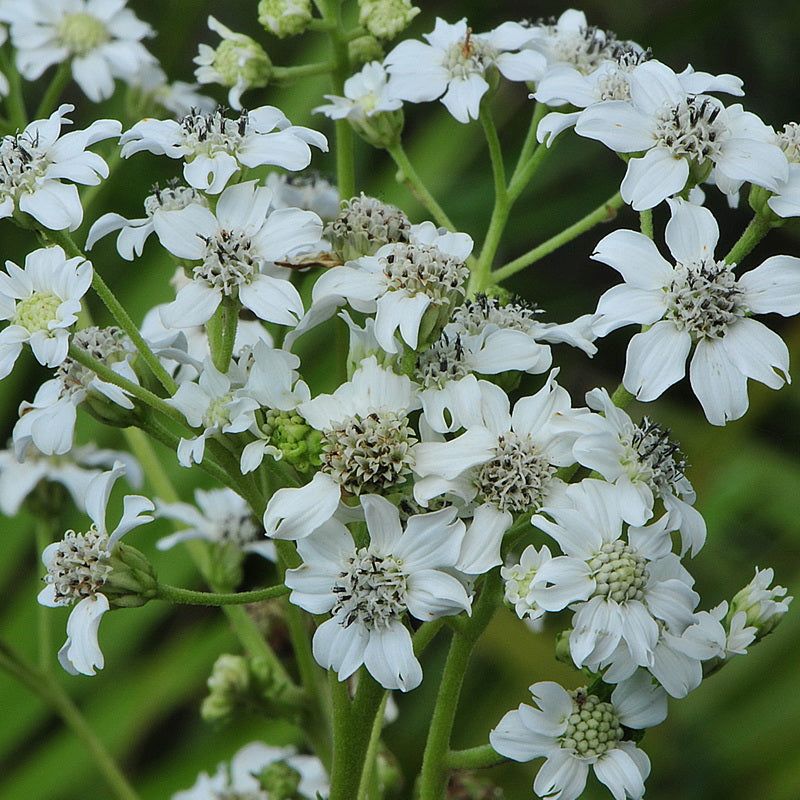
Look at the stems and you will spot thin, fleshy wings running along them. Up top, clusters of small white flowers form heads 3 to 6 inches wide.
They open from August through November.
That timing matters a lot to wildlife. Migrating Monarchs, native bees, moths, beetles, wasps, and flies all crowd in for nectar.
It also hosts several butterfly caterpillars, so a few chewed leaves are a good sign.
Later on, ripe seeds become a winter snack for birds. Leave the seed heads standing for a while instead of tidying up right away.
Your feathered visitors will thank you.
Frostweed likes moist soil and full sun to part shade. In nature, it lines forest and hammock edges, and it can handle short dry spells.
Tuck it at the back of a border or along a wooded edge where its height can shine.
9. Beach Sunflower Handles Hot, Dry Sites
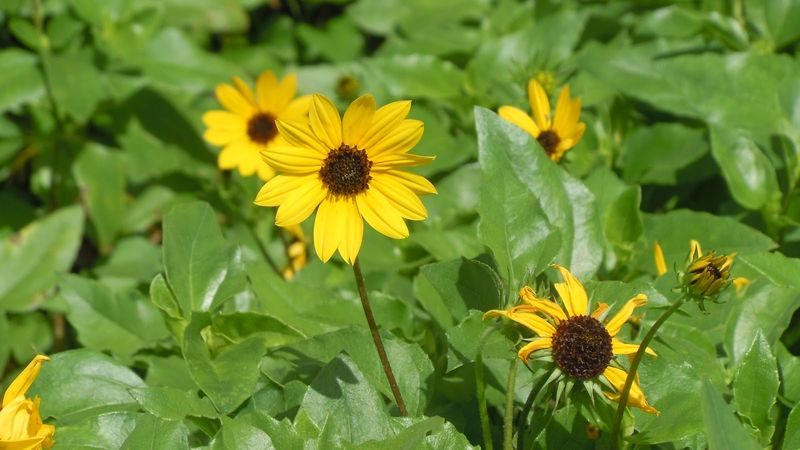
Some plants sulk when the sun blazes. Beach sunflower grins right back with a carpet of cheerful yellow faces.
Helianthus debilis is a low, spreading groundcover with daisy-like flowers about 2 inches wide. Each bloom has bright yellow petals around a brown center, like a mini sunflower.
In much of the state, it flowers nearly all year.
Hot, dry spots are its happy place. Think sandy soil, coastal yards, and sunny strips by the driveway.
It shrugs off salty soil and salt spray, which is a big plus near the beach.
After it gets established, it barely needs watering. In fact, too much water can cause trouble, so go easy with the hose.
Full sun is a must for strong growth and lots of blooms.
Stems sprawl outward more than 4 feet, and the plant reseeds on its own. That spreading habit helps hold sand in place and slows erosion on slopes.
It is a smart swap for thirsty turf in a tough corner.
Need a quick refresh? Trim it back lightly when it starts looking leggy, and new growth will fill in fast.
Butterflies visit the flowers often, and birds snack on the seeds later, keeping your yard lively.