Skipping This Common Garden Task Can Benefit These Native Perennials By Fall
Put the pruners down. On certain Michigan native perennials, skipping deadheading is not a gardening shortcut.
It is the right choice. Spent blooms left to develop into seed heads bring goldfinches, chickadees, and other birds straight into the garden at exactly the time of year when everything else is winding down.
Frost-covered stems catch morning light in ways that tidy, cut-back borders simply cannot.
The planting looks intentional, alive, and connected to the Michigan landscape in a way that an aggressively pruned bed never quite manages.
Deadheading still makes sense for plenty of plants, but native perennials that produce wildlife-supporting seed heads tend to give back far more when they are left to finish the season on their own terms.
1. Black-Eyed Susan Feeds The Fall Garden
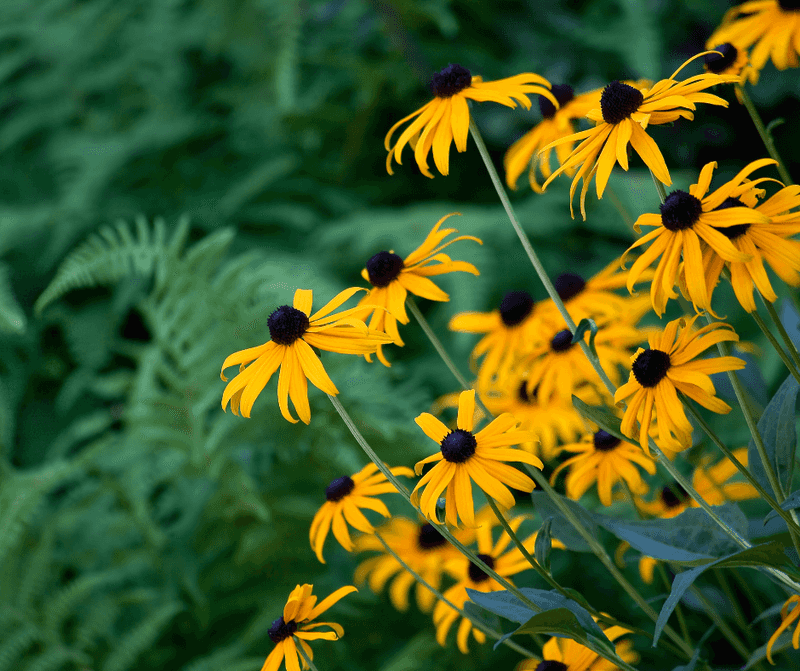
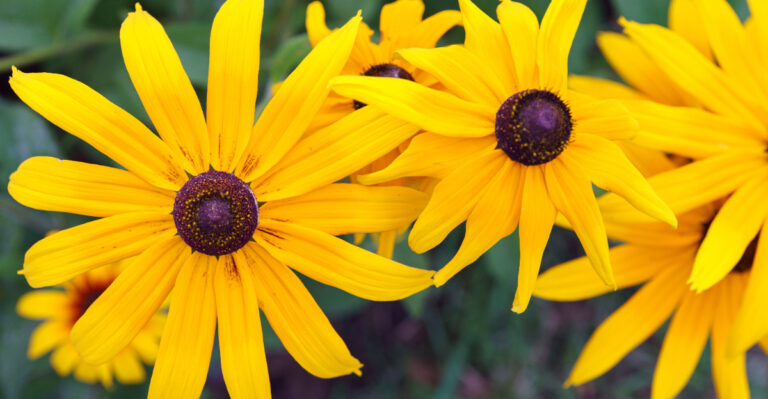
Few sights in a Michigan garden feel quite as satisfying as watching a goldfinch land on a dried Black-Eyed Susan stem and start picking at the seed head.
When you skip deadheading Rudbeckia hirta after its golden petals fade, those cone-shaped centers harden into small, seed-packed structures that birds rely on through late September and into October.
Removing them early means removing a food source that supports wildlife right when natural food begins to thin out.
Black-Eyed Susan is native to Michigan and thrives in sunny, well-drained beds, prairie-style borders, and dry roadside plantings. It handles heat and drought better than many garden perennials, making it a practical choice for low-maintenance spots.
The plant does self-seed freely, so gardeners who prefer a tidy border may want to remove a portion of the seed heads before they fully ripen, while leaving others standing for birds.
By mid-fall, the upright stems and dark cones add quiet texture to a garden that might otherwise look bare. Leaving a few clusters standing through early winter gives the planting a structured, purposeful feel rather than an abandoned one.
If any stems show signs of disease or lodging, those can be cut back selectively without stripping the whole planting.
Black-Eyed Susan rewards patience and minimal fuss with genuine fall character that few other native perennials can match so reliably.
2. Yellow Coneflower Holds Bird-Friendly Seeds
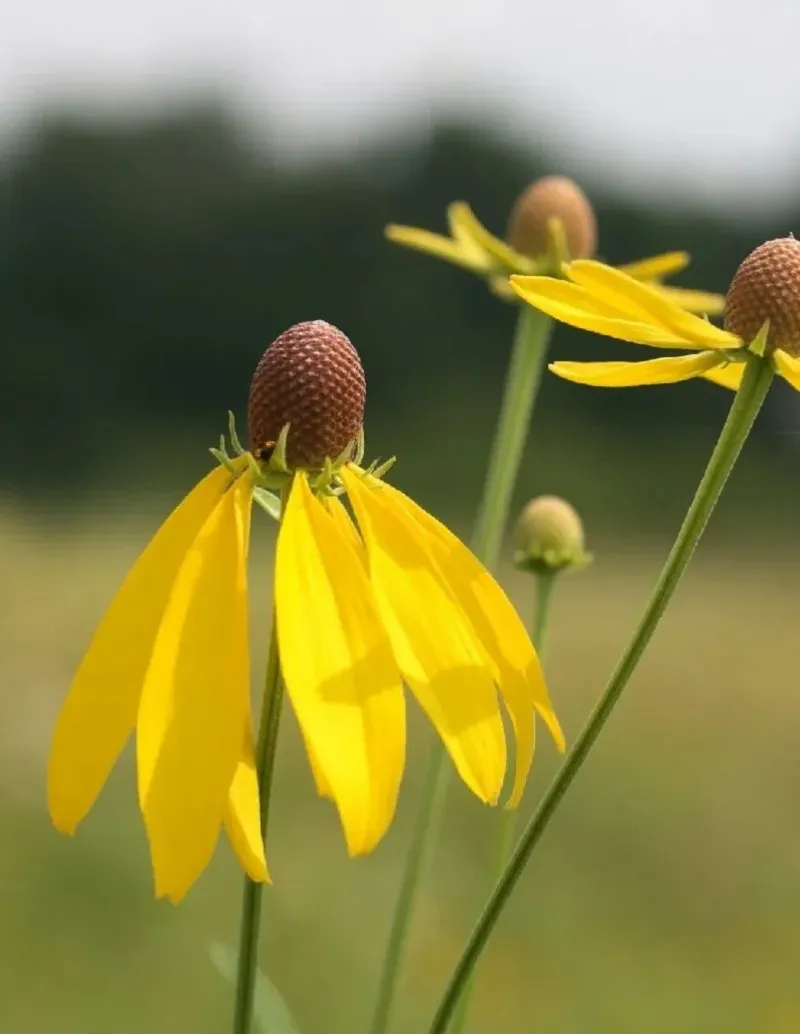
Ratibida pinnata, commonly called Yellow Coneflower or Gray-Headed Coneflower, has one of the most distinctive seed heads of any Michigan native perennial.
The elongated dark cone that remains after the drooping yellow petals fall is packed with small seeds that attract finches, sparrows, and other seed-eating birds during the lean weeks of late fall.
Leaving those cones on the plant costs nothing and pays back generously in wildlife activity.
This plant grows naturally in open prairies, roadsides, and sunny meadows across Michigan. In a home garden, it performs well in full sun with average to dry soil and minimal care.
The tall, airy stems reach three to five feet in good conditions, giving the planting a relaxed, naturalistic quality that fits especially well in rain gardens, pollinator borders, or naturalized edges where a wilder look is welcome.
Skipping deadheading on Yellow Coneflower also reduces unnecessary maintenance during a busy time of year. Once the petals fade in late summer, the seed cones continue to develop and hold their shape well into the season.
Your Michigan Garden Changes Every Week. Your Plan Should Too.
Gardening in Michigan changes quickly throughout the season. Every Friday you’ll receive a simple weekly plan showing exactly what to plant, prune, fertilize, harvest, and protect so you never miss the right timing.
They do not flop or become messy the way some spent flowers do.
Gardeners who grow this plant alongside Black-Eyed Susan and native grasses often find that the combination creates a layered, textured fall display that looks considered rather than unkempt.
Selective cleanup around the base can keep things looking intentional without sacrificing the seed heads that make this plant so valuable.
3. New England Aster Keeps Color Going
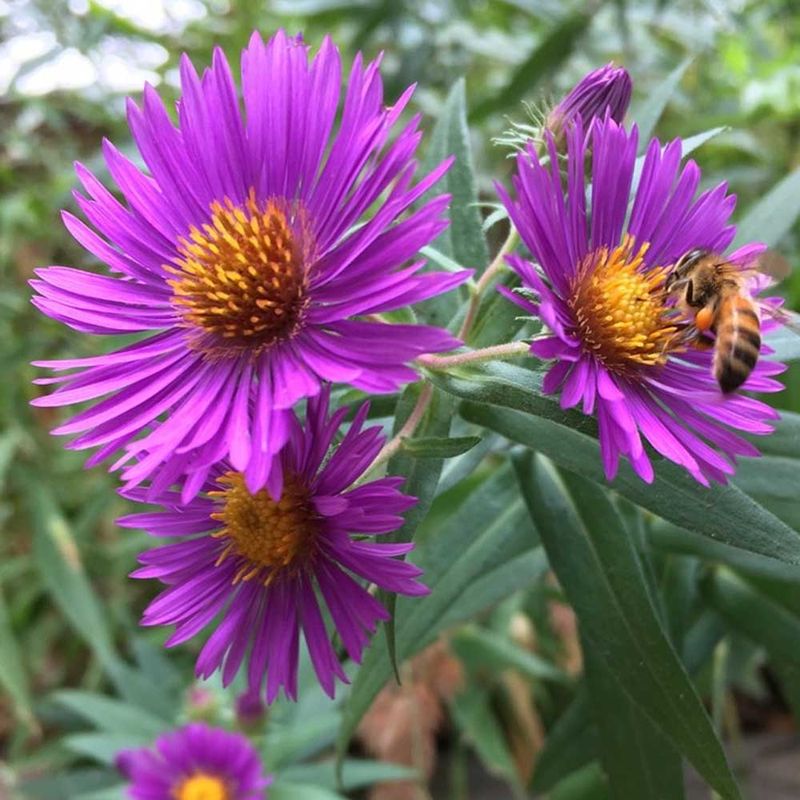
When most of the summer garden has gone quiet, New England Aster is just getting started.
Symphyotrichum novae-angliae blooms in late September and October across Michigan, producing clusters of deep purple, pink, or violet flowers that bring genuine color to a season that can feel increasingly gray.
Because the bloom period arrives so late, deadheading earlier flowers rarely triggers a meaningful second flush the way it might on summer-blooming plants.
Letting New England Aster bloom fully and then go to seed supports late-season pollinators including native bees that are still active in Michigan through early October.
The small, fluffy seed heads that form after bloom have a soft, feathery texture that catches low autumn light in a pleasant way.
They are not the boldest structural element in a fall garden, but they add a gentle transition between late bloom and the quiet of winter.
New England Aster grows well in moist to average soils and tolerates partial shade, making it adaptable to a range of Michigan home garden situations.
It can spread by both seed and rhizome, so gardeners in smaller beds may want to thin plants every few years to keep growth in check.
Removing obviously diseased stems at the end of the season is a smart habit worth keeping.
Healthy seed-bearing stems are a different story, and leaving those standing through late fall gives birds additional foraging material while keeping the planting looking full and intentional well past the first frost.
4. Riddell’s Goldenrod Supports Late Insects
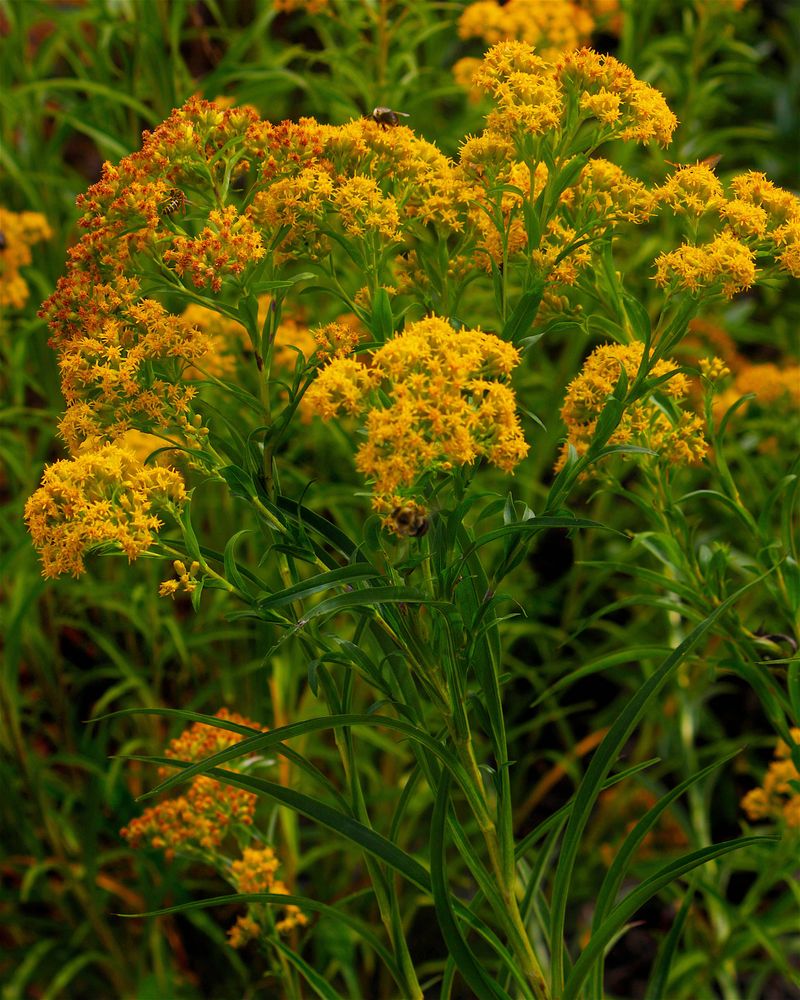
Goldenrod has a complicated reputation in Michigan gardens, often blamed unfairly for hay fever that is actually caused by ragweed blooming at the same time.
Riddell’s Goldenrod, Solidago riddellii, is a native species that favors moist, low-lying areas including wet prairies, sedge meadows, and rain garden edges.
Its curved, arching leaves and tidy yellow plumes make it one of the more visually distinctive goldenrods available to Michigan home gardeners.
Because it blooms in late summer and early fall, Riddell’s Goldenrod serves as a critical nectar and pollen source for bees, wasps, flies, and butterflies that are still active before cold weather settles in.
Deadheading those plumes removes a resource that beneficial insects depend on during a period when other flowering plants are winding down.
Leaving the seed heads also provides material for overwintering insects that seek shelter in hollow or pithy stems.
After the flowers fade, the seed heads develop a soft, tan texture that blends naturally with ornamental grasses and other late-season native stems.
In a rain garden or moist border, Riddell’s Goldenrod can spread gradually by rhizome, so monitoring spread and dividing clumps every few years keeps it well-behaved.
Selective removal of any stems that flop or show damage is reasonable, but leaving the majority standing through fall gives the planting structure and supports the late-season insect community that Michigan gardens benefit from hosting.
5. Showy Goldenrod Adds Fall Texture
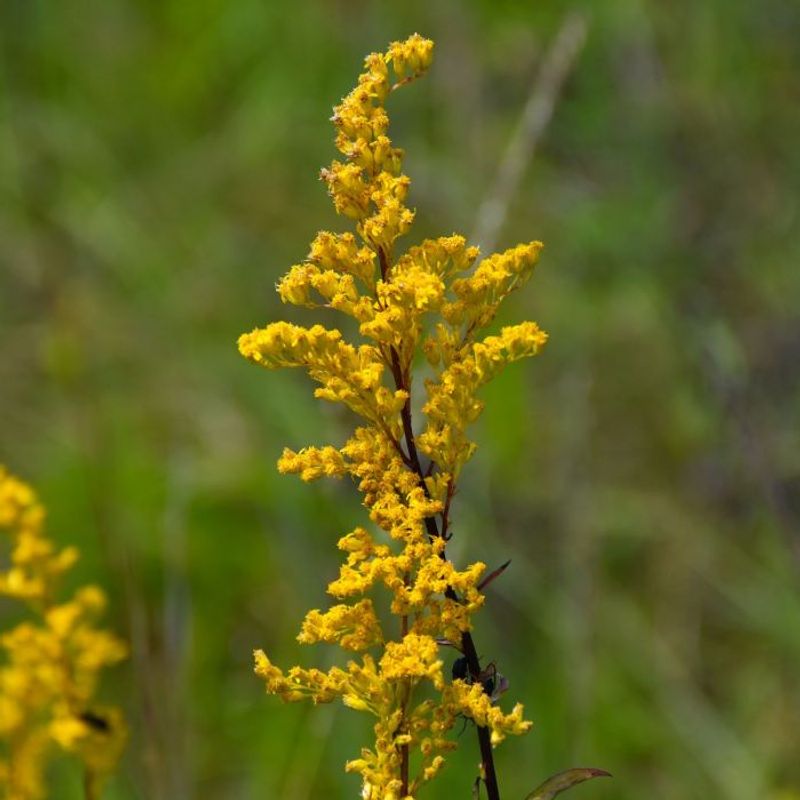
Solidago speciosa earns its common name honestly. Showy Goldenrod produces some of the most upright, well-organized flower plumes of any goldenrod native to Michigan, and those plumes hold their shape and color far longer than many gardeners expect.
While some goldenrods spread aggressively by rhizome, Showy Goldenrod tends to stay in a tighter clump, making it a more manageable option for home garden borders and pollinator beds in Michigan.
The bright yellow flowers appear in late summer and attract an impressive range of beneficial insects, from bumblebees to small native bees and various fly species.
Skipping deadheading after bloom allows those flowers to develop into fluffy, seed-bearing plumes that remain attractive through October and into November.
The dried stems and seed heads catch low fall light in a warm, golden way that pairs naturally with ornamental grasses, asters, and dried seed cones from neighboring native plants.
Showy Goldenrod grows best in full sun with dry to average, well-drained soil. It handles lean conditions well and does not need supplemental fertilizer, which can cause floppy, overly lush growth.
In a Michigan garden setting, it fits beautifully along sunny edges, in prairie-style borders, or in dry naturalized areas where other plants struggle.
Leaving the seed heads standing gives birds additional late-season foraging material while keeping the planting looking structured and purposeful rather than simply untended.
Cutting back in early spring before new growth emerges is all the cleanup most gardeners need.
6. Rough Blazing Star Keeps Upright Form
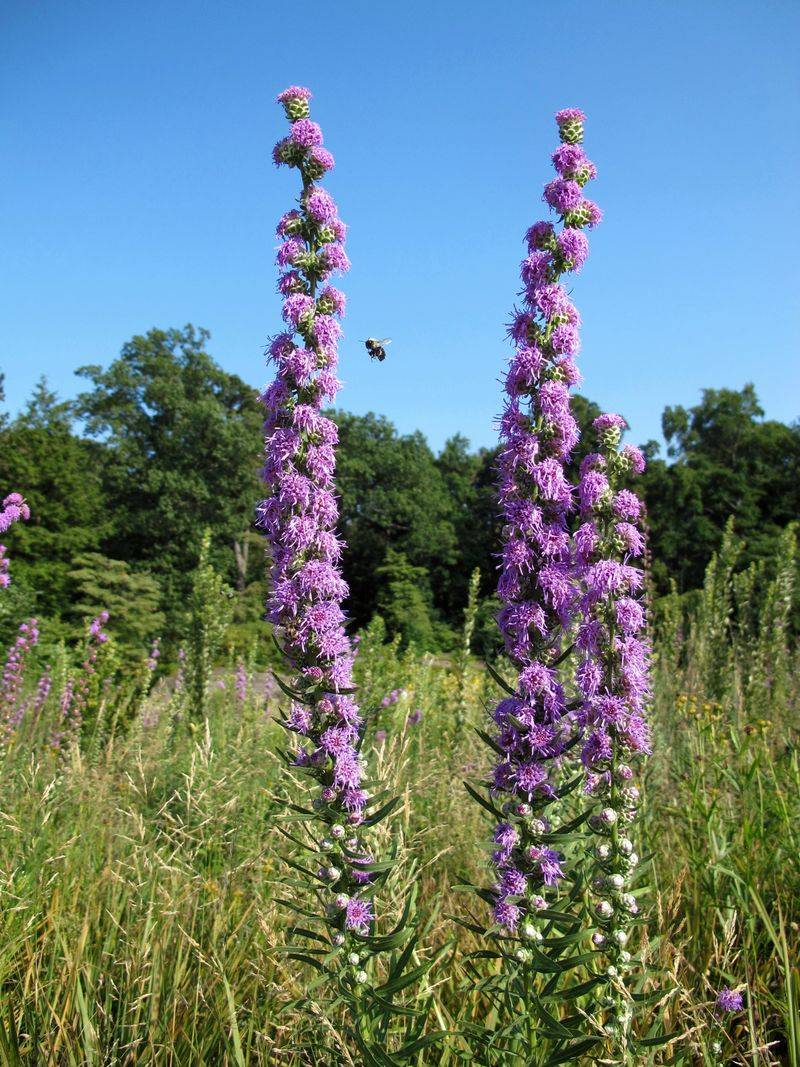
There is something almost architectural about a mature Rough Blazing Star stem standing in a Michigan garden in October.
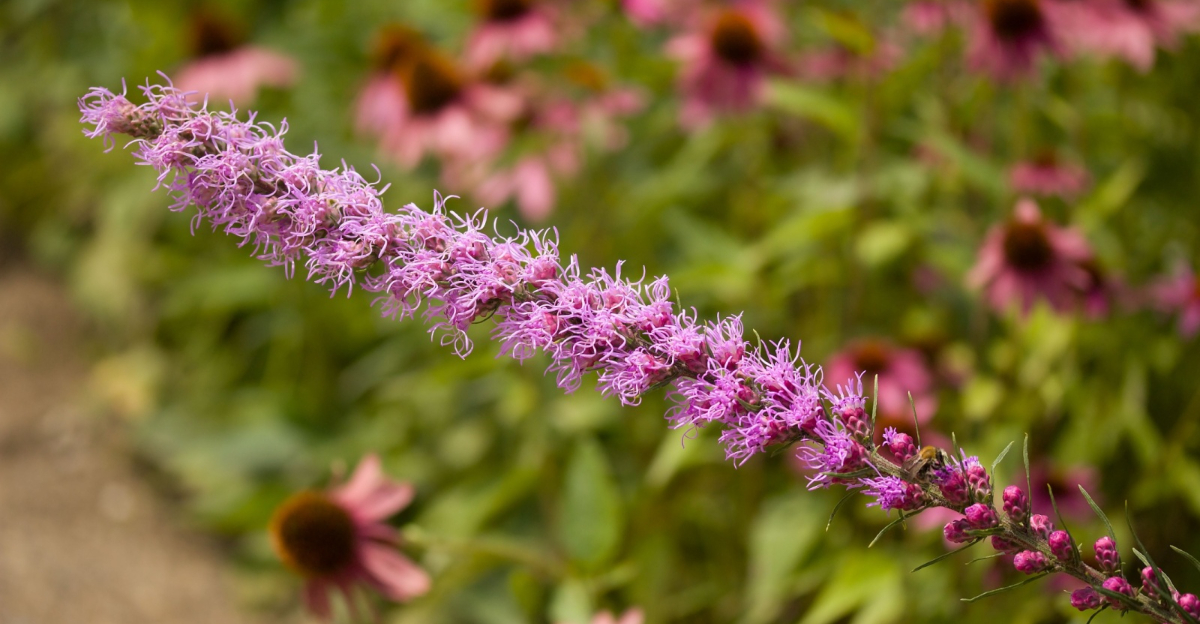
Liatris aspera blooms from the top of its spike downward through late summer, and by the time the last flowers fade, the upper portions of the stem have already begun forming small, feathery seed heads.
That staggered progression means the plant is doing two things at once – offering late bloom for pollinators while simultaneously building the seed structure that will carry it through fall.
Rough Blazing Star is one of the more drought-tolerant Liatris species native to Michigan.
It thrives in sandy, dry soils with full sun and minimal irrigation, making it well-suited to the kinds of lean, sunny spots where gardeners often struggle to find native plants that perform reliably.
The upright stems reach two to four feet and hold their form well after the seed heads develop, resisting the flopping that affects some tall perennials in late season.
Finches and sparrows visit Liatris seed heads regularly, and the stems can provide overwintering habitat for beneficial insects if left standing until late winter or early spring.
Gardeners who grow Rough Blazing Star in a formal border may want to remove a few of the oldest stems while leaving the majority standing for wildlife value.
The plant does not self-seed as aggressively as some natives, so spread is rarely a concern in most Michigan residential garden settings.
7. Wild Bergamot Leaves Useful Seed Heads
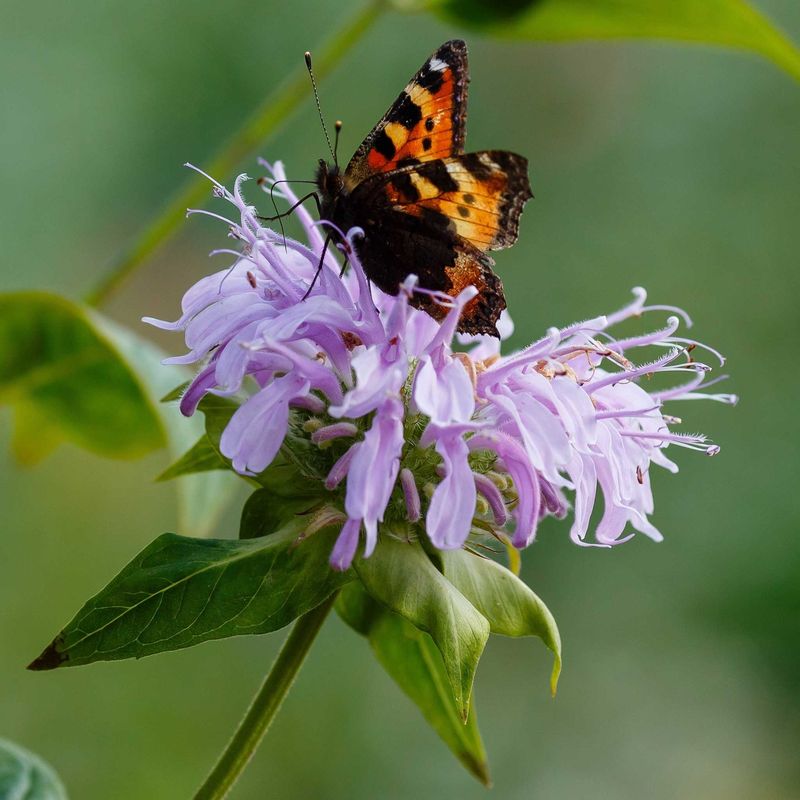
After Wild Bergamot finishes blooming in midsummer, many Michigan gardeners reach for pruners out of habit.
The faded lavender flower heads turn into round, bristly seed clusters that some people find untidy, but those seed heads have real value for birds and beneficial insects through fall.
Goldfinches, in particular, are known to visit Monarda fistulosa seed heads, picking out the small seeds from the dried clusters in a way that is genuinely pleasant to watch from a kitchen window.
Wild Bergamot is native to dry, open habitats across Michigan and handles sun, heat, and lean soils with ease. It spreads by rhizome and can form loose colonies over time, which works well in naturalized edges, prairie-style beds, and open pollinator gardens.
In smaller, more structured borders, gardeners may want to thin the plant periodically to manage spread, but the seed heads themselves rarely cause problems.
The round, spiky seed clusters add a quirky, textural note to fall plantings that pairs well with the flat seed heads of native coneflowers and the feathery plumes of goldenrod.
Powdery mildew can affect Wild Bergamot foliage in humid summers, and any heavily affected stems are worth removing rather than leaving in place.
Healthy stems, though, can stay standing through fall without issue. Cutting everything back in early spring gives the plant a clean start while allowing the seed heads to serve their full purpose through the colder months of a Michigan fall.
8. Joe-Pye Weed Adds Tall Fall Structure
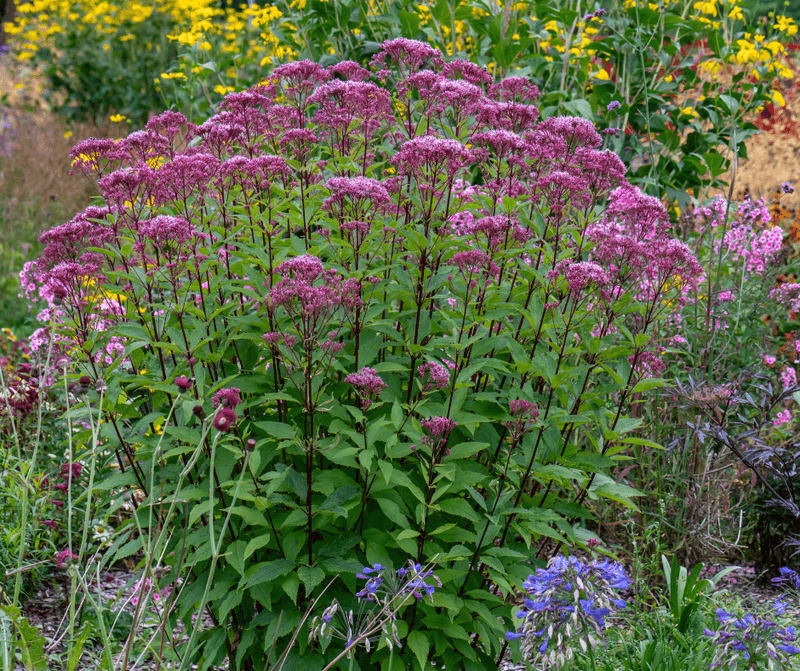
Standing six to eight feet tall in favorable conditions, Joe-Pye Weed is one of the most structurally commanding native perennials a Michigan gardener can grow.
Eutrochium purpureum blooms in late summer with large, domed clusters of dusty pink flowers that attract migrating monarchs, native bees, and a broad range of beneficial insects.
Once those flowers fade and the seed heads begin to form, the plant transitions into something that is genuinely useful for fall and early winter garden structure.
The fluffy, tan seed heads that develop through September and October have a soft, rounded form that reads beautifully against fall foliage and dormant grasses.
Birds including goldfinches and chickadees visit the seed clusters regularly, and the thick, hollow stems can provide overwintering habitat for certain native bees and beneficial insects that nest in pithy plant material.
Removing everything at the end of summer cuts off both of those resources before they have a chance to be used.
Joe-Pye Weed grows best in moist to average soils with full sun to light shade, making it a strong candidate for rain gardens, moist borders, and low spots in Michigan residential landscapes.
The plant rarely self-seeds aggressively, so spread is generally not a concern.
Leaving the tall stems standing through fall and into early winter creates a bold vertical element that keeps the garden looking full and considered even after most other plants have gone dormant.
Cutting back in early spring keeps the bed tidy without sacrificing any of the fall and winter value the plant provides.