May Is The Perfect Time For Michigan Gardeners To Propagate Lavender From Cuttings
May has a way of making Michigan gardeners feel wildly optimistic, and honestly, that energy is hard to resist. Everything is waking up, herbs are pushing fresh new growth, and the garden suddenly starts looking full of possibility.
Lavender is part of that excitement, but it also likes to keep gardeners humble. It smells amazing, looks gorgeous, and then reminds you it has opinions about soil, drainage, and winter.
Classic lavender behavior. That is exactly why late spring can be such an appealing time to take cuttings.
When plants are actively growing and sending out soft new stems, Michigan gardeners have a nice window to try propagating more lavender without waiting all summer.
Of course, timing still depends on how the season is moving in your part of the state.
A warm spring can nudge things along, while a cooler one may slow the party down a bit. Catch lavender at the right stage, though, and May can be a very promising time to start new plants.
1. Soft May Growth Can Root More Easily
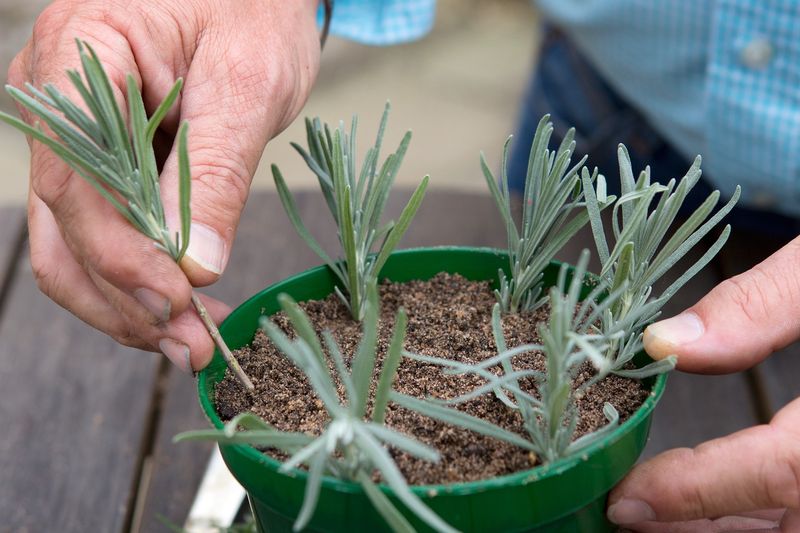
Fresh spring stems on a lavender plant have a different quality than the woody growth that develops later in the season.
When new shoots push out in late spring, they tend to be more flexible and less lignified, which can make them more responsive during the rooting process.
Michigan gardeners who pay attention to this seasonal shift often find that soft growth taken in May behaves differently than cuttings pulled from older, woodier sections of the same plant.
The reason softer tissue can root more readily has to do with how cells behave in actively growing plant material. Young stem cells are still in a more flexible state, which may allow root initials to form with less resistance than in harder, more mature wood.
This does not mean soft cuttings are fragile or unreliable, but it does mean timing can play a real role in how well things go.
Michigan springs can vary quite a bit from year to year, so it helps to look at the plant itself rather than just the calendar.
If your lavender has been putting out noticeable new growth and the stems still bend rather than snap, that is often a good sign that conditions may be favorable.
Paying attention to what the plant is actually doing, rather than working from a fixed schedule, tends to give better results in a home garden setting.
2. Late Spring Gives Lavender Good Cutting Growth
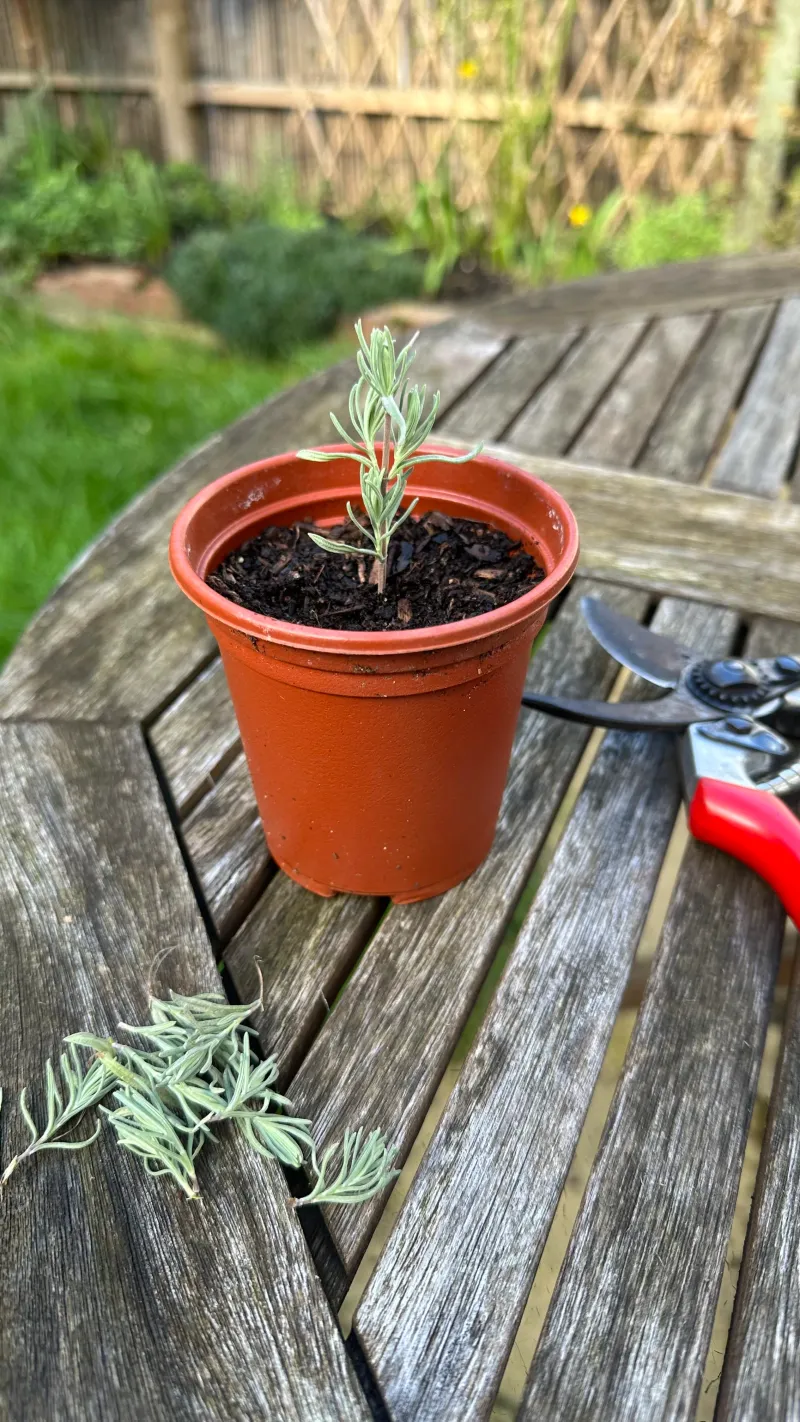
Warmer temperatures in late spring push lavender plants into a period of active growth that can be useful for propagation.
In Michigan, May tends to bring more consistent warmth than earlier in the season, and that shift in temperature often corresponds with visible changes in the plant.
Stems lengthen, foliage brightens, and the overall energy of the plant picks up in a way that is easy to notice if you spend time in the garden regularly.
Lavender responds to that warming period by directing resources into new vegetative growth before flower spikes fully develop.
Your Michigan Garden Changes Every Week. Your Plan Should Too.
Gardening in Michigan changes quickly throughout the season. Every Friday you’ll receive a simple weekly plan showing exactly what to plant, prune, fertilize, harvest, and protect so you never miss the right timing.
For gardeners hoping to take cuttings, this window can be a practical one because the plant is producing the kind of material that tends to work well for propagation.
Waiting too long into the season means flower development takes over, and stems that are already committed to blooming are generally less useful for rooting purposes.
Michigan’s late spring also tends to offer longer daylight hours and more moderate humidity than the heat of midsummer, which can create a gentler environment for cuttings as they begin to establish.
Extreme heat can stress unrooted cuttings, so the milder conditions of May can work in a gardener’s favor.
Of course, conditions shift from one Michigan region to another and from one year to the next, so observing your specific garden space matters more than following a general rule.
3. Non-Flowering Stems Make Better Cuttings
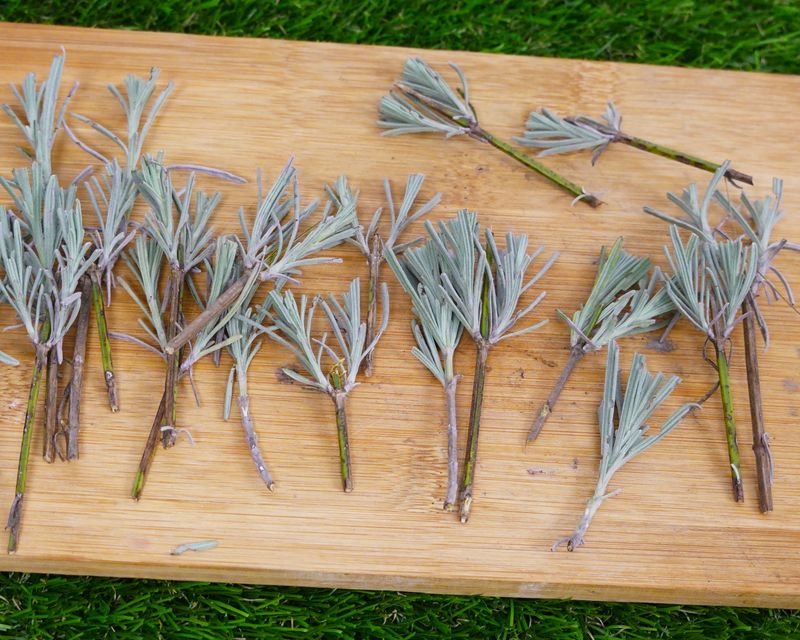
One of the most practical decisions a gardener makes when propagating lavender is choosing which stems to take. Vegetative stems, meaning those that have not yet developed a flower bud or spike, are generally the preferred choice.
When a stem is already committed to flowering, the plant’s energy is focused on reproduction rather than root development, which can make the cutting slower to establish or less successful overall.
In May, many Michigan lavender plants will have a mix of stems in different stages. Some may already be showing early bud formation, while others are still producing clean vegetative growth.
Learning to spot the difference takes just a little practice. Vegetative stems tend to look leafier along their length without the elongated central spike that signals a flower is forming.
Selecting from those leafier, bud-free stems is a straightforward habit that can improve outcomes for home propagators.
It also helps to take cuttings from healthy-looking sections of the plant rather than from stems that appear stressed, discolored, or damaged.
Lavender that has come through a Michigan winter in good shape and is putting out vigorous spring growth is a much better source than a plant that looks sparse or is still recovering.
Choosing well at the cutting stage sets up the rest of the process more favorably, and it does not require any special equipment, just a careful eye and a moment of observation before reaching for the pruners.
4. Clean Snips Help Make Better Cuttings
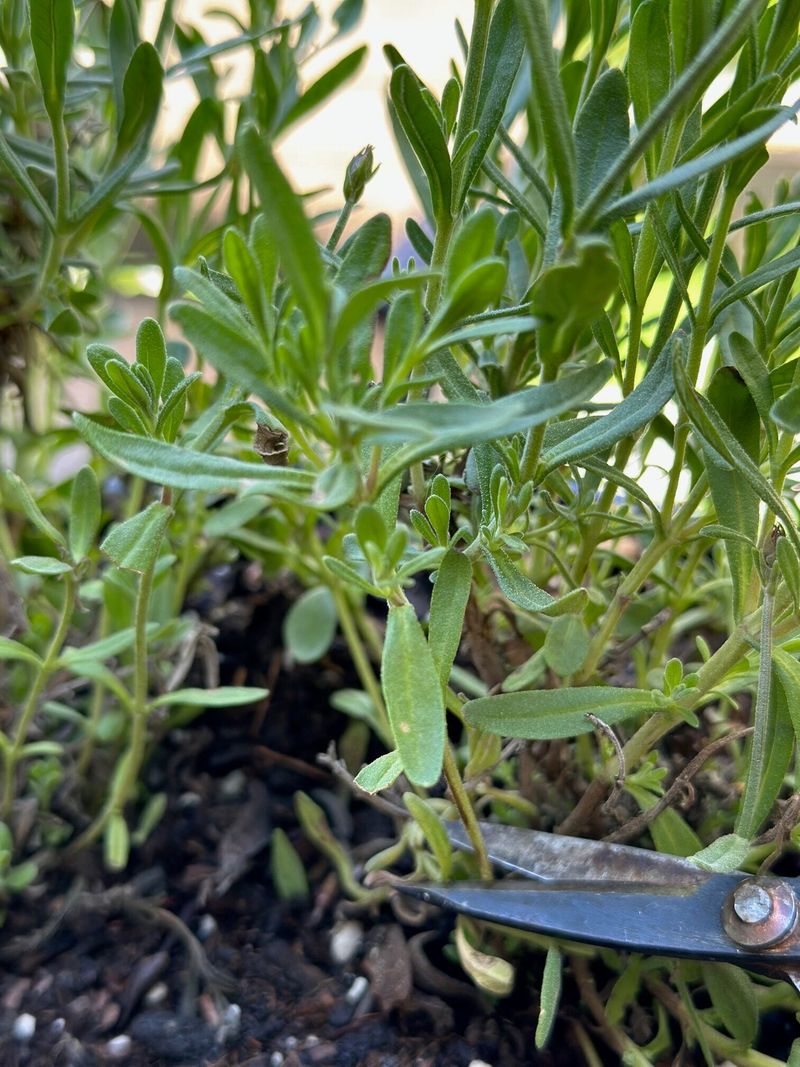
Garden tools that are clean and sharp make a real difference when taking lavender cuttings.
A dull blade can crush or tear the stem rather than cutting through it cleanly, and that kind of damage to the tissue can slow the rooting process or create an entry point for pathogens.
Using sharp pruning snips or a clean knife is a small step that takes almost no extra time but can have a noticeable effect on how cuttings perform.
Wiping blades with rubbing alcohol before use is a common practice among gardeners who propagate regularly.
It reduces the chance of transferring any fungal or bacterial issues from one plant to another, which matters especially when working with lavender, a plant that can be sensitive to excess moisture and certain soil conditions.
Michigan gardeners who tend multiple herb beds may move between plants during a single propagation session, making tool hygiene a practical habit rather than an overly cautious one.
The cut itself should be made just below a leaf node, which is the point on the stem where leaves attach.
Nodes tend to be areas of concentrated cellular activity, and making the cut at or just below one can help encourage root development from that point.
Aim for a cutting that is roughly three to four inches long, which gives enough stem length to work with during preparation while keeping the cutting compact enough to manage moisture balance effectively in the rooting mix.
5. Lower Leaves Should Be Removed First
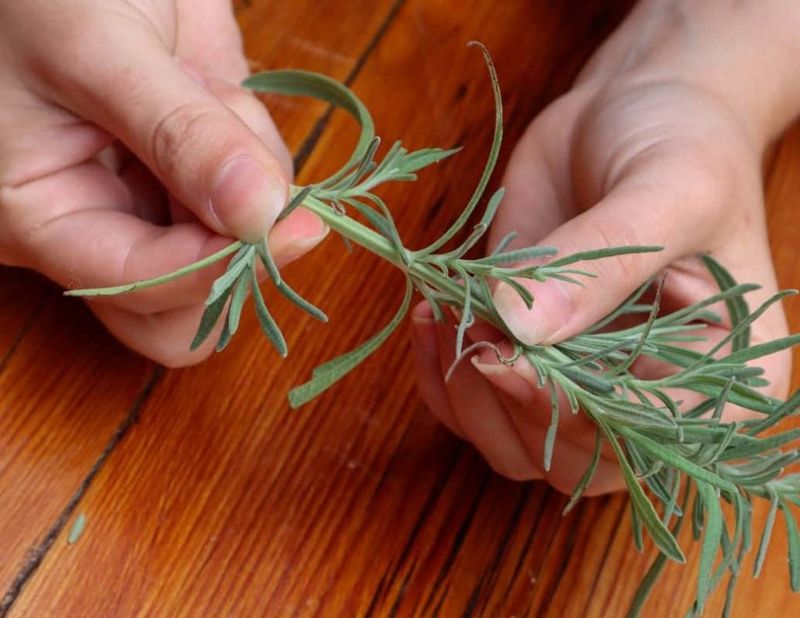
Before a lavender cutting goes into any rooting medium, the lower leaves need to come off. Leaving foliage buried in the mix creates problems quickly, as the leaves break down and introduce excess moisture and potential rot right at the base of the cutting.
Stripping the lower inch or two of the stem cleanly gives the cutting a better environment to work with from the start.
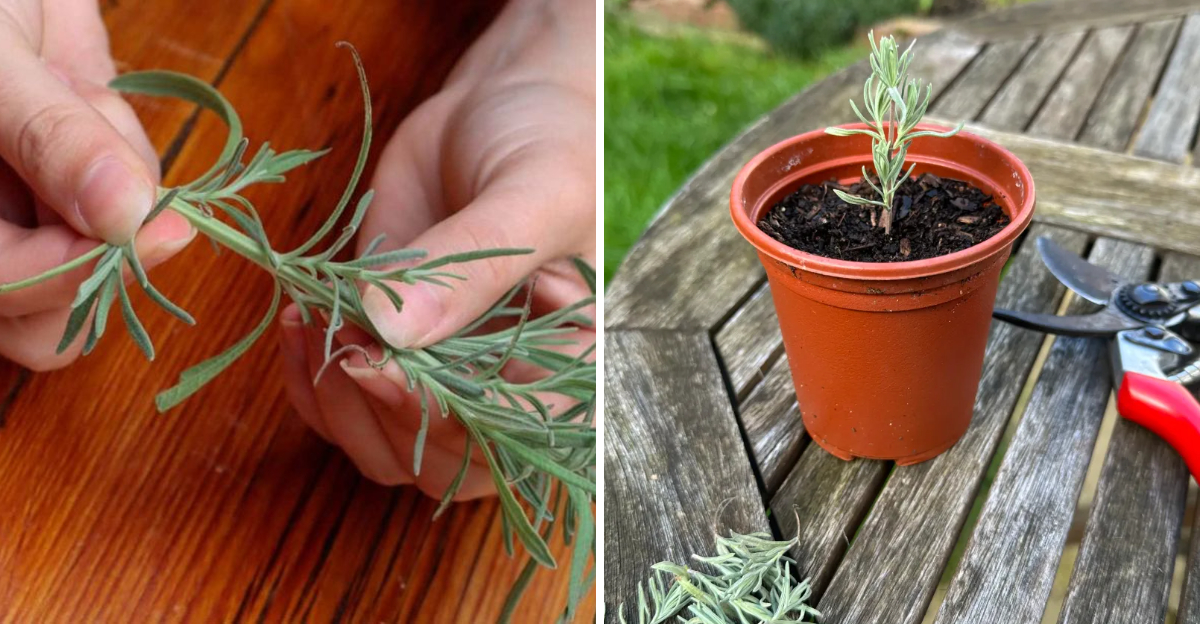
The process is simple and takes just a moment per cutting. Hold the stem gently and use your fingers to slide or pinch the lower leaves away, working carefully so you do not tear the stem itself.
Leaving a cluster of leaves at the top of the cutting is fine and actually helpful, since those leaves continue to support the cutting through photosynthesis while roots are forming.
The goal is a clean lower stem and a modest but intact canopy of foliage above.
Some gardeners also lightly scrape the bottom half inch of the stem with a clean blade to expose a bit of the inner tissue, a technique sometimes called wounding.
This can encourage root formation in some woody-stemmed herbs, though results vary and it is not a required step.
For most home propagation projects in Michigan, simply removing the lower leaves and making a clean cut tends to be a solid starting point.
Keeping the process straightforward reduces the number of variables and makes it easier to repeat with consistent results across multiple cuttings.
6. A Fast-Draining Mix Helps Prevent Rot
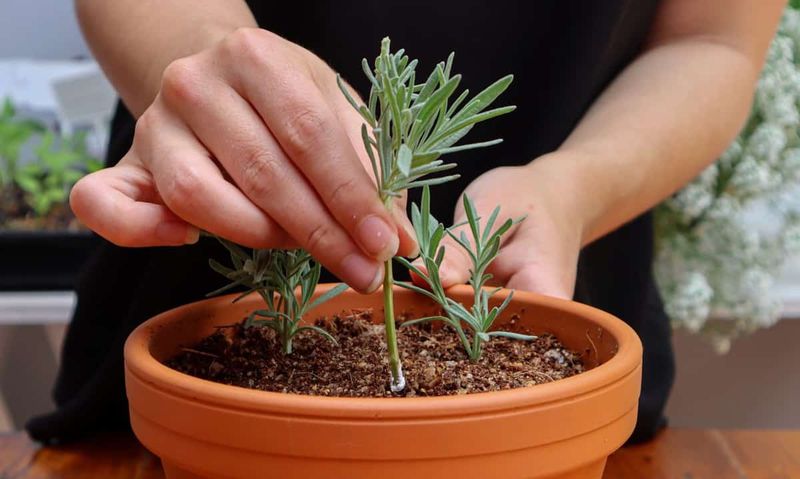
Lavender has a well-known preference for well-drained conditions, and that preference does not change just because a cutting is sitting in a small pot rather than a garden bed.
Using a rooting medium that drains quickly is one of the most practical decisions a Michigan gardener can make when setting up a propagation station for lavender.
A mix that holds too much moisture around the base of the cutting can lead to stem problems before roots ever have a chance to form.
A common approach is to blend coarse perlite with a basic potting mix, using a higher ratio of perlite than you might for other plants. Some gardeners use almost straight perlite or a combination of perlite and coarse sand.
The goal is a medium that feels gritty and open rather than dense and moisture-retentive. When you water it, the excess should flow through quickly rather than pooling at the bottom of the container.
This mirrors the kind of soil conditions that lavender thrives in throughout Michigan gardens, where heavy clay soils are a common challenge and drainage is often something gardeners have to actively work to improve.
Starting cuttings in a free-draining mix from the beginning reflects the same logic that applies to planting established lavender in the ground.
It also makes managing moisture levels easier during the rooting period, since a faster-draining mix is more forgiving when watering frequency is not perfectly consistent.
7. Light Moisture Helps Cuttings Root Well
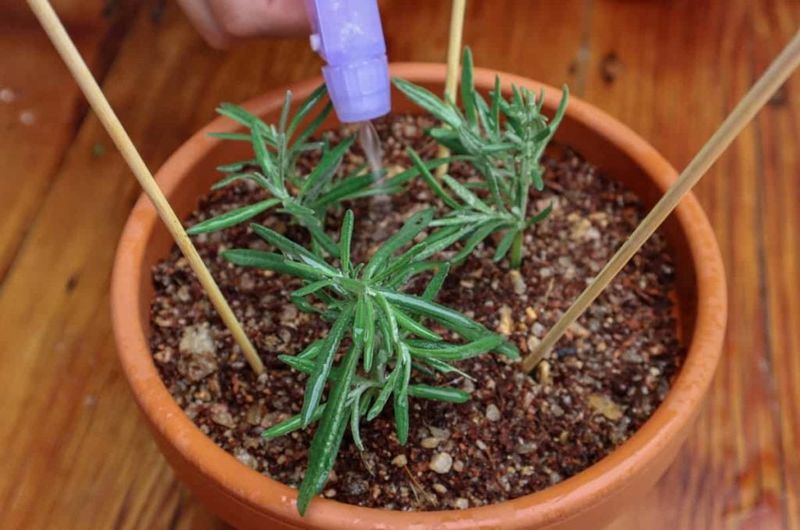
Getting moisture levels right during the rooting period is one of the trickier parts of propagating lavender, and it is worth thinking through before you start.
Cuttings need some moisture to stay hydrated and support the small amount of foliage they are carrying, but sitting in wet conditions can quickly cause problems at the stem base.
Finding that middle ground is something that comes with a little observation and a willingness to adjust.
Checking the rooting medium every day or two is a reasonable habit. The mix should feel slightly damp when you press a finger into it, not soggy and not bone dry.
A light misting with a spray bottle can be a gentler way to add moisture than pouring water directly into the container, especially in the early days after the cutting has been placed.
Some gardeners loosely cover their cuttings with a clear plastic bag or a humidity dome to reduce moisture loss from the foliage, which can be helpful as long as airflow is not completely cut off.
Michigan’s spring weather can bring stretches of cool, cloudy days that slow drying, followed by warmer, breezier periods that dry things out faster.
Keeping an eye on conditions rather than following a fixed watering schedule tends to work better for lavender cuttings specifically.
The goal throughout the rooting period is to keep the cutting viable without creating the kind of consistently wet environment that lavender, even as a cutting, does not respond well to.
8. Rooted Cuttings Need Time Before Planting
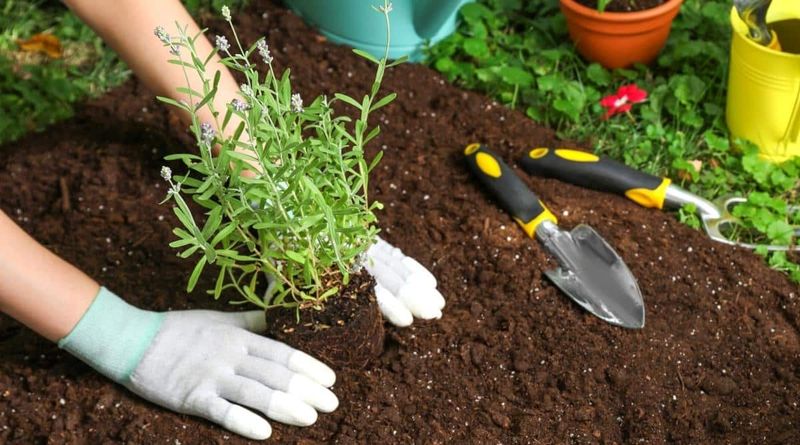
Once a lavender cutting has rooted, the temptation to move it straight into the garden can be strong, especially in May when Michigan gardens are looking their best and there is plenty of enthusiasm for getting plants in the ground.
Giving rooted cuttings a little more time to develop before that move tends to produce stronger results, though, and it is worth being patient through this final stage of the process.
A cutting that has just developed its first roots is still quite young. Those initial roots need time to fill out and establish within the rooting medium before the cutting is ready to handle the more variable conditions of an outdoor garden bed.
Allowing the cutting to grow on in its small container for several more weeks, until roots are visible through the drainage holes or the plant shows signs of active top growth, gives it a much better foundation for the transition.
When the time does come to move rooted lavender cuttings into the garden, choosing a spot with good drainage is especially important in Michigan, where heavier soils can hold water in ways that challenge lavender over time.
Raised beds, amended garden areas, or even patio containers with drainage holes can all work well.
Hardening off the young plants gradually by introducing them to more direct sun and outdoor air over the course of a week or so before planting them out is a step that reduces transplant stress and helps the cuttings settle in more comfortably.