Some Missouri Trees Turned Color Weeks Ahead Of Schedule This Year

August in Missouri felt like business as usual. Hot, dry, and dragging toward Labor Day. Then a handful of Missouri hillsides went ahead and did something the calendar had not approved.
Drivers squinted at orange crowns along the highway while dashboard thermometers still bragged about ninety-six degrees. Pavement stayed scorching underfoot, yet the scenery kept insisting on sweater weather.
Neighbors argued about it over the mailboxes, and half of them blamed somebody’s badly aimed lawn sprinkler. The rest swore autumn had shown up weeks early, uninvited and out of season.
Something slow and stubborn had been going on underground for weeks, well out of anyone’s sight. By Labor Day weekend, the pumpkin spice crowd suddenly looked a whole lot less ridiculous than usual.
Drought Stress Behind The Early Show
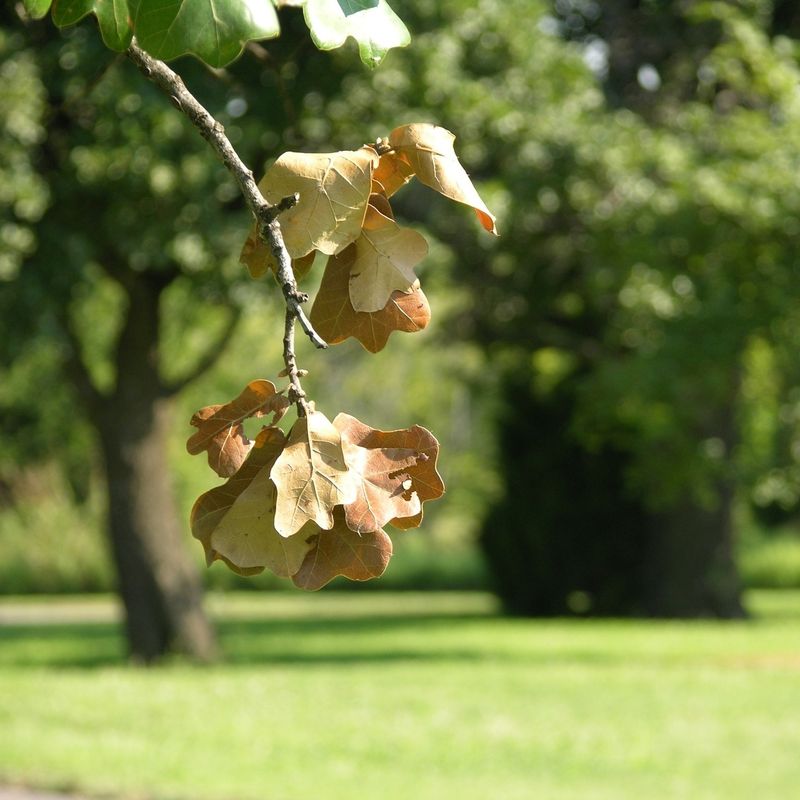
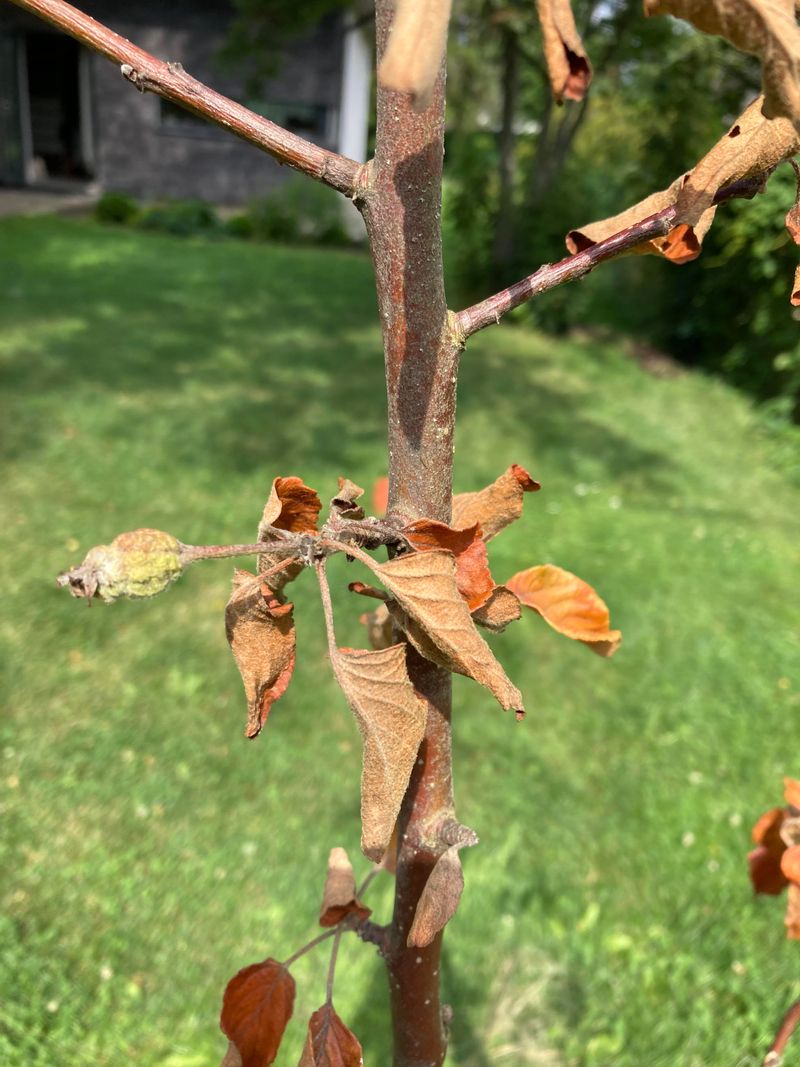
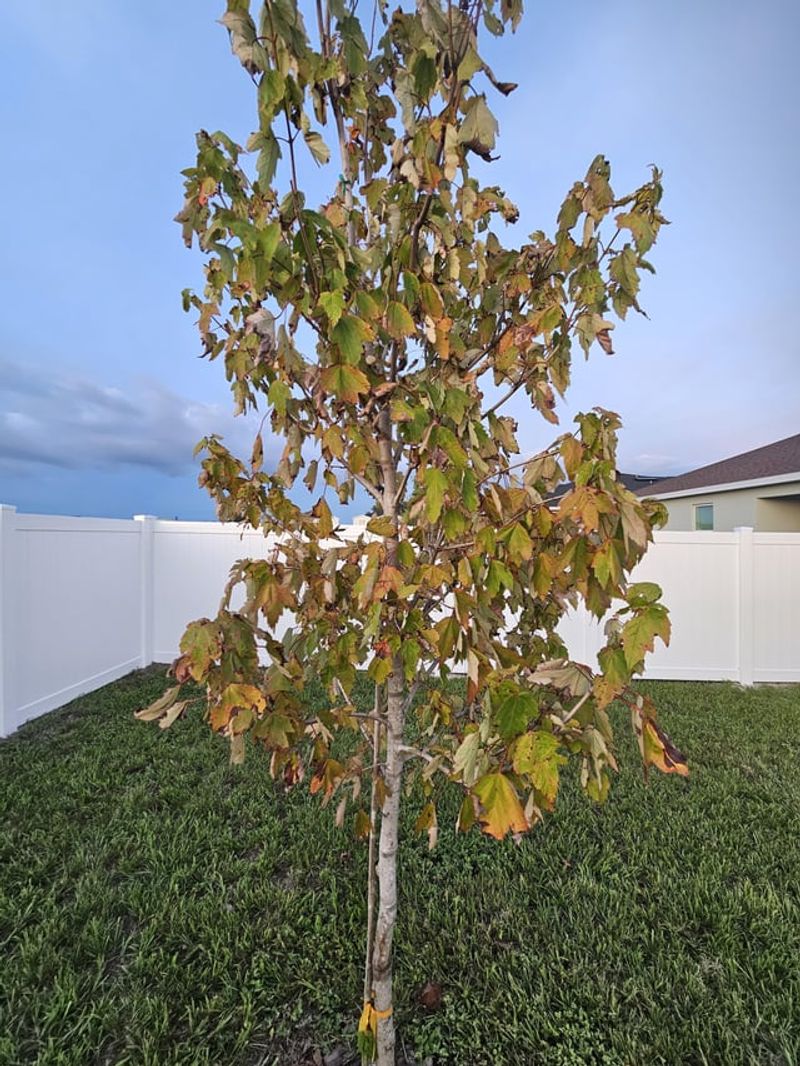
Missouri’s maples started blushing in August this year, and plenty of homeowners rubbed their eyes. Heat plus skimpy rainfall pushed those trees into an early wind-down.
Trees make food through green leaves, and that work depends on steady moisture in the soil. When water runs short, a tree shuts leaf factories early to protect its roots.
Foresters call the result premature fall color, and it shows up as dull orange or brown patches. The shades look muddy rather than the bright crimson October usually delivers.
Soil across much of central Missouri stayed bone dry through July and half of August. Shallow-rooted species felt it first, especially those planted in thin lawn soil near driveways.
Wind adds to the trouble because moving air pulls moisture straight out of leaf pores. A breezy, 95-degree week can drain more water than a tree pulls up daily.
Young trees planted within the last three years show the strongest reaction to dry spells. Their root systems remain small, so they cannot reach deeper pockets of stored moisture.
Color change itself is not damage, though it signals a tree spent its summer under pressure. Think of it as an early curtain call rather than a permanent problem.
Neighbors often blame disease, yet the pattern usually traces back to plain thirst. A rain gauge on the fence answers the question faster than any guesswork.
Watching which trees flip first tells you a lot about your yard’s driest corners. Those spots deserve extra attention next summer, before the calendar even hints at autumn.
Timing Of A Typical Missouri Autumn
Most Missouri leaf peepers circle the third week of October on the calendar. Northern counties usually peak first, while Ozark ridges hold their color into early November.
Sassafras, sumac, and black gum tend to open the show in late September. Maples, hickories, and oaks follow, stacking layers of gold over the hills.
Shorter days set off the real change, since trees track length of darkness with remarkable accuracy. Cool nights paired with sunny afternoons produce those postcard reds people drive hours to see.
This season, some maples and walnuts started turning yellow well before Labor Day, weeks ahead of their usual pace.
Walnut trees drop leaves early even in good years, so their behavior fooled fewer people. Maples along streets and parking lots surprised folks the most with patchy orange crowns.
Your Missouri Garden Changes Every Week. Your Plan Should Too.
Gardening in Missouri changes quickly throughout the season. Every Friday you’ll receive a simple weekly plan showing exactly what to plant, prune, fertilize, harvest, and protect so you never miss the right timing.
Early color rarely spreads evenly, which explains one bright tree beside five green neighbors. Root space, mulch depth, and nearby pavement create wildly different conditions within a single block.
Weather records back up what eyes noticed, with rainfall totals running several inches below average. Those missing inches showed up as color on the hillsides weeks ahead of time.
Statewide peak should still land close to average for healthy trees in shaded, moist ground. The stressed individuals simply jumped the line and finished their season sooner.
Keeping a simple notebook of dates helps you compare years without trusting memory alone. Two seasons of notes will make odd years like this one obvious at a glance.
Common Watering Mistakes That Stress Missouri Trees
Here is the habit that hurts trees most, and it involves quick nightly sprinkler bursts. Light sprinkles wet the top inch of soil and encourage lazy, shallow roots.
Lawn watering schedules rarely match what a mature shade tree actually needs. Grass wants frequent sips, while trees prefer a long, slow soak every week or two.
Another slip involves watering right against the trunk, where few absorbing roots live. Most feeding roots sit out near the drip line and beyond, in the top foot.
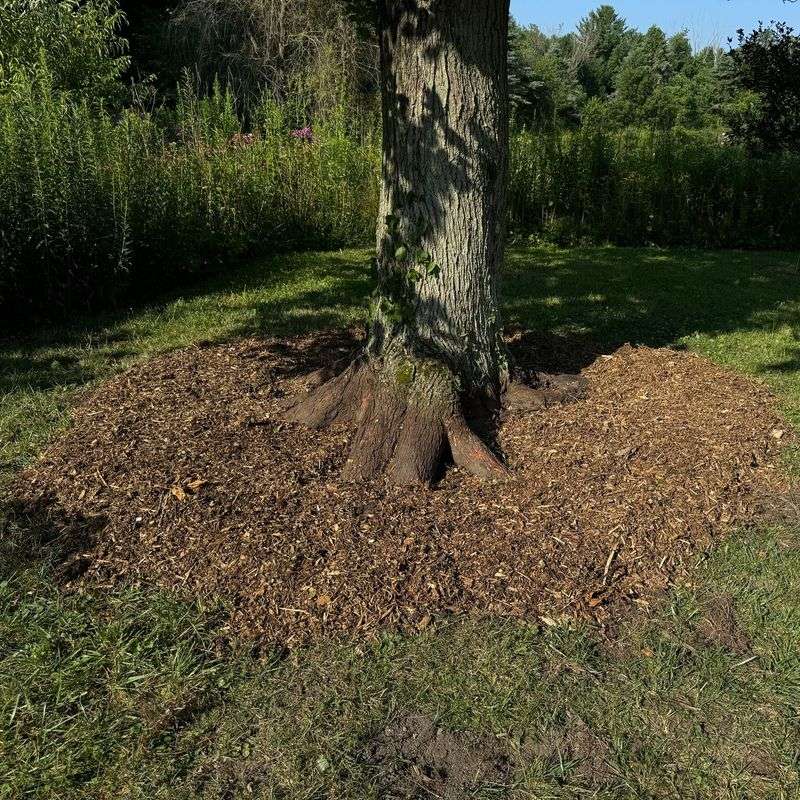
Piling mulch into a volcano around the trunk traps moisture against bark. Bark stays soggy, insects move in, and the roots above can circle the trunk.
Fertilizer gets misused during dry spells too, since salts can burn thirsty roots. Feeding a stressed tree pushes new growth it lacks water to support.
Heavy pruning in late summer creates another setback for trees already running on empty. Cuts remove leaves that were still making food for winter storage.
Compacted ground under trampolines, parked cars, or play sets blocks water from soaking in. Roots suffocate slowly, and the leaves tell the story the following August.
Skipping fall watering ranks as the sneakiest mistake of them all. Roots keep growing after leaves drop, and October moisture builds strength for spring.
Sandy creek-bottom soil drains fast and fools people into thinking rain was enough. A screwdriver pushed into the ground tests moisture better than guessing.
Fixing these habits costs nothing beyond a little attention and a hose timer. Your trees repay the effort with fuller crowns and steadier color each October.
Deep Soaking As A Recovery Plan
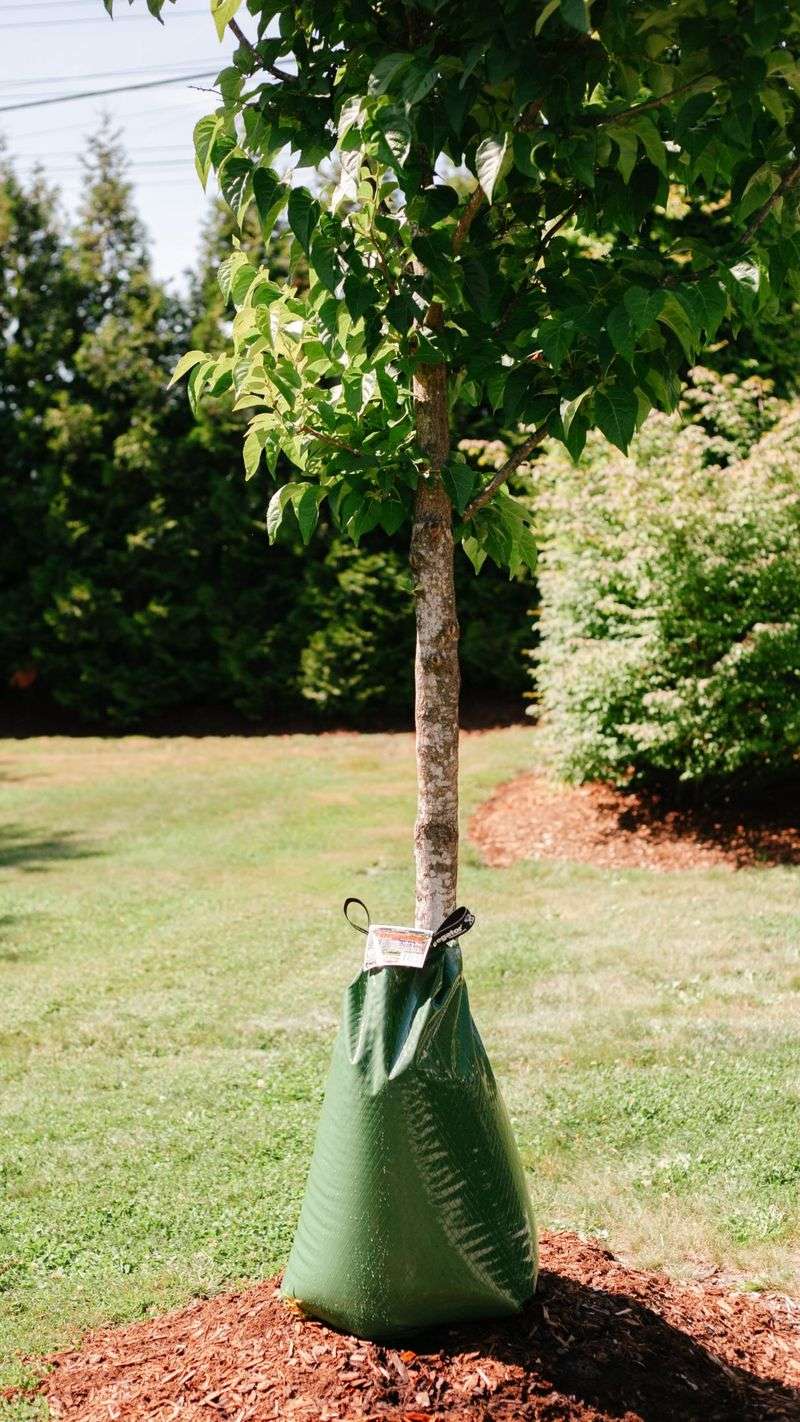
Rescue work starts with a hose set on a trickle and plenty of patience. A slow drip for an hour moves water deeper than twenty minutes of spray.
Aim for roughly ten gallons per inch of trunk diameter during each watering session. Measure the trunk at knee height with a tape, then do the simple math.
Place the hose halfway between the trunk and the outer branch tips. Move it to three or four spots around the tree so coverage stays even.
Soaker hoses coiled in loops work beautifully and need almost no supervision. Five-gallon buckets with small nail holes in the bottom also do the job cheaply.
Check depth afterward by digging a small hole with a trowel near the wet zone. Moisture should reach six to eight inches down before you call it finished.
Repeat every ten to fourteen days during dry stretches rather than daily. Roots need air pockets too, so soggy ground creates its own set of troubles.
Spread two to three inches of wood chips over the root zone afterward. Chips hold moisture, cool the soil, and keep mowers from nicking surface roots.
Hold off on fertilizer until the tree leafs out normally the following spring. Water fixes the real shortage, while nutrients can wait for a calmer season.
Trees that colored early usually leaf out fine next year with steady care. Give them a full season of attention before deciding anything drastic about removal.
Long Term Outcome For Stressed Shade Trees
One early autumn will not undo a healthy oak with a wide root run. Repeated dry summers, though, stack stress the way unpaid bills stack on a counter.
Trees short on stored sugar produce smaller leaves and shorter twigs the next spring. Growth rings tighten, and the canopy slowly thins from the top down.
Weakened bark also attracts borers, which go after trees that cannot push back with sap. Fungal cankers find the same openings, especially on sunscalded south-facing trunks.
Recovery usually takes two or three seasons of decent rainfall and sensible care. Patience matters here, because visible improvement often lags a full year behind the fix.
Watch for warning signs like sparse foliage, small leaves, or branch tips with no buds. A certified arborist can read those clues and recommend realistic next steps.
Yard trees near sidewalks and driveways face the toughest road back. Limited soil volume caps how much water their roots can ever store.
Forest trees fare better, sharing shade, leaf litter, and cooler ground with neighbors. That teamwork explains why woodland color often looks richer than street-side color.
Species matters as well, since bur oak and hackberry shrug off drought far better. Red maple and river birch protest loudly whenever the soil dries out.
Homeowners sometimes remove a tree too soon after one strange-looking season. Waiting one more spring saves money and often saves a perfectly good tree.
Long odds still favor most trees that flashed color early this fall. Give them water, mulch, and time, then judge their comeback next June.
Mulch Beds Plus Smart Soil Care For Prevention
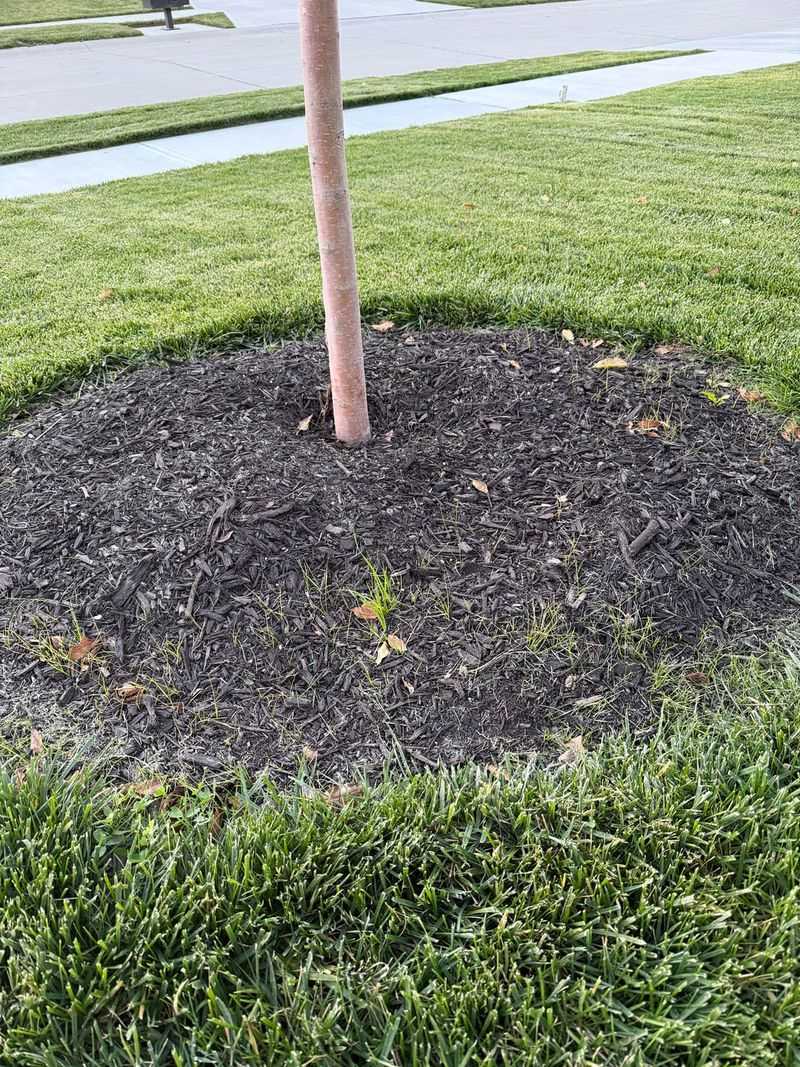
Prevention beats rescue, and the cheapest tool sits in a bag at the garden center. Wood chips spread wide across the root zone change how soil behaves all summer.
Build the ring as wide as you can tolerate, ideally out to the branch tips. Keep the layer flat like a pancake, with bare bark showing at the trunk.
Shrinking the lawn under a tree removes competition for every drop of rain. Grass roots grab surface moisture long before tree roots get a turn.
Choosing the right species at planting time prevents years of babysitting later. Native oaks, hackberry, Kentucky coffeetree, and bald cypress handle Missouri swings with ease.
Planting depth deserves attention too, because buried root flares cause slow decline. The spot where the trunk widens should sit visible above the finished soil.
Loosening compacted ground with an air spade or hand fork helps water soak downward. Adding compost to the surface feeds soil life that keeps the structure open.
Rain barrels give you a free backup supply for the hottest stretch of July. Two barrels under a downspout can hold enough for several deep soaks.
Marking a watering day on your phone calendar turns good intentions into habit. Every other Saturday works well for most yards during a dry summer.
Trees planted with care and mulched properly rarely put on an August color show. They save the fireworks for October, which is exactly where the fun belongs.