Spiky Brown Balls Cover Illinois Sidewalks Every Fall And Almost Nobody Knows Which Tree Drops Them
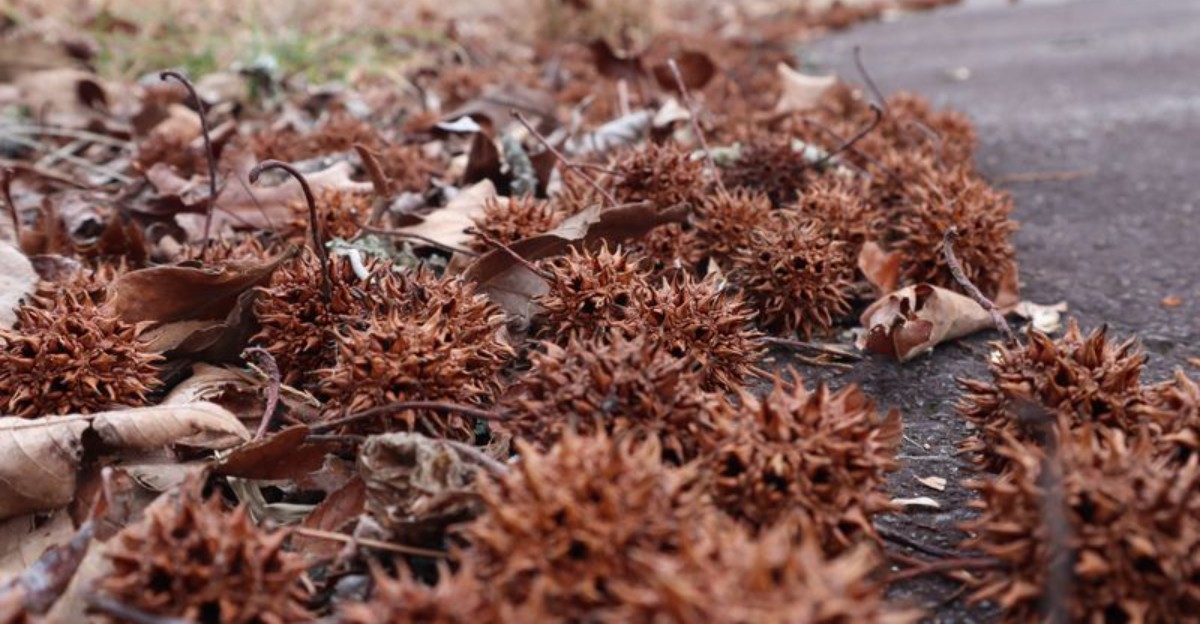
Each spiky ball under your shoe holds dozens of tiny seed chambers, and every chamber has two little hooked beaks. I rolled one in my palm last October and counted more than forty points. No wonder it hurts.
The same tree that drops them can keep raining them down from fall into spring. You might notice fresh ones on the walk in February, long after the leaves are gone. Turns out the tree is in no hurry at all.
Across Illinois, these prickly orbs roll under car tires, jam lawn mowers, and trip dog walkers every year. Yet most people I ask in Illinois just shrug and blame the nearest maple. I did that too for years.
The real culprit has star-shaped leaves, sticky sap with a sweet history, and some surprising fans among backyard birds. Look up at the star-leaved tree on your block, because that is the one guilty of all the spiky mess.
Those Spiky Sidewalk Balls Come From a Tree With Star-Shaped Leaves
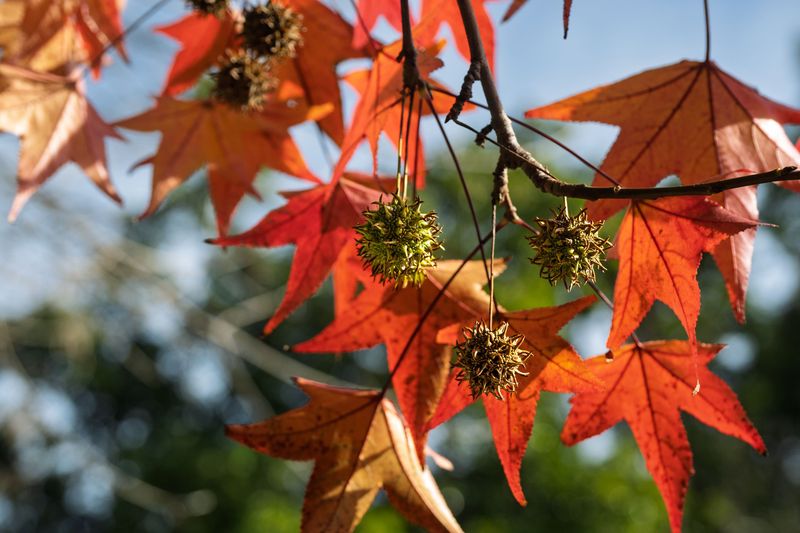
Look up the next time a spiky ball rolls under your sneaker. Chances are good you will spot leaves shaped like little stars, each with five to seven pointed lobes.
That tree is the American sweetgum, known to botanists as Liquidambar styraciflua. Plenty of folks mix it up with maples because the leaves look similar at a glance. A maple drops winged helicopter seeds, though, not prickly spheres.
One easy test is to crush a leaf between your fingers. Sweetgum leaves give off a light, piney, almost resin-like scent that maples lack.
The leaves also sit alternately along the twig, while maple leaves grow in pairs across from each other.
Bark offers another clue on younger branches. Some sweetgum twigs grow odd corky ridges, sort of like flat wings running along the stem. Not every tree shows them, but when you see them, the case is closed.
The name comes from the fragrant gum that oozes from wounds in the bark. People once chewed it and used it in salves and perfumes.
So the tree pelting your driveway actually has a pretty sweet backstory, even if its fruit feels anything but sweet underfoot.
Each Prickly Gumball Is Really a Cluster of Tiny Seed Pods
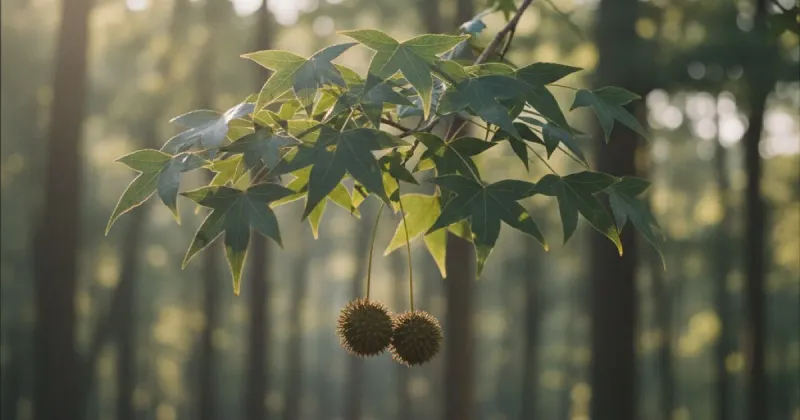
Here is a fun bit of tree trivia for your next walk. A sweetgum ball is not one fruit but a whole bundle of them stuck together.
Botanists call it a compound fruit. Each ball measures roughly one to one and a half inches across and holds many small capsules.
Every capsule ends in a pair of pointy tips, which is why the whole thing feels like a tiny medieval mace.
Inside those capsules sit small winged seeds. When the ball dries and the capsules open, the seeds flutter out on the wind. By the time most balls hit the ground, many of the seeds have already left.
The balls start out green in summer and turn brown as they ripen in early fall. They stay hard and woody, so they break down slowly once they land. That is why last year’s batch may still be hiding in your flower bed.
Kids love to collect them, and honestly, so do I. Hold one up to the light and you can see the small holes where seeds escaped. It feels a bit like peeking inside an empty apartment building built by nature.
Sweetgum Trees Keep Dropping Gumballs Long After Autumn Ends
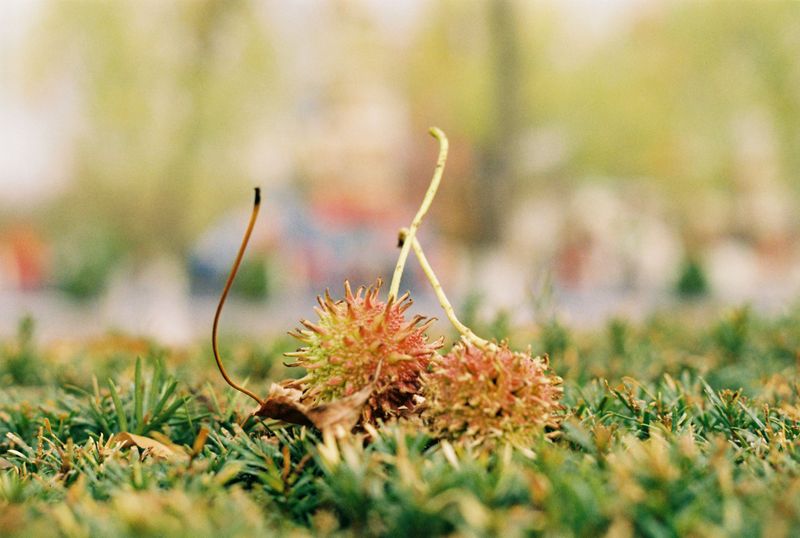
Raking once in October rarely solves the sweetgum problem. I learned that the hard way after clearing my walk and finding a fresh crop two weeks later.
Gumballs ripen in early fall, but they do not fall all at once. Many cling to the branches through winter and keep dropping into early spring. Wind storms and ice often shake loose a big batch at one time.
In Illinois, that means you can find gumballs on top of snow in January. They also show up again when the snow melts, which surprises a lot of homeowners in March. A bare tree with brown balls still dangling is a classic winter look for sweetgum.
This slow release is part of the tree’s plan. Seeds that leave over many months have more chances to land in a good spot. Birds also get a steady snack supply through the cold season.
For you, the practical lesson is to plan for several cleanups, not one. A quick sweep after windy days keeps walkways safer. Leaving some under the tree in a mulched bed can save effort while still feeding wildlife.
Southern Illinois Is Native Sweetgum Country, but Planted Trees Are Everywhere
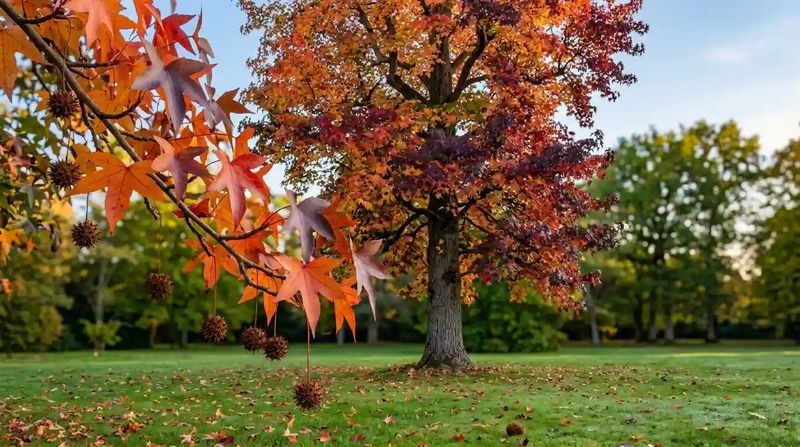
Picture-perfect fall color in a southern Illinois river bottom often comes from sweetgum. The tree grows wild there in moist woods, swamp edges, and floodplains near the bottom of the state.
Farther north, most sweetgums you meet were planted. Cities and homeowners chose them for decades as shade and street trees because they grow fast and look stunning in autumn.
That is why older neighborhoods near Chicago, Peoria, and Springfield can have plenty of them.
Sweetgum likes moist, slightly acidic soil and full sun. It handles clay and even soggy spots better than many trees. Very alkaline soil can turn its leaves pale yellow, a condition called chlorosis.
Northern Illinois winters can be tough on young trees. Gardeners in the north often do better choosing hardy stock grown from more northern seed sources. Sweetgum is commonly rated for USDA zones 5 through 9, which covers most of the state.
So if you are walking a parkway lined with gumballs, someone probably picked that tree on purpose years ago. They likely loved the fall show and may not have thought much about the spiky leftovers.
Goldfinches and Squirrels Happily Pick Apart Fallen Sweetgum Balls
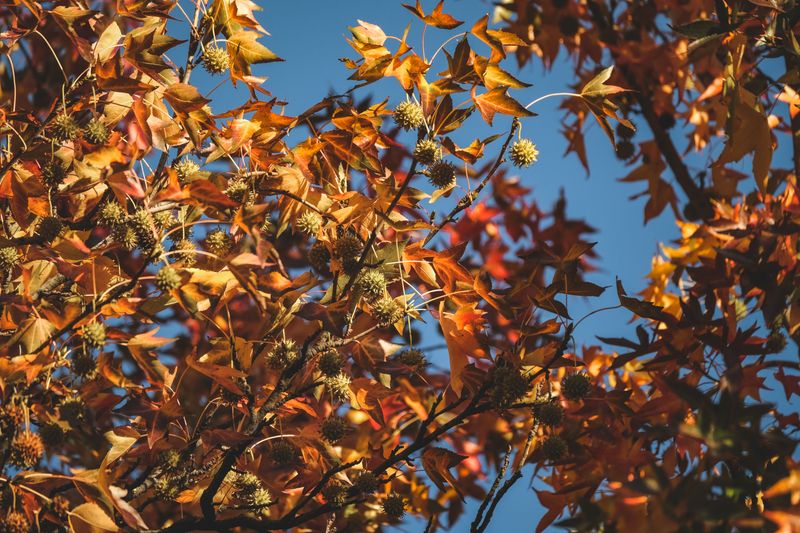
My grumbling about gumballs softened the day I watched a goldfinch hanging upside down on one. It was picking tiny seeds out of the capsules like a kid digging through a cereal box.
American goldfinches, purple finches, and pine siskins all eat sweetgum seeds. Squirrels and chipmunks nibble them too. The seeds matter most in late winter, when many other food sources run low.
The tree itself supports insects as well. Luna moths and promethea moths are among the caterpillars that feed on sweetgum leaves. Those caterpillars then become food for nesting songbirds in spring.
Big sweetgums also offer shade that cools homes in summer. Their leaves and branches catch rainwater and slow down stormwater runoff. They pull carbon from the air as they grow, just like other large shade trees.
A simple tip is to leave a few gumballs in out-of-the-way spots. A mulched bed beneath the tree or a back corner of the yard works nicely. You keep main paths clear and the birds still get their winter buffet.
Sweetgum Balls Can Twist Ankles and Jam Your Lawn Mower
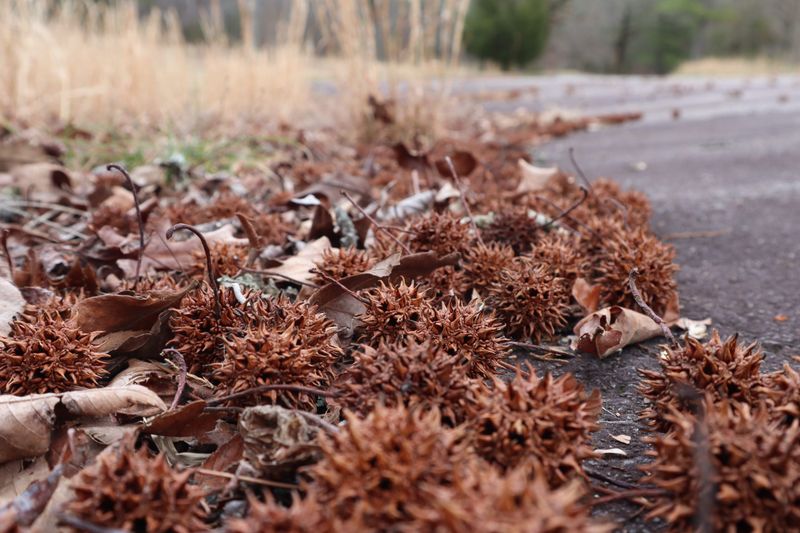
Stepping on a gumball barefoot is a memory nobody wants twice. Even in shoes, the round shape makes them roll like marbles on concrete.
That rolling causes real slip and ankle risks, especially for older adults, joggers, and kids. Wet gumballs on a slope or steps are even trickier.
If your tree sits near a sidewalk, keeping that walk clear is a kind gesture for neighbors and mail carriers.
Gumballs also clog gutters and downspouts when branches hang over the roof. They can get flung by lawn mowers, so wear eye protection and keep people and pets away while mowing.
Some mowers struggle when thick layers build up. Bare feet and paws hurt most. Dogs may limp after pressing a spike into a paw pad. A quick check after walks under sweetgums helps.
Because of these issues, many arborists suggest planting sweetgum away from patios, driveways, and busy walkways.
Open lawns, larger yards, and natural areas suit it better. The tree grows large, often 60 feet tall or more, so it needs room above and below.
A Close-Tined Rake or Lawn Sweeper Makes Gumball Cleanup Easier
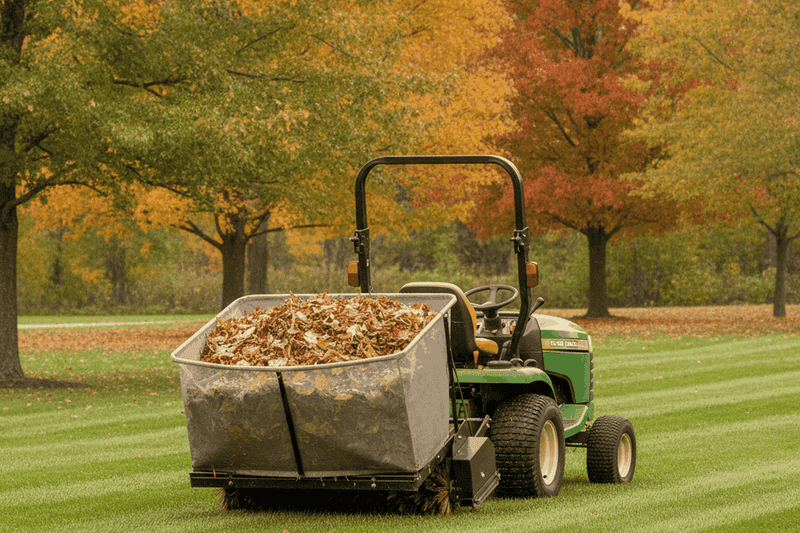
Cleanup goes faster with the right tool, and a regular leaf rake often lets gumballs slip right through. A rake with tighter tines grabs them much better.
For bigger lawns, try a push or tow-behind lawn sweeper. Its spinning brushes scoop gumballs into a bag as you walk. A rolling nut gatherer, the cage-on-a-stick kind, also works well for scattered balls on grass.
Leaf blowers help on hard surfaces like driveways. Push the gumballs into a pile, then shovel them into a bin.
Some lawn vacuums with shredders can handle them too, though check the maker’s advice first.
Timing helps a lot. Clear paths after windy days and before snow, so gumballs do not freeze into icy lumps underfoot.
Some people ask about sprays that stop fruit from forming. These products need precise timing during spring bloom and usually require a certified arborist.
Results vary, and repeat treatments are needed each year, so many homeowners skip them. Check your local yard waste rules too. Many Illinois towns accept gumballs in yard waste pickup with leaves.
Fruitless Rotundiloba Sweetgum Gives You the Fall Color Without the Spikes
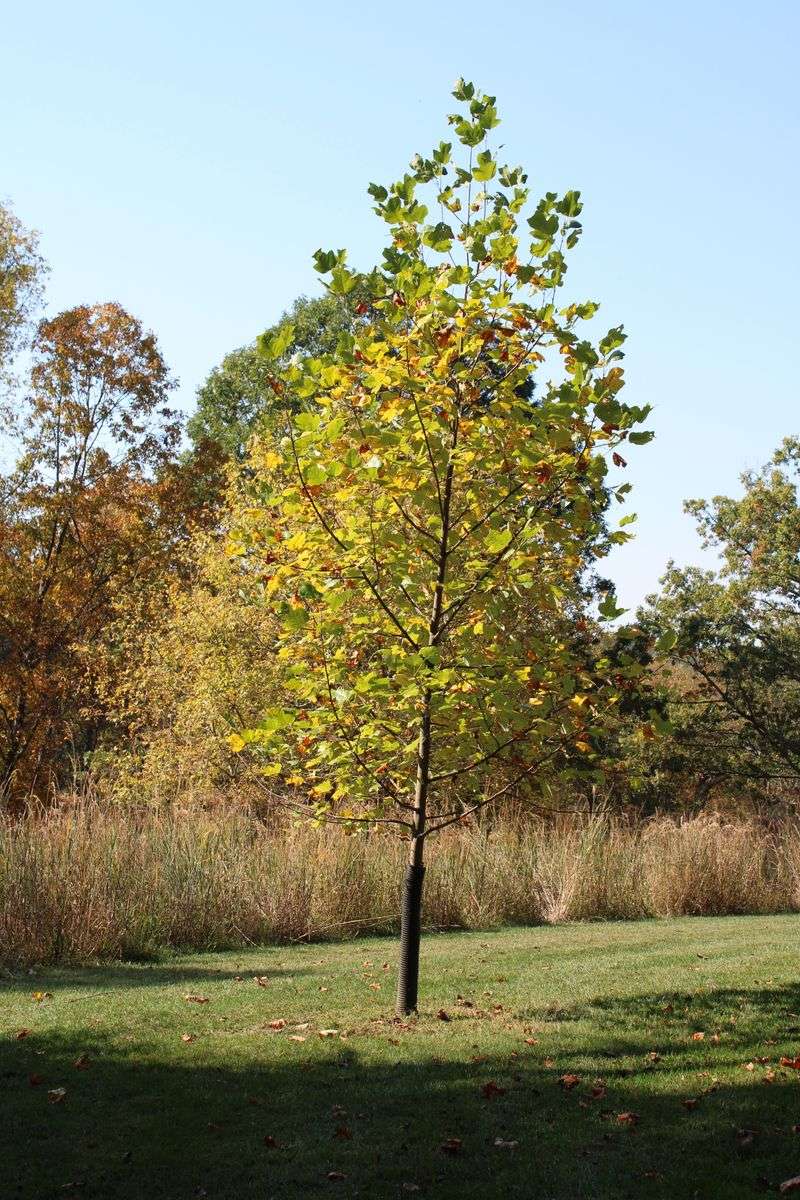
Love the color but dislike the crunch? You are not alone, and growers took notice. The Rotundiloba cultivar of American sweetgum produces few or no gumballs. Its leaves have rounded lobes instead of sharp points, so it is easy to spot.
It still turns rich shades of purple, red, and gold in fall. Rotundiloba tends to be less cold hardy than some other sweetgums. It suits central and southern parts of the state better than the far north.
Ask a local nursery which trees perform well in your area before buying. Already have a fruiting sweetgum? Removing a healthy, mature shade tree is a big decision.
Many people find that smart cleanup habits and a mulched bed under the canopy make life easier while keeping the shade and wildlife benefits.
Gumballs can even be useful. Some gardeners spread them as a slow-breaking mulch or a rough layer that may discourage digging pets.
Crafters paint them for ornaments and wreaths. So the next time one rolls under your foot, you will know exactly which tree sent it and what to do about it.