Spotted a Big Paper Nest Now That the Leaves Are Down in North Carolina? Here’s What to Do
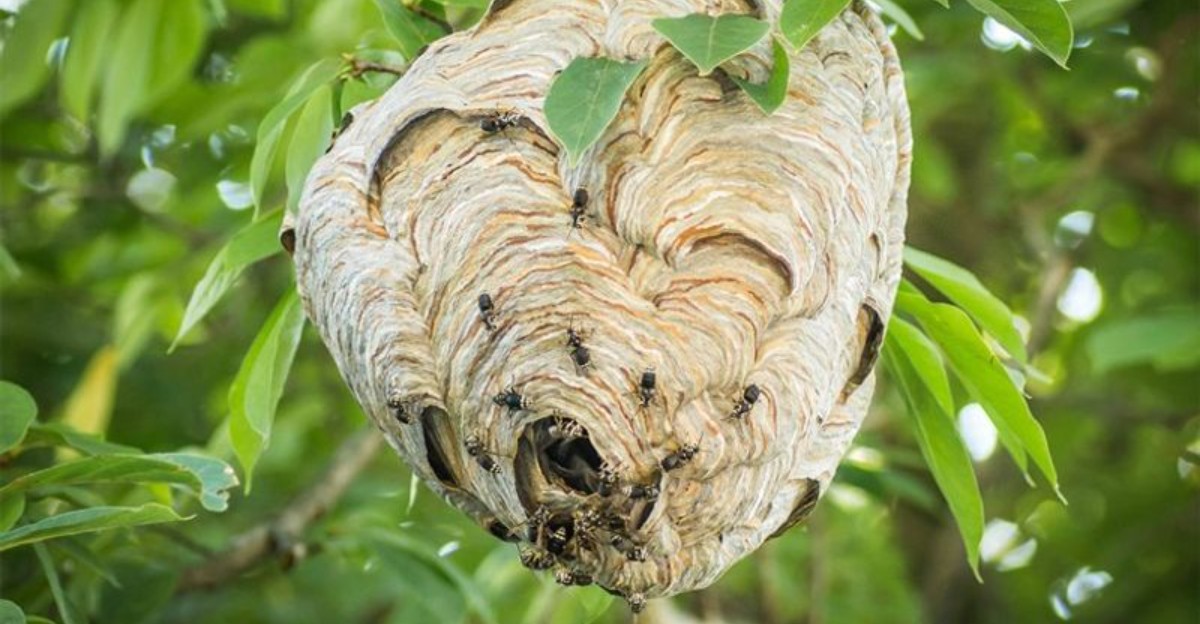
A single summer hornet colony can raise hundreds of workers inside a gray paper ball they chewed together from wood fibers and spit.
I walked under one for months without noticing it. Then the oaks went bare in late fall, and there it was, hanging over my driveway like a forgotten lantern.
If you just spotted one of these in a North Carolina tree, I bet your heart did a little skip. You probably wondered who built it, whether anyone still lives inside, and if you need to do anything at all.
Personally, I think these nests are some of the coolest things a bare tree can reveal. The papery swirls hold a whole season of secrets, and the answer to what happens next is calmer than most people expect. So is it a threat, a trophy, or simply a leftover?
1. That Gray Paper Football In The Tree Has A Surprising Builder
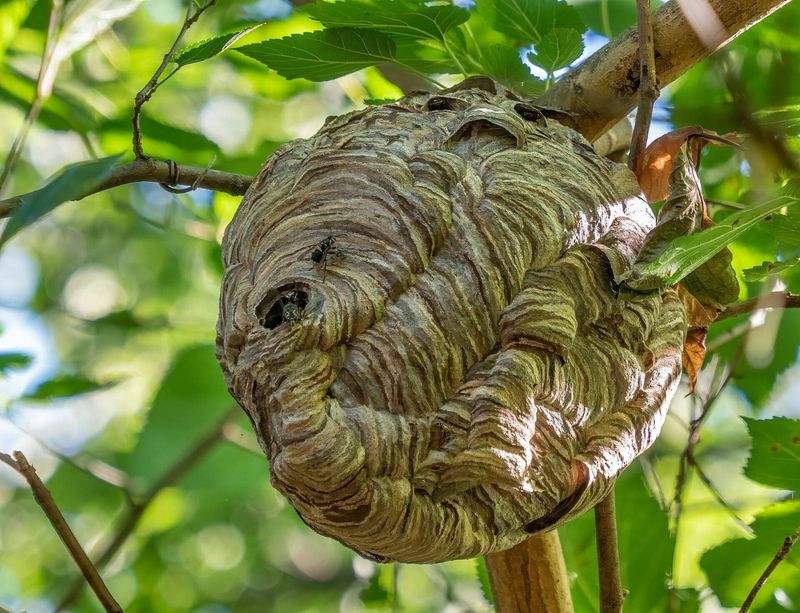
Most big, gray, football-shaped nests hanging in North Carolina trees belong to bald-faced hornets. Despite the name, they are not true hornets at all. Entomologists group them with the yellowjackets.
You can spot the workers in summer by their black bodies and bold ivory-white markings on the face and tail end.
They build their nests by scraping wood from fences, sheds, and old logs, then chewing it into a soft pulp. That pulp dries into the swirly, striped paper you see now.
Inside, the nest holds several stacked layers of six-sided cells, a lot like a paper apartment building. The outside shell has many thin layers that trap air and help keep the brood warm. There is usually one small entrance hole near the bottom.
Size can surprise you. Many nests reach basketball size by early fall, and some grow even larger. Colors vary too, since each forager brings back wood from a different source, giving the paper its tan and gray bands.
Other insects make paper nests, but open, umbrella-shaped combs under eaves usually belong to paper wasps. A big enclosed ball up in a tree points to bald-faced hornets.
2. Cold Weather Empties The Hornet Nest For Good
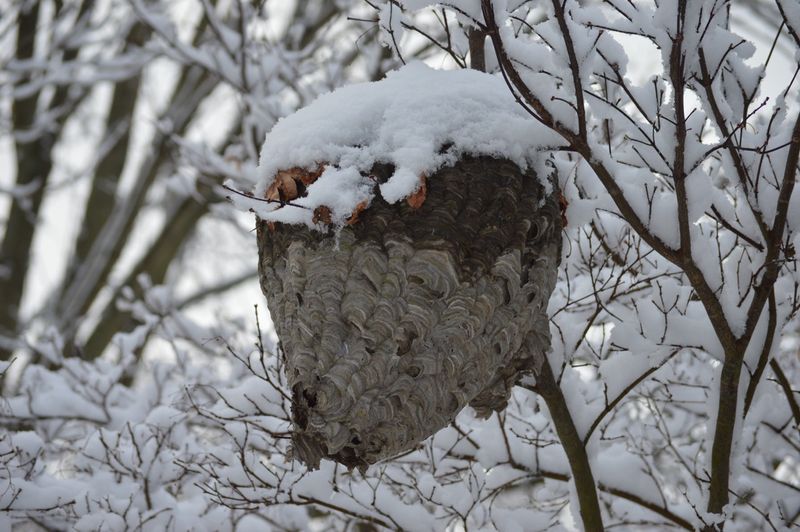
Relax a little, because that nest is very likely empty by the time the leaves are gone. Bald-faced hornet colonies last only one year. The workers, males, and the old queen fade away as hard frosts arrive in late fall.
Only the newly mated queens make it through winter. They leave the nest in autumn and tuck themselves under loose bark, inside rotting logs, or beneath leaf litter. There they stay still and quiet until spring warms things up.
Each queen then starts a brand-new nest from scratch. Old nests are not reused, so the one in your tree will not wake up next year with fresh tenants. Timing shifts a bit across the state.
Mountain counties often see the first hard freeze in October, while the Piedmont and the coast may not get one until November or even December. Warm spells can keep a few stragglers moving a little longer in eastern areas.
By midwinter, nests in most yards hold no living hornets at all. What remains is basically a fragile paper sculpture slowly falling apart in the wind and rain.
3. Watch The Bottom Entrance Hole Before You Get Close
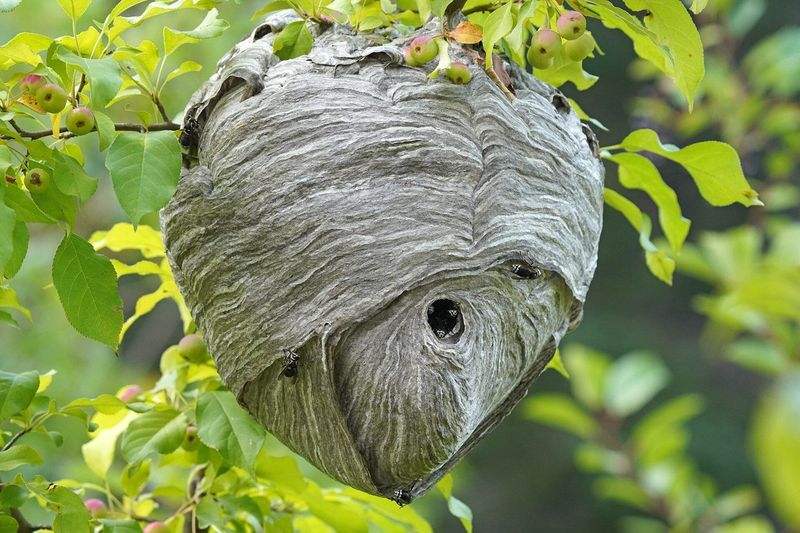
Patience is your best tool here. Pick a mild, sunny afternoon and watch the nest from at least 15 to 20 feet away for several minutes.
Keep your eyes on the small entrance hole, usually near the bottom. An active colony shows steady traffic, with hornets flying in and out every few seconds. A quiet nest with zero movement on a warm day is a very strong sign the colony has finished.
Binoculars make this easy and keep you out of reach. A phone camera with zoom works nicely too.
Found it in October or early November instead? Give it more time. Colonies can stay active into fall, and bald-faced hornets defend their homes hard.
They can sting more than once, and they react to vibrations like a mower or a ladder bumping the trunk.
Here are a few quick checks before going near it: Wait until after a couple of hard freezes. Look on a day above 55 degrees, when any survivors would be flying. Skip tapping, poking, or throwing anything at the nest.
If you see activity, back off and wait a few more weeks. Cold weather will handle the job for you.
4. Leaving The Old Hornet Nest Up Is Perfectly Fine
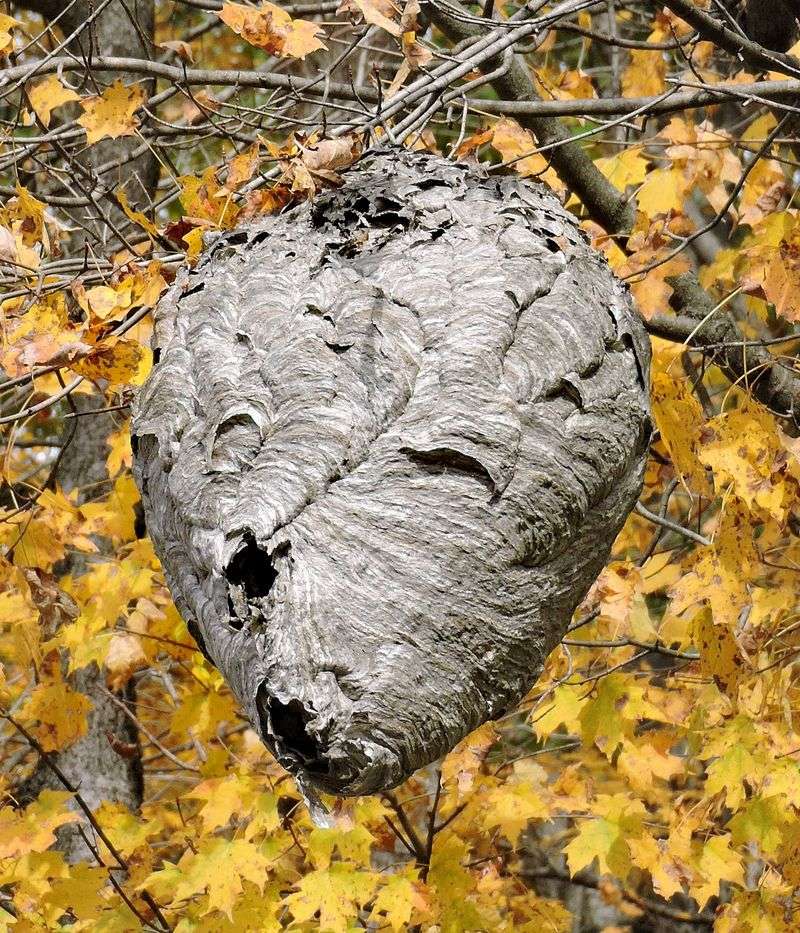
Honestly, my favorite option is often to do nothing at all. An empty nest high in a tree poses no real risk to you, your kids, or your pets.
Winter weather slowly breaks it down. Rain softens the paper, wind tears off the outer layers, and the whole thing usually crumbles by spring. Birds such as woodpeckers and chickadees often peck it open hunting for leftover larvae and pupae.
Watching that slow breakdown can be fun. I like checking on mine after storms to see how much of the shell has peeled away.
Some people worry an old nest will attract a new queen. Bald-faced hornets do not move back in, and there is no solid evidence an empty nest draws new ones.
A new queen might still pick your yard, but that is because good habitat is there, not because of the leftover paper.
Removal makes more sense when the nest hangs right over a doorway, deck, or play set, or if it simply bugs you. Otherwise, let nature take its course and enjoy a front-row seat to the process.
5. Taking Down An Empty Hornet Nest The Safe Way
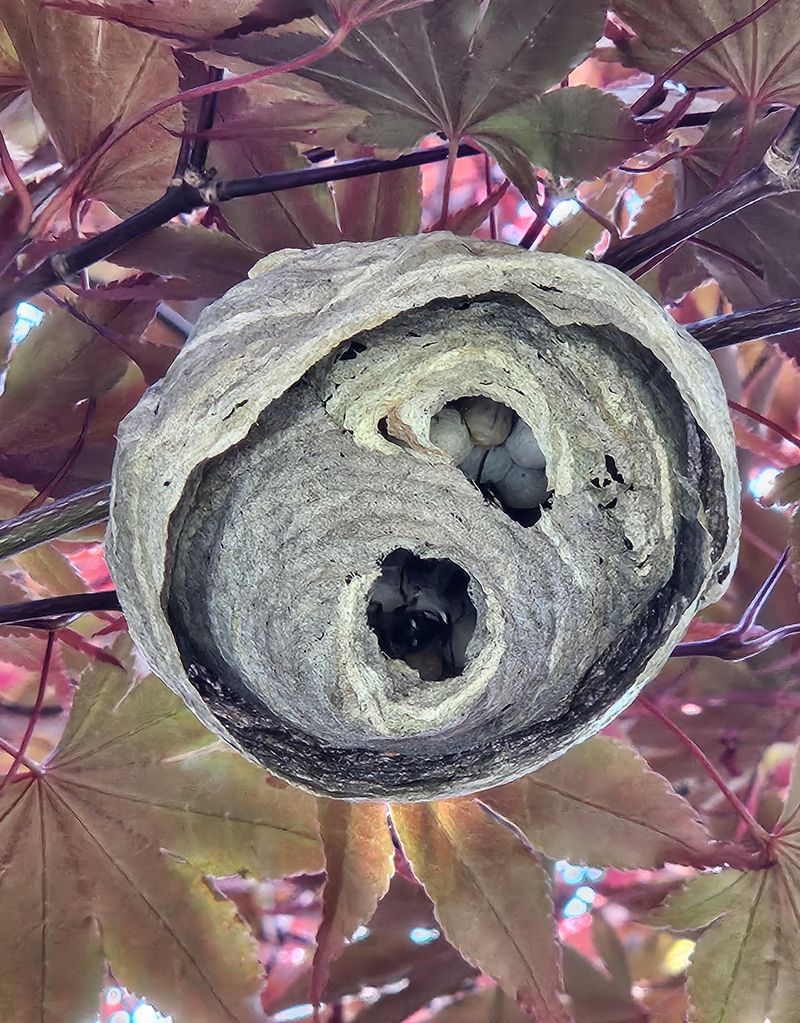
Ready to remove it? Wait for a cold day, ideally after several hard freezes, so any rare late survivor is sluggish.
Gear up with gloves, long sleeves, and safety glasses. Paper dust and old debris can fall when you handle it, and a sturdy outfit gives you some peace of mind.
For nests within reach, slip a large trash bag over the whole thing and clip the branch above it with pruners. Tie the bag shut right away.
Higher nests call for a pole pruner from the ground. Climbing a ladder near any nest is risky, and a fall is a bigger danger than a sleepy hornet. If the nest sits way up high, a tree service or pest professional is a smart call.
Spraying insecticide on an empty winter nest wastes product and money. It also puts chemicals where birds forage.
Once bagged, you can toss it in the trash. Some families keep a clean empty nest as a nature display, but freeze it in a sealed bag for a few days first to handle any hidden critters. Teachers and kids usually love seeing one up close.
6. Those Black And White Hornets Helped Your Garden All Summer
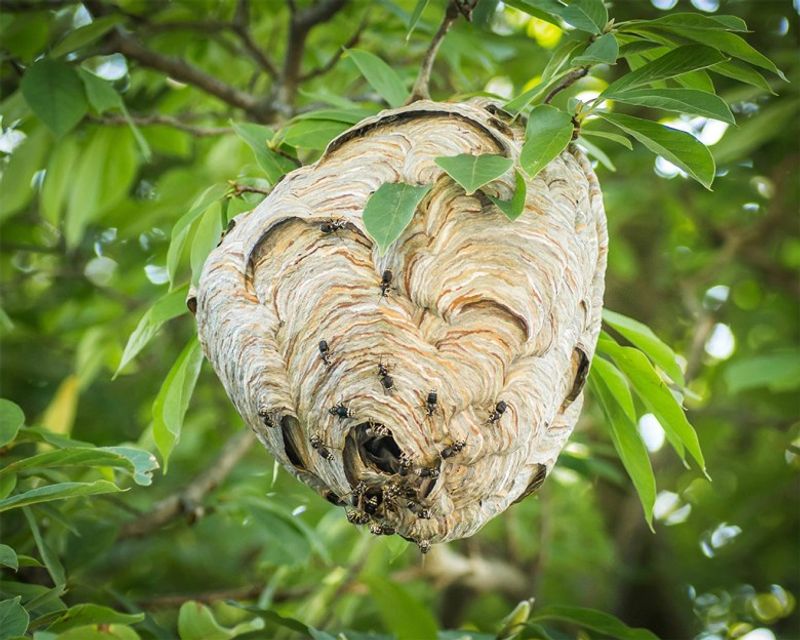
Strange as it sounds, the builders of that nest probably did your vegetable patch a favor. Bald-faced hornets are busy predators that hunt flies, caterpillars, and other soft insects.
Workers catch prey, chew it up, and carry it home to feed the growing larvae. A large colony can remove a huge number of pest insects over a single season. Tomato hornworms and cabbage caterpillars are fair game.
Adults also sip nectar and sweet fruit juices. That means they visit flowers and give a little pollination help, though bees do the heavy lifting there.
Fun fact: bald-faced hornets can squirt venom toward the eyes of an intruder getting too close to the nest. It is one more reason to respect an active colony from a distance.
Their good side does not mean you have to accept a nest beside the front door. It just means a colony far out in the woods or high in a back tree is often worth tolerating in summer.
Wildlife values them too. Birds, skunks, and other animals eat the larvae, making these insects part of a healthy backyard food web.
7. Spring Is When Hornet Queens Start Scouting Your Yard
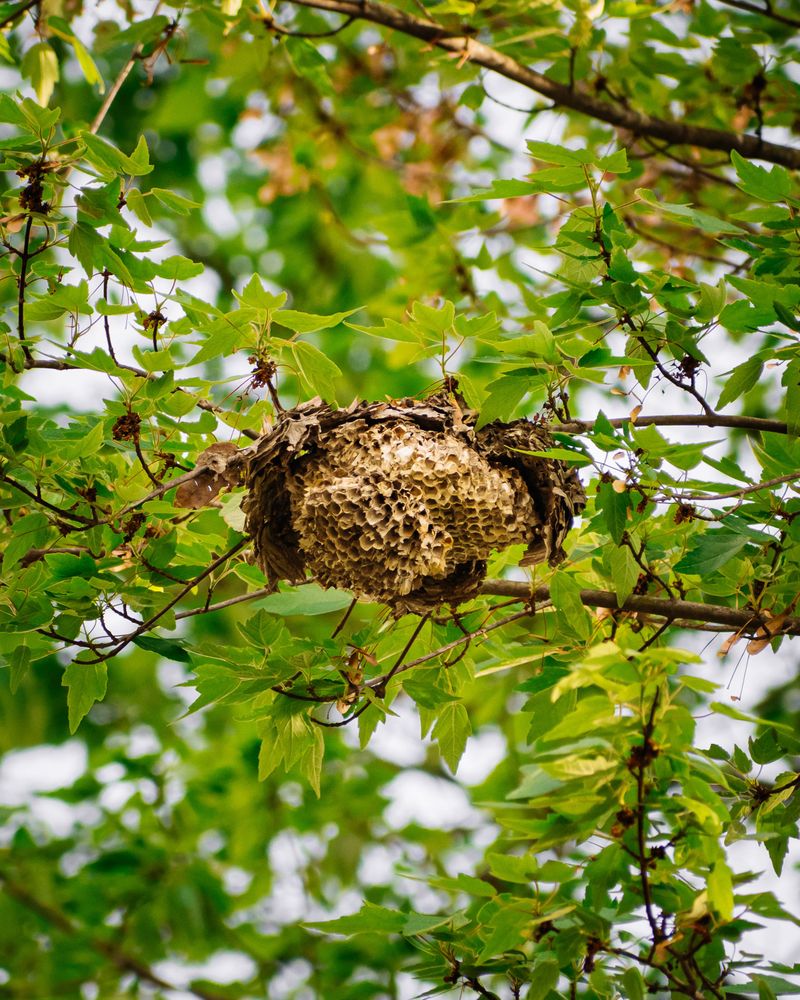
Once spring warms up, usually from April into May across much of the state, overwintering queens wake up and go house hunting. Each one starts a tiny nest alone.
At first, that nest is about the size of a golf ball or even smaller. It might hang from a shrub, a tree limb, an eave, or a porch light. The queen builds a few cells, lays eggs, and raises the first workers herself.
That early stage is your easiest window. A walnut-sized nest with one queen is far simpler to deal with than a basketball-sized colony in August.
Try a quick walk around your home every week or two in spring. Look under eaves, deck railings, shed roofs, and the lower branches of shrubs near doors.
Spotted a starter nest in a high-traffic spot? Contact a licensed pest professional, or check guidance from NC State Extension for safe options. Nests far from people can often stay.
Keep in mind that most spring paper nests under eaves are paper wasps, not hornets. They are usually less aggressive, so identify before you act.
8. A Few Smart Habits Keep Next Year’s Hornet Nests Away From Your Door
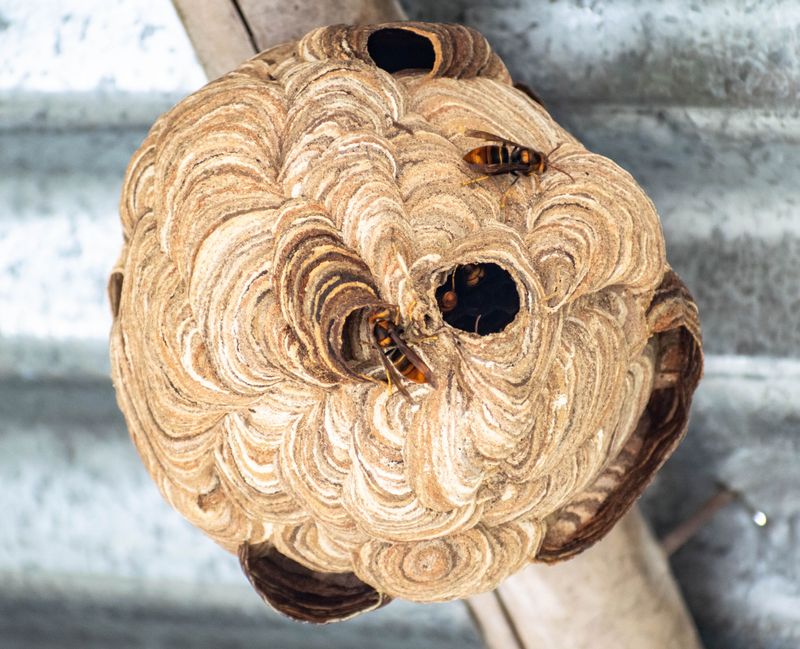
My best takeaway from finding that winter nest? It works as a free map of where hornets felt welcome, so use it to plan.
Start with your house. Seal gaps in soffits, siding, and attic vents so no stinging insects build inside walls. Fix loose trim before spring.
Next, look at your outdoor habits: Keep trash cans tightly lidded, since late-summer yellowjackets love sweets and protein. Pick up fallen fruit under trees promptly. Rinse soda cans before they go into recycling bins.
Trim shrubs and tree limbs right next to doors and walkways. That way, any nest that does appear sits farther from where people walk.
Store weathered wood and old fence boards where foragers have less access, though they will find wood fiber somewhere. A full no-hornet yard is not realistic, and the woods next door will host plenty.
Finally, plan an annual spring patrol on your calendar. Catching a tiny starter nest early is the easiest, cheapest fix there is.
For local identification help, the NC State Extension office in your county can answer questions for free. That big paper ball can turn into a great lesson.