Spotted Lanternfly Egg Masses Laid In Georgia This Fall Should Be Scraped Off Before Spring
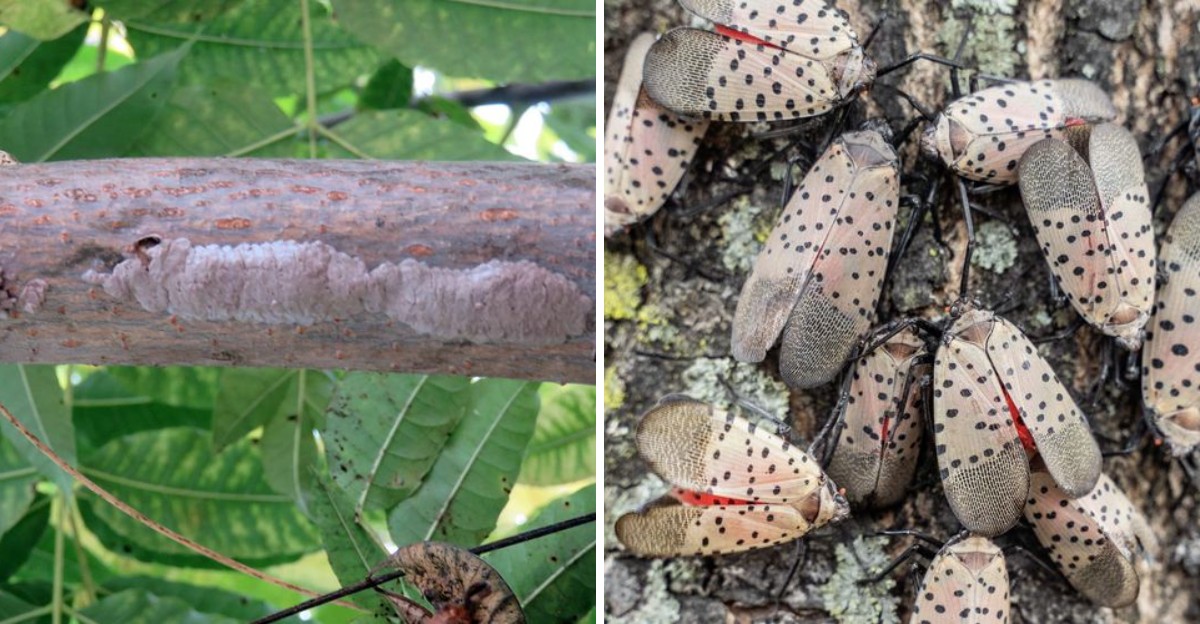
One small egg mass on a tree trunk can hold around 30 to 50 developing insects, all tucked under a gray coat that looks like dried mud. They sit there through the coldest weeks of winter, quietly waiting for warm spring days.
I’ll admit I’d have walked right past them myself. They blend in that well with bark, stone, and old fence posts.
The culprit is a flashy, sap-hungry newcomer that was first confirmed in Georgia in October 2024. Grapevines, maples, and the weedy, invasive tree of heaven are some of its favorite meals.
Farmers, vineyard owners, and backyard growers all have good reason to pay attention.
You need a sharp eye, a few spare minutes, and an old plastic gift card from the junk drawer. Could the bark beside your patio already be hiding a few of these crusty little packages?
1. Those Gray Mud-Like Smears On Tree Bark Hold A Secret
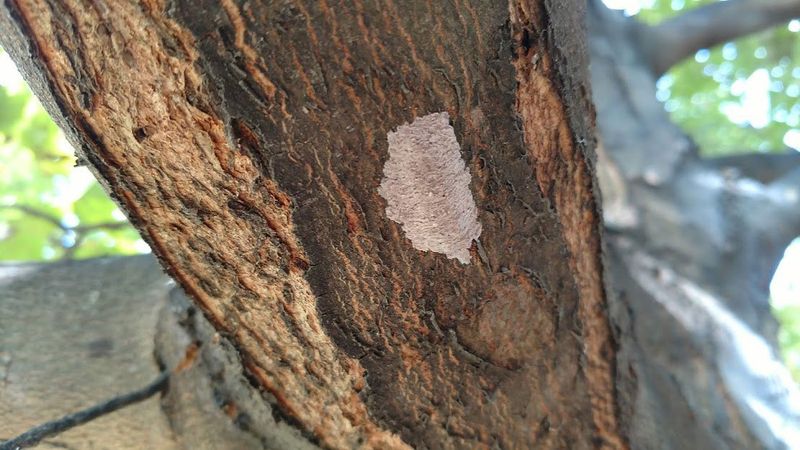
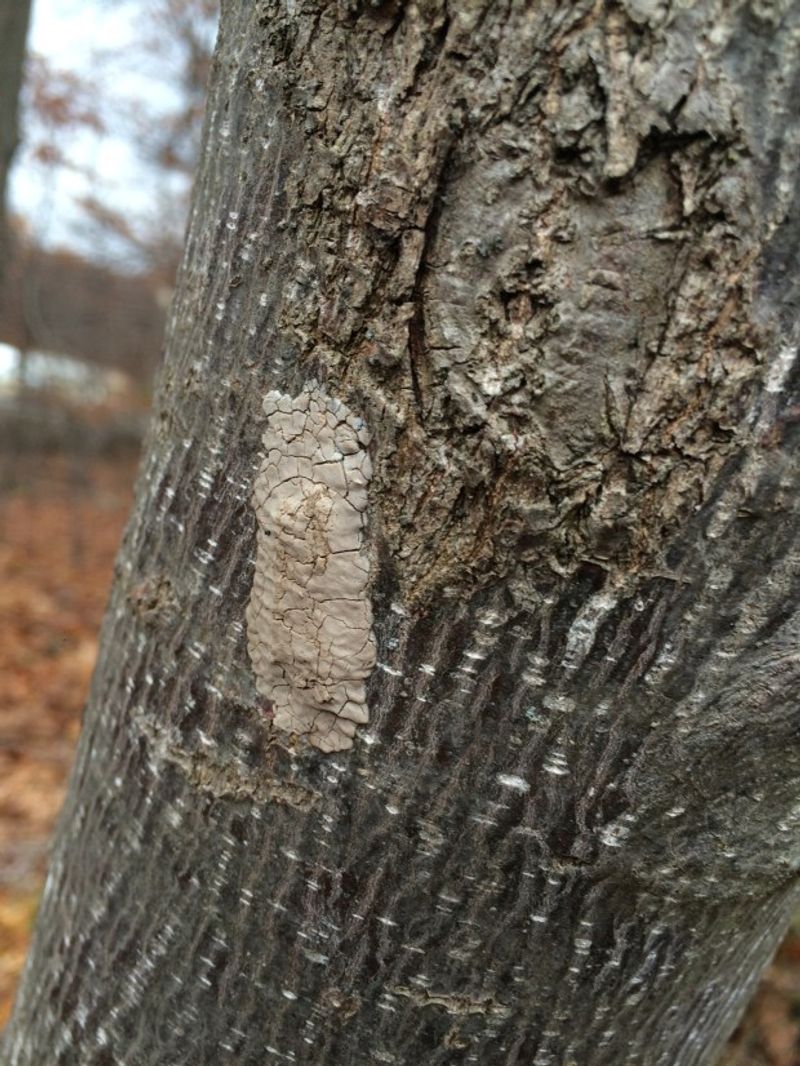
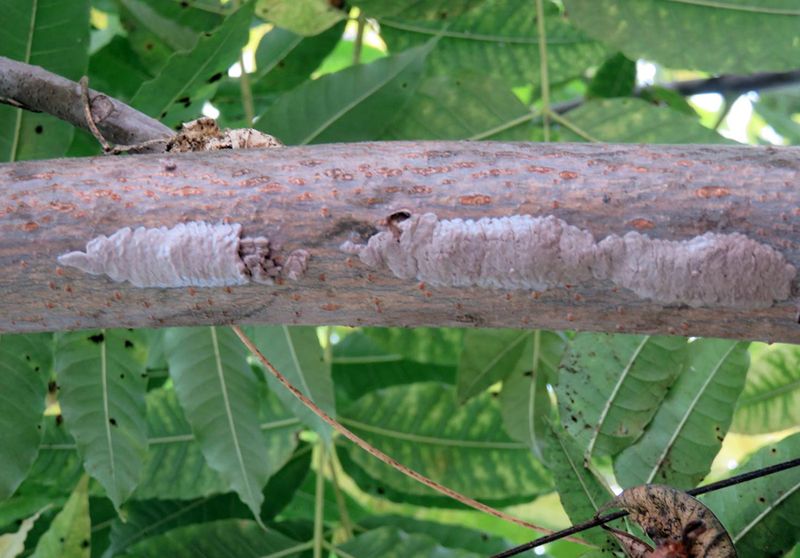
Fresh egg masses actually look a little shiny and pale gray, almost like someone dabbed putty on the bark. Within a few weeks, that coating dries, cracks, and turns a dull tan that resembles splattered mud.
Each patch is usually about an inch long and roughly three-quarters of an inch wide. The female lays her eggs in neat rows, often four to seven columns side by side, then smears a waxy cover over the top.
Underneath, 30 to 50 eggs are packed in tight.
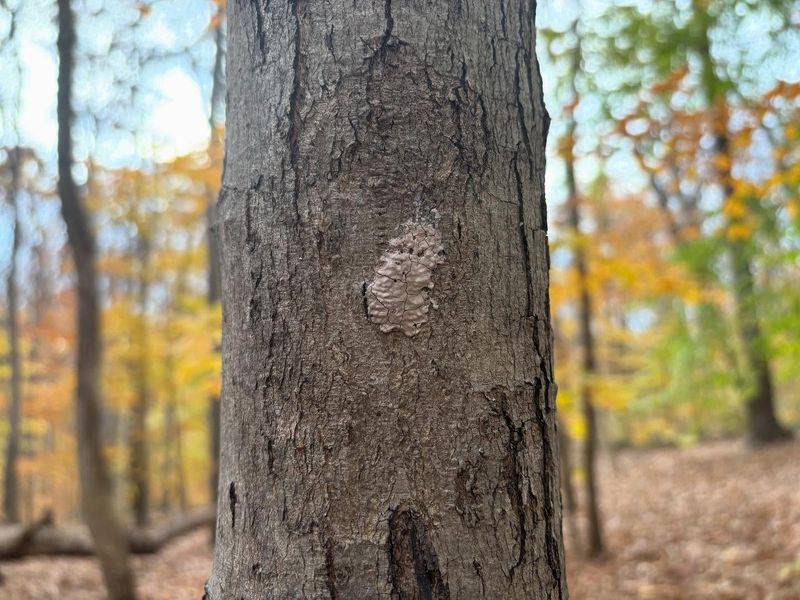
Older masses can be easier to spot once the coating flakes away. You may notice rows of tiny seed-shaped eggs that look a bit like grains of rice glued to the surface.
Masses that already hatched show small exit holes or slits at one end.
Spotted lanternflies lay these masses from about September into early winter. The adults fade out with hard freezes, but the eggs ride out the cold just fine.
I find it helpful to run a gloved hand gently over suspicious spots. Real mud crumbles, while an egg mass feels firmer and waxier.
If you are unsure, snap a close-up photo and compare it with pictures from UGA Extension.
2. Scrape Lanternfly Egg Masses Into A Bag And Crush Them
An old gift card might be the handiest pest-control tool in your house. A plastic putty knife works just as well, and both are gentle enough to use on bark.
Hold a zip-top bag or small jar right under the egg mass. Press the card’s edge against the surface and scrape downward with firm, steady strokes so the eggs drop straight into the container.
Take your time around bark ridges, since a few eggs love to hang on.
Once the eggs are inside the bag, seal it tightly and press down firmly with a flat object until every egg is crushed. Then toss the sealed bag in the trash.
Smashing works too, as long as you crush every egg. Push down hard with the card or a flat tool until you hear and feel the eggs pop.
One mistake catches a lot of people. Scraping the mass onto the ground is not enough, because many of those eggs can still hatch in spring.
Wear gloves if you like, and wipe your tool afterward. Then move on to the next tree, because where you find one mass, others are often nearby.
3. Winter Is Prime Time To Hunt Egg Masses Before Nymphs Hatch
Cold, bare months are a surprisingly great time for this job. Once leaves drop, bark, branches, and fences are easy to scan, and the egg masses have nowhere to hide behind foliage.
In north Georgia, spotted lanternfly eggs typically hatch from late April into June, depending on the warmth of the spring. Every mass you remove between now and then means up to 50 fewer nymphs crawling up your plants.
Those first-stage nymphs are small, black, and covered in white dots. They climb and hop surprisingly fast, which makes them much harder to catch than eggs that sit still all winter.
Personally, I like to make egg hunting part of a regular winter walk. A quick lap around the yard every couple of weeks from December through March lets you catch masses you missed the first time.
Warm spells can tempt you to slack off, but the eggs need a long stretch of spring warmth before they open. Steady checks until mid-spring cover the window nicely.
Jot down where you find masses each year. Those notes reveal the favorite spots in your landscape, so next fall you will know exactly where to look first.
4. Check Tree Of Heaven Trunks, Fences, And Patio Furniture First
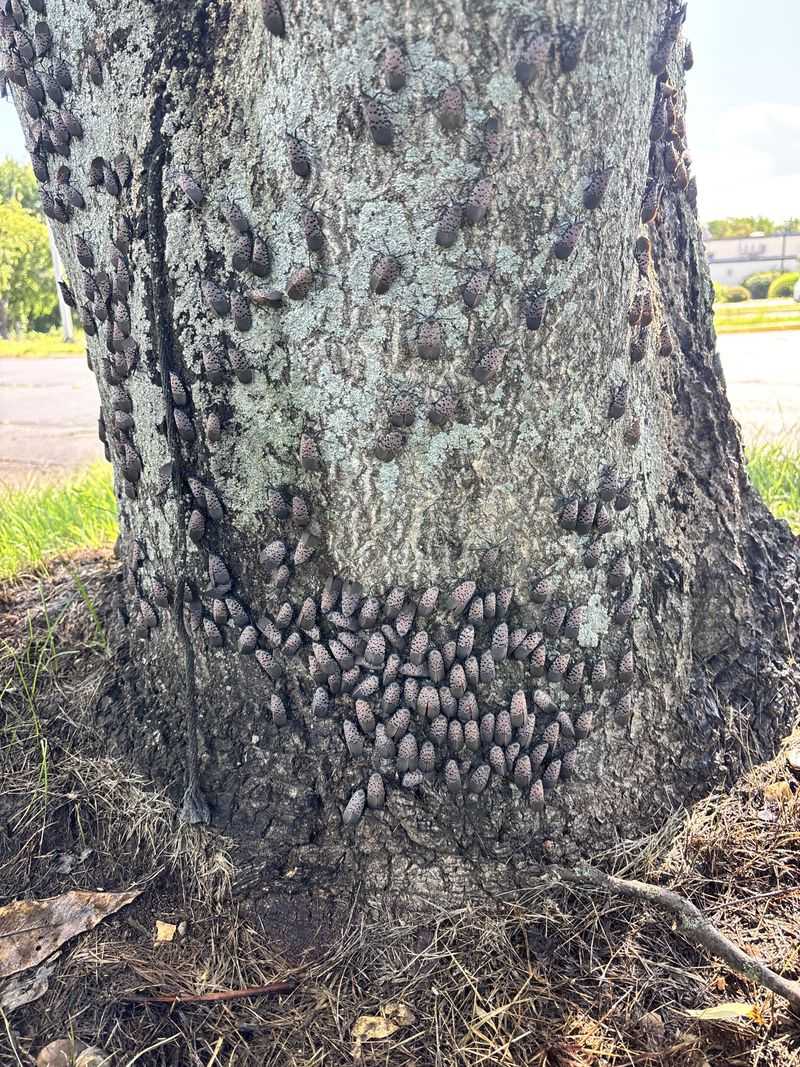
Spotted lanternflies have a favorite tree, and it is one many folks already wish would go away. Tree of heaven, an invasive species with long feathery leaves and a funky smell when crushed, is the top host for this pest.
Still, egg masses show up almost anywhere with a flat, sheltered surface. Check maples, black walnut, birch, willow, and other smooth-barked trees, especially on the undersides of limbs.
Look over stones, brick walls, fence posts, and the bottoms of patio chairs.
Grills, sheds, play sets, flowerpots, and stacked firewood are fair game too. I have read reports of masses on the undersides of trailers and even on rusty metal scraps left in yards.
A flashlight helps when you check shady spots or the backside of objects. Binoculars can help with higher branches, though you should leave tall trees to a professional arborist.
If tree of heaven is growing on your property, consider removing it with help from your county Extension office. Cutting it alone can trigger lots of root sprouts, so a careful plan matters.
Fewer host trees means fewer places for lanternflies to gather, feed, and lay eggs next fall. That one change can make your yard much less attractive to this pest.
5. Hungry Lanternfly Nymphs Can Leave Grapevines Sticky And Sooty
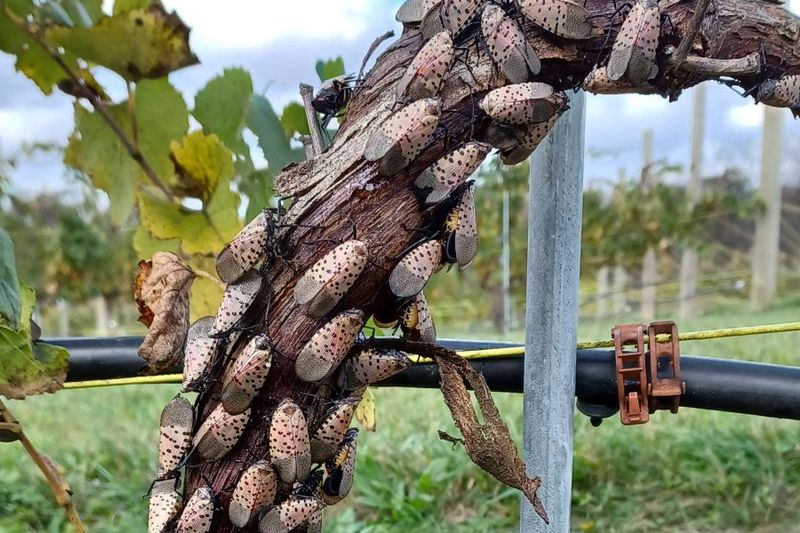
Ever walked under a tree and felt a fine, sticky mist? With spotted lanternflies, that sprinkle is honeydew, the sugary waste they release while sucking plant sap.
Honeydew coats leaves, decks, cars, and lawn furniture below the feeding insects. Black sooty mold soon grows on the sticky film, blocking sunlight from leaves and making outdoor spaces messy.
Wasps and ants often show up for the free sugar too.
Grapes are the biggest worry. Heavy feeding weakens vines, cuts yields, and can lead to vine loss in hard-hit vineyards in Pennsylvania and other states.
Georgia has a growing wine grape and muscadine industry, so growers are watching closely.
The pest feeds on more than 70 kinds of plants, including maples, black walnut, hops, and some fruit trees. Most healthy shade trees hold up, but repeated feeding can stress them, especially during drought.
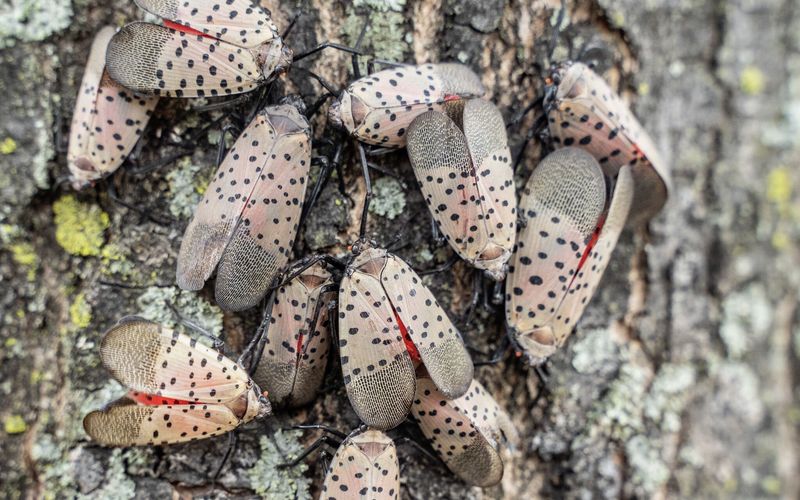
Fun fact: adults are surprisingly pretty, with gray spotted forewings and flashes of bright red on the hind wings. That splashy look hides a big appetite.
In your own garden, watch for weeping sap, sticky leaves, and clusters of insects on trunks. Spotting trouble early gives you more ways to manage it.
6. Your Camper, Trailer, And Firewood Could Be Carrying Hitchhikers
Long-distance travel for this insect rarely happens on its own wings. Most new infestations start when people unknowingly carry egg masses on vehicles, trailers, or outdoor gear.
Before a road trip, walk around your car, camper, or boat trailer. Peek at wheel wells, bumpers, hitches, and the undersides of anything stored outside.
Pay extra attention if you are leaving an area where lanternflies have been found, such as parts of metro Atlanta.
Firewood is another sneaky ride. Buy it near where you plan to burn it, or choose certified heat-treated bundles.
Moving firewood can spread several tree pests, not just this one.
Planning to move house? Patio sets, potted plants, kids’ bikes, and garden tools deserve a careful look before they go on the truck.
Some states with quarantines, including Pennsylvania, even require businesses to inspect vehicles and cargo.
Personally, I keep a little inspection habit in winter. A two-minute look at the camper or truck bed costs nothing and could save a whole neighborhood a lot of trouble.
Kids love the job too, turning it into a quick scavenger hunt.
Share the reminder with friends who travel north often. Many visitors return from Pennsylvania, New Jersey, or Virginia without realizing how common lanternflies are there.
7. A Quick Photo And Report Helps Georgia Track Spotted Lanternflies
A blurry phone picture might not seem like much, yet state experts rely on reports from ordinary residents. Many early lanternfly finds across the country came from alert homeowners, not scientists.
When you spot an egg mass, nymph, or adult, snap a clear photo first. Include something for scale, like a coin or your finger, and note the exact address or GPS location.
Next, report it to the Georgia Department of Agriculture through its online pest reporting form, or contact your local UGA Extension office. They want to hear about sightings outside known areas, especially in new counties.
After that, go ahead and remove what you found. Scrape off egg masses and crush them thoroughly, and squash nymphs or adults when you can catch them.
Keep an eye out for look-alikes before reporting. Some moths and native planthoppers get mistaken for lanternflies, so compare your photo with official guides.
Your role here is bigger than one backyard.
Every confirmed sighting helps officials map the spread, plan treatments, and protect Georgia vineyards, orchards, and forests.
Ask neighbors to check their trees too, since lanternflies do not respect property lines. A few scraped egg masses this winter could mean a far quieter spring for everyone nearby.