Why Arizona Raised Beds Heat Up Quickly And How To Handle It
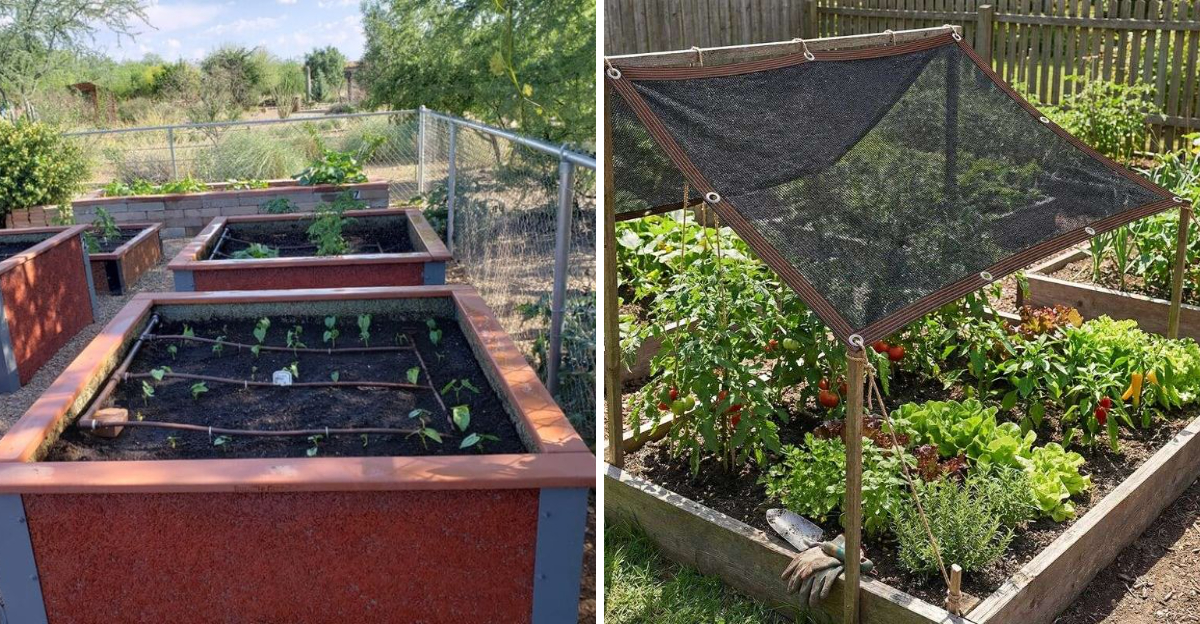
Raised beds in Arizona can feel like a smart upgrade, yet the soil inside them reacts to heat much faster than many expect. Sun exposure hits from all sides, and that trapped warmth builds quickly during the day.
Early growth may look strong, then plants begin to slow once that heat settles around the roots. Different materials make it even more noticeable, especially when sides absorb and hold temperature longer than the ground would.
Moisture disappears faster, and conditions shift in ways that are not always obvious at first glance. A bed that seemed perfect can suddenly behave differently within a short stretch of warmer days.
That change often shows up in plant health before it becomes easy to spot in the soil itself.
Managing how heat builds inside raised beds can keep plants more stable and help maintain steady growth through Arizona’s demanding conditions.
1. Direct Sun Exposure Heats Up Soil Faster In Raised Beds
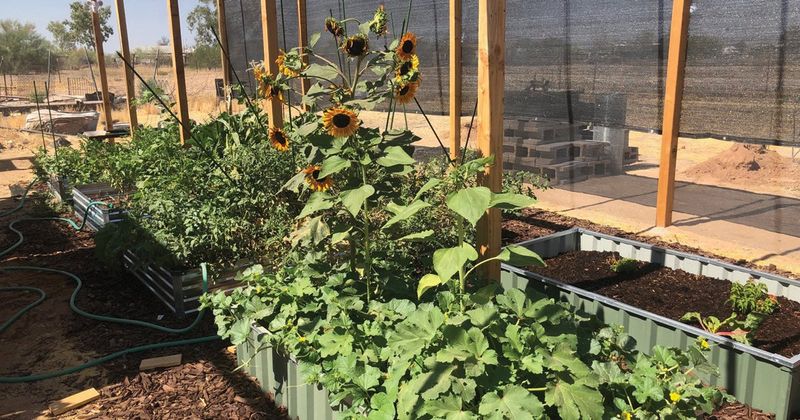
Raised beds sit above the ground, and that single fact changes everything about how they interact with the Arizona sun. Unlike in-ground gardens where surrounding soil acts as a buffer, raised beds receive direct sunlight from above and from the sides.
That exposed surface area means the soil inside warms up much faster, especially during Arizona summers when temperatures regularly climb past 100 degrees Fahrenheit.
In Phoenix or Tucson, the sun angle is steep for much of the year, which means even the vertical walls of your raised bed are catching solar radiation. Darker bed materials, like unpainted wood or galvanized metal, absorb more heat and transfer it into the soil.
Soil temperatures in an exposed Arizona raised bed can reach levels that stress or harm plant roots long before the air temperature peaks in the afternoon.
Positioning your raised bed so it gets morning sun but sits in partial shade during the hottest afternoon hours can help significantly. East-facing or slightly northeast-facing beds tend to do better in Arizona than those with full western exposure.
You do not need to redesign your entire yard — even a nearby wall, fence, or large shrub that blocks the late afternoon sun can reduce how quickly the soil heats up.
2. Elevated Structure Allows Heat To Build From All Sides
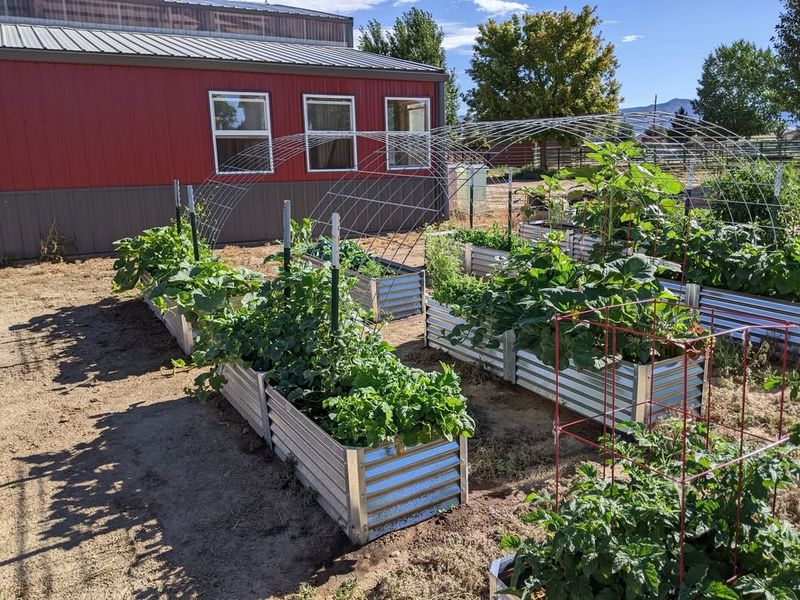
Ground-level garden beds lose heat through the earth beneath them. Raised beds do not have that advantage — they are surrounded by air on all sides, and in Arizona, that air is hot.
Heat enters through the top from direct sun, through the sides from ambient air temperature, and sometimes even from reflected heat bouncing off nearby concrete, gravel, or light-colored walls common in Arizona landscaping.
Metal raised beds are especially prone to this. A galvanized steel bed sitting in a Scottsdale backyard in July can get hot enough on the sides to be uncomfortable to touch.
That heat radiates inward, warming the soil closest to the walls first.
Roots near the edges of a metal raised bed may experience significantly higher temperatures than roots in the center, which creates uneven growing conditions that are hard to manage without some intervention.
Your Arizona Garden Changes Every Week. Your Plan Should Too.
Gardening in Arizona changes quickly throughout the season. Every Friday you’ll receive a simple weekly plan showing exactly what to plant, prune, fertilize, harvest, and protect so you never miss the right timing.
Wooden beds insulate somewhat better, but they come with their own trade-offs in Arizona’s low humidity — they dry out, crack, and degrade faster than in cooler climates.
If you are using a metal bed, painting it white or a light tan color can reflect a meaningful amount of solar radiation and reduce how hot the walls get.
Placing the bed against a masonry wall on the west side adds some insulation.
3. Dry Soil Conditions Increase Temperature More Quickly
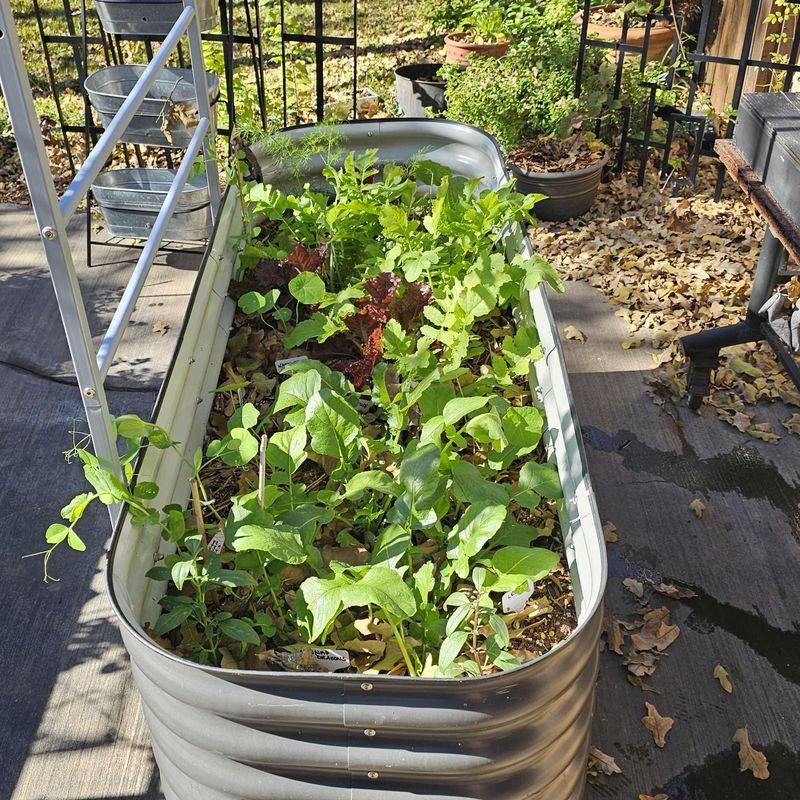
Wet soil holds heat differently than dry soil. Moisture acts as a thermal buffer, meaning it takes more energy to raise the temperature of damp soil compared to bone-dry soil.
In Arizona, where humidity is low and evaporation rates are high, raised bed soil can dry out surprisingly fast — sometimes within a day or two of watering during a hot stretch in June or July.
Once that soil dries out, it heats up rapidly. You might water in the morning and come back in the afternoon to find the top two inches completely dry and warm to the touch.
Without consistent moisture, the soil loses its ability to moderate temperature swings, and plants start to show signs of stress that look a lot like underwatering but are actually caused by root zone heat rather than lack of water alone.
Improving soil structure helps slow this cycle. Adding organic matter like compost increases the soil’s water-holding capacity without causing drainage problems.
Coconut coir mixed into your raised bed soil is another option that retains moisture well even in Arizona’s dry heat.
4. Add Mulch To Slow Down Soil Heating And Moisture Loss
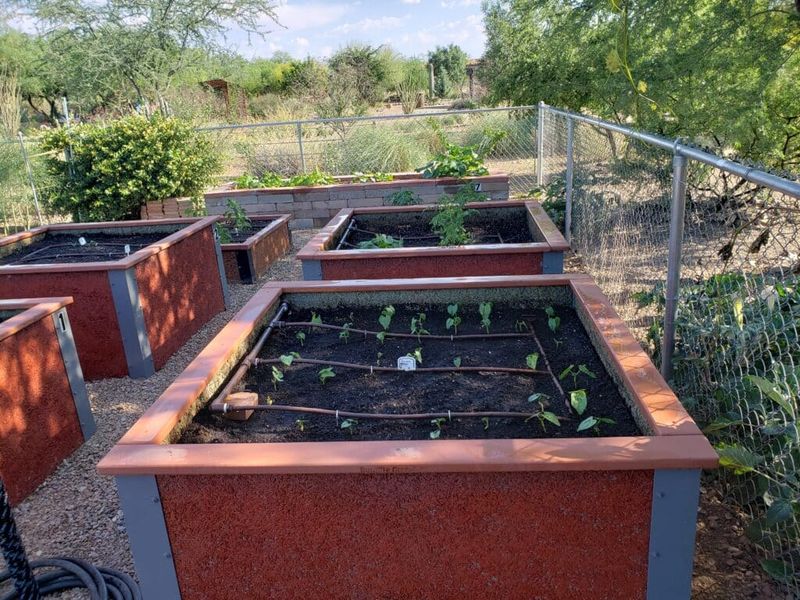
Mulch is one of the most underused tools in Arizona raised bed gardening.
A two to three inch layer of organic mulch on top of your soil acts like a blanket — it slows down evaporation, blocks direct sun from hitting bare soil, and keeps the temperature underneath noticeably more stable throughout the day.
In Arizona’s summer heat, that stability matters more than most gardeners realize.
Wood chips work well and are often available for free from local tree trimming companies. Straw is another common choice that is easy to find at feed stores across the state.
Both break down over time, adding organic matter back into the soil, which gradually improves its structure and water-holding ability.
Avoid using dark-colored rubber mulch in Arizona raised beds — it absorbs heat rather than reflecting it, which is the opposite of what you want during summer.
Apply mulch after watering so you are locking in moisture rather than covering dry soil. Pull it back slightly around the base of plant stems to prevent moisture-related issues at the crown.
In a Phoenix or Mesa backyard where afternoon temperatures regularly exceed 105 degrees, a properly mulched raised bed can have soil temperatures several degrees cooler than an unmulched one sitting right beside it.
5. Water Early In The Morning To Keep Soil Cooler Longer
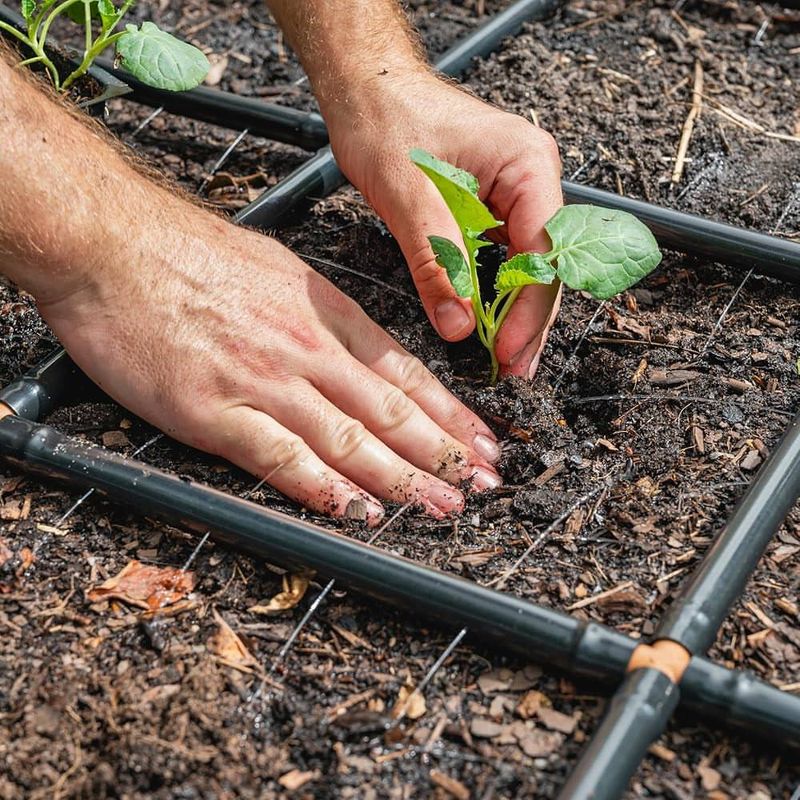
Timing your watering in Arizona is not just a convenience tip — it genuinely affects how well your plants hold up through the day.
Watering early in the morning, ideally before 8 a.m., gives moisture time to soak into the soil before the sun gets strong enough to pull it back out through evaporation.
Soil that starts the day well-hydrated heats up more slowly and stays within a more manageable temperature range longer into the afternoon.
Evening watering might seem like a good alternative, but in Arizona’s raised beds it can cause problems.
Soil that stays damp overnight without the sun to dry it out can create conditions that encourage root rot and fungal issues, especially during the monsoon season when nighttime humidity climbs.
Morning watering sidesteps those risks while still giving plants the moisture they need heading into the hottest part of the day.
Drip irrigation on a timer is one of the most practical setups for Arizona raised beds. It delivers water directly to the root zone, reduces surface evaporation, and takes the guesswork out of consistency.
Soaker hoses laid along the base of plants work similarly and are less expensive to set up. Deep watering — meaning you let water penetrate six to eight inches down rather than just wetting the surface — encourages roots to grow deeper where soil stays slightly cooler.
6. Use Shade Cloth During Peak Afternoon Heat
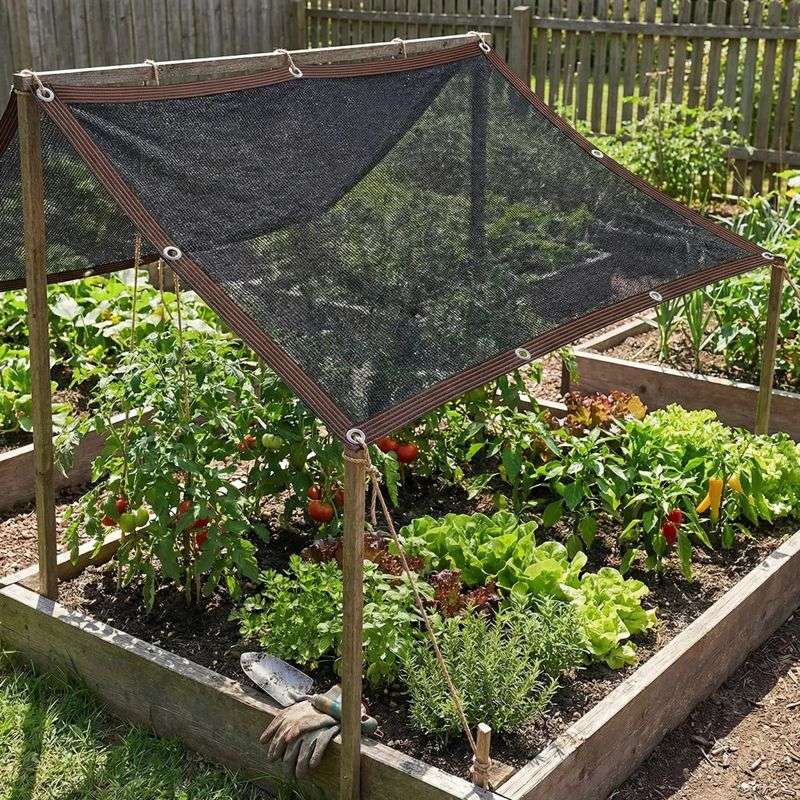
Shade cloth is one of those tools that Arizona gardeners either swear by or have never tried. If you fall into the second group, a single summer season with it over your raised bed will likely change your perspective.
Shade cloth filters sunlight before it reaches your plants and the soil beneath them, reducing both air temperature inside the bed and the rate at which the soil heats up during the brutal afternoon hours.
Not all shade cloth is equal. For most vegetable gardens in Arizona, a 30 to 40 percent shade rating strikes a reasonable balance — enough to cut heat meaningfully without reducing light so much that plants stop producing.
Tomatoes, peppers, and squash can generally handle more direct sun than lettuce or herbs, so what you are growing should influence how dense a cloth you choose.
During June and July in the Phoenix area, even heat-tolerant crops can struggle without some afternoon protection.
Setting up shade cloth does not require anything elaborate. A simple PVC pipe frame anchored to the sides of your raised bed works well and can be assembled for under twenty dollars in materials.
Some gardeners use portable canopy frames that can be moved or removed as the seasons change. Shade cloth is most useful from roughly 11 a.m. to 4 p.m. when Arizona sun intensity peaks.
7. Increase Soil Depth To Reduce Rapid Heat Buildup
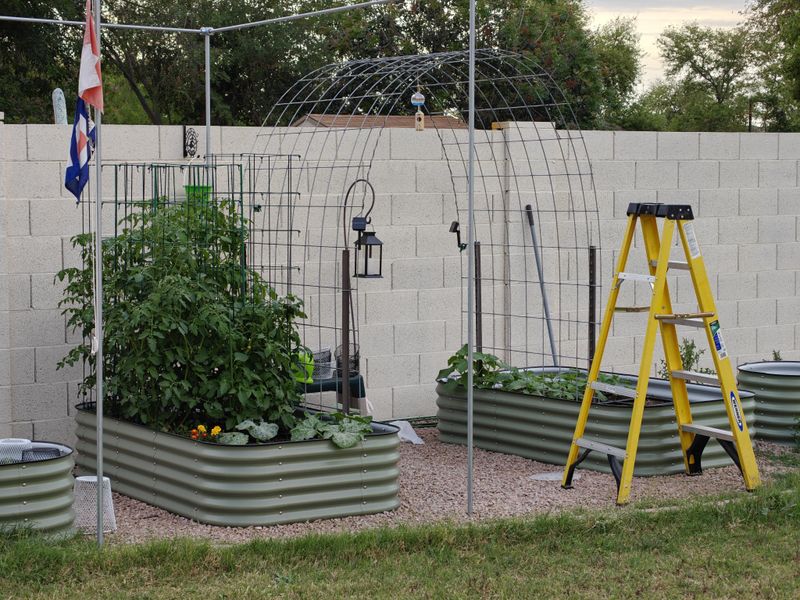
Shallow raised beds warm up faster and more completely than deep ones. When your soil depth is only six or eight inches, the heat from the sun reaches all the way to the bottom of the root zone without much resistance.
Increasing depth to at least twelve inches — and ideally closer to eighteen — gives the lower soil layers a chance to stay cooler, which is exactly where you want roots to be spending most of their time during Arizona summers.
Deeper soil also holds more total moisture, which as noted earlier helps buffer temperature swings.
A shallow bed might dry out completely in a day during a July heat wave in Tucson or Chandler, while a deeper bed retains enough moisture in its lower layers to keep roots from experiencing the worst of the heat.
The math is simple: more soil volume means more thermal mass, and more thermal mass means slower, more gradual temperature changes.
Building up bed depth does not have to be expensive.
Filling the bottom third of a deep raised bed with logs, branches, or coarse wood chips — a technique sometimes called hugelkultur — is a low-cost way to add volume while also improving long-term moisture retention as the wood slowly breaks down.
Top that with quality compost-rich soil and you have a bed that performs noticeably better in Arizona’s heat.