Succulents That Struggle in California’s Winter Rain
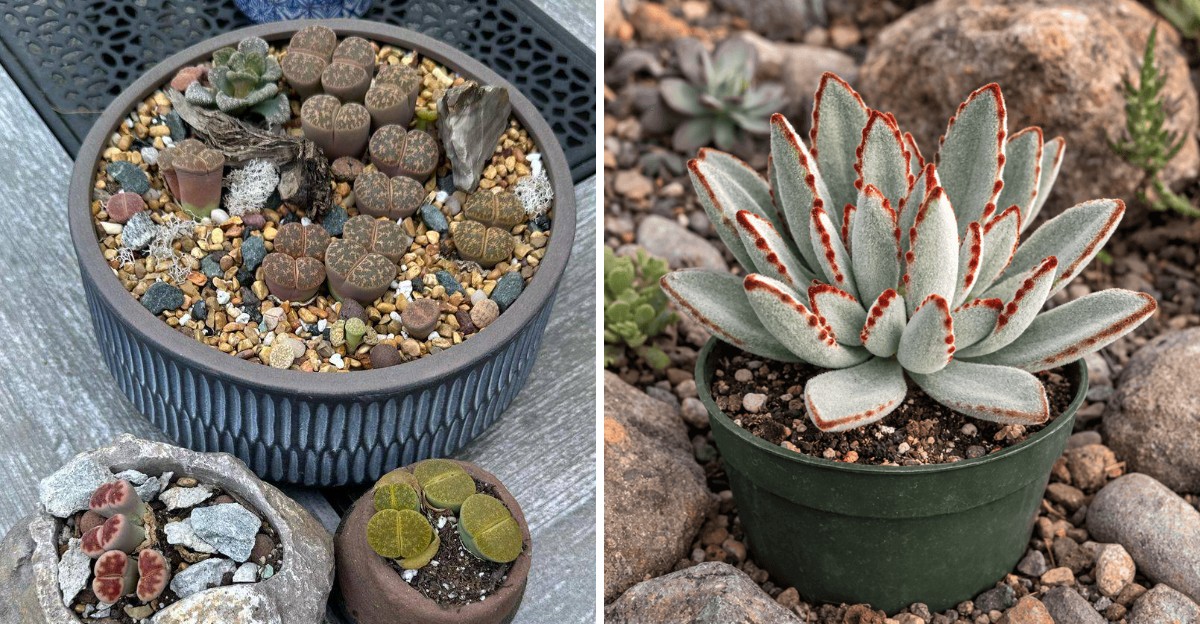
A plant built to survive months of drought can turn to mush after a single soggy week of rain. That irony catches plenty of California gardeners off guard, especially when storms roll in one after another.
Most of the state’s winter rain falls between November and March, right when many plump-leaved plants slow down. Cool soil stays wet for days, and resting roots simply can’t drink fast enough to keep up.
A rainy January can turn a favorite potted rosette into soft goo surprisingly fast. Often, the trouble starts underground, long before the leaves show a single warning sign.
The beauties ahead fill nursery shelves all over California, and each one needs dry feet to thrive. Which of them might be quietly sulking in your yard after the last big storm?
1. Living Stones
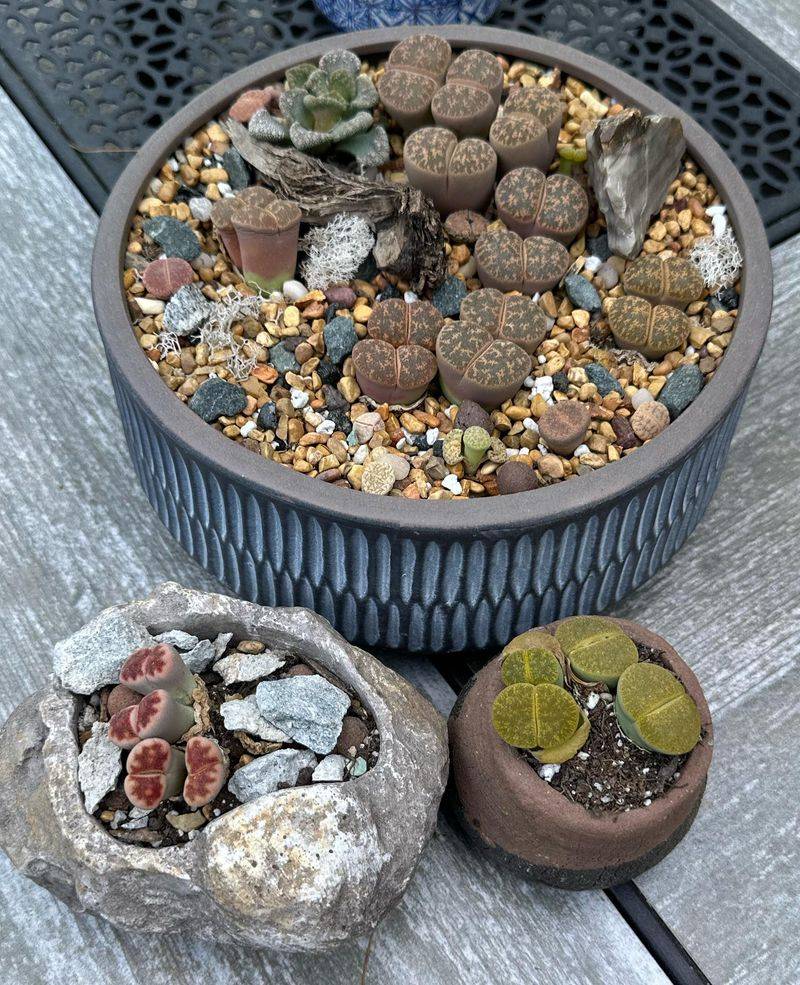
Living stones look so much like pebbles that hungry animals in southern Africa often stroll right past them. I still giggle when visitors poke mine, convinced someone glued two rocks together inside a tiny pot.
Their homeland gets very little rain, so each pair of leaves stores water like a small canteen. Winter storms can overload those leaves, causing them to split open or turn soft and see-through.
Many species start a new leaf pair inside the old one during the cooler months of the year. The plant feeds that growing pair by drawing moisture from the older leaves, so extra water mostly backfires.
You might want to think twice about watering at all from late fall until the old leaves shrivel. Once those papery husks look thin and dry, light sips can begin again as spring warms up.
Outdoor pots should sit under an eave or covered porch whenever a big storm appears in the forecast. A sunny windowsill also works well, provided the plant gets several hours of bright light each day.
Soil matters just as much as shelter for these little stone mimics. I use a mix that is mostly pumice or coarse grit, with only a small scoop of regular cactus soil.
Wrinkled leaves in winter rarely mean thirst, so resist the urge to rescue them with a quick drink. Patience pays off here, and a healthy new pair usually pops through by the time days lengthen.
2. Echeveria
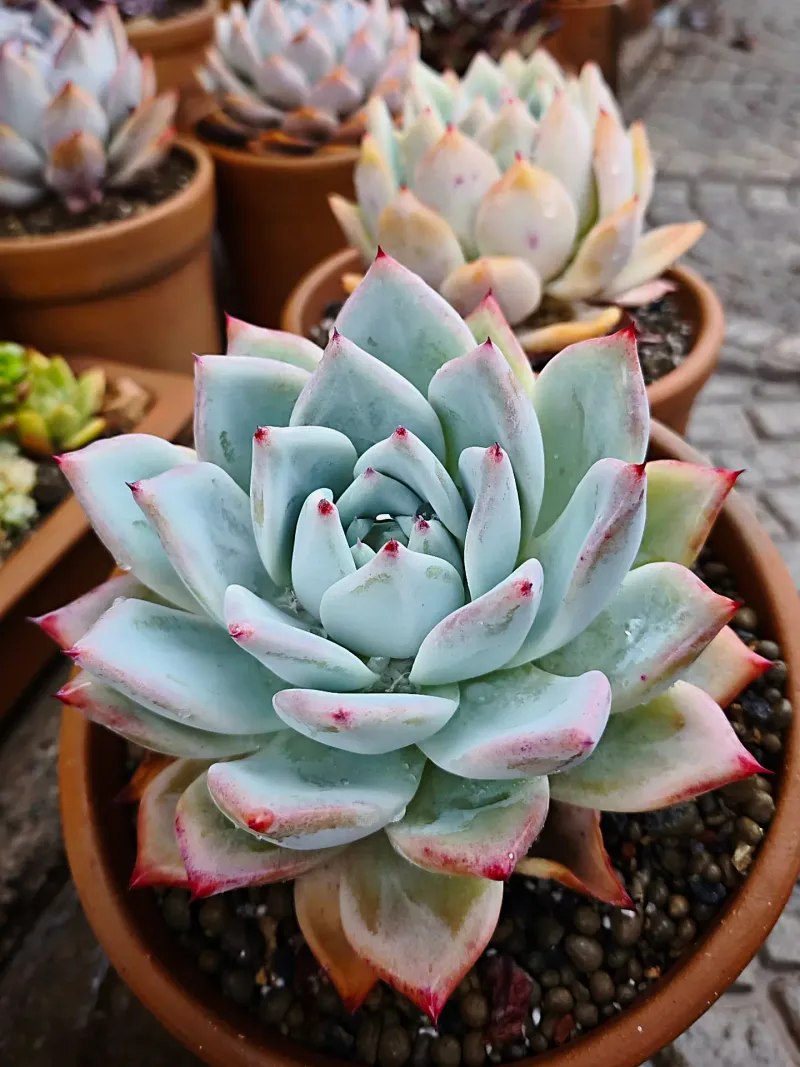
Rain looks lovely beading on a frosty blue echeveria, but those silvery droplets can hide real trouble. Water often pools in the center of the rosette, where tightly packed leaves dry very slowly on cloudy days.
Most echeverias come from Mexico and Central America, where many grow on rocky slopes that drain quickly. Garden beds with heavy clay act more like sponges, holding cold water around roots for a week or more.
The powdery coating on many varieties, called farina, also washes or rubs off under pounding rain. It acts like natural sunscreen, so I try to avoid splashing leaves with a hose or watering can.
Rotting usually begins at the base, with lower leaves turning translucent and mushy before the crown slumps. When you spot that, cut above the soft tissue and let the healthy top callus for several days.
Potted rosettes do best tucked under an overhang during long wet spells, then moved back into sun afterward. In the ground, plant them on a mound or slope so runoff slides away instead of collecting.
Tilting containers slightly after a storm helps water escape from the rosette center instead of sitting there overnight. A quick puff from a squeeze bulb can clear trapped droplets from especially dense, cupped varieties.
Most echeverias handle light chill along the coast, but a hard freeze can leave leaves mushy and scarred. Frost cloth over the plants on clear, cold nights gives inland gardeners a simple layer of protection.
3. String Of Pearls
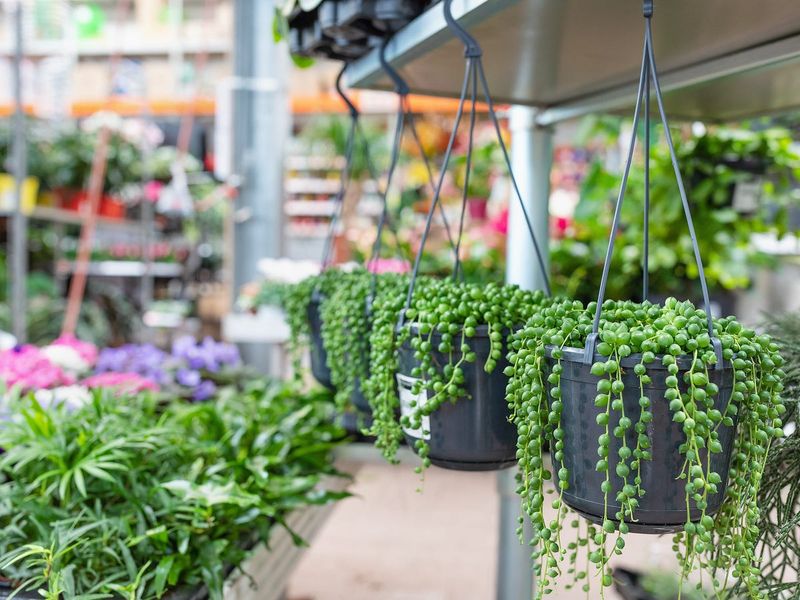
Those dangling green beads are tiny water tanks, and each one carries a thin, clear stripe called a window. Light enters through that window, letting the plant make food even when sand partly buries it in nature.
String of pearls, now often labeled Curio rowleyanus, comes from dry parts of South Africa and Namibia. Its shallow roots naturally spread just under the soil surface, which makes soggy potting mix a serious problem.
Outdoor hanging baskets catch every drop during a storm, and the cool soil can stay damp for days. I move mine under a covered patio each winter, and the strands look much happier for it.
Shriveled pearls usually mean thirst, while mushy, flattened beads near the soil often point toward rot. You can trim healthy strands and lay them on dry cactus mix, where they root surprisingly fast.
Shallow terracotta pots suit this plant better than deep plastic ones that hold moisture near the bottom. Clay breathes and dries faster, which gives those delicate roots a little more breathing room after rain.
During cooler months, a drink every few weeks is plenty for most indoor or sheltered plants. Check by pushing a finger into the mix, and only water once the top inch feels dry.
Frost can turn the pearls dark and soft overnight, so bring baskets inside when temperatures approach freezing. A bright window with a few hours of gentle sun keeps the strands full instead of stretched.
4. Burro’s Tail
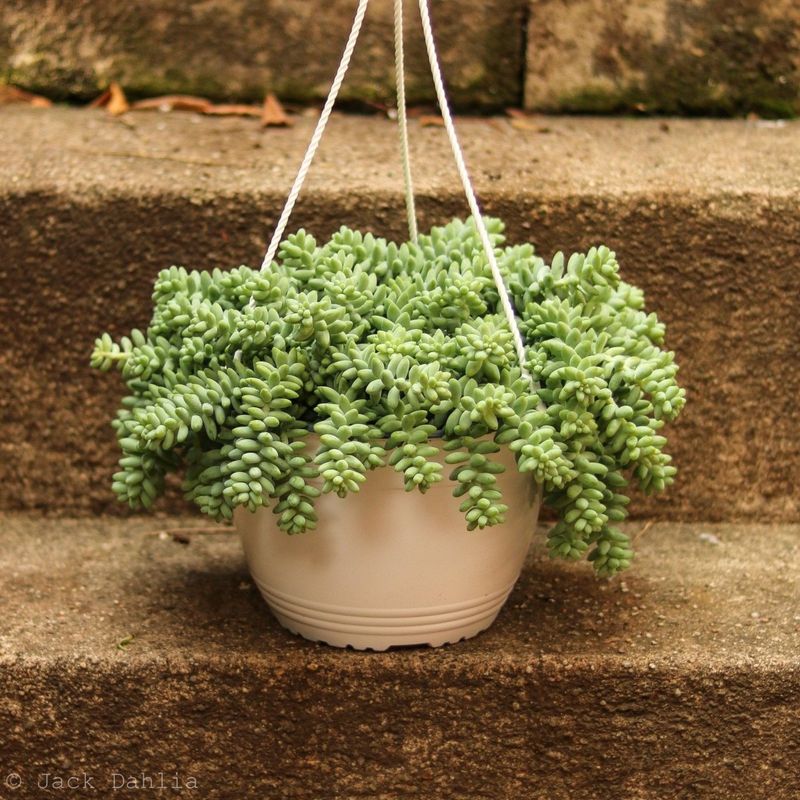
Brush against a burro’s tail and a shower of plump leaves rains onto the patio floor below. I once lost half a strand just by turning the pot, so handle this beauty like a fragile ornament.
Sedum morganianum is believed to come from southern Mexico, and it is hardy only in mild zones. Coastal gardens often suit it fine, but cold winter rain soaking the roots causes most of its trouble.
Long tails get heavy when leaves swell with water, and soggy stems can snap under that extra weight. Waterlogged soil also invites rot at the crown, where every trailing stem joins the root system.
Hanging pots look charming dangling from a tree branch, but open sky means nonstop exposure to storms. Moving baskets beneath an eave keeps the soil drier while still giving the plant bright, filtered light.
Moving this plant is risky, so choose its winter spot early and leave it there until spring. Lightweight pots with wide drainage holes make relocation easier and reduce the chance of knocking off leaves.
The silver-blue powder on its leaves protects against sun, and it rubs away with fingers or hard rain. Water the soil directly at the edge of the pot, keeping the trailing tails as dry as possible.
Fallen leaves are not wasted, since many will sprout roots when set on top of dry gritty mix. You could end the season with a tray of baby plants ready to share with friends.
5. Pencil Cactus
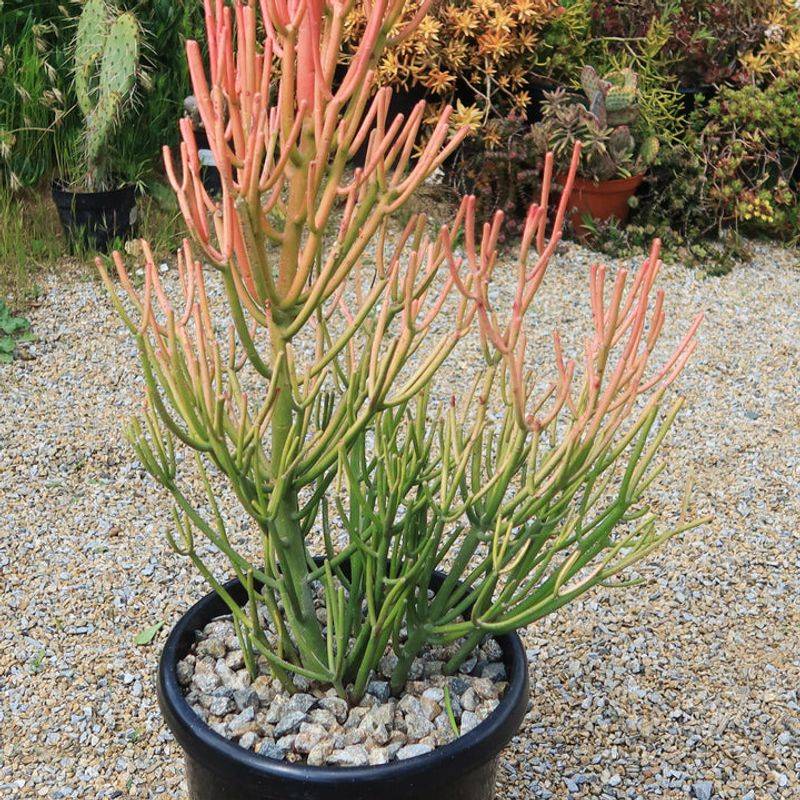
Despite its name, the pencil cactus is not a cactus at all but a succulent euphorbia from Africa. Its slender branches look like a pile of green pencils, and Sticks on Fire blushes orange in cool weather.
Euphorbia tirucalli is hardy mainly in zones 10 and 11, which covers many coastal and southern gardens. It tolerates dry summers easily, but winter soil that stays cold and wet often leads to root rot.
Before you grab the pruners, know that its milky sap can irritate skin and is especially harmful to eyes. I wear gloves and safety glasses, and I keep potted plants away from curious pets and children.
Heavy rain can make tall plants floppy, and saturated soil lets them lean or topple during gusty storms. Staking a top-heavy specimen before the wet season saves a lot of cleanup and heartache later on.
Raised beds or large clay pots filled with fast-draining mix work best for this upright shrub. Skip saucers under containers in winter, because standing water can soak back into the root zone for days.
Light frost may blacken branch tips, and a deeper freeze can damage stems right down to the base. Covering plants on chilly nights helps, though inland valley gardeners may prefer to roll containers into a garage.
Save pruning for warmer months, when fresh cuts seal quickly and the plant pushes plenty of new growth. Winter cuts heal slowly in damp air, leaving open wounds where rot can easily slip inside.
6. Desert Rose
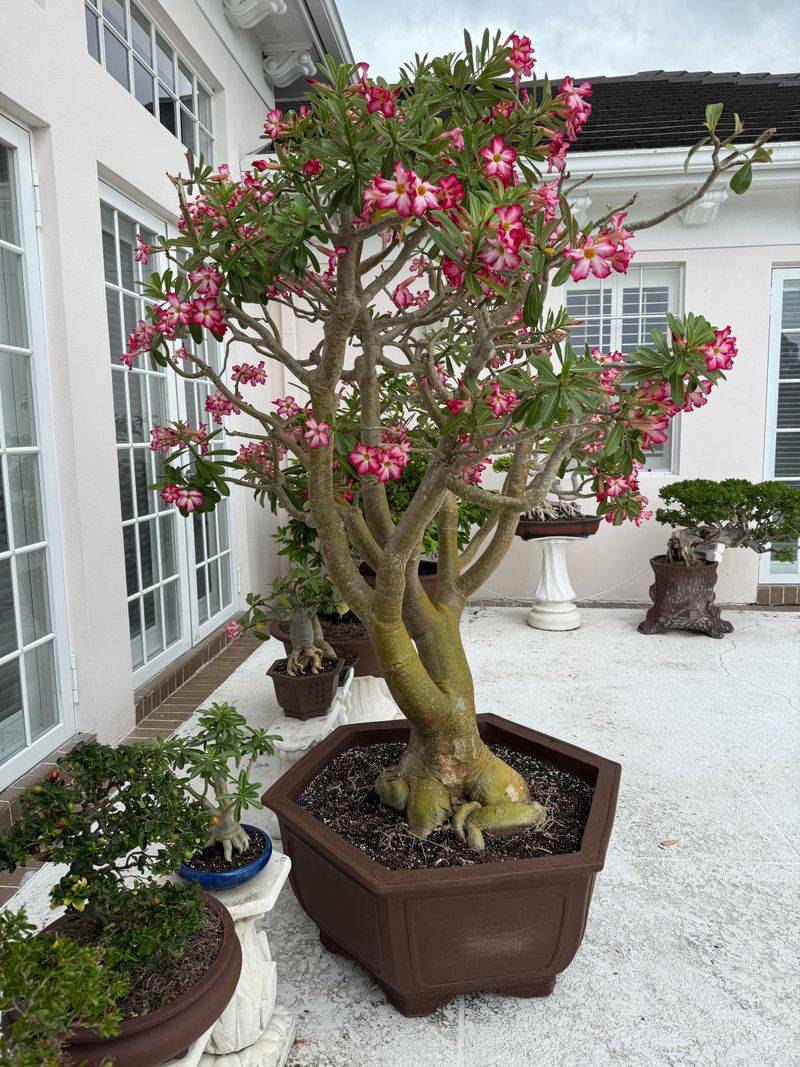
A swollen trunk shaped like a little bottle makes the desert rose look like a bonsai tree from a storybook. Pink and red trumpet flowers made it a favorite, yet winter rain is its biggest challenge in many gardens.
Adenium obesum grows naturally across dry parts of East Africa and the Arabian Peninsula. It loves heat, and it usually slows down or drops leaves once nights fall below about fifty degrees.
Leaf drop in winter is normal, so try not to panic when branches suddenly look bare and sad. The real danger comes from cold, soggy soil, which can rot the thick caudex from the inside out.
Squeeze the trunk gently every few weeks during the cool season to check on its health. A firm base is a great sign, while soft, wrinkly, or squishy spots call for quick action.
I keep my potted desert roses under cover from fall onward and water only lightly while they rest. Many growers stop watering altogether during cold months, then restart once fresh leaves return in spring.
Ground planting is risky across most of the state, since this plant is hardy mainly in zone 11. Containers let you shift it into a bright sunroom or garage before storms and chilly nights arrive.
The sap is toxic, so wash your hands after handling stems and keep plants away from nibbling pets. With careful winter shelter, those fat trunks keep getting chunkier and more charming every single year.
7. Panda Plant
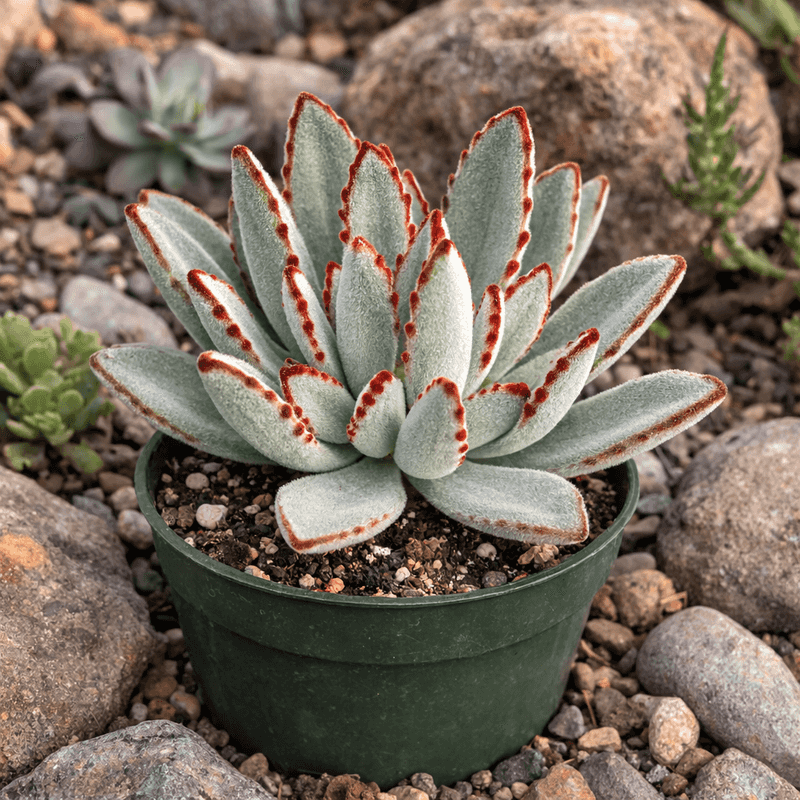
Run a finger across a panda plant leaf and it feels just like soft felt or a kitten’s ear. Those tiny hairs, often tipped with chocolate brown spots, make this one of the most touchable succulents around.
Kalanchoe tomentosa comes from Madagascar and is hardy mainly in zones 10 and 11. Its fuzzy leaves help reduce water loss in sunny habitats, but they also trap moisture during long rainy periods.
Wet fuzz dries slowly on gray days, and damp leaves crowded together can develop spots or rot. I like to give each plant some elbow room so breezes move freely around its stems.
Outdoor pots should come under cover when a series of storms lines up in the forecast. A bright porch or sunny window keeps the plant compact while its soil dries between occasional drinks.
Water at the soil line rather than over the leaves, because droplets cling to the felty surface for hours. A narrow-spout watering can makes that job easy, even when your collection gets crowded.
Cold below about forty degrees can cause stress, and frost often damages the soft leaf edges. Inland gardeners in California valleys should watch overnight lows closely between December and February.
Stretched stems and pale leaves mean the plant needs more light, not more water or fertilizer. Snip leggy tops in spring, let them dry for a few days, then root them in gritty mix.