Tall Privacy Plants Florida Homeowners Are Planting This April
Ever feel like your backyard is a little too public? In Florida, April is the absolute sweet spot for reclaiming your peace and quiet.
As the spring rains return and temperatures climb, your plants get a golden opportunity to sink deep roots before the intense summer humidity hits.
Florida homeowners are ditching expensive fences for lush, fast-growing privacy screens that block out nosy neighbors and dampen road noise naturally.
With our long growing season, the right plants can turn a fishbowl yard into a secluded tropical retreat in just a year or two. If you’re ready to trade views of the street for a wall of green, April is your time to plant.
1. Clusia Forms Thick Tropical Privacy Walls
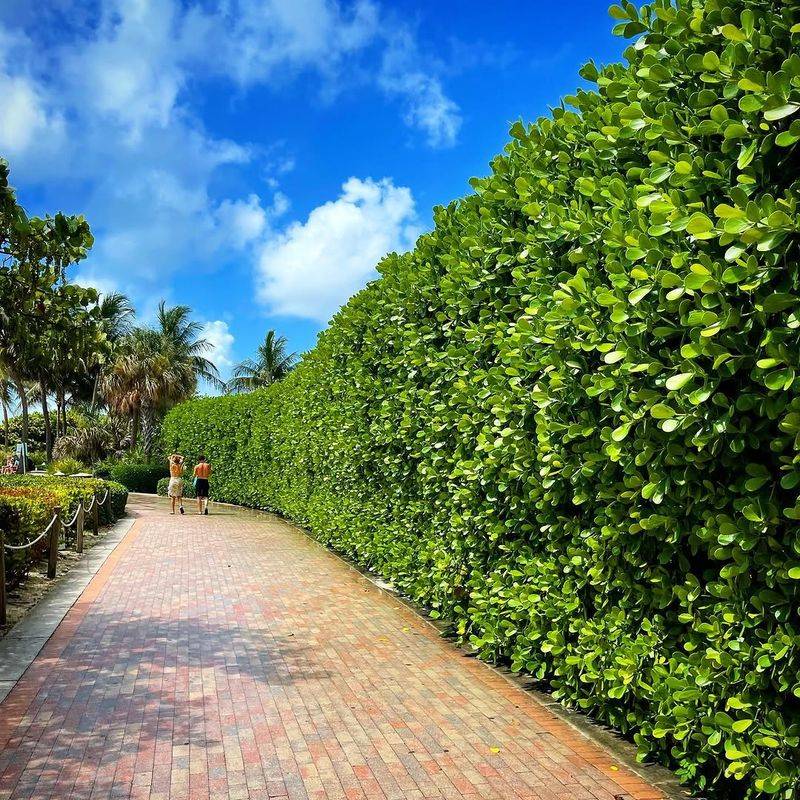
Walk through almost any South Florida neighborhood and you will notice thick, dark-green walls of Clusia lining property edges and driveways.
This tough, broadleaf evergreen has earned its reputation as one of Florida’s most reliable privacy plants, and April is an ideal month to get it in the ground.
Clusia guttifera, the small-leaf variety most commonly used for hedges, typically reaches 8 to 12 feet when maintained, though it can grow taller if left unpruned. Its thick, leathery leaves overlap densely, creating a nearly solid screen that blocks sightlines quickly.
The plant handles salt spray, sandy soil, and periods of drought reasonably well, making it well-suited to coastal and inland Florida properties alike.
Spacing plants about 3 feet apart encourages faster canopy closure. In South and Central Florida, Clusia tends to establish quickly with consistent watering during the first few months.
North Florida gardeners should be aware that occasional cold snaps may slow growth or cause minor leaf damage, though the plant generally bounces back well.
Pruning two or three times a year helps maintain a clean, upright shape and encourages denser branching from the base.
Many Florida homeowners appreciate that Clusia requires relatively little maintenance once established, making it a practical long-term investment for anyone wanting serious backyard privacy.
2. Podocarpus Grows Tall In Narrow Spaces
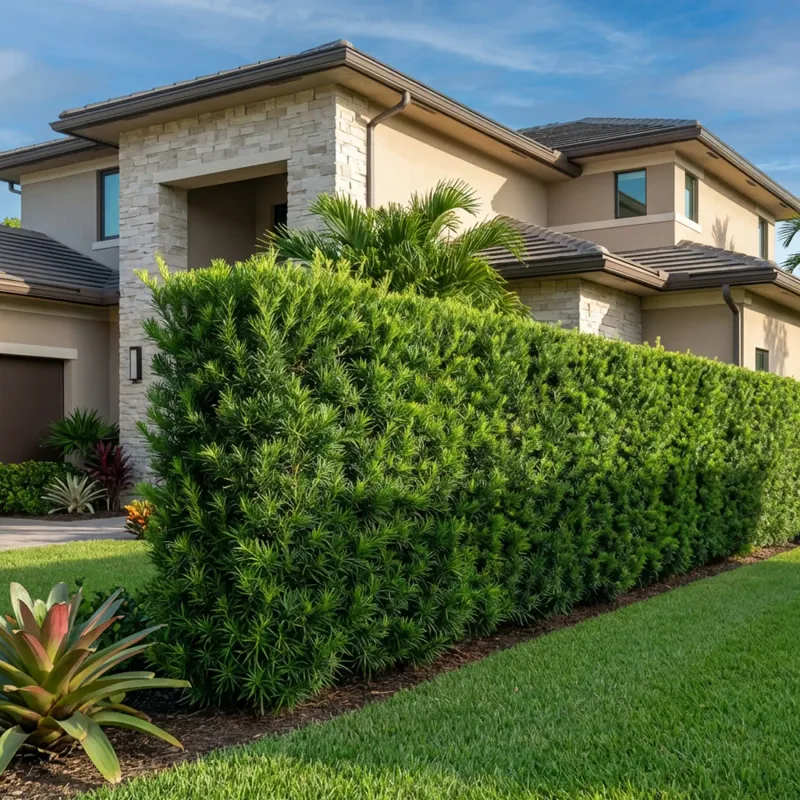
Some yards simply do not have room for wide, sprawling hedges. Podocarpus macrophyllus solves that problem beautifully.
Its naturally upright growth habit makes it one of the most space-efficient tall privacy plants available to Florida homeowners.
Left unpruned, Podocarpus can reach 20 to 40 feet in height, but most homeowners keep it trimmed to 10 to 15 feet to maintain a manageable, columnar shape.
The fine-textured, dark-green foliage gives hedges a clean, formal appearance that works well with a wide range of landscaping styles.
It grows in full sun or partial shade, which adds flexibility when working around existing trees or structures.
April planting gives Podocarpus time to establish roots before Florida’s intense summer heat arrives. Consistent watering during the first growing season is important, though the plant becomes reasonably drought-tolerant once it matures.
It adapts to a variety of Florida soil types, including sandy and slightly acidic soils common across much of the state.
Spacing plants 3 to 5 feet apart creates a solid screen without overcrowding. Podocarpus responds well to shearing, so homeowners can shape it into a precise hedge or allow a slightly softer, more natural silhouette.
Your Florida Garden Changes Every Week. Your Plan Should Too.
Gardening in Florida changes quickly throughout the season. Every Friday you’ll receive a simple weekly plan showing exactly what to plant, prune, fertilize, harvest, and protect so you never miss the right timing.
For narrow side yards and tight property lines, few plants offer this combination of height, slender form, and low maintenance.
3. Areca Palm Creates A Soft Tropical Screen
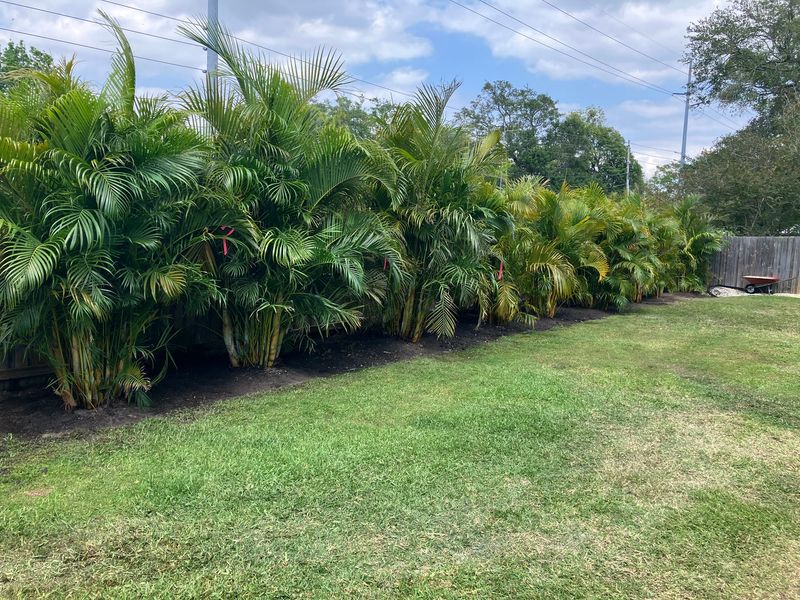
There is something unmistakably Floridian about a row of Areca palms swaying gently along a backyard border.
Unlike rigid hedges, the Areca palm brings movement, texture, and that signature tropical feel that makes outdoor spaces in Florida feel like a private retreat.
Areca palms, also known as Dypsis lutescens or butterfly palms, grow in dense, multi-stemmed clumps that can reach 15 to 20 feet in height.
Their arching, feathery fronds fill in horizontally as well as vertically, creating a soft but effective screen that filters views without feeling like a solid wall.
They thrive in Central and South Florida’s warm, humid conditions and prefer well-drained soil with regular moisture.
Planting in April allows these palms to take advantage of warming temperatures and increasing rainfall as the season progresses. Space clumps about 5 to 6 feet apart for a continuous screen, or place them closer together for faster coverage.
Areca palms perform best in full sun to partial shade and benefit from a slow-release palm fertilizer applied a few times per year to maintain healthy, vibrant fronds.
In North Florida, they may experience some cold sensitivity during winter months, so Central and South Florida locations tend to see the strongest long-term performance.
For homeowners who want privacy without sacrificing a lush, resort-style aesthetic, Areca palms are a popular and visually rewarding choice.
4. Wax Myrtle Fills In Fast With Native Growth
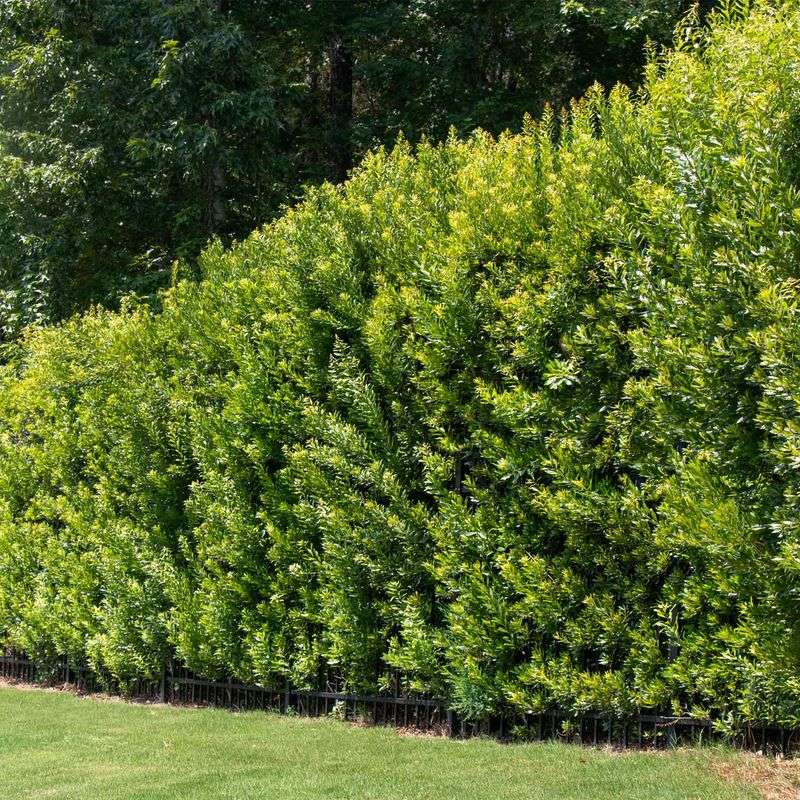
Florida gardeners who want a privacy screen that works with the local ecosystem rather than against it often land on Wax Myrtle as their top pick.
Morella cerifera is a Florida native that grows vigorously, establishes quickly, and supports local wildlife while doing its job as a privacy screen.
Wax Myrtle can reach 10 to 15 feet or more when left to grow freely, and it fills in at a pace that surprises many homeowners.
The semi-evergreen foliage is aromatic and silvery-green, giving hedges a softer, more naturalistic appearance compared to formal clipped plants.
Birds are particularly attracted to its small waxy berries, making it a favorite among Florida homeowners who enjoy backyard wildlife.
April is a strong planting month for Wax Myrtle because it allows roots to establish during the warm, wet season ahead. It tolerates a wide range of Florida soil conditions, including wet, poorly drained areas where many other plants struggle.
This adaptability makes it useful along low-lying property borders or near retention areas.
Pruning once or twice a year encourages denser, bushier growth and helps maintain a desired height. Spacing plants 4 to 6 feet apart creates a natural-looking hedge line that fills in within one to two growing seasons.
Because it is Florida-native, Wax Myrtle generally requires less fertilizer and irrigation once it is established, lowering long-term maintenance demands considerably.
5. Simpson’s Stopper Adds Dense Privacy With A Natural Look
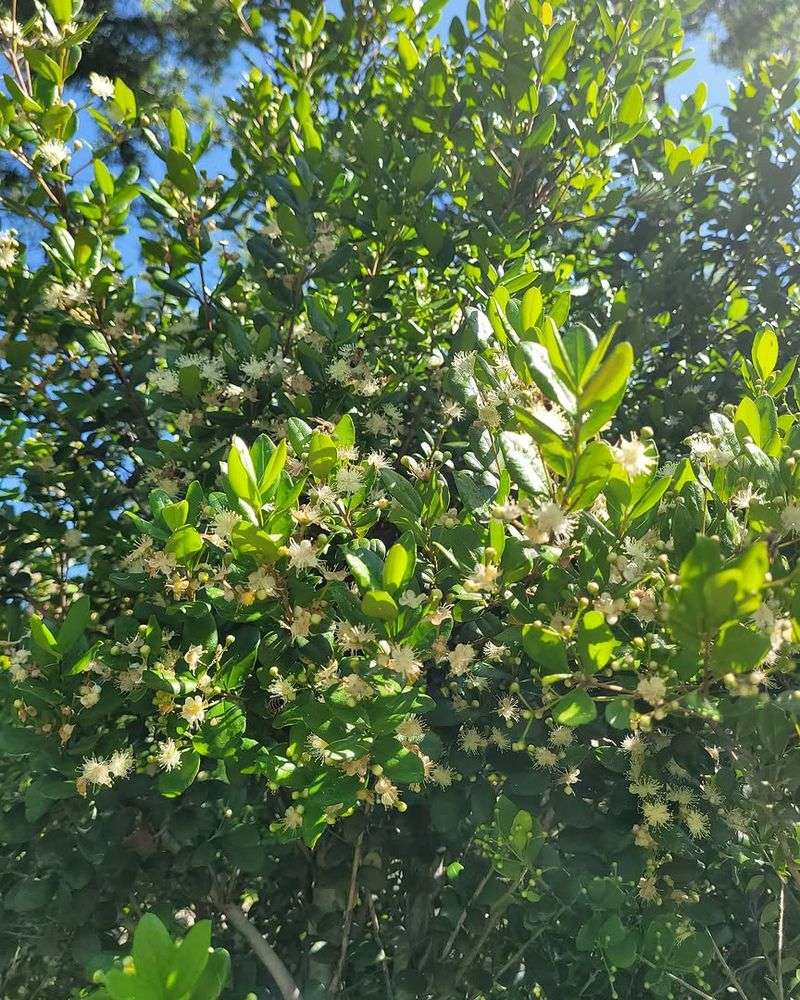
Not every great Florida privacy plant makes it onto mainstream lists, but Simpson’s Stopper deserves a serious look from any homeowner wanting something dense, native, and visually interesting.
Myrcianthes fragrans is a Florida native that brings year-round greenery, fragrant white flowers, and bright orange-red berries to the landscape.
Simpson’s Stopper typically grows 10 to 15 feet tall with a naturally dense, multi-branched form. Its small, dark-green leaves pack tightly together, creating a solid visual barrier that holds up well even without regular shearing.
The plant grows in full sun or partial shade, which makes it adaptable to various yard layouts across Central and South Florida.
One quality that sets it apart is its tolerance for Florida’s challenging soil conditions, including sandy, alkaline, and occasionally wet soils. It is also considered moderately salt-tolerant, which is useful for homeowners in coastal areas.
April planting gives Simpson’s Stopper a full warm season to establish, and it generally responds well to Florida’s summer rainfall once roots are settled.
Spacing plants 4 to 5 feet apart creates a hedge that closes in within a couple of growing seasons. Light pruning helps shape the plant and encourages branching, but heavy trimming is not needed to maintain density.
The berries attract birds throughout the year, adding natural movement and sound to a privacy screen that doubles as a mini wildlife habitat right in your Florida backyard.
6. Sweet Viburnum Builds A Classic Tall Green Hedge
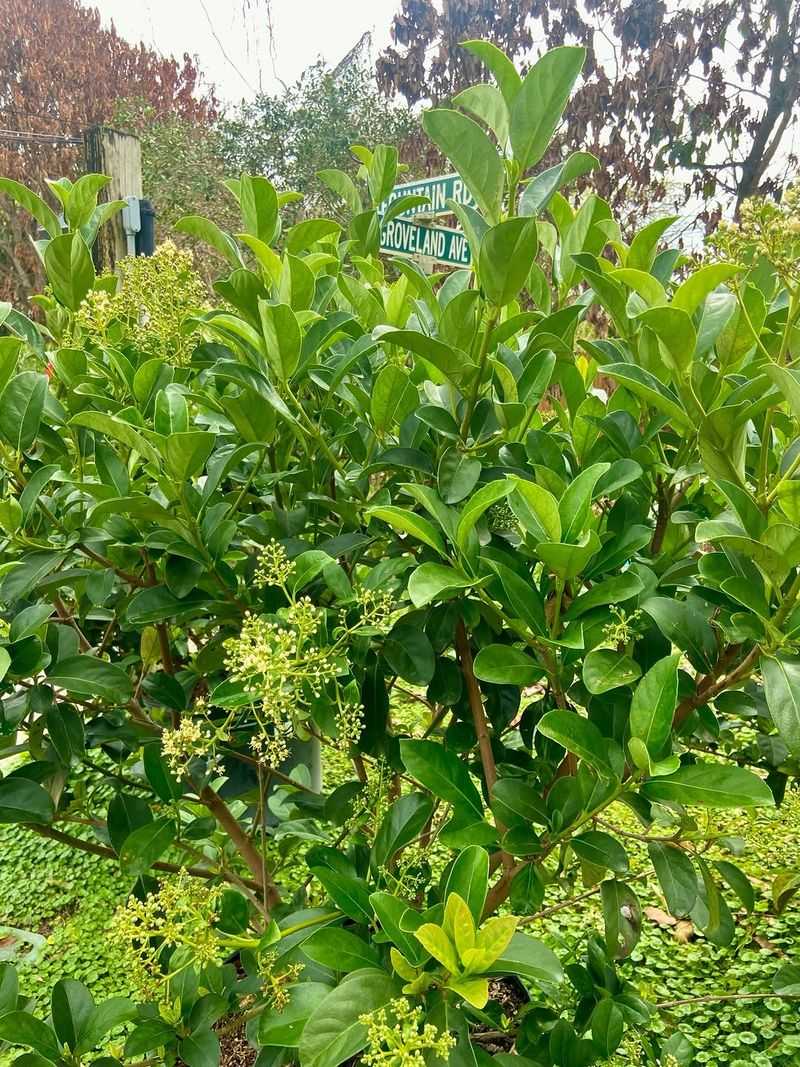
Few plants have earned the kind of widespread loyalty that Sweet Viburnum enjoys among Florida homeowners and landscape professionals.
Viburnum odoratissimum has been a go-to choice for tall privacy hedges across the state for decades, and its combination of fast growth, dense foliage, and easy care keeps it at the top of many planting lists each April.
Sweet Viburnum can grow 15 to 20 feet tall when left unpruned, with large, glossy leaves that overlap to create a thick, full screen. In spring, clusters of small white flowers appear and release a pleasant fragrance, adding a sensory bonus to its practical function.
The plant adapts well to full sun or partial shade and tolerates a variety of Florida soil types, from sandy to clay-heavy.
Planting in April takes advantage of warming soil temperatures and upcoming summer rains, which help Sweet Viburnum establish a strong root system relatively quickly.
Space plants about 3 to 5 feet apart for a hedge that closes in within one to two seasons.
Regular trimming, done two to three times a year, keeps the hedge at a manageable height and promotes thicker lateral branching.
Sweet Viburnum performs strongly across Central and South Florida. In North Florida, it generally handles mild winters without issue, though an unusually hard freeze may cause some temporary foliage stress.
For a reliable, full-looking hedge that requires modest upkeep, Sweet Viburnum remains one of Florida’s most dependable choices.
7. Ligustrum Grows Fast Into A Full Privacy Screen
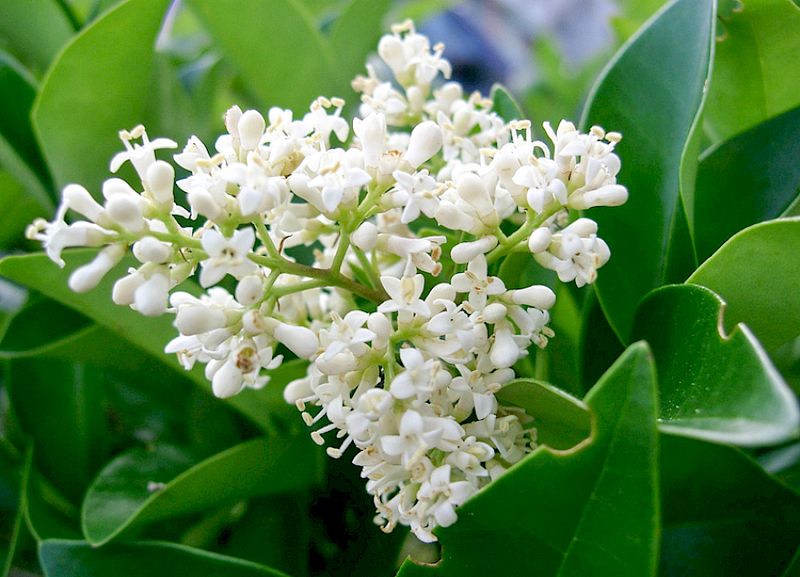
Speed matters when you want privacy, and Ligustrum is one of the fastest-growing hedging plants available to Florida homeowners.
Known commonly as privet, Ligustrum japonicum can put on several feet of growth in a single season under Florida’s warm, humid conditions, making it a popular choice for homeowners who want results without a long wait.
Japanese privet typically reaches 10 to 15 feet in height, though it can grow taller without regular pruning. Its dense, oval leaves are dark green and glossy, and the plant produces clusters of small white flowers in spring that carry a noticeable fragrance.
It grows well in full sun to partial shade and tolerates a range of Florida soil conditions, including slightly acidic sandy soils.
Planting in April gives Ligustrum a running start before summer heat intensifies. It responds well to Florida’s rainy season, putting on vigorous growth from June through September.
Water regularly during the first few months after planting to help roots get established, then reduce irrigation as the plant matures and becomes more self-sufficient.
Trimming three to four times a year keeps Ligustrum dense and upright rather than leggy. Space plants 3 to 4 feet apart for a hedge that fills in quickly.
Ligustrum performs well across North, Central, and South Florida, making it one of the more versatile privacy options available regardless of where in the state your property sits.
8. Clumping Bamboo Creates Instant Tall Privacy
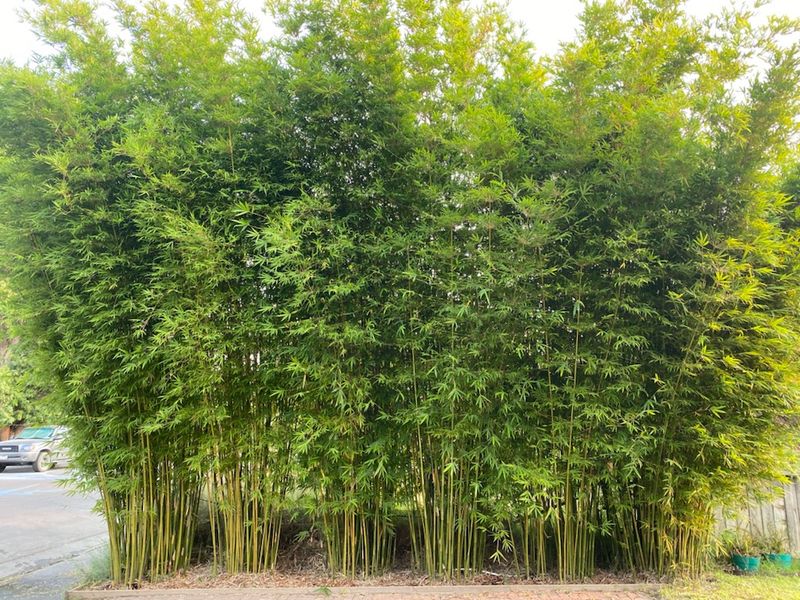
Homeowners who want the fastest possible privacy transformation often discover that clumping bamboo delivers results that few other plants can match.
Unlike running bamboo varieties, clumping types stay in contained, manageable groups and grow upward rapidly rather than spreading unpredictably across the yard.
Varieties like Bambusa glaucescens, commonly sold as hedge bamboo, Bambusa multiplex, and Bambusa textilis ‘Gracilis’, commonly known as Slender Weaver’s Bamboo or Graceful Bamboo, are well-suited to Florida’s warm climate and can reach 15 to 20 feet or more.
Their dense, leafy canopies create a tall, lush screen that goes from newly planted to impressively full within a single growing season under good conditions.
They thrive in full sun to partial shade and prefer well-drained soil with consistent moisture.
April is a strong month to plant clumping bamboo in Florida because the warming temperatures and approaching rainy season support vigorous early growth.
Water thoroughly and regularly during the establishment period, especially during any dry stretches before summer rains arrive.
A layer of mulch around the base helps retain moisture and keeps roots comfortable during the hottest months.
Space clumps 5 to 8 feet apart depending on how quickly you want the screen to close in. Clumping bamboo performs best in Central and South Florida, where temperatures stay warm year-round.
In North Florida, select cold-hardier varieties to reduce the risk of cold-weather foliage damage during winter. For sheer speed and tropical impact, few plants rival what clumping bamboo can accomplish in a single Florida growing season.