The Arizona Native Tree That Thrives With Almost No Extra Water
Watering can feel like a never-ending chore when summer refuses to let up. That is why choosing the right tree matters more than many people realize.
Some trees need constant attention just to get through the season. Others settle in and keep growing with very little extra help.
One Arizona native stands out for doing exactly that. It handles tough conditions without asking for frequent watering once it becomes established.
If you are planning a new landscape or replacing a thirsty tree, this is worth a closer look. Picking plants that naturally fit the climate can save time and reduce maintenance.
It also helps create a yard that stays attractive through long, dry summers without demanding constant attention or wasting valuable water every single week.
1. Blue Palo Verde Is Built For Dry Conditions
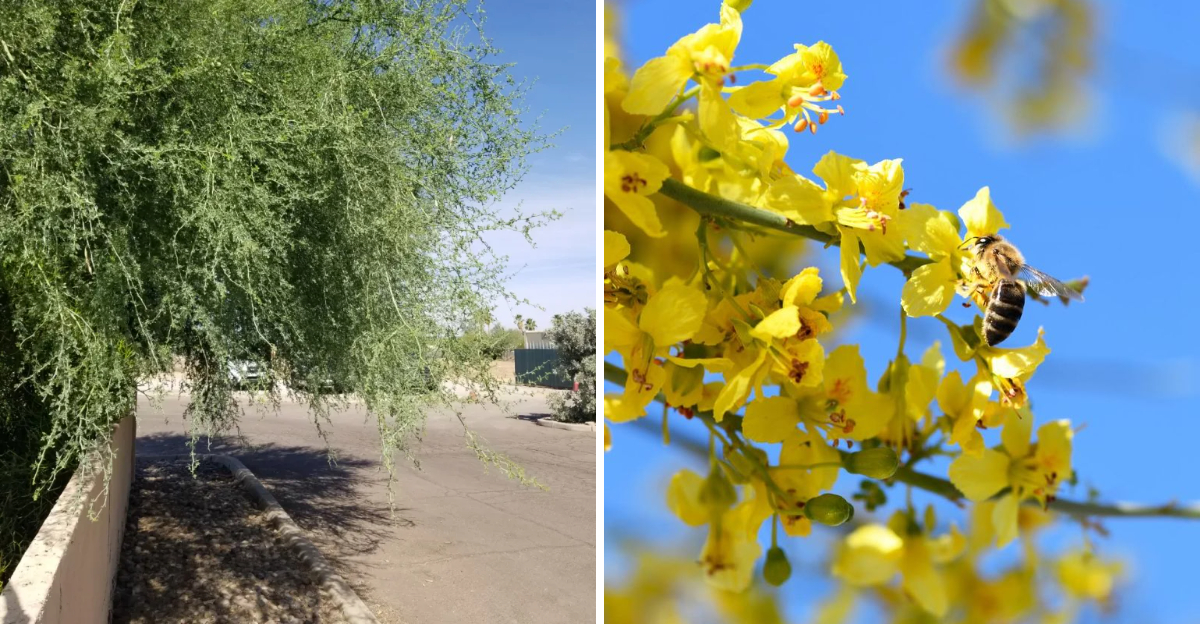
Blue Palo Verde carries its food-making ability right inside its bark. Unlike most trees that depend entirely on leaves, its green trunk and branches contain chlorophyll.
When drought forces the tree to drop its leaves, photosynthesis continues through the bark itself.
That built-in survival trick is not common among North American trees. It gives Blue Palo Verde a serious edge when summer temperatures push past 110 degrees and rain stays absent for weeks.
Roots reach deep into rocky desert soil to find moisture other plants simply cannot access.
Established trees in the Sonoran Desert region can go months between waterings without showing stress. Young trees do need some help during their first season, but once roots are settled, supplemental water becomes mostly optional.
Soil drainage matters more than moisture levels for long-term health.
Rocky or sandy ground suits this tree far better than heavy clay. Poor soil conditions that would stress most landscape trees are conditions Blue Palo Verde actually handles well.
It evolved in harsh terrain, so average suburban soil usually feels comfortable by comparison.
Choosing a native-adapted tree like this one reduces your water bill, saves maintenance time, and supports local desert ecology.
2. Fast Growth Creates Shade In A Few Years
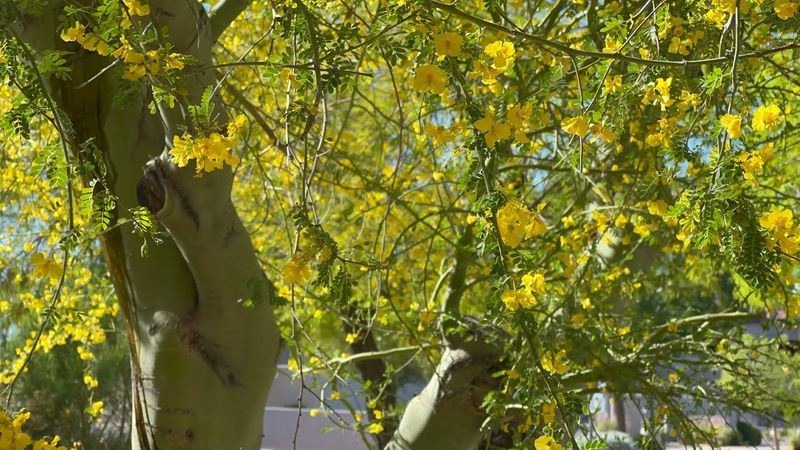
Most desert trees grow slowly, but Blue Palo Verde breaks that rule in a noticeable way. Under good conditions, it can add two to three feet of height each year during its early growth phase.
A tree planted today could be providing real shade within three to five years.
Growth rate depends on a few factors, including soil type, drainage, and how often you water during the first two seasons.
Trees planted in well-drained spots with occasional deep watering tend to establish faster than those left completely dry right after planting.
Consistent early care pays off quickly.
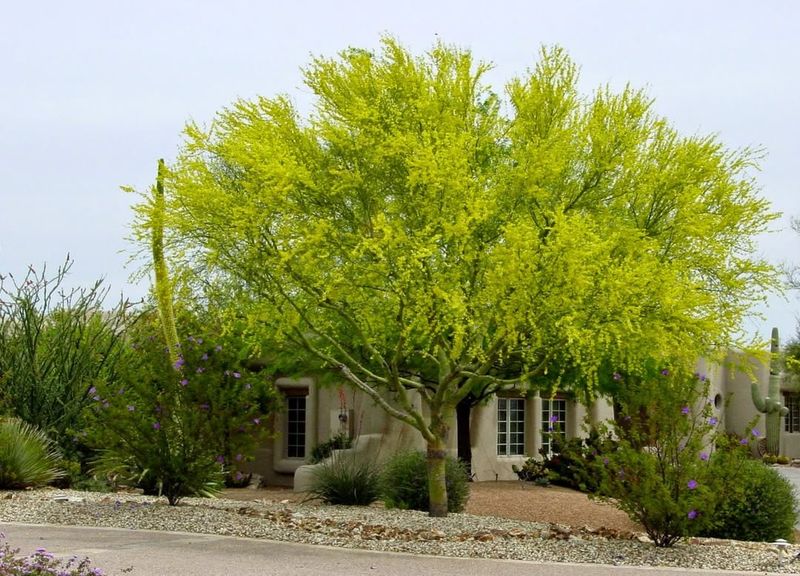
Mature trees typically reach 20 to 30 feet tall with a wide, open canopy spread. That spread creates dappled shade rather than dense, heavy cover.
Dappled shade actually suits many desert garden plants better because they still receive some light while staying cooler.
Placing a Blue Palo Verde near a patio, seating area, or west-facing wall can meaningfully reduce surface temperatures during peak afternoon heat.
Watching this tree fill out over a few seasons feels genuinely rewarding.
Your Arizona Garden Changes Every Week. Your Plan Should Too.
Gardening in Arizona changes quickly throughout the season. Every Friday you’ll receive a simple weekly plan showing exactly what to plant, prune, fertilize, harvest, and protect so you never miss the right timing.
3. The Best Spot For Long-Term Growth
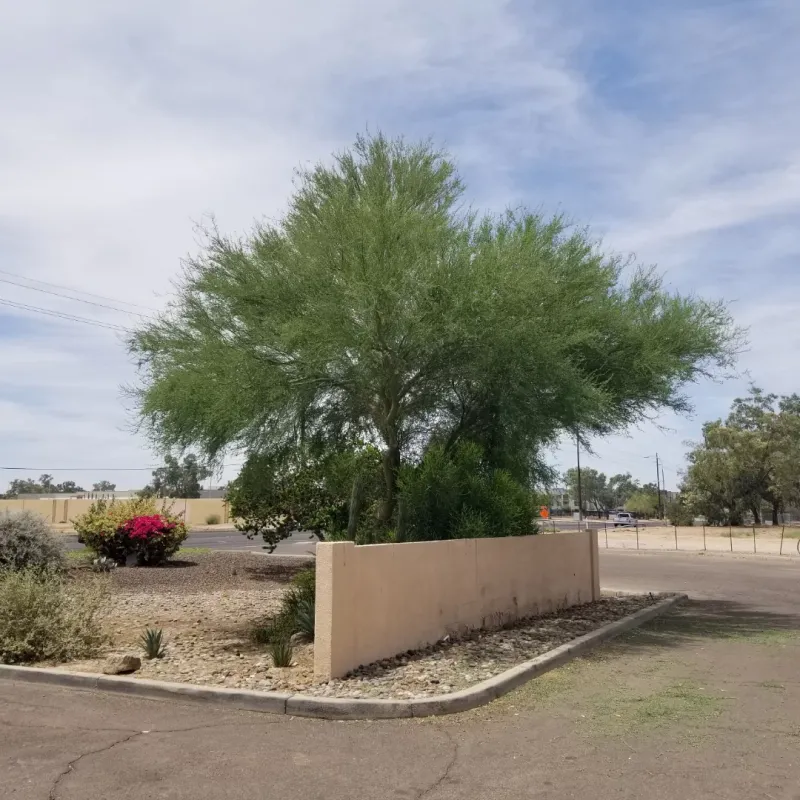
Location shapes everything when it comes to how well this tree performs over decades. Blue Palo Verde needs full sun, which means at least six hours of direct sunlight daily.
Shaded spots slow its growth and reduce flowering significantly.
Space is equally important. Roots spread wide as the tree matures, and the canopy can eventually reach 25 feet across.
Planting too close to structures, fences, or underground utilities creates problems that are difficult to fix later without major intervention.
A spot with natural slope or slightly elevated ground works well because water drains away from the root zone rather than pooling. Standing water around the base is one of the few conditions that genuinely stresses this tree over time.
Good drainage is non-negotiable for healthy roots.
Avoid low-lying areas that collect runoff after monsoon rains. Even though Blue Palo Verde thrives in the desert, soil that stays wet for extended periods creates root problems that compromise the tree’s long-term structure and stability.
Keep the planting hole no deeper than the root ball itself. Planting too deep is a common mistake that restricts oxygen to young roots and slows establishment.
The root flare should sit at or just slightly above the surrounding soil surface for best results.
4. Watering Young Trees During The First Year
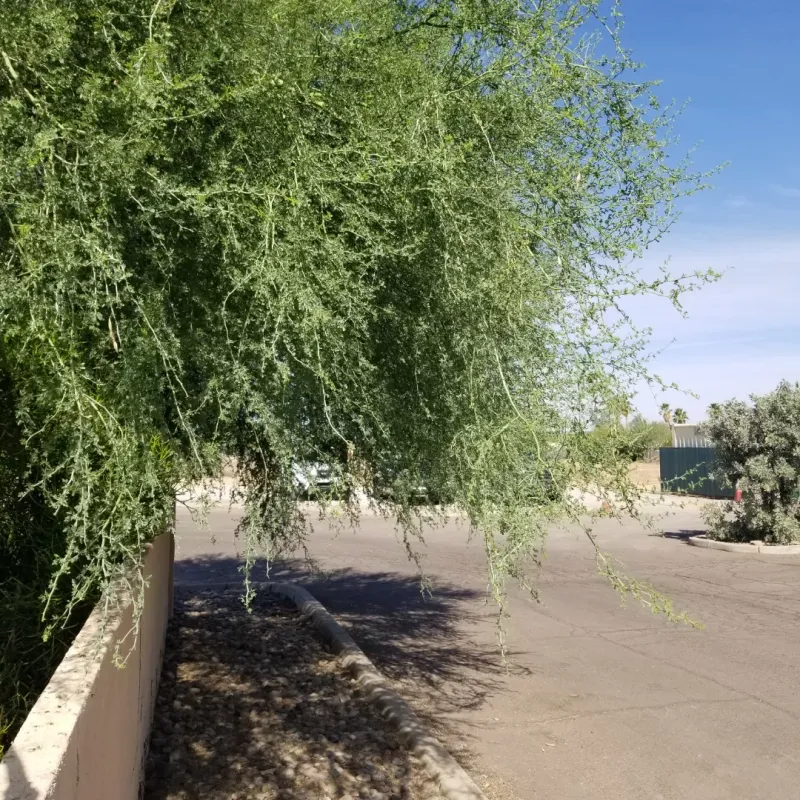
Getting a Blue Palo Verde through its first year is the most hands-on part of the whole process. Roots need time to spread beyond the original planting hole and connect with surrounding soil.
Until that happens, the tree relies on you to supplement what rainfall cannot provide.
Water deeply once or twice a week during the hottest months of summer. Deep watering means soaking the soil 12 to 18 inches down, not just wetting the surface.
Shallow watering encourages roots to stay near the surface where heat stress is more intense.
Reduce frequency as fall temperatures drop. Cooler weather slows the tree’s water demand considerably.
Overwatering during fall and winter is actually more harmful than underwatering at that stage because roots sitting in damp, cool soil become vulnerable to fungal issues.
A wide layer of gravel mulch around the base helps retain some soil moisture between waterings. Keep the mulch a few inches away from the trunk itself to prevent bark problems.
Gravel mulch also reduces weed competition around young trees during establishment.
By the second year, most Blue Palo Verde trees are largely self-sufficient in desert climates.
Occasional deep watering during extended dry spells can help during year two, but the daily or weekly dependence fades significantly once roots are established.
5. Common Planting Mistakes To Avoid
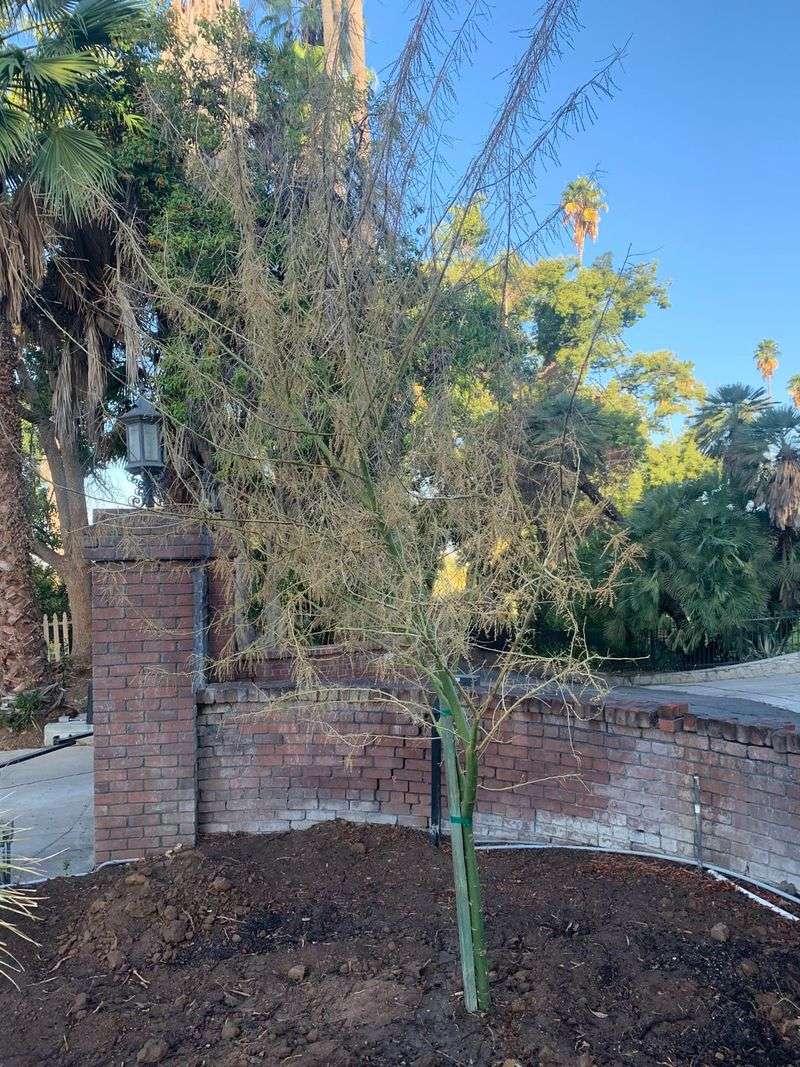
Planting Blue Palo Verde too deep ranks as one of the most frequent errors people make. When the root flare gets buried, the tree cannot breathe properly at the base.
Over time, girdling roots develop and weaken the entire structure from the ground up.
Amending the soil heavily before planting is another mistake worth skipping. Blue Palo Verde evolved in native desert soil that is lean, rocky, and fast-draining.
Adding rich compost or organic matter can actually encourage soft, weak root growth that struggles when conditions get harsh.
Planting in fall or winter gives roots time to establish before summer heat arrives. Spring planting works in some cases, but summer planting puts extra stress on a young tree right when conditions are most demanding.
Timing your planting thoughtfully reduces early setbacks.
Staking too tightly is also problematic. Young trees need slight movement to develop strong trunk tissue.
If stakes hold the trunk rigidly in place for more than one growing season, the wood may not develop the density needed to stand on its own later.
Overwatering during the establishment period creates more problems than underwatering in most desert landscapes. Wet, compacted soil around young roots limits oxygen and encourages root rot pathogens.
6. Pruning Only When It Really Matters
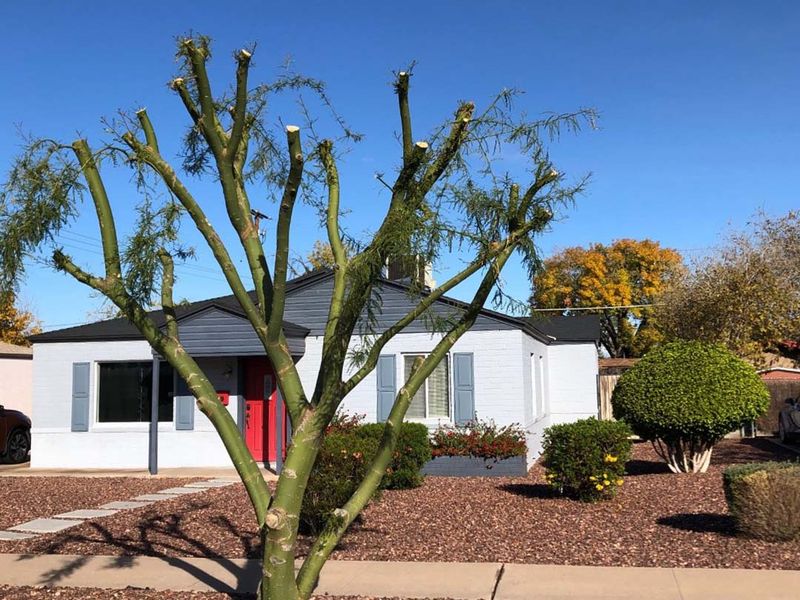
Blue Palo Verde does not need regular pruning to stay healthy. Left alone, it develops a naturally attractive irregular form that fits well in desert landscapes.
Heavy pruning disrupts that natural shape and can stress a tree that was doing fine without intervention.
Remove crossing branches that rub against each other and cause bark wounds over time. Rubbing branches create entry points for insects and pathogens that weaken wood gradually.
Catching these early keeps the canopy structure cleaner and stronger long-term.
Raise the canopy gradually over several years if you need clearance for foot traffic or vehicles. Removing too many lower branches at once stresses the tree and reduces the photosynthetic surface that green bark and remaining branches provide.
Take no more than 25 percent of the canopy in a single season.
Pruning during late winter, before spring growth begins, tends to produce the cleanest results. Wounds close faster when the tree is about to enter an active growth period.
Avoid pruning during the hottest summer weeks when heat stress is already high.
Sharp, clean tools reduce tearing and ragged cuts that heal slowly. Wipe blades between cuts if you are working on multiple trees to avoid spreading any potential pathogens between individual plants.
7. Spring Blooms Support Desert Pollinators
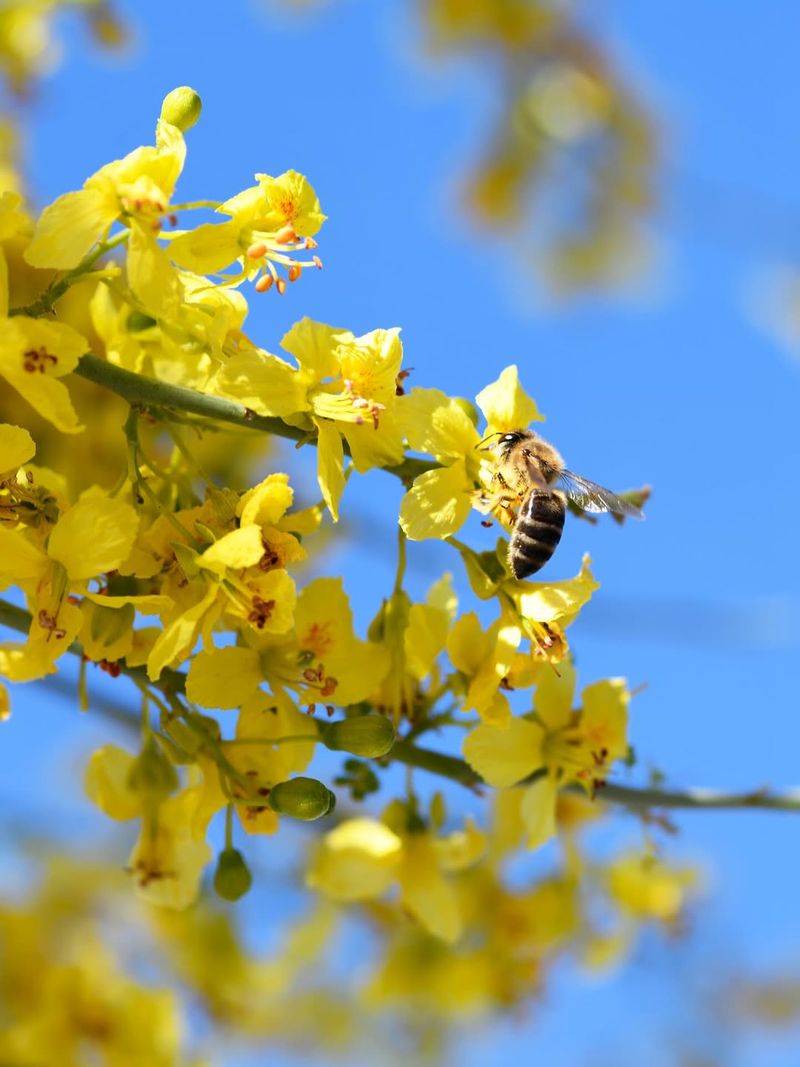
Few sights in a desert garden compare to a Blue Palo Verde covered in yellow blooms during spring. Flowers appear in clusters along every branch, turning the entire canopy into a golden cloud for a few weeks each year.
Bloom timing typically falls between March and May depending on elevation and local temperatures.
Honeybees and native bee species flock to these flowers in impressive numbers. Blue Palo Verde is considered one of the most important early-season nectar sources for pollinators across the Sonoran Desert region.
Supporting that food web matters especially as native plant cover shrinks in developed areas.
Butterflies visit the blooms regularly as well. Certain butterfly species in the Southwest rely on Palo Verde flowers as a primary spring nectar source before other desert plants reach peak bloom.
Planting this tree adds measurable ecological value to any yard or property.
After blooms fade, seed pods form along the branches. Birds and small mammals consume the seeds, adding another layer of wildlife value beyond the flowering period itself.
Leaving some fallen pods on the ground extends that food availability through summer months.
Pollen from Blue Palo Verde can trigger seasonal allergies in sensitive individuals.