The Arizona Shrub That Handles Reflected Heat Better Than Oleander
Choosing a shrub sounds simple until one struggles while another keeps looking healthy in the very same spot. That can leave you wondering what made the difference when both received the same care.
It is frustrating to spend time and money on a landscape only to watch certain plants lose their good looks during the hottest part of summer.
Some shrubs are simply better suited for harsh conditions than others. Picking the right one from the beginning can save a lot of disappointment later.
A reliable choice often makes the entire landscape easier to maintain without constant attention.
One shrub has earned a reputation for standing up to reflected heat where many others begin to struggle.
That dependable performance has made it a popular replacement for oleander in many parts of Arizona.
1. Texas Ranger Thrives In Intense Reflected Heat
Block walls in desert neighborhoods can push surface temperatures past 150 degrees Fahrenheit on a summer afternoon. Most shrubs planted near those walls show leaf scorch or drop foliage by August.
Texas Ranger just keeps growing.
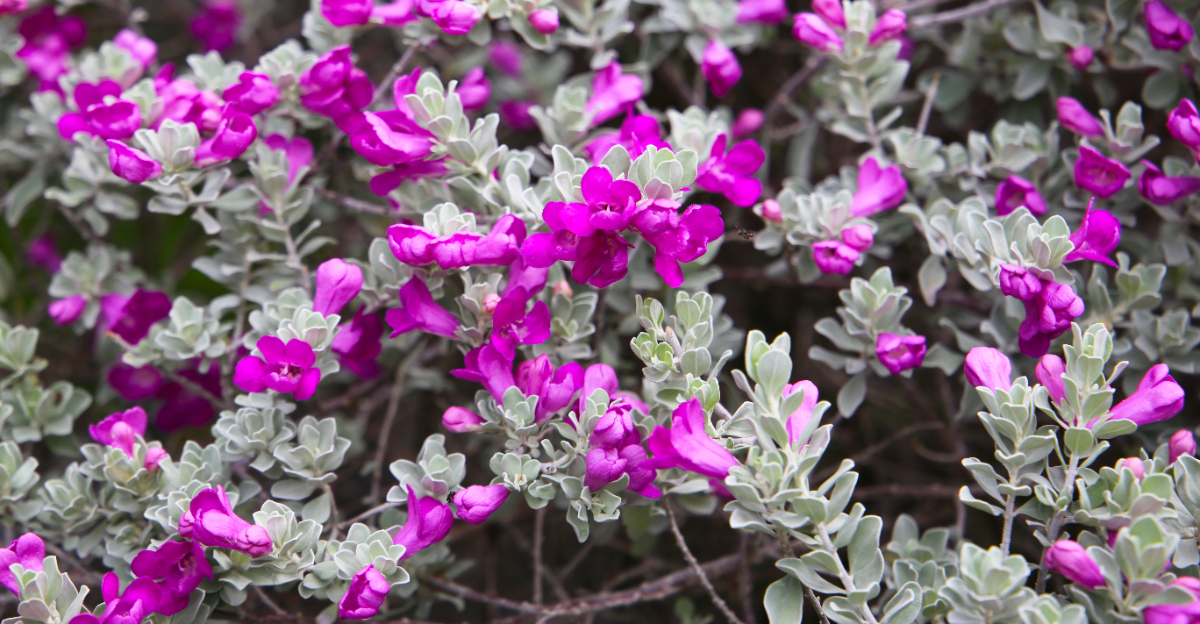
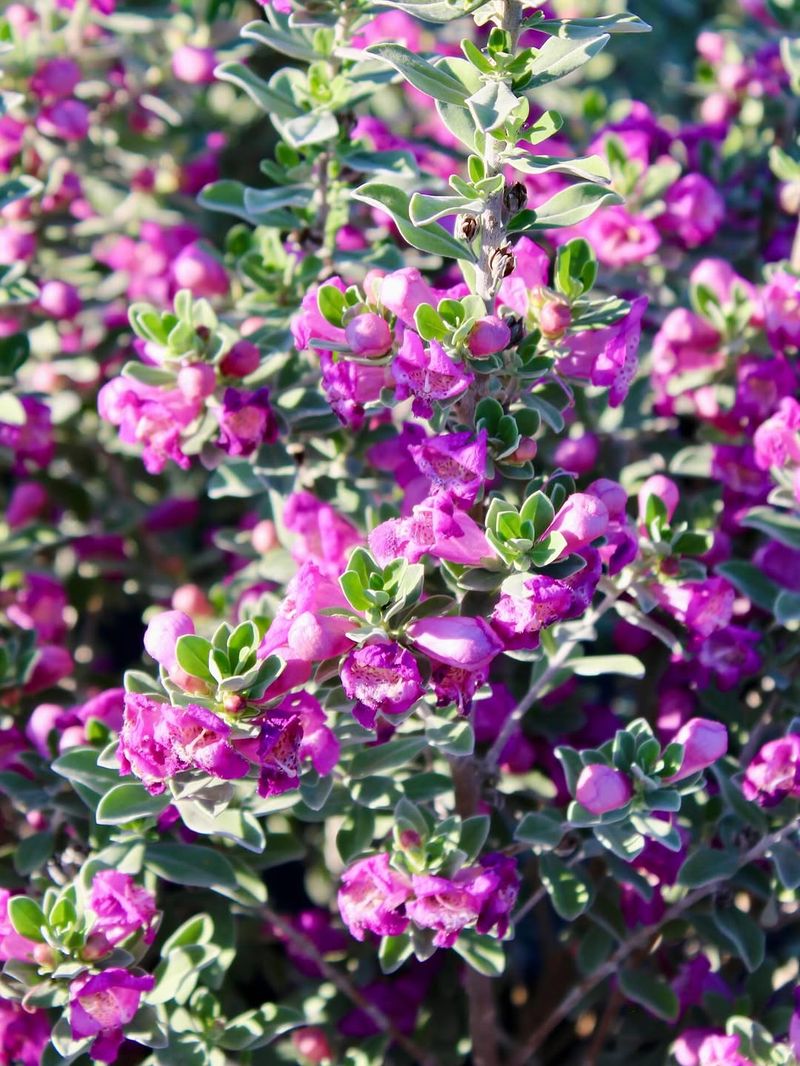
Its silvery-gray leaves are covered in tiny hairs called trichomes. Those hairs reflect sunlight and reduce water loss at the same time.
That two-in-one adaptation is rare in ornamental shrubs.
Oleander manages reflected heat by pushing through stress with sheer toughness. Texas Ranger handles it differently.
It is built at the cellular level to absorb and release heat without damage.
In south-facing planting strips along driveways and parking areas, Texas Ranger holds its shape and color even when the ground nearby hits scorching temperatures. Oleander in the same spot often looks tired by midsummer.
Nurseries across the Southwest stock several varieties, including ‘Green Cloud,’ ‘White Cloud,’ and ‘Compacta.’ Each one shares the same heat tolerance, though bloom color and mature size vary a bit.
If your yard has a hot wall exposure that has burned through other plants, Texas Ranger is worth a serious look.
2. It Needs Less Water Than Oleander Once Established
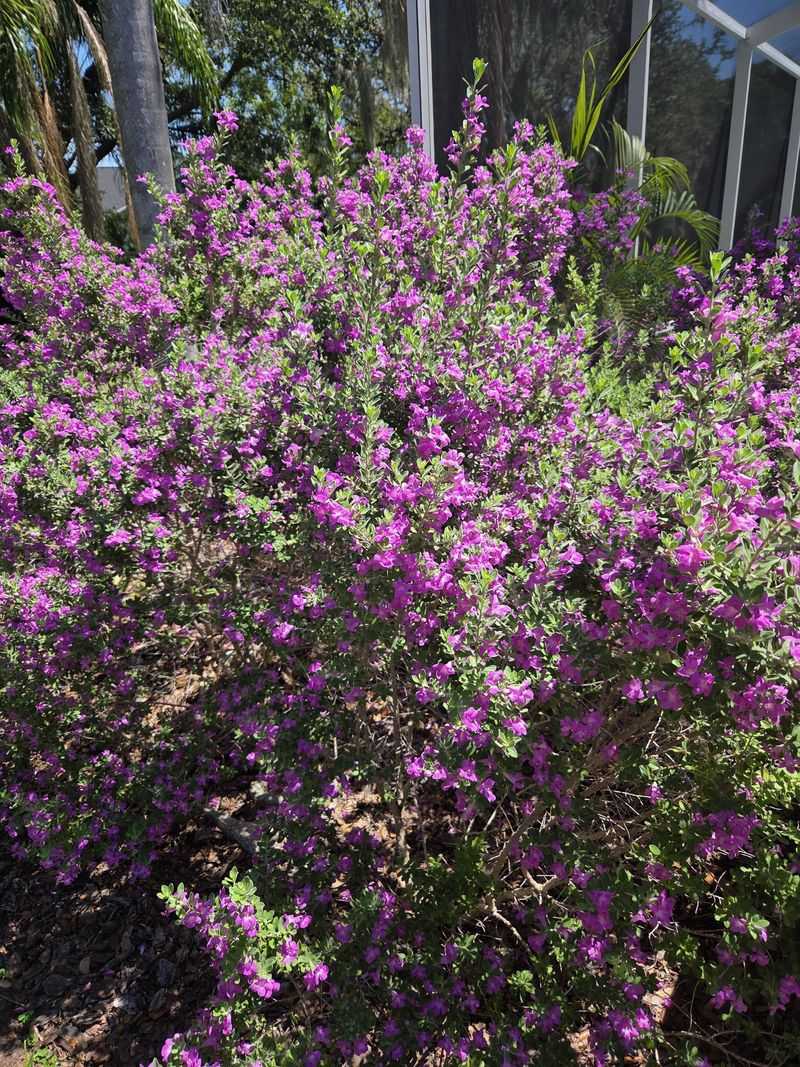
Water bills in hot desert cities can spike fast during summer. Cutting back on irrigation without losing your landscape is a goal most desert gardeners share.
Texas Ranger makes that goal realistic.
Once roots are settled, usually after one full growing season, Texas Ranger can survive on rainfall alone in many low-desert areas. Supplemental watering every two to three weeks during extreme heat is often enough to keep it looking sharp.
Oleander also has solid drought tolerance. But Texas Ranger edges it out in truly low-water situations, especially in rocky or gravelly soils where moisture drains fast.
Overwatering is actually a bigger risk than underwatering with Texas Ranger. Wet roots in clay-heavy soil can cause root problems that reduce the plant’s long-term health.
Lean irrigation schedules work better here.
Deep, infrequent watering trains roots to go deeper into the soil profile. That deeper root system gives the plant more access to residual moisture between rain events.
As a result, the shrub is better able to handle extended dry periods with less supplemental irrigation.
Your Arizona Garden Changes Every Week. Your Plan Should Too.
Gardening in Arizona changes quickly throughout the season. Every Friday you’ll receive a simple weekly plan showing exactly what to plant, prune, fertilize, harvest, and protect so you never miss the right timing.
Frequent shallow watering encourages roots to stay near the surface, where the soil dries out much faster.
3. Full Sun Brings Out Its Best Blooms
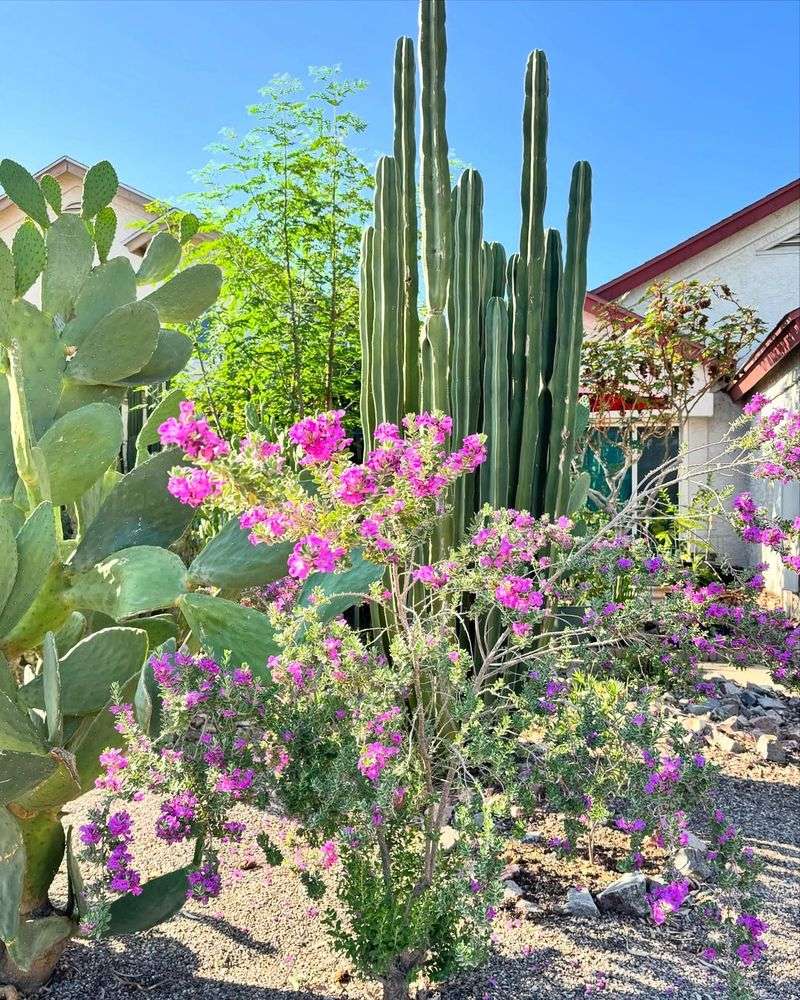
Shade is not this plant’s friend. Texas Ranger blooms most heavily when it gets unfiltered sun for the majority of the day.
Partial shade tends to reduce flower production noticeably.
Bloom cycles are often triggered by humidity spikes, especially during monsoon season. When moisture in the air rises quickly after a dry stretch, Texas Ranger responds with a flush of color that can cover the entire plant within days.
Gardeners sometimes call it the ‘barometer bush’ because of how reliably it blooms ahead of or just after rain events. That nickname has been used in desert gardening circles for decades.
Full sun placement also keeps the plant’s natural silver-gray color strong. In shadier spots, foliage can turn a duller green and the compact shape tends to loosen up in ways that require more maintenance.
South and west exposures are ideal for maximum bloom output. East-facing spots work reasonably well too, though afternoon sun exposure tends to push the heaviest flowering cycles.
If you are planting near a structure, avoid spots where roof overhangs block direct light for more than a few hours per day.
4. Fast-Draining Soil Keeps Roots Healthy
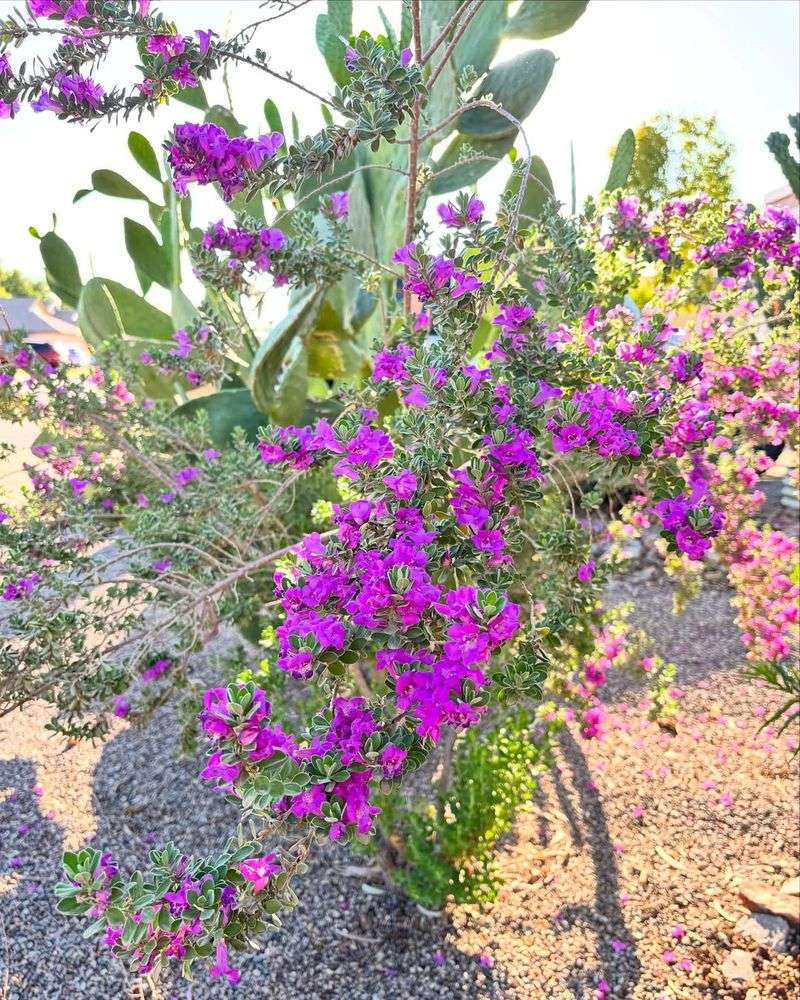
Roots sitting in soggy ground is a fast track to trouble for Texas Ranger. Drainage matters more than fertilizer, more than pruning, and arguably more than watering frequency.
Get the soil right first.
Native desert soils in the low desert tend to be sandy, gravelly, or caliche-based. Texas Ranger evolved in those conditions.
Amended garden beds with heavy compost additions can actually work against this plant by holding too much moisture.
If your soil drains slowly, a simple test helps. Dig a hole about 12 inches deep and fill it with water.
If water is still sitting after an hour, drainage is too slow for Texas Ranger to thrive long-term.
Raised planting berms are a practical fix for poorly draining spots. Mounding the soil six to twelve inches above grade improves drainage significantly without requiring major soil replacement.
Caliche layers found in many desert yards can trap water below the root zone. Breaking through that layer with a breaker bar before planting gives roots room to push deeper and helps excess moisture escape downward.
Gravel mulch on the soil surface also helps. It keeps the crown of the plant dry, reduces soil compaction from rain, and reflects heat away from the root zone.
5. Too Much Water Can Reduce Flowering
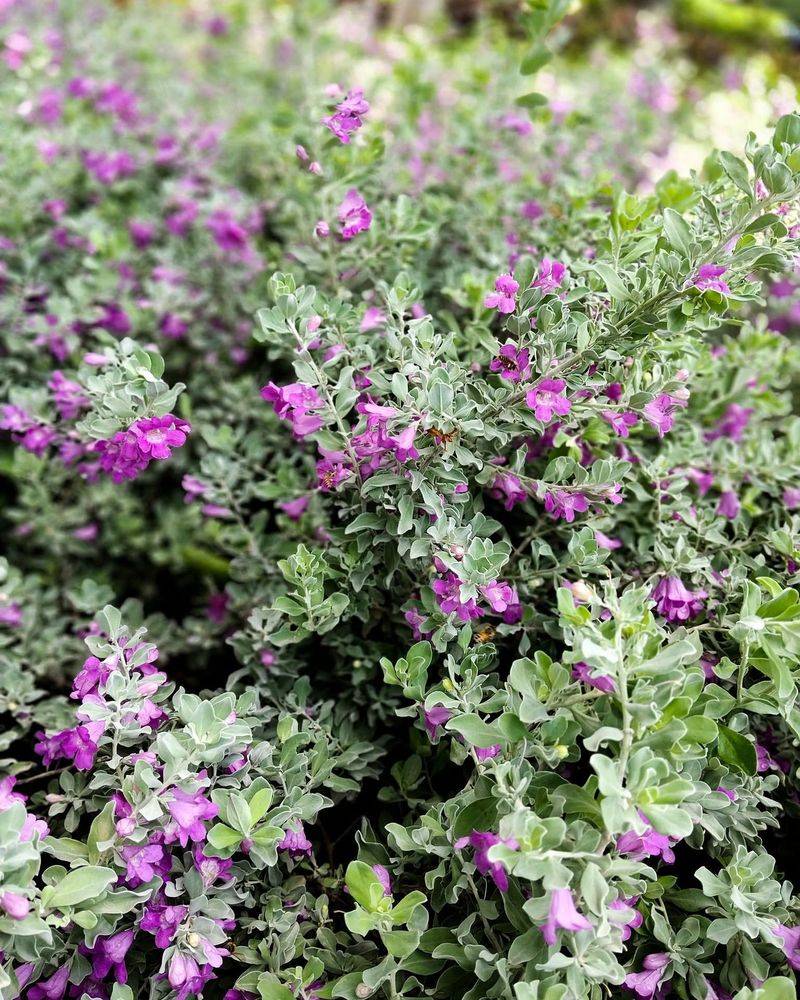
More water does not mean more blooms with Texas Ranger. Counterintuitively, heavy irrigation schedules can actually suppress flowering.
Understanding why helps avoid a common mistake desert gardeners make.
When soil stays consistently moist, the plant focuses energy on vegetative growth. Leaves get larger and greener, the canopy fills out faster, but bloom production slows down or stops between natural triggers like humidity shifts.
Oleander responds to water with more flowers in many cases. Texas Ranger behaves differently.
Its bloom cycle is tied closely to environmental stress cues, particularly humidity changes and dry-wet cycles rather than constant soil moisture.
Cutting back irrigation in late spring, before monsoon season begins, can actually prime the plant for a heavier bloom flush when summer rains arrive.
Some experienced desert gardeners deliberately run a drier schedule from May through early July for this reason.
Watch for yellowing leaves or soft, mushy stems near the base. Both are signs that water is being applied too frequently.
Backing off irrigation for a few weeks often reverses early-stage overwatering effects before lasting root damage sets in.
Soil type plays a big role here. Sandy soils forgive generous watering more easily than clay-heavy ground.
6. Prune Only To Keep Its Natural Shape
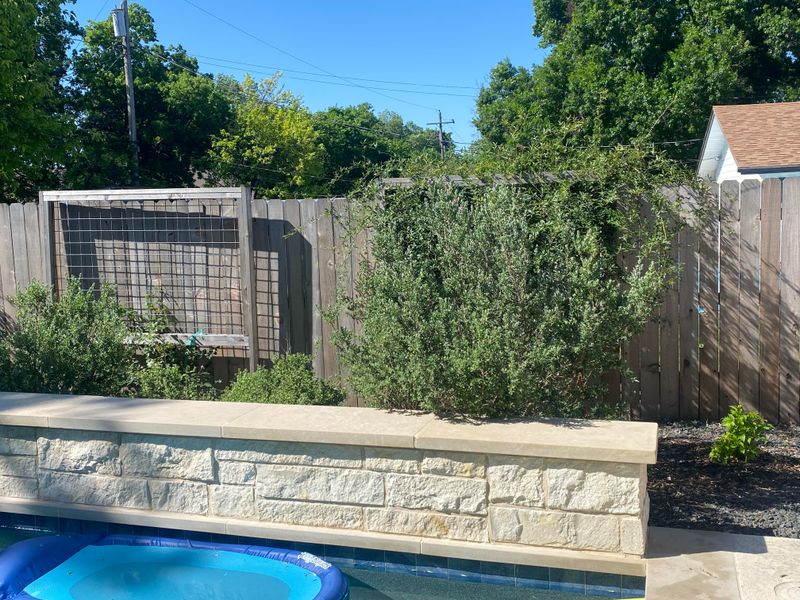
Shearing Texas Ranger into a tight box or ball is one of the most common mistakes made with this plant. Hard shearing removes the branch tips where blooms form, cutting off the plant’s ability to flower properly.
Natural shape matters here. Texas Ranger grows into a soft, rounded mound on its own.
That form does not need aggressive correction unless branches are crossing, rubbing, or pushing into a walkway.
Light selective pruning, removing individual branches at their origin point, keeps the silhouette clean without sacrificing bloom wood. Hand pruners work better than hedge shears for this approach.
Late winter or very early spring is the best window for any structural pruning. Cutting back after new growth has already pushed can set the plant back unnecessarily during its active growing phase.
In some desert landscapes, Texas Ranger is planted in rows and then machine-sheared into uniform hedges. Bloom production in those plantings is noticeably lower than in specimens allowed to keep their natural form.
It is a trade-off between tidiness and flowering performance.
Removing damaged branches can be done at any time of year. Just avoid removing more than about one-third of the canopy during a single pruning session.
7. Leave Room For Good Air Circulation
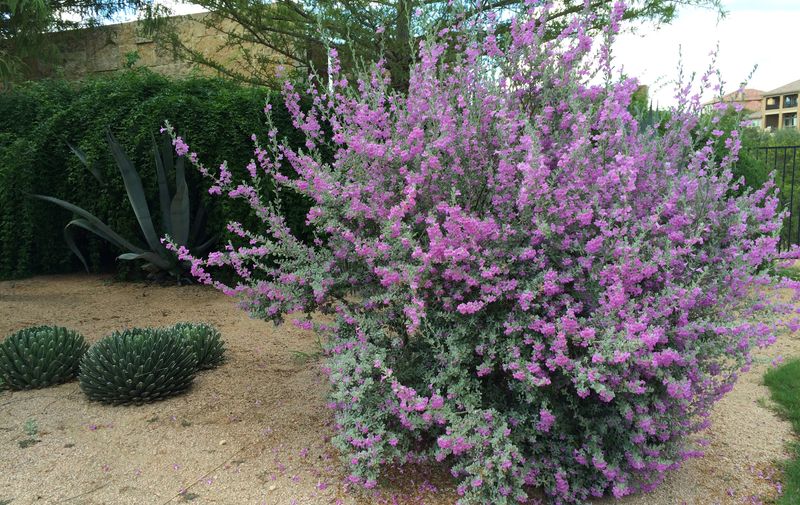
Crowding Texas Ranger against walls, fences, or other shrubs limits airflow around the canopy. Poor air circulation creates conditions where fungal issues can develop, especially during the humid monsoon months.
Mature Texas Ranger plants can reach four to eight feet wide depending on the variety. Planting too close together means constant crowding as plants mature, which usually leads to removal or heavy pruning that stresses the plants unnecessarily.
Spacing plants at least five to six feet apart center-to-center gives each one room to develop its full natural form.
‘Green Cloud’ and similar larger varieties may need even more space, closer to eight feet, to reach their best shape without crowding neighbors.
Good airflow also helps the plant dry out between rain events. Leaves that stay wet for extended periods are more vulnerable to powdery mildew, which can appear during stretches of high humidity in late summer.
Wall placements need extra thought. Positioning Texas Ranger at least three feet out from a solid wall allows air to move behind and around the plant.
Tight against a wall, foliage on the interior side tends to thin out and lose its silvery color.