The Backyard Plant Behind Unpleasant Odors In Illinois Yards This Summer
Your nose might catch it before your eyes do: a sharp, unpleasant smell drifting through the yard on a warm afternoon.
Some homeowners compare it to burnt rubber, others swear it smells closer to spoiled peanuts, but either way, the source rarely gets suspected at first. It is not the trash cans, not a neighbor’s grill, and not anything rotting underground.
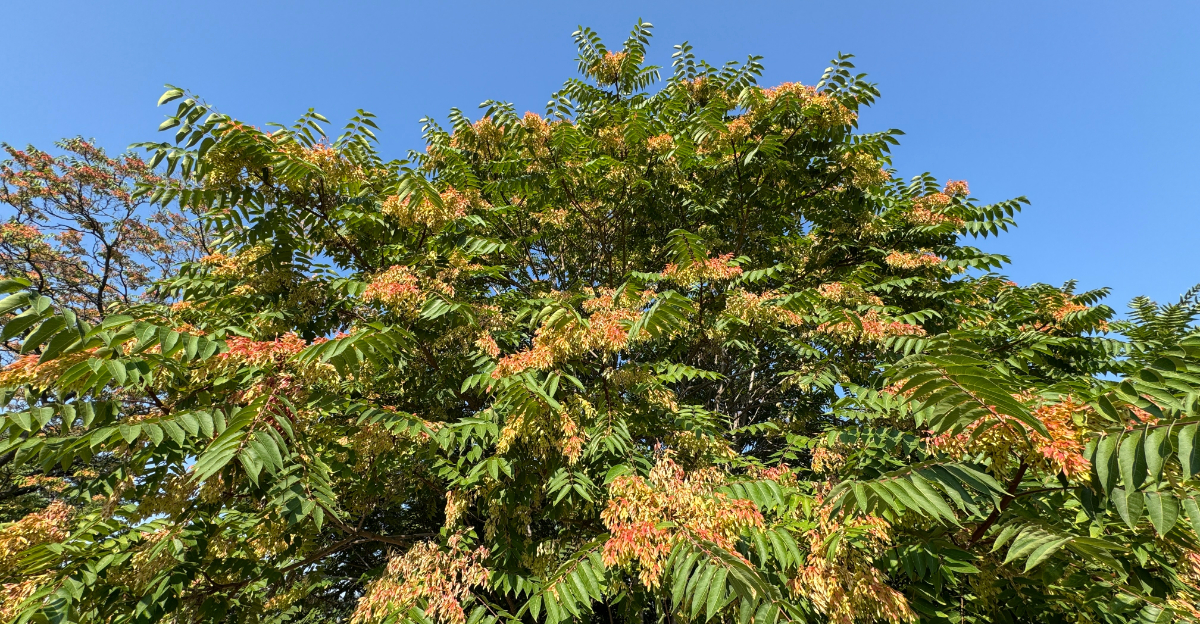
The real source is a tree that blends into the landscape so well it often gets ignored for years. Its leaves look lush, its growth seems vigorous, and nothing about its appearance suggests trouble.
Yet this plant has quietly spread across Illinois yards, and once its scent becomes familiar, it becomes surprisingly easy to spot from a distance.
This Common Backyard Plant Smells Worse Than It Looks
Looks can be deceiving, especially in your own yard. The Tree of Heaven, known scientifically as Ailanthus altissima, is the backyard plant behind unpleasant odors plaguing Illinois yards this summer.
At first glance, it looks almost tropical, with long feathery leaves that fan out gracefully. Many homeowners assume it is a native tree or even a desirable ornamental plant.
Surprise: it is neither. This invasive species originally came from China and arrived in the U.S. back in the 1700s.
Since then, it has spread aggressively across the country, thriving in places where other trees struggle. You will find it along fences, in alleyways, and popping up uninvited in garden beds.
The smell it produces is the real giveaway. Crush one of its leaves between your fingers, and you will get a sharp, rancid odor that is hard to forget.
Some people compare it to cat urine, others say stinky socks, and a few describe it as rotten peanuts. Whatever your nose decides, the scent is unmistakably unpleasant.
The tree grows fast, sometimes adding several feet of height in a single season. That rapid growth makes it look established and even beautiful before you realize what you are dealing with.
Knowing the difference between this smelly intruder and a harmless backyard tree can save your yard a lot of trouble down the road.
Tree Of Heaven Releases A Strong Odor From Its Leaves
Rub a single leaf and brace yourself. The Tree of Heaven releases a strong, foul scent from its leaves that hits you almost instantly.
The smell comes from specific chemical compounds stored inside the leaf tissue. When those cells break open, the odor escapes fast and spreads through the air around you.
Scientists trace the smell to specific oils and compounds stored within the leaf tissue. These chemicals are not harmful to breathe in small amounts, but they are genuinely unpleasant.
Even without touching the leaves, a warm summer day can coax some of that smell into the air. Heat causes the leaf surface to release trace amounts of those compounds naturally.
That is why so many Illinois residents notice the odor more during July and August than in spring. The combination of high temperatures and humidity makes the scent much more noticeable outdoors.
Your Illinois Garden Changes Every Week. Your Plan Should Too.
Gardening in Illinois changes quickly throughout the season. Every Friday you’ll receive a simple weekly plan showing exactly what to plant, prune, fertilize, harvest, and protect so you never miss the right timing.
Nearby patios and outdoor seating areas become especially affected when a Tree of Heaven grows close by. The smell can drift several feet from the tree on a breeze.
If you have been blaming your neighbor’s trash cans or a mystery animal, check the trees first. A quick leaf crush test will confirm your suspicions within seconds.
The odor alone is reason enough to take action, but the tree’s other habits make removal even more worthwhile. Your nose is telling you something important, and it is worth listening.
Identifying It Growing Near Your Yard
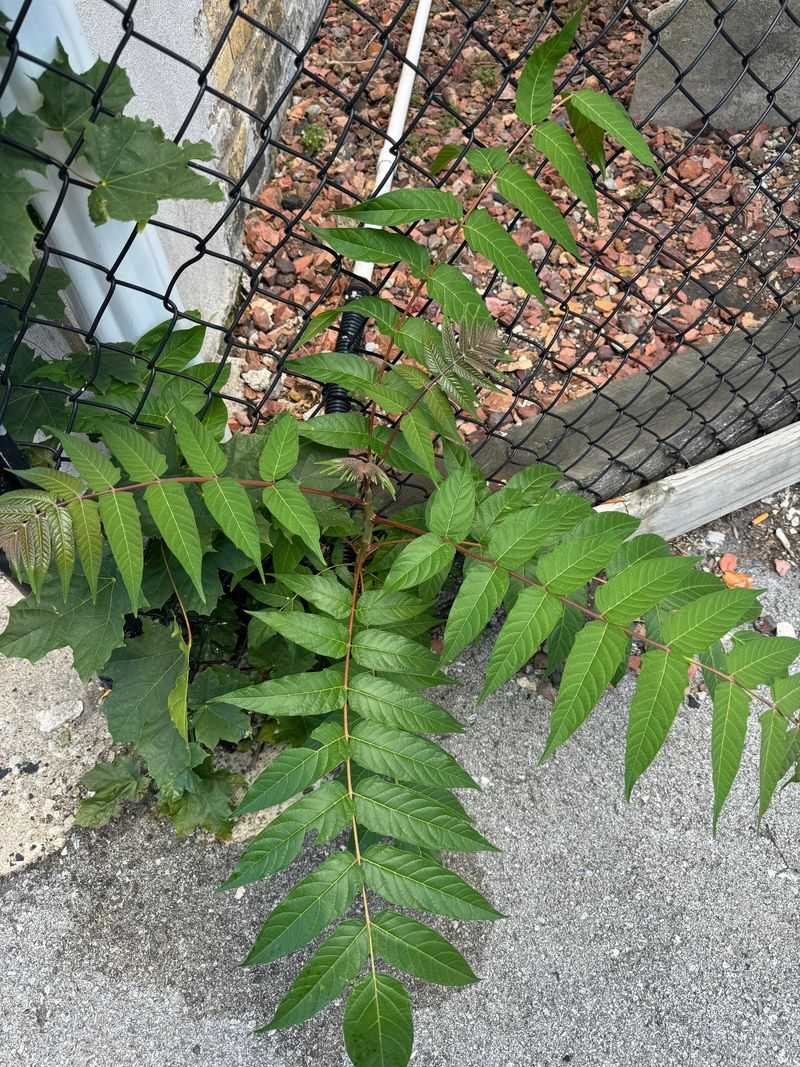
Spotting this tree is easier than you might expect. Tree of Heaven has some very specific features that set it apart from other leafy trees in Illinois yards.
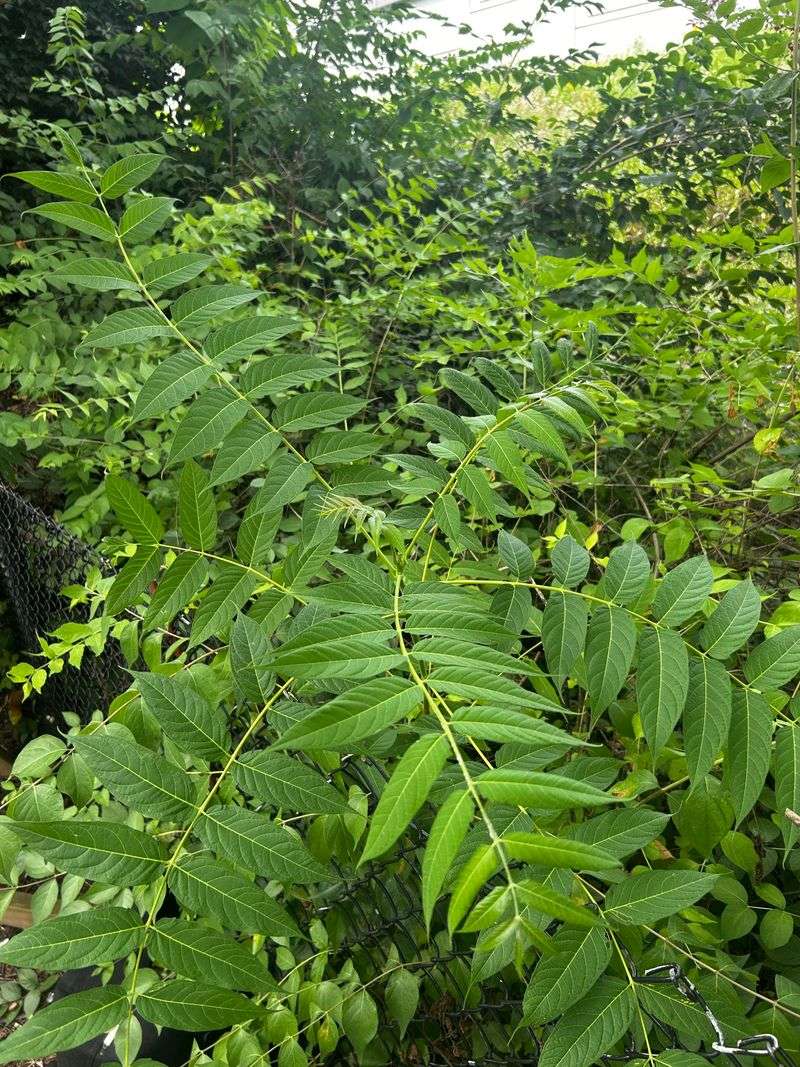
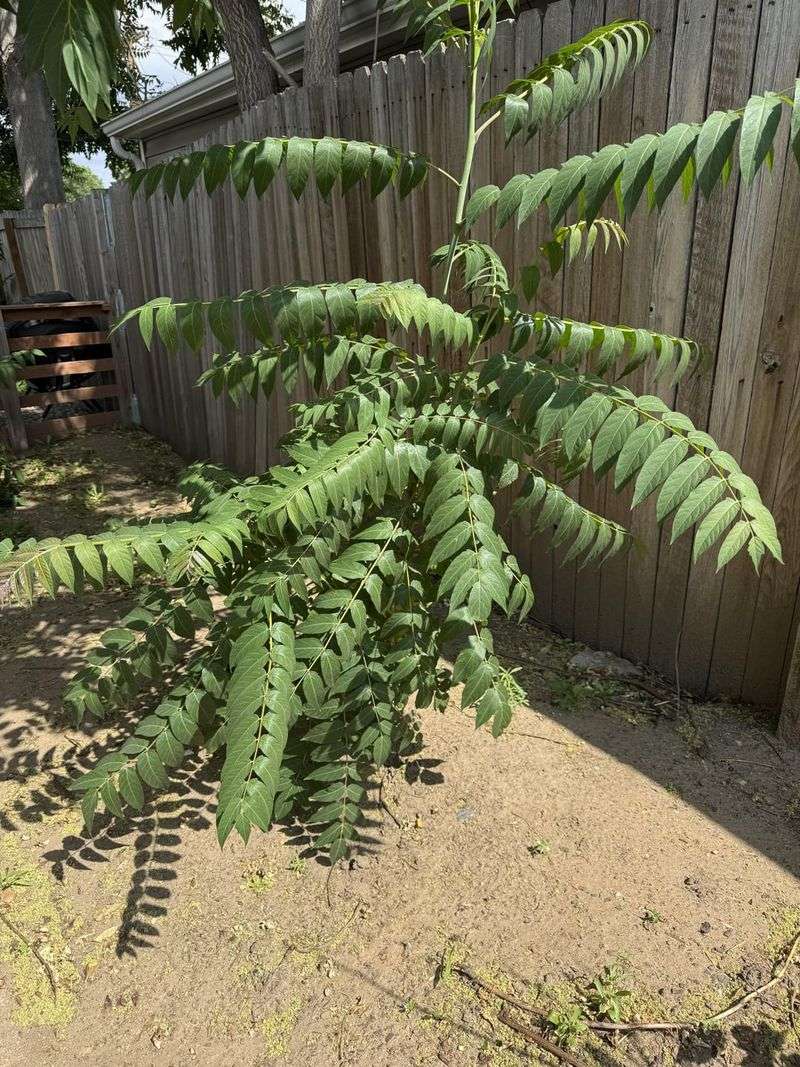
The leaves are long and compound, meaning each stem holds anywhere from 10 to 40 smaller leaflets arranged in pairs. Each leaflet has a small notch near the base that looks almost like a tiny ear.
That little notch is one of the best identification clues you have. Few other trees in Illinois share that exact combination of size, shape, and base notch on each leaflet.
The bark on younger trees is smooth and gray, almost like ash or beech at first glance. As the tree matures, the bark develops shallow ridges but stays relatively smooth compared to oaks or maples.
Tree of Heaven also grows in clusters, sending up multiple shoots from the same root system. You might see what looks like a small grove, but it could all be one connected plant underground.
Check along fence lines, near concrete edges, and at the base of walls. This tree loves disturbed soil and tends to pop up wherever the ground has been dug up or compacted.
Female trees produce clusters of reddish-brown winged seeds in late summer that look almost like spinning helicopter seeds. Those seeds are another reliable way to confirm what you are looking at.
Once you identify one, you will start seeing them all over your neighborhood this summer.
Its Flowers Add To The Smell In Early Summer
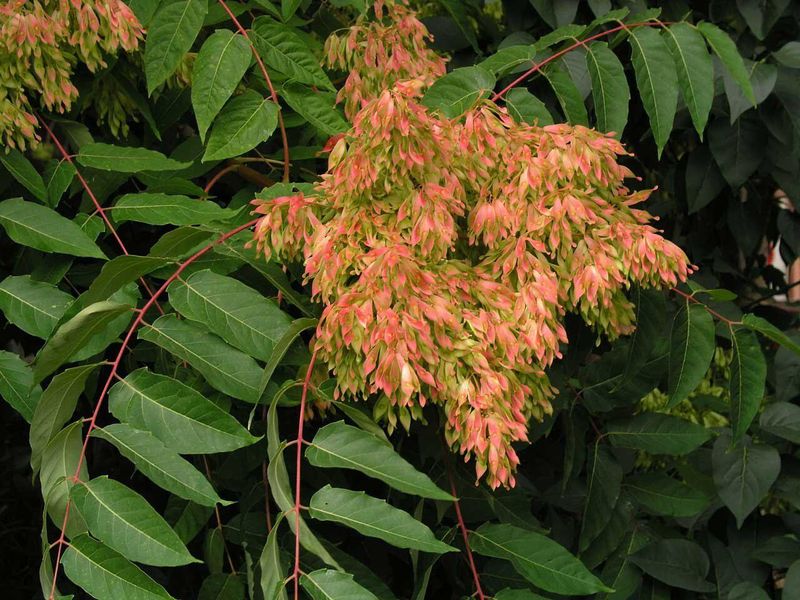
Just when you thought the leaves were bad enough, the flowers show up. In early summer, Tree of Heaven produces large clusters of small yellowish-green flowers that pack their own aromatic punch.
Male trees are the biggest offenders when it comes to floral scent. Their flowers release a smell that many people describe as musty, sour, or even similar to unwashed gym clothes.
The bloom period typically runs from late May through early July in most of Illinois. During that stretch, the smell intensifies significantly, especially on warm, humid afternoons.
Female trees also flower, but their blooms are far less odorous than the males. Still, when both types grow nearby, the combined effect can make outdoor gatherings genuinely uncomfortable.
Pollinators like bees do visit the flowers, which makes the situation a little complicated. Removing the tree means losing that pollinator stop, but the tradeoff is usually worth it for most homeowners.
The flowers themselves are not large or showy, so many people never notice them at first. They blend into the leafy canopy and go undetected until the smell gives them away.
Once you connect that early summer stench to the flower clusters overhead, the mystery of your smelly yard is officially solved. Tree of Heaven is working overtime during bloom season.
Catching the tree before it finishes flowering gives you a better window for management before seeds form and spread.
Tree Of Heaven Spreads Quickly And Crowds Out Other Plants
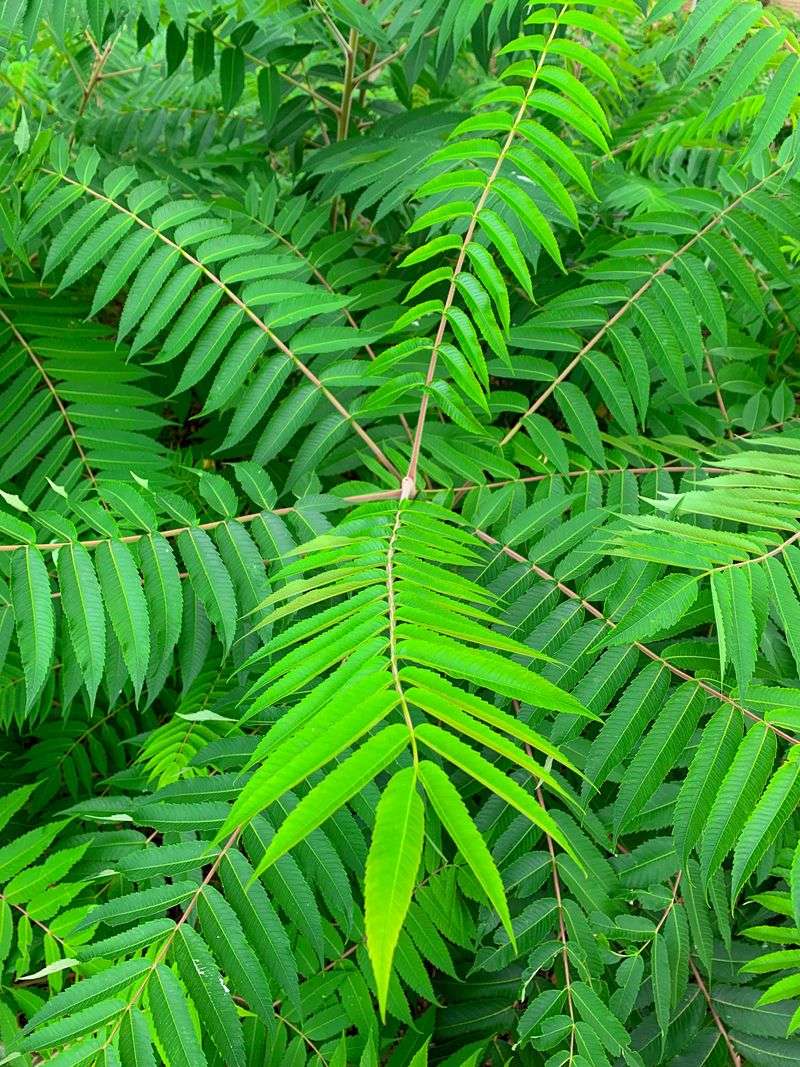
Speed is this tree’s secret weapon. Tree of Heaven can grow up to six feet taller in a single growing season, outpacing almost every native plant around it.
That rapid growth gives it a serious advantage over slower-growing natives like oaks, maples, and native shrubs. By the time you notice it, the Tree of Heaven may already be shading out everything beneath it.
The roots release chemicals into the surrounding soil that actually suppress the growth of nearby plants. Scientists call this process allelopathy, and it is essentially the tree poisoning its own competition.
That means your flower beds, garden borders, and lawn grass can suffer just from having this tree nearby. Plants that seemed healthy may begin to thin out or struggle without any obvious explanation.
A single female tree can produce up to 325,000 seeds per year, each one designed to travel on the wind. Those seeds drift into neighboring yards, empty lots, and natural areas with ease.
The root system also sprouts new shoots aggressively, especially after the main trunk is cut down. One removed tree can produce dozens of new sprouts from the roots within weeks.
Root suckers can also travel surprising distances underground, sometimes emerging 50 feet or more from the original tree. That is part of why you now see this species across most of the eastern United States.
Understanding how fast it spreads helps explain why early action matters so much for keeping your yard balanced and healthy.
Removing It Without Encouraging More Growth
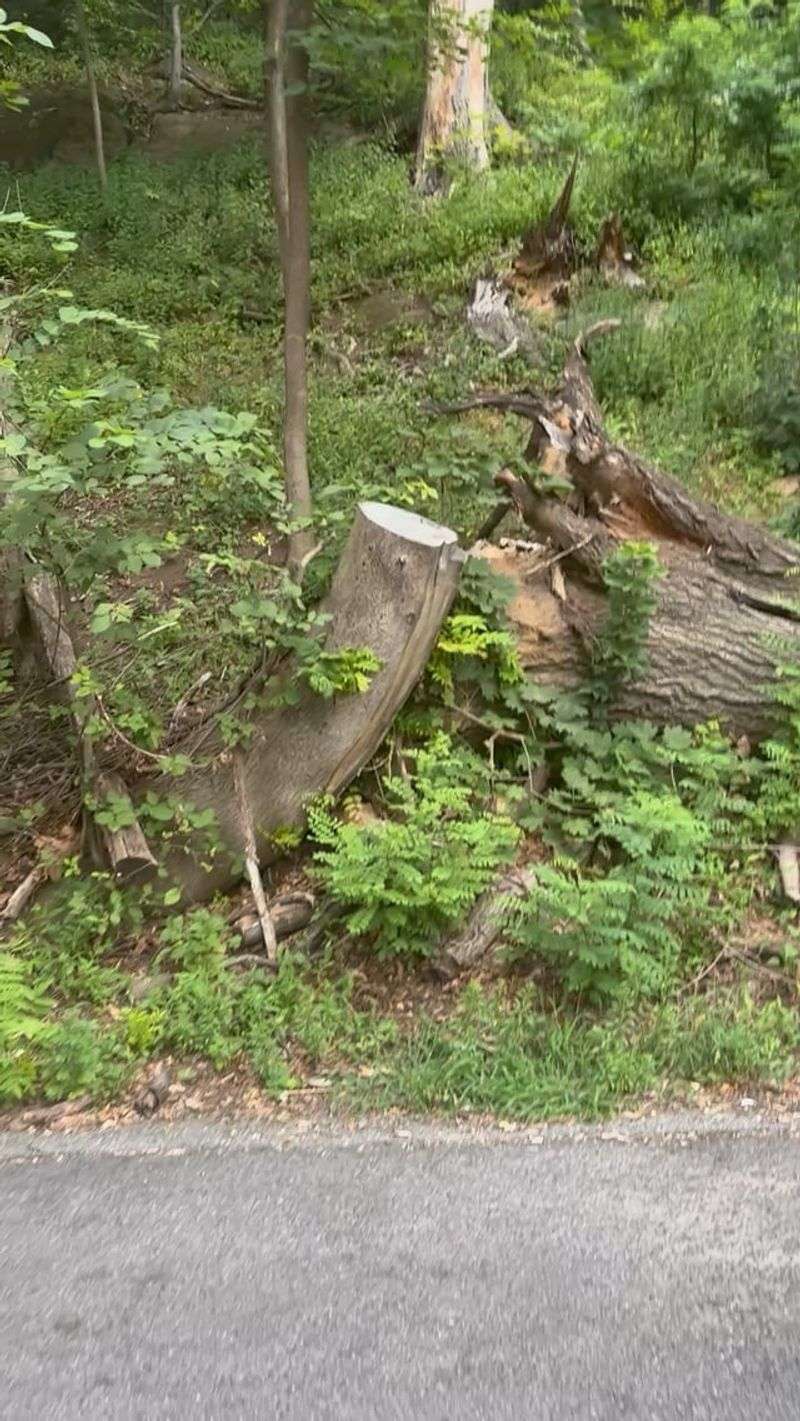
Here is where most people make the big mistake. Simply cutting down a Tree of Heaven without a follow-up plan almost guarantees a stronger, bushier regrowth from the roots.
The roots sense the loss of the main trunk and respond by sending up a surge of new sprouts. Those sprouts can number in the dozens and grow even faster than the original tree did.
For small saplings under two inches in diameter, pulling them out by the root during wet soil conditions works well. Getting the root ball out completely is the key step that most people skip.
Applying an appropriate herbicide to the cut surface soon after cutting is one commonly used approach, though it may need to be paired with treatment for root suckers.
Timing matters a great deal with this method. Late summer and early fall treatments tend to work better because the tree is pulling nutrients down into its roots during that period.
Repeated cutting without treatment will exhaust the root system over several seasons, but it takes patience and consistency. Missing even one round of sprout removal can set your progress back significantly.
Wearing gloves during removal is a smart move, since the sap can irritate sensitive skin. Some people also experience mild reactions from prolonged contact with the leaves or bark.
Staying on top of the backyard plant behind unpleasant odors in Illinois yards takes effort, but a clean, fresh-smelling yard is well worth it.