Privacy Plants Michigan Gardeners Are Using Instead Of Arborvitae That Deer Won’t Touch
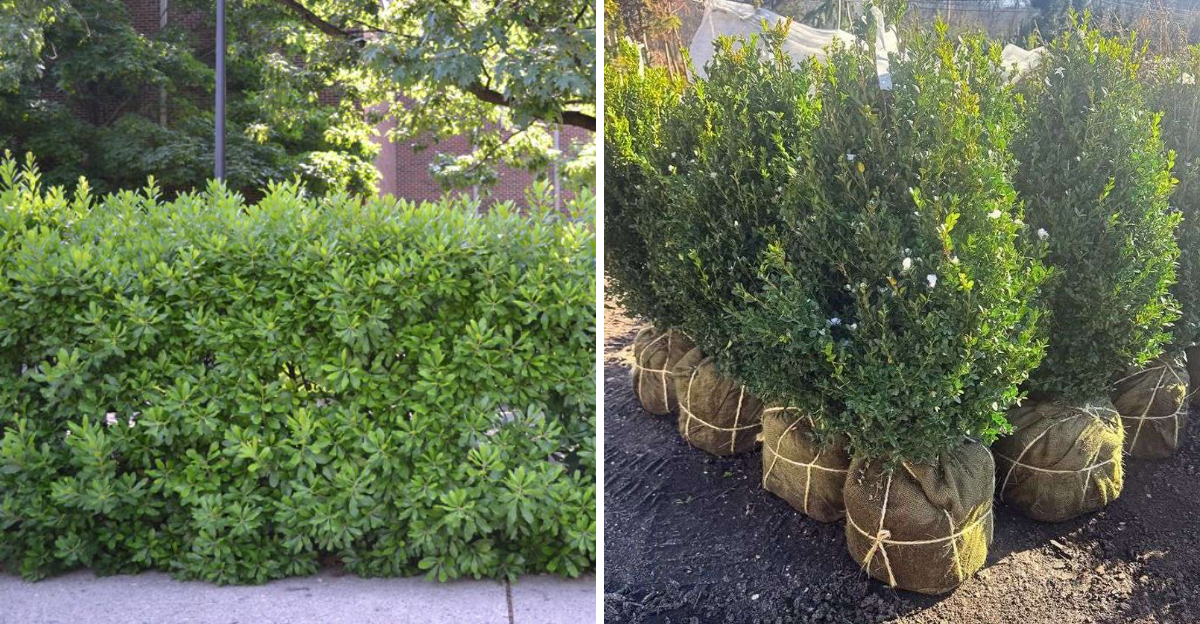
Arborvitae is the default privacy plant in Michigan, and deer treat it like a buffet. Gardeners who have watched a carefully planted hedge get stripped over winter know exactly how frustrating that cycle is.
The good news is that Michigan has plenty of alternatives that grow dense enough to create real privacy, handle the cold without issue, and hold no appeal for deer looking for an easy meal.
Some of these replacements are natives that belong in our landscape and support local wildlife beyond just solving a screening problem.
Others are tough ornamentals that deer consistently avoid and that look better in a residential setting than a wall of arborvitae ever did.
These are the privacy plants local gardeners are switching to, and the results tend to be more interesting, more resilient, and far less likely to end up as a deer’s winter snack.
1. Inkberry Holly
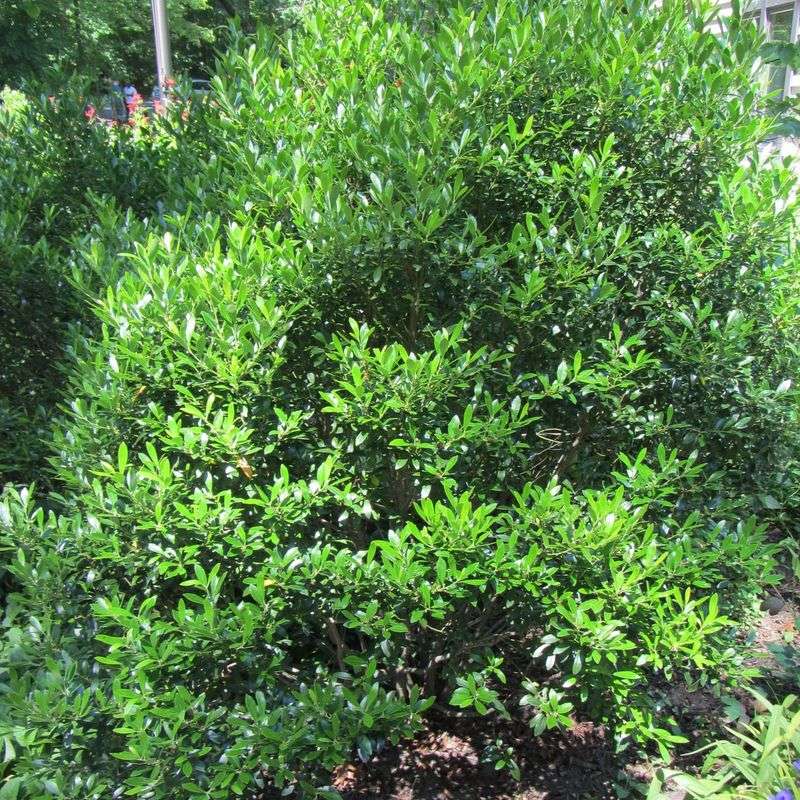
Most gardeners are surprised to learn that a native holly can double as a serious privacy screen. Inkberry Holly is a Michigan-tough evergreen shrub that thrives in conditions arborvitae struggles with, especially wet or poorly drained soils.
Deer tend to leave it alone, which makes it one of the most practical swaps you can make in a Michigan yard.
Inkberry grows best in full sun to partial shade and really shines near rain gardens, pond edges, or low-lying areas of your property. It forms a naturally dense, rounded shape that fills in nicely over time without much fussing.
Birds absolutely love the small black berries it produces in fall and winter, so you get privacy and wildlife value in one plant.
For taller screens, look for cultivars like ‘Shamrock’ or ‘Densa,’ which grow more compactly and stay fuller at the base. Spacing plants about three to four feet apart will give you a solid hedge within a few seasons.
Inkberry is not a lightning-fast grower, so patience pays off here. Once established, it handles our cold beautifully and rarely needs supplemental watering.
Deer resistance is generally strong, though in areas with extremely high deer pressure, some browsing is possible during harsh winters when food is scarce.
2. Eastern Red Cedar
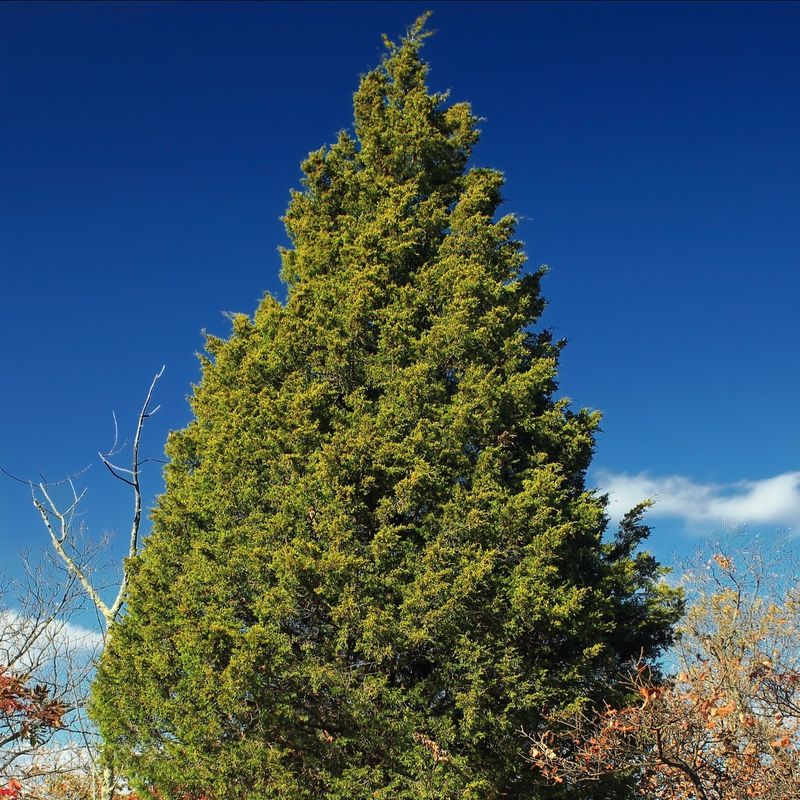
There is something almost legendary about Eastern Red Cedar. This native tree has been lining fence rows and sheltering farmsteads for generations, and it earns that reputation every single year.
Deer typically avoid it because of its prickly, strongly aromatic foliage, which is a huge win compared to arborvitae that deer treat like a salad bar.
Eastern Red Cedar thrives in full sun and handles poor, rocky, or clay-heavy soils that would stress out other evergreens. It is remarkably cold-hardy and wind-tolerant, making it a natural fit for exposed rural Michigan properties or windy suburban lots.
Once established, it needs almost no supplemental watering and keeps growing steadily season after season.
For privacy screening, space trees about six to eight feet apart to allow good airflow and full canopy development. Mature trees can reach 40 to 50 feet tall and 15 feet wide, so give them room to grow into their full potential.
Your Michigan Garden Changes Every Week. Your Plan Should Too.
Gardening in Michigan changes quickly throughout the season. Every Friday you’ll receive a simple weekly plan showing exactly what to plant, prune, fertilize, harvest, and protect so you never miss the right timing.
Younger trees may look a bit sparse at first, but they fill in well after their second or third year in the ground. One helpful tip: plant in well-drained soil because standing water is one of the few things this rugged tree genuinely dislikes.
Eastern Red Cedar is a long-term investment that rewards patient gardeners with decades of reliable, deer-free privacy.
3. Norway Spruce
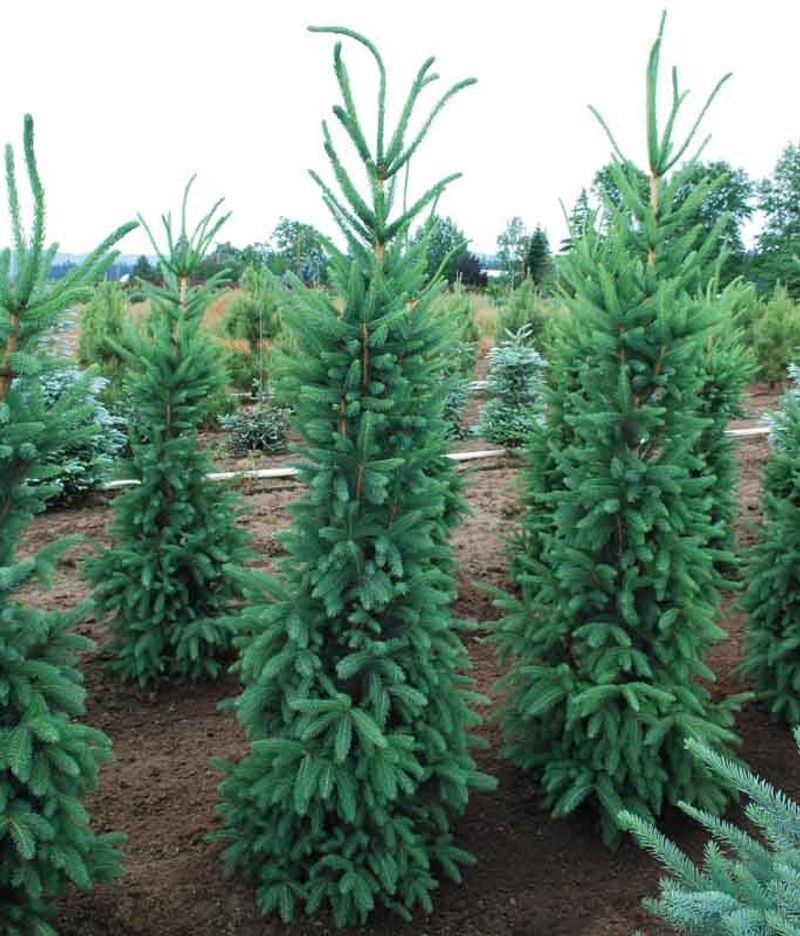
Norway Spruce grows fast, grows big, and grows tough. For gardeners who need a privacy screen in a hurry, this is one of the first trees worth considering.
Its sharp, stiff needles and gracefully drooping branches are far less inviting to deer than the soft, feathery foliage of arborvitae, so browsing damage is rarely a serious problem.
Cold hardiness is one of Norway Spruce’s strongest qualities. It handles Michigan winters without complaint, shrugging off heavy snow loads and bitter wind chills that would stress less resilient trees.
Growth rates of two to three feet per year are common during the establishment phase, which means a noticeable privacy screen can develop within just a few seasons of planting.
Plant Norway Spruce in full sun with well-drained soil for the best results. Space trees ten to fifteen feet apart if you want individual specimens, or tighten spacing to six to eight feet for a denser windbreak effect.
Watering consistently during the first two summers is important for healthy root development. Mature trees can reach 60 to 80 feet tall, making them better suited for larger properties with plenty of open space.
They create exceptional windbreaks along northern exposures and provide year-round screening that only improves with age. The long, pendant cones are a bonus, adding ornamental interest throughout fall and into winter.
4. Black Hills Spruce
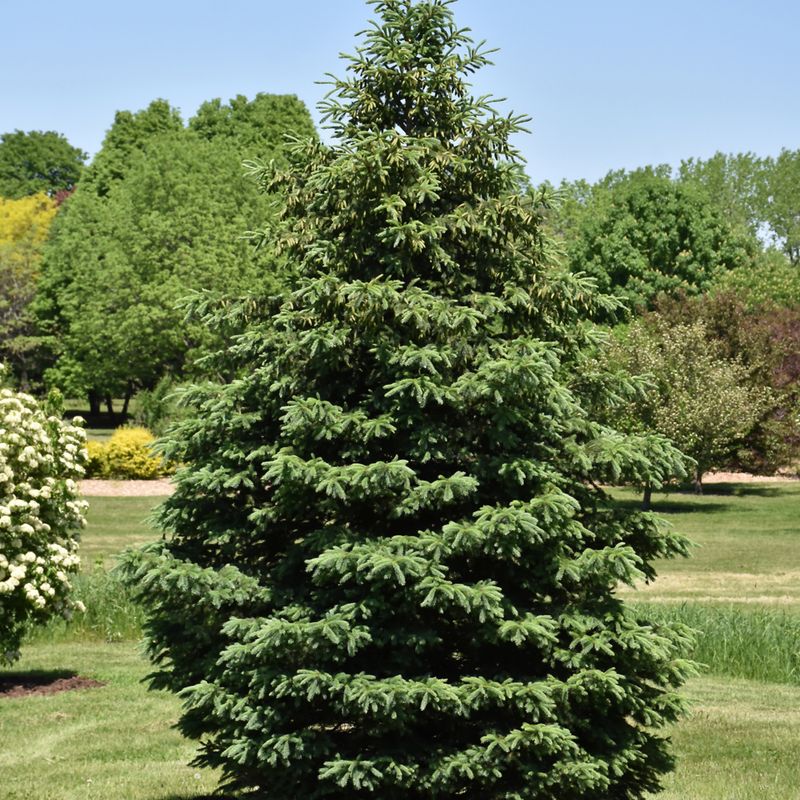
Northern Michigan gardeners have a special appreciation for plants that can handle serious cold without losing their good looks. Black Hills Spruce fits that description perfectly.
A slower-growing cousin of White Spruce, it stays naturally dense and symmetrical even under heavy snow loads, and deer generally avoid its stiff, sharp needles without any encouragement from you.
This tree performs best in full sun and well-drained soil. It is especially well-suited to the Upper Peninsula and northern Lower Michigan, where extreme cold and late spring frosts are a regular reality.
The compact, uniform shape means less pruning and more time enjoying your yard rather than maintaining it.
Space Black Hills Spruce about eight to ten feet apart for a formal privacy screen, or tighten that spacing slightly if you need faster coverage along a property line.
Watering during the first two growing seasons helps establish a strong root system, but once settled in, this tree is remarkably self-sufficient.
Mature height typically ranges from 20 to 40 feet, which is much more manageable than some of the larger spruces on this list. The blue-green foliage holds its color beautifully through winter, giving your property a polished, evergreen look even in January.
For homeowners in the coldest corners of Michigan, Black Hills Spruce is arguably the most reliable privacy tree available right now.
5. Northern Bayberry
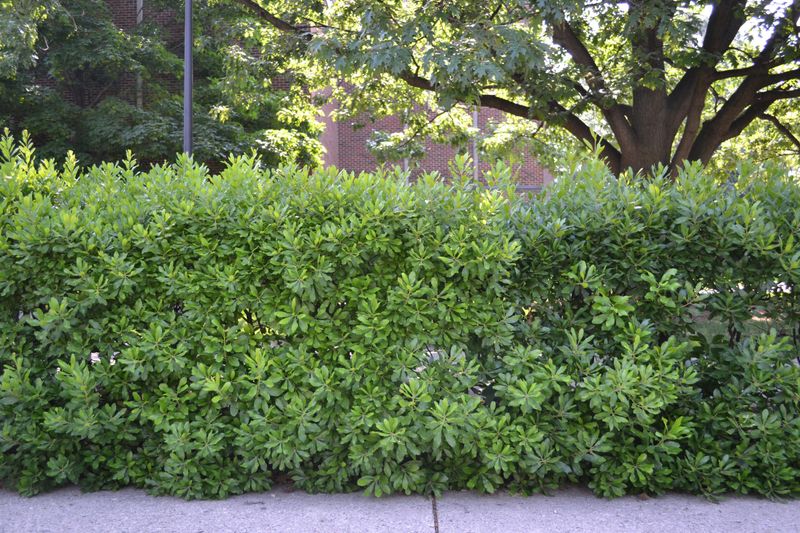
Few native shrubs can match Northern Bayberry when it comes to sheer toughness and versatility. Its waxy, spicy-scented foliage is something deer find genuinely unappealing, which is exactly what gardeners near heavily wooded areas need.
Beyond deer resistance, this plant handles sandy soils, road salt spray, and brutal cold with an ease that most ornamental shrubs simply cannot match.
Northern Bayberry is semi-evergreen, meaning it holds most of its leaves well into winter before dropping them in the coldest months. In milder winters, it stays nearly fully leafed out, providing good year-round screening.
Coastal gardeners along Lake Michigan or Huron will find it especially valuable since it tolerates salt air and shifting sandy soils without missing a beat.
Birds are big fans of the small, waxy gray berries that clusters of female plants produce in fall. To get berries, you need at least one male plant nearby, so plan your planting accordingly.
Northern Bayberry grows six to ten feet tall and spreads into a natural, informal shape that suits relaxed landscape styles beautifully. Full sun to partial shade works well, and it actually thrives in lean, nutrient-poor soils where other shrubs struggle.
For a low-maintenance, wildlife-friendly privacy planting that deer walk right past, Northern Bayberry belongs near the top of your list.
6. Colorado Blue Spruce
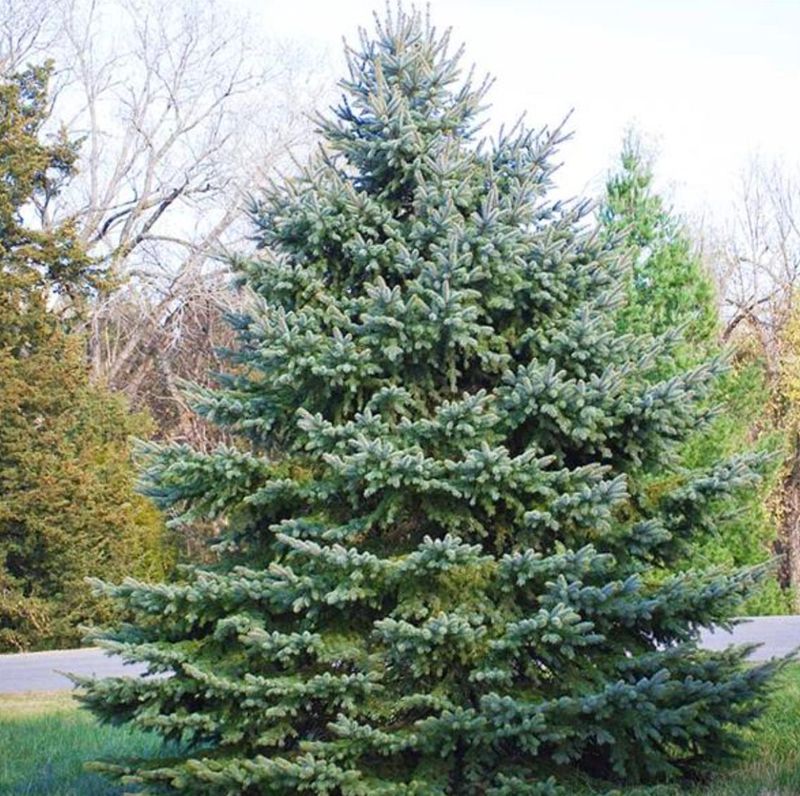
That stunning silver-blue color is what catches your eye first, but Colorado Blue Spruce earns its place in Michigan gardens for reasons that go well beyond good looks.
The needles are stiff, sharp, and genuinely uncomfortable for deer to browse, making this tree one of the most physically uninviting options on the entire list.
Deer pressure that would devastate arborvitae barely slows a Blue Spruce down.
Cold tolerance is excellent across all of Michigan, and the bold foliage color adds a visual punch to privacy screens that most evergreens simply cannot offer. Full sun is non-negotiable for Colorado Blue Spruce.
Without it, the tree opens up, loses density, and becomes far less effective as a screen. Good airflow around the branches also matters because humid summers can encourage needle cast diseases in trees planted too closely together or in low-lying areas.
Space trees ten to fifteen feet apart to promote healthy airflow and long-term density. Watering during the first two summers after planting sets the tree up for strong, independent growth going forward.
Mature trees reach 50 to 75 feet tall and 15 to 20 feet wide, so they are best suited to medium or large properties. Compact cultivars like ‘Fat Albert’ stay smaller and work well in tighter suburban spaces.
The year-round color and reliable deer resistance make Colorado Blue Spruce a perennial favorite worth planting.
7. Upright Juniper
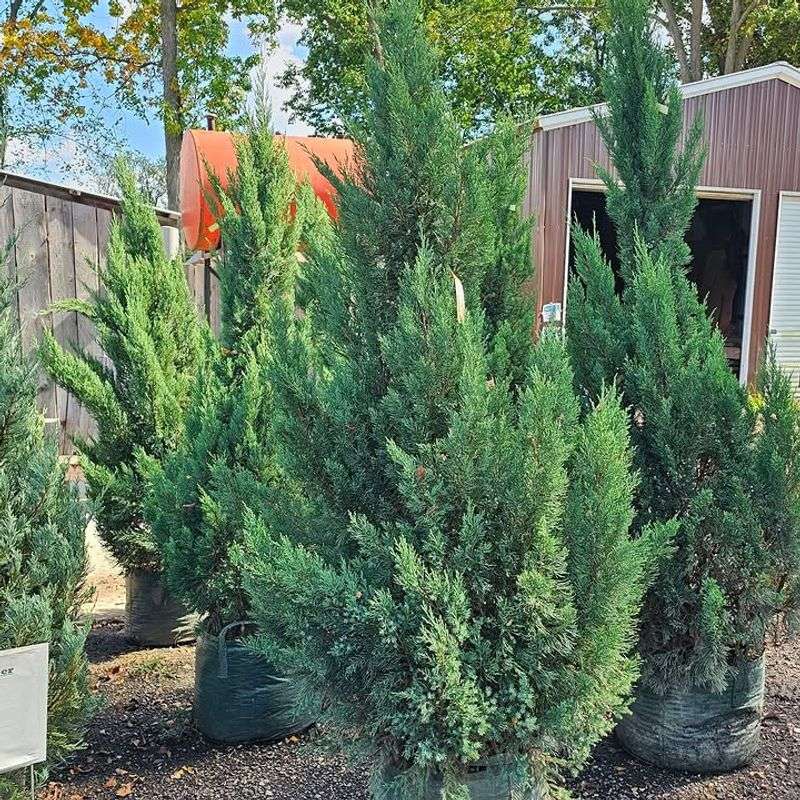
When your property line is tight and you need height without width, upright junipers are practically purpose-built for the job.
Cultivars like ‘Skyrocket’ and ‘Taylor’ grow in slim, pencil-shaped columns that reach impressive heights while barely taking up any horizontal space at all.
Deer find the prickly, aromatic foliage off-putting, which is a major advantage over arborvitae in areas with consistent deer pressure.
Upright junipers are incredibly adaptable. They tolerate poor, rocky, or sandy soils and handle drought conditions once they are fully established, making them a smart pick for properties with challenging growing conditions.
Full sun is where they look and perform their absolute best, so avoid planting in shaded or partially shaded spots if you want maximum density and upright form.
Space ‘Skyrocket’ junipers about three to four feet apart for a tight privacy column effect along a fence line or property edge.
‘Taylor’ juniper is even more cold-hardy and narrow, making it a top choice for northern Michigan where extreme winters are the norm. Minimal pruning is needed since these cultivars naturally maintain their columnar shape without much intervention.
One thing to watch for is bagworm infestations, which can affect junipers around here. Check plants in late spring and remove any egg cases you find before they hatch.
Overall, upright junipers deliver reliable, low-fuss privacy that earns its keep every season.
8. Meyer Spruce
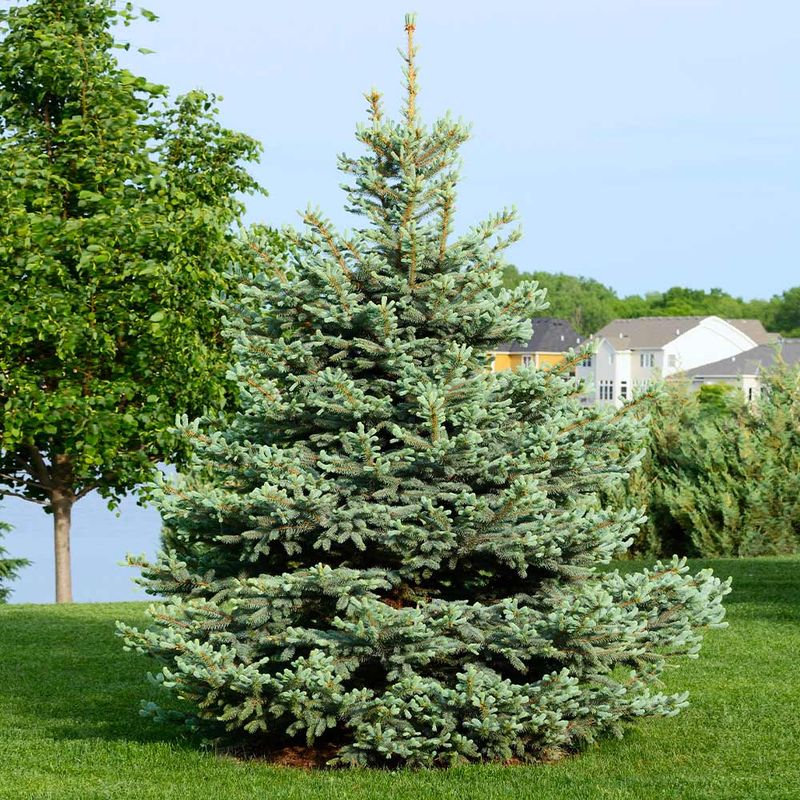
Not many gardeners have heard of Meyer Spruce yet, but that is starting to change fast.
Originally from northern China, this spruce offers a look that closely resembles Colorado Blue Spruce but comes with notably better resistance to the needle cast diseases that can plague Blue Spruce in Michigan’s humid summers.
Deer find the stiff, sharp needles just as unappealing, so deer resistance remains equally strong.
The blue-green foliage is dense and attractive year-round, and the tree maintains a naturally symmetrical, pyramidal shape that requires little to no corrective pruning.
Meyer Spruce is fully cold-hardy throughout Michigan and handles the state’s freeze-thaw cycles without significant stress.
It is emerging as a go-to choice for homeowners who love the look of Blue Spruce but have struggled with disease issues in the past.
Plant Meyer Spruce in full sun with well-drained soil. Space trees ten to fifteen feet apart for windbreaks and privacy screens on larger properties.
Watering during the first two growing seasons is important, after which the tree becomes largely self-sufficient. Mature height typically reaches 30 to 50 feet, which is slightly more compact than Norway or Blue Spruce, making it a better fit for mid-sized lots.
For gardeners who want a striking, disease-resistant, deer-proof privacy tree that stands out from the usual options, Meyer Spruce is genuinely worth tracking down at your local nursery.
9. White Spruce
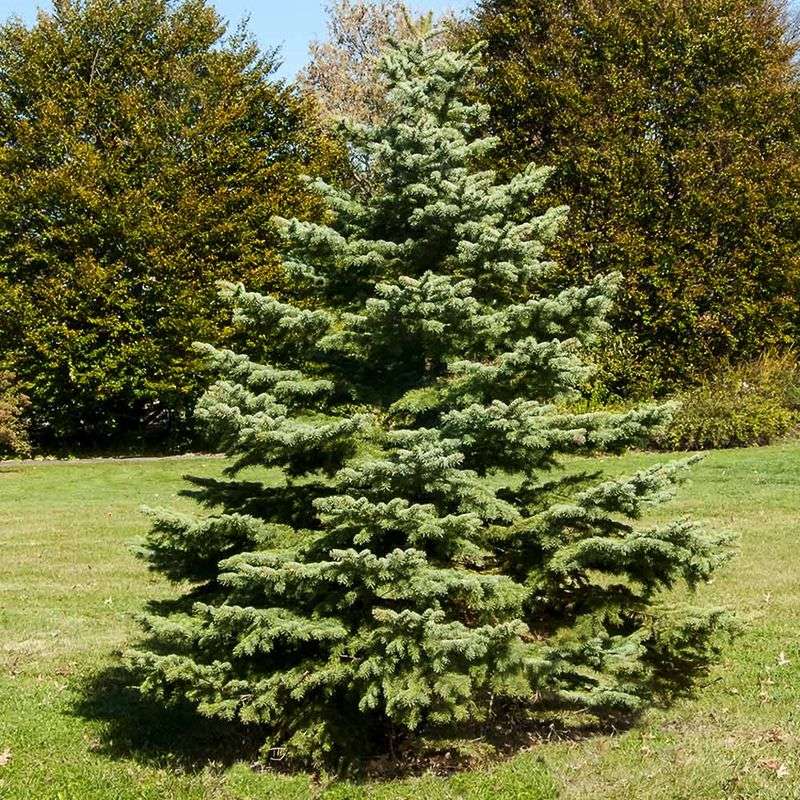
White Spruce is the kind of tree that just handles everything Michigan throws at it. Heavy snow loads, brutal wind chills, ice storms, and dry summer spells barely register as problems for this cold-hardy native.
Compared to arborvitae, deer pressure is significantly lower since the stiff needles and resinous scent are far less appetizing to browsing animals looking for an easy meal.
Native to Michigan and much of the upper Midwest, White Spruce grows naturally in conditions that match the state’s climate perfectly. It thrives in full sun and tolerates a wide range of soil types, from sandy to clay-heavy, as long as drainage is reasonably good.
Growth is steady rather than explosive, averaging one to two feet per year under normal conditions.
Space trees ten to fifteen feet apart for a classic windbreak or privacy screen. Consistent watering during the first two growing seasons helps establish deep roots that carry the tree through future dry spells independently.
Mature trees reach 40 to 60 feet tall and 15 to 20 feet wide, making them well-suited to larger rural or suburban lots where scale is not a concern. The dense branching from ground level up creates full coverage that genuinely blocks sightlines and wind year-round.
For a low-maintenance, set-it-and-forget-it privacy screen that holds up season after season, White Spruce is one of the most dependable choices available to gardeners today.
10. Boxwood
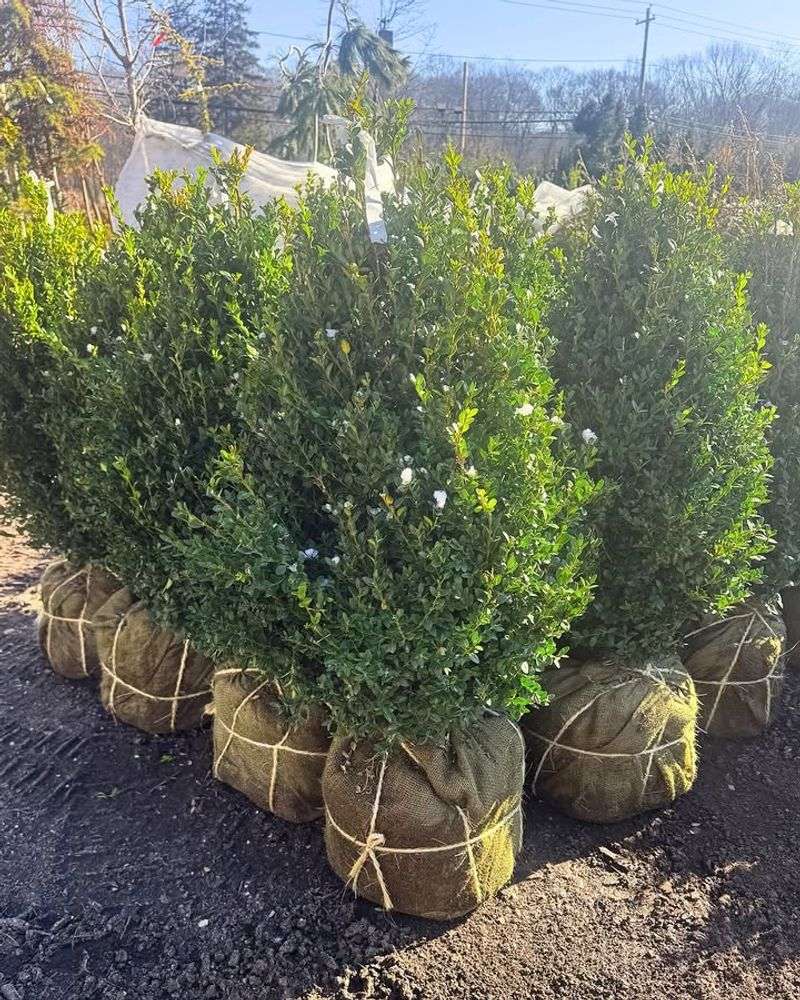
Boxwood might surprise you on a deer-resistant list, but the science backs it up completely. The alkaloids naturally present in boxwood foliage make it genuinely toxic to deer, which means they avoid it with a consistency that almost no other shrub can claim.
For gardeners who have tried everything and still lost hedges to deer, boxwood offers a level of confidence that is hard to argue with.
Cold-hardy hybrids like ‘Green Mountain’ and ‘Fastigiata’ are the standouts for Michigan conditions.
‘Green Mountain’ grows in a naturally upright, pyramidal form that reaches four to five feet tall without heavy pruning, making it an excellent choice for formal privacy hedges along walkways, driveways, or property boundaries.
‘Fastigiata’ grows even more narrowly upright, which suits tight spaces well. Good drainage is absolutely essential for boxwood health.
Soggy or poorly drained soil causes root problems that no amount of care can fully fix, so raised beds or amended planting sites are worth considering in heavier clay soils.
Winter bronzing, the yellowish discoloration that can appear on foliage during cold months, is a cosmetic issue rather than a health problem and fades as spring arrives. Wrapping plants in burlap through the harshest winters helps prevent it.
Prune in late spring after new growth emerges for the cleanest, densest hedge shape. Boxwood rewards careful planting and minimal maintenance with decades of polished, deer-proof evergreen structure.