The Best California Patio Plants For Homes That Get Blazing Afternoon Sun
California patios with strong afternoon sun can feel almost hostile by midsummer. The heat often lingers long after the day starts to cool.
Many container plants simply cannot cope with that level of exposure.
The space does not have to stay bare, though. Some plants can face intense sunlight without looking exhausted by dinner.
They also bring life to areas that might otherwise feel harsh and empty.
The real challenge comes down to choosing varieties that suit container life. Reflected heat near concrete or stucco can make conditions even tougher.
The weather forecast rarely tells the whole story. Sneaky, right?
A smart plant choice can transform that difficult corner. It can stay attractive through the hottest hours and make the patio feel far more inviting.
Suddenly, the sunniest spot at home may become the one you enjoy most.
1. Aloe Striata Handles Hot Patio Containers
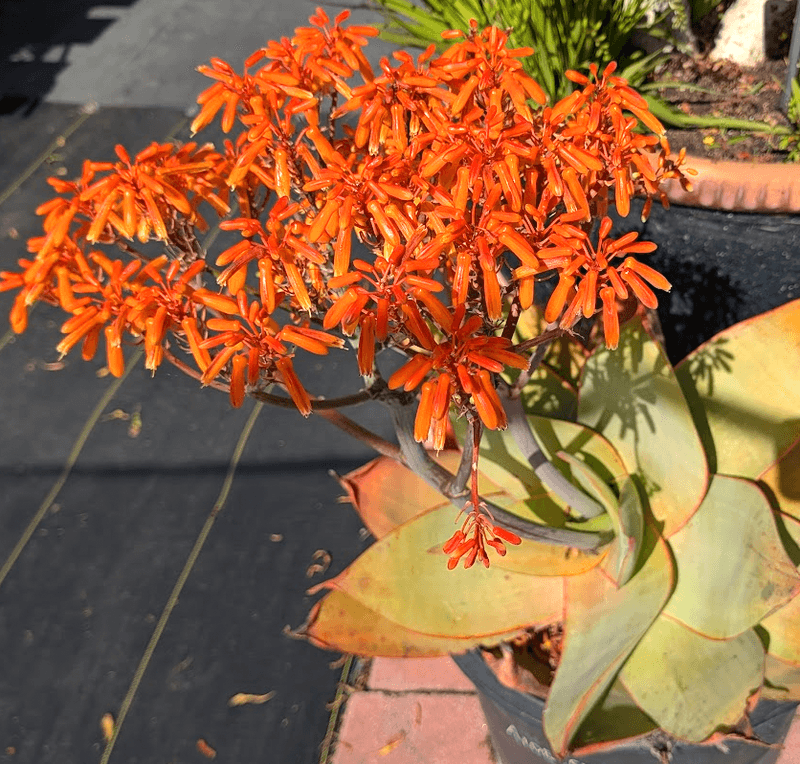
Most succulents are tough, but Aloe striata takes hot container life to a whole new level. Unlike spiky aloes that scratch your ankles, this one has smooth, flat leaves with soft pink edges that glow in bright sunlight.
It looks almost sculptural sitting in a pot, and it earns every bit of that dramatic look without asking for much in return.
The leaves are a pale blue-green that shifts toward peachy pink when the plant gets plenty of sun. That color change is totally natural and actually shows the plant is thriving.
In late winter or early spring, tall coral-orange flower stalks shoot up and attract hummingbirds like crazy.
For patios in California that face west or south, this aloe is basically a dream plant. It handles reflected heat from walls and pavers without complaint.
Plant it in a well-draining cactus mix and use a pot with drainage holes. Water it deeply once every two to three weeks in summer and even less in winter.
It does not want to sit in wet soil ever. One plant can anchor a whole container arrangement, especially when paired with trailing sedums or low-growing echeverias.
It grows slowly, so it stays tidy in containers for years without needing repotting every season. This is a plant that rewards neglect more than fussing.
2. Grevillea Adds Color Without Looking Thirsty
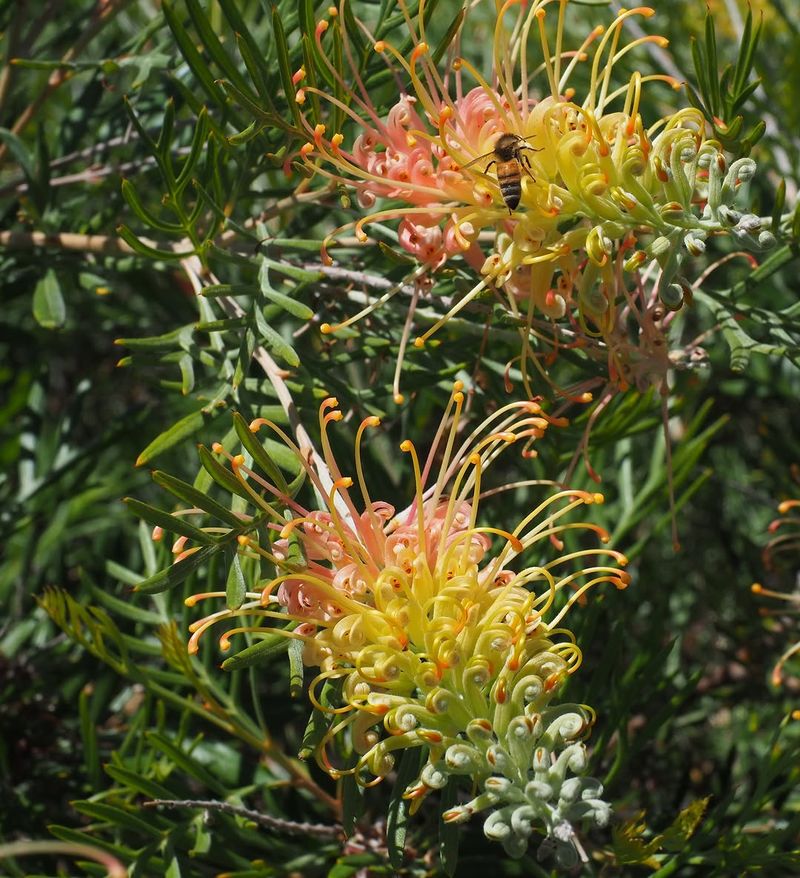
Few plants pull off the combination of delicate looks and serious drought toughness quite like Grevillea.
Originally from Australia, this shrub produces wild, spider-like flowers in shades of red, orange, and pink that look almost tropical.
But do not let the exotic appearance fool you. It is built for dry, hot conditions and barely blinks at a scorching afternoon.
Grevilleas come in many sizes, which makes them flexible for patio use. Compact varieties like Grevillea lanigera or Grevillea ‘Peaches and Cream’ work beautifully in large containers.
They stay tidy, bloom for months, and bring in hummingbirds and native bees without any extra effort on your part.
Grevillea grows especially well in Southern regions and the Central Coast, where summers are long and dry. It prefers slightly acidic, well-draining soil and does not like heavy clay or overwatering.
Your California Garden Changes Every Week. Your Plan Should Too.
Gardening in California changes quickly throughout the season. Every Friday you’ll receive a simple weekly plan showing exactly what to plant, prune, fertilize, harvest, and protect so you never miss the right timing.
Once established, water it deeply but infrequently, roughly every ten to fourteen days in summer. Avoid fertilizers high in phosphorus, as that can actually hurt the plant.
Prune lightly after blooming to keep the shape neat and encourage fresh growth. The fine, needle-like foliage stays green and attractive year-round, giving your patio structure even when the flowers are between cycles.
It is a standout plant that looks expensive but asks for very little maintenance.
3. Feijoa Gives Patios Evergreen Structure
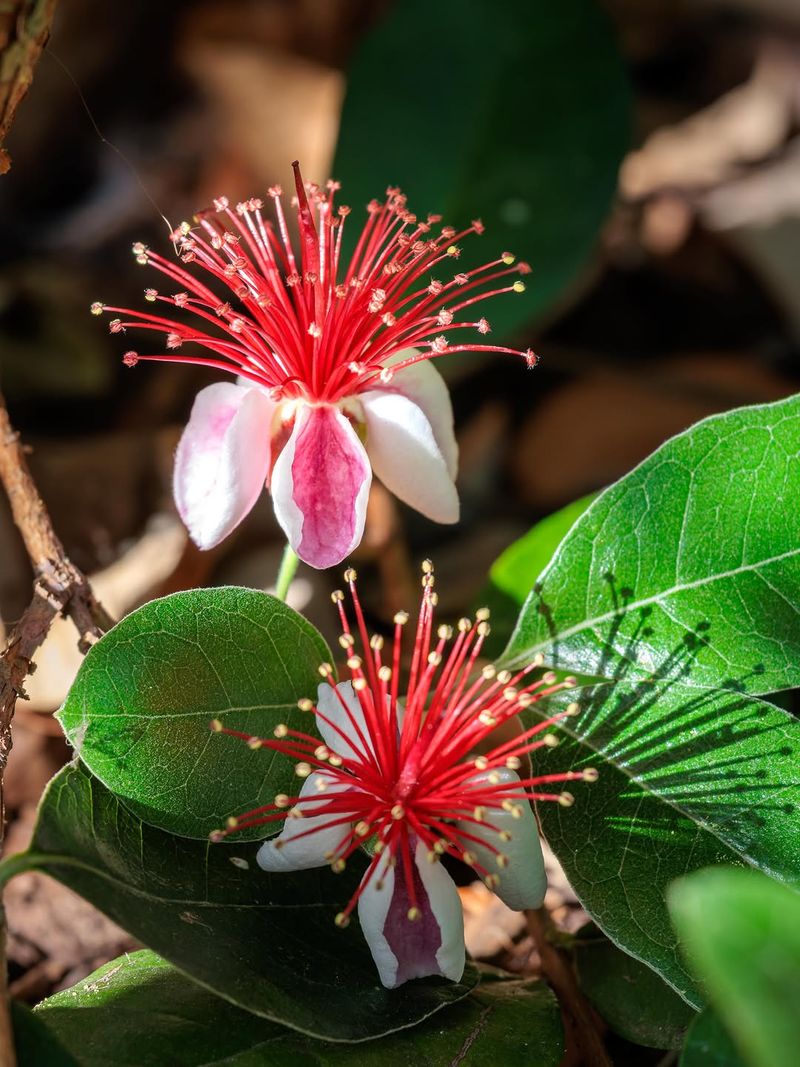
Not every patio plant needs to be a showstopper in bloom. Sometimes what a space really needs is a solid, good-looking anchor that stays green, stays tidy, and holds everything else together visually.
Feijoa, also called pineapple guava, does exactly that while quietly being one of the most underrated patio plants in California.
The leaves are thick, glossy green on top and silvery underneath, which creates a beautiful two-tone shimmer when the breeze moves through them.
In late spring, the plant produces stunning flowers with bright red stamens and fleshy white petals that are actually edible and taste mildly sweet.
If you have a large enough container and the right conditions, you may even get small, fragrant fruit in fall.
Feijoa handles heat and drought better than most broadleaf evergreens. It tolerates reflected heat from walls and pavers, making it ideal for west-facing patios that get intense late-day sun.
Use a large container, at least fifteen to twenty gallons, with rich but well-draining soil. Water deeply once a week during the hottest months, then back off in cooler seasons.
Trim it into a rounded shrub shape or even a small tree form to suit your patio layout. In Northern regions of our state, it may need a slightly warmer spot near a south-facing wall.
Overall, Feijoa is reliable, beautiful, and genuinely low-maintenance once it settles in.
4. Pink Muhly Grass Glows In Afternoon Sun
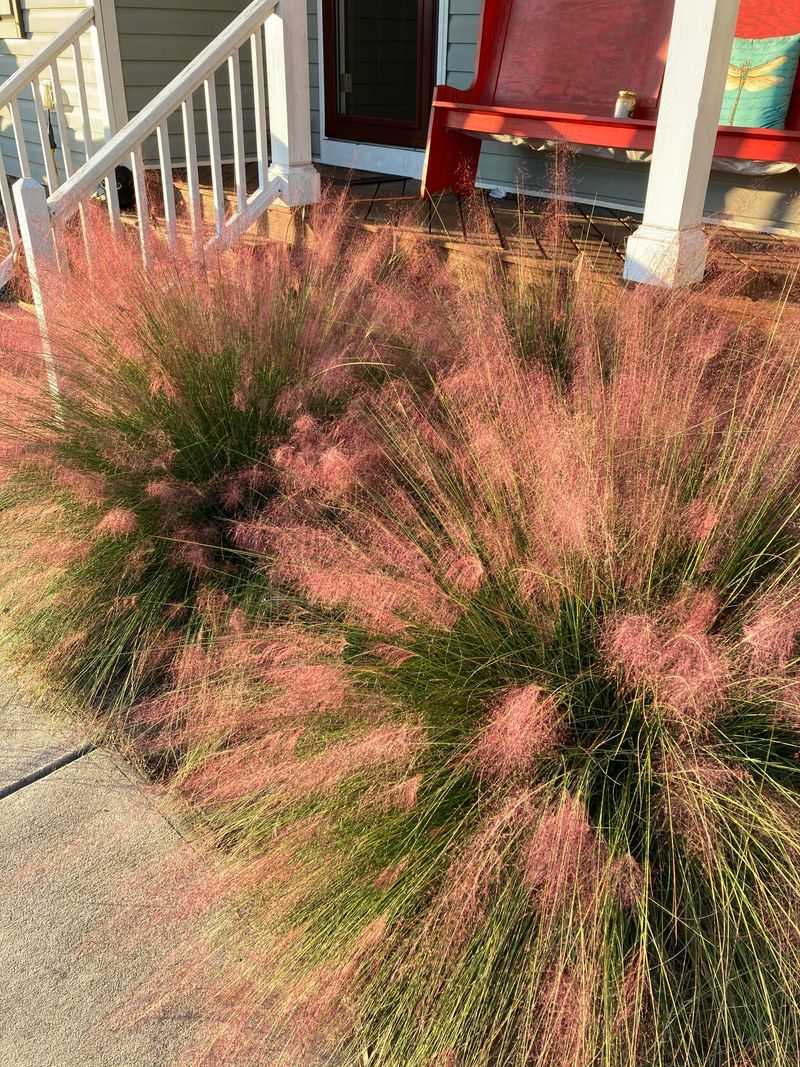
There is a moment every fall when Pink Muhly grass turns a patio into something that looks straight out of a dream. The airy, cotton-candy pink plumes catch the afternoon light and seem to glow from within.
It is the kind of plant that makes neighbors stop and ask what it is, and the answer is always simpler than they expect.
Muhlenbergia capillaris, its botanical name, is a warm-season grass native to the southeastern United States. It loves heat, full sun, and well-draining soil.
Our long, warm summers are basically perfect for it. The grassy base stays green and tidy from spring through summer, then erupts into that spectacular pink cloud from late September through November.
For patio use, plant it in a large container with sandy or loamy, well-draining soil. Water it weekly during the first growing season, then cut back once it is established.
It is surprisingly drought-tolerant once its roots settle in. Cut the whole plant back to a few inches in late winter or early spring to make room for fresh new growth.
It pairs beautifully with bold plants like agaves or dark-leaved sedums that contrast with the soft, feathery texture. Pink Muhly grass also works well lining the edge of a patio to soften hard concrete edges.
It adds movement, color, and a sense of lightness that few other plants can match in late-season heat.
5. Bush Germander Keeps Hot Pots Tidy
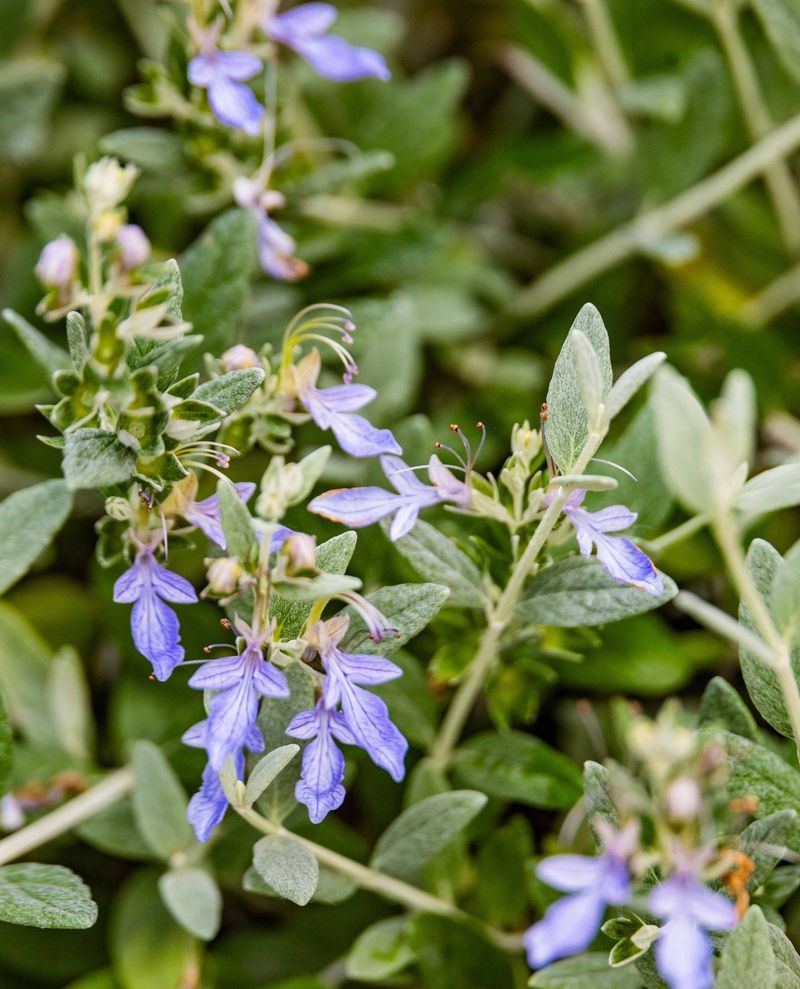
Some plants were practically invented for the kind of hot, dry patio situation that stumps most gardeners. Bush Germander, known botanically as Teucrium fruticans, is one of those plants.
It is compact, evergreen, silvery-leafed, and covered in soft lavender-blue flowers for months at a time. It looks refined without being fussy, which is a rare combination.
The leaves have a slightly woolly texture that reflects sunlight and helps the plant stay cool. That silver-green color pairs well with almost any patio furniture color, from warm terracotta tones to cool gray concrete.
The flowers bloom from late winter through spring and often continue into summer, attracting bees and butterflies regularly.
Bush Germander thrives in fast-draining soil and full sun. It handles reflected heat from walls and pavers without any visible stress.
In containers, use a Mediterranean-style planting mix with added perlite or coarse sand for drainage. Water it every seven to ten days in summer and much less in the cooler months.
It actually prefers lean soil, so skip the heavy fertilizing. Prune it lightly after each bloom cycle to keep the rounded shape looking crisp and intentional.
In California, it performs well across most climate zones, from coastal areas to hot inland valleys.
It stays at a manageable size, usually three to four feet wide, making it ideal for large pots near entryways or patio corners that need a polished, put-together look.
6. Rock Purslane Blooms Through Reflected Heat
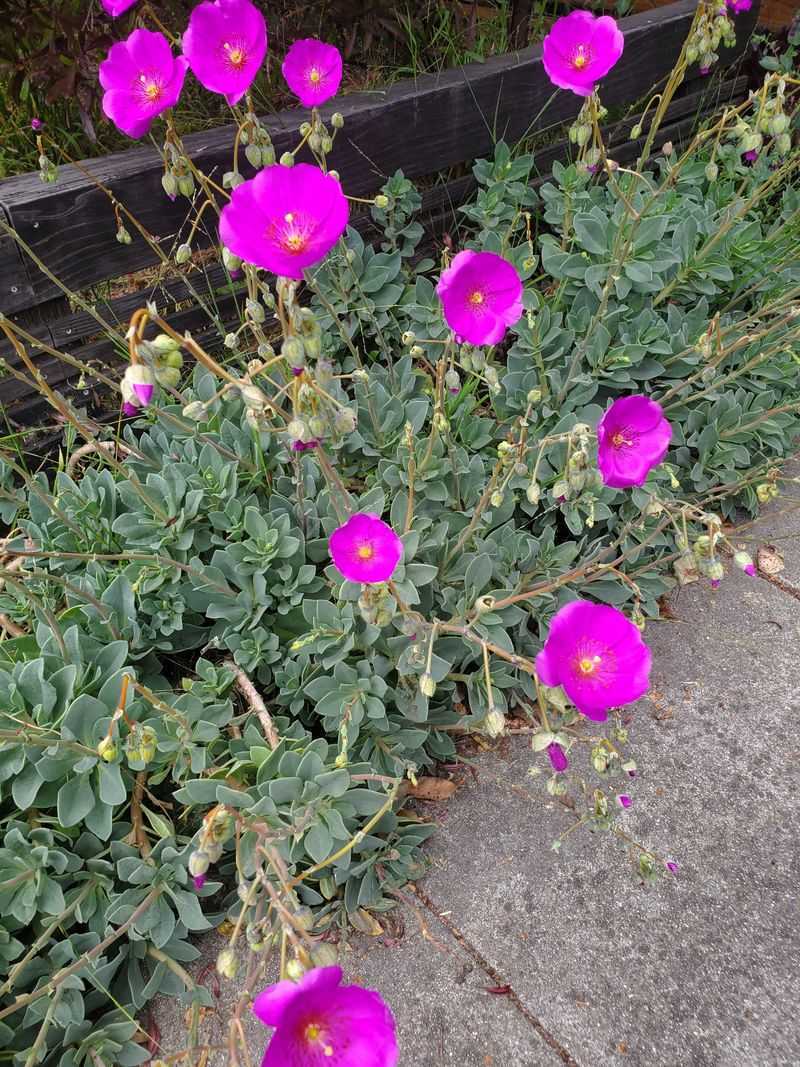
Walk past a blooming Rock Purslane on a hot afternoon and you will do a double-take.
Those bright magenta-pink flowers look almost unreal against the fleshy, blue-gray foliage, especially when everything else around them is wilting in the heat.
Calandrinia spectabilis earns its keep on the hottest patios California can throw at it.
Native to Chile, this plant is perfectly adapted to dry, sunny conditions with poor soil. It blooms from late winter all the way through fall, which is an incredibly long season for any flowering plant.
The flowers open in the morning and close at night, giving the patio a cheerful rhythm throughout the day. Bees absolutely love them.
Rock Purslane grows as a low, spreading mound, usually about eighteen inches tall and two to three feet wide. That makes it a great choice for wide, shallow containers or for spilling over the edge of a raised planter.
Use very well-draining soil and water it sparingly, roughly every ten to fourteen days once established.
It handles reflected heat from stucco walls and concrete surfaces better than almost any other flowering plant.
Too much water is its only real weakness, so err on the dry side always. In our state’s hottest inland zones, it performs especially well and rarely needs any attention beyond occasional deadheading.
It is a bold, cheerful, and practically indestructible addition to any sun-baked patio setup.
7. Santolina Adds Silver Texture To Hot Corners
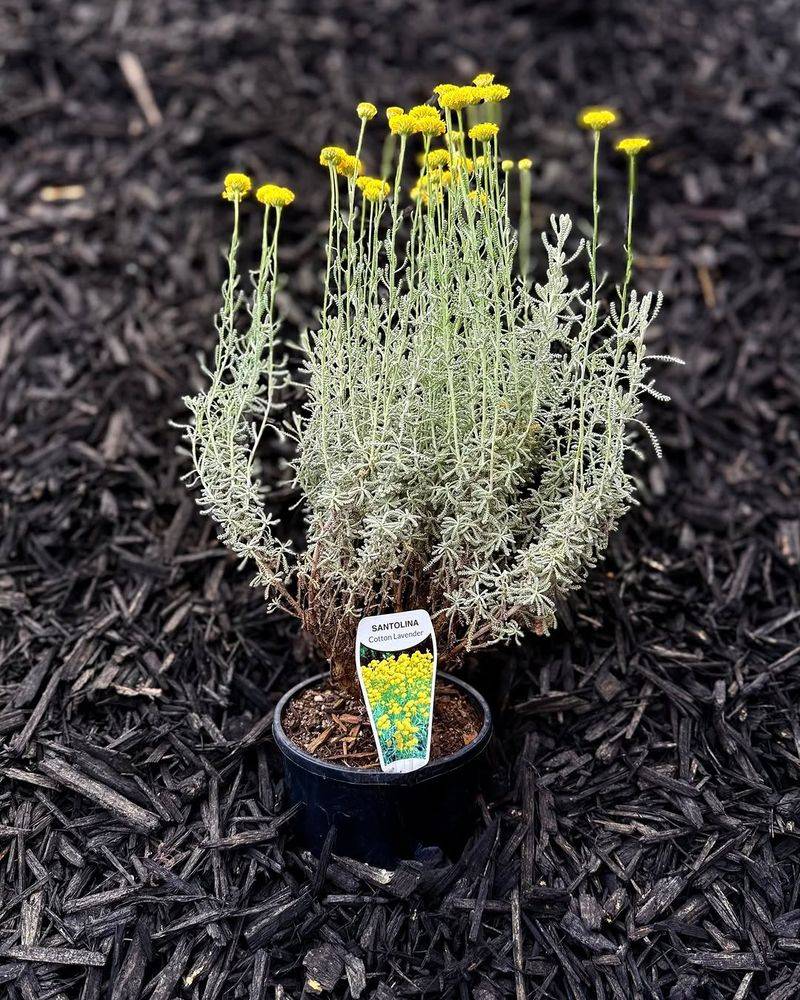
Hot patio corners can be brutal. They trap heat, dry out containers fast, and tend to be the spots where plants struggle most.
Santolina, or cotton lavender, was practically built for exactly this situation. The silvery-white, feathery foliage reflects heat and sunlight, and the plant barely notices when temperatures soar past 95 degrees.
Santolina chamaecyparissus is a compact Mediterranean shrub that stays tidy and aromatic year-round. The foliage has a distinctive herby scent when brushed, similar to chamomile or sage.
In summer, it sends up small, bright yellow button flowers on tall stems that add a cheerful pop of color above the silver mounds below.
For hot corner containers, Santolina is practically unbeatable. It thrives in lean, fast-draining soil and needs very little water once established.
Water deeply every ten to fourteen days in summer and even less in winter. It actually performs better in poor soil than in rich, amended soil, so resist the urge to fertilize heavily.
Trim it back by about one-third after flowering to keep the mound shape compact and prevent it from getting woody in the center.
It pairs beautifully with purple-flowering plants like lavender or salvia, creating a striking silver-and-purple contrast.
California’s inland valleys and Southern regions, where afternoon heat can be relentless, Santolina holds its shape and color without fading or wilting. It is quiet confidence in plant form.
8. Sunroses Spill Over Dry Patio Edges
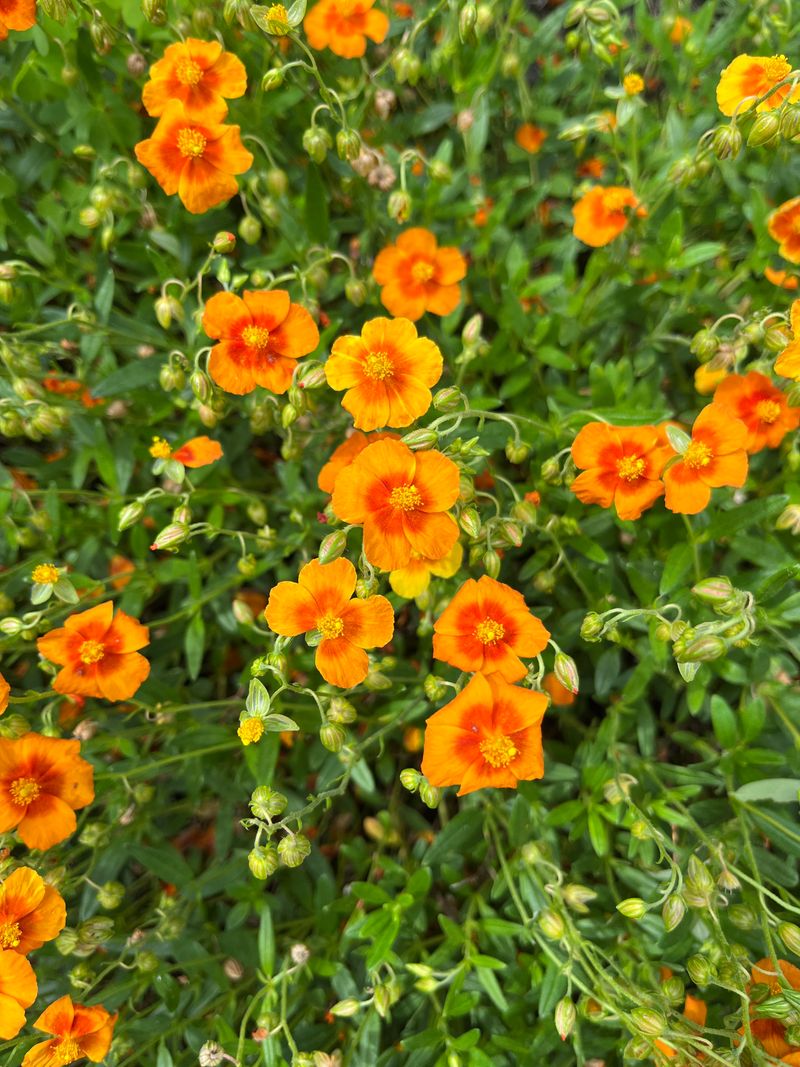
If your patio has a raised edge, a low retaining wall, or a planter box that could use some cascading color, Sunroses are the answer.
Helianthemum, as it is officially known, spills outward in cheerful waves of small, tissue-paper-thin flowers in shades of pink, orange, red, yellow, and white.
And it does all of this in full, blazing sun with barely any water.
Each individual flower lasts only one day, but the plant produces so many of them that the display feels continuous from late spring through early summer.
A second flush often follows if you shear the plant lightly after the first bloom cycle ends.
The low, spreading habit makes it look intentional and polished along patio edges.
Sunroses need sharp drainage above everything else. They absolutely will not tolerate wet roots, especially in heavy clay soil.
Use a sandy or gravelly mix in containers and make sure water moves through quickly. Water every seven to ten days during the growing season and cut back to once every two to three weeks once established.
Full sun is non-negotiable for good flowering. In partial shade, the blooms drop off significantly.
Coastal and inland regions alike, Sunroses perform beautifully along south and west-facing patio edges. They stay low, usually under one foot tall, but can spread up to three feet wide.
Pair them with trailing sedums or creeping thyme for a layered, textured edge planting that handles heat without missing a beat.
9. Lion’s Tail Brings Bold Orange Summer Color
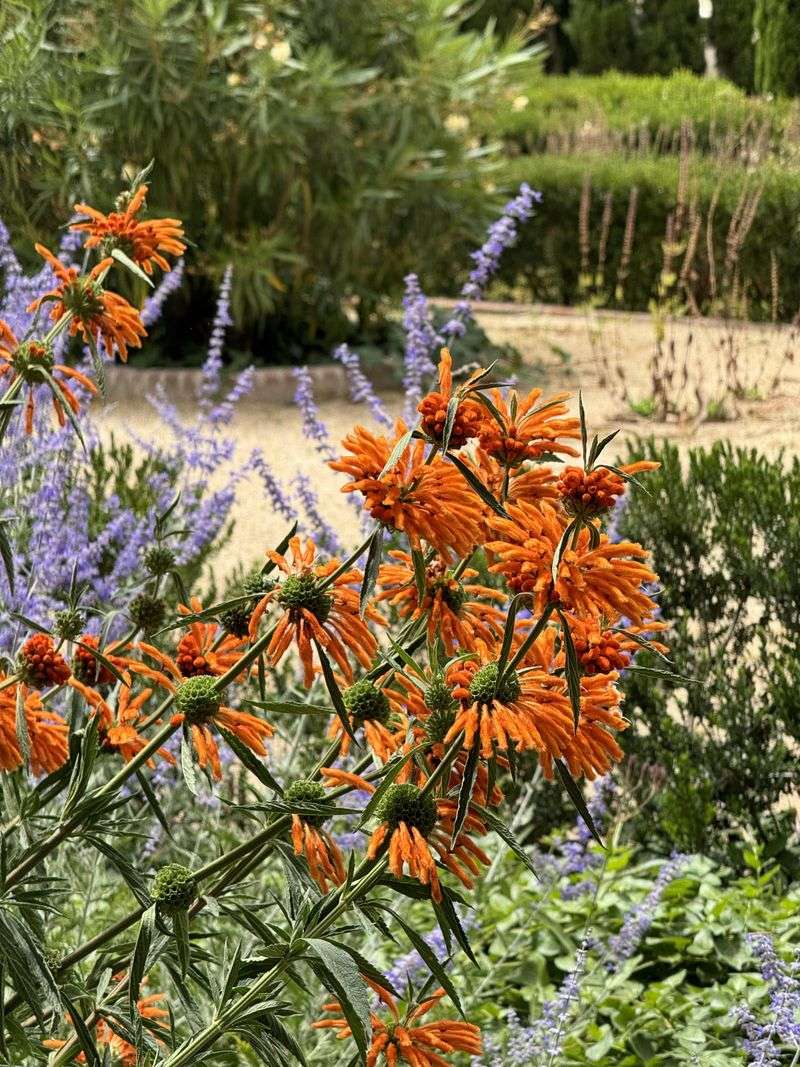
Bold, tall, and practically on fire with color, Lion’s Tail is the kind of plant that commands attention from across the yard.
Leonotis leonurus produces whorls of bright orange tubular flowers stacked up along tall stems, sometimes reaching five to six feet high in the ground.
In a large patio container, it stays a bit more compact but still makes a striking vertical statement.
Originally from South Africa, this plant evolved in hot, dry grasslands, which explains why it handles our California’s blistering summer afternoons without any complaint.
Hummingbirds are obsessed with the tubular flowers, so expect regular visitors during the bloom season, which runs from late summer through fall and sometimes into early winter.
Plant Lion’s Tail in a large container, at least fifteen gallons, with well-draining soil. It needs full sun to produce its best flowering, and it will lean toward shade if given the option, so keep it in the brightest spot on your patio.
Water deeply once a week in summer and allow the soil to dry out between waterings. Cut the stems back by about half in late winter to encourage bushy new growth and better flower production the following season.
It pairs well with silver-leafed plants like Santolina or Artemisia, which make the orange flowers pop even more.
In the warmer regions of our state, it may stay semi-evergreen through mild winters. It is a bold, confident plant that brings serious summer energy to any patio space.