8 California Native Plants That Actually Prefer Heavy Clay Soil
Heavy clay has a tough reputation among California gardeners. It sticks to shovels in winter, cracks wide open in summer, and seems to resist every new planting.
Much of the advice about native gardens adds to the worry. Fast-draining soil gets mentioned so often that clay can feel like a lost cause.
That advice holds true for some popular natives, but certainly not all of them.
Plenty of plants across the state grow naturally in dense, heavy ground and do just fine in it. University and native plant society guidance points to several reliable choices.
Eight standouts can turn tough soil into a thriving garden, often with less effort than fighting the clay ever required.
1. Western Redbud Handles Clay With Ease
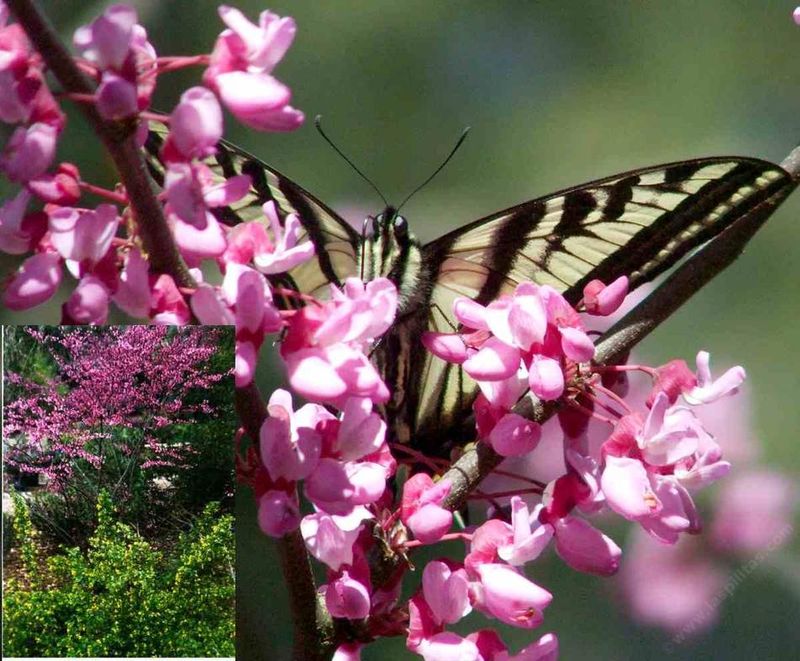
A bare, gray hillside in March can suddenly burst into bright magenta bloom. That show belongs to western redbud (Cercis occidentalis), which often grows wild on rocky, clay-heavy slopes in the foothills.
Gardeners who battle sticky soil every spring may be surprised that this small tree feels right at home in it. UC and native plant nursery guides list redbud as tolerant of many soil types, including clay.
Its roots push down slowly and steadily, so dense ground doesn’t stop it from settling in. Heavy summer watering after establishment is the main thing to avoid, since soggy clay in hot weather can lead to root rot.
Fall planting gives winter rains a chance to help roots spread. A hole about as deep as the root ball and twice as wide, backfilled with the same native soil, works best.
Lots of added compost or sand can backfire. It creates a soggy pocket that traps water around the roots.
Redbud grows about 10 to 20 feet tall and wide, usually with a multi-trunk shape. Rounded, heart-shaped leaves follow the flowers, along with flat purple seed pods.
Fall can bring yellow or red foliage, and bare winter branches look tidy against the sky. Bees flock to the early spring blooms.
Some California Native American groups have also used redbud branches in basket weaving. Few backyard trees carry that much beauty and history in one package.
2. Toyon Tolerates Heavy Soil Better Than Assumed
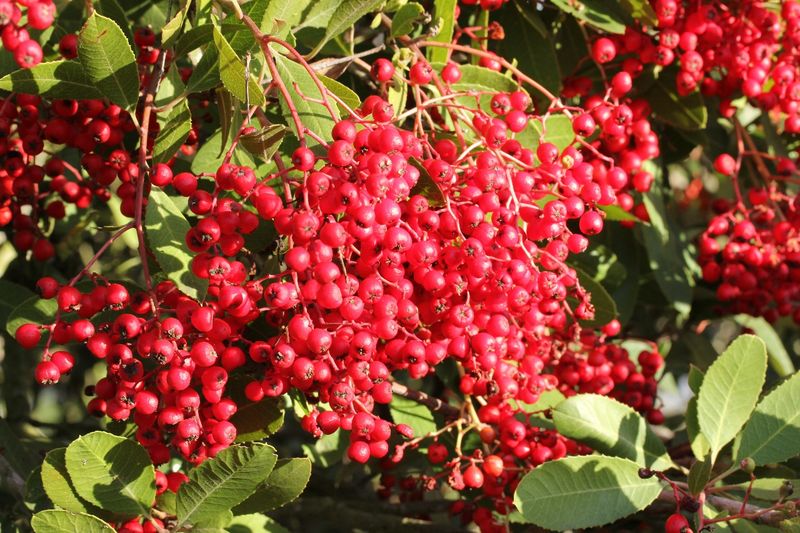
A tough, drought-hardy shrub seems like it should want gritty, fast-draining soil. Toyon (Heteromeles arbutifolia) breaks that rule, handling clay far better than many gardeners expect.
In the wild, it grows in chaparral, oak woodlands, and canyons. Those habitats include plenty of dense, heavy ground.
The confusion is understandable. Many famous California natives, including a lot of manzanita and ceanothus types, really do prefer sharp drainage and can struggle or decline in heavy clay.
Toyon is different. Both UC ANR and California Native Plant Society resources describe it as adaptable to a wide range of soils, clay included.
Drought tolerance and clay tolerance are two separate traits, and a plant can have one without the other. Toyon happens to have both, which makes it a smart pick for dense ground with limited water.
Expect a large evergreen shrub reaching 6 to 15 feet, sometimes more. Glossy, toothed leaves stay green all year, and small white flowers appear in early summer.
Your California Garden Changes Every Week. Your Plan Should Too.
Gardening in California changes quickly throughout the season. Every Friday you’ll receive a simple weekly plan showing exactly what to plant, prune, fertilize, harvest, and protect so you never miss the right timing.
By winter, the plant is loaded with bright red berries that robins and cedar waxwings eagerly gobble up. Fall planting works best, with deep but infrequent watering during the first two summers.
After that, an occasional summer soak is plenty. Its size makes it a fine screen or informal hedge.
Toyon is often called California holly, and a popular story says Hollywood was named after it, though historians still debate that claim.
3. California Aster Thrives In Dense Ground
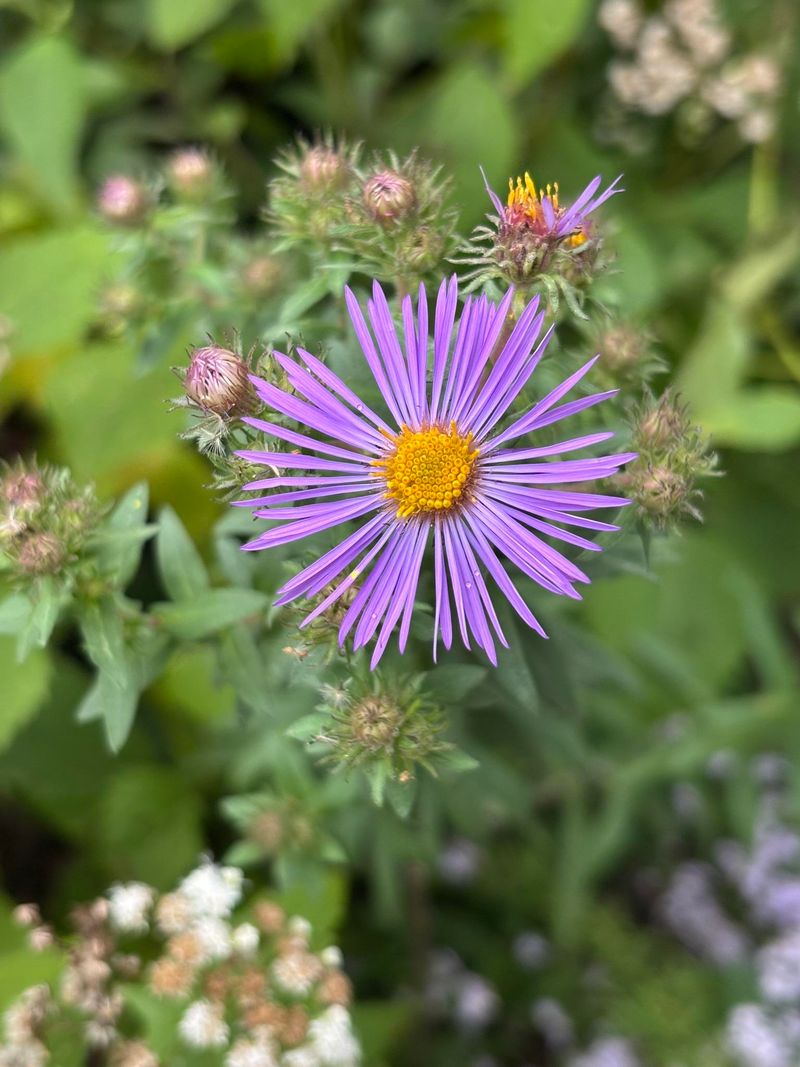
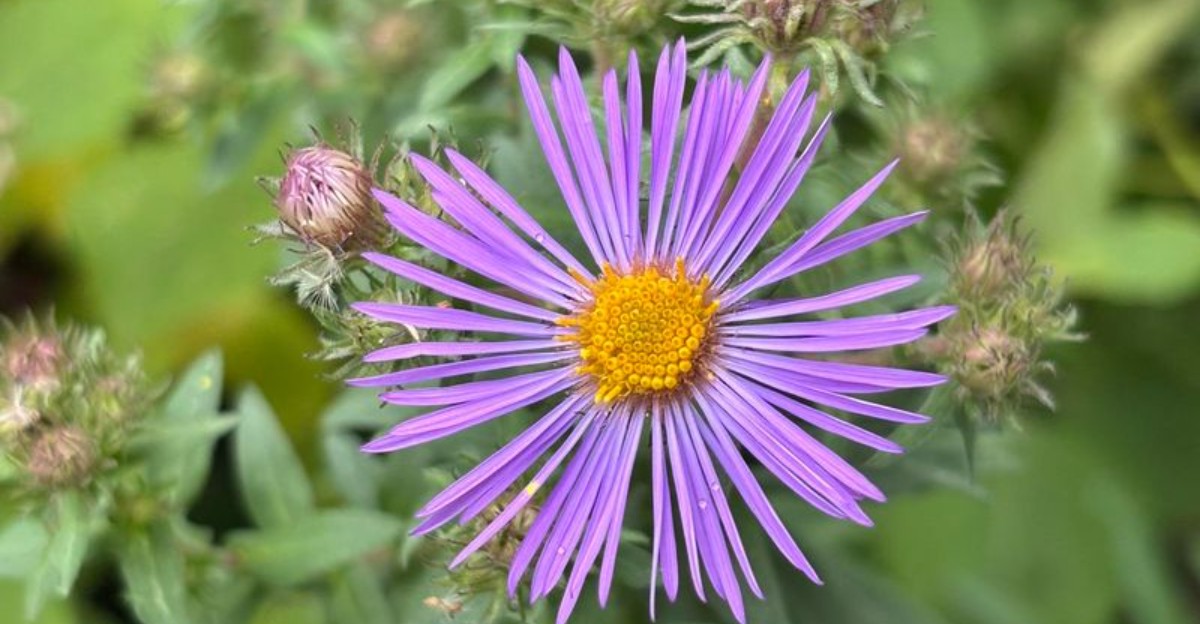
Late summer can feel quiet in a native garden, with many plants resting after the spring rush. That’s when California aster (Symphyotrichum chilense) opens hundreds of small lavender daisies with sunny yellow centers.
It’s one of the few bloomers that steps up while the rest of the yard takes a nap. In the wild, this perennial grows in coastal grasslands, meadows, and open areas where heavy soils are common.
That background explains why it copes so well with clay. Dense soil holds moisture longer than sand, and the aster draws on that stored water to keep blooming into fall.
Plants usually stay about 1 to 3 feet tall. They spread by underground stems called rhizomes, so one plant can slowly turn into a patch.
Some gardeners love that spreading habit, while others pull extra shoots to keep it in bounds. Full sun or light shade suits it best.
A bit of summer water keeps it looking good, though established plants can get by on less, especially near the coast. Rich fertilizer is best avoided, since it can make stems floppy.
Cutting stems back to the ground in late fall or winter gives the plant a tidy fresh start. New growth returns with the rains.
Native bees, butterflies, and hoverflies visit the blooms at a time when food can be hard to find. Paired with goldenrod, it creates a purple and gold show that feels like a wild meadow.
4. Mugwort Spreads Well In Clay Rich Beds
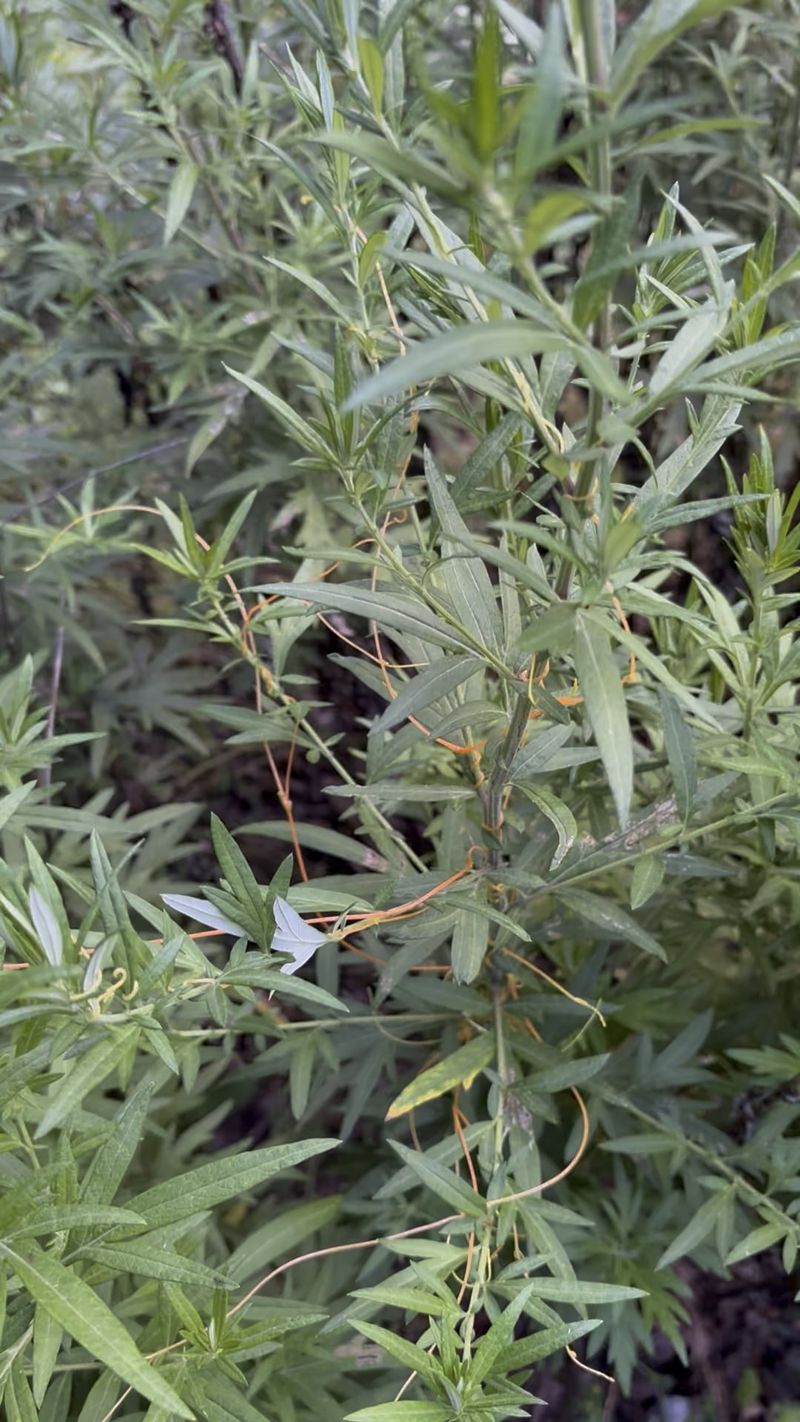
A leaf of California mugwort rubbed between the fingers releases a sharp, sage-like scent that fills the air. Artemisia douglasiana grows along streams, in moist meadows, and on heavy soils across much of California.
Its comfort in clay and eager spreading habit make it a hardworking groundcover. New stems pop up from rhizomes a short distance from the parent plant.
In clay-rich beds, that habit becomes useful. The roots help bind soil and cover bare spots where weeds would otherwise move in, often filling a slope or low corner in a season or two.
Space deserves honest planning, though. Mugwort can wander into nearby plantings, so it works best where it has room or where a path or edging can hold it back.
Unwanted shoots pull out easily when the soil is damp. A quick tug each spring usually keeps things in check.
Plants grow 2 to 5 feet tall with soft, gray-green leaves. They look lushest with some water and may go partly dormant in a dry summer.
A hard cutback in late fall brings fresh growth when the rains return. The tiny flowers are wind-pollinated, so there’s no big bloom show, but birds pick through the stems for seeds and insects.
Many California tribes have long used mugwort in medicine and ceremony. Some people also tuck leaves under pillows for vivid dreams, a bit of folklore rather than science.
5. Elderberry Adapts To Heavier Soil Types
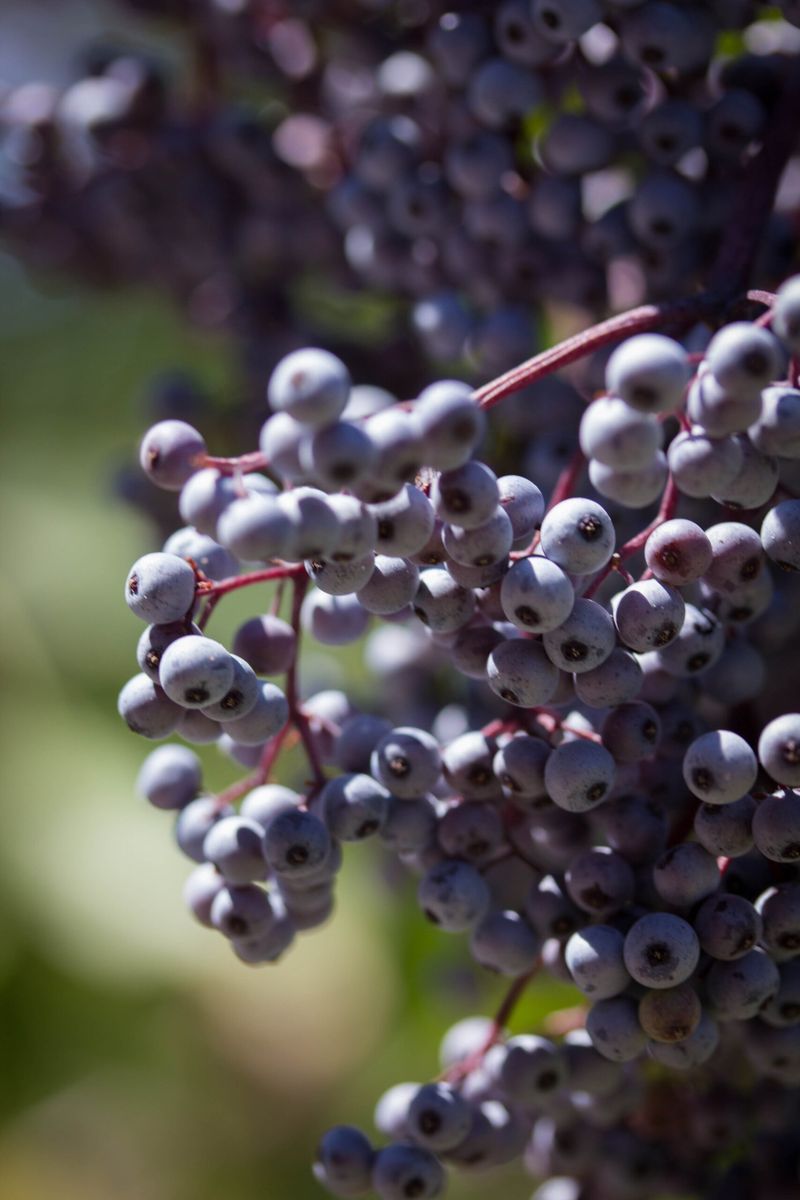
Creek banks are where many people expect to find blue elderberry, and it does grow along rivers. It also turns up on dry valley flats, roadsides, and foothill slopes where the ground is thick and heavy.
That wide range shows how flexible Sambucus nigra subsp. caerulea is about soil. UC ANR materials describe it as adaptable to many soil types, and it’s often used in restoration plantings on heavy valley soils.
Clay actually gives it an edge. The soil stores winter rain that deep roots can reach in summer, while loose, sandy soil would dry out much faster.
Growth is fast, reaching 15 to 25 feet as a large shrub or small tree. Flat clusters of creamy flowers appear in spring and early summer, followed by dusty blue berries.
Late fall or winter planting helps it settle into clay. Watering every week or two in the first summer, then tapering off, gets roots established.
Heavy winter pruning keeps it from turning leggy and encourages more flowers. Birds adore the berries, and native bees visit the blooms.
A safety note matters here. Raw berries, leaves, stems, and roots can make people sick. Fully ripe berries need cooking before eating, and only by people who can identify them correctly.
In parts of the Central Valley, elderberry also supports the threatened valley elderberry longhorn beetle. That makes each planting a small win for local wildlife.
6. Rush Species Suit Clay That Holds Water
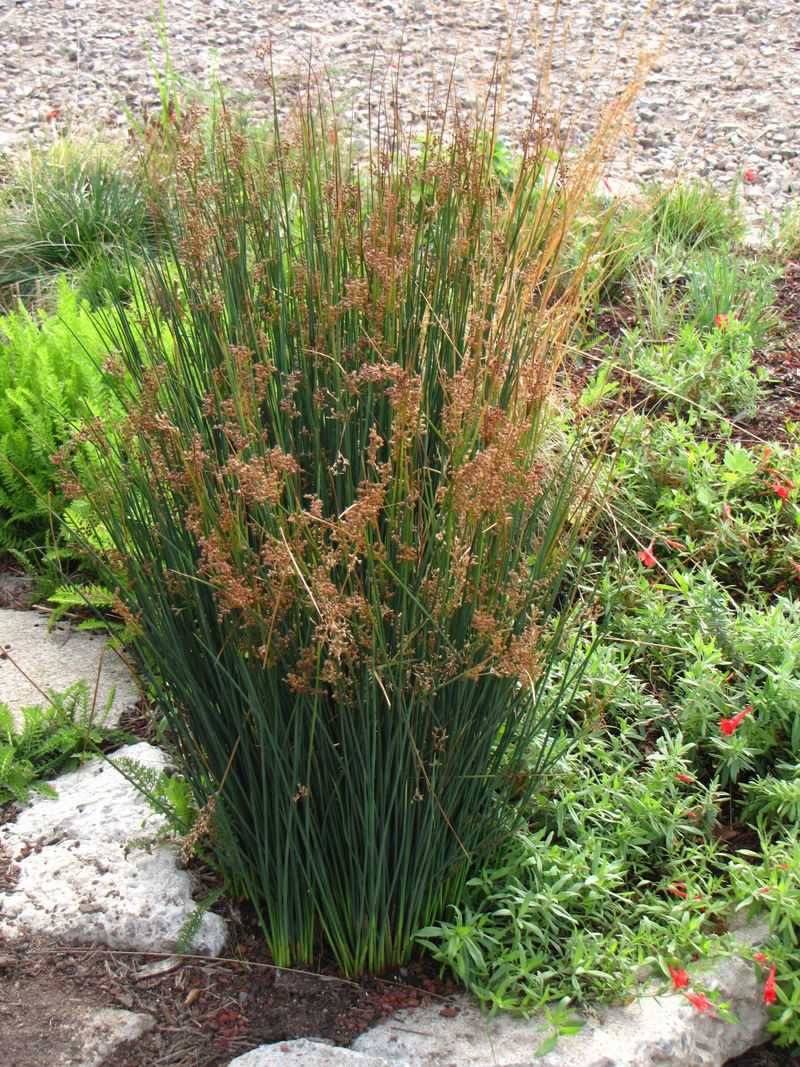
Puddles that linger for days after a storm look like a problem to many gardeners. Native rushes see them as an invitation.
Rushes belong to the genus Juncus, and several California species grow naturally in wet meadows, seeps, and pond edges where clay keeps water near the surface.
Common rush (Juncus patens) is a home garden favorite, with stiff blue-gray stems that stand up like a bundle of pencils.
Other natives, such as Mexican rush (Juncus mexicanus), spread more and work well as a low cover. Each fits a slightly different role in the garden.
Waterlogged clay can cut off the air supply many roots need. Rushes have special tissue in their stems and roots that moves oxygen downward, so soggy soil doesn’t bother them much.
Many also handle dry summers once established, though they look fresher with some water. That flexibility makes them unusually forgiving.
Rain gardens, swales, downspout areas, and any spot where water collects suit rushes nicely. They also look clean and modern in containers or mixed with grasses, and Juncus patens stays a tidy 1 to 2 feet tall.
Care is simple. Old brown stems come out in late winter, crowded clumps can be divided every few years, and heavy fertilizer isn’t needed.
Named garden selections from a native nursery are the safest bet, since wild-collected plants vary in size and spread. Mexican rush in particular can roam more than expected in a small bed.
7. Purple Needlegrass Feels At Home In Clay Grasslands
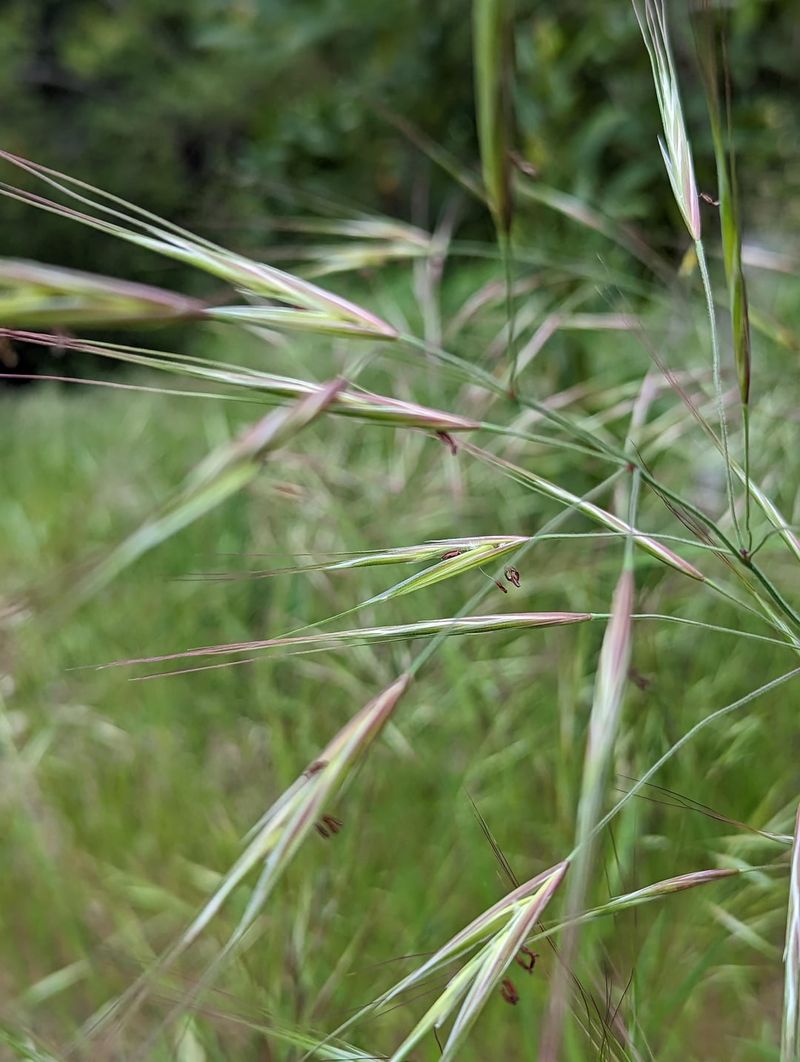
Few plants carry as much California pride as purple needlegrass (Stipa pulchra), which became the official state grass in 2004. It once covered huge stretches of valley and foothill grassland, much of it growing on heavy clay.
That history makes it a natural fit for dense yards. Deep, fibrous roots reach far below the surface, tapping moisture that clay holds long after the rains end.
This bunchgrass grows in neat clumps about 2 to 3 feet tall. In spring, airy flower heads take on a soft purple tint and shimmer in the breeze.
Long, twisting seed awns follow, giving the plant its name. By summer, the clumps turn golden and rest until cooler weather returns.
That summer dormancy is normal, not a sign of trouble. Growth picks back up with the first fall rains, which is also the best time to plant.
Full sun and very little summer water suit it well once established. Extra irrigation in hot weather can actually invite weeds and weaken the clumps over time.
A trim in late summer or early fall tidies old growth and makes room for fresh green blades. Pet owners may want to place it away from play areas, since the sharp seeds can catch in fur.
Mixed with aster, goldenrod, and spring wildflowers, it brings back a piece of California’s original grassland. Birds and small wildlife appreciate the seeds and shelter, too.
8. California Goldenrod Rounds Out A Clay Friendly Palette
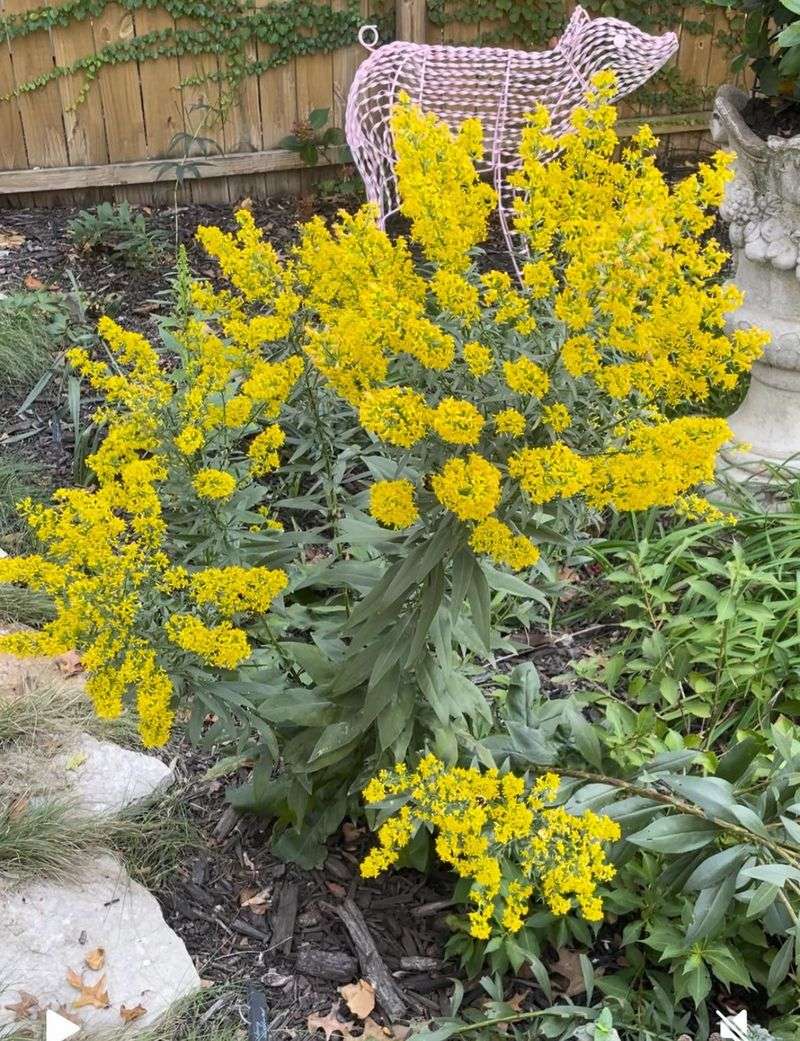
Weedy is the word some people use for goldenrod, but California goldenrod (Solidago velutina subsp. californica) earns its place. Bright yellow plumes light up late summer and fall, and it’s a true clay-adapted native rather than just another low-water pick.
In the wild, it grows in grasslands, open woodlands, and clearings, often on heavy soils. Rhizomes spread it into loose colonies about 1 to 3 feet tall.
In clay, plants stay sturdy and spread at a steady pace. They rarely need much fuss once established.
A common myth blames goldenrod for hay fever. Its pollen is heavy and sticky, carried by insects rather than wind, so ragweed is usually the real troublemaker.
That makes it a comfortable choice near a patio. Full sun to part shade and little to moderate summer water keep it happy, with a cut to the ground each winter.
Butterflies, native bees, and beneficial wasps visit the blooms, creating a late-season food stop when little else is flowering. Paired with aster, rushes, or mugwort, it helps build a garden that matches what clay naturally supports.
That’s the big lesson of this whole list. Drought tolerance and clay tolerance are different traits, and plenty of popular natives, including many manzanitas and ceanothus, want fast drainage.
Starting with clay lovers like redbud, toyon, aster, mugwort, elderberry, rushes, needlegrass, and goldenrod means working with the soil instead of fighting it. The shovel gets a well-earned break, too.