The Texas Trees Most At Risk In A Hurricane And What Homeowners Can Do Now
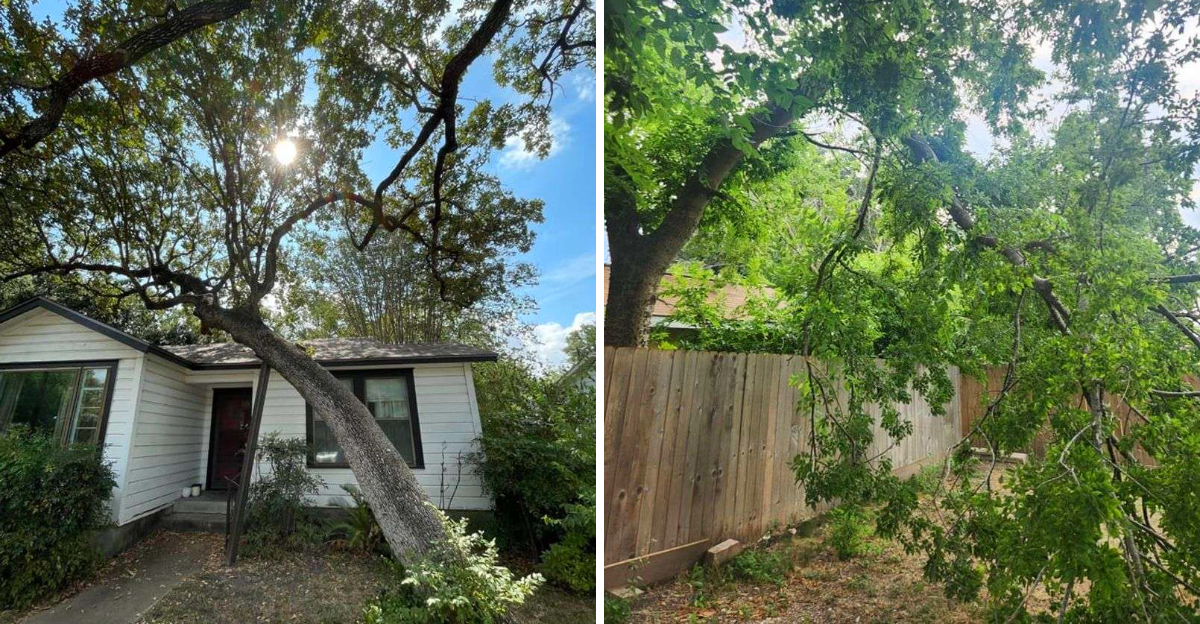
Texas hurricane season has a way of making you look at your trees very differently.
That big live oak you have always loved? Suddenly you are wondering about its root system.
The pecan hanging over the driveway? Now you are thinking about those branch angles in a whole new way.
When a Gulf storm rolls in, saturated soil, weak structure, decay, and overgrown canopies can turn familiar backyard trees into serious hazards faster than most homeowners expect.
And here is the thing: tree risk is not just about species. Health, pruning history, wind exposure, and soil conditions all factor into how a tree actually performs when the wind gets serious.
Taking a honest look at what is growing in your yard before hurricane season peaks is one of the smartest and most practical things a Texas homeowner can do.
1. Bradford Pears With Weak Branch Angles
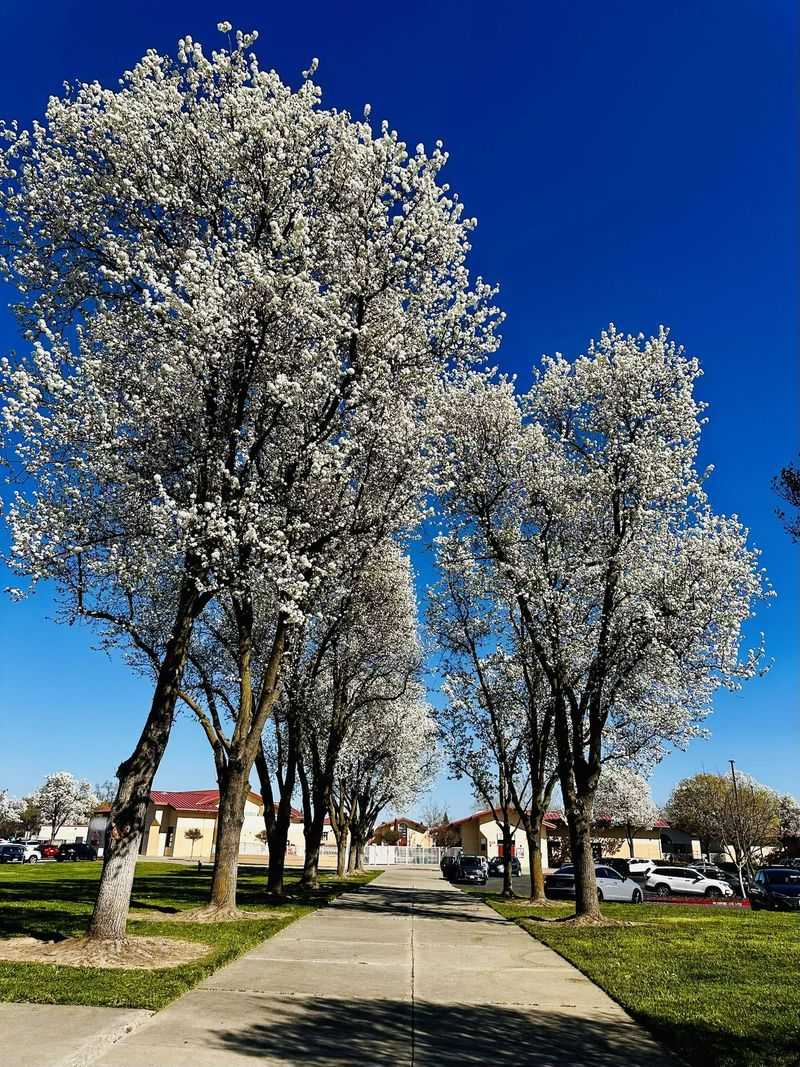
If you have ever seen a Bradford pear split nearly in half after a strong storm, you already understand why these ornamental trees cause so much trouble.
Bradford pears are widely planted across Texas neighborhoods, often chosen for their spring blossoms and tidy shape.
But beneath that attractive appearance is a structural problem that makes them particularly vulnerable when hurricane-force winds arrive.
The issue comes from their branch angles. Bradford pears tend to produce branches that grow almost straight up from the trunk, forming very narrow angles called codominant stems.
These tight angles create weak attachment points that are prone to splitting under wind load, especially when the canopy is full and catching a lot of air. A mature Bradford pear can fail at multiple points in a single storm event.
Before hurricane season picks up in Texas, check your Bradford pear for crowded upright branches, included bark at branch unions, and any signs of past cracking or splitting.
A qualified arborist can assess whether the tree can be safely pruned to reduce wind resistance or whether the risk has grown too large to manage.
Waiting until a storm is already in the forecast leaves very little time to act.
2. Chinese Tallow Trees Near Coastal Homes
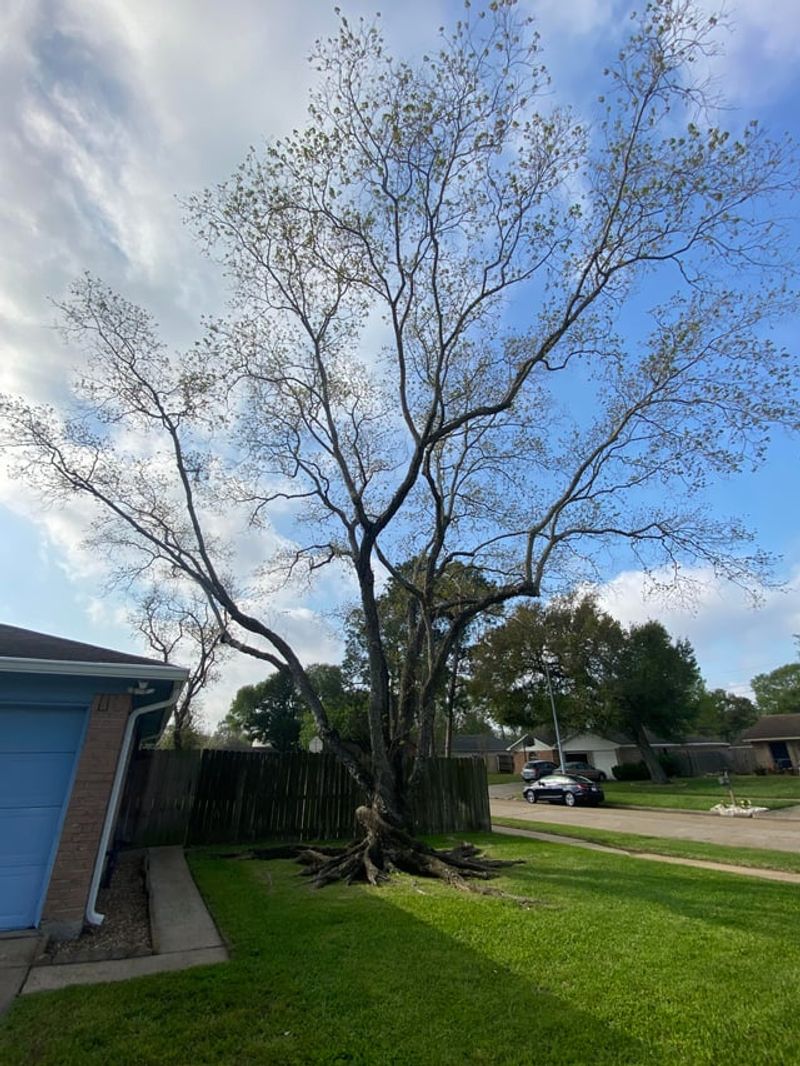
Along coastal fence lines and drainage areas across Southeast Texas, Chinese tallow trees have become one of the most commonly spotted invasive species. They grow fast, spread aggressively, and can reach considerable heights in a relatively short time.
That rapid growth often comes with a trade-off, because fast-growing trees frequently develop weaker wood and shallower root systems than slower-growing native species.
Near coastal homes, Chinese tallow trees face the added challenge of storm surge, saturated soil, and sustained high winds during a Texas hurricane.
Their shallow roots may not hold the trunk firmly in place when the ground becomes waterlogged, making them more likely to lean or uproot.
The dense canopy they produce also catches a significant amount of wind, putting extra stress on the root system and trunk.
Homeowners near the Texas coast who have Chinese tallow trees growing close to structures, power lines, or fences should have them evaluated before the peak of hurricane season.
Your Texas Garden Changes Every Week. Your Plan Should Too.
Gardening in Texas changes quickly throughout the season. Every Friday you’ll receive a simple weekly plan showing exactly what to plant, prune, fertilize, harvest, and protect so you never miss the right timing.
Because this species is also considered invasive in Texas, removal may actually benefit both safety and the surrounding environment.
A certified arborist can help you understand what options make the most sense for your specific property and location.
3. Siberian Elms With Weak Limbs
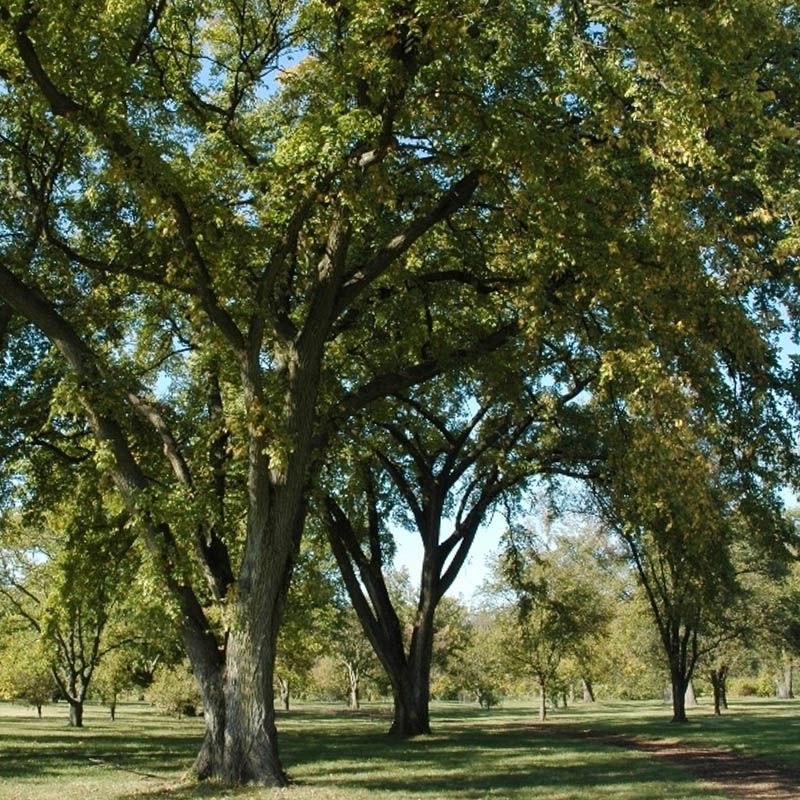
Brittle limbs hanging over a driveway or parked car are never a comforting sight, and Siberian elms are well known for producing exactly that kind of concern.
These trees were planted widely across Texas decades ago because they grow quickly and tolerate tough conditions.
Over time, however, many of them have developed structural problems that make them a real liability when strong winds arrive.
Siberian elms tend to produce dense, twiggy canopies with limbs that can become heavy and poorly attached over time.
The wood itself is considered relatively brittle compared to many native Texas hardwoods, which means branches are more likely to snap under wind stress rather than bend.
Limb failures from Siberian elms have been documented during storms across the southern United States, including in Texas communities far from the coast.
If you have a Siberian elm on your property, look for hanging or cracked limbs, heavy clusters of branches that look disproportionate to the trunk, and any signs of decay near branch unions.
Removing compromised or structurally weak limbs before a storm arrives can significantly reduce the chance of property damage during high winds.
A professional tree evaluation is the safest way to know what corrective work, if any, makes sense for your tree.
4. Water Oaks With Decay Or Short Lifespans
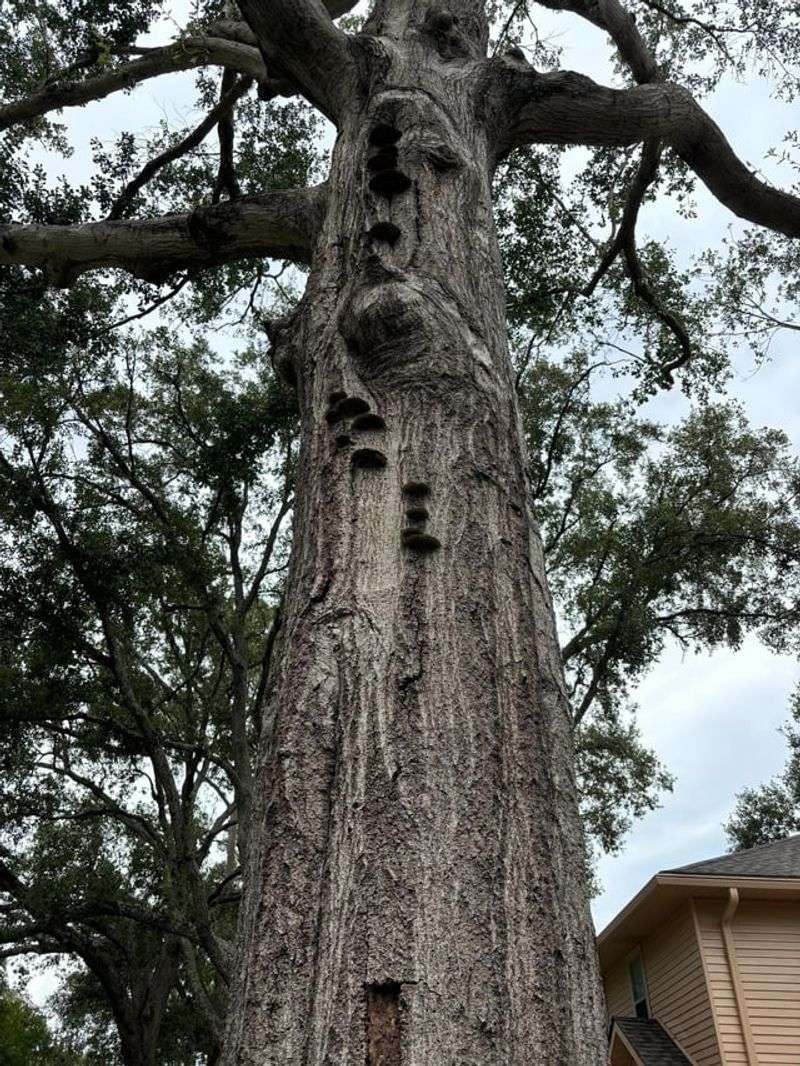
Water oaks are a familiar sight across East Texas and Southeast Texas, often growing in low-lying areas near creeks, bayous, and residential neighborhoods. They provide welcome shade and are a natural part of the regional landscape.
But water oaks have a relatively short lifespan compared to many other oak species, and older specimens are more prone to internal decay that is not always visible from the outside.
When a water oak develops decay in the trunk or major limbs, the structural integrity of the tree can be significantly compromised. From the outside, the tree may still look full and healthy, but the wood inside could be weakened by fungal activity.
Storm winds that would not topple a healthy tree may be enough to bring down a water oak that has unseen internal problems.
Homeowners with large, older water oaks near their homes or driveways should consider having them professionally assessed before hurricane season.
Signs worth watching for include mushroom-like fungal growth at the base or on the trunk, soft or hollow-sounding wood when tapped, unusual lean, and bare or non-productive branches throughout the canopy.
An ISA-certified arborist can use specialized tools to evaluate internal decay and give you a clearer picture of the tree’s condition and stability.
5. Laurel Oaks In Hurricane-Prone Areas
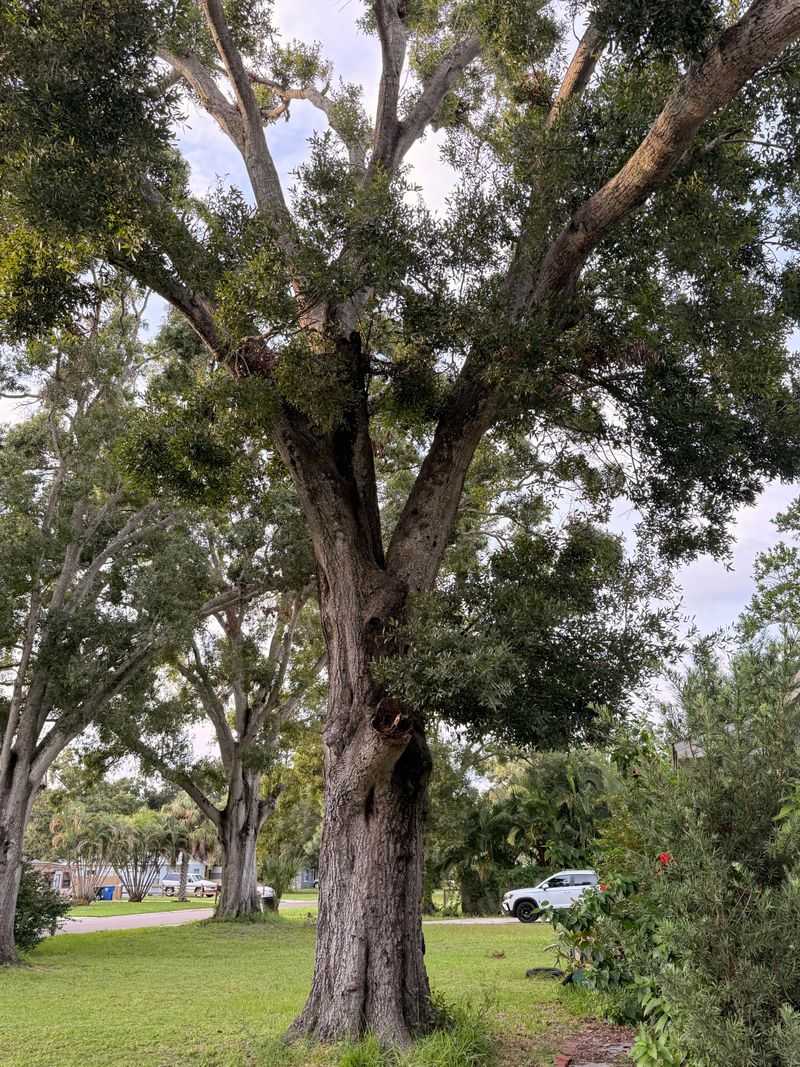
Laurel oaks grow across Southeast Texas and along the Gulf Coast, and they are a common feature of older neighborhoods where mature trees provide significant shade.
They can reach impressive heights and develop large, spreading canopies that make them attractive landscape trees.
In hurricane-prone areas, however, that same size and canopy density can become a serious concern when sustained winds and storm surge arrive.
One issue with laurel oaks is that they tend to have a moderate lifespan and can develop decay, weak branch attachments, and root problems as they age.
In areas where soil becomes saturated during heavy rainfall or storm surge, the root system may not provide the stability needed to keep a large tree upright.
Laurel oaks that have not been properly maintained or that have experienced past storm damage may be at higher risk of partial or full failure.
If your property in Southeast Texas or a coastal community has mature laurel oaks, it is worth scheduling a professional tree inspection before the most active part of hurricane season.
Look for visible signs of stress such as damaged branches, fungal growth, included bark at branch unions, and any visible lean.
Taking early action gives you more options and more time to make informed decisions about the trees near your home.
6. Tall Pines In Saturated Soil
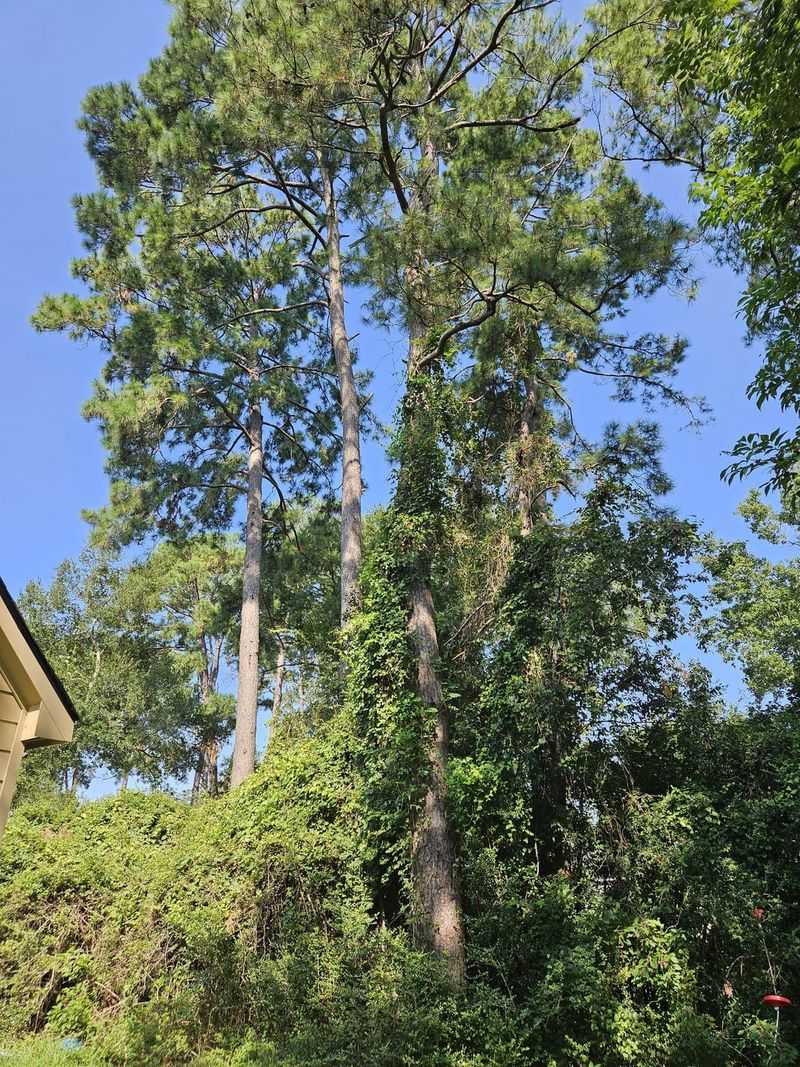
After several days of heavy rain in East Texas or Southeast Texas, the ground around tall pine trees can become completely saturated. When soil loses its firmness, it can no longer grip tree roots as securely as it normally would.
A pine tree that seemed perfectly stable in dry conditions can become vulnerable to tipping or uprooting when the root zone is waterlogged and hurricane winds begin pushing against the tall trunk and canopy.
Loblolly pines and other pine species common in Texas tend to be tall with relatively high canopies, which means wind has a long lever arm to push against.
Pines that have been weakened by pine bark beetles, root rot, or past lightning strikes may be at even greater risk.
Trees growing in compacted or shallow soils may have root systems that cannot spread and anchor the tree as effectively as pines growing in deeper, healthier ground.
Before a Texas hurricane season, check the pines on your property for signs of bark beetle activity such as small holes and pitch tubes in the bark, thinning crowns, or yellowing needles.
Also note any visible surface roots that look disturbed or lifted.
If a tall pine stands near your home, roof, or driveway, having a certified arborist evaluate its stability while soil conditions are normal is a practical step worth taking.
7. Trees With Co-Dominant Trunks
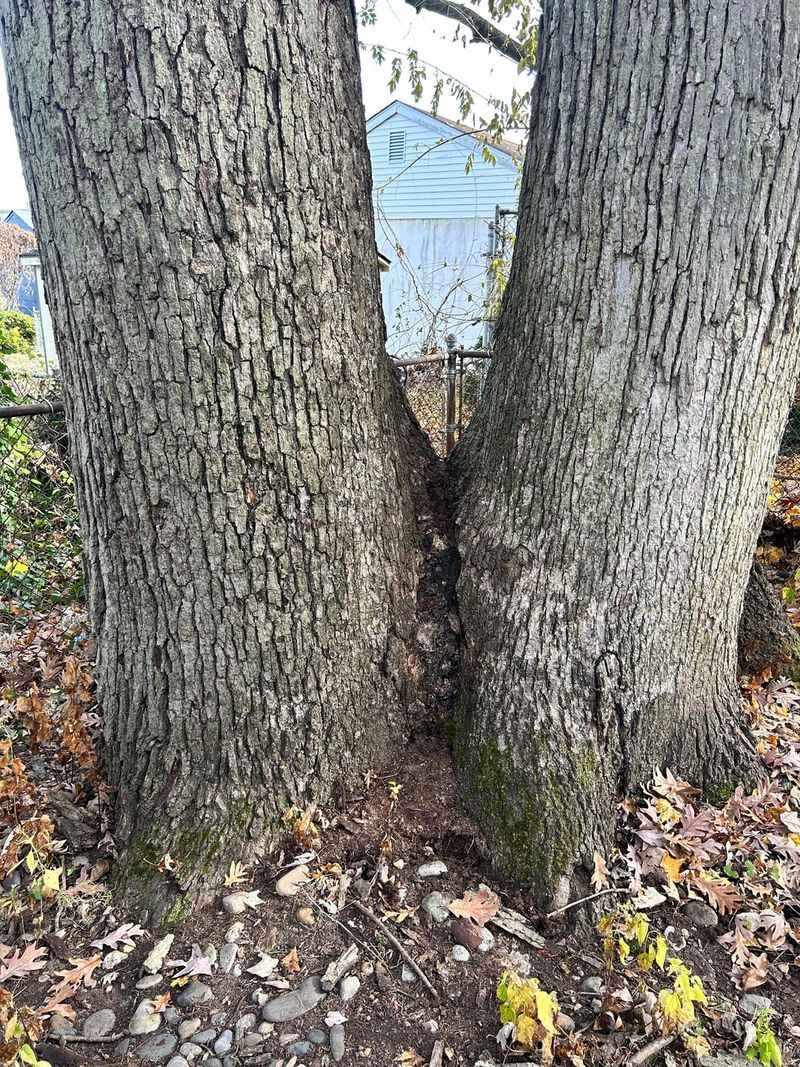
Spotting a trunk that splits into two roughly equal stems partway up is one of the most important structural warning signs a homeowner can recognize before a Texas hurricane.
This condition is called a co-dominant trunk, and it creates a weak point where the two stems meet.
Instead of growing around each other and forming a strong union, the bark from each stem often gets trapped between them, a condition known as included bark.
Included bark prevents the two stems from forming a solid wood connection, which means the split point can be under tension even without wind.
When hurricane winds push against a tree with co-dominant stems, that weak union is often where the failure happens.
The result can be a large portion of the tree falling suddenly, which is especially dangerous when the tree is near a home, fence, or vehicle.
Co-dominant trunks can develop in many species including oaks, pecans, and ornamental trees commonly found across Texas landscapes. The risk level depends on the size of the stems, the presence of included bark, and whether any decay has begun at the union.
A qualified arborist can assess the severity of the defect and recommend options such as structural cabling, pruning, or removal depending on what the tree’s condition and location require.
8. Trees With Large Broken Or Declining Limbs
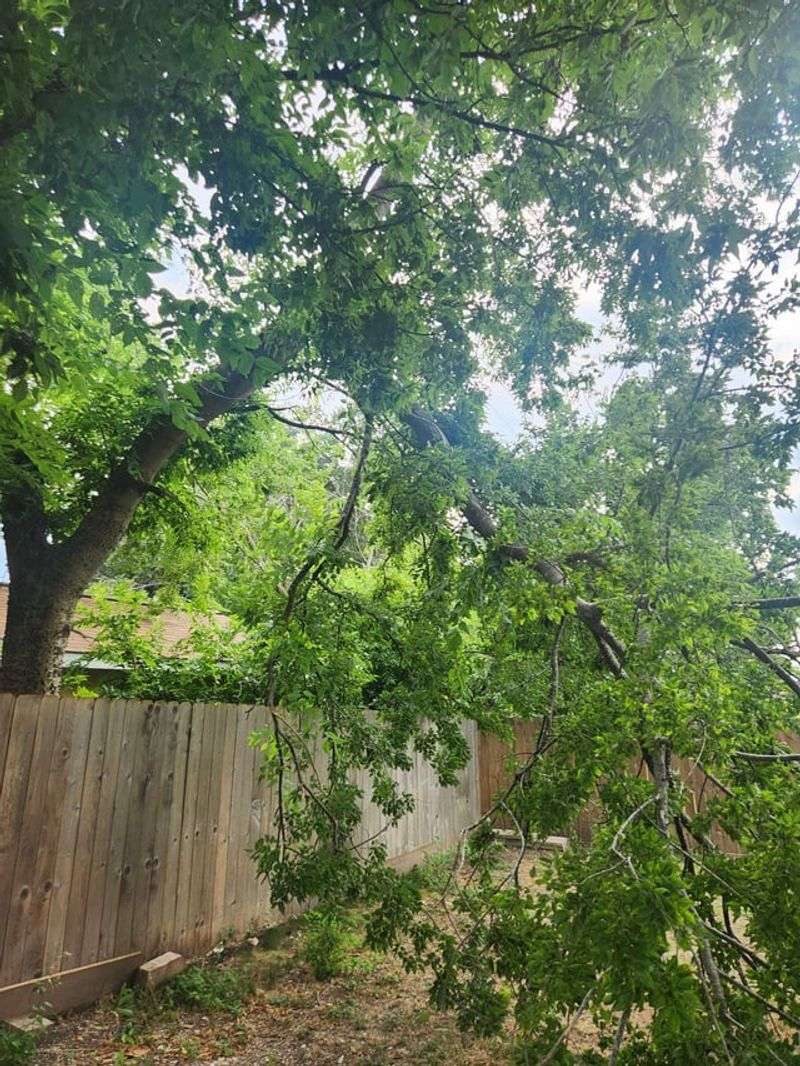
Walking around your yard and looking up into the canopy before hurricane season is one of the simplest and most useful things a Texas homeowner can do.
Large broken or structurally compromised limbs are among the most immediate hazards on any property, and they do not need a full hurricane to become a problem.
A moderate storm, a burst of straight-line wind, or even a heavy rain event can send a weakened limb crashing down onto a roof, patio, or vehicle.
Compromised limbs are often visible because they lack leaves when the surrounding tree is still full, or because the bark has started to peel and the wood looks gray or dry.
Broken limbs that are partially attached and hanging in the canopy are sometimes called hangers or widow-makers, and they are particularly unpredictable because they can fall without warning even in calm conditions.
When hurricane winds arrive, these limbs become fast-moving projectiles.
Removing large broken or structurally compromised limbs from trees near your home, driveway, fence, or power lines should be a priority before Texas hurricane season arrives.
Homeowners should not attempt to remove large overhead limbs themselves, especially near utility lines or over structures.
Hiring a qualified tree care professional ensures the work is done safely and that the cuts are made in a way that supports the tree’s long-term health.
9. Leaning Trees With Exposed Roots
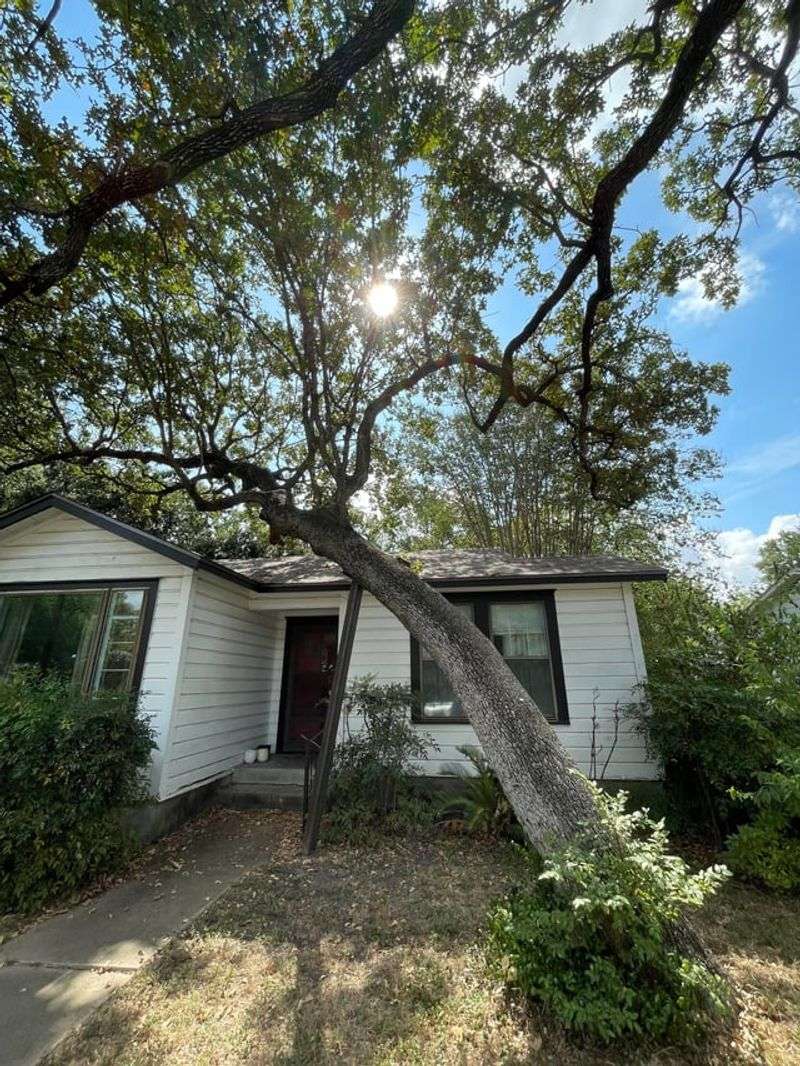
Exposed roots on one side of a tree trunk, combined with a noticeable lean, are two signs that often appear together and deserve serious attention before a Texas storm season.
When a tree begins to lean, the root system on the side opposite the lean is often under tension, which can cause roots to lift and become visible at the soil surface.
This is a sign that the tree may already be in the process of slowly tipping.
In Southeast Texas and other areas that receive heavy rainfall, soil saturation can speed up this process. Once the ground becomes soft and wet, a leaning tree with compromised roots has even less resistance to wind.
The lean may have developed gradually over years due to soil erosion, root damage from construction, compaction, or storm damage from a previous event.
If you notice a tree on your property that has developed a lean since you last paid close attention, or if you can see roots that appear to be pulling up from the soil on one side, contact an ISA-certified arborist before the next storm season begins.
The arborist can evaluate whether the lean is structural or just a growth pattern, and whether the root system still provides enough stability to keep the tree safely in place during strong winds.
10. Overgrown Canopies That Catch More Wind
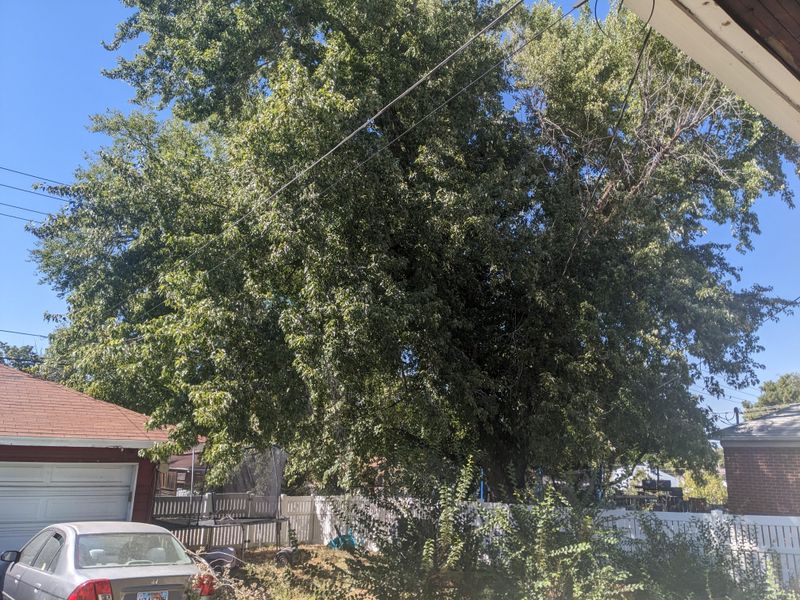
Many Texas homeowners go years without having their trees pruned, and over time the canopy can become so dense that it acts like a sail in high winds.
An overgrown canopy with tightly packed branches does not allow wind to pass through efficiently, which means the full force of a storm gust pushes against the entire surface of the tree.
This increases the load on the trunk, root system, and branch unions in ways that can lead to failures during a hurricane.
Proper canopy thinning by a qualified arborist reduces wind resistance without removing so much foliage that the tree is stressed.
The goal is to create a canopy that allows some wind to pass through while maintaining the tree’s natural shape and structural balance.
This is different from topping, which is a harmful practice that removes large portions of the upper canopy and creates more problems than it solves.
Before hurricane season in Texas, take a look at the trees near your home and note any that have canopies extending far over the roofline, touching utility lines, or looking significantly denser than nearby trees of the same species.
A pre-storm canopy evaluation by a certified tree professional can help you understand which trees would benefit from thinning and whether any other structural concerns need to be addressed before strong winds arrive.