What It Really Means When A Black Rat Snake Appears In Your Pennsylvania Garden
Finding a black rat snake in your Pennsylvania garden is one of those encounters that produces an immediate and very human reaction. The size alone is enough to stop most people in their tracks.
These are substantial snakes, and coming across one unexpectedly in the garden bed or coiled near the compost pile is the kind of moment that tends to stay with you. But before the alarm fully sets in, there’s something worth knowing.
A black rat snake in your Pennsylvania garden is almost always good news. Not in a way that makes the encounter feel less startling, but in a way that genuinely changes how you should respond to it.
These snakes have one of the most beneficial ecological roles of any wildlife that visits a Pennsylvania yard, and their presence is a direct reflection of something your garden is doing right.
Beyond the practical, black rat snakes carry rich symbolic meaning across many of the cultural and natural traditions that have deep roots in Pennsylvania.
1. Your Yard May Have Plenty Of Rodents
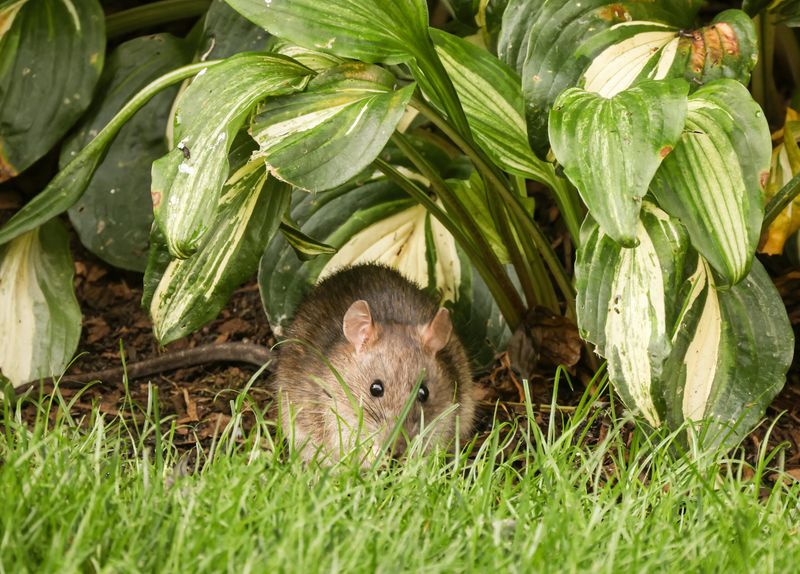
Mice are quiet, sneaky, and surprisingly common in Pennsylvania backyards. You might not even know you have them until something shows up looking for a meal.
A black rat snake is one of nature’s most efficient hunters, and when one shows up in your yard, it is often because the food supply is good.
Rat snakes rely heavily on their sense of smell to track down prey. They pick up on scent trails left behind by mice, voles, and other small animals.
If your yard has tall grass, compost piles, birdseed on the ground, or dense shrubs, those are exactly the kinds of places where rodents like to hide and nest.
A snake that visits your garden more than once has likely found a reliable hunting ground. It will return when the conditions are right.
Gardens with fruit trees, vegetable patches, or stored firewood tend to attract rodents, which in turn attract snakes looking for an easy meal.
Rather than viewing the snake as a problem, consider what its presence is telling you. Your yard may have a hidden rodent population you were not aware of before.
Taking steps like sealing gaps in sheds, cleaning up fallen fruit, and storing birdseed in sealed containers can reduce rodent activity over time. The snake may move on once the food supply drops.
Until then, it is simply doing what it does best, keeping your local rodent numbers in check without any effort on your part.
2. Your Garden Offers Good Snake Habitat
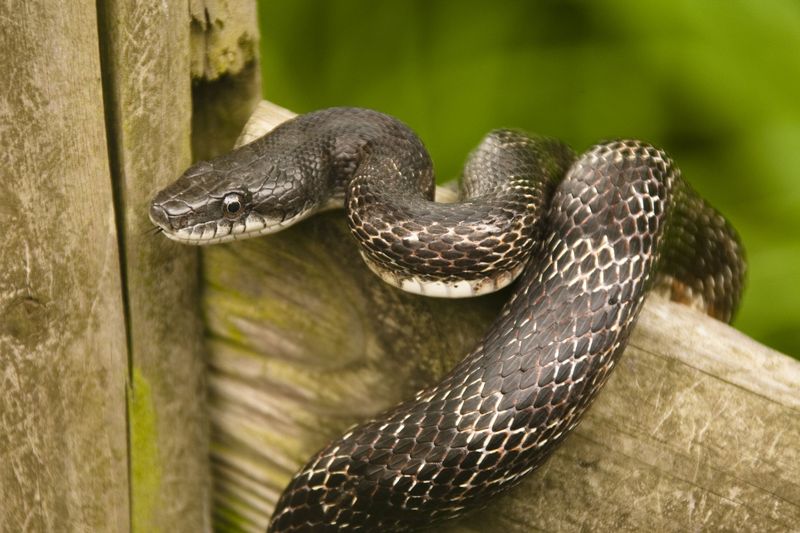
Not every yard gets a snake visitor, so if one shows up in yours, your garden is probably doing something right. Black rat snakes look for specific conditions when choosing where to spend time.
Your outdoor space may be offering exactly what they need. Rock walls are a big draw. Snakes love the warmth that stones hold after a sunny afternoon.
Logs, old lumber piles, and wood stacks also provide cool, sheltered hiding spots where snakes can rest safely. Dense vegetation like ground cover plants, thick shrubs, and tall ornamental grasses all give snakes places to move through without feeling exposed.
Your Pennsylvania Garden Changes Every Week. Your Plan Should Too.
Gardening in Pennsylvania changes quickly throughout the season. Every Friday you’ll receive a simple weekly plan showing exactly what to plant, prune, fertilize, harvest, and protect so you never miss the right timing.
Sheds and outbuildings are another favorite. Gaps under doors or in the foundation give snakes easy access to a quiet, protected space.
Even compost bins and leaf piles can attract them, especially if rodents are already nesting nearby.
Sunny open patches in the garden matter too. Snakes are cold-blooded, meaning they depend on outside heat to regulate their body temperature.
A flat rock in a sunny corner or a south-facing slope is like a heating pad for a snake on a cool morning. You may spot one stretched out and completely still, simply warming up before it gets moving.
If you want to make your garden less inviting to snakes, reducing clutter and keeping vegetation trimmed can help. But many gardeners actually enjoy having a healthy habitat that supports local wildlife.
A yard that welcomes a rat snake is usually a yard that is full of life, and that is something worth appreciating rather than avoiding.
3. It May Be Helping With Natural Pest Control
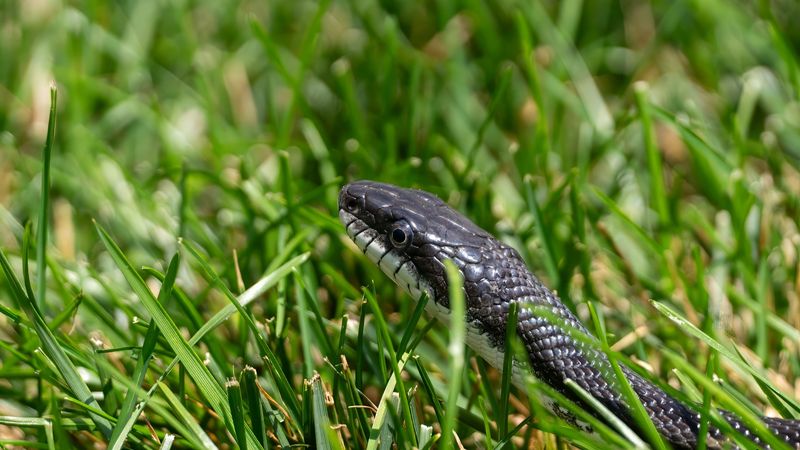
Farmers have known for generations that rat snakes are worth keeping around. Long before pest control companies existed, these snakes were doing the hard work of keeping barns and grain stores free of rodents.
Your garden may be benefiting from the same natural service right now. A single black rat snake can consume a significant number of mice and voles over the course of a season.
Rodents can quietly destroy a vegetable garden by chewing through plant stems, eating bulbs underground, and gnawing on root vegetables before you even notice the damage.
Having a snake patrolling the area reduces that risk in a way that is completely chemical-free.
On larger properties and farms, rat snakes are especially valuable. They cover wide areas while hunting and often return to the same fields and outbuildings season after season.
Landowners who recognize this tend to leave the snakes alone and benefit from fewer rodent problems as a result.
Home gardeners can take the same approach. If a black rat snake is moving through your garden beds or resting near your shed, it is likely already working on your behalf.
Avoiding the use of rodent poisons is one way to support this natural balance. Poisoned rodents can harm the snakes that eat them, which removes a helpful animal from your yard.
Letting nature handle some of the pest management in your garden is a smart and low-effort strategy. The snake is not asking for anything in return.
It just needs to be left alone to do what it has always done, quietly and effectively keeping the rodent population under control.
4. Seeing One Doesn’t Mean You’re In Danger
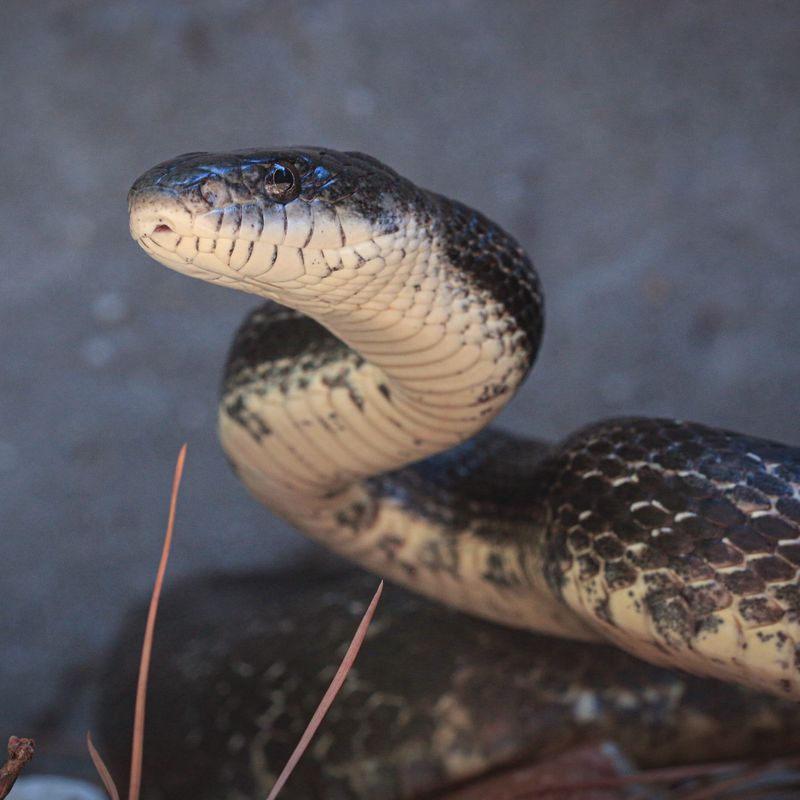
A big snake moving through your yard can feel startling, especially if it appears suddenly from under a bush or slides across the garden path.
But there is good news: the black rat snake found in Pennsylvania is completely nonvenomous and poses no real threat to people or pets.
Pennsylvania does have a small number of venomous snakes, including the timber rattlesnake and the copperhead, but the black rat snake looks very different from both.
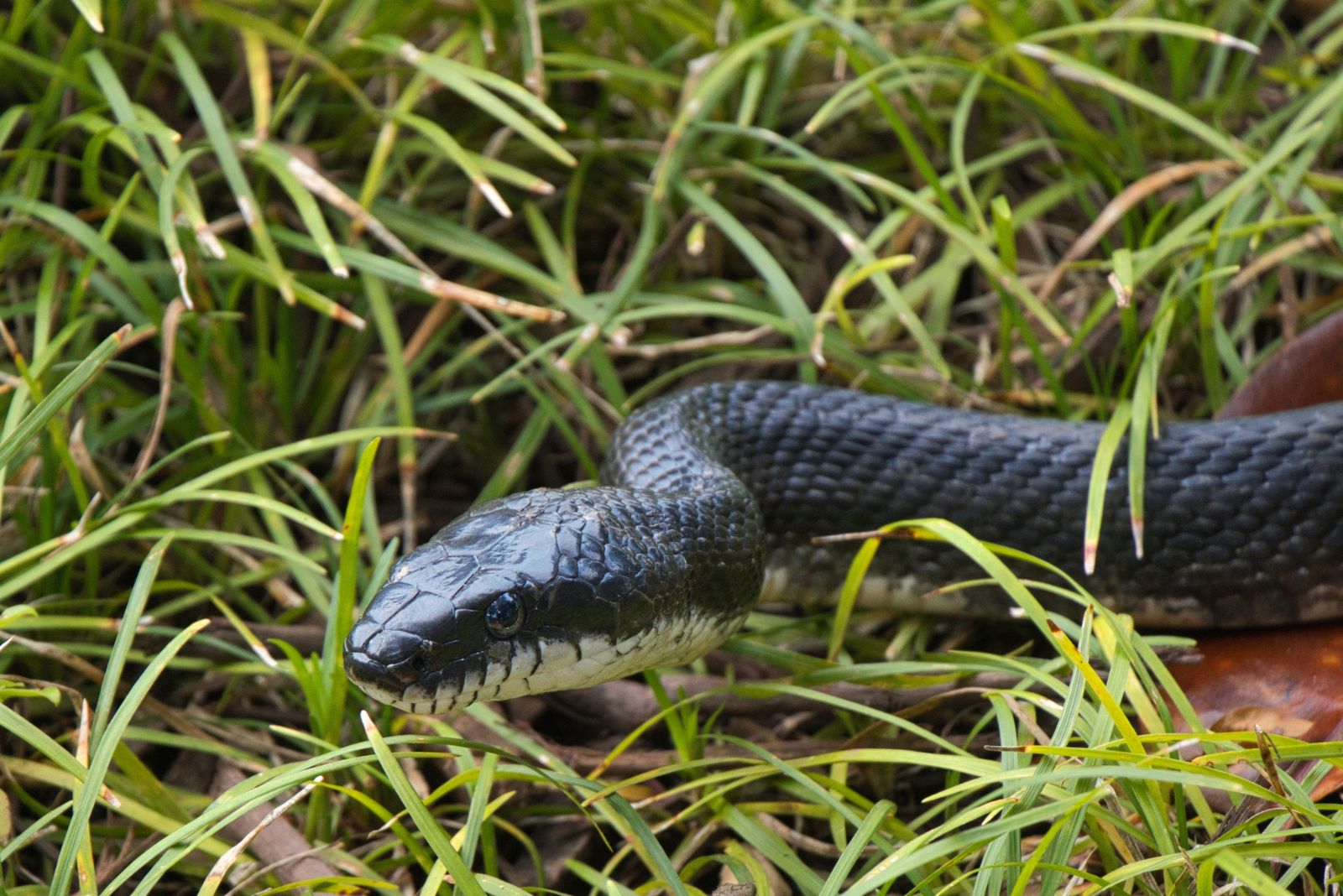
It is typically solid black or dark gray on top with a lighter belly, and it has a slender head that blends smoothly into its body.
Venomous snakes in the region tend to have broader, more triangular heads and distinct facial features.
When a black rat snake feels threatened, its first instinct is to get away from the situation. It may freeze and try to blend into its surroundings, or it might move quickly toward the nearest cover.
On rare occasions, a cornered snake may vibrate its tail, which can sound similar to a rattlesnake in dry leaves. That is just a defensive bluff, not a sign of venom.
Giving the snake space is always the best approach. Trying to handle, chase, or corner it increases the chance of getting a bite, which, while not dangerous, is not exactly comfortable either.
Most bites from rat snakes happen when people try to pick them up or trap them unnecessarily.
Watching from a comfortable distance is usually all you need to do. The snake is not aggressive by nature, and with a little patience, it will move along on its own without any intervention from you.
5. Don’t Be Surprised If You See It Climbing
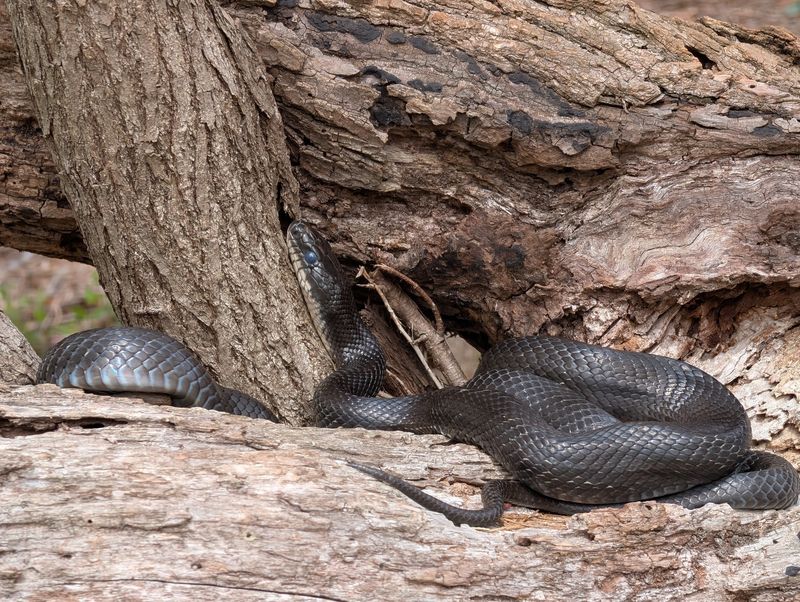
Here is something that surprises a lot of people: black rat snakes are excellent climbers. Spotting one halfway up a tree or wrapped around a shrub branch is not unusual at all. In fact, climbing is one of their most impressive and well-known abilities.
Rat snakes use rough bark and the tiny ridges on tree trunks to grip and push themselves upward. They can scale surprisingly tall trees with ease and move through the branches with a fluid, unhurried confidence.
Watching one climb can feel almost unreal if you have never seen it before. So why do they go up? Birds, bird eggs, and the occasional young squirrel are all part of the rat snake’s diet.
If your garden has nest boxes, birdhouses, or trees with active nests, a visiting snake may be checking those out. This is a natural behavior that has been happening long before backyard bird feeders and nest boxes became popular.
Some bird lovers find this frustrating, especially when a snake finds a nest they have been watching. Placing nest boxes on smooth metal poles with baffles can help prevent snake access without causing harm to the snake itself.
Snakes that cannot reach a nest will simply move on and look elsewhere. The ability to climb also helps rat snakes find warm resting spots in trees and escape from ground-level threats. They may curl up in a hollow branch or rest across a wide limb to soak up the sun.
Seeing one in a tree does not mean anything is wrong. It is just a very capable animal making the most of its environment in a way most people never expect.
6. It May Simply Be Passing Through
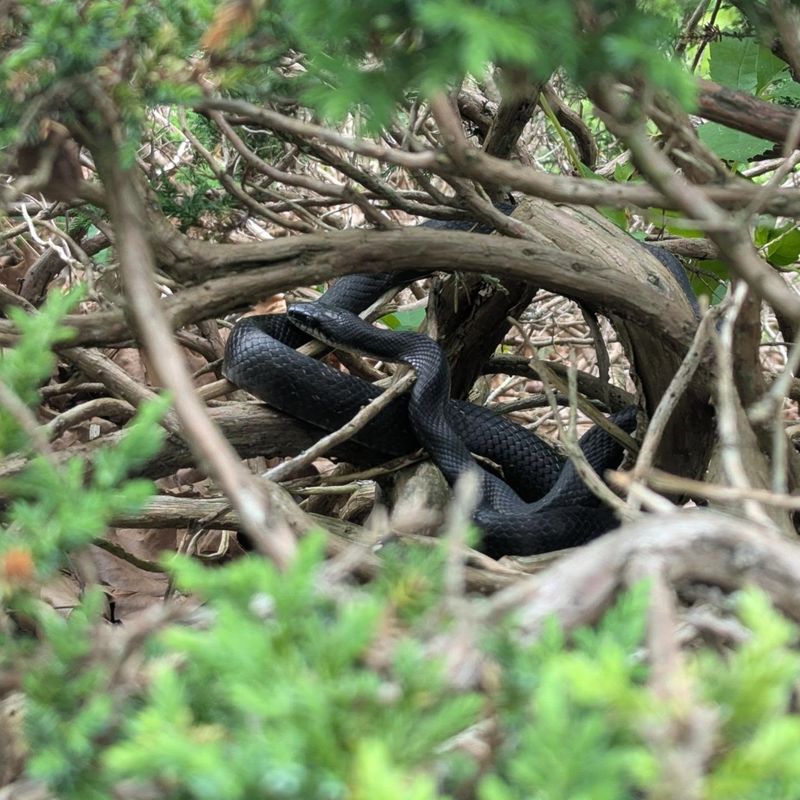
One sighting does not mean a snake has set up permanent residence in your flower beds. Black rat snakes cover a lot of ground as they move through their home range, and your garden may simply be one stop along a longer route they travel regularly through the neighborhood.
These snakes do not stay in one spot for long unless the conditions are exactly right. They move based on temperature, food availability, and the time of year.
In spring and fall, you are more likely to see them as they travel between seasonal sheltering spots. During summer, they may pass through more quickly as they hunt across a wider area.
If you only see the snake once or twice, there is a good chance it was just moving through. Yards that sit between wooded areas, fields, or creek banks tend to become natural travel corridors for local wildlife.
Your garden may simply be in the path that this particular snake uses on its regular rounds. The best thing you can do when you spot one is to step back and give it room. Snakes that feel safe and unharassed are more likely to move on calmly and quietly.
Chasing or disturbing them can cause unnecessary stress for the animal and may push it into a hiding spot where it stays longer than it otherwise would have.
Most of the time, a black rat snake that appears in your Pennsylvania garden is simply living its life. It is not there to cause trouble.
Leave it a clear path, respect its space, and it will almost certainly continue on its way without any fuss at all.