The Best Ohio Plants For Monarch Butterflies That Aren’t Just Milkweed
Milkweed gets all the credit, and honestly, it deserves it. No milkweed means no monarch eggs, no caterpillars, no next generation.
But here’s something a lot of well-meaning gardeners don’t realize: adult monarchs need a lot more than just milkweed to survive.
These butterflies are basically long-distance athletes fueling up for one of the most impressive migrations on the planet, and they need rich, reliable nectar sources to make it happen.
The great news for Ohio gardeners is that the state has some truly stunning native plants that deliver exactly that. Plant the right mix and your yard stops being just a pit stop on the monarch highway.
It becomes a full-on rest and refueling station. And yes, it will look absolutely gorgeous in the process.
1. New England Aster Supports Late Monarchs
When September arrives and most summer flowers start to fade, New England aster steps up as one of the most valuable plants gardener can have.
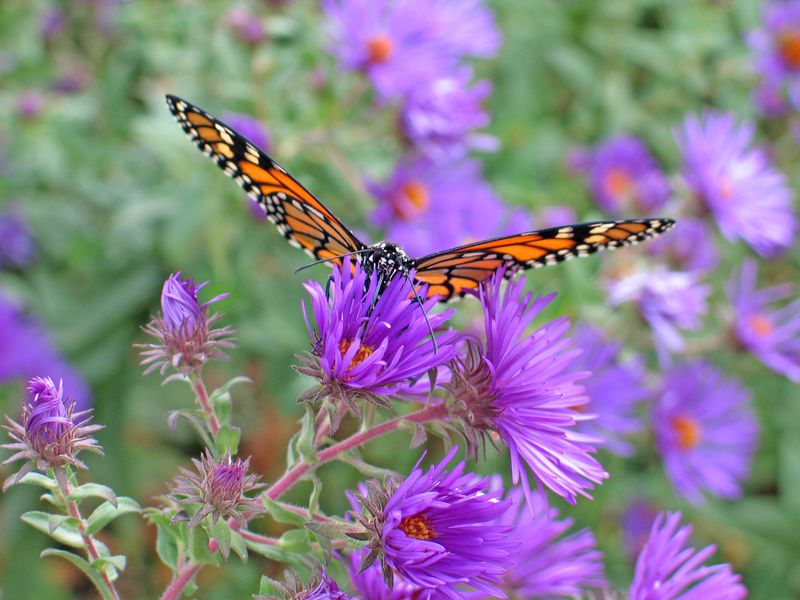
Its bright purple blooms with golden centers open right when migrating monarchs are moving through Ohio on their way south, and the timing could not be more helpful.
This plant essentially bridges the gap between summer nectar and the lean weeks of early fall.
New England aster is a true Ohio native, and it tends to thrive in sunny garden beds, pollinator borders, and even slightly moist spots near rain gardens or low areas of the yard.
It can grow quite tall, reaching four to six feet in some garden conditions, so placing it toward the back of a border gives it room to spread without blocking shorter plants.
Cutting stems back by about half in early July can encourage a more compact, bushier habit while still allowing the plant to bloom on schedule in fall.
Beyond monarchs, New England aster supports a wide range of late-season pollinators, making it one of the most productive native plants you can add to a yard.
The flowers hold nectar well even on cooler fall days, which matters a great deal for monarchs fueling up before their long journey south.
A single established clump can put on an impressive show and reward patient gardeners year after year with very little fuss.
2. Ironweed Adds Height And Monarch Appeal
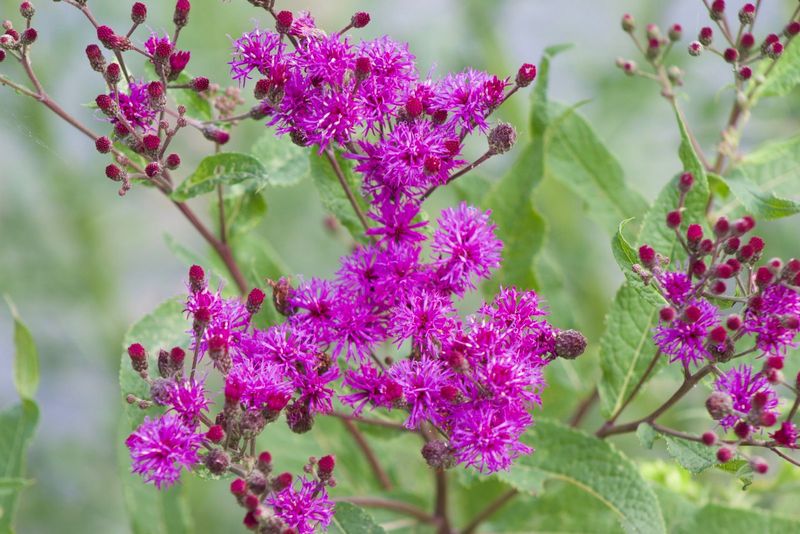
Bold, upright, and covered in vivid purple blooms, ironweed is the kind of plant that stops people in their tracks when they see it for the first time in a garden.
Tall ironweed is native to Ohio and can reach five to eight feet in height, making it a dramatic focal point in the back of a pollinator border or along a sunny fence line.
The deep violet flower clusters are hard to miss, and monarchs seem to feel the same way.
Ironweed blooms in late summer, typically from July through September, which lines up well with the peak of monarch activity before the fall migration begins in earnest.
The flowers are rich in nectar and tend to attract a wide range of butterflies and native bees, making an ironweed patch a lively corner of any yard during those warm late-summer weeks.
Your Ohio Garden Changes Every Week. Your Plan Should Too.
Gardening in Ohio changes quickly throughout the season. Every Friday you’ll receive a simple weekly plan showing exactly what to plant, prune, fertilize, harvest, and protect so you never miss the right timing.
Pairing ironweed with goldenrod and New England aster creates a late-season native planting that gives monarchs consistent nectar options across several months.
This plant does best in full sun and tolerates a range of soil types, including clay-heavy soils that are common across much of Ohio. It can self-seed moderately, so deadheading spent flowers after bloom helps keep it from spreading more than intended.
Ironweed is also deer-resistant in most settings, which is a practical bonus for gardeners dealing with regular deer pressure in their yards.
3. Goldenrod Keeps Late Nectar Flowing
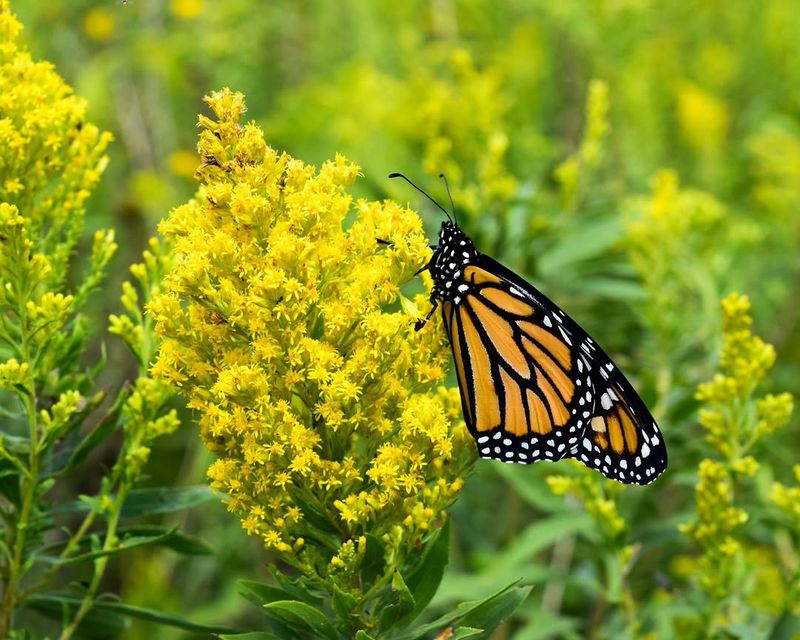
Few Ohio native plants carry as much late-season nectar value as goldenrod, yet it still gets a bad reputation from gardeners who mistake it for ragweed.
Goldenrod does not cause seasonal allergies the way ragweed does, and its pollen is too heavy and sticky to travel through the air.
Once that myth gets cleared up, most gardeners are happy to welcome it into a pollinator bed.
Several goldenrod species are native to Ohio, and stiff goldenrod and showy goldenrod both tend to perform especially well in home garden settings.
These varieties stay a bit more compact than some of the spreading types, which makes them easier to manage in a mixed perennial border.
Goldenrod spreads through both seeds and underground runners, so keeping an eye on it each spring helps prevent it from taking over neighboring plants.
For monarch butterflies moving through Ohio in late summer and fall, goldenrod is a reliable pit stop.
The dense clusters of small yellow flowers hold nectar in good quantities, and monarchs are frequently spotted nectaring on goldenrod right alongside bees and other late-season pollinators.
Planting goldenrod near New England aster creates a strong late-season pairing that gives migrating monarchs two excellent nectar options at once.
A sunny spot with average to dry soil suits most goldenrod varieties well, and once established, these plants need very little extra care to thrive in an garden.
4. Liatris Brings Bright Nectar-Rich Blooms
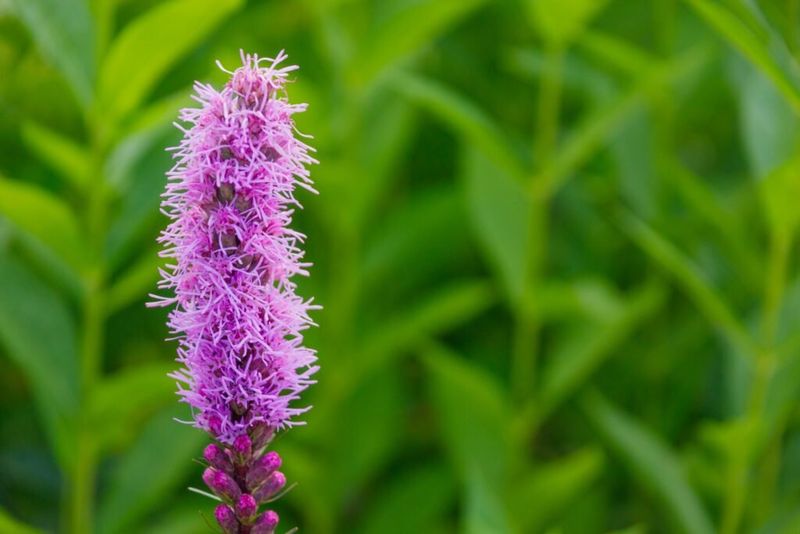
There is something almost electric about a row of liatris in full bloom. The tall, spiky flower wands rise straight up from the ground and open their bright purple-pink florets from the top down, which is the opposite of how most spike flowers bloom.
That unusual trait makes liatris easy to identify and genuinely eye-catching in any garden from midsummer onward.
Liatris spicata, commonly called blazing star or dense blazing star, is native to Ohio and well-suited to sunny garden beds and pollinator borders.
It typically blooms from July into August, filling in a stretch of the season when some other natives are just wrapping up their early summer show.
Monarchs are drawn to the rich nectar in liatris flowers, and the upright form of the plant makes it easy for butterflies to land and feed without too much effort.
Liatris grows from a corm, which is a small bulb-like structure underground, and it tends to be quite reliable once established in a spot it likes.
Full sun and well-drained soil are the main things it needs to perform well, and it handles summers without much complaint.
The dried seed heads also provide winter interest and attract birds like goldfinches, so the plant earns its spot in the garden well beyond butterfly season.
Adding liatris to a mixed native planting helps fill the midsummer nectar gap that can sometimes leave monarchs with fewer options in Ohio gardens.
5. Joe-Pye Weed Draws Monarchs In
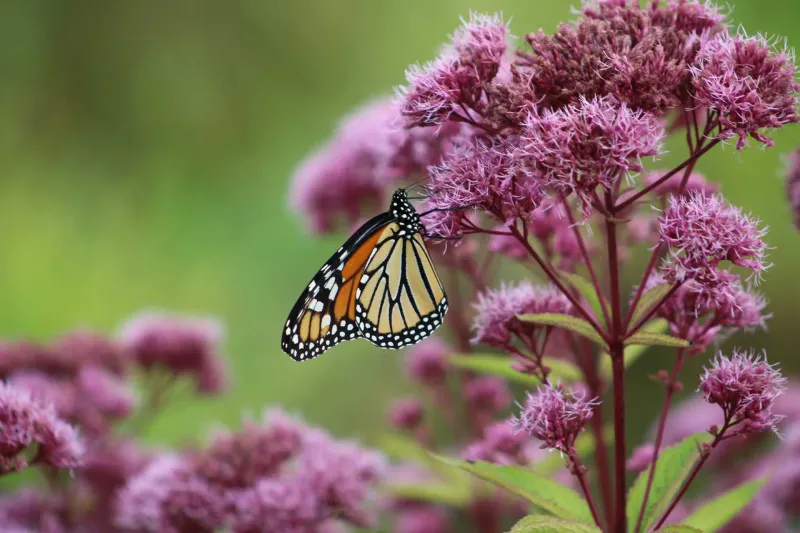
Spotted Joe-Pye weed has a way of turning a plain Ohio backyard into something that feels more like a meadow, and monarchs seem to appreciate the transformation.
This tall native plant can reach six feet or more and produces large, domed clusters of dusty pink-purple flowers in late summer that are genuinely hard to overlook.
The blooms appear from about July through September, which makes Joe-Pye weed a useful bridge between the height of summer and the early weeks of fall migration.
The nectar in Joe-Pye weed flowers is accessible and plentiful, and the wide, flat-topped flower clusters give butterflies a comfortable landing platform.
Monarchs are frequent visitors, but swallowtails, fritillaries, and native bees also show up in good numbers when this plant is in bloom.
That kind of activity can make a pollinator garden feel genuinely alive during the slower stretches of late summer.
Joe-Pye weed is native to Ohio and adapts well to a range of garden conditions. It handles average to moist soils and can even tolerate periods of wet feet, which makes it a practical option for lower spots in the yard that sometimes hold water after heavy rain.
Full sun to part shade both work, though full sun tends to produce the most robust flowering.
Cutting plants back by one-third in early summer can help manage height without sacrificing bloom time, making it easier to fit into a home garden setting.
6. Mountain Mint Offers Long Bloom Time
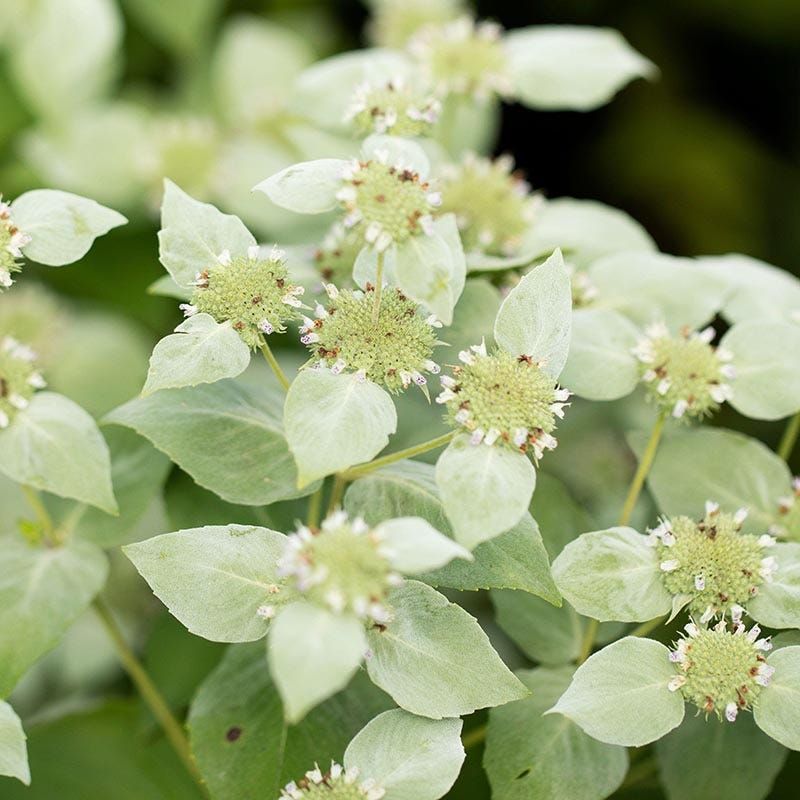
Walk past a patch of mountain mint on a warm afternoon and the clean, minty fragrance will catch your attention right away.
This Ohio-native perennial is one of the more underused plants in home pollinator gardens, but it deserves far more attention than it typically gets.
The small white flower clusters may not look showy from a distance, but up close they are busy with activity from a wide range of pollinators, including monarch butterflies.
Mountain mint blooms over a long stretch of the season, often from late June well into August or even September in favorable Ohio summers.
That extended bloom window is one of its biggest strengths, since it provides consistent nectar during a period when some other natives have already finished flowering.
Virginia mountain mint and common mountain mint are both native to Ohio and tend to perform reliably in sunny garden beds and pollinator borders with average to dry soil.
One thing to keep in mind is that mountain mint spreads through underground runners and can expand its footprint over time. Planting it where it has a bit of room, or using a root barrier, helps keep it from crowding neighboring plants.
The silvery-green foliage also adds texture to a mixed native planting, so the plant earns its place even when it is not in bloom.
For gardeners looking for a long-blooming native that reliably draws adult monarchs and other pollinators through much of the summer, mountain mint is a strong and practical choice.
7. Purple Coneflower Adds Easy Summer Nectar
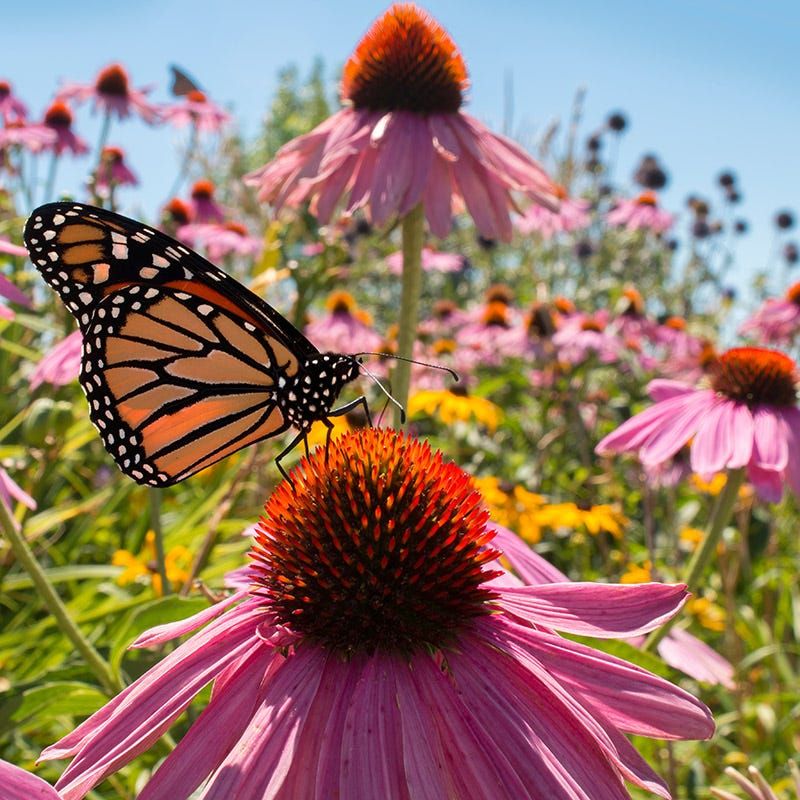
Purple coneflower might be the most recognizable native plant in Ohio home gardens, and there are good reasons it shows up in so many pollinator beds across the state.
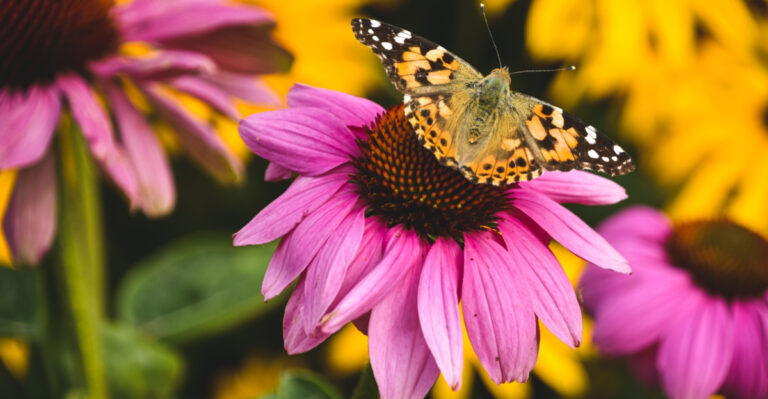
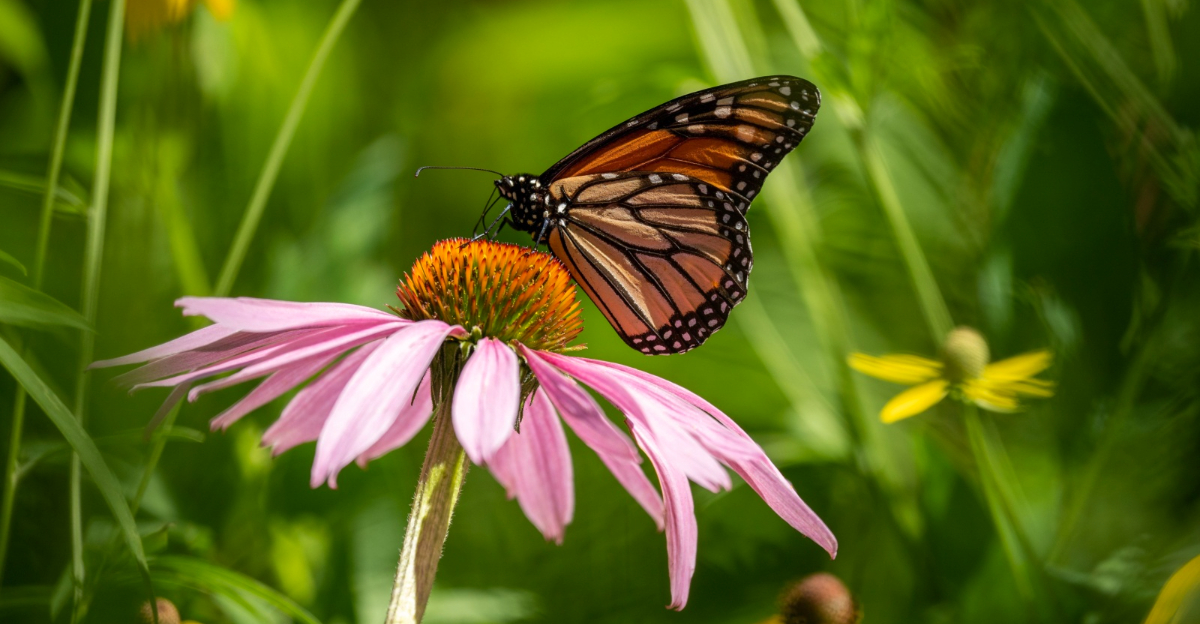
The rosy-purple petals and raised, spiky orange-brown centers are distinctive and cheerful, and the plant blooms reliably from late June through August without asking for much in return.
Monarchs passing through Ohio in summer are among the many butterflies that visit coneflower for nectar.
Echinacea purpurea is native to Ohio and adapts well to a wide range of soil types, including the clay-heavy soils found in many neighborhoods.
It prefers full sun but can manage in spots that get a few hours of afternoon shade without losing too much of its flowering potential.
Once established, coneflower is notably drought-tolerant, which makes it a practical choice for gardeners who want a low-maintenance native that still delivers solid pollinator value through the heat of summer.
Leaving the seed heads in place after the petals fall provides food for goldfinches and other birds through fall and winter, adding another layer of wildlife value to the plant.
Purple coneflower also pairs naturally with liatris, mountain mint, and other midsummer natives, making it easy to build a layered native planting that supports monarchs across several weeks of the season.
For anyone just starting to build a monarch-friendly garden, coneflower is a reliable and rewarding place to begin alongside milkweed.