The Best Palms For Northern California With A Tropical Look And Better Cold Tolerance
Northern California winters can be tough on plants that look like they belong on a beach. Crunchy frost, cold fog, salty wind, and soggy soil all test anything with tropical ambitions.
Yet some backyards keep a lush, vacation feel through the coldest nights. The secret lies in choosing wisely.
A few bold, leafy characters handle chilly weather far better than their warm-climate cousins. Some grow tall and stately, while others stay low and shrubby.
Young plants still need a little extra care during their first few winters, and published cold ratings vary from source to source.
With the right pick in the right spot, a frosty morning can reveal a corner of the yard that looks like summer never left.
1. Windmill Palm Leads In Cold Tolerance
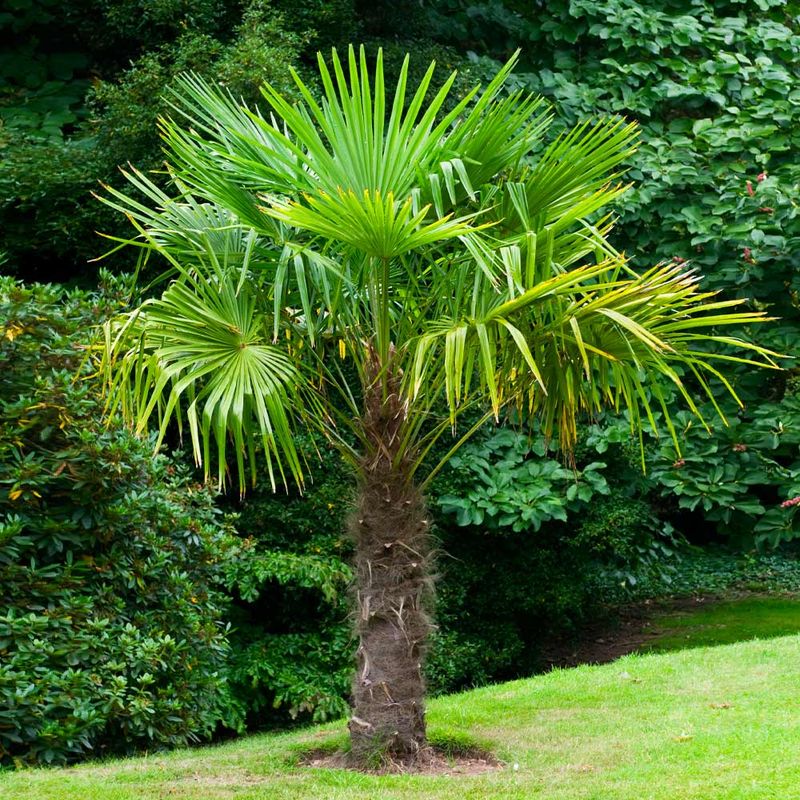
Frost on the windshield, frost on the lawn, and not a scratch on the palm by the fence. Northern California gardeners see that scene every winter with the windmill palm, one of the toughest tree palms available here.
Nurseries sell it as Trachycarpus fortunei. Mature plants handle temperatures down to about 5 degrees Fahrenheit, and some survive brief dips a bit lower.
Very few palms with a real trunk can match that. Valley gardens, foothill yards, and foggy coastal lots all suit it well.
The look delivers pure tropical charm. Stiff, round fan fronds spread out like pinwheels, giving the plant its name. The slim trunk wears a shaggy coat of brown fiber resembling burlap.
Most plants reach 20 to 30 feet over many years, with a narrow spread of about 10 feet.
A windmill palm fits beside a patio, in a side yard, or near a pool without taking over. Two or three planted at different heights create a lush grove effect.
Shade is welcome, too, especially in the hot Central Valley. Afternoon shade keeps fronds deep green rather than yellowed and scorched.
A sheltered spot also protects leaves from shredding in strong wind.
Well-drained soil and steady summer water keep it healthy. Young plants under three feet tall appreciate frost cloth on the coldest nights.
Spring planting gives roots a full warm season to settle in, so fall makes an ideal time to plan.
2. Needle Palm Brings A Shrubby Tropical Look
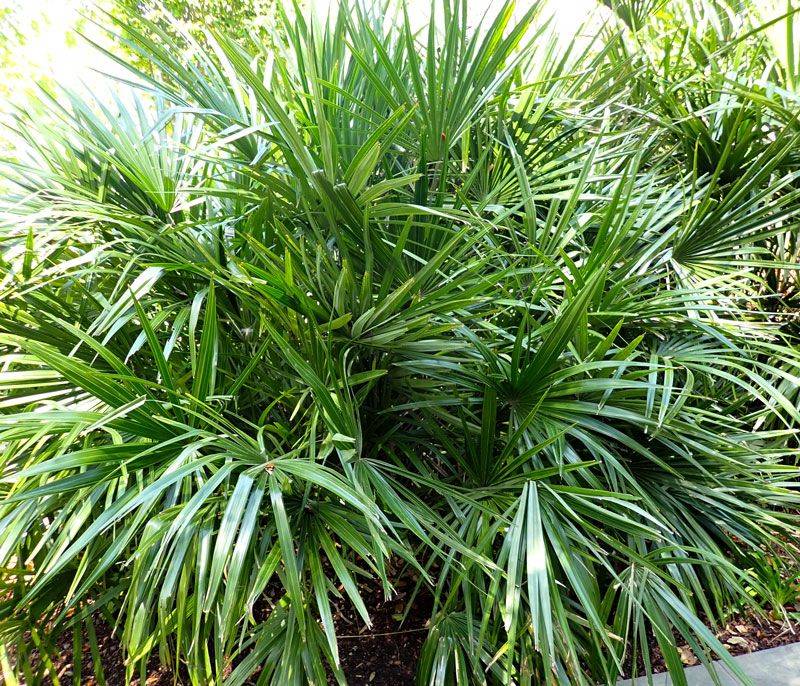
Bare hands reaching toward the base of this palm learn its name quickly. Long, sharp spines hide among the fibers near the crown, and those needles make it unforgettable.
Nurseries list it as Rhapidophyllum hystrix. Hardiness is where it truly shines, since needle palm often earns the title of most cold-hardy palm in the world.
Established clumps handle single digits with ease, and many references list survival near 0 degrees Fahrenheit or colder. No palm on this list beats it for pure toughness.
Instead of a tall trunk, needle palm grows as a dense, rounded shrub. Mature clumps form a mound about 3 to 6 feet tall and just as wide after many years.
Glossy, deep green fans sit on long stems, giving a jungle feel at eye level.
Its compact size works in spots where tree palms would look out of place. Under a window, along a shady path, or beneath taller trees all make good homes.
Your California Garden Changes Every Week. Your Plan Should Too.
Gardening in California changes quickly throughout the season. Every Friday you’ll receive a simple weekly plan showing exactly what to plant, prune, fertilize, harvest, and protect so you never miss the right timing.
It pairs beautifully with ferns and other leafy plants for a woodland tropical scene. The combination looks lush year-round.
Native to the southeastern United States, needle palm grows naturally in shady, moist forests. That background explains its love of partial shade and regular water.
Full Central Valley sun can bleach the leaves.
Growth runs slow, and nursery plants can cost more than expected. Placement away from walkways keeps anyone from getting a pointed surprise during yard work.
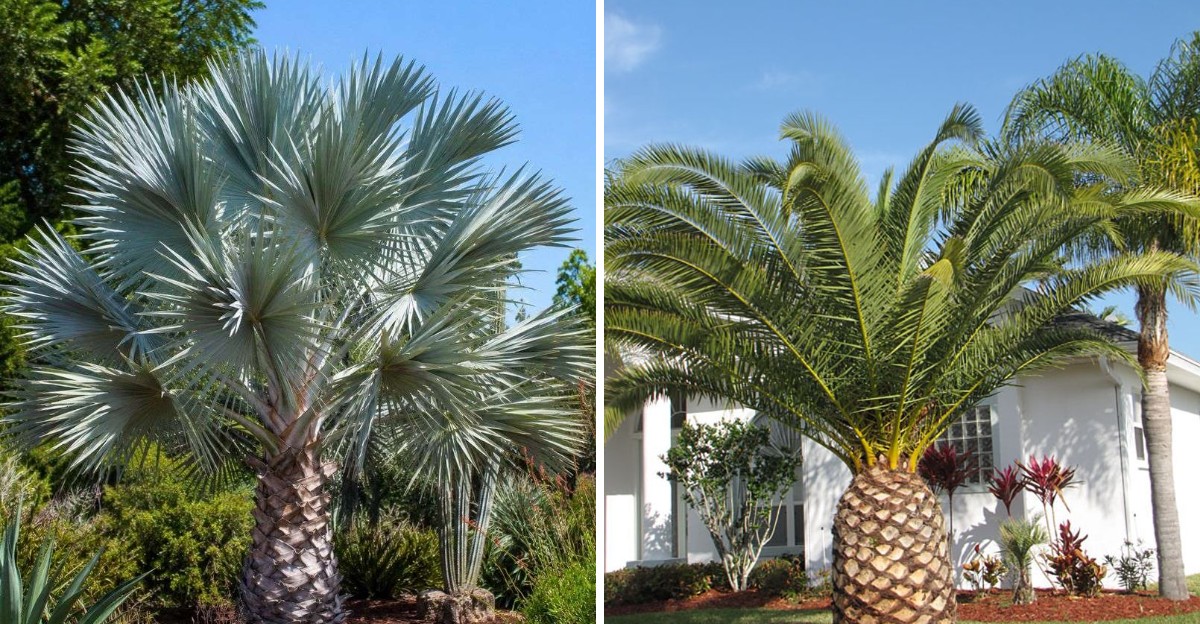
3. Pindo Palm Adds Silvery Blue Fronds
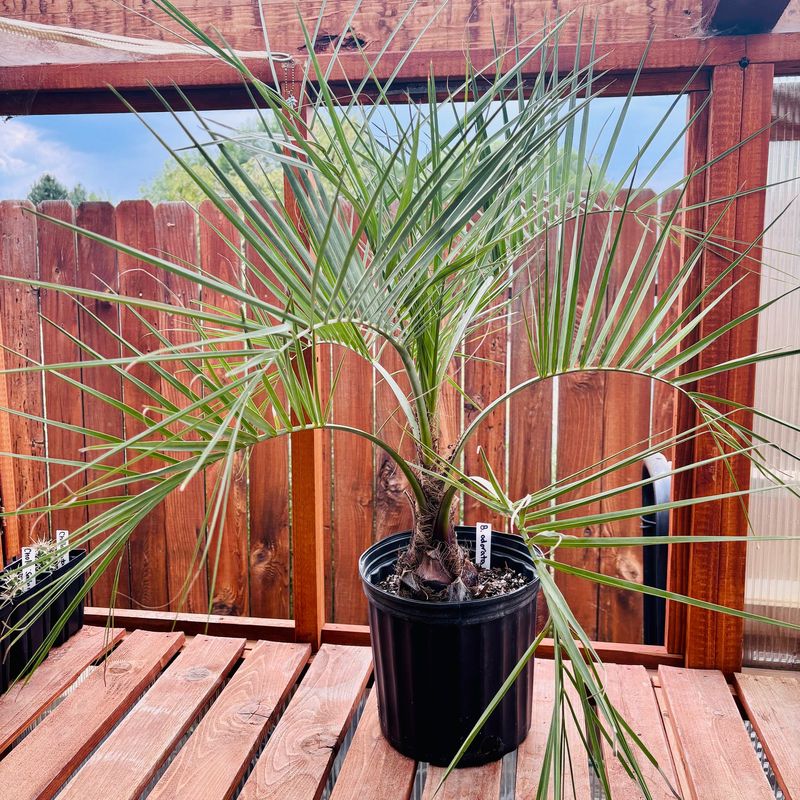
A fountain made of leaves describes this palm well. Long, feathery fronds rise from a stout trunk, then curve back toward the ground in a graceful arc.
Pindo palm, sold as Butia odorata and sometimes still labeled Butia capitata, carries that soft, sweeping shape as its calling card. Color sets it apart from greener palms.
Fronds range from gray-green to a cool silvery blue. Against a stucco wall or dark mulch, they almost glow in late afternoon light.
Cold hardiness holds up well for Northern California. Mature pindo palms handle about 12 to 15 degrees Fahrenheit, with some reports a bit lower.
That range covers most Bay Area, coastal, and Valley gardens in a typical winter. Few feather palms offer such dependable toughness.
Size stays friendly, too. Most plants grow 10 to 20 feet tall with a wide crown about 10 to 15 feet across.
Slow to moderate growth keeps them from outgrowing a front yard quickly.
Summer brings a sweet bonus. Clusters of orange fruit carry a tangy flavor some people compare to pineapple and apricot. The fruit makes a tasty jam, which earned the nickname jelly palm.
Fruit drop can get messy on patios, though. Mulch or groundcover beneath the crown handles it more gracefully.
Full sun and well-drained soil suit pindo palm best. Deep watering during the first few summers, followed by a gradual cutback once roots settle, sets it up for decades.
4. Mediterranean Fan Palm Forms Tough Clumps
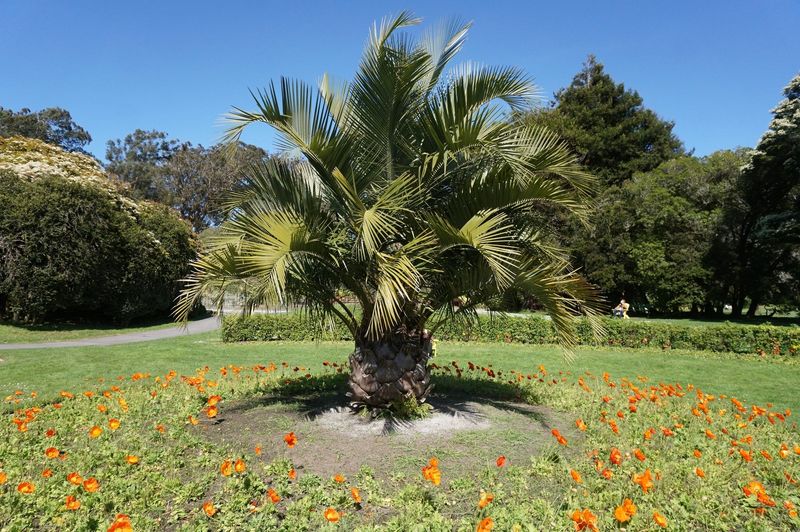
Small yards often come with big wish lists. Many homeowners want a palm that looks lush but stays well below the roofline, and the Mediterranean fan palm answers that request with style.
This species ranks as one of only two palms native to Europe, growing wild on rocky hills around the Mediterranean Sea.
Those dry summers and cool, wet winters feel a lot like Northern California, which explains why it settles in so easily here.
Nurseries sell it as Chamaerops humilis. Its form makes it special, since several short trunks form a dense clump rather than one tall trunk.
Stiff fan leaves in green, gray-green, or silvery blue fill out the shape. Most clumps reach 6 to 15 feet tall and about as wide.
Cold tolerance runs about 10 to 15 degrees Fahrenheit for established plants. That makes it a tough pick for Valley towns that see frost every year.
Wind and salty coastal air rarely faze it, either.
Drought tolerance stays strong once roots spread. A deep soak every couple of weeks in summer keeps it looking fresh.
Soggy winter soil poses the real danger, so low spots where rain puddles are best avoided. Raised ground or a gentle slope works far better.
Sharp teeth along the leaf stems call for caution during pruning. Gardeners wanting a single trunk can remove extra suckers over time.
A clump left alone becomes a living screen with a tropical twist.
5. California Fan Palm Offers Classic Height
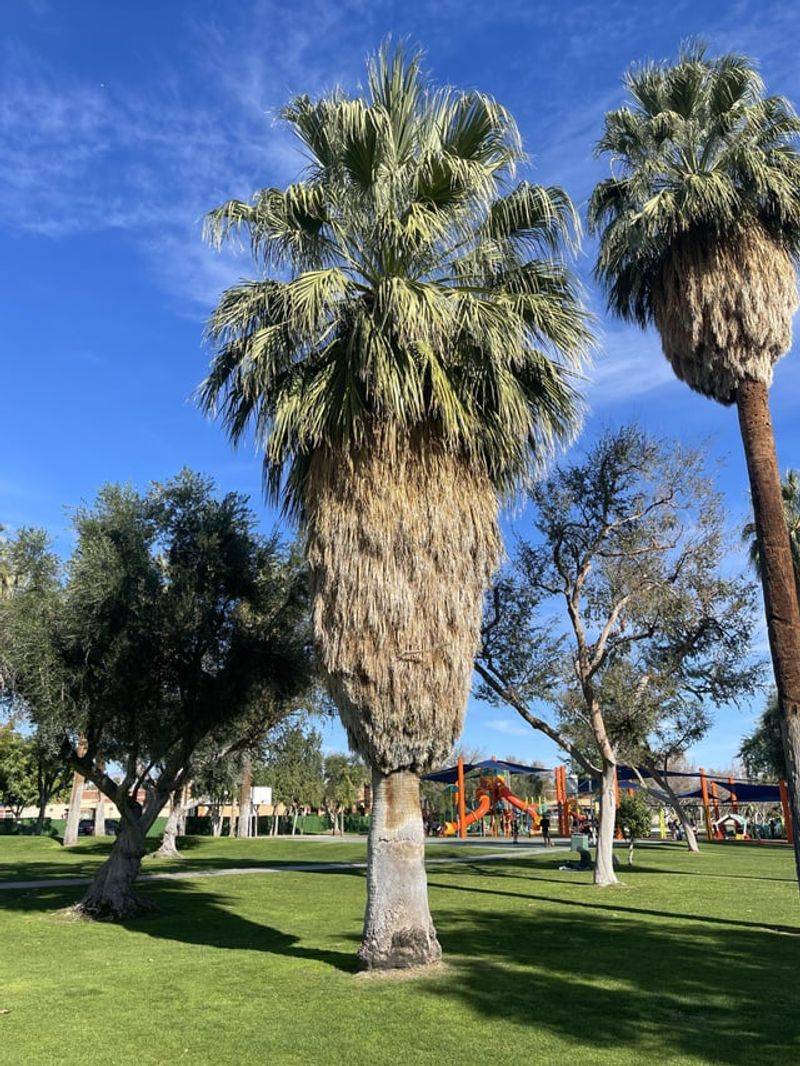
Long before anyone planted palms along city streets, desert oases in Southern California held groves of a single native species. That species, the California fan palm, remains the only palm native to the western United States.
Nurseries sell it as Washingtonia filifera. Height gives it that classic postcard look, with mature trees often reaching 40 to 60 feet tall.
The trunk grows thick and sturdy, often 2 to 3 feet wide, topped by a full crown of big gray-green fans. Thin white threads curl from the leaf edges, explaining the name filifera, meaning thread-bearing.
Cold tolerance runs better than many people expect. Established trees handle about 15 degrees Fahrenheit, with brief dips slightly lower.
Its close cousin, the Mexican fan palm, grows skinnier and less hardy. A careful look at the nursery label prevents mix-ups.
Left untrimmed, old fronds hang down to form a thick skirt around the trunk. Wildlife love that skirt, but it burns very easily.
Many gardeners trim it for a cleaner, safer trunk. CAL FIRE guidance supports removing dry fronds on palms near homes.
Space matters with this giant. Placement well away from power lines, roofs, and narrow side yards makes sense.
A large lawn, driveway entrance, or open corner of a property suits it best.
Full sun and occasional deep watering keep it happy. Hot Central Valley summers pose no problem, while foggy coastal spots simply slow its growth.
6. Canary Island Date Palm Makes A Bold Statement
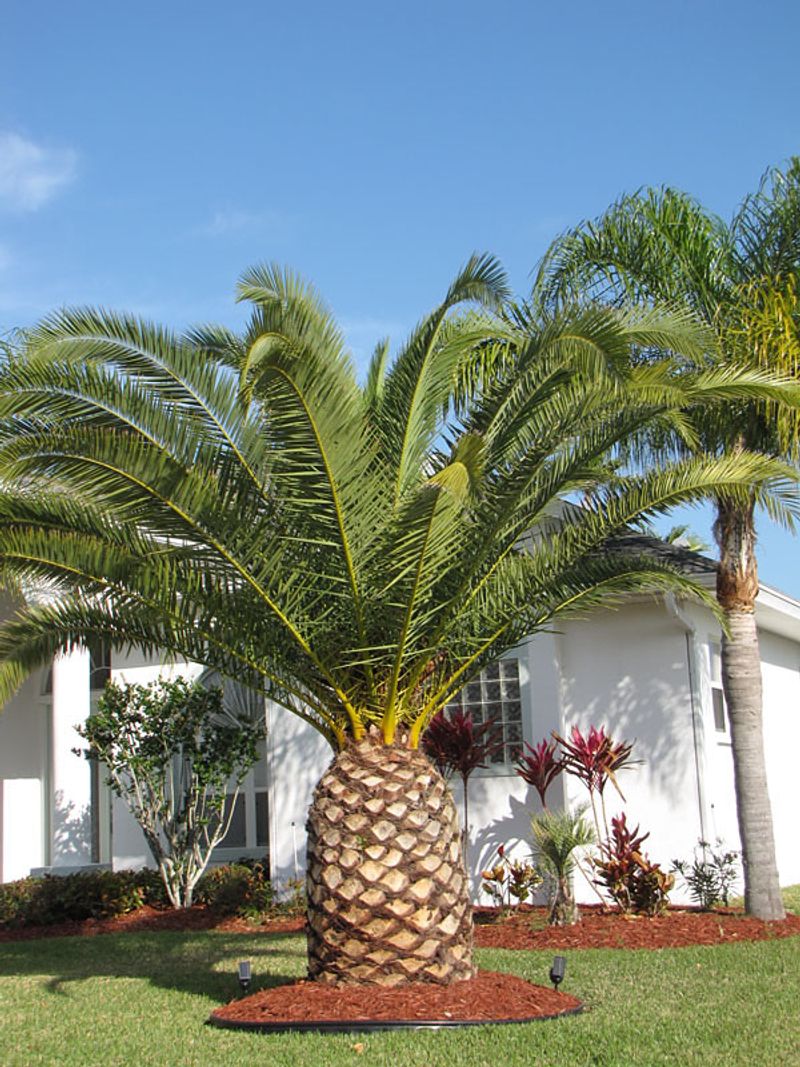
Old Victorian neighborhoods in Sacramento and the Bay Area often show off giant palms with crowns like green fireworks. Many of those beauties are Canary Island date palms, and some were planted more than a century ago.
Nurseries sell this species as Phoenix canariensis. Nothing about it feels subtle.
The crown can spread 30 feet or more, packed with long, arching feather fronds.
A thick trunk shows a neat diamond pattern where old leaves were removed, and height reaches 40 to 60 feet over time.
Cold tolerance sits around the low 20s Fahrenheit for mature trees, with leaf damage possible near 20 degrees. Most Bay Area and Valley winters stay above that.
Young plants need covering during hard freezes, since their growing tip has less protection. Frost cloth makes an easy safeguard.
Size raises the biggest concern, so careful thought before planting pays off.
Fronds carry long, sharp spines near their base that can pierce skin, making walkways, play areas, and the house poor neighbors.
Disease deserves a warning, too. A fungal problem called fusarium wilt spreads through dirty pruning tools.
Any tree crew working on the palm should clean saws before cutting. Blades are best cleaned before moving on to another palm, since a single dirty cut can spread the disease.
Full sun and plenty of room suit this palm best, along with deep but infrequent watering. Once settled, it becomes a true neighborhood landmark for decades.
7. Chilean Wine Palm Is Slow But Mighty
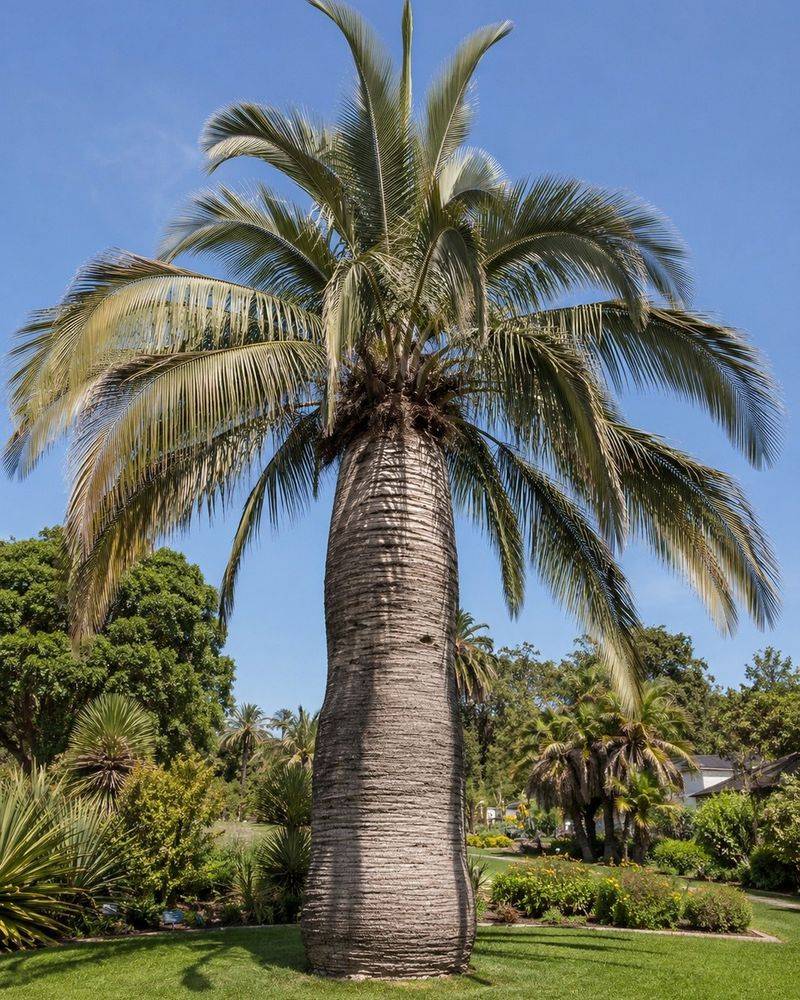
Patience defines life with this palm. Some young plants spend ten years or longer before forming a real trunk, making it a gift to future owners as much as current ones.
Nurseries sell it as Jubaea chilensis, sometimes under the name coquito palm for its small, edible nuts. The long wait brings one of the most impressive trunks in the plant world.
Mature trees can grow trunks 3 feet wide or more, smooth and gray like an elephant leg. A full crown of green feather fronds sits on top, giving a grand, almost ancient look.
Cold tolerance runs strong for a feather palm. Established trees handle about 15 to 20 degrees Fahrenheit.
That range places it among the hardiest feather palms for outdoor growing in Northern California. Few rivals match its combination of size and toughness.
In its native Chile, heavy harvesting of the sweet sap for syrup shrank wild populations, which once covered large stretches of central Chile. The palm now enjoys legal protection there.
Size takes time but eventually grows big. Older trees may reach 50 feet or taller, so a roomy spot makes sense.
Parks, large estates, and spacious backyards make the best homes. Small lots are best avoided.
Drought tolerance improves once roots dig deep, and cool coastal weather suits it, since the palm comes from a similar climate.
Buying the largest plant the budget allows cuts years off the wait.
8. Mexican Blue Palm Brings Silver Foliage
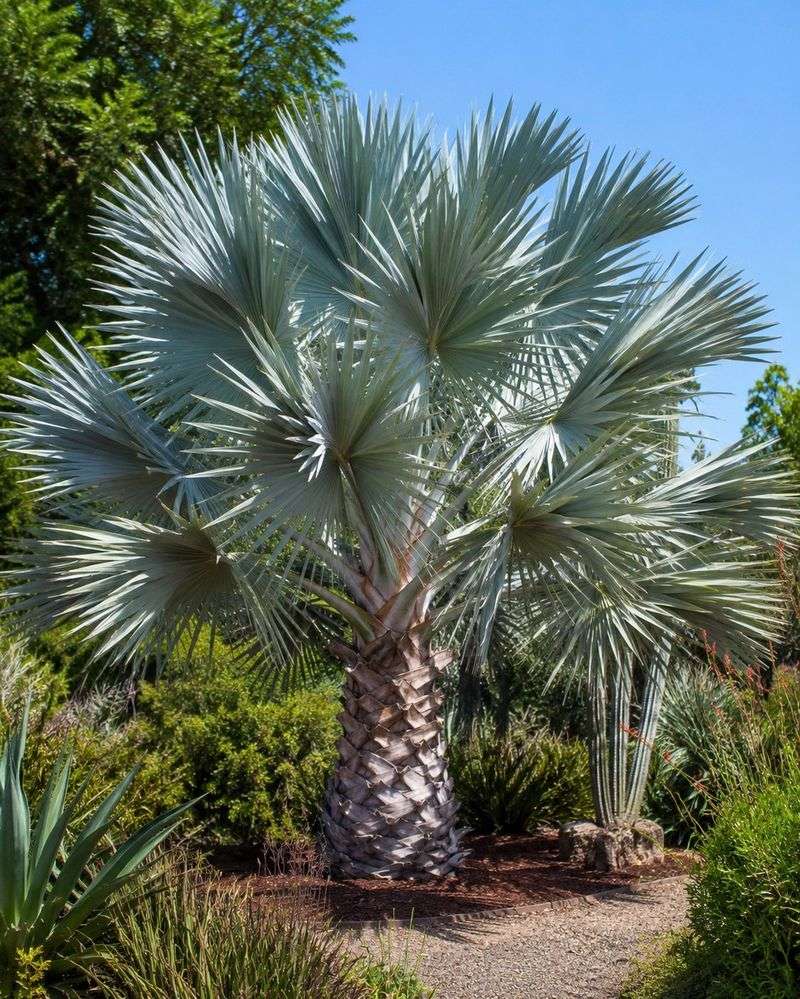
Sunlight hits the fronds, and suddenly the whole palm shimmers like brushed silver. Icy blue-gray fans look almost frosted, even in July.
Nurseries sell the Mexican blue palm as Brahea armata. Few plants catch the eye quite like it.
Spring and summer bring a surprise show. Long, creamy flower stalks arch far past the leaves, sometimes reaching 15 feet, while bees visit the blooms and small round fruit follows.
Native to dry, rocky areas of Baja California, this palm handles drought with ease. Once established, it needs only occasional deep watering.
Gravel gardens and succulent beds make ideal neighbors, since they share the same low thirst. The pairing looks striking, too, with silver fans above spiky rosettes.
Cold tolerance lands around 15 to 18 degrees Fahrenheit for mature trees. Most Northern California winters stay comfortably above that.
Soggy soil poses the bigger risk, so a slight mound or fast-draining ground works best. Growth runs slow, and most trees top out around 20 to 40 feet over many years.
Short leaf stems carry sharp teeth, as the name armata, meaning armed, suggests. Thick gloves make tidying far more comfortable.
Tidying matters on every palm here. CAL FIRE guidance favors trimming dry fronds regularly and keeping palms well away from roofs, decks, and fences.
A clean, well-placed palm adds beauty without adding fuel, keeping a tropical corner lush and safer through every season.