The Best Way To Prune African Violets For Bushier Growth In Oregon
African violets are one of those plants that look delicate but are secretly pretty tough once you figure out what they actually want.
Most people grow them, enjoy them for a while, and then watch them slowly turn into a leggy, lopsided situation with a sad cluster of leaves at the top and a whole lot of bare stem underneath.
Sound familiar? The good news is that a little strategic pruning completely changes the game.
Here’s what most growers don’t realize: African violets respond to pruning the same way a great haircut transforms a bad hair day.
Remove the right leaves at the right time and the plant throws its energy into pushing out new, compact, bushy growth that makes the whole thing look full and intentional.
Oregon’s indoor growing conditions are actually fantastic for African violets year round, which means more opportunities to get the pruning rhythm right and watch these plants absolutely thrive. It’s easier than it looks and the results are genuinely satisfying.
Remove Old Bottom Leaves
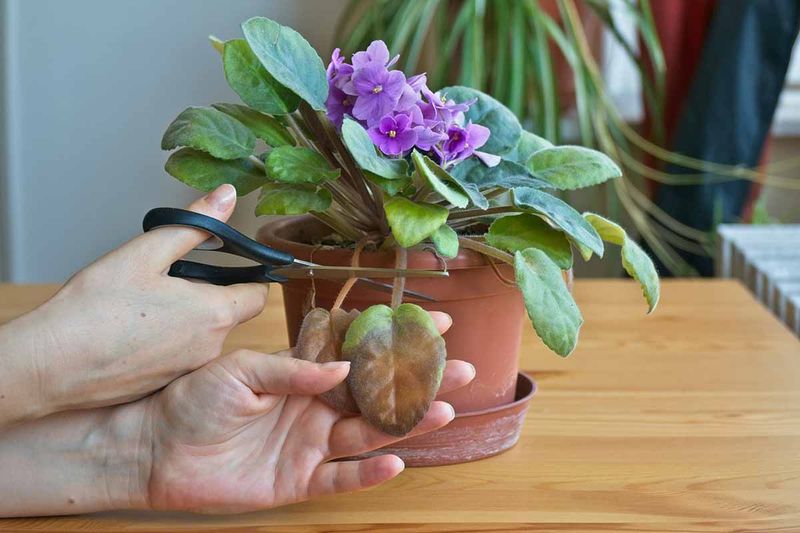
Old leaves at the bottom of your African violet are often the first sign that your plant needs some attention. Over time, the lower leaves turn yellow, get soft, or just stop looking their best.
Removing them is one of the simplest and most effective pruning steps you can take.
When you pull away those tired outer leaves, the plant can focus its energy on the healthy, newer growth at the center. This helps the whole plant look fuller and more vibrant.
In Oregon, where indoor humidity can vary by season, keeping the base of your plant clean also helps prevent mold and rot from forming near the soil.
To remove old leaves, gently grip them close to the stem and wiggle them side to side until they snap off cleanly. Try not to tear or rip, since rough breaks can leave the plant open to infection.
Aim to keep about three to five rows of healthy leaves on a standard-sized plant. Doing this every few weeks makes a big difference over time.
Your plant will look neater, grow stronger, and reward you with more blooms when the lower leaves are regularly cleared away.
Pinch Off Spent Flowers
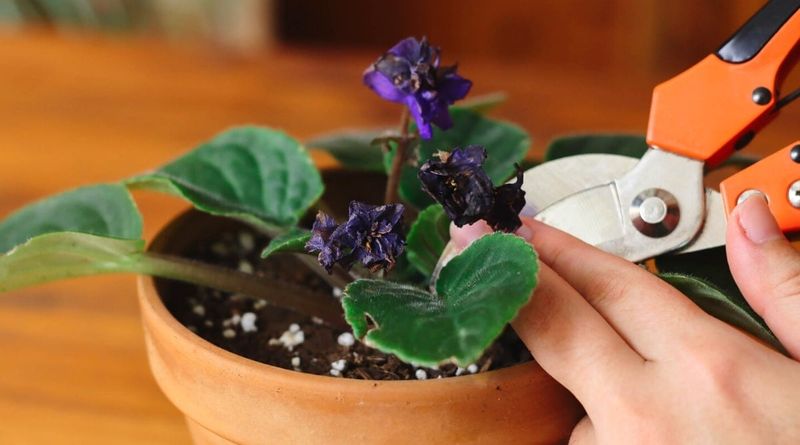
Spent flowers might seem harmless, but leaving them on your African violet actually slows down new blooms. Once a flower fades and turns brown, the plant starts putting energy into forming seeds instead of growing new buds.
Pinching off those old flowers right away keeps that energy going in the right direction.
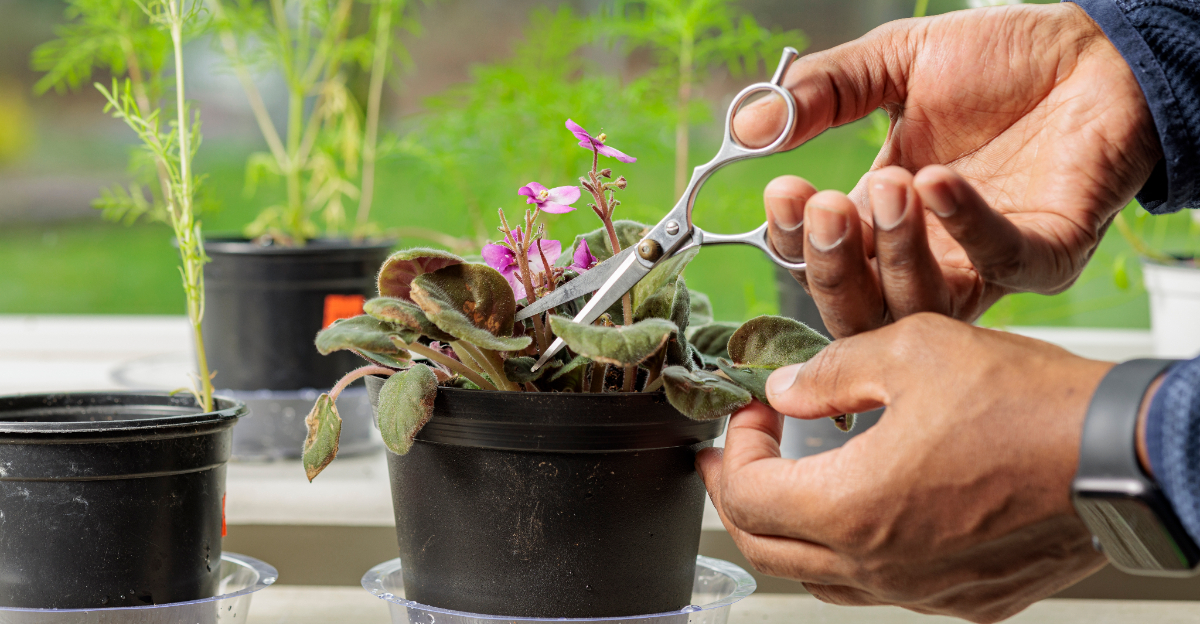
This process is called deadheading, and it is one of the easiest habits to build as a plant parent. All you need to do is pinch the flower stalk just above the leaf rosette using your fingers or a pair of clean scissors.
Do this as soon as you notice a bloom starting to fade, and you will be amazed at how quickly new flowers appear to take its place.
Oregon gardeners who grow African violets indoors often notice that their plants bloom more consistently when spent flowers are removed regularly. The plant stays tidy, the leaves get more light, and the whole rosette looks healthier.
Your Oregon Garden Changes Every Week. Your Plan Should Too.
Gardening in Oregon changes quickly throughout the season. Every Friday you’ll receive a simple weekly plan showing exactly what to plant, prune, fertilize, harvest, and protect so you never miss the right timing.
Make it part of your weekly plant check. Walk by your shelf or windowsill, look for any drooping or browning blooms, and pinch them off right away.
Small habits like this lead to big, beautiful results over time.
Trim Leggy Stems
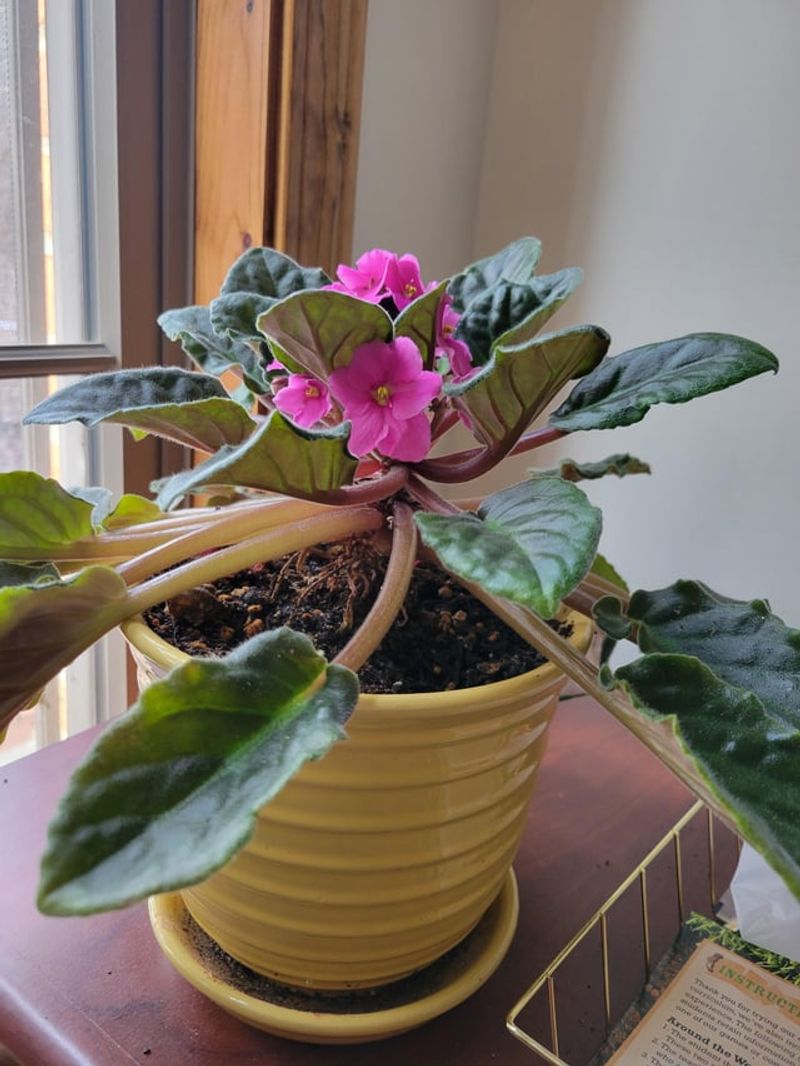
Leggy stems are a common problem for African violets, especially when they are not getting quite enough light. A leggy stem looks stretched out and bare, with leaves only at the very tip and a long naked section below.
It makes the plant look uneven and scraggly instead of full and round.
Trimming those leggy stems back encourages the plant to push out new growth from lower down on the stem. When you cut back a stretched stem, the plant responds by branching out, which is exactly what you want for bushier growth.
Use clean, sharp scissors and make your cut just above a healthy leaf node.
In Oregon, African violets grown near windows may stretch toward the light during the shorter winter days. Rotating your plant every week or two helps prevent legginess in the first place.
But when leggy stems do appear, do not wait too long to trim them. The sooner you cut them back, the faster the plant bounces back with fresh, compact growth.
Pairing regular trimming with a bright but indirect light source will keep your plant looking neat and full throughout every season in Oregon.
Encourage New Crown Growth
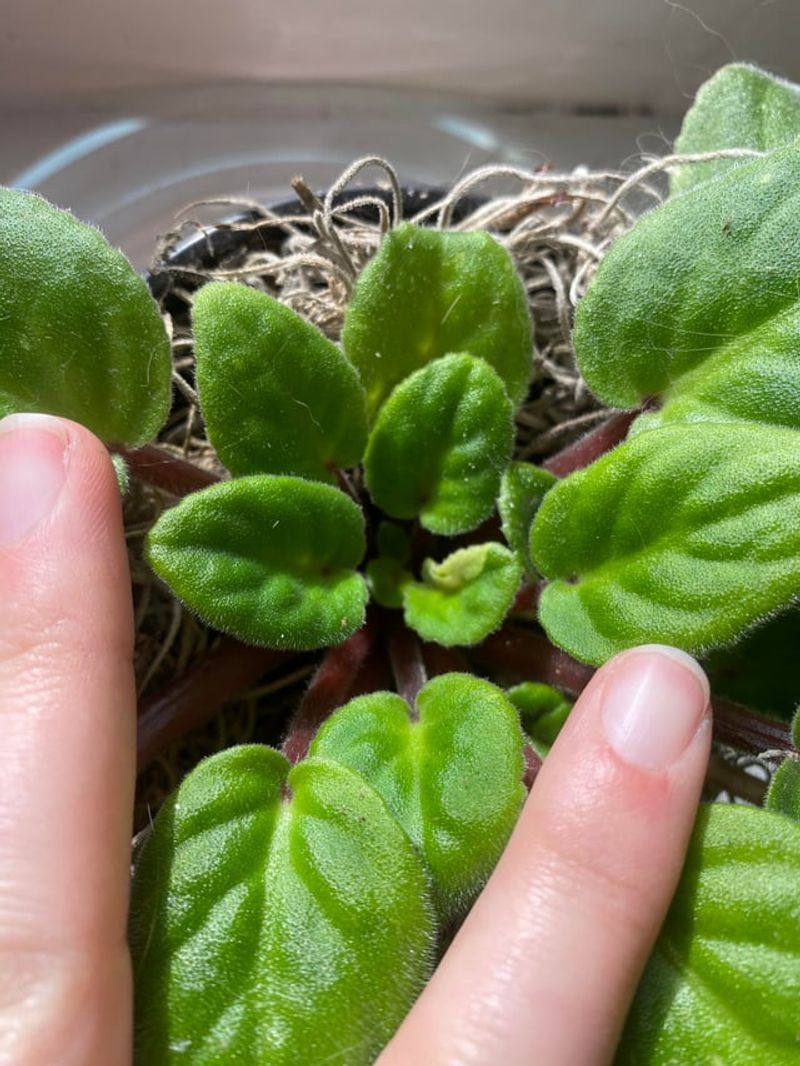
The crown is the very center of your African violet where all the new leaves and flower stalks emerge. Keeping the crown healthy and open is one of the most important parts of getting bushier growth.
A crowded or blocked crown means slower growth and fewer blooms.
Sometimes small offshoots called suckers grow around the base of the crown. These little plantlets are cute, but they actually pull energy away from the main plant.
Carefully removing suckers with a clean toothpick or small scissors helps the crown stay strong and productive. You can even pot those suckers separately to grow new plants.
Oregon plant lovers often find that giving the crown a little extra care in early spring makes a huge difference for the rest of the growing season. After removing any suckers and old leaves, the crown gets better airflow and more light.
This wakes up the plant and triggers a fresh wave of new leaf and flower production. Keep the center of your plant clear, check on it weekly, and never let debris or old flower stalks pile up around the crown.
A clean, open crown is the secret to a truly full and thriving African violet.
Keep The Rosette Balanced
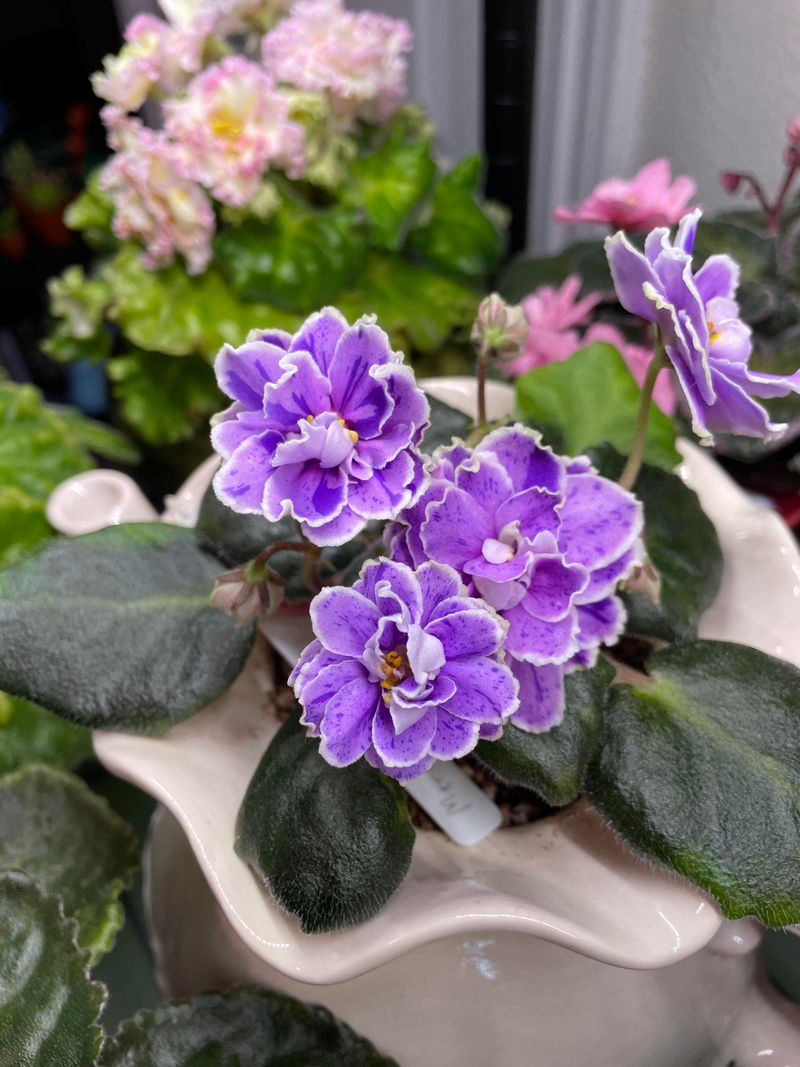
A well-balanced rosette is the hallmark of a healthy, well-cared-for African violet. When leaves grow unevenly, with one side fuller than the other, the plant can look lopsided and even grow less effectively.
Keeping the rosette balanced is both a visual and a practical goal.
To correct an uneven rosette, selectively remove a few leaves from the fuller side. This redirects the plant’s energy toward the side that needs to catch up.
At the same time, make sure you are rotating your plant regularly so every side gets equal exposure to light. In Oregon’s variable light conditions, especially during gray winter months, rotation makes a real difference.
Balancing the rosette also means checking that no single leaf is blocking others from getting light. Sometimes one large outer leaf casts a shadow over younger inner leaves, slowing their growth.
Removing or trimming that oversized leaf opens things up nicely. Think of it like giving each leaf its own personal space to grow.
A symmetrical, evenly spaced rosette looks stunning and signals that your plant is healthy and thriving. With a little attention each week, keeping your African violet balanced becomes second nature and the results are absolutely worth the effort.
Prune With Clean Tools
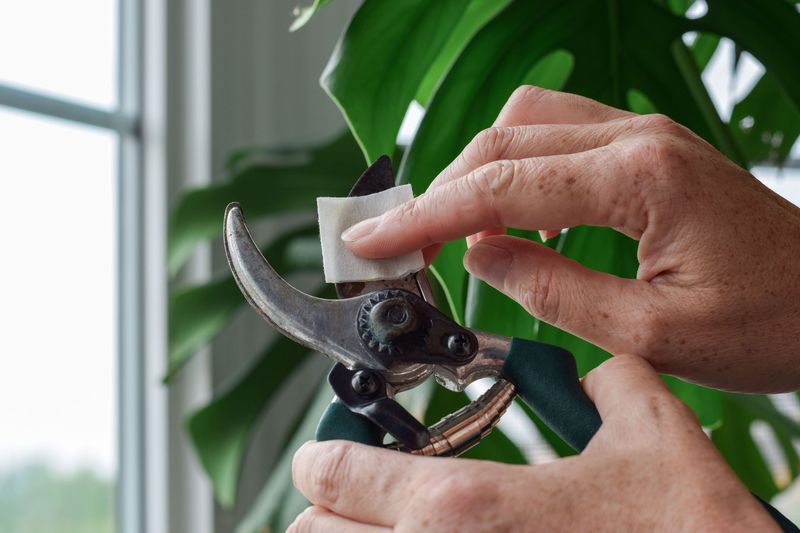
Using clean tools might sound like a small detail, but it is actually one of the most important pruning rules you can follow. Dirty scissors or pruning shears can spread bacteria, fungi, and other pathogens from one plant to another without you even realizing it.
One infected cut can cause serious problems for your African violet.
Before you start pruning, wipe your scissors or shears with rubbing alcohol and let them air dry for a moment. Do this between plants too, especially if you are working on multiple African violets in one session.
Sharp blades also matter because clean cuts heal faster than jagged or torn ones. Dull scissors crush the stem tissue instead of cutting it cleanly, which makes recovery slower.
Oregon gardeners who grow multiple houseplants know how quickly problems can spread when tools are shared without cleaning. Making tool sterilization a regular habit protects your whole plant collection, not just your African violets.
Keep a small bottle of rubbing alcohol and a few cotton balls near your plant area so the process stays quick and easy. Healthy plants start with clean habits, and this one simple step can save you a lot of trouble down the road.
Avoid Over-Pruning
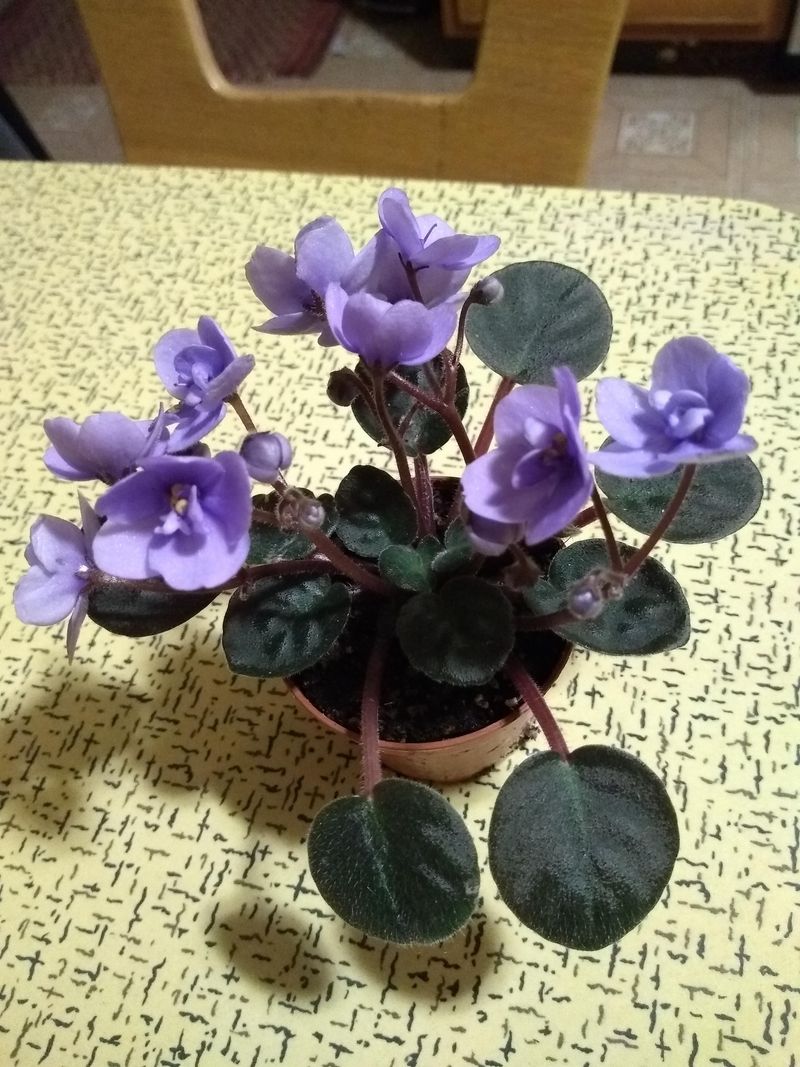
Pruning is powerful, but too much of a good thing can set your plant back significantly. African violets need their leaves to absorb light and produce the energy that fuels new growth.
If you remove too many leaves at once, the plant struggles to recover and may stop blooming for weeks.
A good rule of thumb is to never remove more than one third of the plant’s leaves in a single pruning session. Spread out your pruning over several weeks if the plant needs a lot of work.
This gives it time to adjust and push out fresh growth between sessions. Slow and steady really does win the race with African violets.
In Oregon, where the growing season indoors can feel longer thanks to mild temperatures, it can be tempting to prune aggressively in hopes of quick results. Resist that urge.
Instead, check your plant every week and remove only what truly needs to go. A few leaves here, a spent flower there, and maybe one or two suckers add up to meaningful progress without stressing the plant.
Patience is a big part of successful African violet care, and avoiding over-pruning is one of the best ways to keep your plant happy and productive all year.
Prune Regularly For Fuller Plants
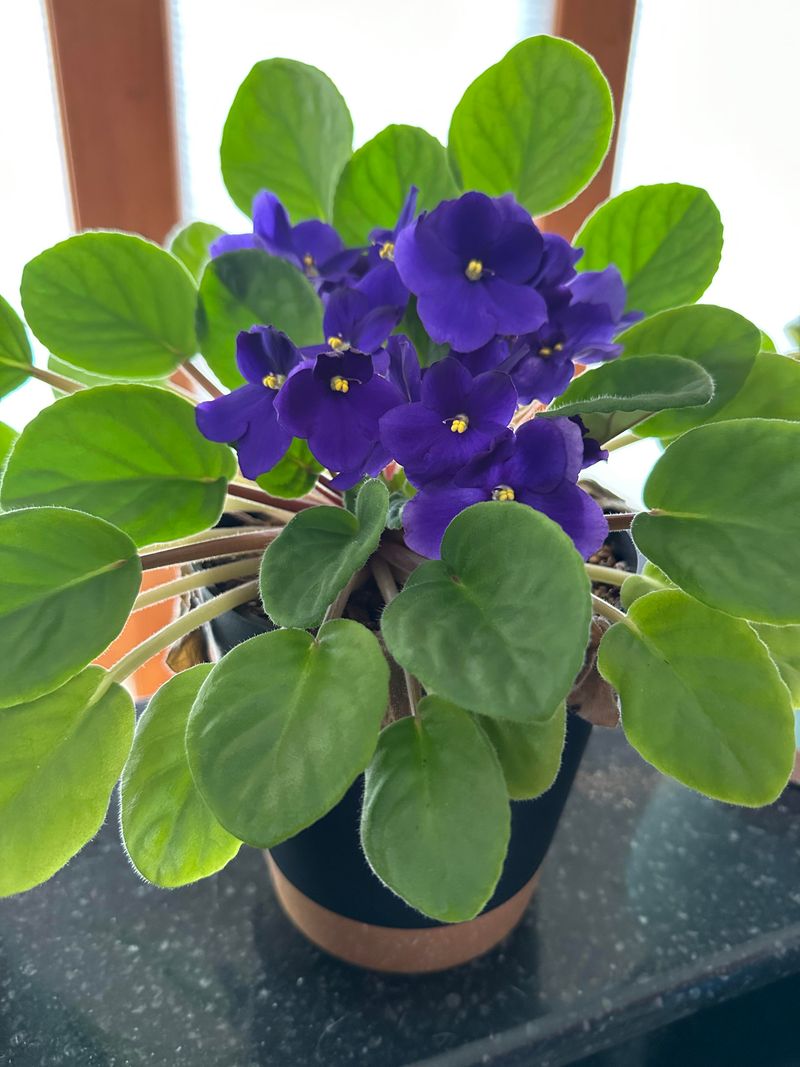
Consistency is the real secret behind those big, beautiful African violets you see at plant shows and in gorgeous home gardens. Pruning once and then forgetting about it will not give you the same results as making it a regular habit.
Regular pruning keeps the plant tidy, encourages branching, and promotes steady blooming throughout the year.
Try setting a weekly or biweekly schedule for checking your African violets. During each check, look for spent blooms, old or yellowing leaves, leggy stems, and any suckers forming around the crown.
Remove what needs to go, rotate the pot, and give the plant a quick once-over. It only takes a few minutes, but the cumulative effect over months is dramatic.
Oregon plant enthusiasts who treat pruning as a regular ritual rather than an occasional chore tend to have the most stunning African violets. The plants respond to consistent care with steady new growth and reliable flowering.
Think of it as a conversation between you and your plant. Each week you check in, remove what is holding it back, and give it room to grow.
Over time, your African violet will reward your attention with a fuller, more vibrant appearance that makes every pruning session feel completely worth it.