The Bird That Shares Mississippi’s Name Has Already Left The State Before Its Own Fall Begins
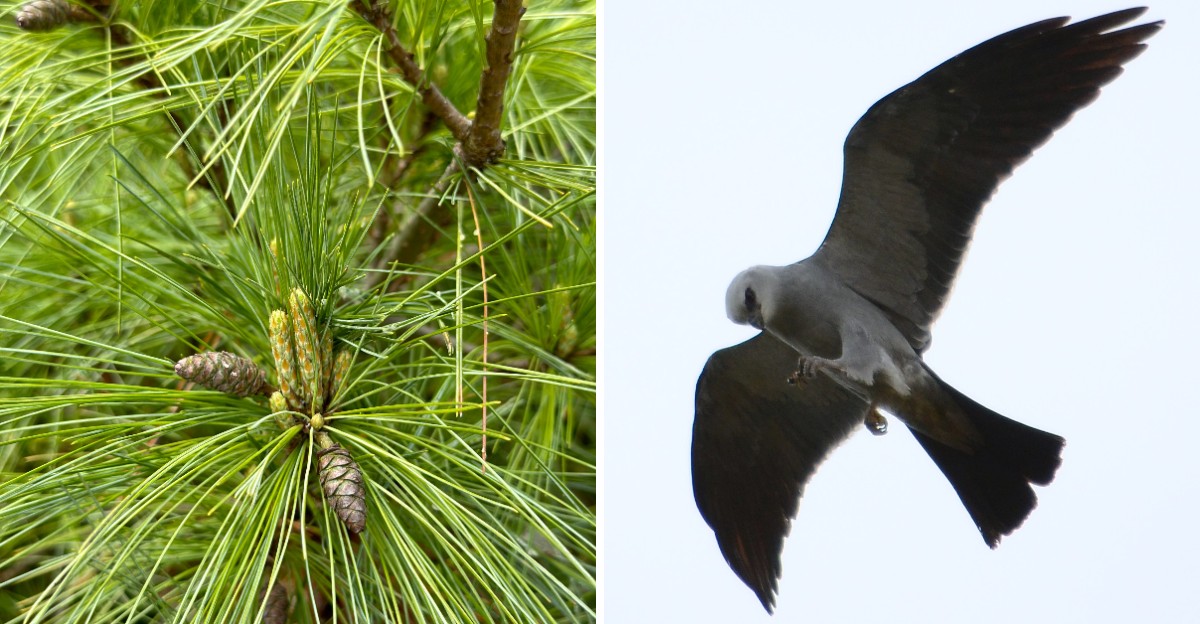
You felt it before you noticed it, that hollow evening quiet. Gone are the swirling flocks that once owned your summer pastures. Pines you passed this summer no longer whistle.
These birds ignore your calendar and leave on theirs. Their clock runs weeks ahead of yours, sharp and unshakable. These gray fliers cross Mississippi skies toward South America now, chasing your summer south.
Cool fronts arrive late for a bird already gone from your view. Watching this exodus changes how you read your own September sky. You’ll notice it too, sooner than any calendar admits. Argentina waits with open skies while your home settles into autumn.
Countless miles south feel effortless for wings built to travel. Your evenings feel thinner without that familiar shape overhead. Migration like this rewards anyone paying close attention.
Timing alone makes it unforgettable. Miss these details, and you miss the whole spectacle unfolding above you.
Gone Before The Leaves Even Think About Turning
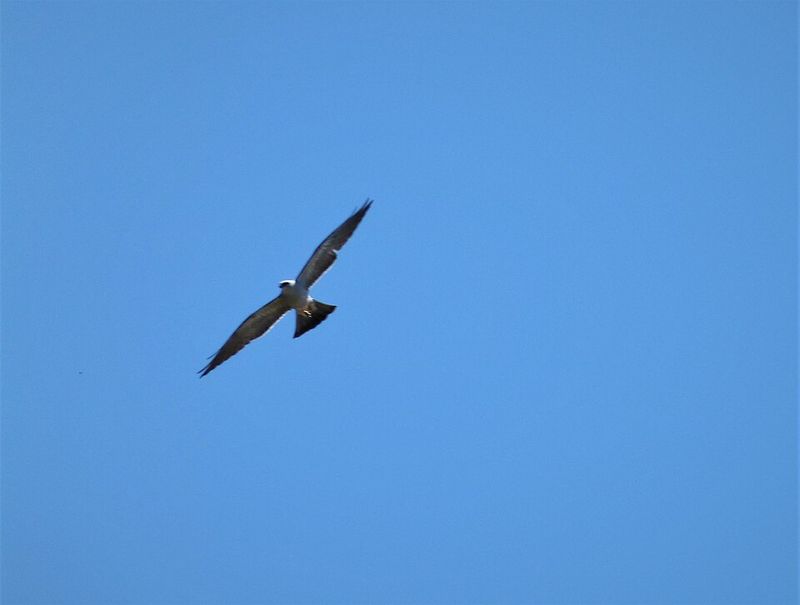
Late August across the state still feels like deep summer, but the kites keep a different calendar. Their internal clock runs on daylight and insect numbers, not on pumpkin displays at the grocery store.
Nesting pairs usually finish raising young by early August, and the fledglings gain strength quickly. Once those youngsters can chase dragonflies on their own, the family groups begin drifting.
Loose flocks gather over fields, pastures, and river bottoms during the final two weeks of August. Birders call those swirling gatherings kettles, and a good one can hold dozens of birds at once.
Weather nudges the schedule a little from one year to the next. A soggy spring can delay nesting, which pushes departure into the second week of September.
Long-term records point to peak movement in the second half of August. Anyone scanning the sky above harvested soybean fields around Labor Day has decent luck.
By mid-September, sightings in the Delta and along the Gulf Coast drop off sharply. A few late travelers linger, often young birds still learning the route south.
So while Mississippi’s own autumn shows up in late September, its namesake raptor has usually cleared out weeks earlier. That gap between the bird’s fall and the state’s fall is one of the neatest quirks in southern birding.
Keep the timeline in mind if you hope to see them. Waiting on cool weather means missing the show.
Mark the last two weeks of August through early September on the calendar and look up often. That short window offers the best odds of a memorable view.
A Gray Silhouette Worth Learning By Heart
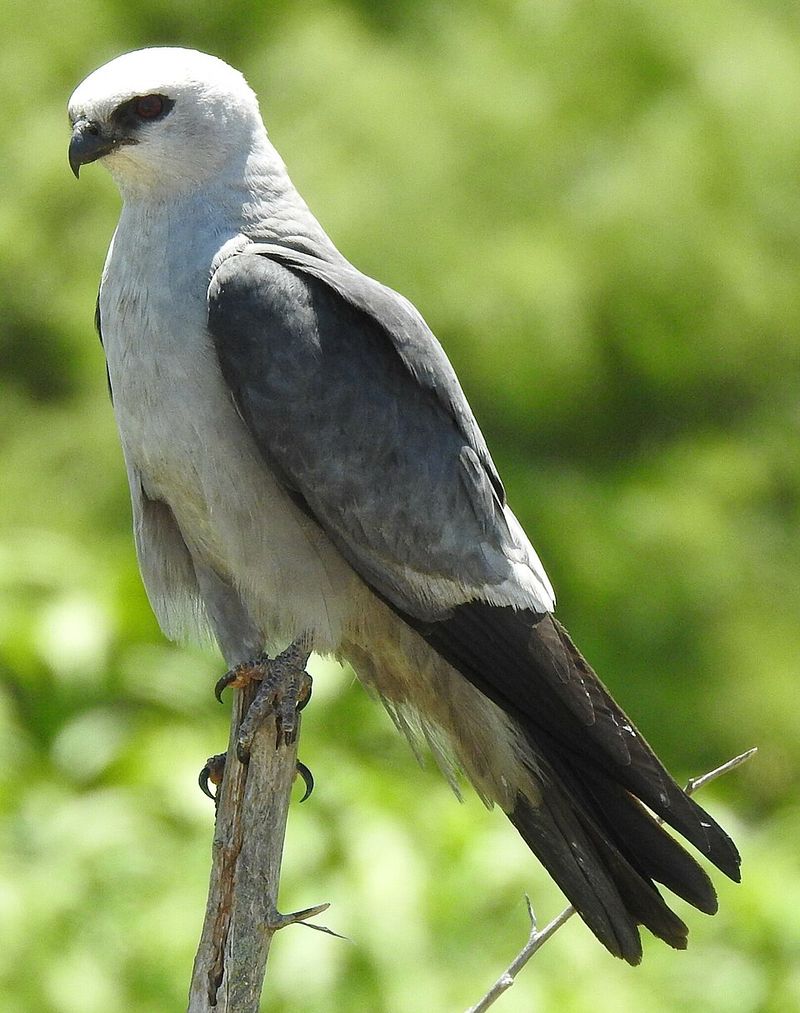
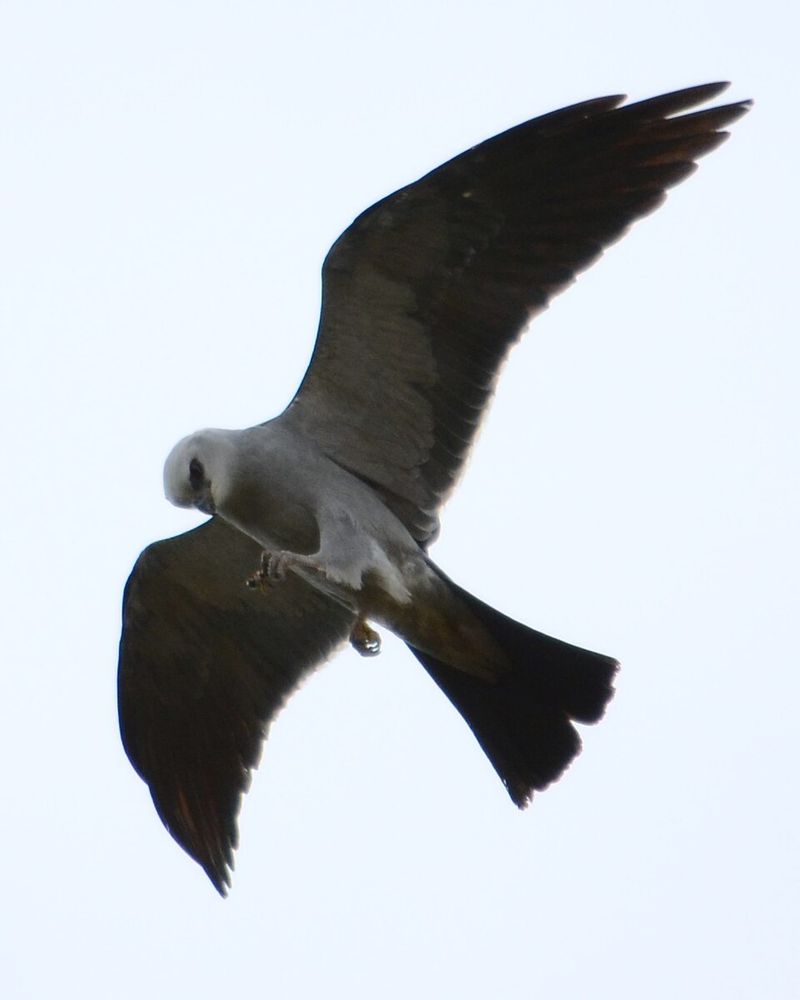
Pale head, gray body, dark wingtips, and a tail shaped like a black paddle. That combination belongs to one graceful raptor, and once you spot it the shape sticks with you.
Adults wear a pearly white head that can flash almost silver in bright sun. Their eyes are deep red, though that detail rarely shows without binoculars.
Your Mississippi Garden Changes Every Week. Your Plan Should Too.
Gardening in Mississippi changes quickly throughout the season. Every Friday you’ll receive a simple weekly plan showing exactly what to plant, prune, fertilize, harvest, and protect so you never miss the right timing.
In flight, look for long pointed wings held with a slight bend at the wrist. The bird floats more than it flaps, tilting to grab insects without breaking rhythm.
Juveniles confuse newcomers each season because they wear brown streaks and a banded tail. Those markings fade over their first winter, so September youngsters look unlike their parents.
Size lands between a crow and a red-tailed hawk, with a wingspan near three feet. Body weight stays light, around ten ounces, which explains that buoyant style.
Compare them with Cooper’s hawks, which flap harder and show barred underparts. Peregrines look bulkier with a helmeted face, while swallow-tailed kites carry a deeply forked tail.
Voice helps as well, a thin two-note whistle a bit like a squeaky dog toy. Neighbors often hear it before anyone notices the bird overhead.
A phone camera pointed at the sky rarely captures enough detail for a confident call. Simple binoculars, even eight by forty-two, make a real difference.
Practice on quiet evenings when insects rise and the light turns gold. Sketching the tail shape in a notebook speeds up learning faster than scrolling photos.
Cicada Season Fills The Fuel Tank
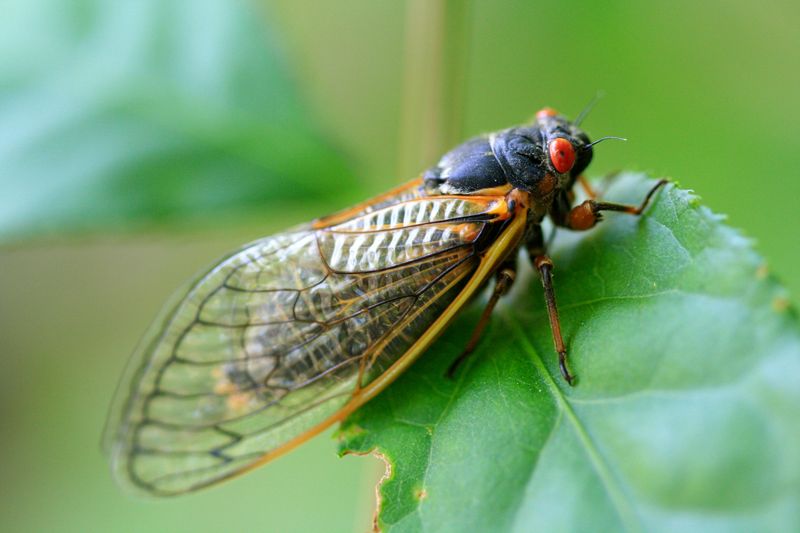
Dog-day cicadas rattling in the oaks work like a dinner bell. Kites time their nesting so hungry chicks arrive when insect numbers hit their summer peak.
Grasshoppers, dragonflies, beetles, and katydids fill out the rest of the menu. Adults snatch them in midair with their feet, then eat while still gliding.
That aerial feeding style explains why the birds trail tractors and mowers across a field. Cut hay stirs up clouds of insects, which sets out an easy buffet.
Small frogs, lizards, and the occasional bat also show up in their diet. Insects, though, carry the heaviest load through a Mississippi summer.
Fat built from all that protein powers a journey of several thousand miles. A bird that feeds poorly in August has a harder time later on the route.
Heavy spraying or mowed-to-the-fence-line fields can thin insect numbers in a hurry. Leaving weedy edges, wildflower strips, and brush piles supports the bugs that support the birds.
Watch one work a thermal above a pasture around six in the evening. Each tilt and grab stacks another calorie toward the trip south.
September flights often follow dragonfly swarms along the coast, which is handy for anyone with a lawn chair and patience. Food and travel stay linked the whole way.
Here is a nice piece of history. Farmers once welcomed these birds as free pest control, and that reputation still holds in pecan groves and cotton country.
Fewer insects in a neighborhood usually means fewer kites overhead. Backyard choices carry more weight than people expect.
Neighborhood Pines Double As Nurseries
Golfers in Tupelo and joggers in Hattiesburg know the whoosh of a gray bird sweeping past a ball cap. Kites nesting near people can get bold when chicks are in the nest.
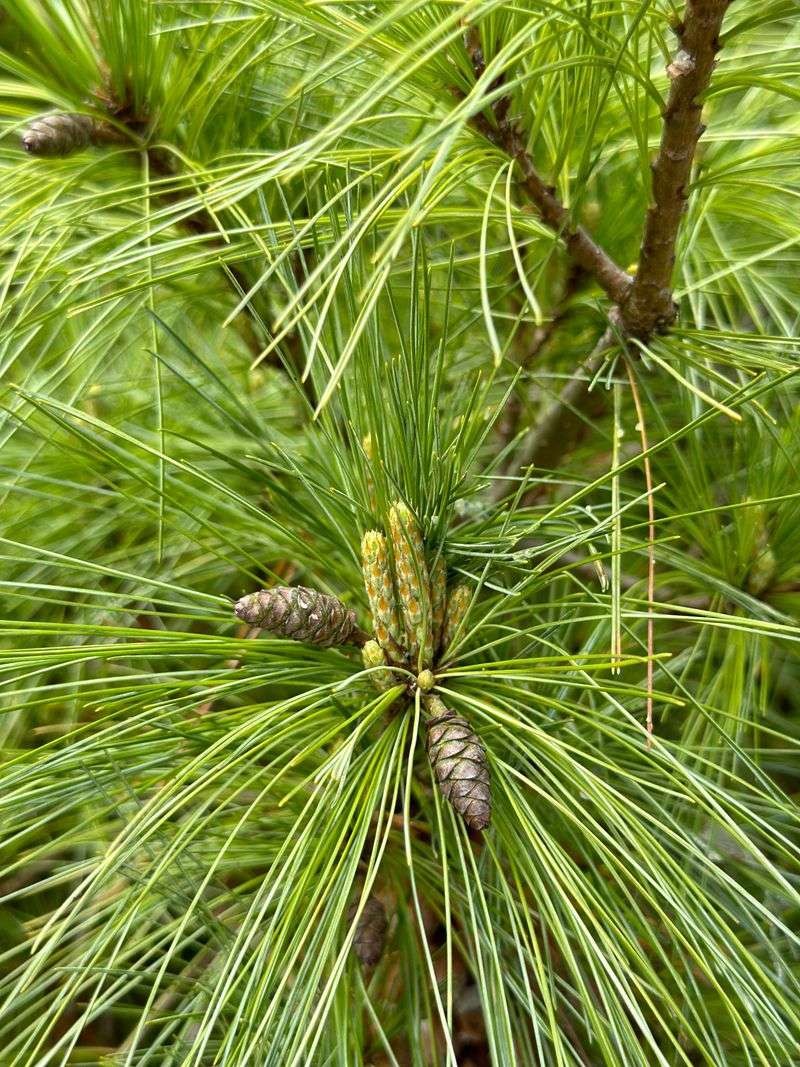
Pairs favor tall pines, oaks, and pecans, often in parks, subdivisions, and golf courses. Nests sit high, built from twigs and lined with leaves and Spanish moss.
Two eggs is typical, and both parents share incubation for about a month. Chicks stay in the nest another five weeks before taking their first flights.
Defensive dives peak in July, when the young are at their most vulnerable. Carrying an umbrella or waving a hat overhead settles the situation without harming anyone.
Federal law protects the species, so removing a nest or bothering a brood is off limits. Patience works better anyway, since the whole show wraps up in a matter of weeks.
A tip for schools and parks. Post a small sign during nesting season instead of trimming the tree, because cooperation buys goodwill and keeps the pair on site for next year.
Colonies sometimes hold several pairs in a few acres of shade trees. Neighbors who learn the pattern often end up bragging about their resident raptors.
Once the young fledge in early August, the birds loosen their grip on the nest area. Families start roaming, and lawns go back to normal traffic.
Come September the trees fall quiet, and the swooping stories become summer legend. Anyone who missed the drama has to wait until the birds return in April.
Five Thousand Miles To A Second Summer
Few birds from the Southeast travel as far. Kites leaving Mississippi aim for central South America, a trip of nearly four thousand miles.
The route funnels southwest through Texas, then down the Gulf coast of Mexico. Thousands stream past Veracruz each autumn in one of the largest raptor migrations in the Americas.
From there the flocks cross Central America, squeeze through Panama, and continue over Colombia. Bolivia, Paraguay, Brazil, and northern Argentina serve as the wintering grounds.
Kites avoid long water crossings because they depend on rising warm air for lift. Soaring over land costs far less energy than flapping across open ocean.
Some satellite-tracking studies suggest birds can cover well over a hundred miles on a strong day. Others loaf for a week when insects are thick and the weather cooperates.
Return flights begin in March, with the first arrivals reaching the state in early April. That leaves about four months of Mississippi residency.
Young birds travel with adults their first autumn, learning the corridor as they go. Some spend a full year in the south before heading north again.
Threats along the way include habitat loss and pesticide use in farm regions. Protected stopover land in Mexico and Central America helps more than people realize.
Following the journey through online tracking maps turns a backyard bird into a world traveler. Students in particular get hooked on watching the dots move.
Think of the state as a summer nursery rather than a permanent home. The rest of the year belongs to skies far below the equator.
Where To Catch A Late September Kite
Timing beats luck when it comes to finding the last stragglers. Late afternoon, roughly four to seven, brings the strongest thermals and the loftiest flights.
Harvested soybean and cotton fields in the Delta make excellent scanning spots. Open horizons let you pick out distant specks circling together.
Pull-offs along the Natchez Trace Parkway offer shade, safety, and wide sky views. Bring water, since September afternoons still push past ninety degrees.
The Gulf Coast holds birds a bit later, especially along its dragonfly-rich marshes and inlets. Check eBird before driving anywhere, since local birders post sightings within hours.
Hawk watch counts in Texas often peak in September, which hints at what left the state. Cold fronts matter too, because a north wind pushes birds along and boosts counts. Watching a front’s timing gives you the best single clue.
Binoculars with a wide field help you follow fast movers across the sky. A polarized pair of sunglasses cuts glare while you wait.
Look for the shape of the flock rather than the color of one bird. Kettles rise in a slow spiral, then string out in a line heading south.
Keep a simple notebook with dates, counts, and weather notes. After two seasons, personal records beat any field guide for predicting departure.
Missed them this year? Set a phone reminder for August 15 and try again, because the show repeats and it rewards anyone willing to stand in a field and squint.