The Burlap Setup New York Broadleaf Evergreen Owners Should Prep Now
A bright January sun can dry out a rhododendron faster than you’d expect. Behind that tough, glossy look, the leaves keep losing water all day long.
Frozen soil stops the roots from sending any back up. By spring, the foliage can turn crispy and brown, a problem gardeners call winter burn.
Across New York, broadleaf evergreens like holly, boxwood, and mountain laurel feel it the most. Cold wind and winter sun make the damage worse.
A simple burlap screen and a few stakes can change the whole story. A sloppy wrap, though, can cause almost as much trouble as no wrap at all.
The right setup starts before the ground turns to stone. The steps below show how to build it at the right time and in the right way.
Burlap Blocks Drying Winter Wind
Think of winter wind as a giant invisible sponge. It soaks moisture right out of evergreen leaves, even when temperatures sit well below freezing.
Broadleaf plants have big, flat leaves with lots of surface area. More surface means more water slips away on every breezy, bright afternoon.
Here is the tricky part for New York gardens. Roots locked in frozen soil cannot pull up fresh water to replace what the leaves lose.
Experts call the result winter desiccation. You will usually spot it in March as brown, curled, or crispy leaf edges.
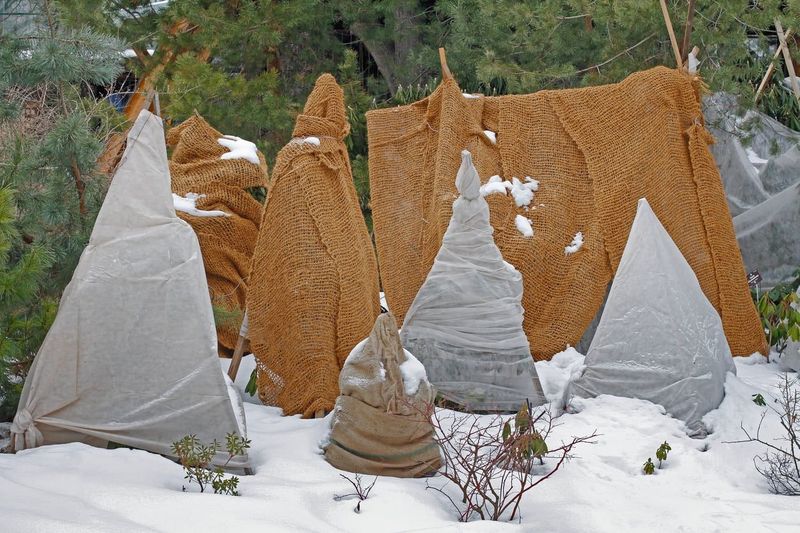
A burlap screen works like a windbreak fence for one plant. It slows the moving air, creating a calmer pocket where leaves hold onto their moisture.
Exposed spots benefit most from this kind of shelter. Hilltop yards, open lawns, and corners where wind funnels between houses are prime candidates.
Fun fact for curious gardeners: burlap has been made from jute plant fibers for centuries. The same rough fabric once carried coffee beans and potatoes across the world.
Start by walking your yard on a gusty fall day. Notice which shrubs whip around the most, and put those at the top of your list.
Young plants deserve extra attention too. Shrubs planted within the last year or two have small root systems that struggle to keep up.
Hollies, boxwoods, rhododendrons, and mountain laurels are the usual suspects. Give them a buffer, and they will thank you with green leaves come spring.
Set Stakes Before The Ground Freezes
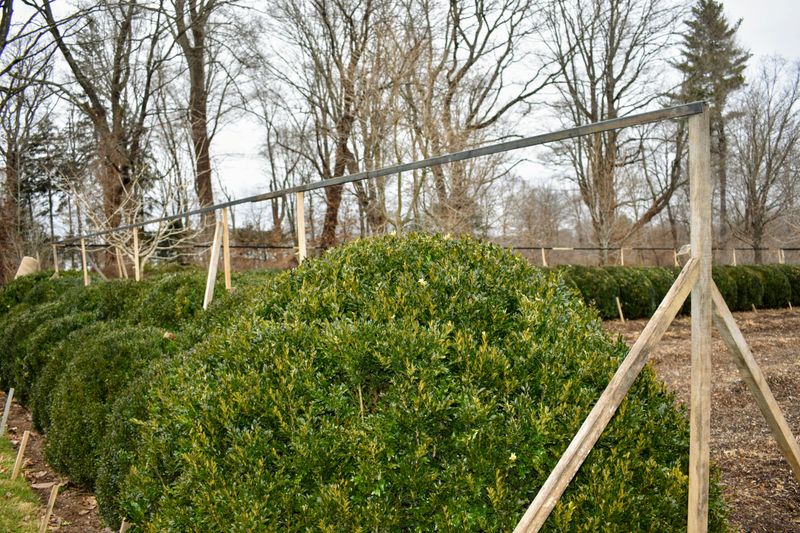
Anyone who has tried pounding a stake into January soil knows the sound. It is a dull clunk, followed by a sore wrist and a bent stake.
Timing is the secret behind a sturdy burlap setup. Get your stakes in while the ground is still soft enough to accept them.
Across much of the state, that window usually closes between late November and mid-December. Upstate and higher elevations can freeze sooner, so watch your local forecast.
Plan on three or four stakes for each shrub. Wooden garden stakes or metal fence posts both work well for this job.
Place them evenly around the plant, a little outside the branch tips. Leaving that room keeps the fabric from pressing into the leaves later.
Your New York Garden Changes Every Week. Your Plan Should Too.
Gardening in New York changes quickly throughout the season. Every Friday you’ll receive a simple weekly plan showing exactly what to plant, prune, fertilize, harvest, and protect so you never miss the right timing.
Drive each stake at least a foot into the ground. Winter gusts can be surprisingly strong, and shallow stakes tend to lean or topple.
Height matters as well. Choose stakes that stand slightly taller than the shrub so the burlap can cover the whole plant from the side.
Here is a handy shortcut many gardeners love. Put the stakes in now, then attach the burlap later once cold weather settles in.
Staple guns, zip ties, or simple twine can hold the fabric in place. Keep supplies in a bucket by the door for quick access.
A little effort in October or November saves real frustration later. Your future self, standing in the snow, will be grateful.
Build A Screen, Not A Tight Wrap
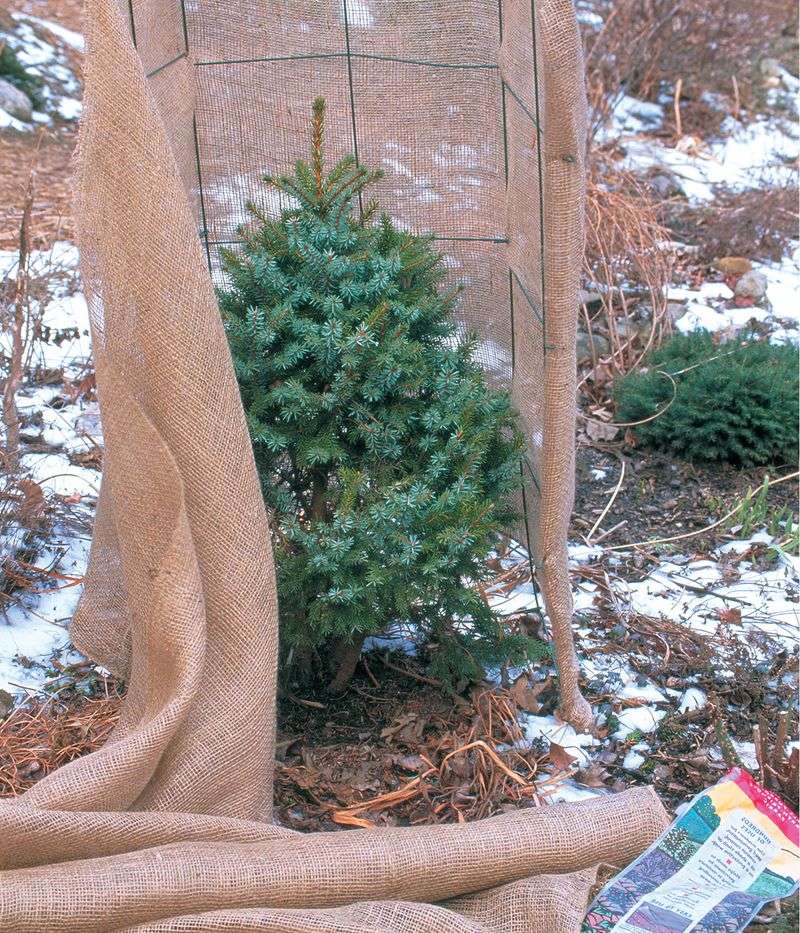
Picture a cozy scarf versus a full-body cast. Your evergreen wants the scarf, not the cast.
Many people wrap shrubs tightly, like a burrito, and call it done. The intention is kind, but the results can be disappointing.
Tight wraps squeeze branches together and press them out of shape. Heavy snow on a wrapped bundle can even snap stems that would normally flex.
Air movement also suffers when burlap hugs every leaf. Trapped moisture and warmth can invite mold and fungal problems over a long winter.
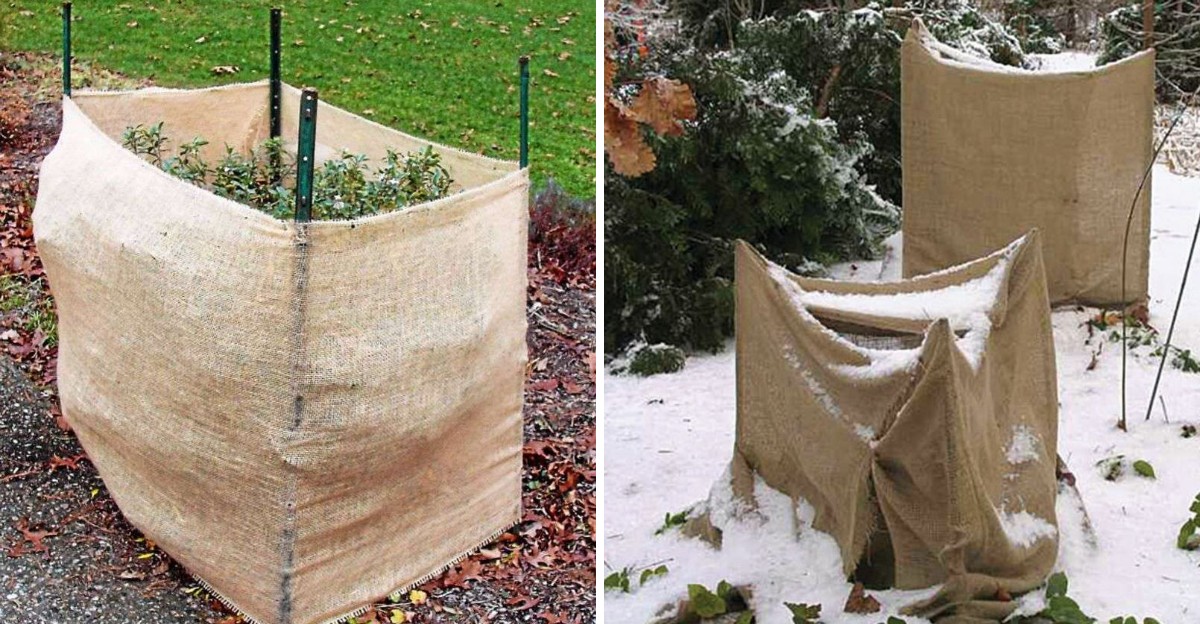
A screen solves those issues neatly. Burlap stretched between stakes forms a sheltering wall while the plant inside keeps its natural shape.
Plenty of experienced gardeners prefer this method for good reason. It protects the foliage, lets the plant breathe, and looks tidier from the street.
Building one is easier than it sounds. Wrap the burlap around the outside of your stakes, then fasten it with staples or twine.
Overlap the ends by several inches where they meet. Gaps along the seam let wind sneak through and undo your hard work.
Tall, narrow plants like arborvitae sometimes need light twine to keep branches upright under snow. Keep that twine loose, and remove it in spring.
Think of the screen as a small fort rather than a blanket. Your shrub gets protection and room to stretch, which is the best of both worlds.
Leave A Few Inches Between Fabric And Leaves
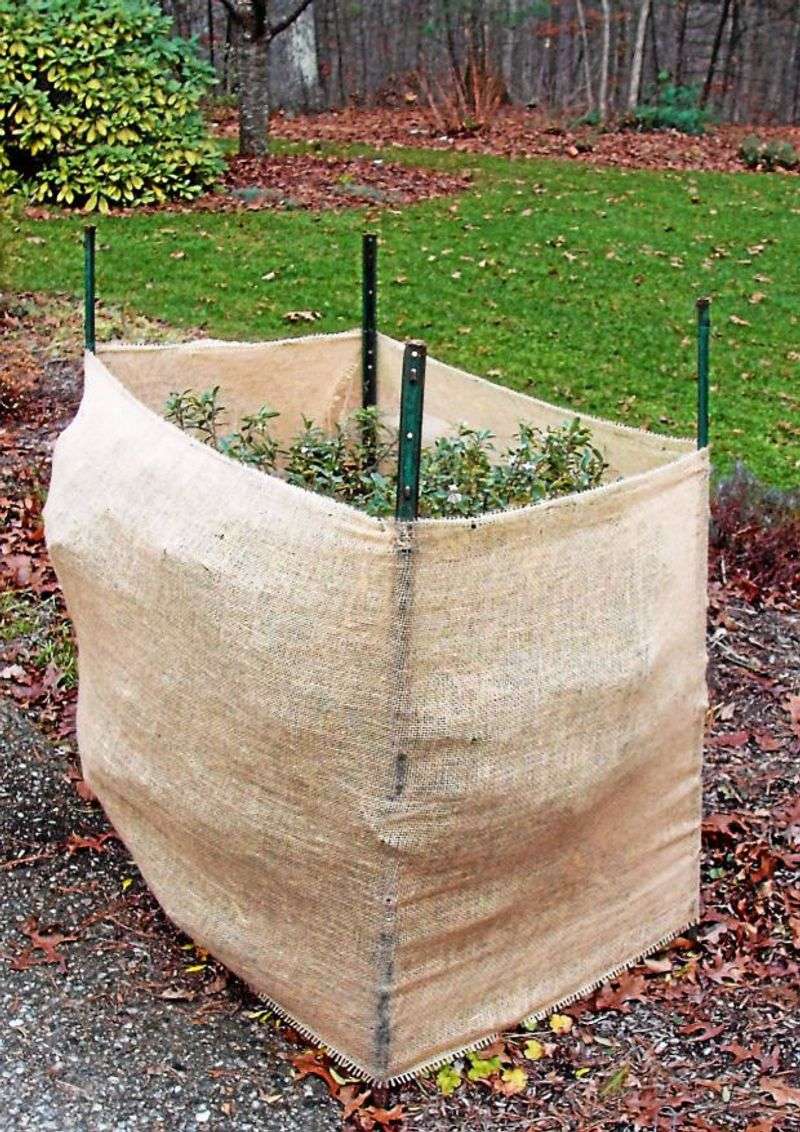
Wet burlap pressed against a leaf on a freezing night is bad news. The fabric can stiffen into an icy sheet that bruises tender foliage.
A small gap fixes that problem easily. Aim for about three to six inches of space between the burlap and the outer leaves.
Airflow is the other big reason for spacing. Moving air dries out damp leaves and discourages mold from setting up shop.
Leaves touching soggy fabric for weeks can develop brown or black patches. Some of that damage looks a lot like the winter burn you hoped to prevent.
So how do you measure without a ruler in the yard? Hold your hand flat between a branch tip and the stake line.
If your palm fits comfortably, you probably have enough room. Move a stake outward if branches are already brushing the fabric.
Growing shrubs can surprise you here. A boxwood that seemed small last fall may have spread several inches over summer.
Check the gap again after the first big snowfall. Snow weighing on the burlap can bow it inward toward the plant.
Brush off heavy snow with a broom if the screen starts sagging. Gentle sweeping keeps the structure upright and the leaves clear.
Spacing feels like a tiny detail, yet it makes a noticeable difference. Leaves that stay dry and free tend to come through winter shiny and green.
Shield The Windward And Sunny Sides
Ever notice winter burn showing up on just one side of a shrub? There is a clear reason behind that lopsided browning.
Damage usually appears where plants face drying winds or strong afternoon sun. In most New York yards, that means the west, northwest, or south sides.
Low winter sun bounces off snow like a mirror. Leaves warm up during the day, lose water, and then chill quickly after sunset.
Bark can suffer from a similar cycle called sun scald. Warm afternoons followed by icy nights stress tissue that would rather stay steady.
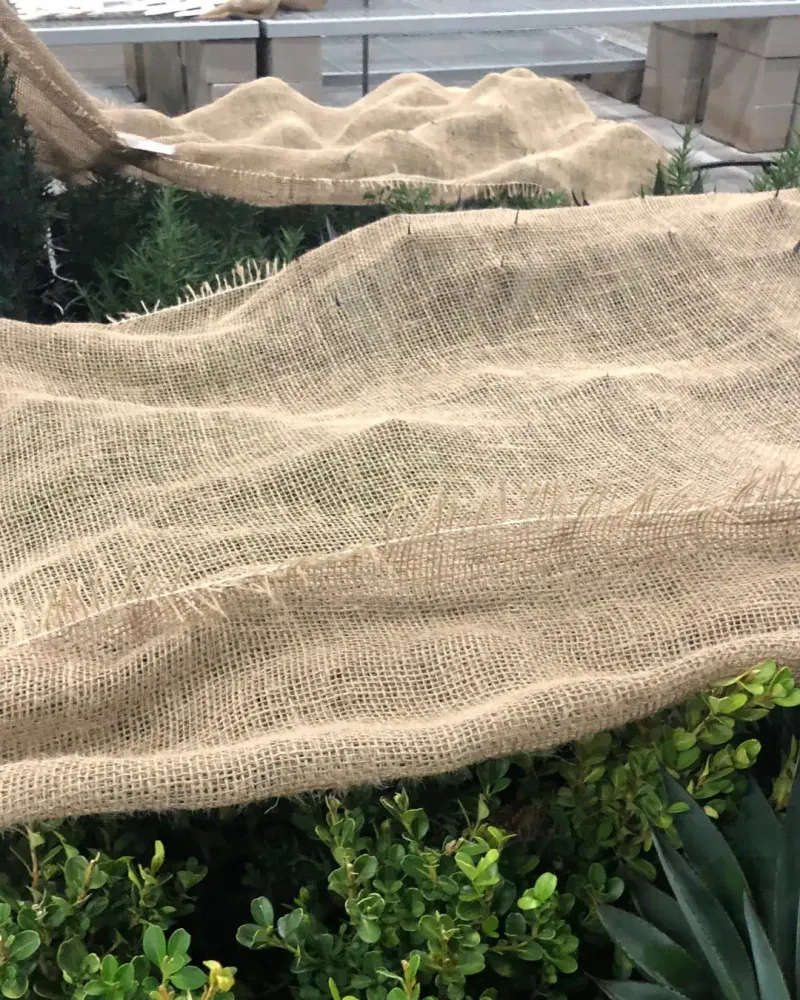
Shielding the exposed sides blocks much of that stress. Sometimes a single panel of burlap does the job without fencing the whole plant.
Not sure which way your wind blows? Spend a breezy afternoon watching flags, smoke, or snow drifting across your property.
Drifts piled against one side of a fence reveal the prevailing direction. Your burlap belongs on the opposite side, facing into the weather.
Sun exposure is easier to judge. Note which shrubs bask in bright light from noon until late afternoon during December.
Plants near reflective walls or light-colored siding may need extra help. Bounced heat and glare can double the drying effect on nearby leaves.
Targeted protection saves burlap and effort. It also keeps your garden looking less like a row of wrapped presents all season.
Leave The Top Open For Air And Light
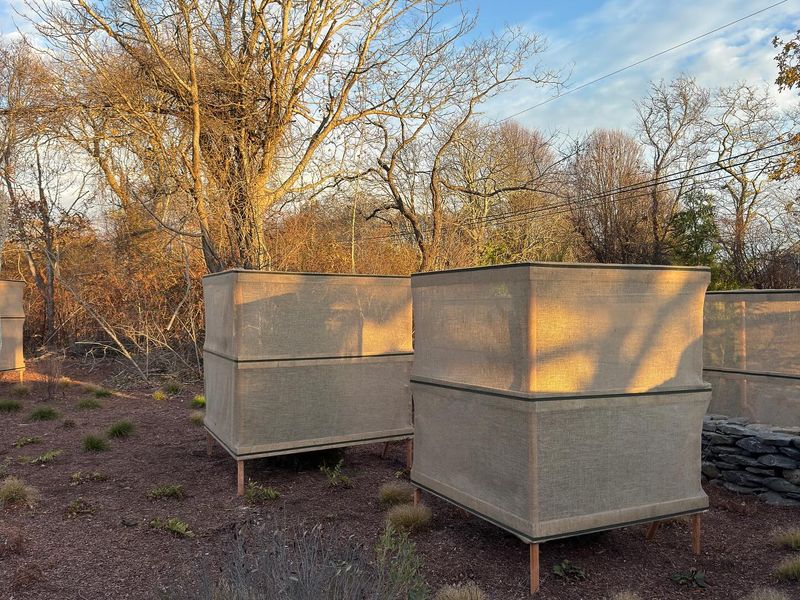
Closing the lid might seem like the coziest choice. Plants, however, prefer a little sky above their heads, even in February.
Broadleaf evergreens keep their leaves through winter for a reason. Those leaves still capture some light on mild, sunny days.
An open top lets that light reach the foliage. It also allows warm, damp air to rise out instead of building up inside.
Covered tops can turn a burlap fort into a tiny steam room on bright days. Trapped heat and moisture create a welcome mat for fungus.
Snow is another consideration. A flat burlap lid collects heavy snow and can collapse right onto the branches below.
Leaving the top open means snow falls gently onto the plant instead. Most shrubs handle a light snow layer just fine, and it even insulates them.
Height still matters with this approach. Your screen should reach at least the top of the shrub to block side winds well.
Wondering about deer? An open top usually does not invite them in, especially when the sides stand tall around the plant.
Gardeners in snowy spots like Buffalo or the Adirondacks sometimes add a slanted support. A few crossed sticks can help shed snow without sealing the top.
Keep things simple whenever you can. Fresh air and daylight from above help your evergreen stay healthy until spring returns.
Block Salt Spray Near Roads And Driveways
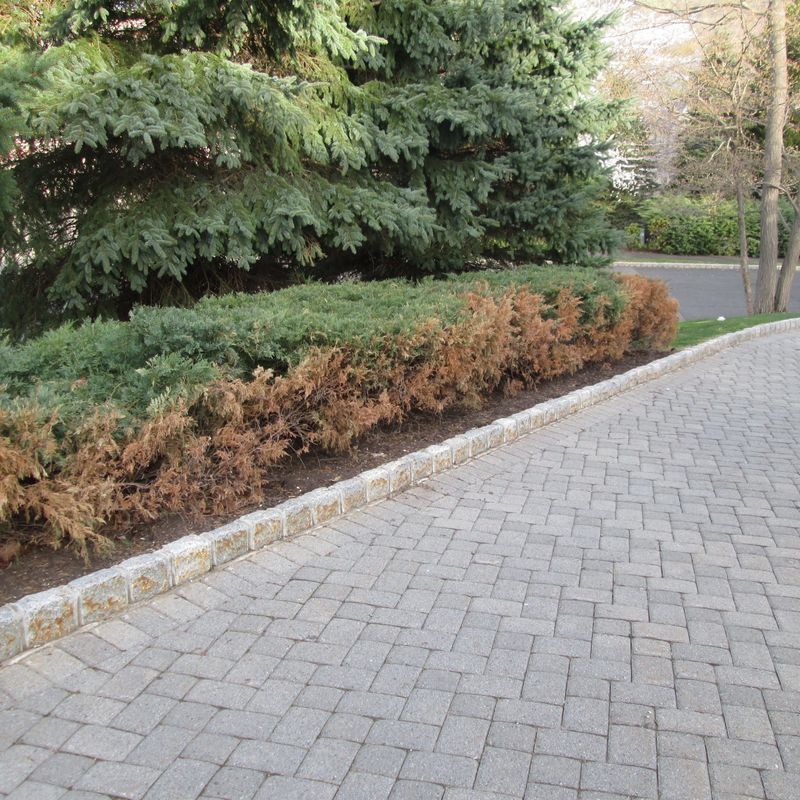
Snowplows rumble down New York streets all winter, tossing slush in every direction. That spray carries a lot of road salt with it.
Salt can scorch evergreen leaves and leave them yellow or brown. It also builds up in soil, making it harder for roots to drink.
Shrubs along sidewalks, driveways, and busy roads take the biggest hit. Plants within about ten to twenty feet of traffic are especially vulnerable.
A burlap screen makes an excellent salt shield. Place it on the side facing the road, where flying slush tends to land.
Height should cover the zone that gets splashed. Usually, that means the lower few feet of the plant, though plows can fling slush higher.
Here is a smart extra step for your own walkway. Try sand, sawdust, or calcium magnesium acetate instead of rock salt near your plants.
Shoveling technique matters as well. Pile salty snow away from your shrubs rather than heaping it on their roots.
Come spring, give salt-exposed soil a deep, slow soaking. Watering helps rinse lingering salt below the root zone.
Fun fact: road salt use in the United States runs into millions of tons each winter. Some of that inevitably ends up in garden beds.
A simple burlap wall cannot stop every crystal. Still, it catches a surprising amount and keeps curbside evergreens looking far healthier.
Choose Breathable Burlap Over Plastic
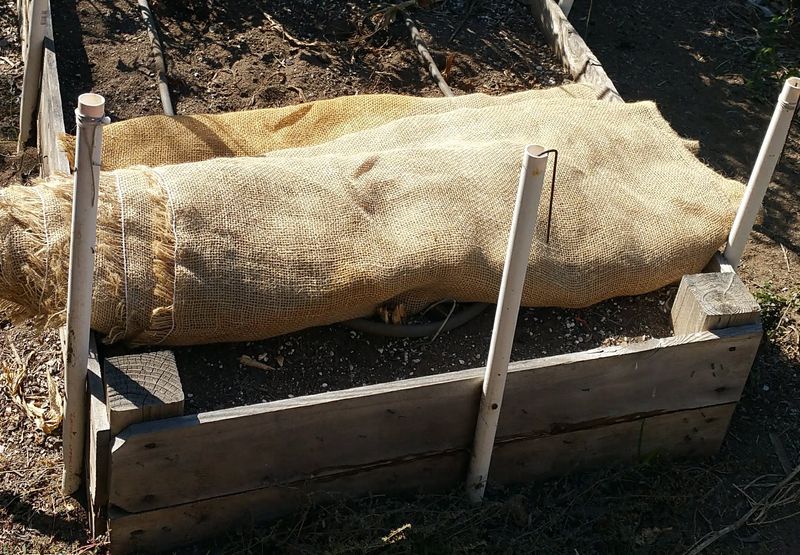
Plastic sheeting looks tempting at the hardware store. It is cheap, waterproof, and comes in giant rolls, but your shrubs will disagree.
Plastic traps heat on sunny days like a car parked in July. Inside that pocket, temperatures can swing wildly from warm afternoon to icy night.
Moisture also gets stuck behind plastic. Condensation drips onto leaves, encouraging mold, powdery mildew, and other unwelcome problems.
Burlap behaves very differently. Its loose weave lets air and some light pass through while still slowing wind.
Natural jute burlap is the classic choice. It breaks down over time, which makes it friendly for compost piles once it wears out.
Synthetic landscape burlap is another option worth a look. It resembles jute but lasts several seasons and resists rot.
Shop for burlap around seven to ten ounces in weight. Lighter fabric may tear in strong winds, while heavier types can feel bulky.
Color is mostly a personal decision. Classic tan blends with winter landscapes, though green versions look a bit less noticeable from the street.
Avoid burlap treated with chemicals unless the label says it is plant-safe. Some fabric is coated for shipping uses and not meant for gardens.
Storing it well stretches your budget. Shake it out, dry it, and roll it up for reuse next fall.
Water Deeply Before Putting It Up
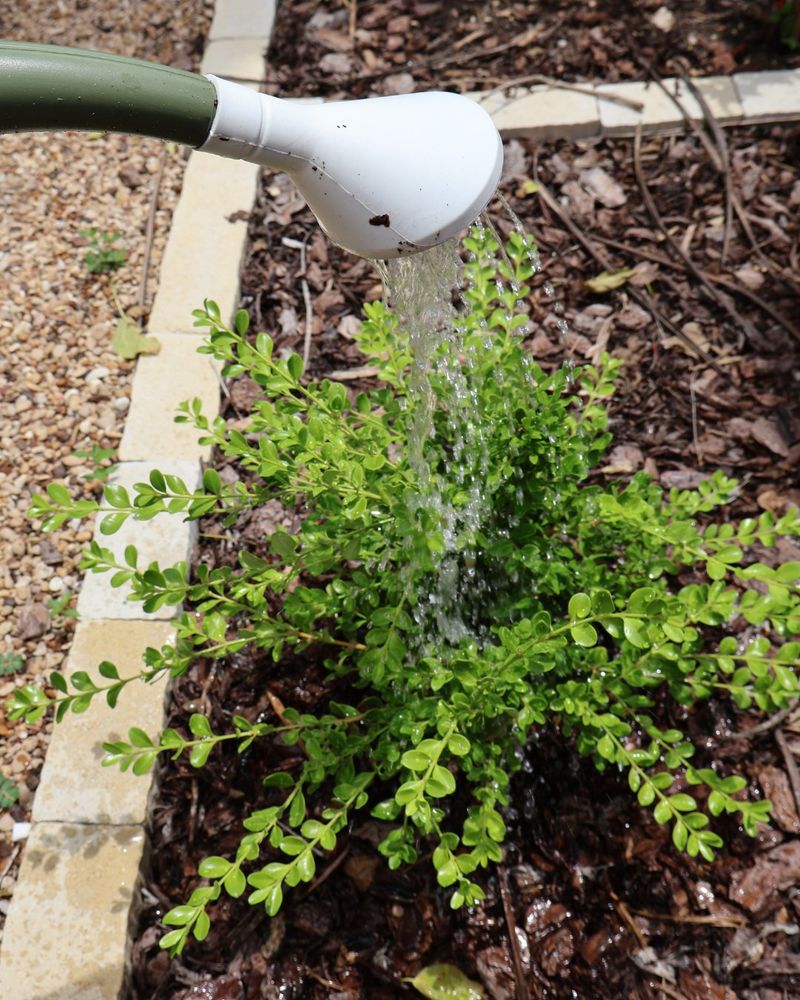
Burlap protects from the outside, but water protects from within. Skipping the fall soaking is like heading on a road trip with an empty tank.
Evergreens keep losing moisture through their leaves all winter. A well-watered root zone gives them a reserve to draw from before the soil locks up.
Keep watering through October and November across most of New York. Continue until the ground actually freezes, not just until the leaves drop.
Deep watering beats frequent sprinkles every time. Aim to soak the soil eight to twelve inches down around the root zone.
A slow trickle from a hose works nicely. Let it run for twenty to thirty minutes near the base of each shrub.
Soaker hoses make the job even easier. Snake one around several plants and let it seep gently for an hour.
Check your work with a simple trowel test. Dig a small hole a few inches from the plant and feel for moisture deep down.
Mulch helps lock that water in place. Spread two to three inches of shredded bark around the base, keeping it off the stems.
Dry autumns make this step even more critical. Rainfall can seem plentiful, yet still fall short of what thirsty roots need.
Once the soil is soaked and mulched, put the burlap up. Your shrub will head into winter fully hydrated and ready.
Take It Down Gradually In Spring
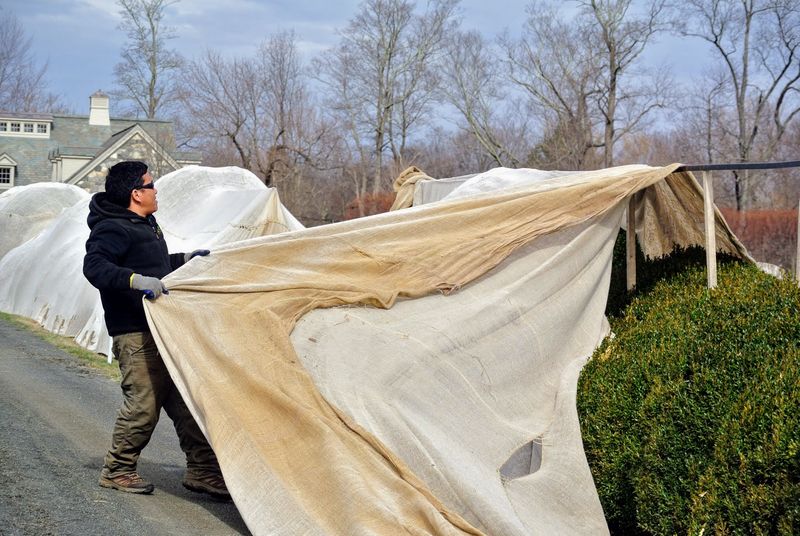
Spring fever hits hard after a long New York winter. The urge to rip off every scrap of burlap on the first warm day is completely understandable.
Patience pays off here, though. March and early April can swing from sunny and mild to snowy overnight.
Wait until temperatures stay above freezing most days and nights. For many areas, that falls somewhere between late March and mid-April.
A gradual approach works well for nervous gardeners. Remove one side first, leaving the windward panel up for another week or so.
Leaving the stakes in place offers handy insurance. If a surprise cold snap rolls in, you can reattach the fabric in minutes.
Do not wait too long, however. Burlap left up deep into spring can block light and trap warmth as leaves start actively growing.
Overheating is a real risk during sunny April afternoons. Plants need full light to photosynthesize and push out fresh growth.
Inspect each shrub once the screen comes down. Light browning may recover, while fully crispy branches can be trimmed after new buds appear.
Give the soil a good drink too. Spring watering helps flush out salt and wakes up sleepy roots.
Finally, dry and store your burlap and stakes together. Labeling them by shrub saves time when fall rolls around and the routine starts again.