The California Botanical Garden Most Locals Have Never Actually Been To
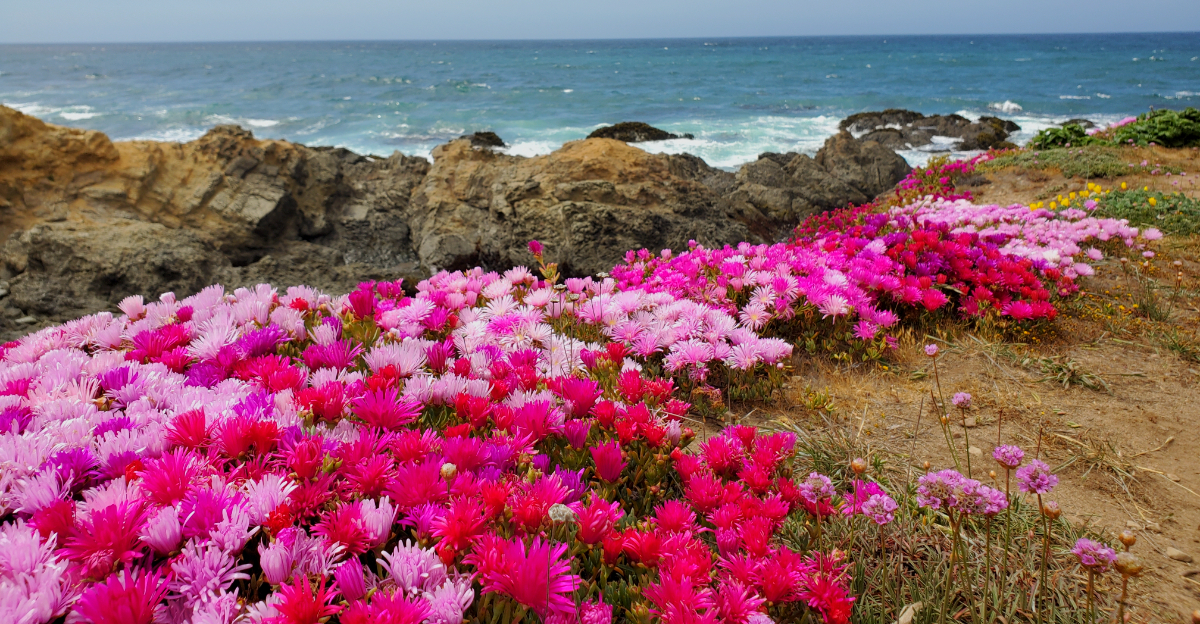
Somewhere along California’s rugged northern coast, a botanical garden slips past the attention of travelers chasing redwoods, beaches, and postcard towns.
There are no giant billboards pointing the way, and no flashy entrance hinting at what waits beyond the gate.
Inside, winding paths lead through colorful plantings, quiet woodlands, native habitats, and windswept bluffs overlooking the Pacific. One moment feels carefully designed; the next feels completely wild.
Even travelers familiar with the Mendocino Coast may know the garden mainly by name, without realizing how far its trails extend or what waits near the western edge.
Follow the paths beyond the formal plantings, and the landscape eventually opens onto sweeping Pacific views.
That gradual reveal is a major part of the appeal. It is peaceful, dramatic, and far less crowded than California’s better-known gardens.
For visitors who enjoy places that feel stumbled upon rather than scheduled, this coastal escape delivers flowers, wildlife, salty air, and one unforgettable reveal. The real surprise is where it has been hiding all along, quietly in plain sight.
1. A Garden That Runs All The Way To The Ocean
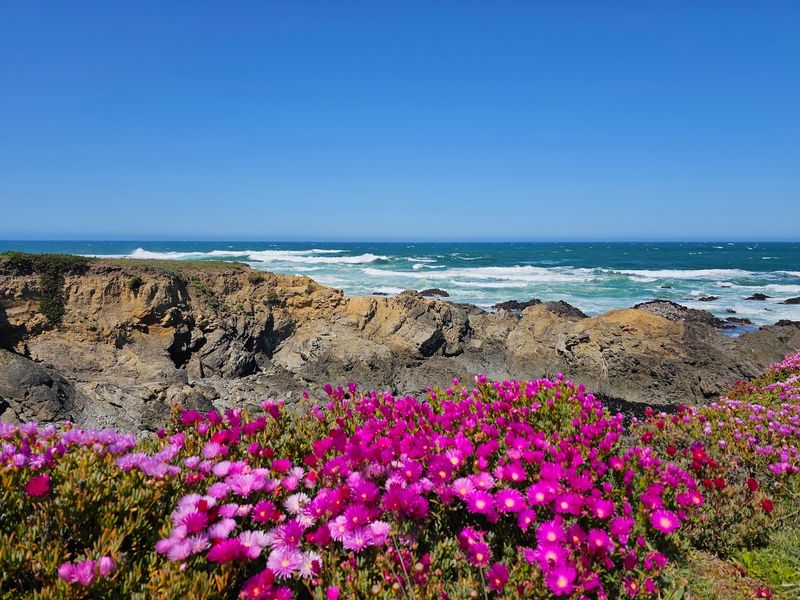
Not many gardens can say their trails end at the ocean, but this one can. The Mendocino Coast Botanical Gardens spans a full 47 acres, running from historic Highway 1 all the way to the edge of the Pacific.
That half-mile walk from the entrance to the sea is unlike anything most visitors expect.
Along the way, the landscape shifts dramatically. You move through deep canyons, quiet wetlands, a closed-cone conifer forest, and wide coastal grasslands before reaching a dramatic rocky headland.
Every turn offers something new to look at. The salty sea breeze hits you before you even see the water.
What makes this layout unusual is the way a cultivated botanical garden blends directly into an undeveloped coastal landscape.
While many public gardens sit within cities or enclosed estates, this one stretches from landscaped collections and woodland habitats all the way to windswept bluffs overlooking the Pacific.
Here, the garden and the coastline feel like one connected experience. You are not just visiting a plant collection.
You are walking through a living landscape that ends with the open sea stretching out in front of you.
Visitors who come expecting a quiet flower garden often leave talking about that moment they first saw the Pacific from the bluff.
It catches almost everyone off guard, and in the best possible way.
2. Why Fort Bragg Is Hiding This Coastal Gem
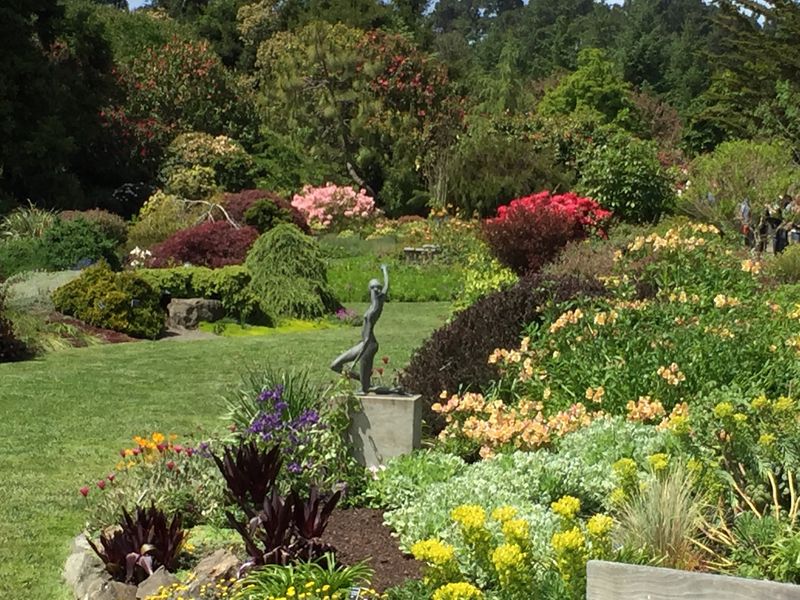
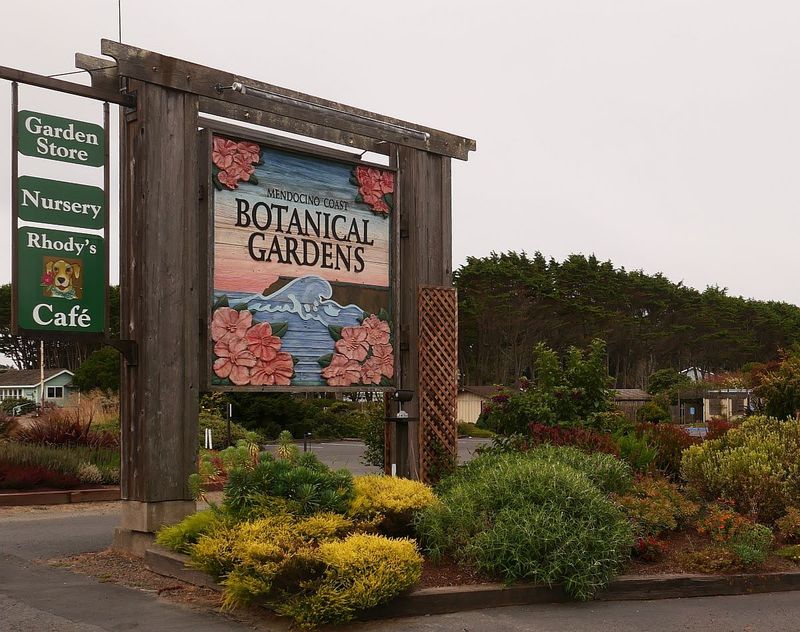
From the highway, the entrance looks modest. There is no grand gate or flashy sign demanding your attention. That understated entrance gives only a small hint of what lies beyond it.
Behind the roadside frontage is a nationally recognized botanical garden whose collections, native habitats, woodland trails, and dramatic coastal setting have earned praise from visitors and garden enthusiasts from well beyond Mendocino County.
The garden was founded in 1961 by Ernest and Betty Schoefer, a couple who had a deep passion for plants and the natural beauty of the Mendocino Coast.
Your California Garden Changes Every Week. Your Plan Should Too.
Gardening in California changes quickly throughout the season. Every Friday you’ll receive a simple weekly plan showing exactly what to plant, prune, fertilize, harvest, and protect so you never miss the right timing.
It officially opened to the public in 1966, and by 1992 a dedicated non-profit organization had taken over its care.
Today, that same non-profit manages everything from trail maintenance to educational programs.
Fort Bragg lies along a quieter stretch of Northern California’s coastline, where rocky headlands, forests, beaches, and small coastal communities shape the experience.
The area’s mild maritime climate gives the garden conditions that allow an unusually broad range of plants to grow and flower throughout the year.
Things grow here that simply would not survive in warmer, drier parts of California.
Admission fees go directly toward caring for the garden, which is why the staff takes such obvious pride in every corner of the grounds. It is a community treasure hiding in plain sight.
3. Flower Paths With Pacific Views Around Every Corner
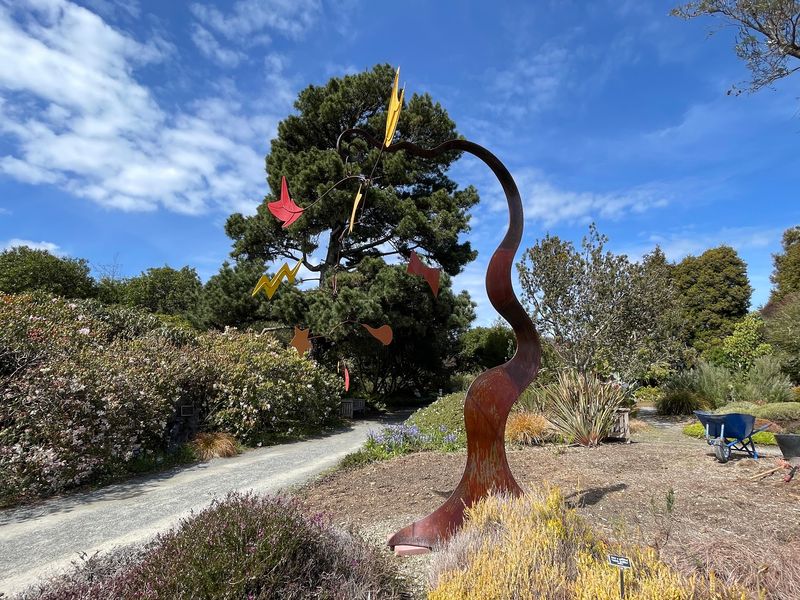
Over four miles of trails wind through this garden, and almost every stretch of them comes with a view worth stopping for.
The main pathways are built with hard-packed fine gravel, about four feet wide, and are wheelchair accessible all the way to the ocean.
That level of accessibility is something a lot of botanical gardens simply do not offer.
Specific garden areas are connected along these routes, including the Perennial Garden, the Heritage Rose Garden, and the vibrant Dahlia Garden.
Walking from one to the next feels less like a tour and more like a journey through completely different worlds.
One moment you are surrounded by rose bushes heavy with fragrance. The next, you are under a canopy of coastal pines.
Sweeping Pacific Ocean views appear regularly along the bluff areas and open meadow sections, giving the trails a sense of drama that most garden paths simply cannot match.
The gravel paths feel intentional and well-maintained, which makes the whole experience more relaxing.
You are not watching your step the whole time. You are looking up, looking out, and taking everything in.
Visitors who bring a camera often find themselves stopping every few minutes because a new angle or a new bloom keeps catching their eye.
The combination of curated gardens and wild coastal scenery is genuinely hard to find anywhere else in our state.
4. Rhododendrons That Make Spring Feel Almost Unreal
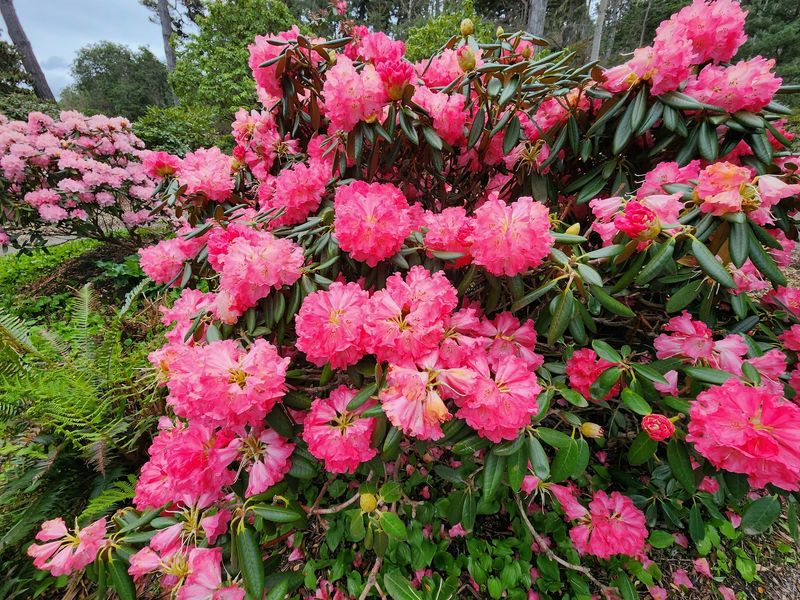
Few plants put on a show quite like the rhododendrons here in April and May. The collection at Mendocino Coast Botanical Gardens includes more than 124 species, approximately 315 recorded taxa, and over 1,000 individual rhododendrons.
The biggest display generally arrives in April and May, although different plants can begin flowering in December and continue producing blossoms through June.
The mild maritime climate and naturally acidic soils along this stretch of coast create near-perfect growing conditions for rhododendrons.
Mature plants here reach impressive heights, forming towering walls of color that feel more like a forest than a flower garden.
Visitors often describe walking through them as moving through a magical riot of color, and that description is hard to argue with.
The collection also includes tender species prized for their rich fragrance, as well as a special “Fort Bragg Collection” featuring local hybrids. One standout is the “Noyo Chief,” which holds the honor of being the city’s official flower.
Some of the big-leaf varieties grow leaves up to 25 inches long, which surprises most visitors who are used to seeing smaller garden rhododendrons.
If a spring trip to the Mendocino Coast is on your list, planning it around peak bloom time is one of the best decisions you can make.
The display is genuinely breathtaking and unlike anything you will find in most other botanical gardens across California.
5. Dahlias Bringing The Drama By Late Summer
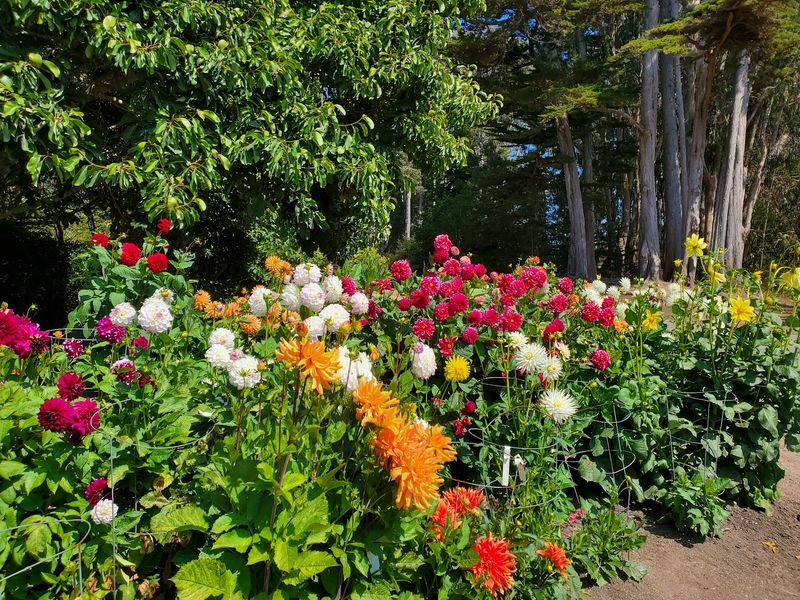
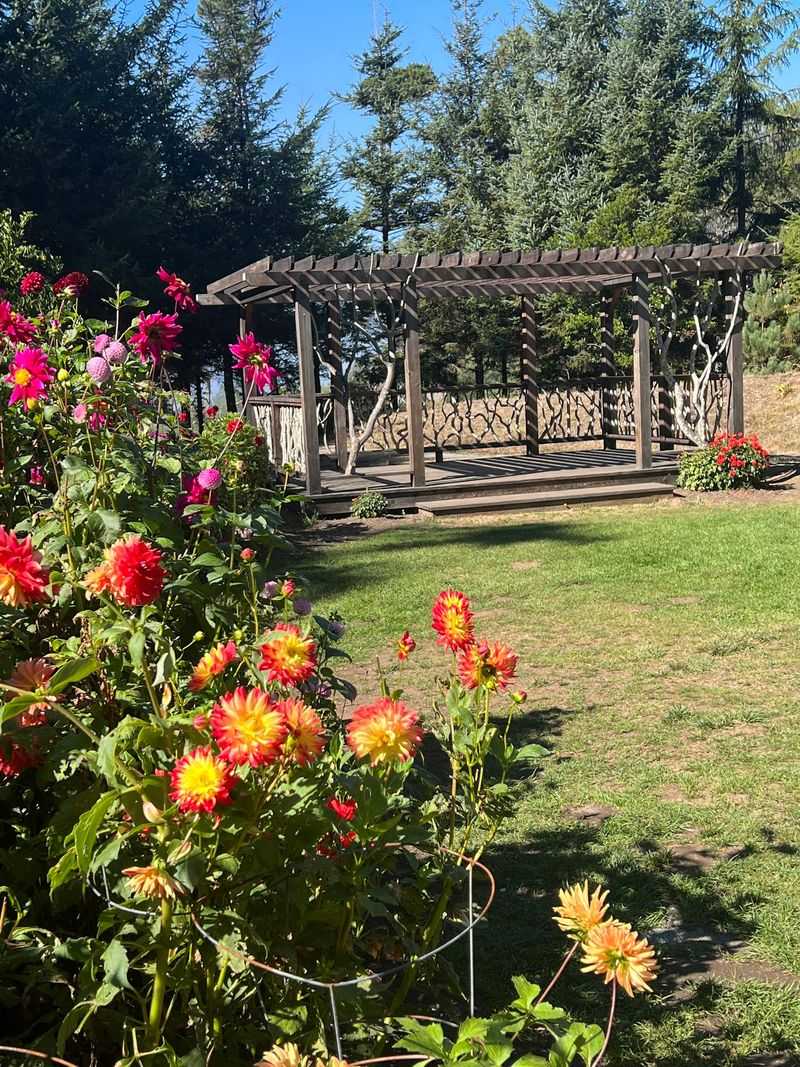
By the time August rolls around, the Dahlia Garden at Mendocino Coast Botanical Gardens becomes one of the most photographed spots on the entire Northern coast.
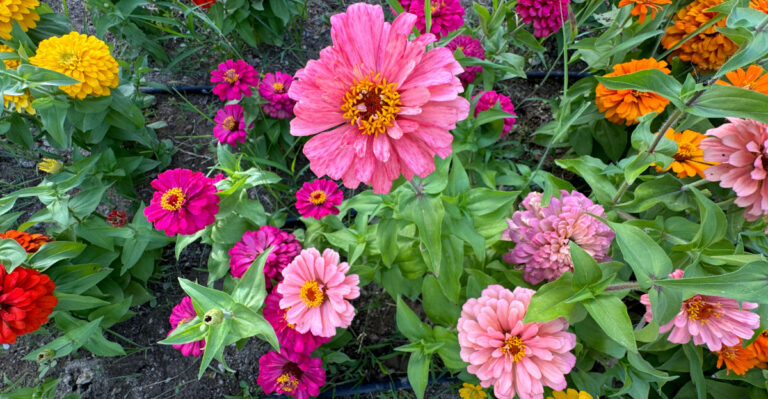
Hundreds of individual plants representing roughly 150 dahlia varieties fill the garden beds with bold, layered blooms that seem almost too vivid to be real.
Official garden pages differ on the exact number currently planted, but the collection remains one of the property’s largest and most colorful seasonal displays.
Garden founder Ernest Schoefer originally planted dahlias here, and that original vision has grown into something extraordinary over the decades.
Recent 2023 improvements included stage repairs, bed adjustments, and new trails added specifically so visitors can get closer to the flowers.
Photographers, artists, and couples looking for wedding backdrops all make special trips during this season.
One practical bonus that most people do not know about is that dahlias are naturally deer resistant. That makes them ideal for display areas near the Vegetable Garden, where other plants might attract unwanted browsing.
The variety on display here ranges from dinner-plate dahlias with blooms the size of a small frisbee to delicate pompom varieties no bigger than a golf ball. Each bed has its own personality.
Some burst with deep burgundy and orange, while others lean toward soft lavender and cream. Walking through during peak bloom feels genuinely dramatic, like the garden saved its biggest statement for the end of summer.
6. Woodland Trails That Feel Miles From California
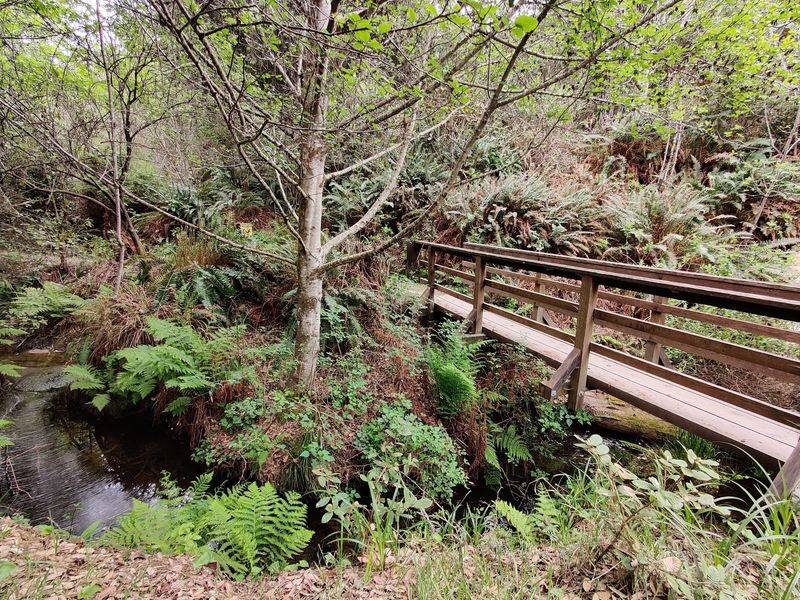
There is a section of this garden that feels nothing like the sunny, dry image many people associate with our state.
Dense coastal pine forests and deep fern-covered canyons line the trails toward the back of the property, creating an atmosphere that is cool, green, and almost otherworldly.
First-time visitors often stop and look around, genuinely unsure of where they are.
The South Trail meanders through thick coastal vegetation, while smaller paths along Fern Canyon Creek offer close-up views of lush foliage clinging to the canyon walls.
Part of the trail system also passes through a closed-cone conifer forest, which is a rare and distinctive ecosystem.
These trees only release their seeds under specific conditions, making them a fascinating piece of natural history to walk alongside.
Visitors who describe the woodland section often use words like quiet, hidden, and surprisingly remote. That feeling of being transported somewhere far away is one of the most common things people mention in reviews.
You forget you are in a public garden. You forget the highway is nearby.
All you hear is the sound of the creek, the wind in the pines, and the occasional bird calling overhead.
For anyone who loves forest bathing or simply needs a break from the noise of daily life, this part of the garden delivers something genuinely restorative without requiring a long drive into the wilderness.
7. Succulents Thriving In The Cool Coastal Air
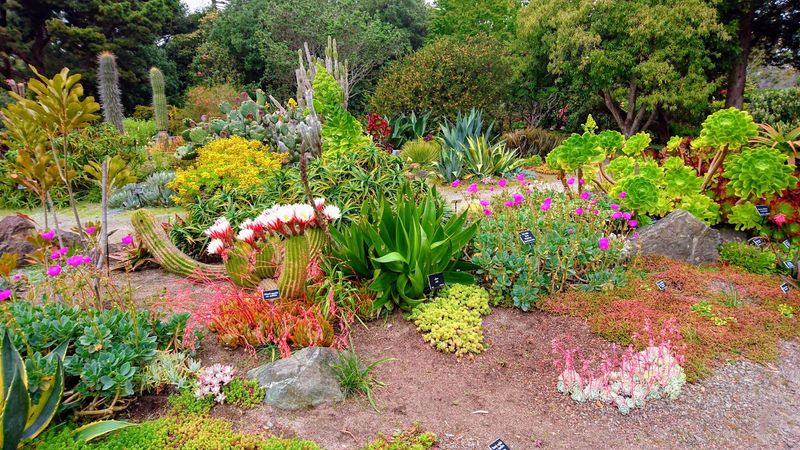
Most people picture succulents thriving in hot, dry desert settings, so finding a thriving succulent garden right on the foggy Mendocino Coast tends to catch visitors by surprise.
The Succulent Garden here was established in the early 1980s using generous plant donations, and it has grown into a collection of over 150 distinct species and cultivated varieties.
Special well-draining soil was brought in to help these plants handle the wetter winter months along the coast.
A large portion of the collection originates from highland Mexico and South Africa, two regions that share surprisingly similar rainfall and temperature patterns with this stretch of Northern coastline.
That geographic connection is what makes the growing conditions here work so well.
Succulents display small, leathery, thick leaves that sometimes appear white, waxy, or slightly hairy to the touch.
All of them produce blooms, typically from May through August, which means the Succulent Garden adds its own burst of color right as the rhododendron season winds down.
The consistently cool, moist coastal air actually plays a key role in keeping these plants healthy and happy year-round.
Far from being a simple add-on to the larger garden, this section stands on its own as a genuinely impressive collection.
Garden enthusiasts who grow succulents at home often find themselves taking notes and discovering varieties they have never seen before in any nursery or garden center.
8. Quiet Benches Made For Watching The Waves
Some of the best moments at this garden happen when you are not moving at all. Scattered throughout the grounds are benches placed at spots carefully chosen for their views, their quiet, or their natural beauty.
A particularly special cliff-side bench offers a front-row seat to migrating whales, crashing surf, and seabirds riding the coastal wind.
Near the bluff area, a small structure called the Cliff House provides shelter for visitors who want to watch for whales without standing in the wind. A nearby overlook offers similar views with a slightly different angle on the water below.
These spots invite you to slow down and just be present for a while, which is harder to find than it sounds in most tourist destinations.
Reviews from visitors mention again and again how peaceful and unhurried the whole experience feels. One person described it as a tonic for the soul, which is hard to top as a summary.
Whether you pack a lunch and find a bench near the rose garden, or you make it all the way to the coastal bluff and sit watching the sea for a while, the garden gives you permission to take your time. There is no rush here.
No crowd pushing you along. Just open sky, ocean sound, and a bench that seems like it was put there just for you.
9. The Bluff Walk Locals Somehow Keep Missing
Ask most Fort Bragg locals if they have done the Coastal Bluff Trail at the botanical garden, and a surprising number will shake their heads.
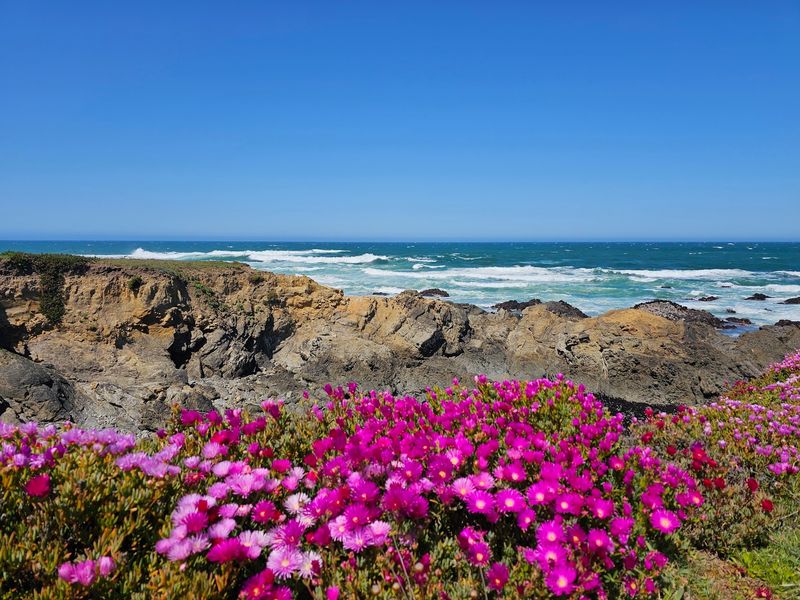
This trail meanders along the edge of a delicate coastal prairie, offering some of the most sweeping views of the Pacific you can find without a boat.
And yet it remains one of the most overlooked walks on the entire Mendocino Coast.
The bluff is home to resilient, low-growing plants perfectly adapted to the salty, wind-battered conditions of the coast.
Familiar sights like local poppies, seaside daisies, and Dudleya farinosa cling to the rocky edges with the kind of quiet toughness that feels almost inspiring.
From November through May, gray whales make their annual migration past this exact stretch of coastline, visible from the bluff on clear days.
Humpback whales can be spotted from April through November, and blue whales occasionally appear between June and October.
The bluff loop trail is mostly level, which makes it accessible to a wide range of visitors, though one moderately steep section appears just after the bridge over Digger Creek.
The round trip from the main entrance to the ocean and back covers about a mile total. It is an easy walk by most standards, but the views it delivers are anything but ordinary.
Missing this trail means missing the whole point of what makes this garden so different from every other botanical garden in our state.
10. Why One Visit Never Feels Like Enough
People who visit Mendocino Coast Botanical Gardens for the first time almost always say the same thing on the way out: they need more time. Many first-time visitors leave feeling that they could have spent longer exploring.
The garden opens daily at 9 AM, generally closing at 5 PM from April through October and at 4 PM from November through March, with occasional holiday, private-event, or special-program closures.
Each season brings something new. Winter magnolias give way to spring rhododendrons, which hand off to summer dahlias, which transition into fall color along the woodland trails.
Annual events like “Art in the Gardens” and the “Festival of Lights” add unique seasonal experiences that turn a garden visit into something more memorable.
The garden is also a recognized haven for birdwatchers, with over 180 species recorded on the grounds.
The garden is pet friendly too, which means the whole family, including the dog, can enjoy the trails together.
As a nonprofit organization, the garden uses admission revenue to support its operations, horticultural collections, conservation work, educational programs, public access, and care of the 47-acre property.
That mission gives each visit a broader purpose and helps preserve the landscape for returning guests.