The California Citrus Pests That Show Up Every Summer And How To Stop Them Early
Summer can bring out the best in California citrus trees, but it can also invite a few unwanted guests. One week the leaves look glossy and fresh.
The next, something is curling, spotting, or leaving sticky messes behind. Citrus pests often show up when warm weather helps new growth push out fast.
That tender growth can be a big target, which is annoying but not surprising. The tricky part is that early damage can look small at first.
A few curled leaves or tiny specks may not seem like a big deal. Then the problem spreads, and suddenly the tree looks stressed right when it should be thriving.
Catching pests early makes a huge difference. It can protect fruit, support healthy leaves, and save gardeners a lot of frustration later. California citrus has enough summer drama already. Bugs do not need to add more.
1. Asian Citrus Psyllid Is The Pest To Take Seriously
Out of every pest that targets citrus trees in our state, the Asian citrus psyllid stands in a class of its own. It is not just damaging on its own.
It also spreads a disease called Huanglongbing, or HLB, which has no cure and can permanently ruin entire orchards.
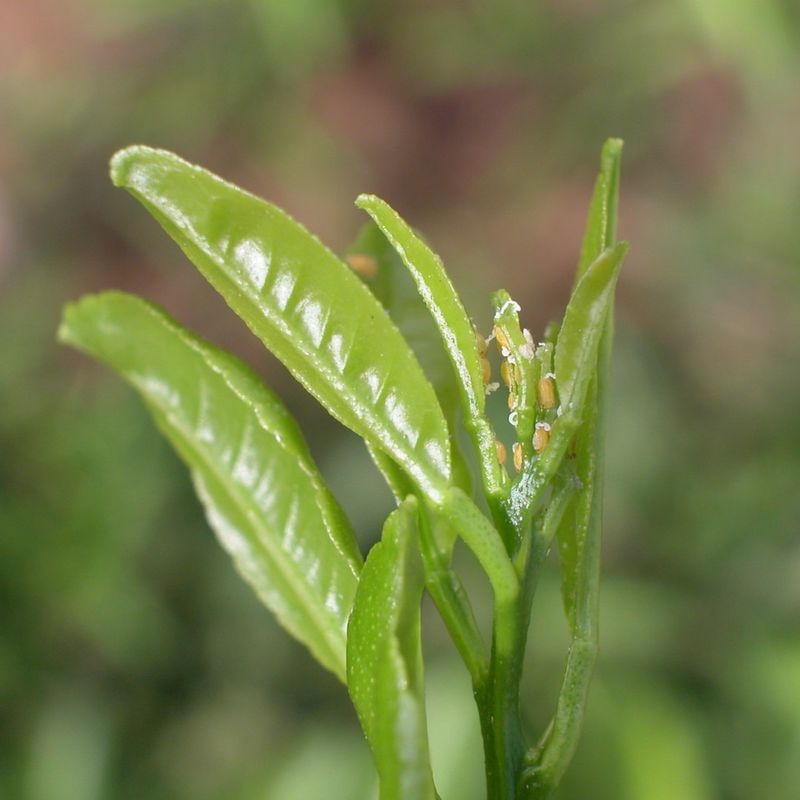
The psyllid is a tiny, brownish insect about the size of a sesame seed. Adults feed with their bodies tilted at a sharp angle, which is a helpful identification clue.
The nymphs, or young psyllids, produce white, waxy, curly threads as they feed on new growth.
Look for those waxy threads on fresh shoots in spring and early summer. Leaves that look twisted, stunted, or yellowed on new growth are another warning sign worth investigating quickly.
Report any suspected sightings to your local agricultural commissioner right away. Early detection truly matters here.
Trapping programs and inspection services are available throughout the state to help homeowners and growers monitor for this pest. Removing heavily infested new growth before the insects mature can slow the spread.
Horticultural oil sprays applied to new flushes of growth can also reduce psyllid populations when used consistently.
Staying connected with your county extension office keeps you informed about active infestations in your region.
2. Citrus Leafminer Leaves Twisted New Growth
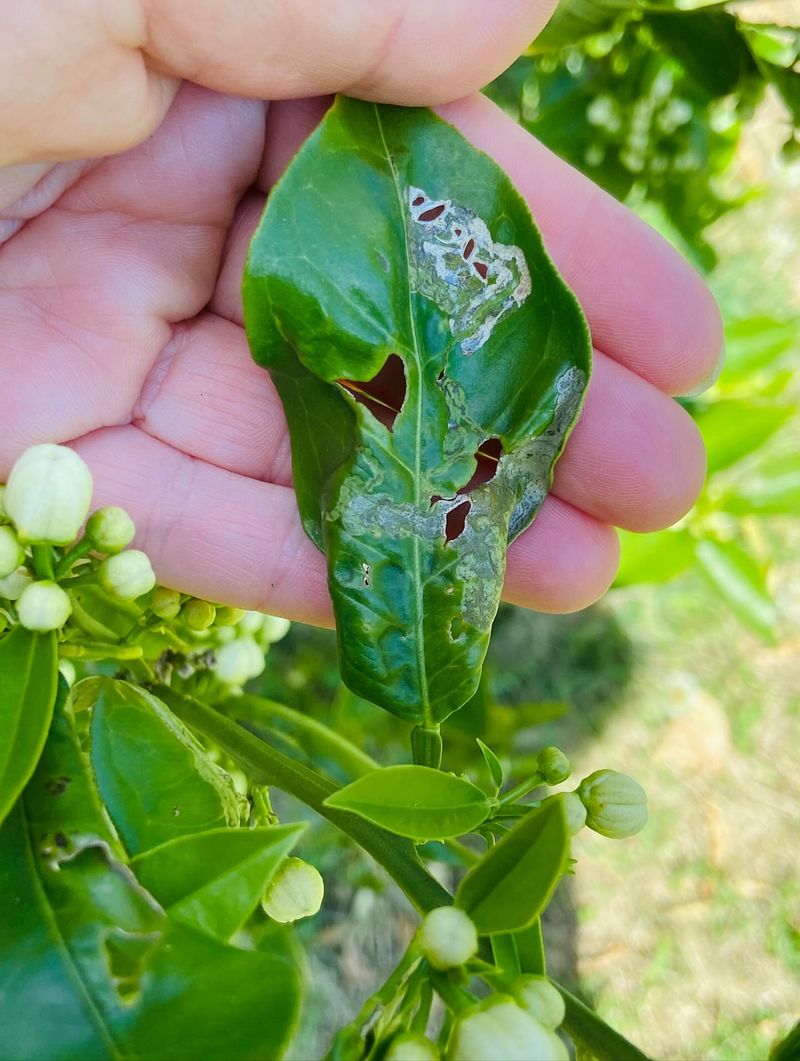
Tiny silvery trails winding through young citrus leaves are one of summer’s most recognizable calling cards.
Those trails are left behind by the citrus leafminer, a moth whose larvae tunnel inside fresh leaf tissue as they feed and grow.
Adult moths are barely visible to the naked eye and are active mostly at night. The real damage comes from the larvae, which create those winding, blister-like mines just beneath the leaf surface.
Affected leaves curl tightly at the edges, which can look alarming but rarely threatens a mature, healthy tree.
Young trees are most at risk because they depend on new growth to build strength and size. Repeated leafminer attacks can slow a young tree’s development significantly over a season.
Older trees with established canopies usually tolerate the damage without serious setbacks.
Your California Garden Changes Every Week. Your Plan Should Too.
Gardening in California changes quickly throughout the season. Every Friday you’ll receive a simple weekly plan showing exactly what to plant, prune, fertilize, harvest, and protect so you never miss the right timing.
Timing your response to new flush periods is key. Leafminers attack during the soft, new-growth stage, so monitoring those flushes closely is your best early warning system.
Spinosad-based sprays applied to new growth offer effective control without heavy environmental impact. Sticky yellow traps can help you track adult moth activity before damage begins.
Keeping trees well-watered and healthy also helps them push through infested flushes more quickly.
Avoid over-fertilizing with nitrogen, which triggers excessive new growth and gives leafminers more opportunity to attack.
3. Scale Insects Hide On Stems And Leaves
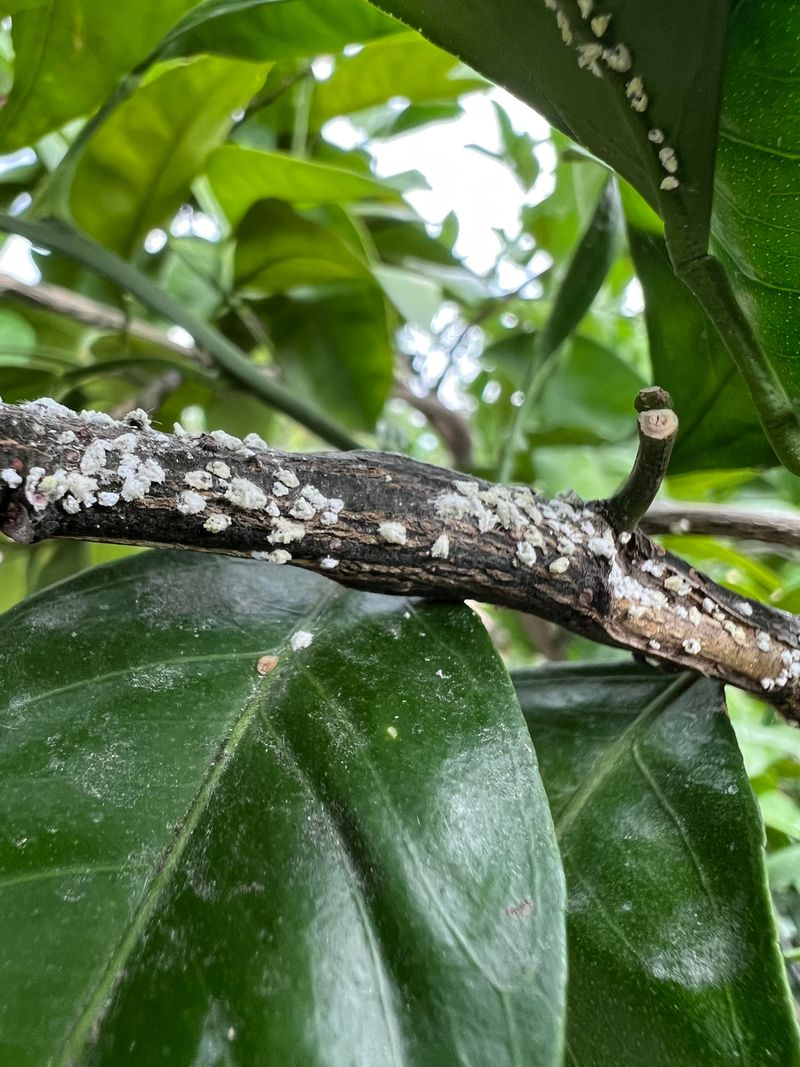
Scale insects are masters of disguise. They press flat against stems and leaves, covering themselves with a hard or waxy shell that makes them look more like a bump or discoloration than a living insect.
By the time most people notice them, the infestation is already well established. There are several types that target citrus in our state.
Brown soft scale, California red scale, and citricola scale are among the most common. They all feed by sucking sap from plant tissue, weakening branches and reducing fruit quality over time.
One major side effect of a scale infestation is sooty mold. Scale insects produce a sticky substance called honeydew, and mold grows right on top of it.
Black, dusty-looking leaves are often the first visible clue that scale insects are nearby, even before you find the insects themselves.
Run your fingers along stems and the undersides of leaves during your weekly tree checks. Scale insects feel like tiny bumps and are easy to overlook unless you are specifically looking for them.
Horticultural oil smothers them effectively when applied at the right time. Summer oil sprays work well on active crawlers, which are the mobile juvenile stage.
Parasitic wasps also attack scale insects naturally, so avoid using broad-spectrum pesticides that would eliminate those beneficial insects from your garden ecosystem.
4. Aphids Cluster On Tender Citrus Shoots
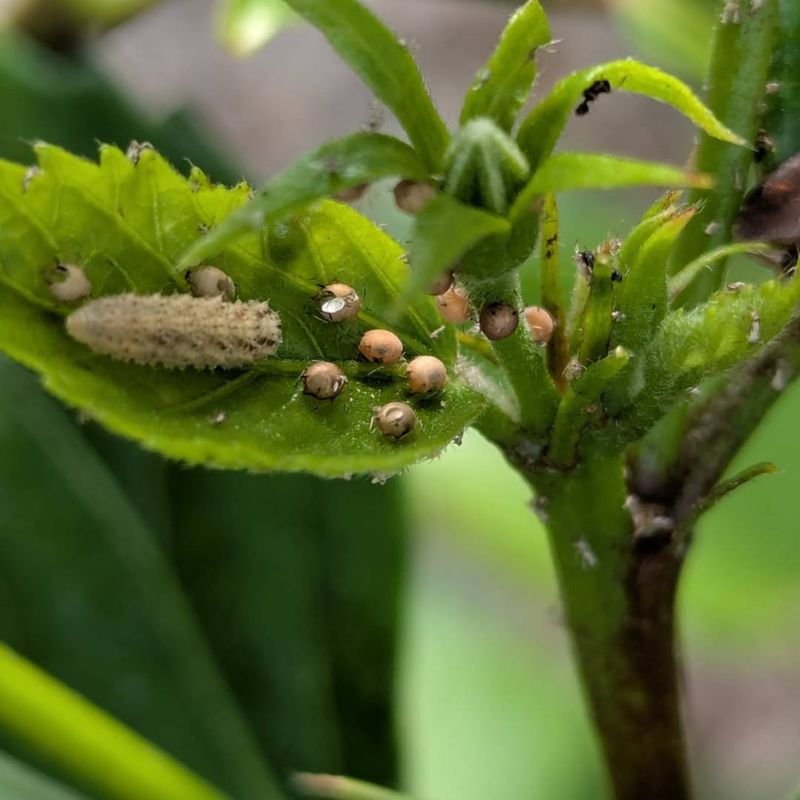
Few garden pests reproduce as fast as aphids. A single aphid can produce dozens of offspring in less than a week, and before long, an entire new flush of citrus growth can be smothered in a dense, sticky cluster of these soft-bodied insects.
Citrus aphids tend to be yellow-green, brown, or black depending on the species. They gather tightly on the undersides of young leaves and on tender new shoots.
Their feeding causes leaves to curl, pucker, and turn yellow in patches. The honeydew they produce also invites sooty mold and attracts ants, which protect aphids from natural predators in exchange for the sweet secretion.
Watch for curling new leaves and trails of ants moving up your tree trunk. Those ants are often a reliable early signal that aphids are feeding somewhere above.
Use a sticky ant barrier around the trunk to disrupt that relationship. Once ants can no longer protect the aphids, natural predators like ladybugs and lacewings move in and do a lot of the work for you.
A strong blast of water from a garden hose knocks aphids off leaves quickly and effectively. Insecticidal soap spray is another low-impact option that works well on contact.
Repeat applications every few days during peak summer growth flushes to keep populations in check. Early action prevents the damage from spreading to surrounding branches.
5. Spider Mites Thrive In Hot, Dusty Conditions
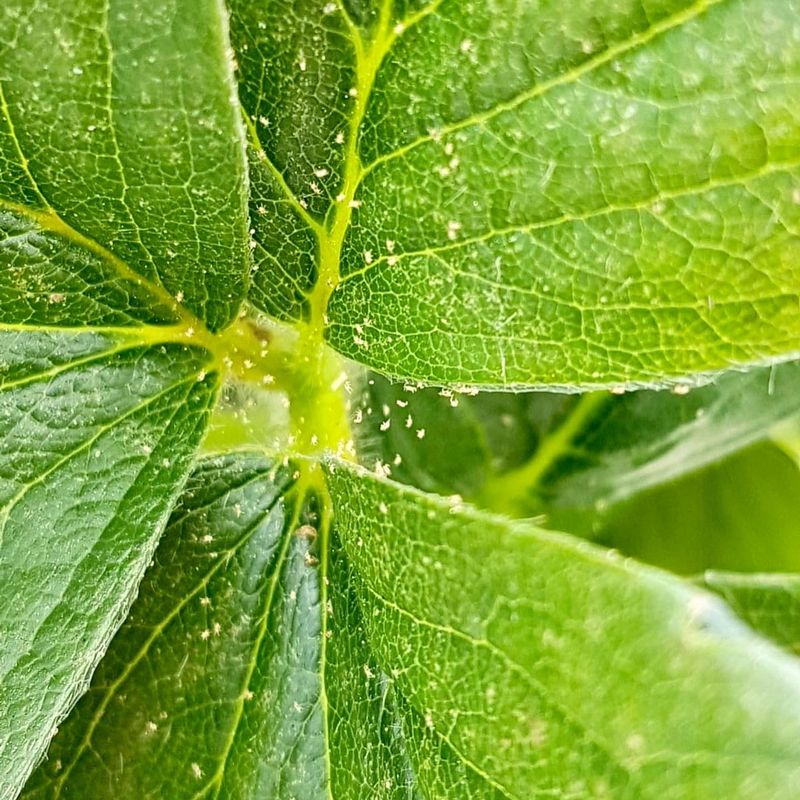
Hot, dry summers are prime time for spider mites on citrus trees. These microscopic pests are barely visible without a magnifying glass, but the damage they leave behind is hard to miss.
Leaves take on a dull, bronze, or stippled appearance as mites pierce individual cells and drain the contents.
Two-spotted spider mites and citrus red mites are the most frequent offenders in our state during summer.
They multiply rapidly in warm, dusty conditions, especially when beneficial predatory mites have been reduced by pesticide use or drought stress.
A single generation can complete in less than a week during peak summer heat. Tap a branch over a white sheet of paper to check for mites. If tiny specks start moving around on the paper, you have found them.
Fine webbing on the underside of leaves is another reliable sign, especially in the later stages of an infestation.
Keeping trees well-watered during heat waves reduces mite-friendly stress conditions. Wetting down dusty soil and nearby pathways also helps, since dust actually encourages mite population growth.
Miticide sprays or horticultural oil applied in the morning offer solid control. Predatory mites like Phytoseiulus persimilis are available from garden suppliers and offer a natural, chemical-free solution.
Avoid using broad-spectrum insecticides, which wipe out the natural enemies that normally hold spider mite numbers in check.
6. Whiteflies Lift Off When Leaves Are Disturbed
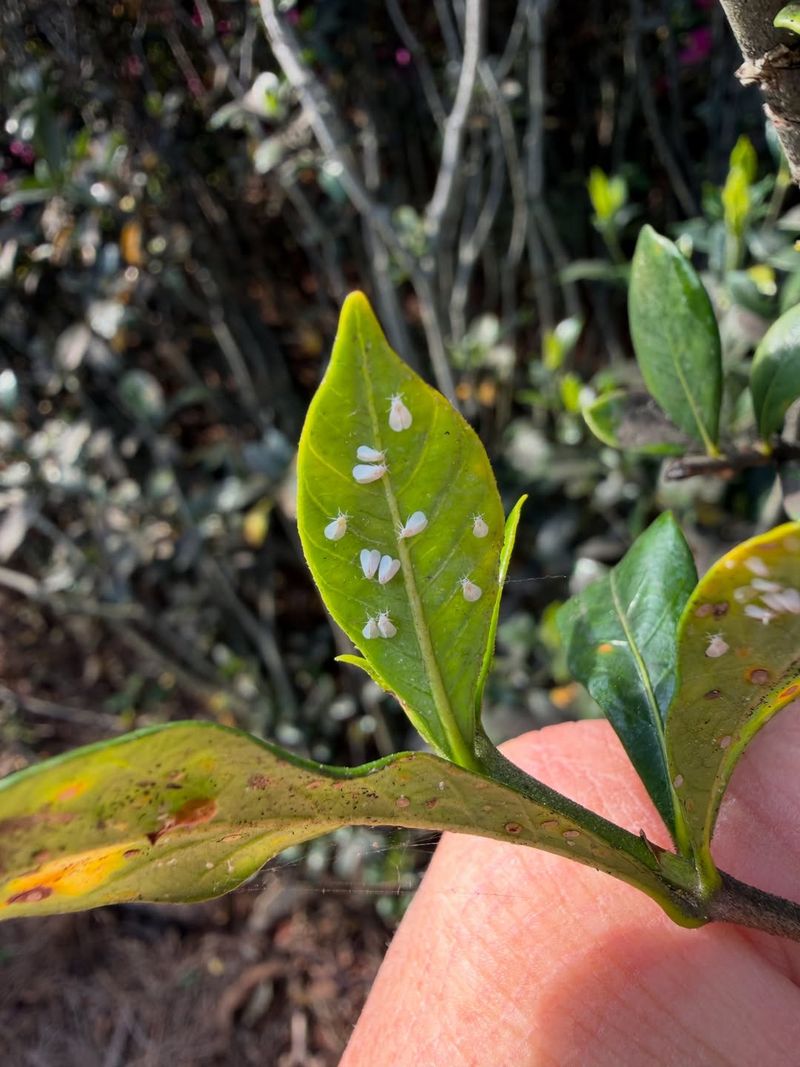
Brush against a citrus branch in summer and a tiny white cloud lifting into the air is a sure sign of whiteflies.
These small, winged insects cluster on the undersides of leaves and scatter instantly when disturbed. They look harmless in that brief, fluttery moment, but the damage they cause adds up fast.
Whiteflies feed by sucking plant sap, just like aphids and scale. They also produce honeydew, which leads to sooty mold on leaves and fruit.
Heavy infestations weaken trees, cause leaf yellowing, and can reduce both fruit size and quality. Citrus whitefly and woolly whitefly are the two species most commonly seen on citrus in our region.
Yellow sticky traps placed near your trees are one of the most useful early-detection tools available.
When you start catching large numbers of adults, it is a signal to inspect leaves more closely for eggs and nymphs on the undersides.
Nymphs are flat, oval, and nearly transparent, making them easy to overlook. Insecticidal soap or neem oil sprays aimed directly at the undersides of leaves work well when applied consistently.
Repeat every seven to ten days during active infestation periods. Parasitic wasps like Encarsia formosa are natural enemies of whiteflies and can be introduced into your garden as a biological control option.
Avoid excessive nitrogen fertilizer, which pushes out the soft, lush growth that whiteflies prefer most.
7. Mealybugs Leave Cottony Clumps Behind
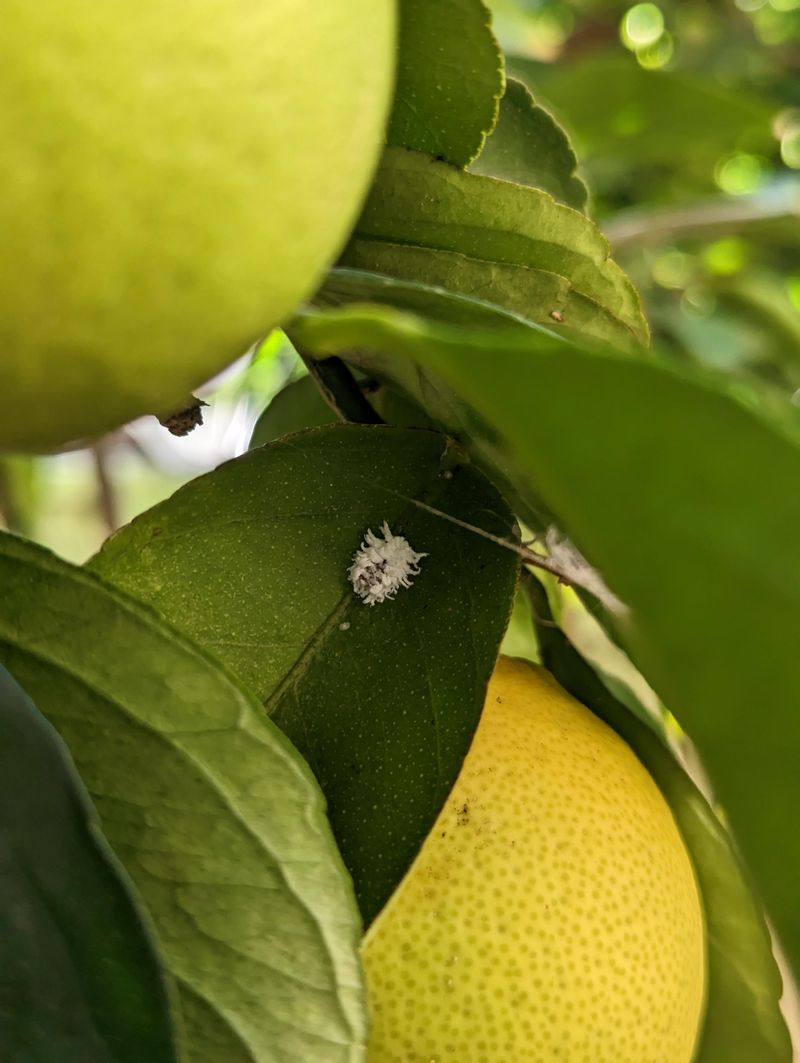
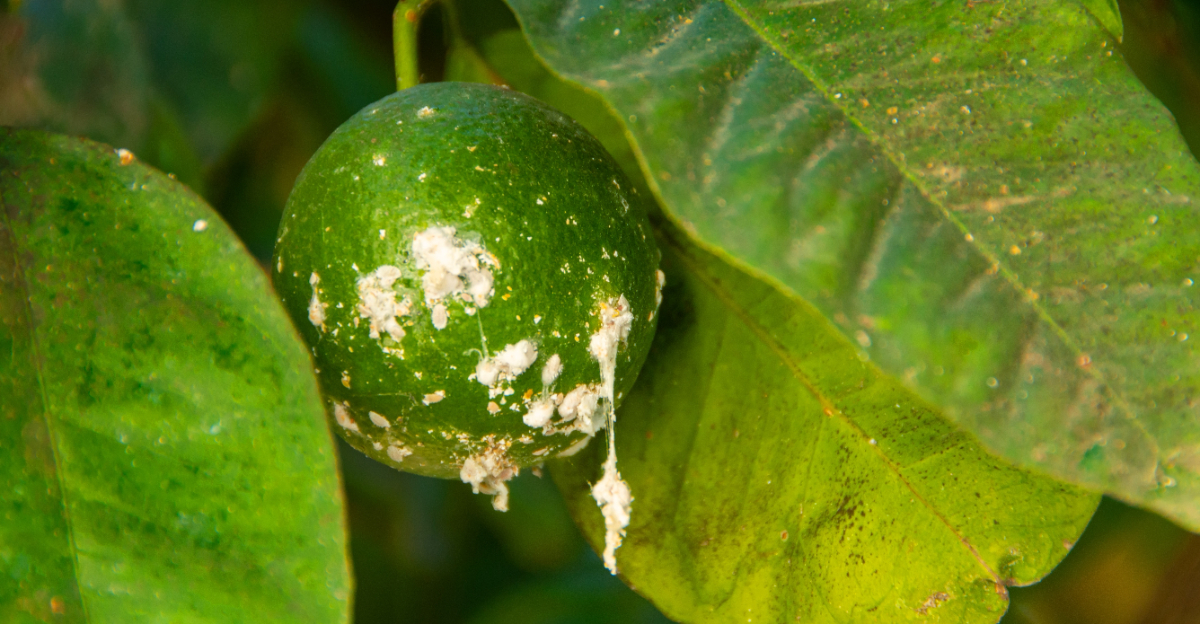
Spotting what looks like small tufts of white cotton tucked into the joints of citrus branches is a classic sign that mealybugs have moved in.
These soft-bodied insects cover themselves in a powdery, waxy coating that gives them that fluffy, cotton-like appearance. It also makes them harder to treat than many other pests.
Mealybugs gather in tight groups at leaf axils, along stems, and near the base of fruit. They feed on plant sap and produce large amounts of honeydew, which quickly leads to sooty mold.
In heavy infestations, fruit can become sticky, discolored, and unmarketable. Weakened branches may also drop leaves prematurely during the heat of summer.
Ants once again play a role here. Just like with aphids, ants tend mealybug colonies and protect them from predators.
Managing ant activity around your trees is a smart first step in any mealybug control plan. Rubbing alcohol applied with a cotton swab removes small colonies on contact and is satisfying in a hands-on kind of way.
For larger infestations, insecticidal soap or neem oil sprays work well when you achieve good coverage, especially in the hidden spots where mealybugs like to hide.
The natural predator Cryptolaemus montrouzieri, a small beetle, actively hunts mealybugs and is available through biological control suppliers.
Check your trees weekly during summer, paying close attention to stems and branch joints where colonies tend to start forming first.
8. Citrus Thrips Scar Young Fruit And Leaves
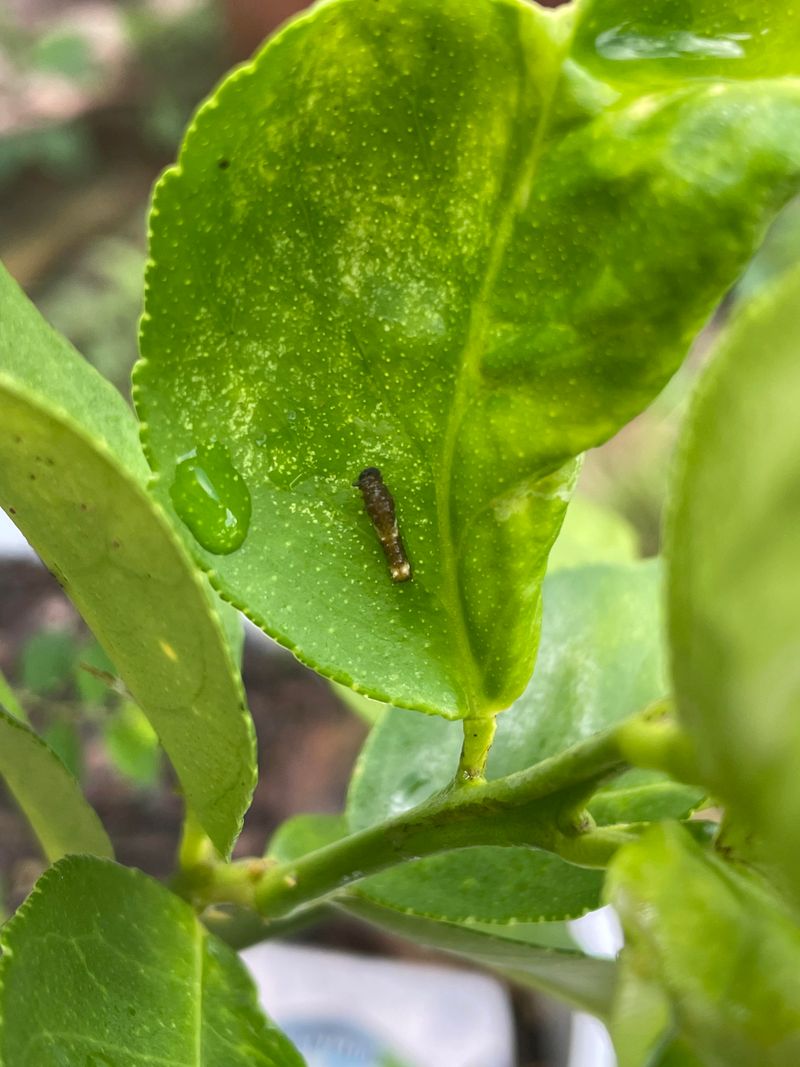
That silvery, ring-shaped scar circling the stem end of a young citrus fruit is the unmistakable signature of citrus thrips.
These tiny, fast-moving insects feed on the surface of young fruit and leaves just as they are forming, leaving permanent marks that follow the fruit all the way to harvest.
Citrus thrips are yellowish-orange and barely a millimeter long. They are most active during warm, dry weather in late spring and early summer, which is exactly when young fruit is at its most vulnerable.
The scarring they cause does not affect the flavor or edibility of the fruit, but it does reduce the visual appeal and market value significantly.
Leaf damage appears as distorted, silvery, or bronzed patches on young foliage. In severe cases, new leaves become crinkled and fail to develop normally.
Young trees with repeated heavy infestations may show stunted growth over the course of a season.
Monitoring with blue sticky traps helps you track adult thrips activity before fruit set. Spinosad-based sprays are highly effective against thrips and have a low impact on most beneficial insects.
Apply during petal fall and the early fruit-set stage for the best results. Avoiding excessive nitrogen fertilizer reduces the lush, soft growth that thrips prefer.
Keeping the area around your trees free of weeds and plant debris also removes hiding spots where thrips shelter between feeding periods on your citrus.