The California Groundcover That Stays Cooler Than Gravel During Extreme Heat
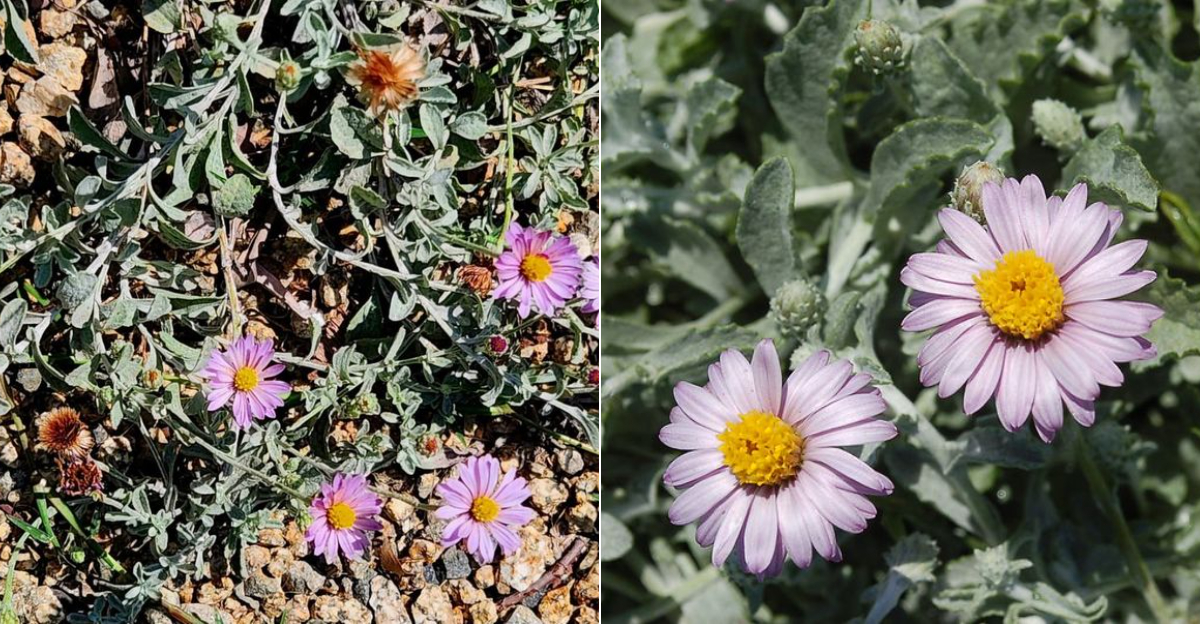
Gravel may seem like the obvious answer for a dry California yard, but extreme heat can turn that tidy surface into a miniature hot plate. Bare feet learn this lesson fast.
A low-growing groundcover offers a much cooler alternative. Its pale foliage reflects sunlight instead of absorbing every bit of it.
The result is a softer surface that feels far less harsh during brutal summer afternoons.
This plant also suits the relaxed look of a water-wise landscape. It spreads close to the soil and fills open spaces without the heavy appearance of rock.
Even better, it brings subtle texture to spots where gravel can feel flat or severe.
Hot patios and sun-baked borders deserve more than another layer of stone. This overlooked option can help the yard feel calmer during heat waves.
It also proves that practical landscaping does not need to look dull, dusty, or painfully hot.
1. This Groundcover Softens Hot Ground
Most people reach for gravel when they want a low-maintenance groundcover. It looks clean, drains fast, and needs no watering.
But here is the problem: gravel absorbs heat all day and radiates it back up at night, turning your garden into an oven.
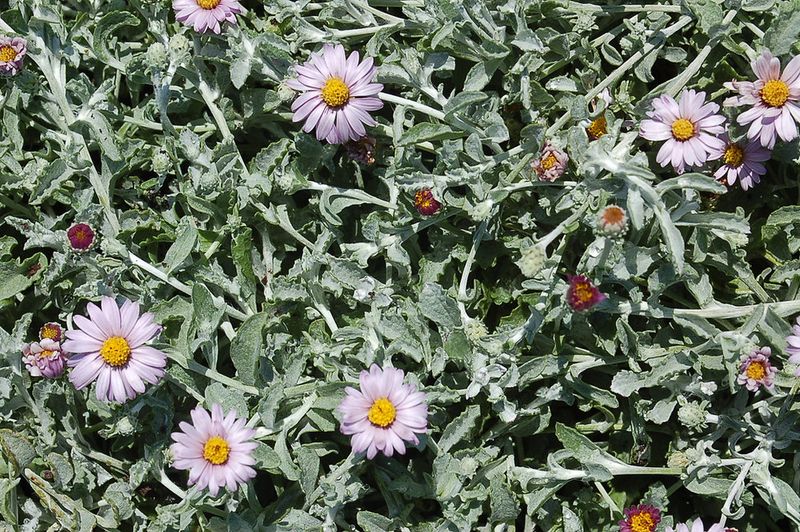
Silver Carpet Beach Aster works the opposite way. Its dense, woolly mat of leaves acts like a natural insulator.
The plant traps cool air near the soil surface and slows the transfer of heat into the ground below. Studies on vegetative groundcovers show that planted surfaces can run 20 to 40 degrees cooler than exposed gravel on a hot afternoon.
That temperature difference is huge for soil health. Roots stay comfortable, beneficial soil organisms survive, and nearby plants do not suffer from heat stress radiating off a rock surface.
The mat also blocks weeds by shading the soil, which means less work for you.
For homeowners in inland valleys or hot suburban neighborhoods, this cooling effect is genuinely useful. You feel it when you walk near the planting in bare feet.
The ground is noticeably softer and cooler than the surrounding hardscape. Silver Carpet Beach Aster does not just look good.
It actively makes your outdoor space more livable during the hottest months of the year, which is something gravel simply cannot offer.
2. Its Low Mat Shades Soil Better Than Gravel
One of the biggest reasons this plant outperforms gravel in heat is simple: it shades the ground. Gravel sits on top of soil but does not cover it the way a living mat does.
Gaps between rocks let sunlight hit the soil directly, heating it up fast.
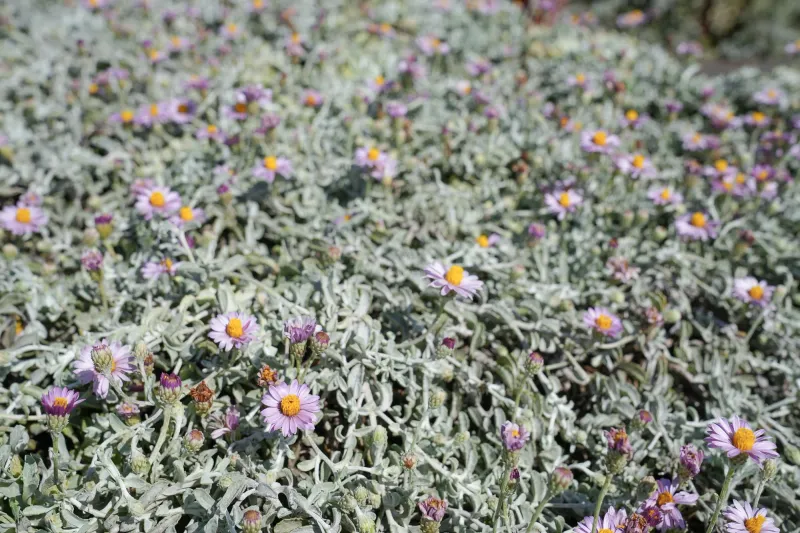
Silver Carpet Beach Aster grows in a tight, overlapping pattern. Leaves press close to each other and form a nearly unbroken canopy just a few inches off the ground.
That canopy blocks direct sunlight from ever reaching the soil beneath it. Shaded soil holds moisture longer. It stays cooler through the afternoon heat.
And because it is not baking dry every day, the microorganisms living in it stay active. Those tiny organisms are what break down organic matter and feed your plants naturally.
Your California Garden Changes Every Week. Your Plan Should Too.
Gardening in California changes quickly throughout the season. Every Friday you’ll receive a simple weekly plan showing exactly what to plant, prune, fertilize, harvest, and protect so you never miss the right timing.
Gravel actually creates the opposite effect. Dark-colored gravel can reach surface temperatures above 150 degrees Fahrenheit on a hot day.
That heat pushes down into the soil and stresses roots. Light-colored gravel reflects heat upward instead, which can scorch low-growing plants nearby.
The mat formed by this beach aster stays relatively consistent in temperature because living tissue regulates heat through a process called transpiration. The plant releases a small amount of moisture, which cools both the leaf surface and the air right around it.
It is a natural, built-in cooling system that gravel will never have.
3. Silvery Foliage Helps Reflect Harsh Sun
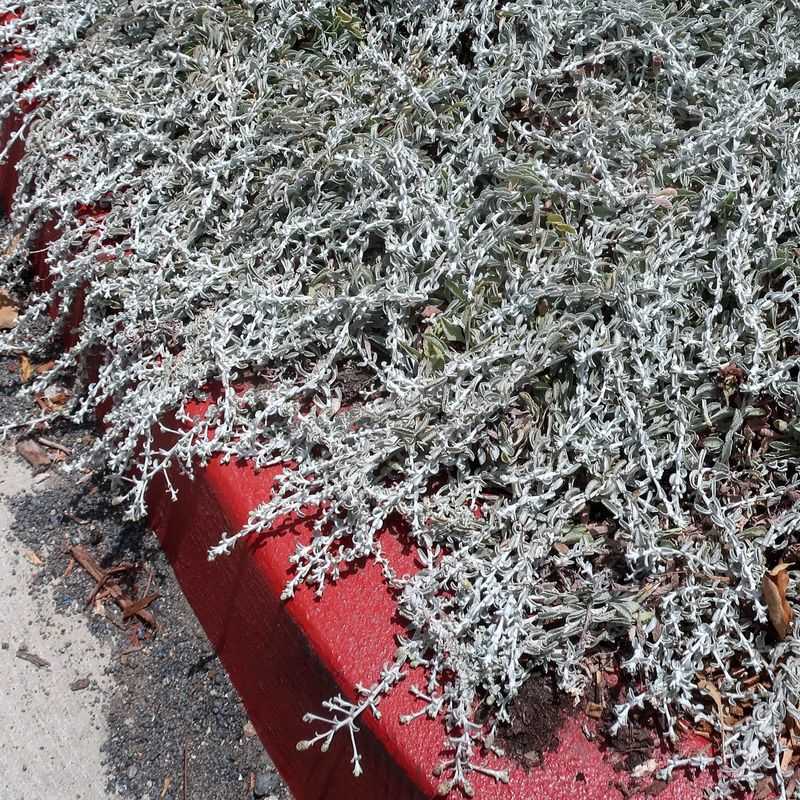
Run your hand across the leaves of this plant and you will notice something right away. They feel soft and fuzzy, almost like felt.
That texture is not just for looks. It is a survival tool the plant developed over thousands of years growing on sun-blasted coastal bluffs.
The tiny hairs covering each leaf are called trichomes. They trap a thin layer of air between the leaf surface and the sun, which slows how fast the leaf heats up.
They also reflect a portion of incoming sunlight away from the plant entirely.
That reflective quality is part of what gives the plant its silvery appearance. When you look at it in full sun, it almost seems to glow.
That shimmer is actually light bouncing off thousands of tiny leaf hairs. It is the same reason desert plants often look pale or silver compared to plants in shady forests.
For your garden, this reflective foliage does double duty. First, it keeps the plant itself from overheating.
Second, it bounces some of that solar energy away from the surrounding soil. Combined with the shading effect of the mat, the result is a noticeably cooler microclimate around the planting.
Gardeners in the hotter parts of California have noticed that nearby plants seem to do better when Silver Carpet Beach Aster grows around them.
The reflected light is soft, not harsh, and the cooling effect is real enough to make a difference on a scorching July afternoon.
4. It Cools The Look Of Dry Path Edges
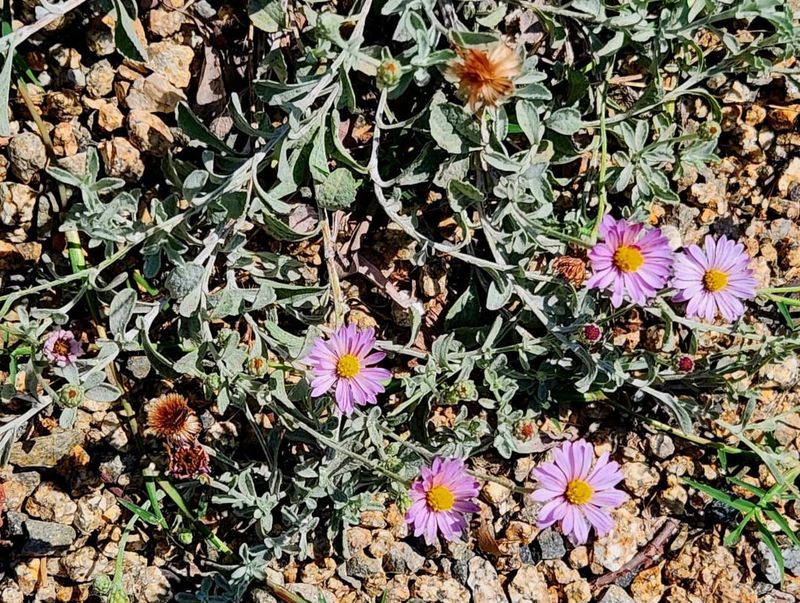
Dry gardens can sometimes feel harsh. Gravel paths, decomposed granite, and exposed soil create a look that reads as hot and unwelcoming, even when the plants nearby are beautiful.
Adding soft texture along the edges changes everything.
Silver Carpet Beach Aster is one of the best plants for softening the edge of a dry path. Its low mat spills slightly over borders without becoming invasive or messy.
The silvery color contrasts beautifully with warm-toned gravel, terracotta pavers, and dark decomposed granite.
Beyond the visual effect, it actually makes the path feel cooler. When you walk alongside a planting of this aster, the air just above it is measurably cooler than the air above an exposed gravel surface.
That slight temperature drop makes a real difference during a summer stroll through the garden.
Path edges are also one of the hardest spots to keep planted. Foot traffic, reflected heat from the path surface, and limited soil depth make most plants struggle there.
This beach aster handles all three challenges with ease. Its roots are shallow and adaptable, and it tolerates the extra heat that radiates off nearby hard surfaces.
Designers working on fire-wise landscapes in California have started using it along path edges as a living border.
It stays low enough to never block sightlines, and its soft appearance gives even a very minimal, dry garden a finished and intentional look that gravel borders alone cannot achieve.
5. Small Blooms Keep It From Looking Flat
A plant that only offers foliage can start to look one-dimensional after a while. Flat mats of silver or green are fine as a backdrop, but they rarely hold attention on their own.
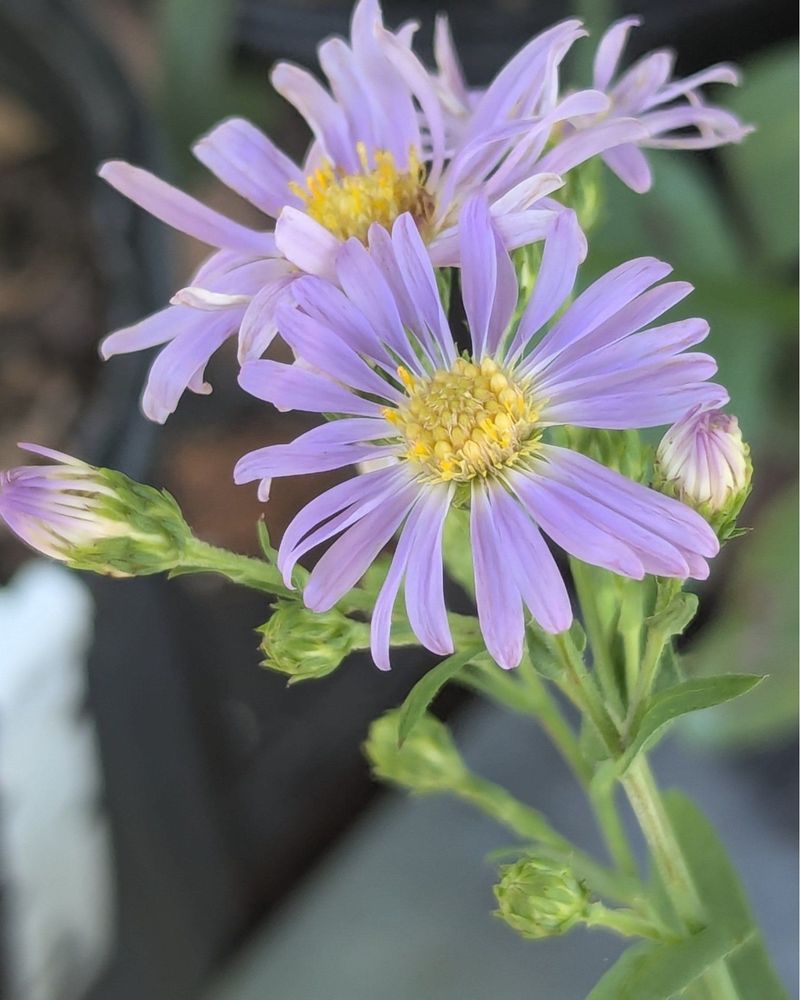
Silver Carpet Beach Aster solves that problem with a late-season bloom that adds just enough color to keep things interesting.
From late summer into fall, the plant sends up small daisy-like flowers in shades of lavender and pale purple. They are not showy in a dramatic way.
Instead, they dot the silvery mat with tiny bursts of color that feel natural and relaxed rather than forced or overdone.
The flowers are also excellent for pollinators. Bees and small butterflies visit them regularly, which adds movement and life to what might otherwise be a quiet corner of the garden.
Watching a bee work its way across a carpet of blooming aster on a warm September afternoon is genuinely satisfying.
After the blooms fade, the seed heads have a soft, feathery look that adds texture through the winter months.
Many gardeners choose to leave them rather than cut them back, since the seeds attract small birds like finches and sparrows.
The bloom cycle also signals that the plant is healthy and well-established. A thriving patch of Silver Carpet Beach Aster that flowers reliably every fall is a sign that your soil, drainage, and watering routine are all working together the way they should.
That kind of feedback is genuinely useful for any gardener.
6. Coastal Gardens Are Its Sweet Spot
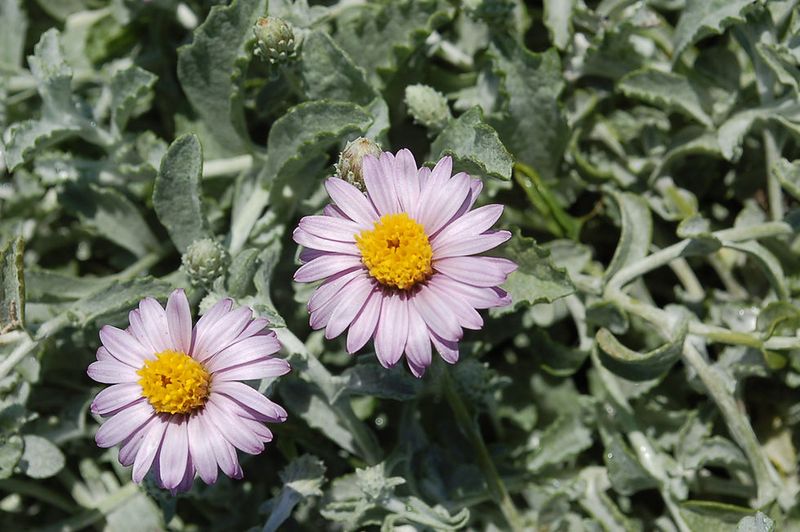
Salt air, sandy soil, and relentless wind would finish off most ornamental plants in a season. But for Silver Carpet Beach Aster, those conditions feel like home.
This plant evolved right along the coast of California, from the northern regions near the Oregon border down through the central coast and into Southern California.
Its natural habitat is coastal bluffs and sandy flats where the soil is poor, the wind is constant, and fresh water is limited. Growing in those conditions for thousands of years shaped a plant that is genuinely tough in ways that most cultivated plants simply are not.
Salt tolerance is one of its strongest traits. Ocean spray and salt-laden breezes can burn the leaves of many plants, but the woolly coating on this aster’s foliage helps protect it.
Gardeners within a few blocks of the beach report that it performs better than almost anything else they have tried.
Wind resistance is another advantage. Because the plant grows so low to the ground, strong coastal winds pass right over it.
There is nothing tall to break or bend. The mat simply flattens slightly and springs back when the wind lets up.
For anyone gardening near the coast, finding plants that actually thrive rather than just survive is a constant challenge. Silver Carpet Beach Aster does not just tolerate coastal conditions.
It genuinely performs better there than it does in milder inland settings, which makes it a rare and valuable find for seaside gardeners.
7. Drainage Matters More Than Rich Soil
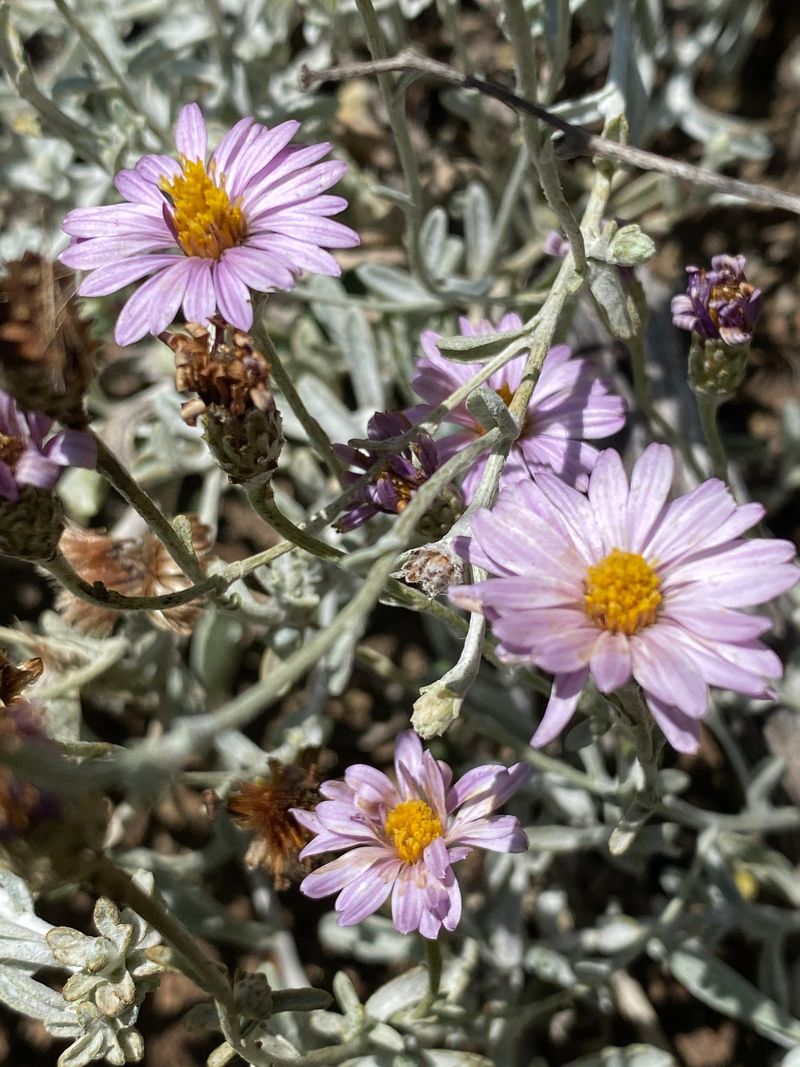
Here is something that surprises a lot of new gardeners: feeding this plant too well can actually hurt it.
Rich, amended soil with lots of compost and fertilizer encourages fast, soft growth that is prone to rot and disease. This beach aster prefers to be a little lean.
What it absolutely needs is drainage. Sitting in wet soil for even a short period can damage the roots and cause the mat to thin out or develop bare patches.
Sandy, gravelly, or rocky soil that drains quickly after rain or irrigation is exactly what this plant wants.
If your garden soil is heavy clay, amend it with coarse sand or decomposed granite before planting. Raised beds and berms also work well.
The goal is to make sure water moves through the root zone quickly and does not pool around the base of the plant.
One practical tip: avoid planting it in low spots where water naturally collects. Even in a dry climate, those areas can hold moisture long enough after a rain to stress the roots.
Higher ground or sloped areas are much better choices.
Once established in well-drained soil, the plant becomes remarkably self-sufficient. It does not need regular feeding.
It does not need mulch piled around its base. It does not need fussing.
Just give it the right soil conditions from the start and step back. That simplicity is one of the biggest reasons experienced gardeners keep coming back to it.
8. It Needs Water To Stay Summer-Green
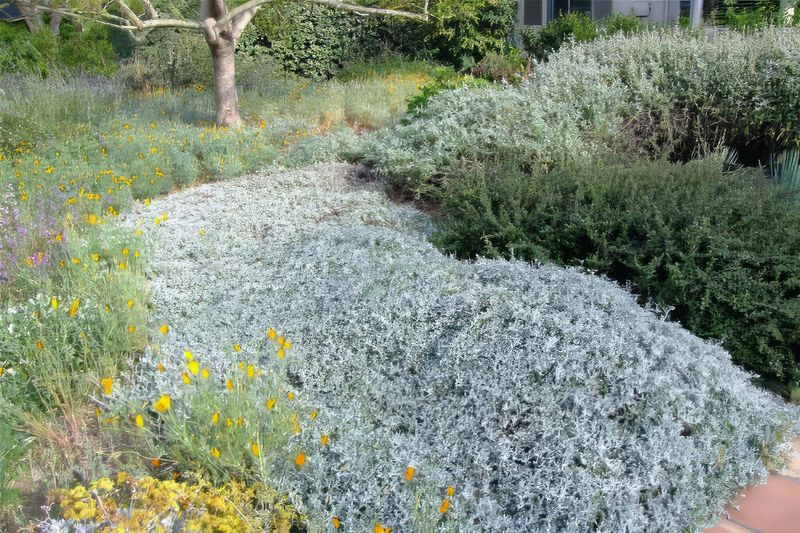
Do not let the word drought-tolerant fool you into thinking this plant never needs water. It does, especially during its first year in the ground.
Getting the roots deep and wide enough to handle dry summers takes time, and supplemental irrigation helps that process along.
Once established, usually after one to two full growing seasons, it can survive on rainfall alone in many coastal areas.
Inland gardens, however, get hotter and drier, so occasional deep watering through the summer keeps the mat looking full and green rather than sparse and stressed.
The key word is deep. Light, frequent watering encourages shallow roots that cannot handle heat stress.
Watering deeply but infrequently pushes roots downward in search of moisture, which builds a stronger, more resilient plant over time. Drip irrigation works well for this because it delivers water slowly and directly to the root zone.
Signs that the plant needs water include edges of the mat turning grayish-tan or leaves curling slightly. Those are early signals, not emergencies.
A good deep watering usually brings the plant back to looking healthy within a day or two.
In gardens across the hotter inland valleys of California, gardeners have had success watering every two to three weeks during peak summer heat.
That schedule keeps the plant green and attractive without encouraging the kind of soft growth that makes it vulnerable to rot.
Finding that balance is the real skill, and it gets easier with a little practice.