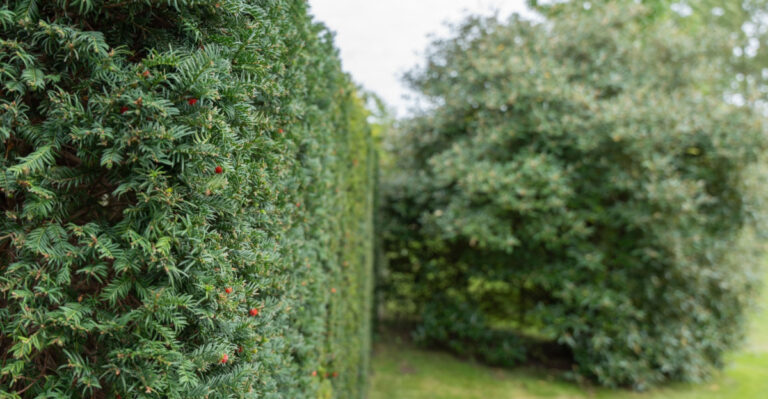
The Compact Native Ohio Shrub That Works Better Than Yew Near Foundations
Yew has been the default foundation shrub in Ohio for so long that nobody questions it. It stays green, shapes cleanly, fits the space.
The problems it creates are slow enough to miss and serious enough to matter once they arrive. Toxicity to pets and children.
A growth habit that eventually outpaces the space it was given. A relationship with Ohio’s native ecosystem that amounts to nothing.
One compact Ohio native fits foundation beds just as naturally. It holds its size honestly.
It brings seasonal interest that yew never offered. It supports local insects and birds that a well-placed foundation shrub could be feeding without any extra effort.
The case for replacing yew has been building for years. This native makes it easy to act on.
1. Northern Bush Honeysuckle Stays Low Enough For Many Foundation Beds
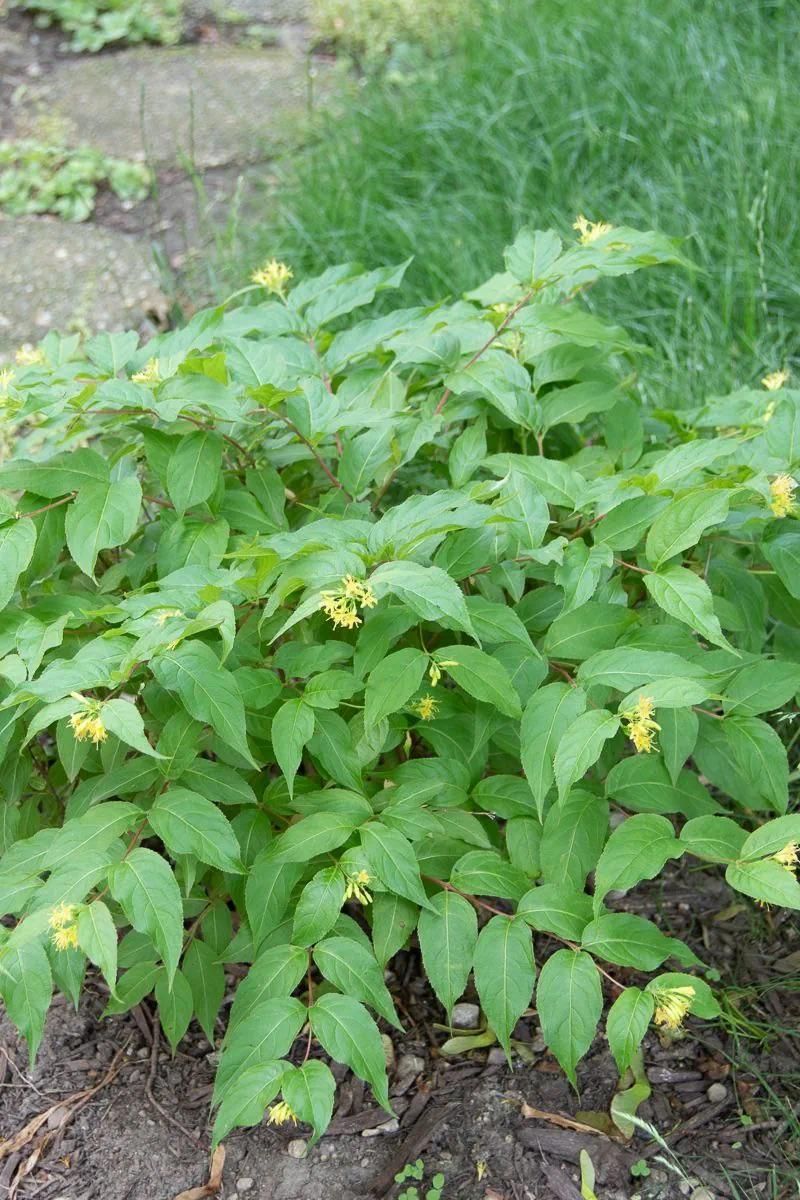
Measured against the wall of a typical house, a mature Diervilla lonicera reaches roughly 2 to 4 feet tall in many documented settings. Ohio University Extension sources sometimes place the upper range closer to 5 feet, depending on site conditions and genetics.
That variation is normal for a species growing across different soils, light levels, and climates.
Width matters just as much as height when planning a foundation bed. Diervilla lonicera can spread 3 to 5 feet across, and its suckering habit may push that spread further over time.
A shrub planted too close to a walkway or entry step can crowd the path well before it reaches full height.
Positioning should be based on mature dimensions rather than the size of the plant at purchase. Leave enough room for air movement around the stems and for access to windows and the building itself.
Do not squeeze a wide-spreading shrub into a strip that only has 18 inches of depth.
One important note to establish early: Diervilla lonicera is deciduous. Its leaves emerge in spring, provide cover through summer, color in fall, and then drop.
The foundation bed will look more open from late fall through early spring. Homeowners who need foliage at the foundation through winter should factor that into their decision before planting.
2. Dry Shade Near The House Is Less Of A Problem For This Tough Shrub
A roof overhang can intercept a surprising amount of rainfall before it ever reaches the soil below. Add building shade to that reduced moisture, and many foundation beds end up drier and darker than the open lawn just a few feet away.
Root competition from nearby trees can make conditions even more demanding.
University Extension programs and USDA resources describe Diervilla lonicera as adaptable from full sun to partial shade. It also tolerates relatively dry soil conditions.
That combination of light flexibility and dry-soil adaptability is genuinely useful in spots where other shrubs struggle to establish.
Tolerance is not the same as preference, though. Flowering and foliage density tend to be better with more light.
A plant growing in several hours of direct sun will likely produce more blooms than one tucked under deep shade all day. Deep shade beneath a dense tree canopy is a different environment from filtered light beside a house wall.
Your Ohio Garden Changes Every Week. Your Plan Should Too.
Gardening in Ohio changes quickly throughout the season. Every Friday you’ll receive a simple weekly plan showing exactly what to plant, prune, fertilize, harvest, and protect so you never miss the right timing.
Newly planted shrubs still need regular watering during the establishment period, regardless of how adaptable the species is once mature. Watering needs depend on soil type, weather, and drainage rather than a fixed schedule.
Check soil moisture and respond to actual conditions rather than assuming an Ohio native plant can go without water right after planting.
3. Yellow Summer Flowers Give Pollinators More Than A Yew Can Offer
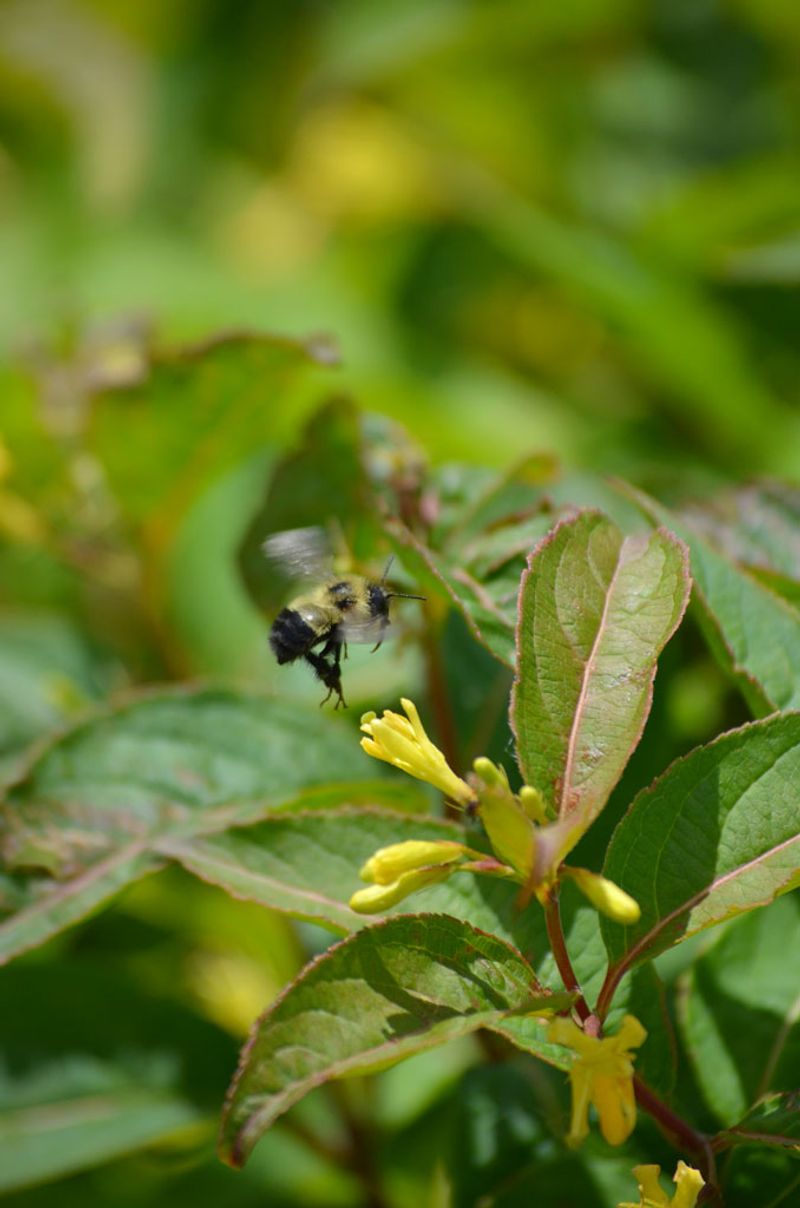
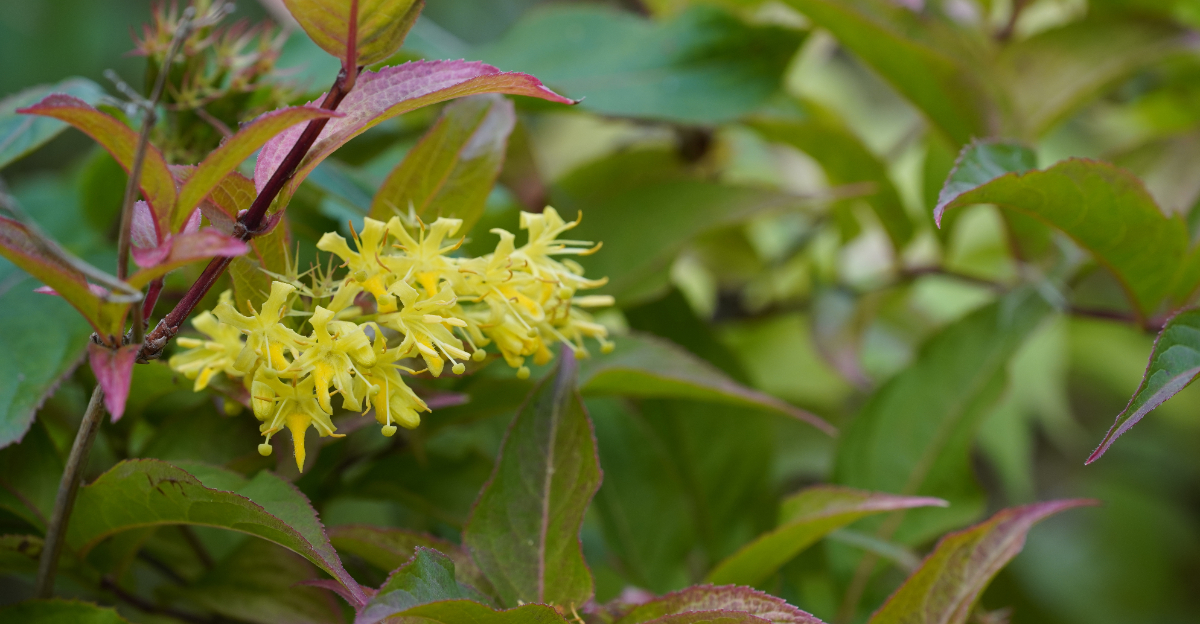
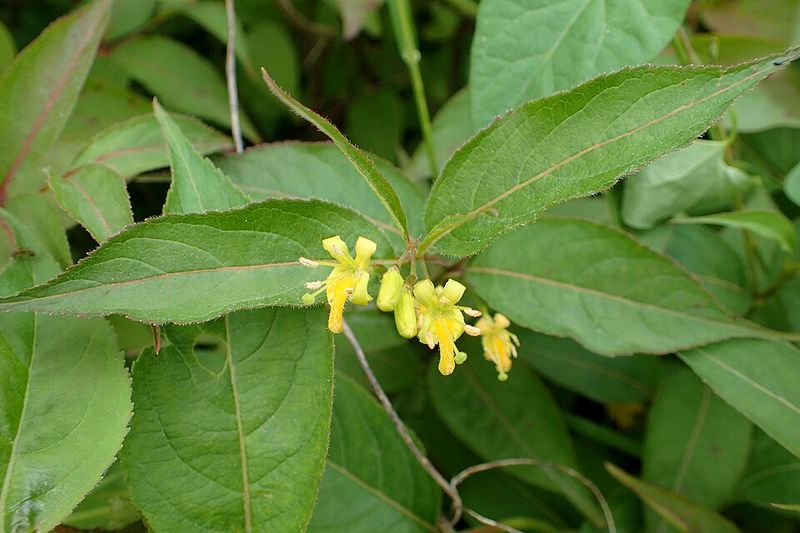
Small clusters of yellow tubular flowers open on Diervilla lonicera during early to mid-summer, depending on location and seasonal temperatures.
The flowers are modest in size rather than showy, but they offer something a yew simply cannot: accessible nectar and pollen for visiting insects.
The USDA Forest Service identifies the species as insect-pollinated and documents bumblebee use of the flowers. Bumblebees are among the more commonly observed visitors to the blooms.
Other insect visits are possible, but building a long list of confirmed pollinators beyond what documented sources support is not warranted here.
Yew produces pollen and small red fruit in female plants, but its contribution to summer-blooming insect activity is a different kind of resource than a flowering shrub. Calling Diervilla lonicera superior to all yews for wildlife would overstate the case.
The honest comparison is that it adds a flowering function to the foundation bed that most common landscape yews do not provide.
This matters most to homeowners who want their planting beds to support Ohio local insect activity during summer. The flowers are not a dramatic display, but they appear reliably on a low shrub that fits the scale of many residential beds.
That combination of modest size and summer bloom is a genuine functional difference from a clipped evergreen yew.
4. Its Dense Growth Can Fill Bare Ground Without Becoming A Tall Wall
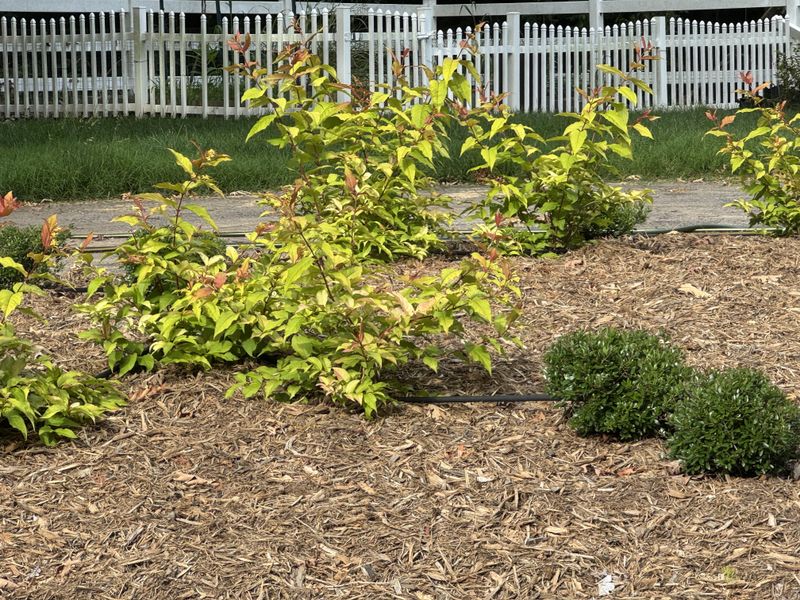
A low mound of arching stems gradually filling an empty foundation bed is one of the more practical qualities Diervilla lonicera brings to a residential planting.
The species tends toward a rounded, densely branched form that covers ground without reaching the height of many common foundation shrubs.
Several plants set at appropriate spacing can grow together into a continuous mass over a few seasons. The rhizomatous spread of this species, covered more fully in a later section, can also help a planting fill in over time.
No single shrub will instantly cover a large area, and no precise yearly growth rate is reliably documented across all conditions.
The visual effect differs from a row of clipped yews. Diervilla lonicera has a looser, more natural outline.
It does not create the dense architectural wall that a formally maintained yew hedge produces. Some homeowners find that relaxed form more appealing in a naturalistic setting.
Others specifically want the tight structure that yews provide when sheared regularly.
Width is the detail most often underestimated at planting time. A shrub that eventually spreads 4 or 5 feet can crowd a narrow bed beside a front walkway, even if it never grows tall enough to block a window.
Plan the bed width around mature spread, not around how small the plant looks at the Ohio nursery.
5. Fall Leaves Bring Color Where Yew Stays The Same Shade Of Green
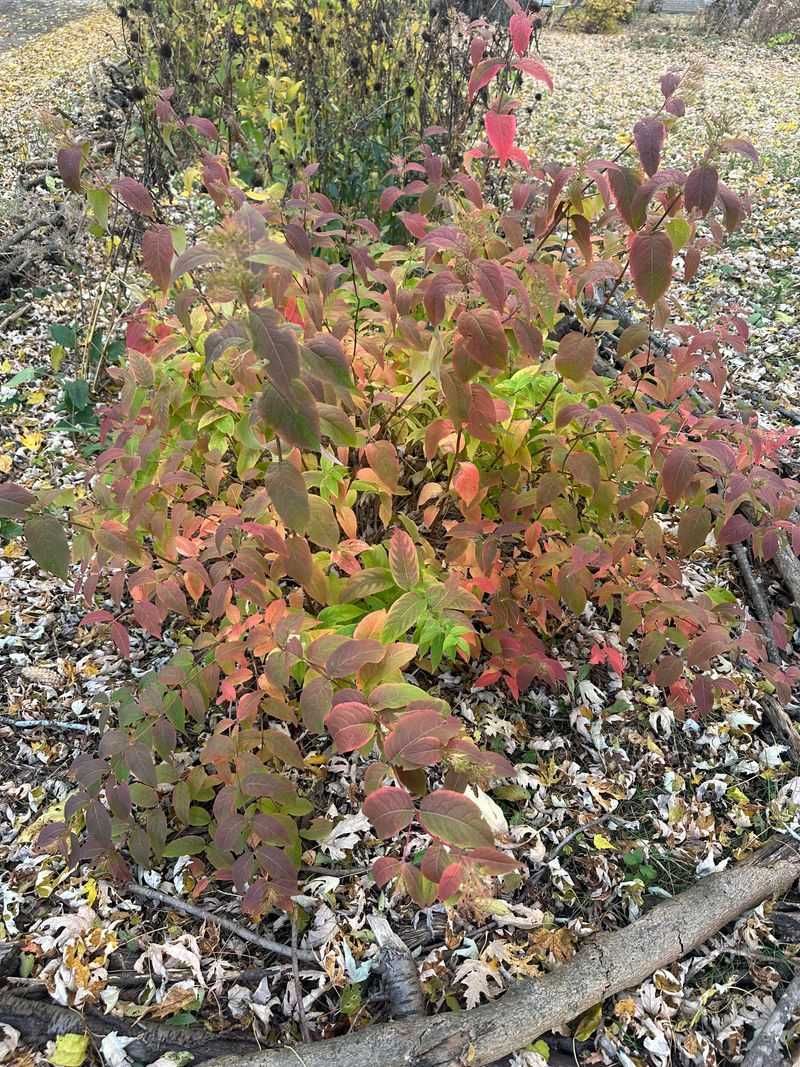
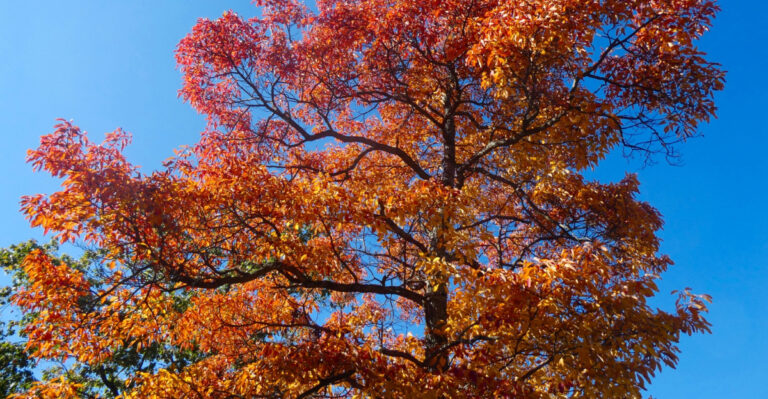
As temperatures drop in autumn, the foliage of Diervilla lonicera shifts from green toward shades that can include yellow, orange, and reddish tones.
The intensity of that color varies with genetics, sun exposure, weather patterns, and the specific growing conditions of the site.
Brilliant fall color is not guaranteed every year, but some seasonal change is expected.
Common Ohio landscape yews retain their needle-like foliage year-round. They do not produce fall color in the same way a deciduous shrub does.
The contrast between a changing Diervilla and a steady evergreen yew is simply a matter of plant biology rather than a quality judgment about either shrub.
Some homeowners prefer the consistency of evergreen foliage. Others enjoy watching a planting bed shift with the seasons.
Neither preference is wrong. The design tradeoff is real.
Diervilla lonicera brings seasonal movement and color change, while yew provides a stable green presence throughout the year.
After the leaves fall, Diervilla lonicera leaves behind a framework of stems that remains visible through winter. Those bare stems do not function as a visual screen or foundation cover.
The bed will look noticeably more open than it did during the growing season. Homeowners who find that acceptable gain a shrub with genuine fall interest.
Those who need consistent coverage should weigh that tradeoff carefully.
6. Suckering Helps The Shrub Fill In But Needs Room Beside The House
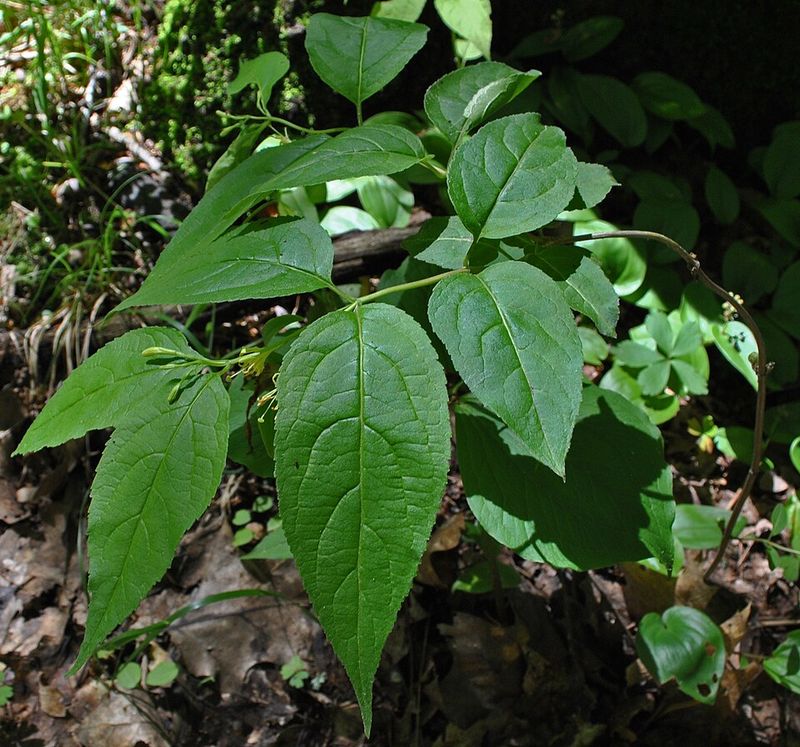
New stems emerging a foot or two beyond the original plant are a familiar sight with Diervilla lonicera. The species spreads through underground rhizomes, which are horizontal stems that travel through the soil and send up new shoots.
That gradual expansion is part of how the plant naturally forms colonies in the wild.
In a wider foundation bed or a naturalistic border, that spreading habit can be an advantage. A single plant can slowly develop into a fuller mass without additional purchasing or planting.
On slopes or in areas where ground cover is needed, the colony-forming tendency helps stabilize soil over time.
The same behavior becomes inconvenient in a narrow planting strip beside a front walk. New shoots can appear in the lawn, between pavers, or beyond the intended bed edge.
Removing unwanted stems by cutting or digging them out is the most straightforward management approach. The spread is manageable, but it does require occasional attention in confined spaces.
Being native does not make the spreading behavior automatically welcome in every garden situation. A plant can be native to Ohio and still grow beyond the space a homeowner planned for it.
The practical solution is to choose a planting location wide enough to accommodate the mature colony, or to be prepared to edit the edges each season. Diervilla lonicera is not invasive, but it is not a stationary shrub either.
7. It Handles Informal Pruning Better Than Constant Tight Shearing
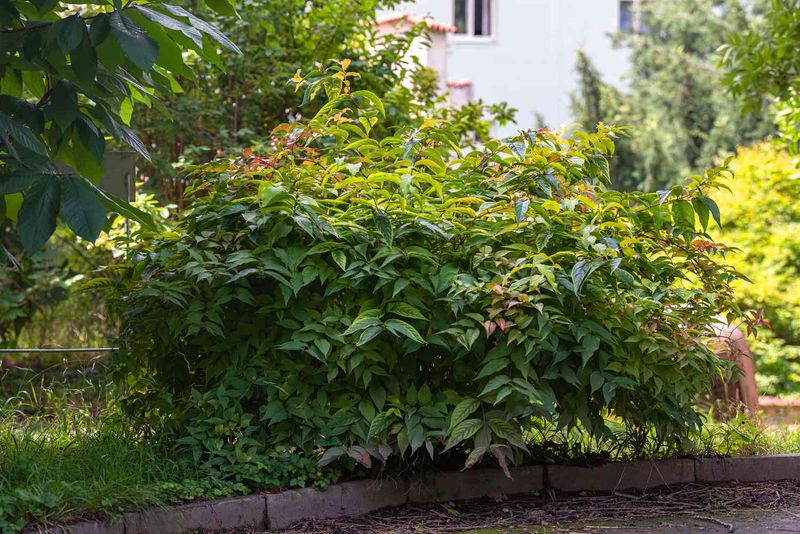
Pruning shears set beside a naturally rounded shrub tell a different story than the same shears working a yew into a geometric box.
Diervilla lonicera grows with an arching, mounded form that suits a relaxed approach to maintenance rather than repeated tight clipping.
Yews tolerate formal shearing well and are commonly maintained as clipped hedges or structured shapes in residential landscapes. That is a genuine strength of the genus, not a criticism.
The contrast with Diervilla lonicera is simply that the two plants suit different design intentions. One fits a formal layout; the other fits a looser, more naturalistic setting.
Diervilla lonicera flowers on stems that developed the previous season. Heavy pruning in early spring could therefore remove some of the flowering wood before it blooms.
Light shaping after flowering is a more commonly recommended approach for maintaining the plant without sacrificing the summer display. Verify current guidance from Ohio Extension sources before making significant cuts.
Selecting a plant whose mature size fits the available space reduces the need for repeated size-control pruning over the years. A shrub that naturally stays within the dimensions of the bed requires far less intervention.
An oversized shrub needs repeated cutting to keep it from overgrowing its space. Choosing the right plant for the right space is more effective than relying on pruning to correct a size mismatch.
8. Yew Still Wins When You Need Evergreen Screening Through Winter
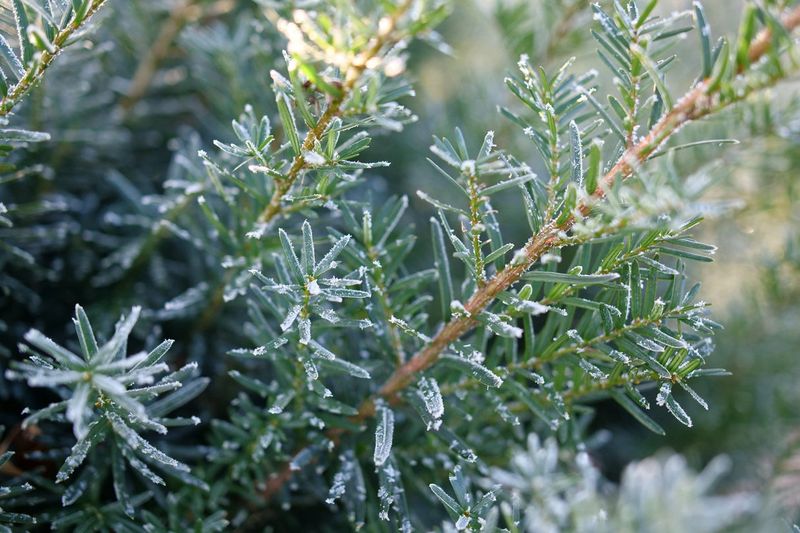
A January foundation bed planted with Diervilla lonicera will show bare stems against the house wall. There is no foliage, no screening, and no visual buffer between the building and the open yard.
For homeowners who specifically need that coverage through the cold months, an evergreen yew planted at an appropriate mature size remains a more practical solution.
Yews within the genus Taxus are commonly used in residential foundation beds because they hold their needle-like foliage year-round.
They can screen mechanical equipment, soften a foundation wall in winter, and maintain a structured appearance when other plants have gone dormant.
Canada yew, Taxus canadensis, is native to parts of eastern North America including some areas of the region. Many ornamental foundation yews involve other species or hybrids within the genus, so the specific plant matters when evaluating native status.
Mature dimensions still matter with yews. Some cultivars stay compact and manageable.
Others can grow considerably taller and wider than their original placement allowed. Yews are not maintenance-free, and matching cultivar size to the available space is just as important as it is with any other shrub.
The clearest way to frame this comparison is by goal. Diervilla lonicera may be the stronger choice when the homeowner values a lower native deciduous shrub with summer flowers, pollinator activity, and seasonal foliage.
Yew remains the stronger choice when consistent evergreen coverage through all four seasons is what the foundation bed actually needs.