What It Really Means When Stink Bugs Start Showing Up On Your North Carolina Peppers
A shield-shaped bug on a pepper can turn a quiet North Carolina harvest into a close inspection.
The fruit may look usable. Then a pale spot appears. Another pod develops a rough bump. Slice one open, and a few seeds look shriveled instead of plump.
That combination deserves attention.
Stink bugs and leaffooted bugs both pierce pepper pods, buds, and seeds. Their feeding can leave deformed fruit, damaged seed, and wartlike marks that become easier to notice as the crop matures.
So what does their late-summer arrival actually tell you?
It does not mean every pepper is ruined. It does mean the plants deserve more frequent checks while fruit is full and attractive to piercing insects.
Look at the pods first. Then inspect leaves, stems, egg masses, and the bugs themselves. North Carolina gardens can host several species, and not every shield-shaped visitor deserves the same reaction.
The useful signal is not one insect.
It is repeated feeding damage, new nymphs, and a pattern that keeps spreading across the crop.
1. Read Late Summer Bugs As Seasonal Pressure
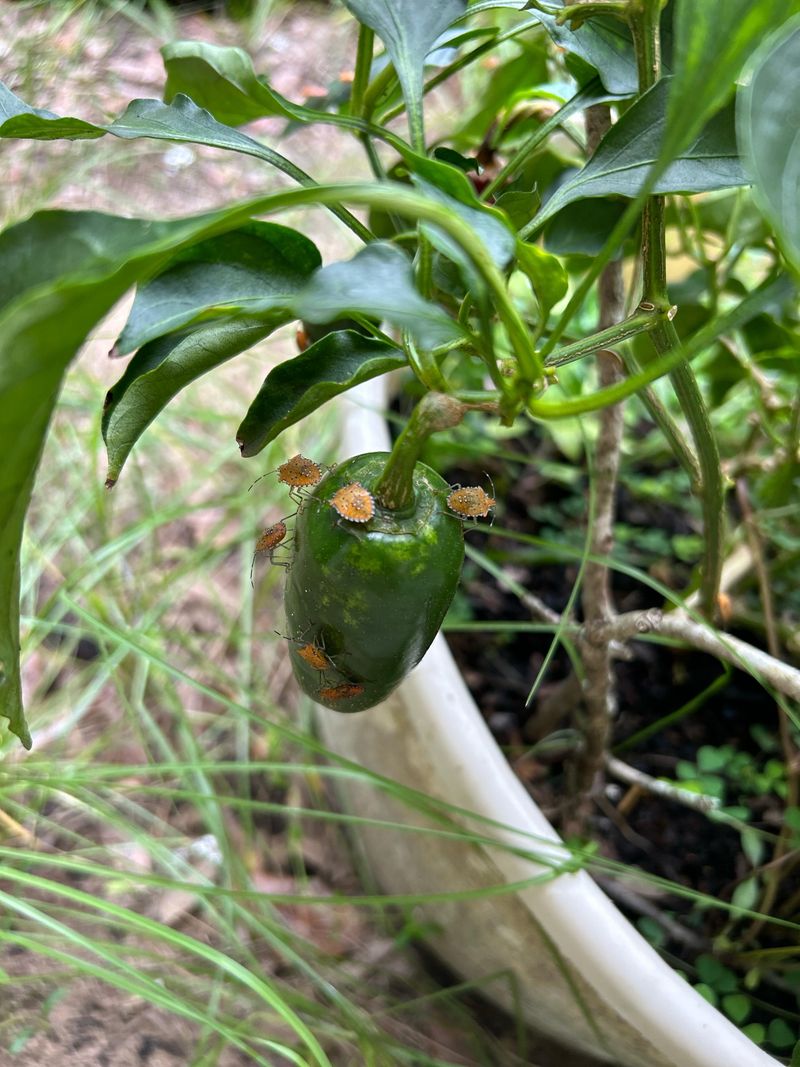
Late summer turns one shield-shaped visitor into a more useful warning sign.
Stink bug pressure often rises as the season advances in North Carolina.
Native brown and green stink bugs can become troublesome in August and September, while brown marmorated stink bug pressure can stay strong through late summer in the Piedmont, Sandhills, and mountains.
That does not mean every pepper plant suddenly faces a major outbreak.
It means August deserves a closer scouting routine.
Walk the row every few days and inspect fruit that has started to size up. Check the shoulders, sides, and shaded portions of pods where a bug can sit unnoticed. Then scan stems and nearby leaves for adults or nymphs.
Brown marmorated stink bugs also move among crops as plants mature, so a garden can gain visitors from nearby hosts during the season.
Pay extra attention after nearby vegetation changes. A mowed weedy strip, harvested crop, or drying host plant may alter where mobile bugs spend their time, though movement varies from site to site.
Do not turn one adult into a panic spray.
Use its arrival as a reason to look for repeated fruit injury and more insects.
One bug is a visitor.
Several bugs plus fresh pod damage tell you the pepper patch has become part of the late-summer menu, and that deserves action before the next harvest fills the basket.
2. Check Pepper Pods For Feeding Punctures
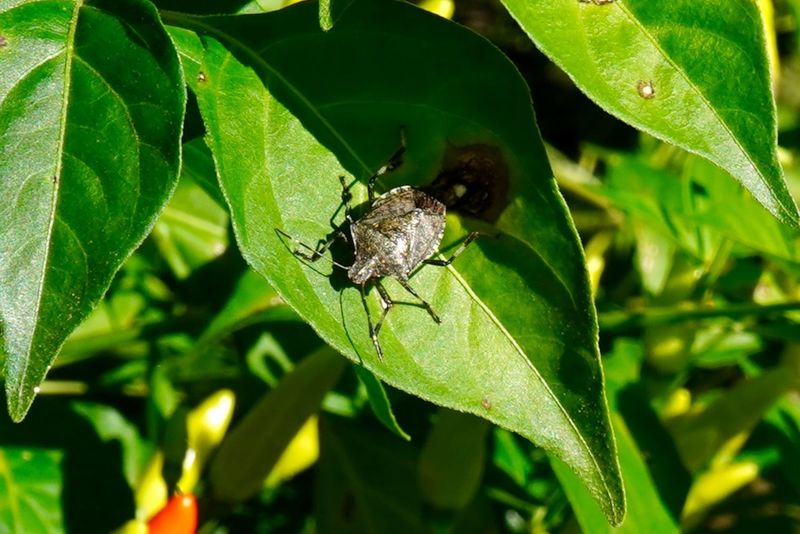
The first useful evidence may be smaller than the insect itself.
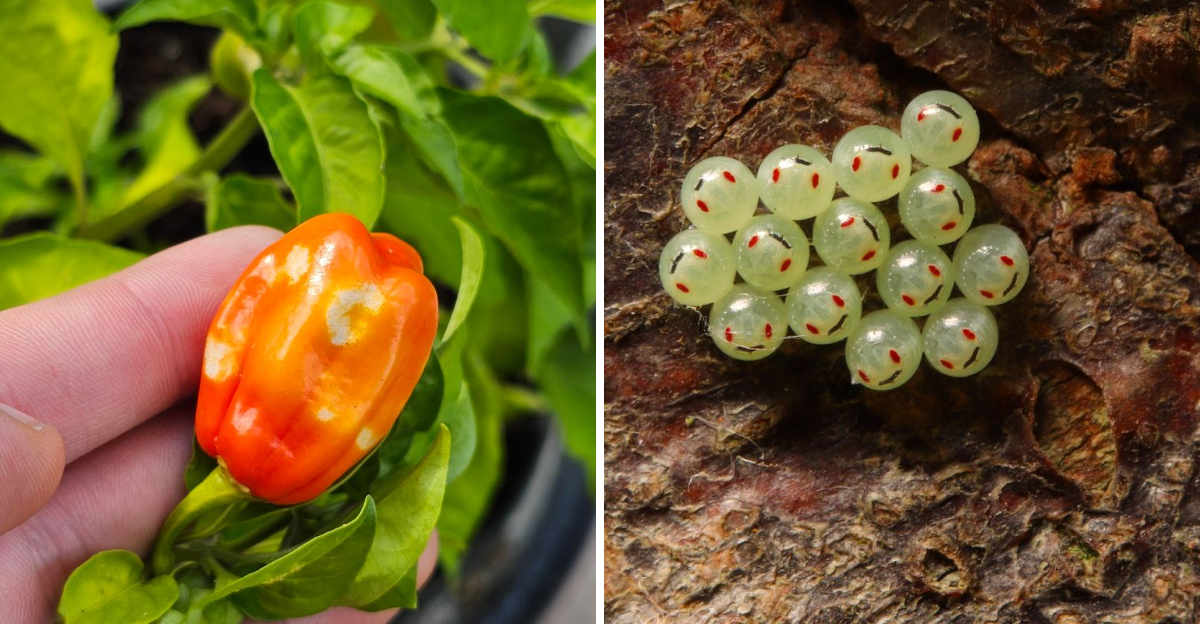
Turn a suspect pepper slowly in bright light and look for pale, discolored, or slightly sunken areas. Stink bugs use piercing-sucking mouthparts, so their injury does not resemble the ragged hole left by a caterpillar.
The puncture can be subtle.
Damage may become much easier to see later as tissue around the feeding site develops unevenly. Brown marmorated stink bug injury on peppers can show up as misshapen or discolored fruit, and visible symptoms may take time to appear after the actual feeding event.
Your North Carolina Garden Changes Every Week. Your Plan Should Too.
Gardening in North Carolina changes quickly throughout the season. Every Friday you’ll receive a simple weekly plan showing exactly what to plant, prune, fertilize, harvest, and protect so you never miss the right timing.
Compare several pods on the same plant.
A single blemish can come from sun, abrasion, disease, or another insect. Repeated marks across several peppers make a piercing-insect problem more convincing.
Run a finger across the skin.
A firm dimple or rough patch tells a different story from a soft lesion that expands through the fruit. Take a photo of fresh damage so you can compare it with the same pod several days later.
Do not rely on the puncture alone.
The strongest diagnosis combines surface injury with the presence of stink bugs or leaffooted bugs nearby.
Your pepper will rarely provide a perfect little needle hole with a name tag beside it.
The mark is only the opening clue.
Follow it with a look at fruit shape, internal tissue, seeds, and the bugs on the plant before you decide what moved into the garden.
3. Look For Wartlike Spots On Fruit
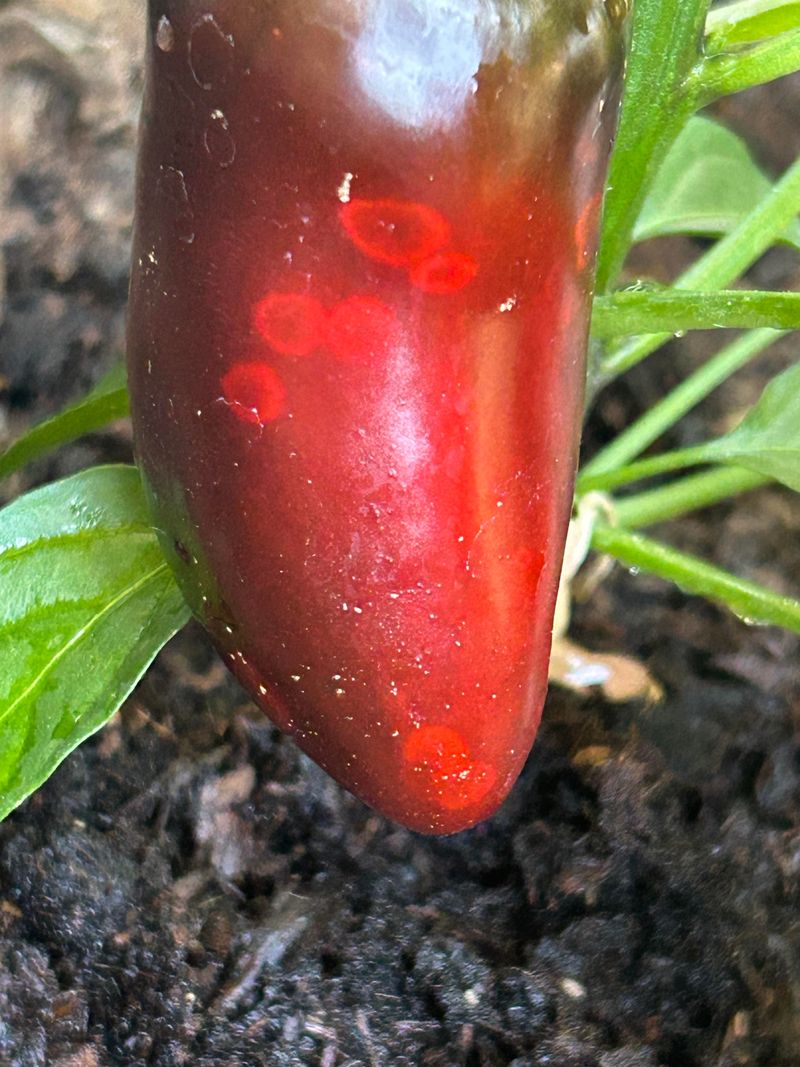
A rough bump on an otherwise smooth pepper is one of the more revealing clues.
Stink bugs and leaffooted bugs can pierce pepper pods and disrupt tissue beneath the skin. North Carolina pepper references list deformed pods, shriveled seeds, and wartlike growths among the characteristic results.
That roughness can look strange enough to suggest disease.
Check the texture before you jump to that conclusion. Wartlike insect injury tends to stay firm and corky, while many fruit rots become soft, wet, sunken, or progressively larger.
Location helps too.
Look for several firm bumps near other pale or distorted areas, then inspect the rest of the plant for the insects themselves. One rough spot with no other evidence still leaves room for a different cause.
Slice a badly marked pepper after harvest and compare the fruit wall beneath the blemish with healthy tissue nearby.
Keep the plant in production when the rest of it looks strong. Cosmetic injury on several pods does not automatically mean the whole plant is failing.
Harvest usable fruit promptly and continue the inspection.
Fresh wartlike marks on new pods tell you much more about current pressure than old scars on peppers that developed weeks earlier.
The pepper surface basically keeps minutes from an insect meeting you never attended.
Read several entries before you blame the guest.
Once rough patches, pod distortion, and actual piercing bugs appear together, the evidence becomes much harder to dismiss.
4. Inspect Seeds Inside Damaged Peppers
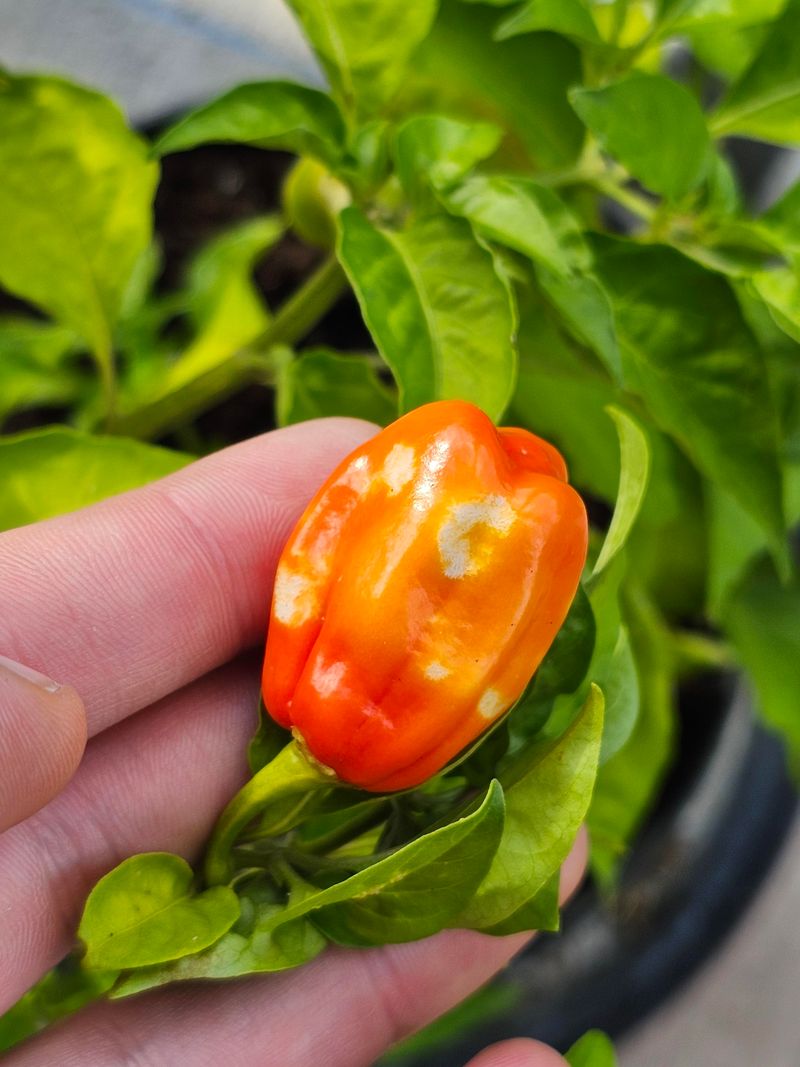
The outside of a pepper does not always reveal the full cost of the visit.
Cut one damaged pod open and inspect the seed cavity. Stink bugs and leaffooted bugs can pierce buds, pods, and seeds, and affected seed may end up shriveled rather than full and normal.
That clue matters most when it repeats.
One poorly developed seed can have several causes. Several peppers with surface injury plus shriveled seed create a much stronger link to piercing-insect damage.
Check the fruit wall around the suspect area as well.
Brown marmorated stink bug injury can remain subtle on the exterior, and some damage becomes obvious only after fruit is cut.
This pest can also introduce microorganisms associated with rot in peppers and tomatoes, so soft internal breakdown deserves extra attention.
Do not save seed from a heavily damaged pod.
Choose fully mature, healthy fruit from vigorous plants for any seed-saving project. That gives you a better starting point than seed from fruit that already shows insect injury or decay.
Use the kitchen knife as part of your scouting routine.
You do not need to sacrifice every pepper. Cut a few representative fruits from the affected area and compare them with clean pods from another plant.
Internal evidence can settle a mystery that the skin leaves unresolved.
A pepper may look nearly normal from arm’s length.
The seed cavity has no reason to keep the stink bug’s secret.
5. Scout Leaves For Eggs And Nymphs
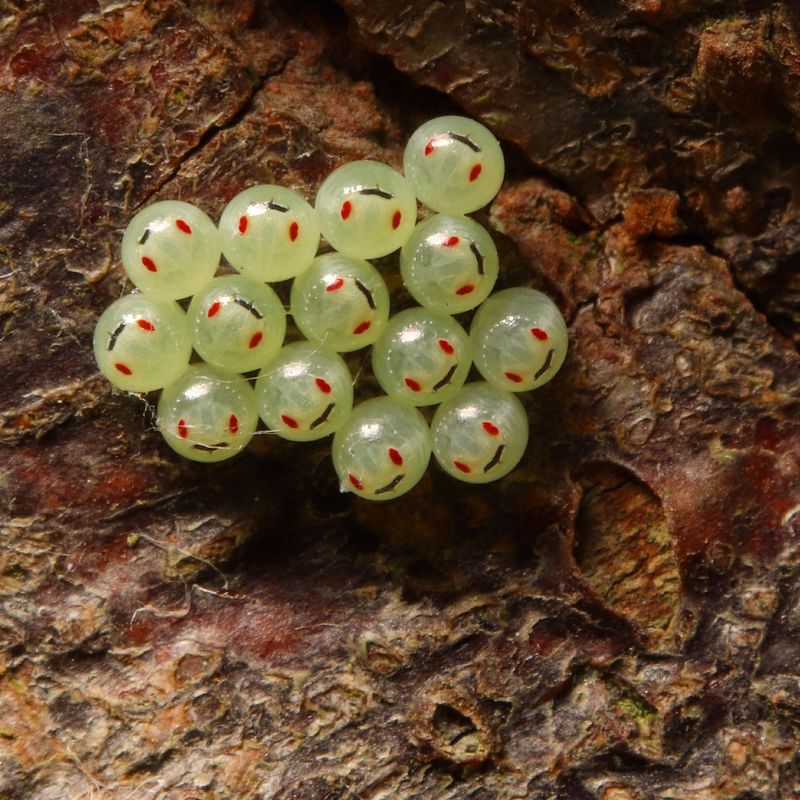
The underside of a leaf can tell you that the problem is more than one wandering adult.
Check leaves near fruit clusters for egg masses and small nymphs. Brown marmorated stink bug eggs occur in clusters that average about 28 eggs, while other stink bug species can use different patterns and numbers.
Do not identify every pale egg cluster as a pest on sight.
Take a close photo first. Useful insects also place eggs on garden leaves, and an uncertain egg mass deserves identification before removal.
Brown marmorated stink bug nymphs change appearance across five immature stages. Adults and nymphs carry pale bands on the antennae, a useful clue that separates this invasive species from several native look-alikes.
Pepper-specific references also describe stink bug nymphs as pale green or green with orange-and-black markings. Leaffooted bug nymphs are mostly red.
Check the same leaves again several days later.
Fresh nymphs close to a known egg mass show that reproduction has occurred near the crop rather than every adult came from elsewhere.
Small gardens make early removal practical.
Remove a confirmed pest egg mass by hand, and collect easy-to-reach nymphs before they spread across more fruit. Preserve unfamiliar eggs until you have a confident identification.
A mature stink bug is obvious enough to earn attention.
The tiny nursery beneath the leaf is easier to miss.
Find that nursery early, and you may interrupt the next round before it develops a taste for your peppers.
6. Separate Stink Bugs From Leaffooted Bugs
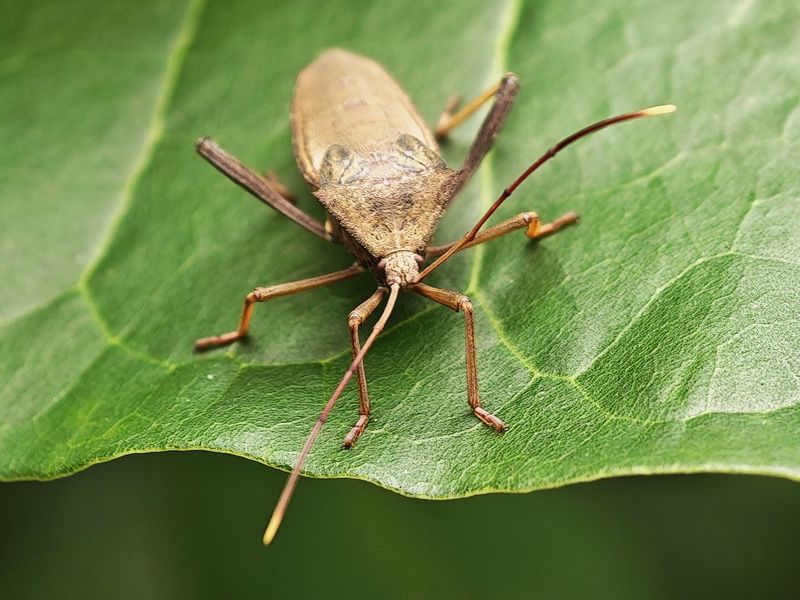
Long legs can save you from the wrong name on the pest.
Leaffooted bugs share peppers with stink bugs and create very similar injury. Both groups pierce pods and seeds, so distorted fruit or wartlike marks cannot separate them on their own.
Look at body shape first.
Adult stink bugs are broad and shield-shaped. Leaffooted bugs are narrower, and the adults have wide, flattened sections on the hind legs that give the group its common name.
Color can help with the young stages.
Pepper references describe leaffooted bug nymphs as mostly red, while stink bug nymphs are often pale green or green with orange-and-black markings.
Brown marmorated stink bugs add another identification clue. Pale bands across the antennae are visible on adults and immature stages, which helps separate them from several brown native stink bugs.
Take a clear photo from above and another from the side.
That record beats a fuzzy memory after the bug flies away.
Do not assume every shield-shaped insect is a crop pest. Predatory stink bugs also exist, and correct identification protects useful insects from unnecessary treatment.
Get the name as close as you can before any pesticide enters the plan.
The pepper damage may look nearly identical.
The legs tell a different story.
A quick glance at the hind pair can turn “some giant bug” into the right pest group, which makes every next decision more accurate.
7. Handpick Small Numbers Early
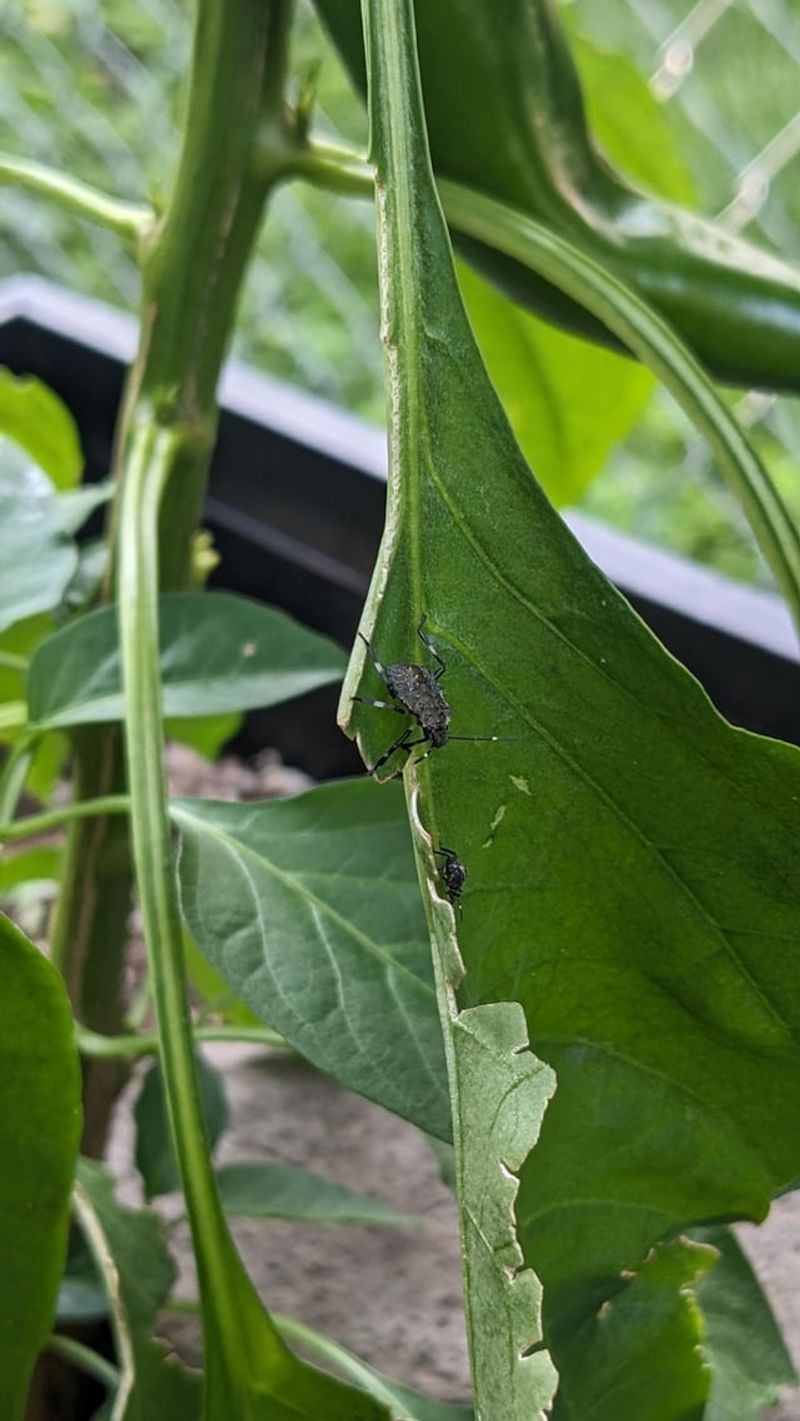
Small numbers give a home gardener the easiest control opportunity.
Bring a cup or small container of soapy water on your next inspection. Knock confirmed stink bugs into it or collect them by hand with gloves. Brown marmorated stink bugs release their famous odor under stress, so the container keeps the encounter brief.
Start with adults that sit openly on fruit.
Then check stems and leaf undersides for nymphs. Remove confirmed pest egg masses before hatch where practical.
Repeat the walk rather than expect one cleanup to finish the job.
Brown marmorated stink bugs are mobile and can move into gardens from other hosts through summer. New adults may arrive after you removed yesterday’s group.
Keep notes on what you find.
Three bugs over two weeks call for a different response from several insects on every plant plus fresh pod damage after each visit.
Protect beneficial insects while numbers stay manageable.
Broad insecticide use can affect predators and parasitoids that already work in the garden. Physical removal lets you target the pest in front of you rather than every insect on the pepper row.
Wear gloves, especially when the smell bothers you.
The stink is defensive, not a sign that the pepper has become toxic.
A cup, a five-minute walk, and decent identification can handle a surprising amount of early pressure.
Sometimes the best pest-control gadget in the garden is still your hand, with a lid nearby.
8. Protect Ripening Pods With Targeted Control
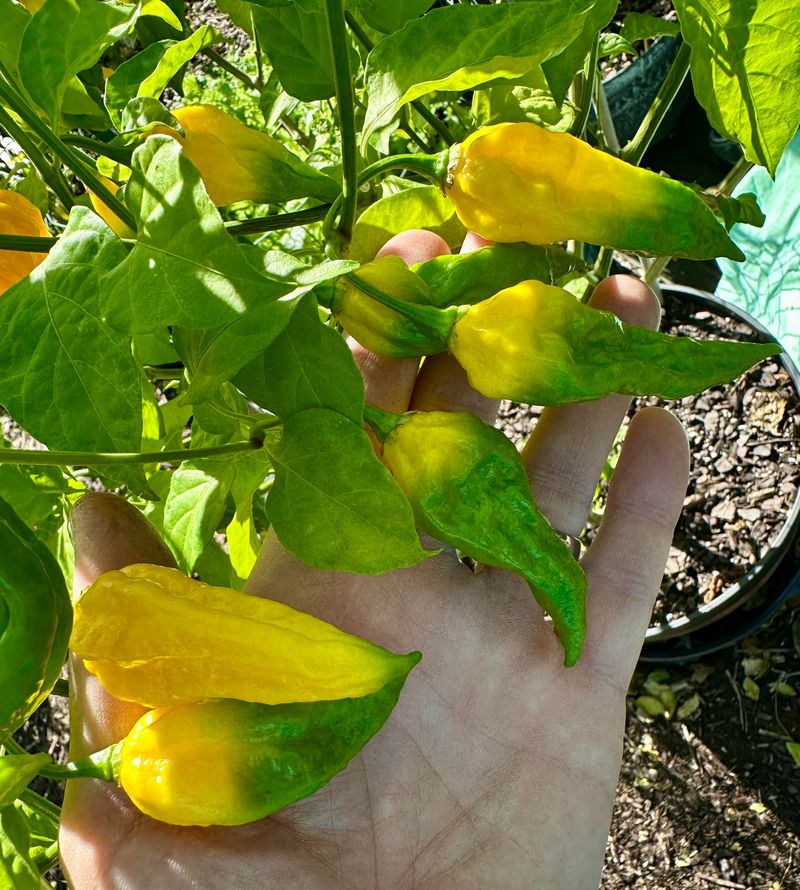
Repeated fresh damage changes the decision from observation to protection.
Harvest ripe peppers promptly. Remove badly decayed fruit from the bed. Continue checks on green pods so you know that injury is still active rather than a collection of old scars.
Keep nearby weeds under reasonable control, but leave the garden soil protected.
Stink bugs use many host plants, but a perfectly weed-free border does not guarantee a pest-free crop. Mobile adults can still arrive from farther away, especially brown marmorated stink bugs that move among hosts as crops mature.
Reserve insecticide for a confirmed, persistent problem.
The product must list peppers or the appropriate vegetable crop on its label and must also cover the target pest. Follow the stated rate, harvest interval, application limit, and pollinator precautions exactly.
Target treatment rather than coat the garden by habit.
Chemical control belongs after correct identification and other practical measures. Brown marmorated stink bug can also be difficult to control because new adults may continue to move into a garden after treatment.
That makes follow-up scouting essential.
Check the next set of pods. Do not judge success from one bug-free afternoon.
Your goal is not an insect-free backyard.
It is a harvest with less new feeding injury and fewer damaged peppers.
Protect the fruit that is still developing, keep the response proportional, and make every treatment earn its place in the garden.