The Fast-Growing Arizona Vines That Shrug Off Summer Heat
Arizona summer does not care how empty your block wall looks.
By July, masonry can throw heat back into the yard long after the sun moves west. A flimsy vine can stall, scorch, or demand far more water than the screen is worth.
Tougher desert choices simply keep pace.
Queen’s wreath races across sturdy supports. Pink trumpet vine can build substantial cover. Crossvine grips its way upward.
Bougainvillea turns brutal exposure into color, while Mexican flame vine handles heat with a lighter frame. Even Baja passion vine can make quick use of a fence.
So which one belongs on your wall, pergola, or gate?
The answer depends on exposure as much as speed. Cape honeysuckle needs more protection in the low desert, and yellow orchid vine grows at a more moderate pace than the headline sprinters.
Both remain useful southern Arizona options in the right spot, with those caveats.
Choose the support first.
Then give the vine enough room to prove what desert summer cannot scare away at all.
1. Let Queen’s Wreath Race Across A Trellis
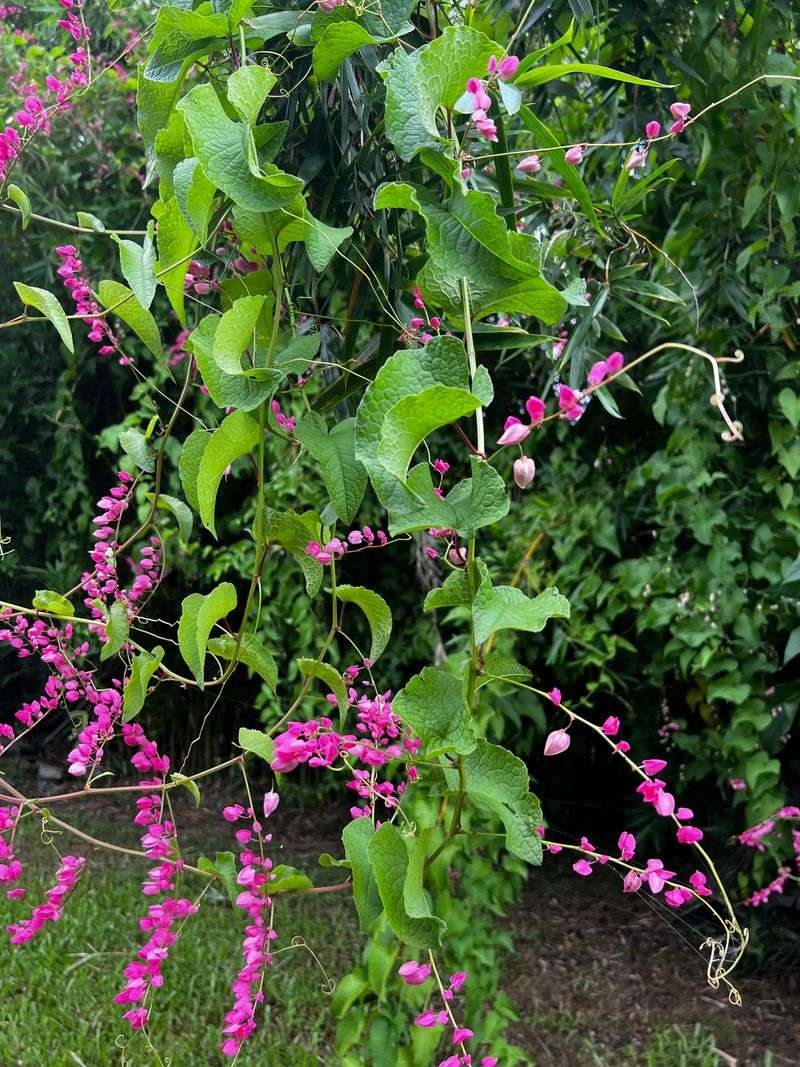
A July wall that scares softer vines can suit queen’s wreath almost too well.
Antigonon leptopus loves full sun and high heat, and mature plants can cover roughly 20 by 20 feet.
Tendrils grab fences, arbors, trellises, and similar supports, while dense heart-shaped leaves create quick visual cover. Rose, pink, or white flowers become especially showy in late summer and early fall.
Give this vine a support that can handle ambition.
A thin decorative panel may disappear beneath the foliage long before the plant feels finished. Set the trellis several inches from a hot wall where practical, and keep stems away from roof edges, windows, and nearby shrubs.
Water new plants often enough to establish the root zone, then adjust by soil moisture and weather rather than a rigid calendar. Mature queen’s wreath falls into the low-to-medium water group for southern Arizona landscapes.
Make space for control too.
The vine can become very aggressive and overrun nearby plants. Keep it away from locations where a broad root and stem system would create trouble, and cut unwanted growth back before it claims another section of the yard.
Cold weather can knock the top back, but spring growth can return quickly after freezes.
Queen’s wreath does not approach an Arizona trellis politely.
Give it boundaries before it writes its own property map.
2. Plant Baja Passion Vine For Desert Heat
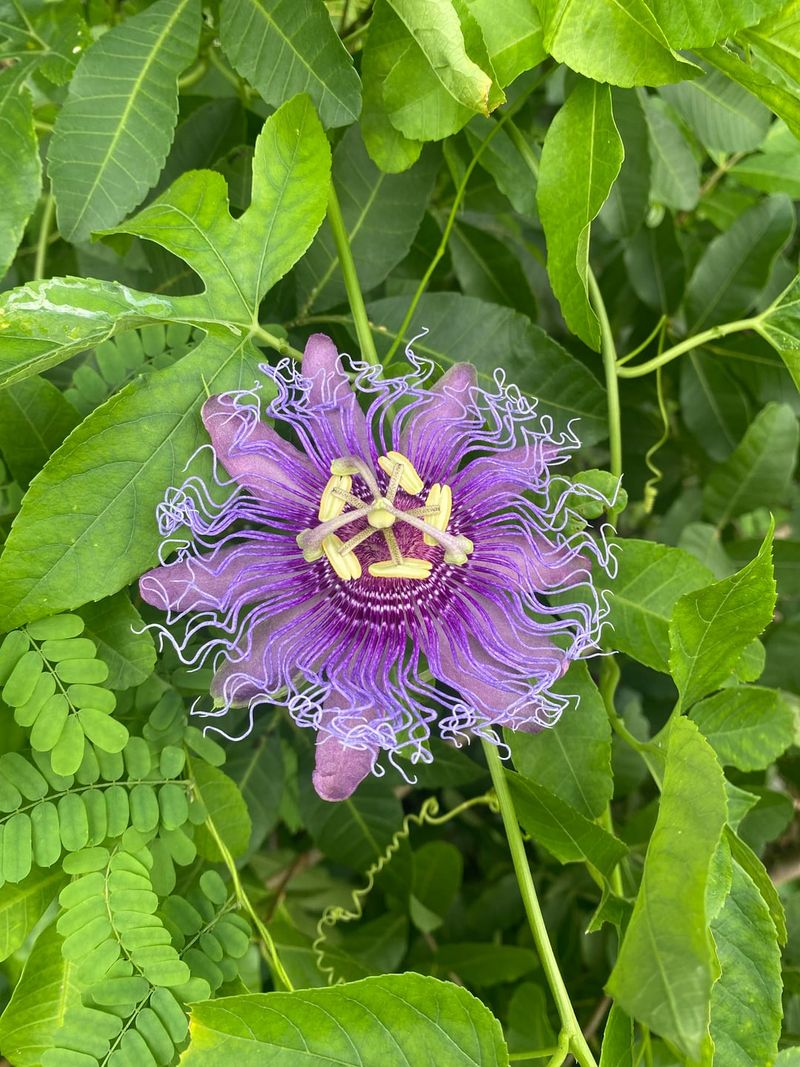
Baja passion vine brings a very different look to a hot fence.
Passiflora foetida can reach about 10 by 10 feet and uses tendrils to catch a sturdy trellis or open fence. It tolerates full sun or part shade, uses low to moderate water, and produces intricate pale flowers from early summer into fall.
Place the support before the stems wander.
Chain-link, wire panels, or an open trellis give the tendrils plenty to grab. Smooth posts alone offer little help, so add horizontal wire or another open framework where vertical cover is the goal.
Your Arizona Garden Changes Every Week. Your Plan Should Too.
Gardening in Arizona changes quickly throughout the season. Every Friday you’ll receive a simple weekly plan showing exactly what to plant, prune, fertilize, harvest, and protect so you never miss the right timing.
Keep the root zone well drained.
This vine does not benefit from constant wet soil, and excess water can cause flower buds to drop. Give a thorough soak, then let the soil lose some moisture before the next round. Use the soil as the cue rather than the date on the calendar.
Cold becomes the bigger limitation outside the warmest desert sites. Temperatures in the mid-20s can cause severe top damage, though established plants can return once summer heat takes over.
Give the vine room, since mild climates can also encourage an unruly spread.
This is the section of the pergola where the flowers get all the attention, but the tendrils do the real work.
A sturdy frame gives them something better to conquer than the nearest shrub.
3. Use Pink Trumpet Vine For Fast Coverage
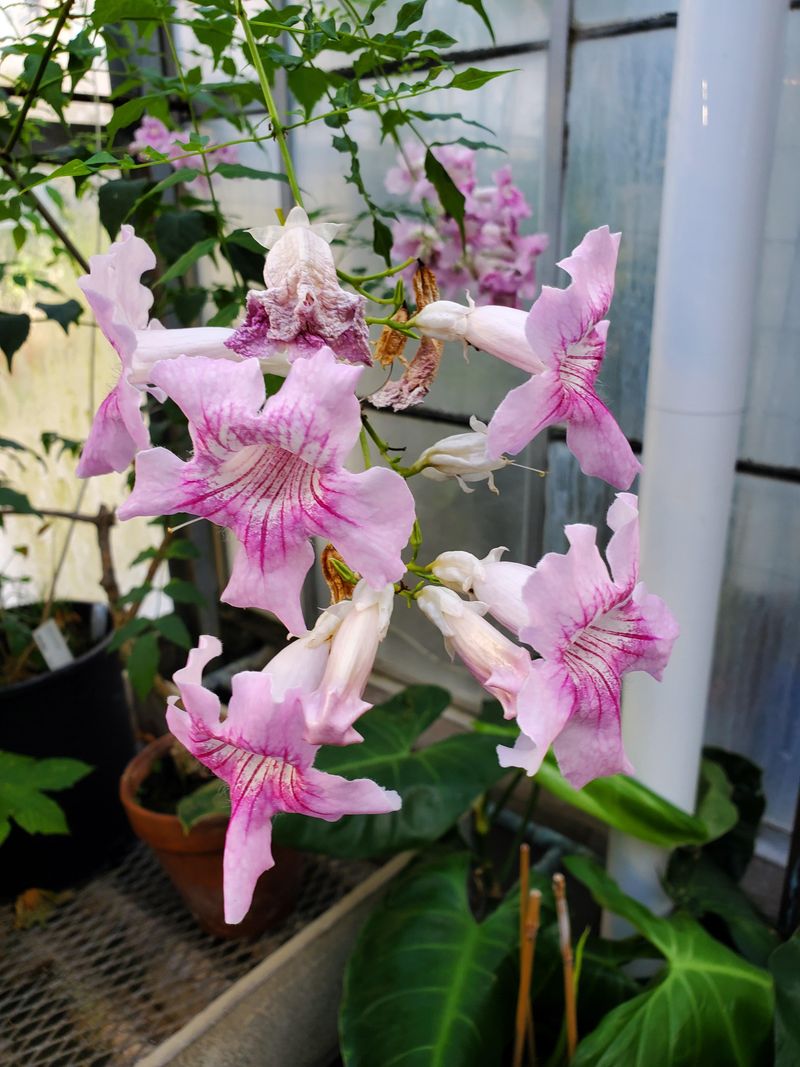
A pergola that needs real summer cover can make excellent use of pink trumpet vine.
Podranea ricasoliana is one of the true speedsters on this list. It can reach about 20 feet, performs best in full sun, and handles heat, strong light, wind, and periods of drought once established.
The plant also appreciates ample summer water in well-drained soil.
Do not expect the stems to attach themselves.
This species lacks tendrils, so long branches need ties or a sturdy frame. Use broad, soft ties rather than wire that can bite into stems as they thicken.
A pergola, carport, fence, or substantial arbor gives the plant enough structure for its eventual weight.
Give it space before that speed becomes a maintenance problem.
A mature plant can get unruly, and regular cuts help keep the canopy neat. The best major trim comes in winter or early spring just before fresh growth resumes. That schedule can also improve the flower show.
Young plants need frost protection, while established specimens tolerate only light frost. That makes this a much safer choice in frost-free or mild low-desert pockets than in colder Arizona yards.
Use summer water to support growth, not to create swampy soil.
Pink trumpet vine likes a hot climate, but it still wants drainage.
Give it a strong frame and a little discipline, and that bare overhead structure can lose its naked look surprisingly fast.
4. Grow Yellow Orchid Vine In Full Sun
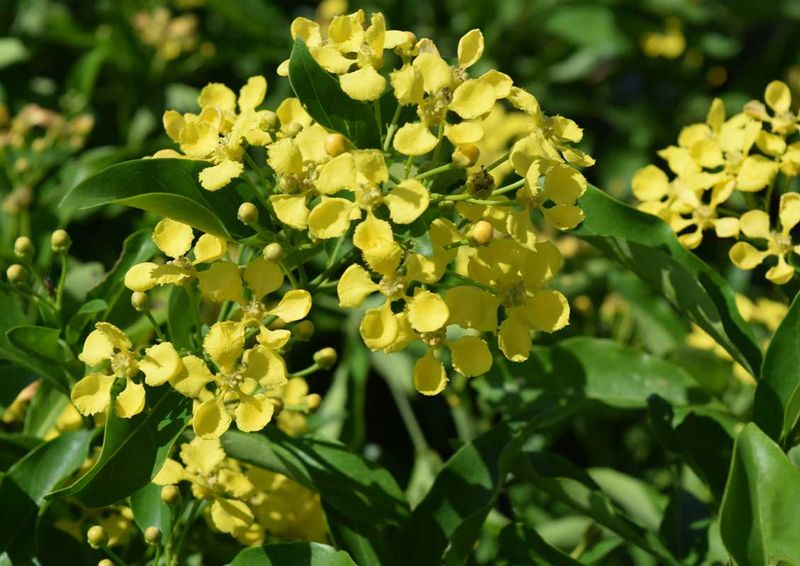
Yellow orchid vine belongs on the hottest side of this list with one honest correction.
It is not the fastest vine here.
Callaeum macropterum, still sold under the older name Mascagnia macroptera, has a moderate growth rate rather than the sprint of queen’s wreath or pink trumpet vine.
It can still reach about 10 to 20 feet and handles full sun, drought, and well-drained soil well.
Use it where controlled coverage matters more than instant shade.
The stems wrap around an open support, so wire panels, trellises, and fences work better than a blank wall with nothing to catch.
Yellow flower clusters bring color, then winged fruits add another decorative phase. The fruits resemble little paper butterflies.
Give the roots drainage from day one.
A low-water reputation does not excuse a new plant from establishment care, but constant wet soil is not the goal. Deep water should reach the root zone, followed by enough time for oxygen to return to the soil.
This species also has a genuine Arizona connection. Its native range extends from Arizona into Mexico.
That makes it a useful choice for a sunny wall where a giant vine would become a yearly battle.
The speed may be calmer.
The heat tolerance still earns it a place in the race.
5. Train Crossvine Up A Strong Support
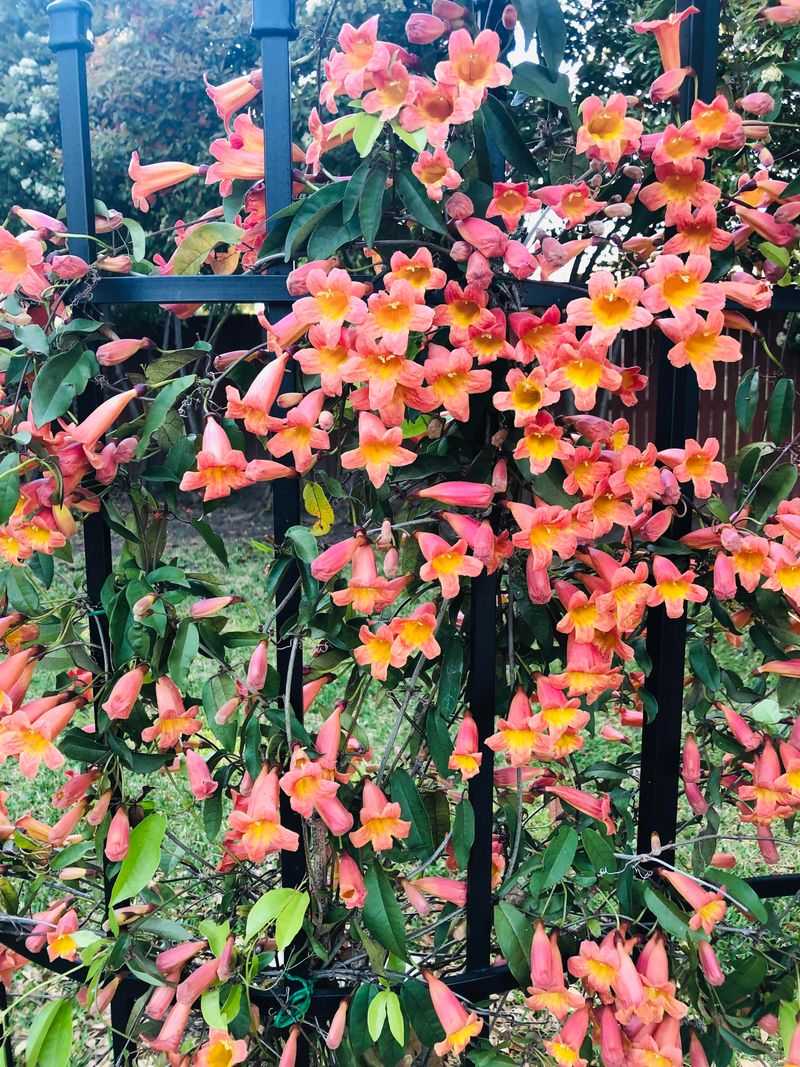
Crossvine offers fast coverage without the loose habits of a giant shrub.
Bignonia capreolata can reach roughly 20 to 30 feet. Branched tendrils end in adhesive disks, which let the vine attach to suitable surfaces and supports. It grows in full sun to part shade, and flower production is strongest with more sun.
Give it a durable structure anyway.
Adhesive disks make the vine efficient, but mature woody stems add weight over time. A sound trellis, fence, arbor, or masonry structure gives that mass a safer home than fragile lattice.
Use this one where quick green cover matters beyond summer.
The foliage can stay evergreen in milder areas, then turn reddish-purple before leaf drop where winter cold is stronger.
Tangerine flowers add the main spring display. Severe winter weather can cut stems back, but roots can send up fresh growth the next spring.
Water needs sit in the medium range, so do not treat crossvine like bougainvillea.
Give new roots steady access to moisture without constant saturation. Once the plant settles, adjust irrigation to soil, exposure, and weather.
Prune after the flower show when size control becomes necessary.
Crossvine does not need to be bullied into speed. It already has that trait.
Your main job is to decide where twenty feet of confidence should go before the adhesive disks decide for you.
6. Let Bougainvillea Own The Hottest Wall
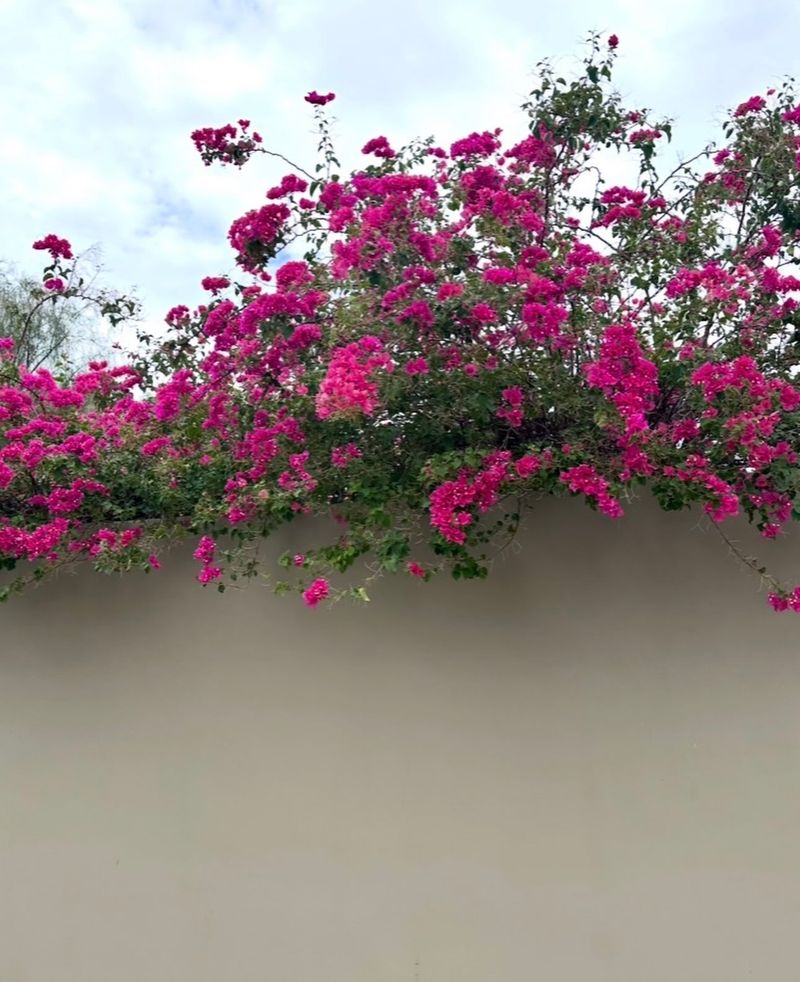
The sunniest wall in the low desert is where bougainvillea earns its reputation.
This plant tolerates full sun, uses little water once established, and can reach 15 to 50 feet based on type and support. Bright bracts can cover vigorous stems from early summer into fall.
Treat it as a loose shrub that needs help upward.
Bougainvillea does not climb with tendrils or adhesive pads. Tie long canes to a sturdy trellis, cable system, or wall support and keep the thorny stems away from gates, narrow walks, and places where bare arms pass every day.
Resist the urge to overwater for faster growth.
Established plants fall into the low-water group, and lush plants with too much water or fertilizer can produce fewer flowers. Deep, less frequent irrigation suits the plant better than constant wet soil.
Leave room for light trims through the warm season.
Very vigorous shoots can be shortened as needed, while frost-damaged wood should wait until spring growth reveals what remains alive.
Cold is the weak point. Bougainvillea can suffer top damage during freezes, so warmer low-desert sites offer the safest long-term home.
The thorns demand respect, but the heat barely gets a vote.
On a brutal sunny wall, bougainvillea can turn the harshest spot in the yard into the one everyone notices first.
7. Use Mexican Flame Vine For Summer Color
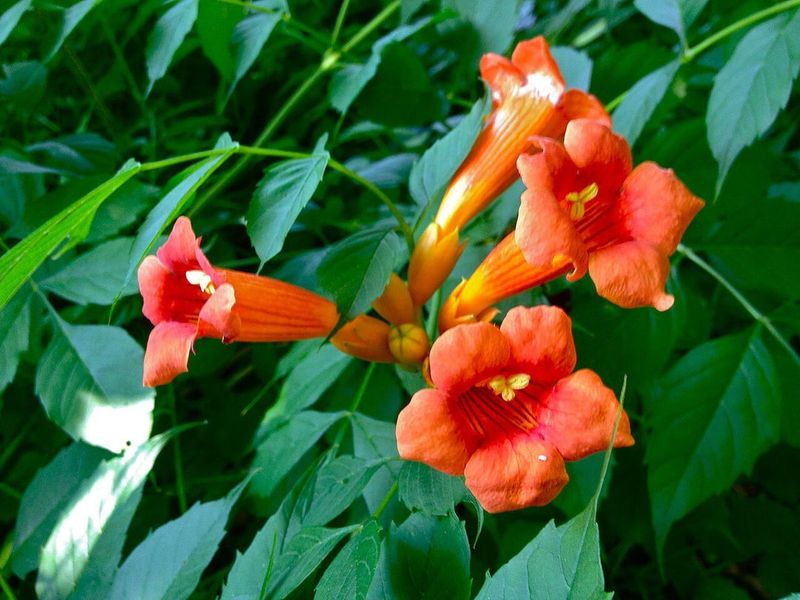
Mexican flame vine brings speed without the massive frame of queen’s wreath.
The accepted name is Pseudogynoxys chenopodioides, though Arizona nursery material may still list the older name Senecio confusus.
It is a fast, drought-tolerant vine with orange-red flower clusters and a mature size around eight to ten feet in southern Arizona references.
Use that smaller scale around fences, mailboxes, rails, and compact trellises.
The stems wrap around supports, so an open structure gives them an easy route upward. Full sun or partial shade can work, and established plants fall into the low-water group.
Give new roots regular establishment water, then let the soil guide later irrigation.
This vine handles dry conditions, but a newly planted root ball still needs time to connect with nearby soil. Keep drainage open and avoid a constantly saturated base.
Orange-red flowers add color without the huge canopy of a pergola vine. Butterflies may visit the blooms, which gives the plant another reason to sit near a patio edge or garden path.
Cold can limit its permanence outside warm sites, so treat frost exposure as part of placement.
Give the vine an open frame and enough sun.
Mexican flame vine does not need forty feet of runway to make an impression. It gets there with bright color, quick stems, and far less real estate.
8. Grow Cape Honeysuckle As A Loose Climber
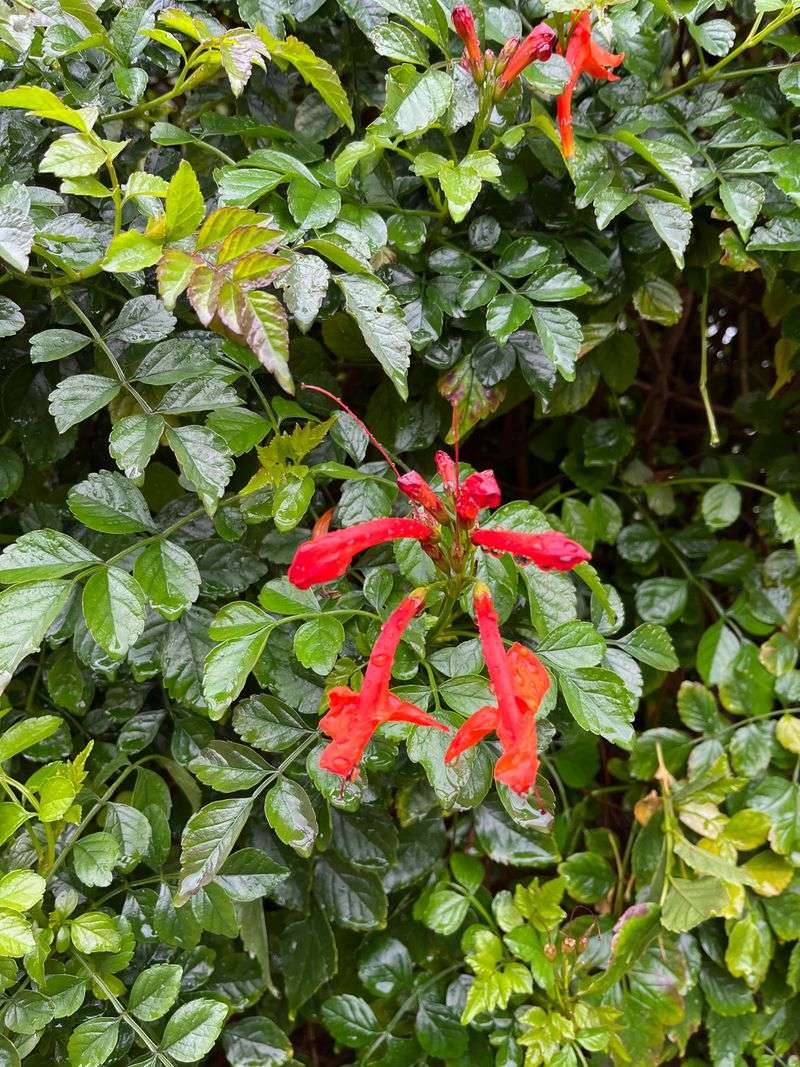
Cape honeysuckle belongs on this list with another low-desert caveat.
It handles Arizona heat, but the hottest west wall is not its best assignment. In low-desert areas, a north or east exposure is the safer placement.
The plant grows in full sun or part shade, uses medium water, and reaches about five to ten feet.
It is also not a true self-climber.
Tecomaria capensis forms stout, upright stems that need ties to create a vine-like shape. Left alone, it behaves more like a large, loose shrub. Use a sturdy trellis or wall frame and guide young stems before they arch away from the structure.
Give the roots excellent drainage and protect the plant from the harshest afternoon exposure in Phoenix-style low desert.
Bright orange-red tubular flowers arrive from late summer into early winter, which gives the vine color after many spring bloomers have finished. Frost can damage the top, so colder Arizona sites need more caution.
Keep the shape loose rather than force every stem into a formal grid.
That natural form fits the plant better and reduces constant cuts.
Cape honeysuckle can still build useful height fast enough for a patio screen, but placement makes the difference.
Give it the east side, not the blast furnace.
That one decision lets the vine spend summer on foliage and flowers instead of a daily argument with reflected heat.