The Final Lawn Task Ohio Homeowners Skip Before The Ground Freezes
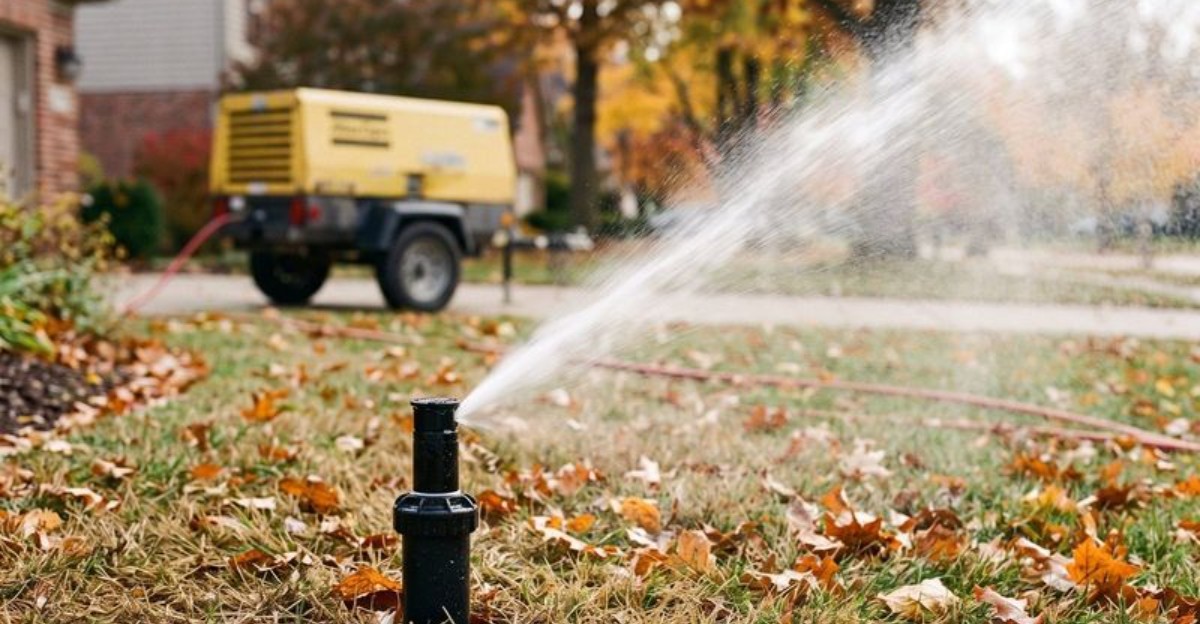
Your sprinkler system worked hard all summer, and right now it’s sitting under your Ohio lawn, still full of water. That’s the problem.
Most homeowners switch off the controller, roll the mower into the shed, and call the season done. The pipes never get the memo.
Water left in the lines freezes once the cold settles in, and ice doesn’t ask permission before it splits plastic.
Nobody sees the damage in January. It shows up in April, when the system kicks on and the yard sprouts geysers and soggy patches.
By then, the repair means shovels, torn-up grass, and a bill that dwarfs the cost of a simple fall service.
One task prevents all of it, and it takes less time than raking the front yard.
Get it done before the ground freezes. Your spring self will be glad you did.
The Overlooked Task Is Winterizing Your Sprinkler System
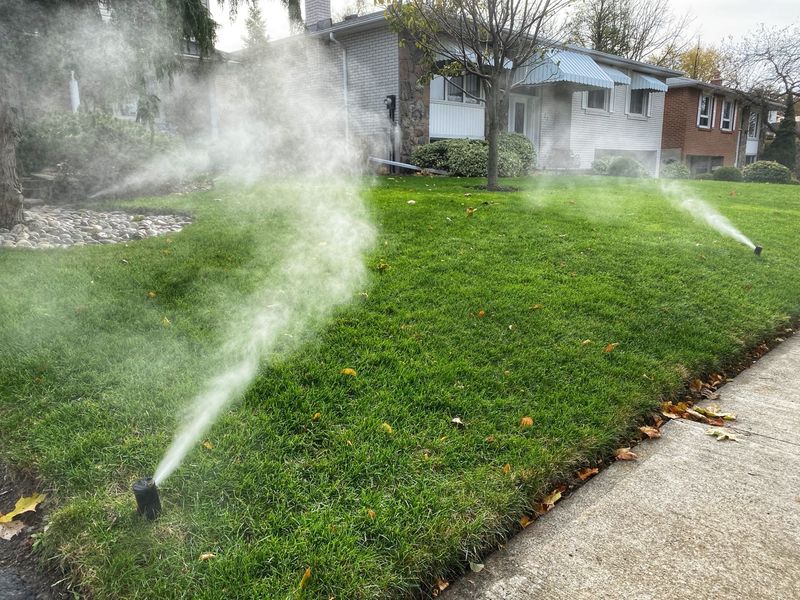
Picture a busy October Saturday in Columbus, with leaf bags lined up at the curb like little soldiers. Somewhere under that tidy lawn sits a web of pipes still holding plenty of summer water.
Winterizing your sprinkler system simply means getting that water out before the cold settles in. Pros often call the job a blowout, which sounds dramatic but is pretty simple at heart.
Timing matters a lot here in Ohio, where the weather can flip overnight. Most experts suggest finishing in October or early November, before the first hard freeze arrives.
A hard freeze usually means temperatures sitting around 28 degrees or lower for several hours. That kind of chill can push frost down into the soil where your pipes are resting.
Plenty of homeowners mean to get to it but run out of free weekends. Holiday plans, school events, and Buckeyes games crowd the calendar faster than anyone expects.
A smart move is to set a phone reminder for mid-October right now, while you are thinking about it. You can also book a local irrigation service early, since their schedules fill up quickly once the weather turns.
Think of winterizing as tucking your yard into bed for a long winter nap. A little effort this fall means your lawn wakes up happy, green, and ready to grow when spring finally returns.
Water Left In The Lines Can Freeze And Crack Pipes
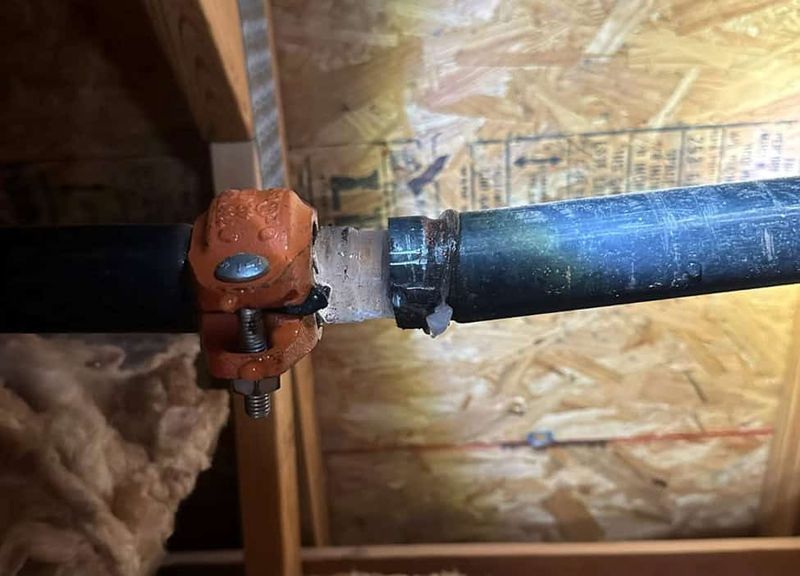
Ever left a can of soda in the freezer a little too long? That bulging, split-open mess is a perfect picture of what happens inside forgotten sprinkler pipes.
Water grows by about nine percent when it turns to ice. That might not sound like much, but trapped inside a narrow pipe, it creates a huge amount of pressure.
Something has to give, and it is usually the plastic or the fittings. Cracks can show up in underground pipes, zone valves, sprinkler heads, and the backflow preventer.
Here is the sneaky part that catches many Ohio homeowners off guard. You probably will not see any damage during winter, because the problem stays frozen and quiet.
Your Ohio Garden Changes Every Week. Your Plan Should Too.
Gardening in Ohio changes quickly throughout the season. Every Friday you’ll receive a simple weekly plan showing exactly what to plant, prune, fertilize, harvest, and protect so you never miss the right timing.
Spring is when the trouble finally reveals itself. You turn the system on, and suddenly there are geysers, mushy spots in the grass, or zones that barely sputter.
Fixing buried lines is no small chore, either. Someone has to locate the leak, dig up the lawn, cut out the broken section, and patch everything back together.
Repairs like that can cost far more than a simple fall service visit. Spending a little now is a lot like buying an umbrella before the storm, rather than drying off after you are already soaked.
Turning Off The Controller Isn’t Enough
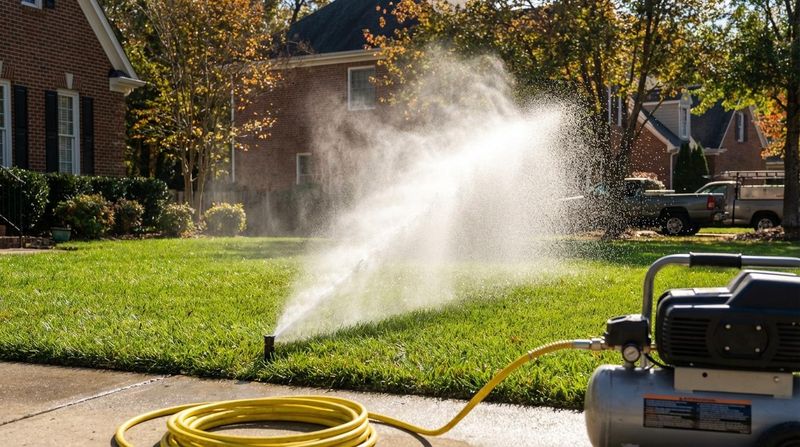
Flipping the dial to off feels satisfying, like closing a book at the end of a good story. Sadly, your sprinkler system has a few more chapters left before winter.
The controller is basically the brain of the system, telling each zone when to run and for how long. It does a fantastic job with schedules, but it has no way to move water out of the pipes.
When you switch it off, the watering stops, yet the water already inside stays put. It sits quietly in the lines, valves, and heads, just waiting for a cold snap.
Many people assume gravity will handle the rest and drain things out naturally. Unfortunately, pipes dip and rise across the yard, leaving low spots where water likes to pool.
Turning off the controller is still a helpful move, so do not skip it. Just save it for the end, because you will need the controller to open each zone during the blowout.
Just treat that step as a finishing touch rather than the whole show. The real goal is getting every drop out of the system, and that takes more than pushing a button.
A quick tip: snap a photo of your controller settings before winter. That way, spring startup feels easy instead of confusing.
Shut Off The Water Supply First
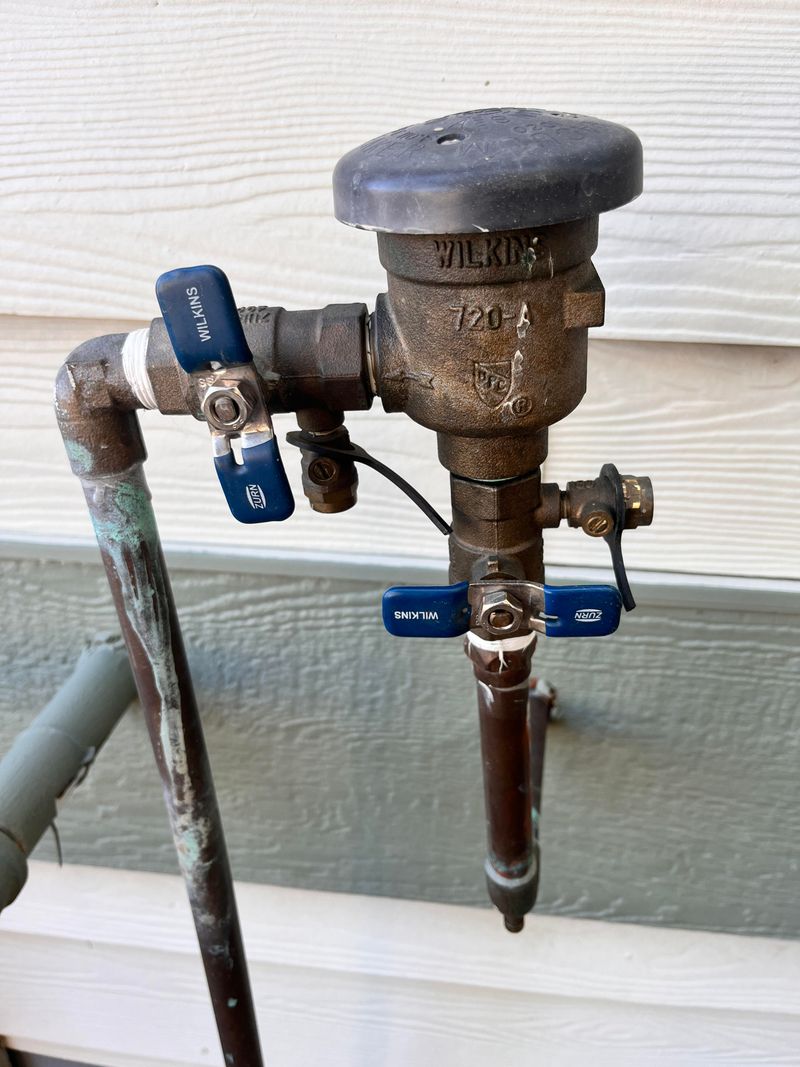
Trying to empty a bathtub while the faucet is still running would be a pretty silly afternoon. Your sprinkler system works the same way, so the water supply has to stop first.
Most Ohio homes have a shutoff valve for the irrigation line somewhere indoors. Common spots include the basement, a utility room, or near the water meter.
Look for a valve on a pipe branching off toward the outside of the house. It may have a lever handle or a round wheel, and it often carries a small tag.
Turn the handle until it sits crosswise to the pipe, or twist the wheel clockwise until it stops. That simple motion keeps fresh water from sneaking back into the lines during the blowout.
After that, it helps to drain whatever water remains near the valves. Some systems have small drain caps or manual valves that let leftover water trickle out.
Keep an old towel and a bucket nearby while you work. A few splashes on the basement floor are normal, so do not panic if things get a little damp.
Fun fact: many people cannot find this valve until the day they need it. Locating and labeling it now could save you a frantic search during a future leak emergency.
Compressed Air Is The Only Sure Way To Clear The Lines
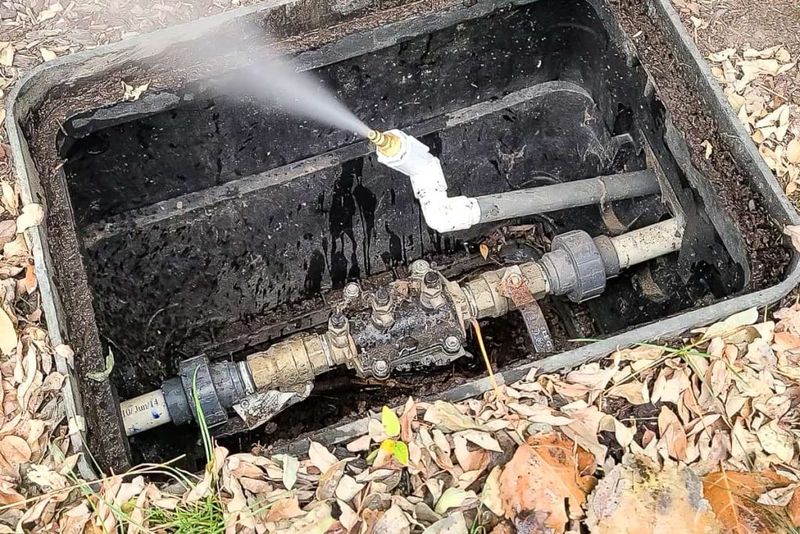
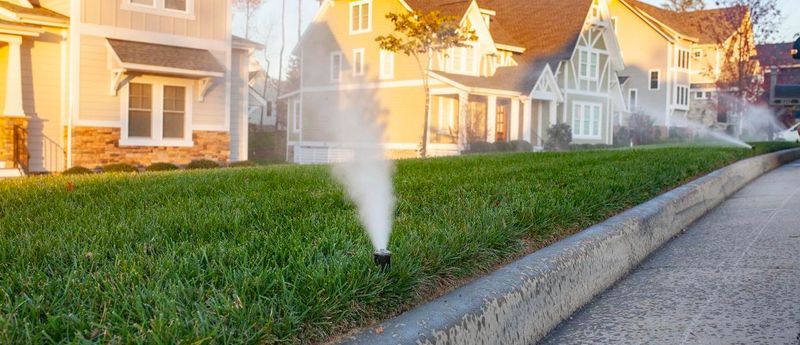
There is something oddly fun about watching a sprinkler head spit out a final burst of mist and air. That little sputter is the sound of a job done right.
Compressed air pushes water out of the pipes in a way that draining alone cannot match. It reaches the low spots and tricky bends where water likes to hide.
The process works one zone at a time, rather than blasting the whole yard at once. Air flows in through a connection point, travels the pipes, and shoves water out through the heads.
Each zone usually gets a couple of short rounds of air. You keep going until the heads release only a fine mist instead of steady spray.
Here is the catch for weekend warriors. A small tire inflator or shop compressor often lacks the volume needed to clear a full residential system.
Professionals use high-volume, towable compressors that move a lot of air quickly without cranking the pressure too high. That balance matters, since steady airflow clears lines better than a sharp, forceful blast.
Some homes have manual or automatic drain valves, but those methods can leave water behind in sagging pipes. For peace of mind in an Ohio winter, a careful air blowout remains the gold standard.
Never Blow Air Back Through The Backflow Preventer
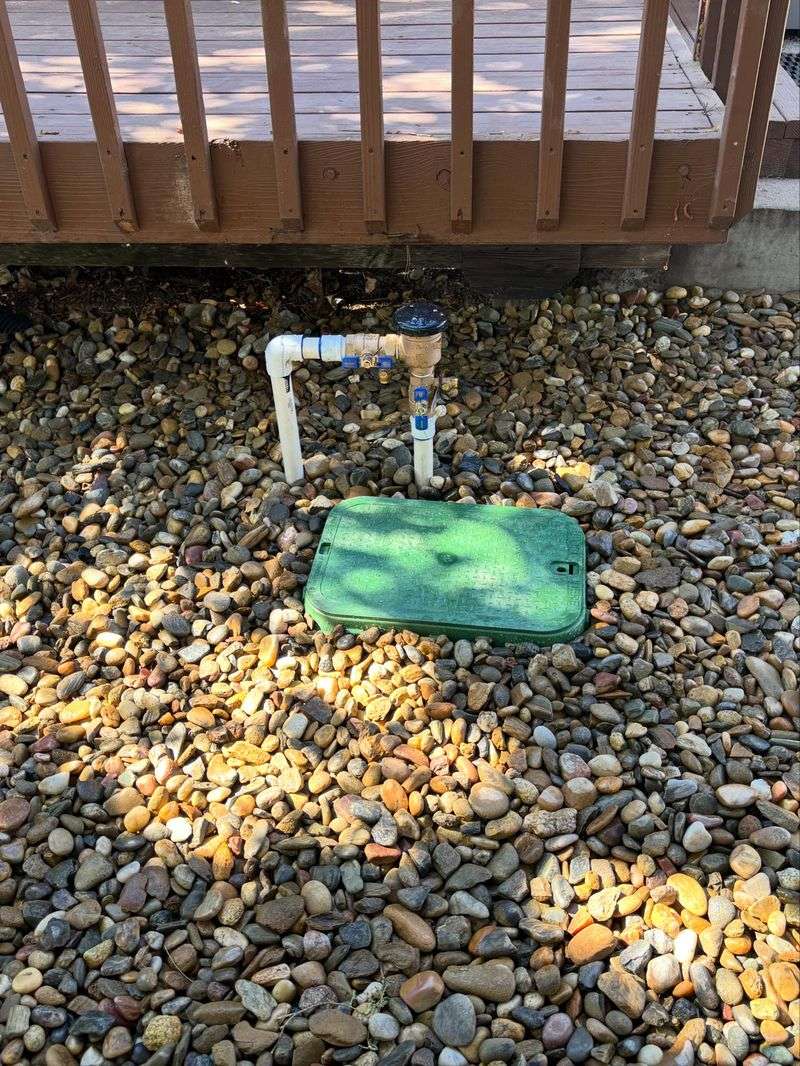
Meet the unsung hero of your yard: the backflow preventer. That funny brass contraption near the house keeps sprinkler water from flowing back into your clean drinking water.
Lawn water can pick up fertilizer, soil, and other things you would not want in a glass of lemonade. The backflow device acts like a one-way door, letting water out but not back in.
Because it usually sits above ground, it faces the full bite of Ohio wind and cold. That makes it one of the first parts to crack when temperatures plunge.
During a blowout, air should go in downstream of the device, not through it. Pushing air backward can damage the delicate checks and seals inside, leading to costly replacements.
Proper care starts with closing its isolation valves before the blowout, so air cannot push through it. Once the lines are clear, open the test cocks and drain the body, then leave the ball valves and test cocks turned halfway, about 45 degrees, so any leftover moisture has room to expand.
Some homeowners also wrap the unit with an insulated cover for extra protection. A snug cover looks a bit like a winter hat for your plumbing, which is kind of charming.
If you are unsure which handles do what, take a photo and call a pro. A quick question costs far less than a brand new assembly.
Keep The Air Pressure In Check To Protect The Pipes
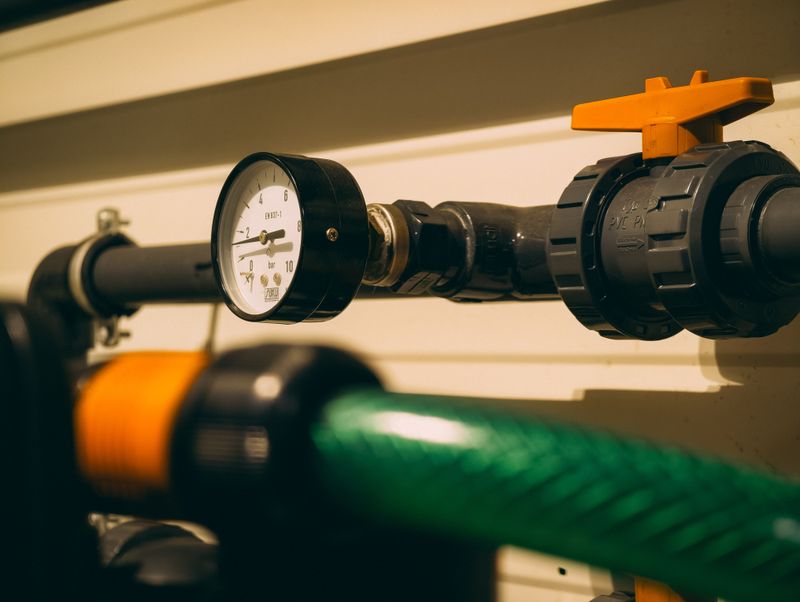
More power sounds like a good idea until something pops. With sprinkler blowouts, gentle and steady wins the race over loud and forceful.
Too much air pressure can crack pipes, blow apart fittings, and damage the little gears inside sprinkler heads. Ironically, the fix meant to protect your system could end up harming it.
Many residential systems use flexible poly pipe, which should stay at or below 50 PSI during a blowout. Rigid PVC systems can often take more, up to about 80 PSI.
Those numbers are upper limits, and the lowest-rated part in your system sets the real ceiling. Your pipe type, the age of the system, and the parts installed all affect what is safe.
Moving air without water to cool things down can also create heat from friction. Running air through one zone for too long may warm up plastic parts, so short bursts work better.
A good rhythm is a minute or two per zone, then moving on and circling back later. Watching the gauge closely keeps everything in a comfortable range.
If you have no idea what kind of pipe lies under your grass, check any paperwork from the installer. When in doubt, a professional can figure out the right setting in seconds.
Wear Safety Glasses During A Blowout
A friend of mine once leaned over a sprinkler head to see why it was gurgling. One surprise blast of muddy water later, he learned a lesson he still laughs about.
Blowouts send air, water, and tiny bits of grit shooting out of the system with real force. Sand, pebbles, and broken plastic can fly out faster than you can blink.
That is exactly why safety glasses belong on your face for the whole job. A basic pair from the hardware store costs a few dollars and protects something you cannot replace.
Gloves are another smart addition, especially when handling cold metal fittings and hoses. Sturdy shoes help too, because the lawn often turns slippery as water sprays out.
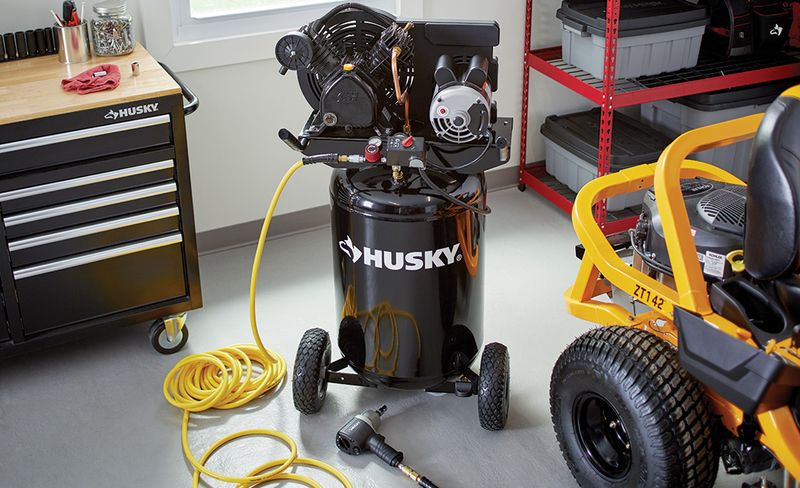
Hearing protection is worth considering if you are using a loud compressor. Those machines can rumble like a motorcycle idling in your driveway.
Keep kids and pets indoors while the air is running. Curious little ones love peeking at bubbling sprinkler heads, and that is the last place they should be.
Finally, avoid standing directly over any head, valve box, or open fitting while it is pressurized. Taking a step back gives you a better view of the spray anyway.
Many Experts Recommend Hiring An Irrigation Professional
Sometimes the smartest tool in your garage is a phone number. For plenty of Ohio families, calling an irrigation pro turns a stressful chore into a stress-free afternoon.
Professionals bring high-volume compressors that most homeowners do not own. Renting one is possible, but it can cost nearly as much as a full service visit.
Experience counts for a lot here, too. A trained tech knows the right pressure for your pipes, the proper order for each zone, and how to handle the backflow device safely.
Many companies also give your system a quick checkup while they are there. They might spot a leaky valve, a cracked head, or a wiring issue before it grows into a bigger headache.
Cost usually lands somewhere in the range of 75 to 150 dollars for a typical home, depending on the number of zones. That price looks pretty friendly next to a spring repair bill for broken buried lines.
Booking early is the key, since fall schedules fill up quickly across Ohio. Some companies offer packages that bundle fall winterizing with spring startup at a discount.
Do-it-yourself fans can still learn by watching the pro work. Ask questions, take notes, and enjoy a warm cup of coffee while someone else handles the heavy lifting.