The Fire-Resistant Trees California Homeowners Should Plant Within 30 Feet Of Their House
A homeowner in the Sierra foothills walks the property with a defensible space checklist in hand, tape measure tucked in a back pocket, squinting at the trees standing near the porch.
Which ones actually help during a wildfire, and which ones quietly raise the risk without anyone noticing until it matters most?
CAL FIRE calls the area from 5 to 30 feet around a structure Zone 1, and the plants living there matter enormously.
Some trees hold water in their leaves, wear thick insulating bark, and resist catching fire long enough for crews to actually work.
Others carry resin, shed piles of dry litter, and hand flames a ladder straight to the roofline instead.
No single tree on any list is fireproof, and none should ever get sold that way to a hopeful homeowner.
Eight species show up again and again in UC ANR and CAL FIRE guidance as genuinely lower-flammability choices for California yards specifically.
1. Coast Live Oak
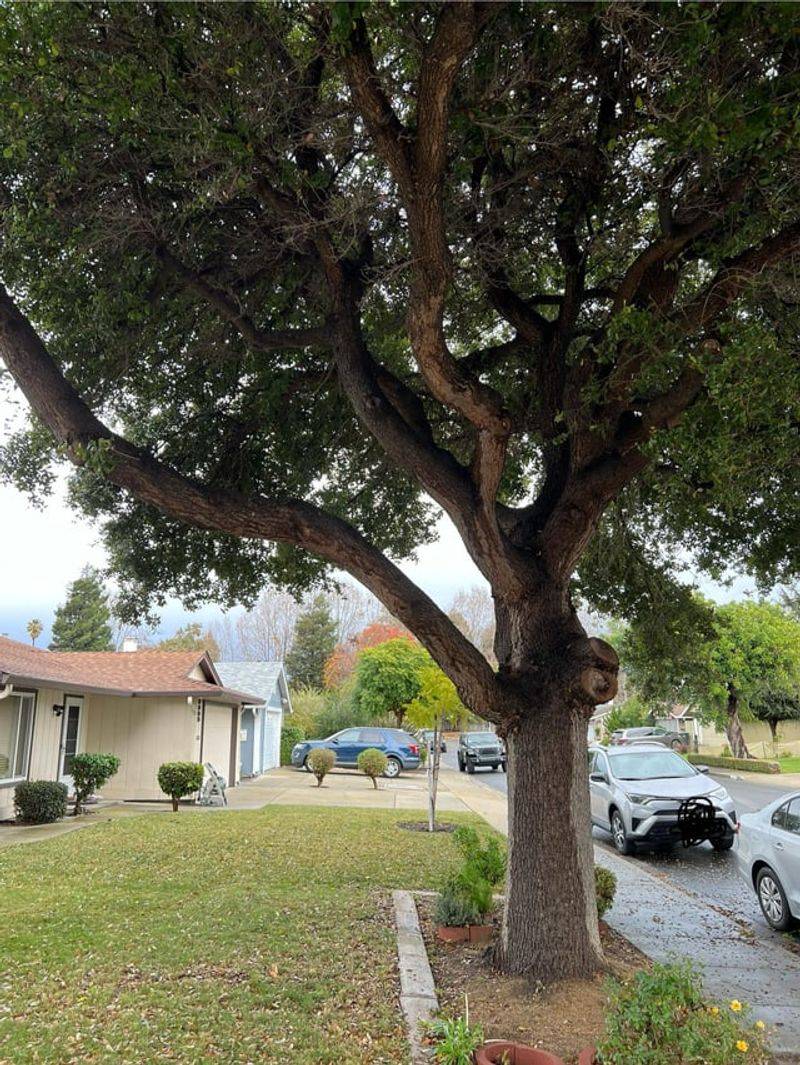
Drive through coastal California after a grass fire, and you will often see the same picture repeating itself. Blackened ground, scorched fence posts, and coast live oaks still standing with green leaves overhead through it all.
Their bark does much of that work. Thick, corky, and furrowed, it insulates the living tissue underneath from short bursts of heat passing through quickly.
Leaves help too. Quercus agrifolia holds small, stiff, evergreen leaves with a waxy surface and decent moisture, so they resist igniting compared to resinous conifer needles nearby.
The canopy is dense enough to block embers and shade out flammable weeds growing below it as well.
Researchers at UC Berkeley studying oak response to fire caution against treating that toughness as any kind of guarantee though.
Inner bark that has dried out from prolonged drought stress conducts heat far more readily, and an oak weakened by pests or root damage loses much of its protective edge fast.
Maintenance closes that gap reliably. Rake acorn litter and fallen leaves out of Zone 1, prune branches back at least 10 feet from the chimney, and remove any dry limbs as soon as you spot them.
Never let ivy, juniper, or woodpiles gather at the trunk, since those become the ladder that carries flame upward toward the canopy.
Give an established oak occasional deep summer water during extended dry spells, but keep irrigation away from the trunk crown to avoid rot setting in.
2. Interior Live Oak
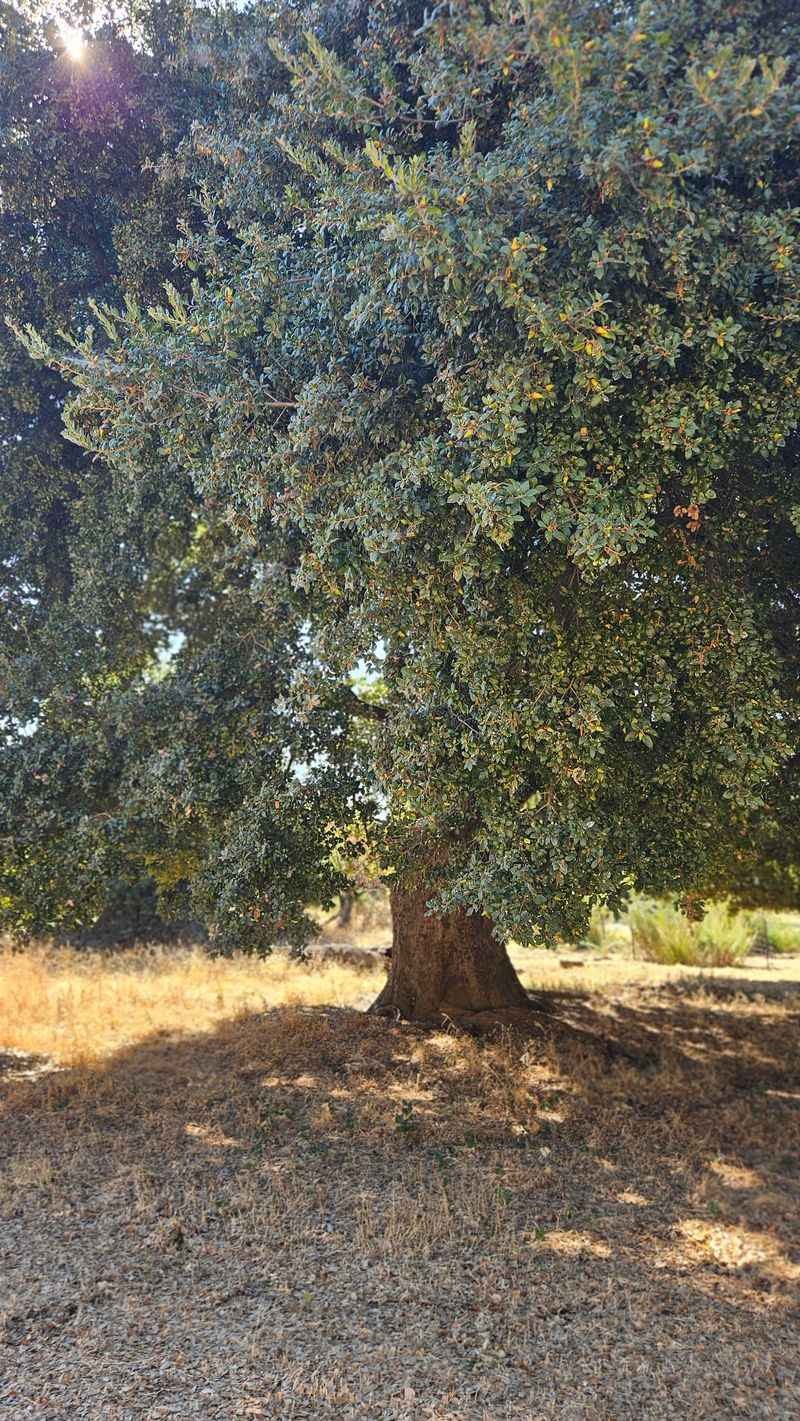
Hotter, drier inland valleys and foothills ask more of a tree than the coast ever does. Interior live oak answers that challenge directly.
Quercus wislizeni handles Central Valley heat, thin foothill soils, and long rainless summers without much fuss, which already puts it ahead of thirstier ornamentals competing for the same spot.
Its bark thickens with age into a rough, insulating layer that shields the cambium during fast-moving fire events.
Above that sits a canopy of small, glossy, sometimes spine-edged evergreen leaves that hold moisture and resist quick ignition well.
The real headline trait here is recovery. Interior live oak resprouts vigorously from the root crown and from surviving stems after a burn, pushing new growth within a single season afterward.
Your California Garden Changes Every Week. Your Plan Should Too.
Gardening in California changes quickly throughout the season. Every Friday you’ll receive a simple weekly plan showing exactly what to plant, prune, fertilize, harvest, and protect so you never miss the right timing.
Foothill landscapes that have burned repeatedly still carry these oaks for exactly that reason, standing as living proof of resilience.
Resprouting does not mean invincible though. A young interior live oak with a slim trunk has far less bark protection than a 60-year-old specimen, and any tree carrying dry interior branches becomes a fuel package rather than a shield.
Clean under it twice a year. Pull dry grass back from the trunk, remove suckers crowding the base, and thin crossing branches so air moves through the crown properly.
Plant single specimens instead of clusters inside Zone 1, leaving roughly 10 feet between mature canopy edges for safety.
3. California Sycamore
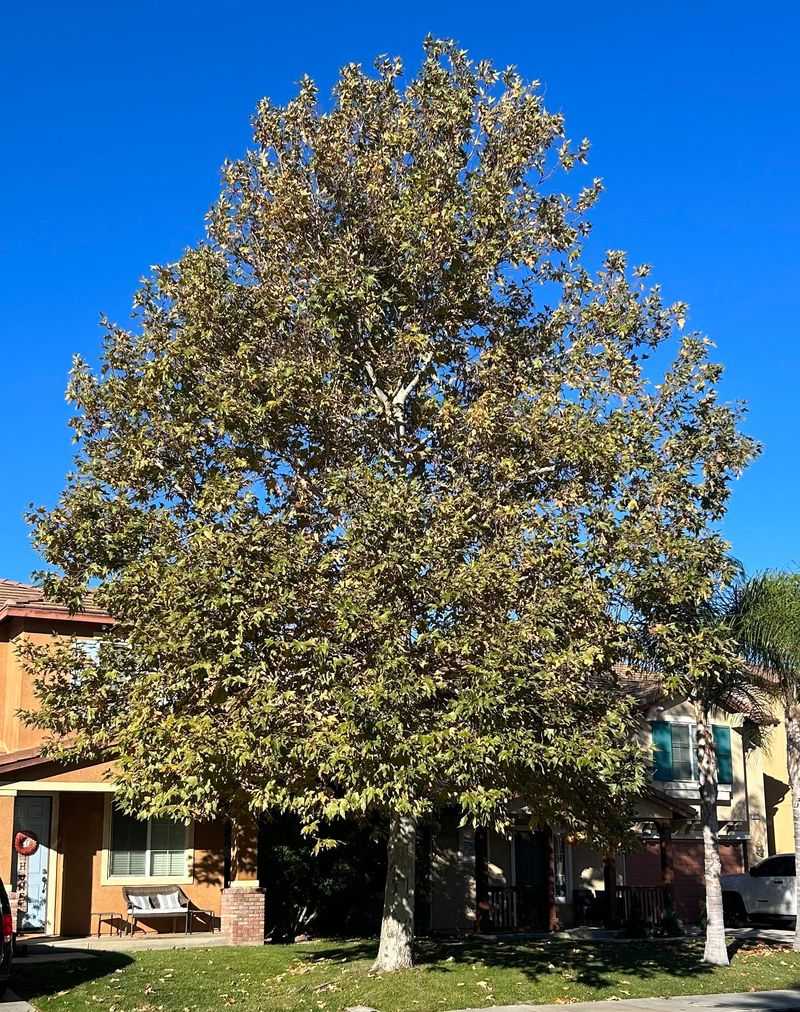
Those enormous hand-shaped leaves are not just for looks here. A California sycamore leaf can span 10 inches across and stays plump with water through the growing season, which makes it slow to ignite and quick to smother small embers landing on it.
Platanus racemosa also drops its whole canopy in fall completely. A bare winter tree carries very little flammable material overall, and deciduous broadleaf species generally rank lower on flammability scales than evergreen conifers do.
Mottled bark peels away in patches too, shedding rather than holding a smoldering ember against the trunk.
Thirst is the catch with this one. Sycamores evolved along creeks and seasonal streambeds, and a dry sycamore is a stressed sycamore with crisp brown leaves hanging on. Brown leaves burn fast.
Plan on regular deep watering, especially during heat waves, or skip this species entirely if that commitment feels unrealistic.
Size deserves respect as well here. Mature trees reach 50 to 80 feet with a wide spread, so planting one 12 feet from the eaves invites branches onto the roof within a decade or so.
Set it toward the outer edge of Zone 1 and prune to keep limbs well clear of the chimney at all times.
Autumn leaf drop creates a second chore too. Rake fallen leaves out of gutters, off decks, and away from the foundation rather than letting them pile into tinder near the house.
4. Western Redbud
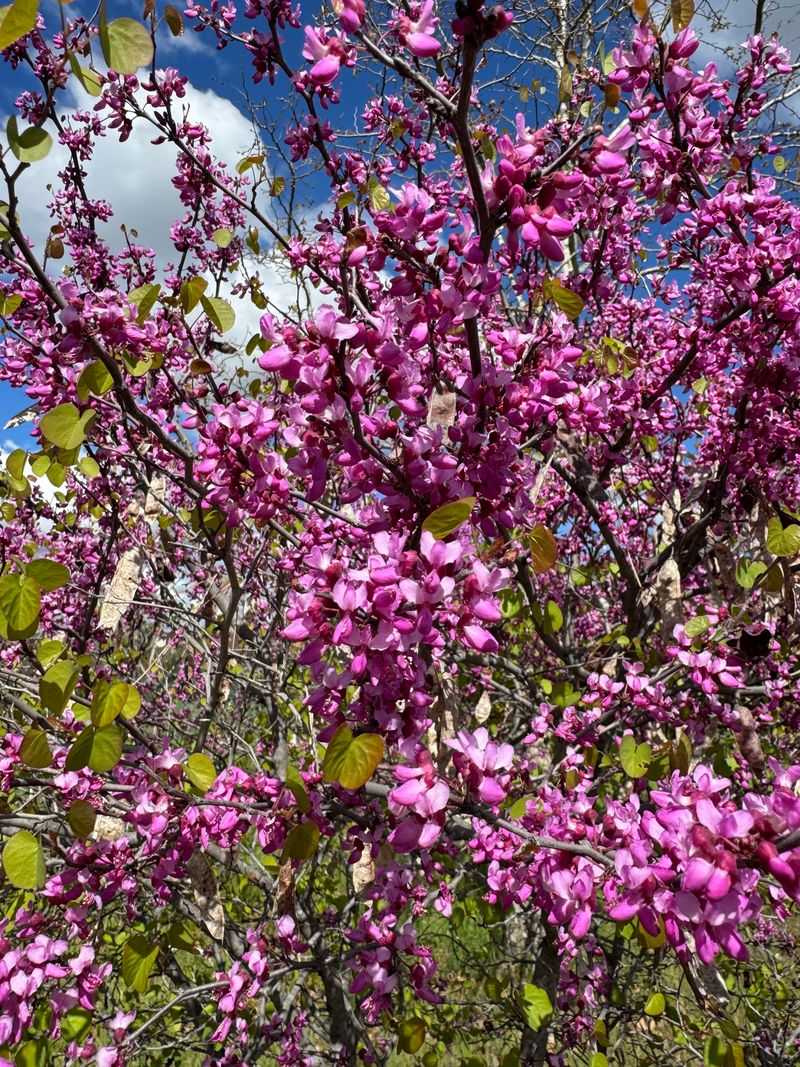
Every March, western redbud puts on a magenta show that genuinely stops traffic in its tracks. Bare branches erupt in hot pink blossoms before a single leaf appears, followed by round blue-green foliage and coppery seed pods later.
Beauty aside, the plant earns real points in Zone 1 too.
Cercis occidentalis stays small, usually 10 to 18 feet tall, so it never towers over a roofline or drops heavy limbs on the house below.
Modest size also makes spacing easy, letting you keep 10 feet of air between its canopy and anything else nearby.
Being deciduous helps during the worst months of fire season. Leaves hold reasonable moisture through summer, and by late fall the tree stands mostly bare with little fuel left to offer flames.
Water needs sit in the moderate range here, which is unusual and genuinely useful for planning purposes.
Many California natives resent summer irrigation, but redbud tolerates occasional deep soaking without sulking about it. Hydrated leaves resist ignition, so that flexibility matters more than it might sound at first.
Maintenance stays light but not entirely optional. Prune out dry twigs each winter, since redbud naturally sheds small interior branches that collect inside the crown over time.
Sweep up dropped pods and leaves instead of letting them mat against a wall or under a deck somewhere.
5. Big Leaf Maple
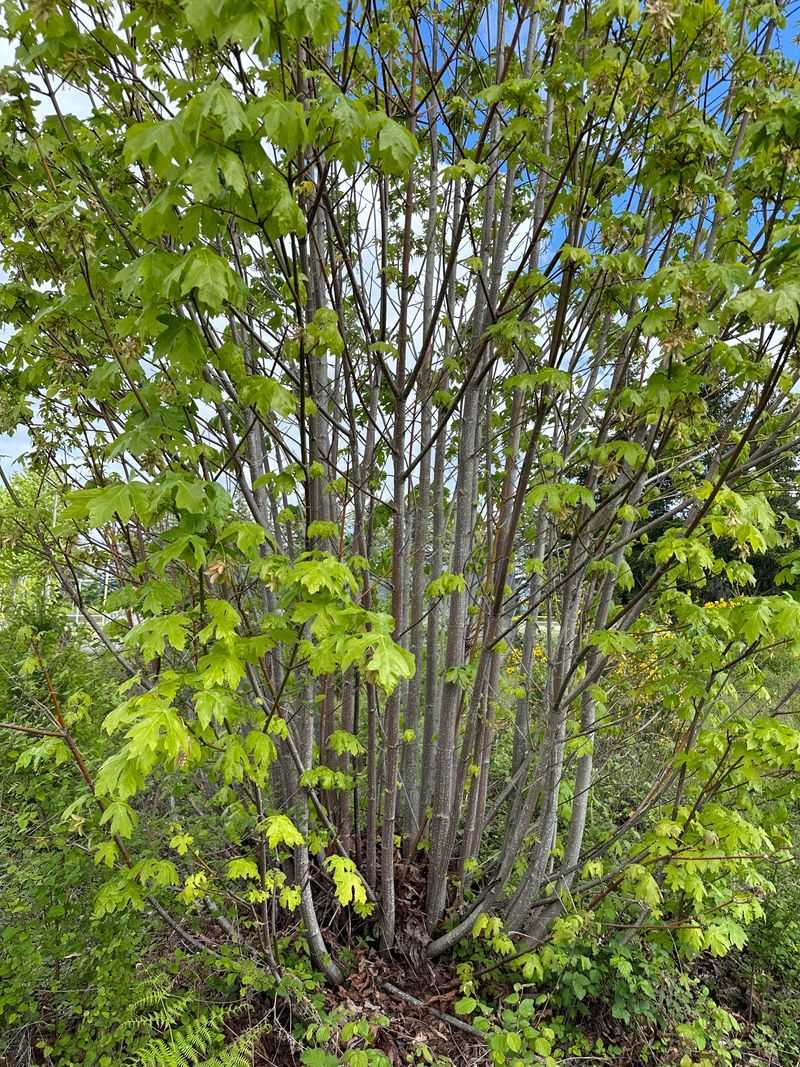
Snap a maple twig in spring and you get sap that runs thin and watery, nothing like the sticky resin oozing from a pine or fir nearby. Resin ignites fast and burns hot. Water-like sap simply does not behave that way.
Acer macrophyllum carries the largest leaves of any maple, sometimes a full foot wide across the blade.
Big, flat, moisture-filled leaves take real heat to dry out before they will catch fire, and the dense canopy shades the ground so grassy fuels struggle to establish underneath it.
Northern California and coastal ranges suit it best overall. Big leaf maple wants cool roots, decent soil, and steady moisture, so Southern California inland yards are usually a poor match for this species.
Planting it where it will struggle produces a stressed tree, and stressed trees burn more readily than healthy ones do.
Give it room to grow properly. Mature specimens hit 50 feet or more with a broad crown, which means the outer half of Zone 1 rather than right against the siding of the house.
Limb up the lower branches so nothing forms a ladder from ground level straight into the canopy above.
Fall brings a heavy leaf dump, and those giant leaves clog gutters fast if left unchecked. Clear them promptly, keep dry wood cut out, and maintain canopy separation from neighboring trees.
6. Pacific Dogwood
Shade corners give homeowners real fits when planning defensible space. Most fire-resistant recommendations assume blazing sun, leaving the north side of the house planted with whatever manages to survive there.
Pacific dogwood fills that gap beautifully.
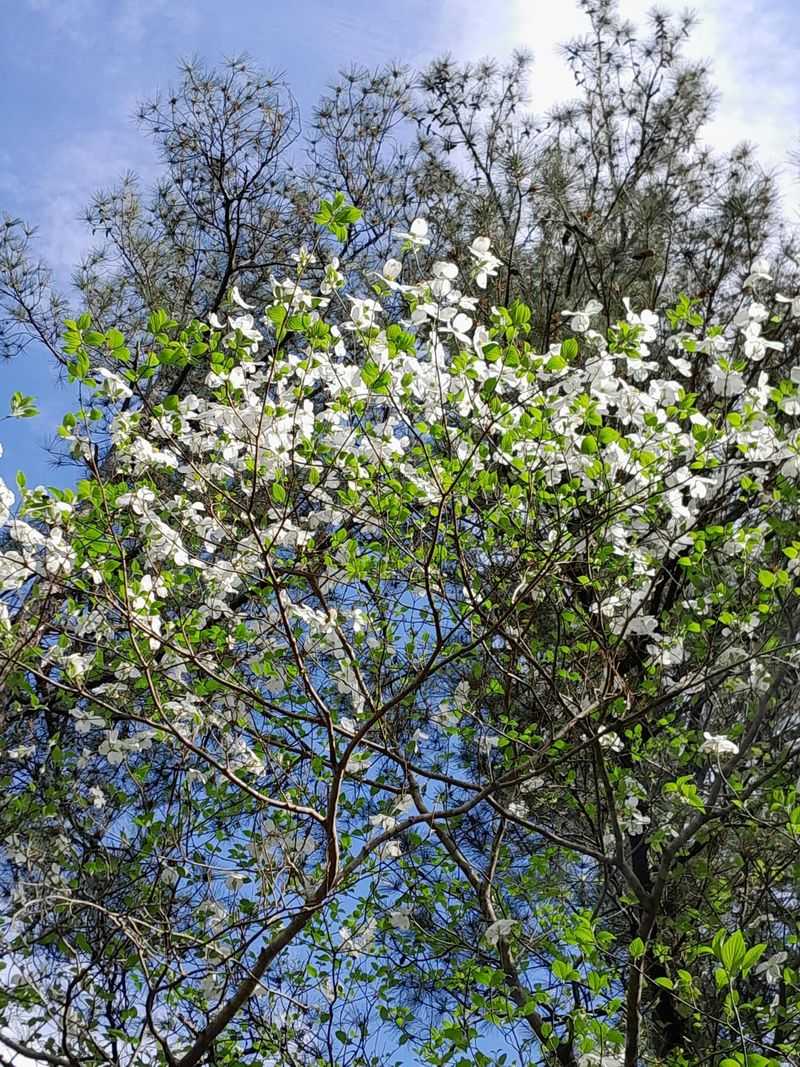
Cornus nuttallii grows naturally under taller trees in Northern California forests, producing creamy white bracts the size of a saucer each spring and sometimes flowering again in fall too.
Reaching 20 to 40 feet, it stays modest enough for careful placement within Zone 1 without much trouble.
Fire behavior favors it clearly. Broad deciduous leaves hold moisture through summer, the wood is not resinous at all, and winter dormancy strips the canopy down to bare branches carrying minimal fuel overall.
Fallen leaves break down quickly too, rather than forming the springy, dry mat that conifer needles tend to create nearby.
Fussiness is the honest drawback here though. Pacific dogwood dislikes hot afternoon sun, compacted soil, and root disturbance, and it stays vulnerable to dogwood anthracnose in certain conditions.
A sickly specimen full of dry twigs adds fuel instead of reducing it, which defeats the whole purpose of planting it there.
Site it in filtered light with good drainage and consistent moisture year-round. Mulch lightly with coarse chips, keeping the material several inches off the trunk itself.
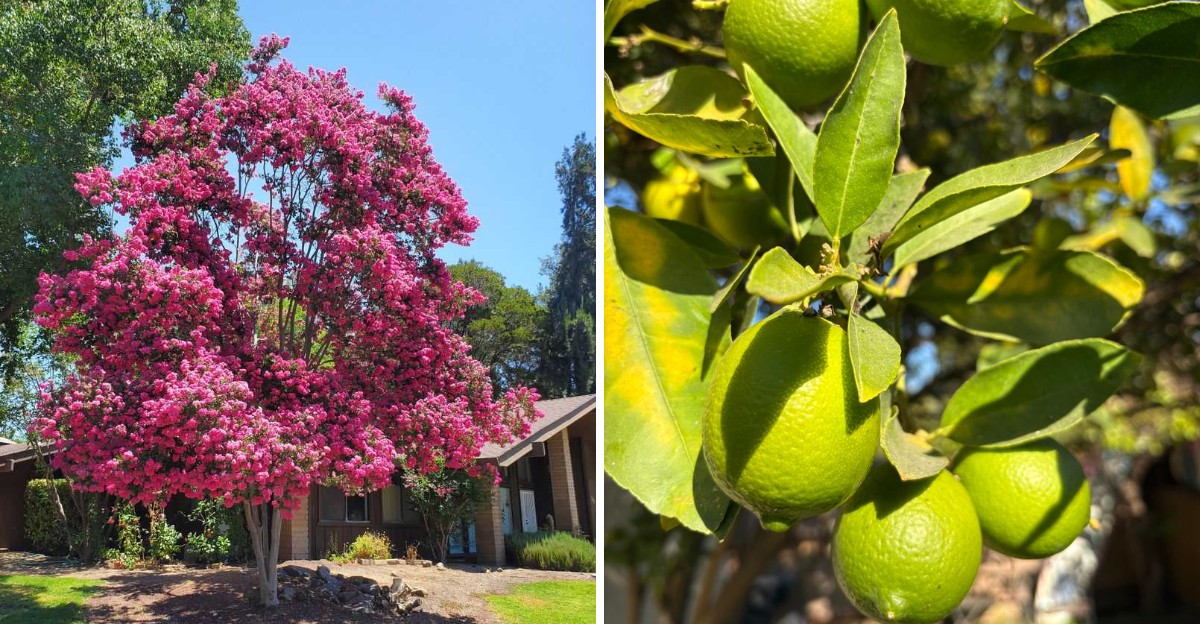
7. Crape Myrtle
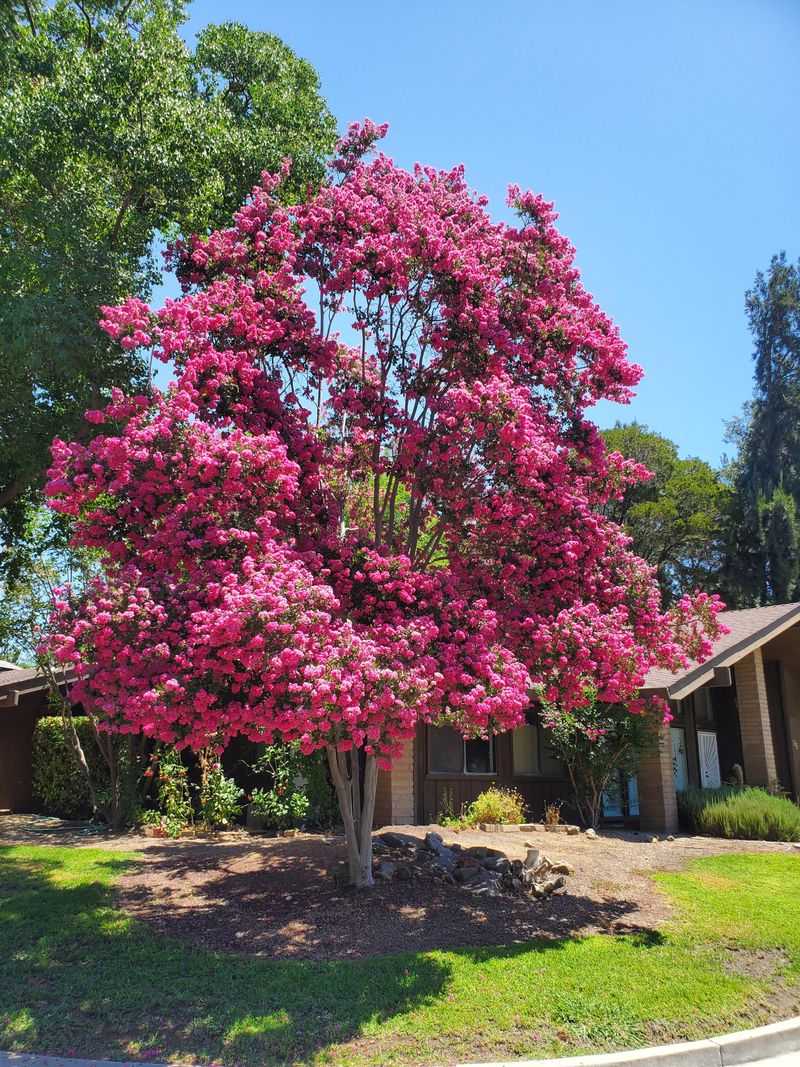
Worth saying plainly up front here: crape myrtle is not a California native tree.
Lagerstroemia came from Asia originally, and it shows up on fire-wise plant lists for practical landscape reasons rather than ecological ones specifically.
Smooth, thin, peeling bark in cinnamon and gray tones defines the trunk, and it sheds rather than accumulating shaggy strips that catch embers over time.
Compare that to a resinous conifer or a shredding-bark shrub, and the difference becomes obvious in a hurry once you look closely.
Leaves are broad, moderately thick, and free of volatile oils entirely. Nothing about crape myrtle wood is oily or waxy the way eucalyptus and juniper tend to be, and those two rank among the worst offenders near California homes.
Size cooperates well too. Most cultivars top out between 15 and 25 feet, several stay under 10, and the tree tolerates hard pruning without much complaint.
Small stature makes canopy spacing manageable in tight suburban lots where a 60-foot shade tree would be completely impossible to fit.
Drought tolerance is decent, though a well-watered crape myrtle holds more leaf moisture and performs noticeably better overall.
Trim spent flower clusters, rake the fall leaf drop, and remove the thin suckers that sprout around the base every single season without fail.
8. Citrus Trees
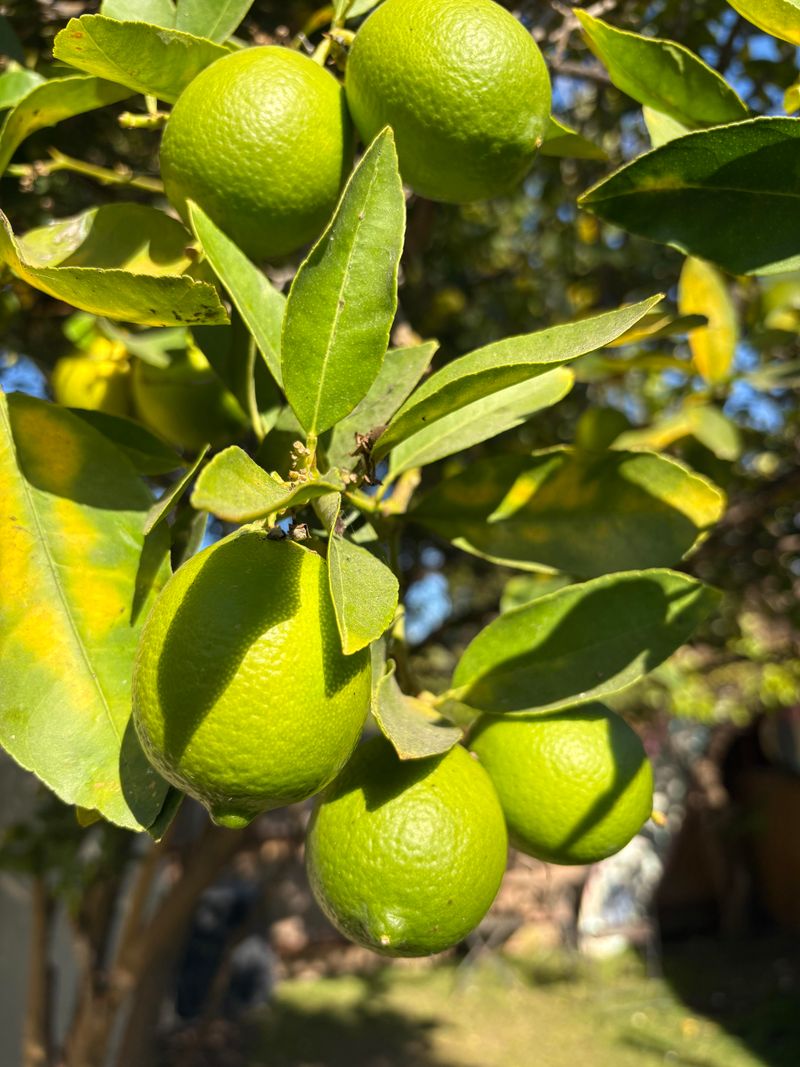
Fruit and fire safety rarely overlap in most conversations, yet citrus manages both at once without much trouble.
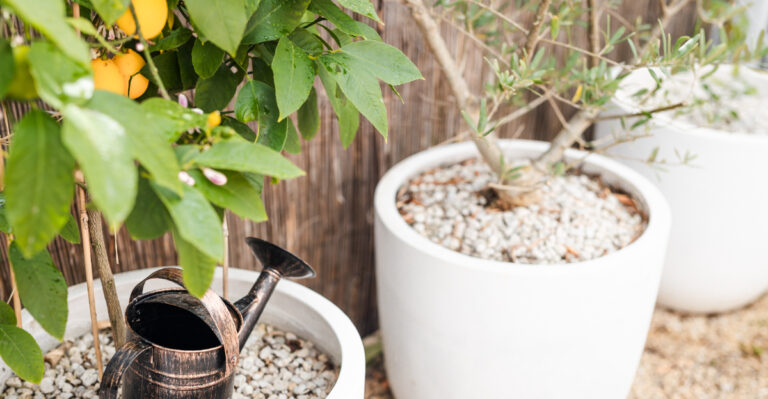
Orange, lemon, lime, and mandarin trees carry thick, glossy, evergreen leaves loaded with water, and high leaf moisture is one of the strongest predictors of low flammability available to homeowners choosing landscape plants.
Dense canopies also sit low, typically 12 to 20 feet, making them easy to position and easy to prune around the property without heavy equipment or professional help.
Mediterranean California climate suits them well, which is why backyard citrus has been a state fixture for well over a century now, showing up in yards from the coast to the inland valleys alike.
Native they are not, so consider them a landscape choice rather than a habitat one specifically, since local wildlife did not evolve alongside these particular trees the way it did with oaks or redbud.
Everything depends on water here though. A drought-stressed citrus tree drops leaves, develops crisp brown foliage, and loses the moisture advantage that put it on this list in the first place.
An unirrigated, neglected citrus near the house becomes a liability rather than an asset fast, especially once summer heat really settles in for the season.
Deep, regular watering through the dry season keeps the canopy properly hydrated and resistant to quick ignition. Drip lines work well for this, delivering water slowly and consistently right where roots can use it most.
Mulch helps hold soil moisture too, as long as you keep it several inches away from the trunk itself to avoid rot setting in over time.
Harvest fruit promptly as well, since fallen fruit and leaf litter build up fast underneath an untended tree, creating exactly the kind of debris pile Zone 1 guidance warns against leaving in place.
A little seasonal cleanup keeps this tree pulling its weight as both a food source and a genuine fire-conscious choice for the yard.