These Flowering Shrubs Outshine Hydrangeas In Texas Gardens
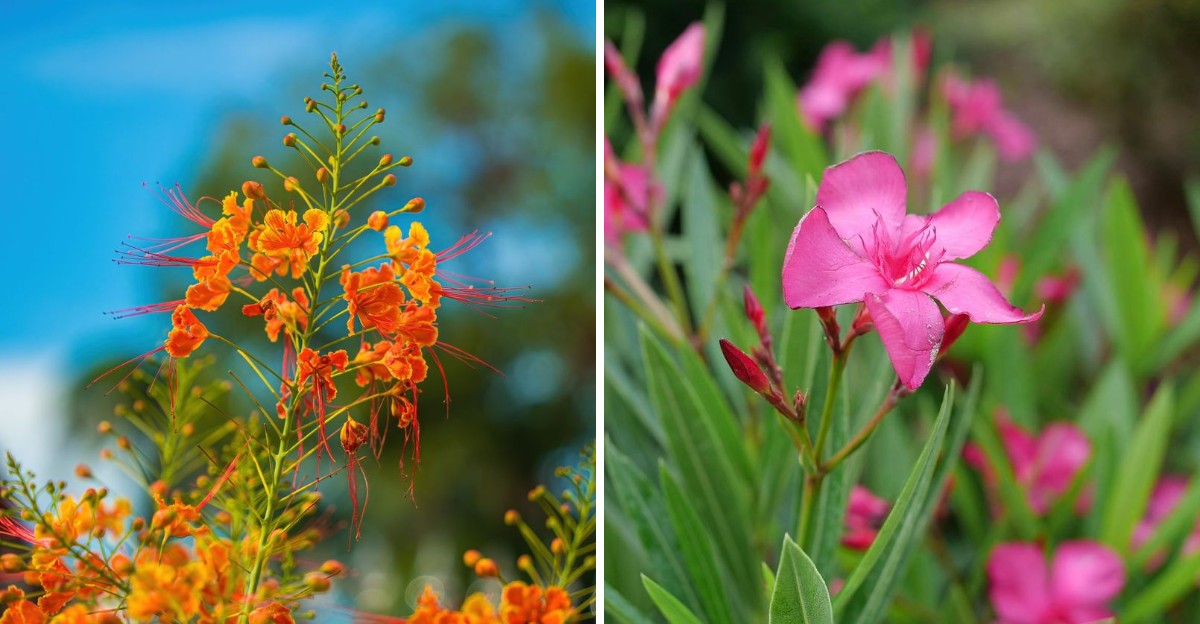
Texas gardens can be tough places to grow pretty flowers. The heat gets fierce, rain comes and goes, and hydrangeas often struggle to keep up. While hydrangeas look lovely in cooler states, they can wilt fast under the hot Texas sun.
Luckily, there are plenty of flowering shrubs that thrive here and put on an even better show. These plants handle the heat, sip less water, and still burst with color all season long. If you want a garden that looks amazing without constant fussing, you are in the right place.
These shrubs are proven winners in Texas soil and climate. They bring bright blooms, sweet smells, and happy pollinators to your yard.
Best of all, most need little care once they settle in. Get ready to meet the flowering shrubs that will make your neighbors stop and stare.
1. Texas Sage (Cenizo)
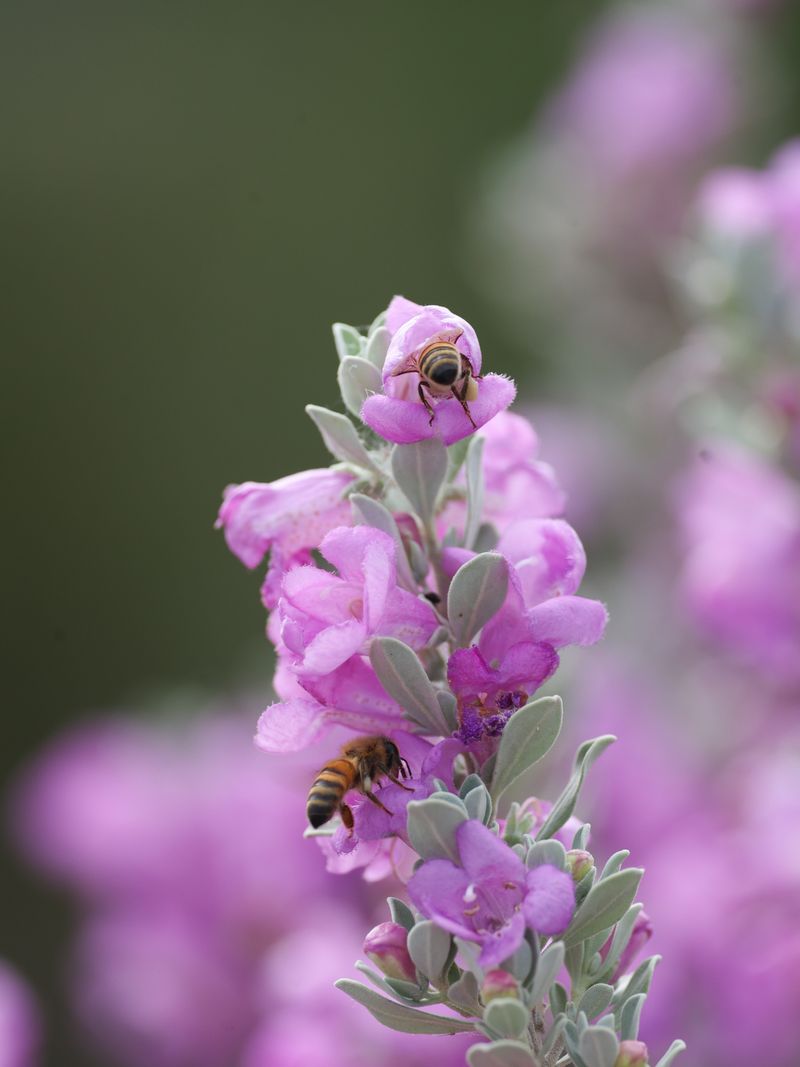
Some plants seem to know when rain is coming, and Texas Sage is one of them. Right before a storm, this shrub bursts into a cloud of purple blooms, which is why folks call it the barometer bush.
Native to the Lone Star State, cenizo loves heat and dry soil. It shrugs off drought like it is no big deal. Once established, you can almost forget to water it, and it will still thrive happily.
The silvery-gray leaves add a soft, cool look to the garden even when the flowers are resting. That gentle color pairs nicely with brighter plants nearby. It also handles rocky, poor soil that would trouble hydrangeas.
Bees and butterflies flock to the blooms whenever they appear. That makes cenizo a helpful friend for pollinators across your yard. Birds sometimes shelter in its dense branches too.
Plant it in full sun for the best flowering. Too much shade will leave it leggy and sparse. Well-drained soil is the key, so avoid spots where water pools after rain.
Pruning is simple and rarely needed. A light trim in early spring keeps it neat and bushy. Skip heavy fertilizer, since this tough shrub prefers lean conditions.
You can use Texas Sage as a hedge, a border, or a stand-alone showpiece. It grows about five to eight feet tall over time. Its low water needs make it perfect for water-wise gardens.
For anyone tired of babying thirsty plants, cenizo is a dream come true. It rewards neglect with beauty, which few shrubs can claim.
2. Oleander
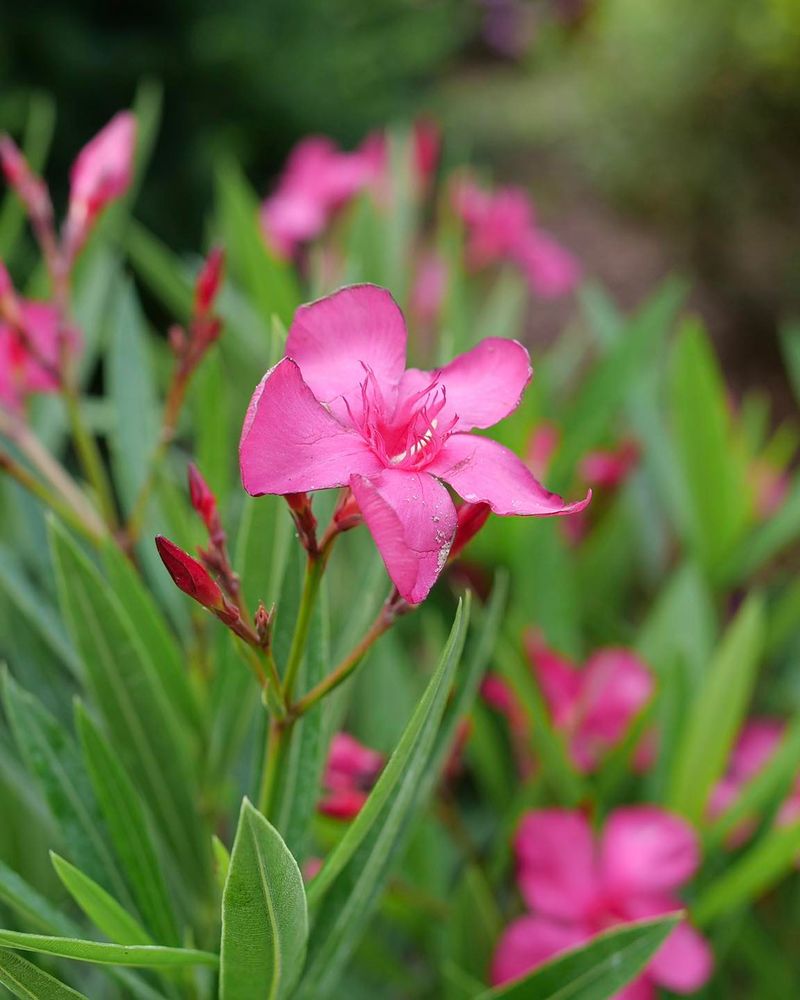
Drive along any highway in South Texas and you will spot oleander showing off. These tough shrubs line roads and medians because almost nothing bothers them.
Oleander brings clusters of pink, white, red, or salmon flowers from spring through fall. That long bloom time beats hydrangeas by a wide margin. The blossoms keep coming even in blazing summer heat.
Salt, wind, poor soil, and drought barely faze this plant. Coastal gardeners especially love it for that reason. It stands strong where fussier shrubs would fade.
A quick heads-up for families: every part of oleander is toxic if eaten. Keep it away from curious pets and small children, and wash your hands after pruning. With a little caution, it stays a safe and stunning choice.
Your Texas Garden Changes Every Week. Your Plan Should Too.
Gardening in Texas changes quickly throughout the season. Every Friday you’ll receive a simple weekly plan showing exactly what to plant, prune, fertilize, harvest, and protect so you never miss the right timing.
Give oleander full sun and room to spread. It can grow six to twelve feet tall, so plant it where size will not be a problem. Regular shaping keeps it looking tidy and full.
Watering is easy once the roots take hold. A deep drink now and then is plenty during dry spells. Overwatering does more harm than helping.
You can grow oleander as a privacy screen or a colorful hedge. Dwarf types work well in smaller yards and containers. Either way, the flowers bring life to boring corners.
Pollinators and hummingbirds visit the blooms all season. That extra buzz of activity makes the garden feel alive. For nonstop color with barely any effort, oleander earns its place in Texas landscapes.
3. Crape Myrtle
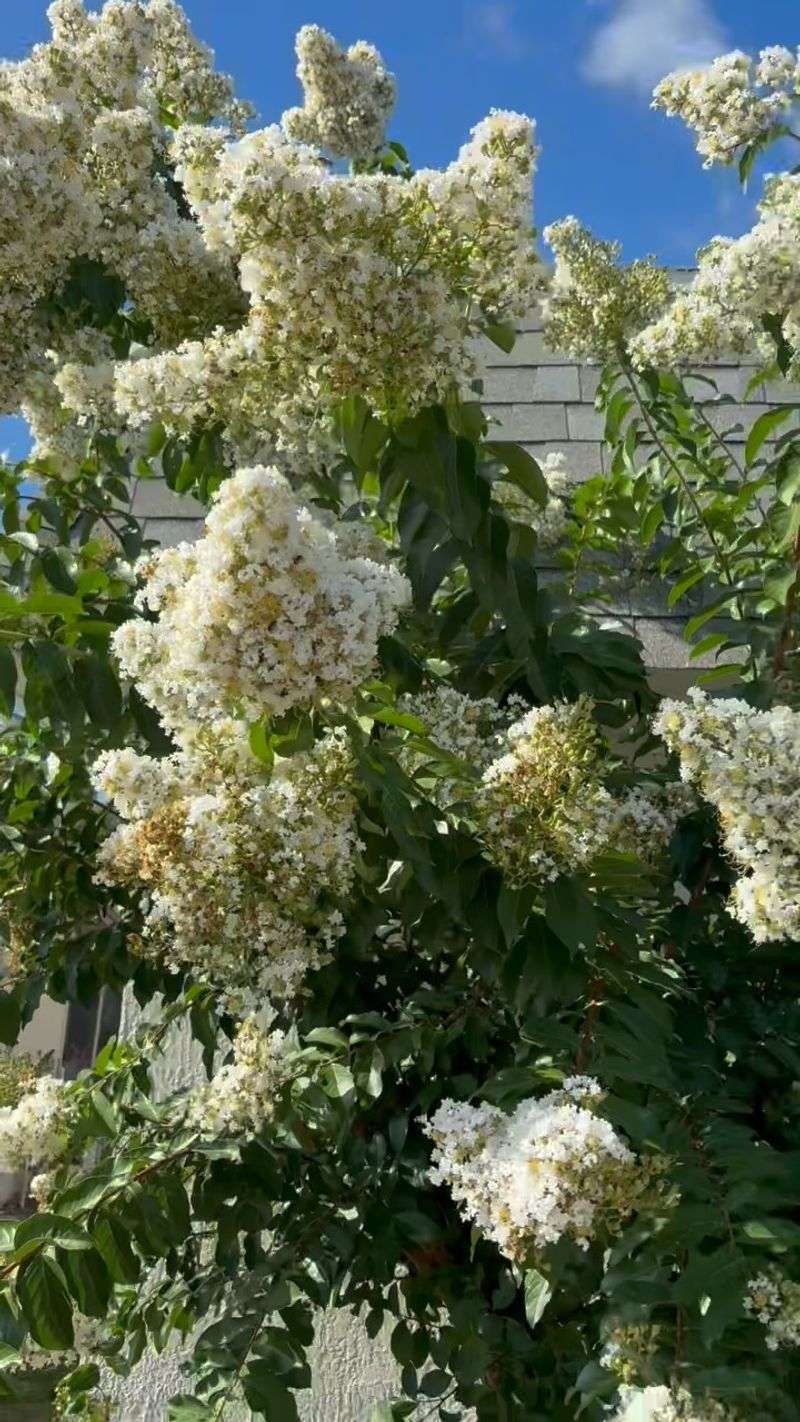
Often called the lilac of the South, crape myrtle rules summer in Texas. When most plants look tired from the heat, this one throws its biggest party.
The flowers come in ruffled clusters of pink, red, purple, or white. They last for weeks, sometimes months, filling the garden with color. Even the bark is pretty, peeling to show smooth patches underneath.
Crape myrtle handles heat and drought like a champ. Once its roots are deep, it needs very little help from you. That easygoing habit makes it a favorite for busy gardeners.
Sizes range from tiny two-foot shrubs to twenty-foot trees. That means there is a crape myrtle for almost any yard. Pick a dwarf type for beds or a tall one for shade and privacy.
Full sun brings the most flowers, so choose a bright spot. Shady locations lead to fewer blooms and more mildew. Good airflow keeps the leaves healthy.
Please skip the harsh chopping some people do each winter. That rough cut, nicknamed crape murder, ruins the natural shape. A gentle trim of dry or crossing branches is all it needs.
In fall, the leaves turn shades of orange, red, and gold. That gives your garden a second show after the flowers fade. Few shrubs offer so much beauty across the seasons.
Pollinators love the blooms, and birds enjoy the seeds later. For color that keeps going through the hottest months, crape myrtle is hard to beat. It truly earns its spot in Texas gardens.
4. Turk’s Cap
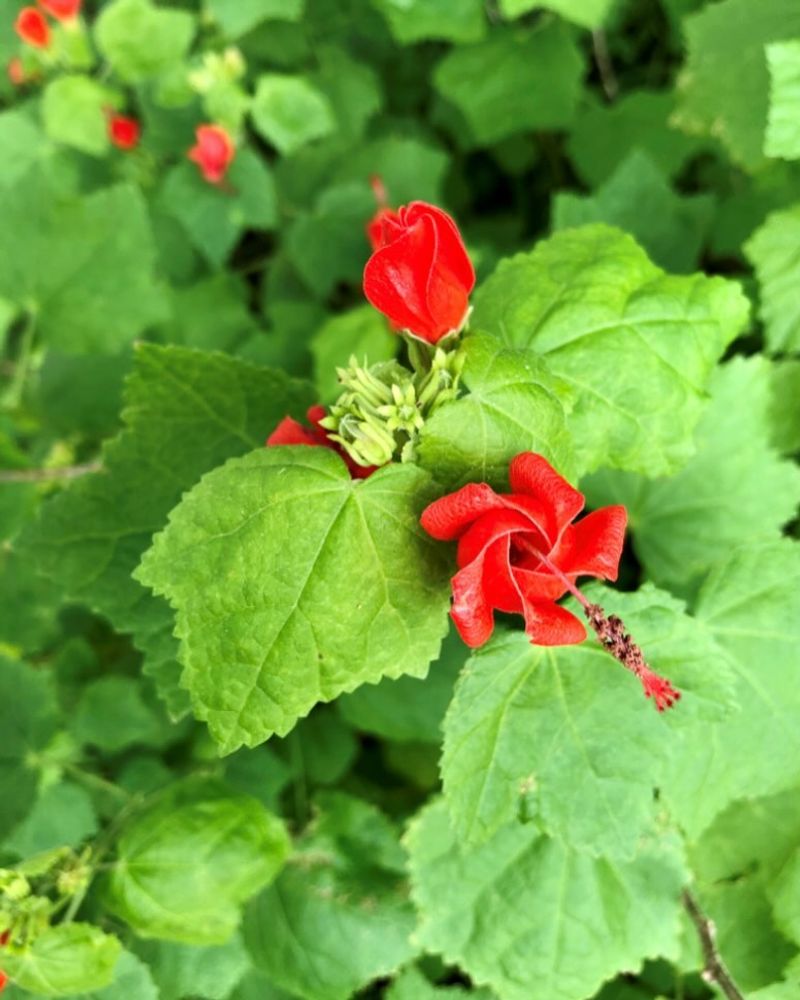
Here is a shrub that actually loves the shady spots where hydrangeas sulk. Turk’s Cap shines in those tricky areas under trees and along fences.
Its bright red flowers look like tiny turbans that never fully open. That fun twisted shape gives the plant its name. The blooms show up from spring all the way into fall.
Hummingbirds cannot resist these red swirls. Butterflies and bees join the feast too. If you want a garden buzzing with wildlife, this native plant delivers.
Turk’s Cap grows well in sun or shade, which makes it super flexible. It handles dry spells and even bounces back after tough winters. Few plants are this forgiving.
The soft green leaves stay lush even in heat. That gives your shady beds a full, leafy look. Small red fruits follow the flowers and birds gobble them up.
You can let it grow into a loose mound about three to five feet tall. A trim in early spring keeps it bushy and neat. It spreads slowly, so it will not take over.
Because it is a Texas native, Turk’s Cap fits right into local gardens. It needs no fancy soil or constant feeding. Once planted, it mostly takes care of itself.
Try it under oak trees or beside a porch where hydrangeas would flop. The pop of red brightens dark corners beautifully. For a low-fuss native that feeds pollinators and thrives in shade, Turk’s Cap is a smart and cheerful pick.
5. Esperanza (Yellow Bells)
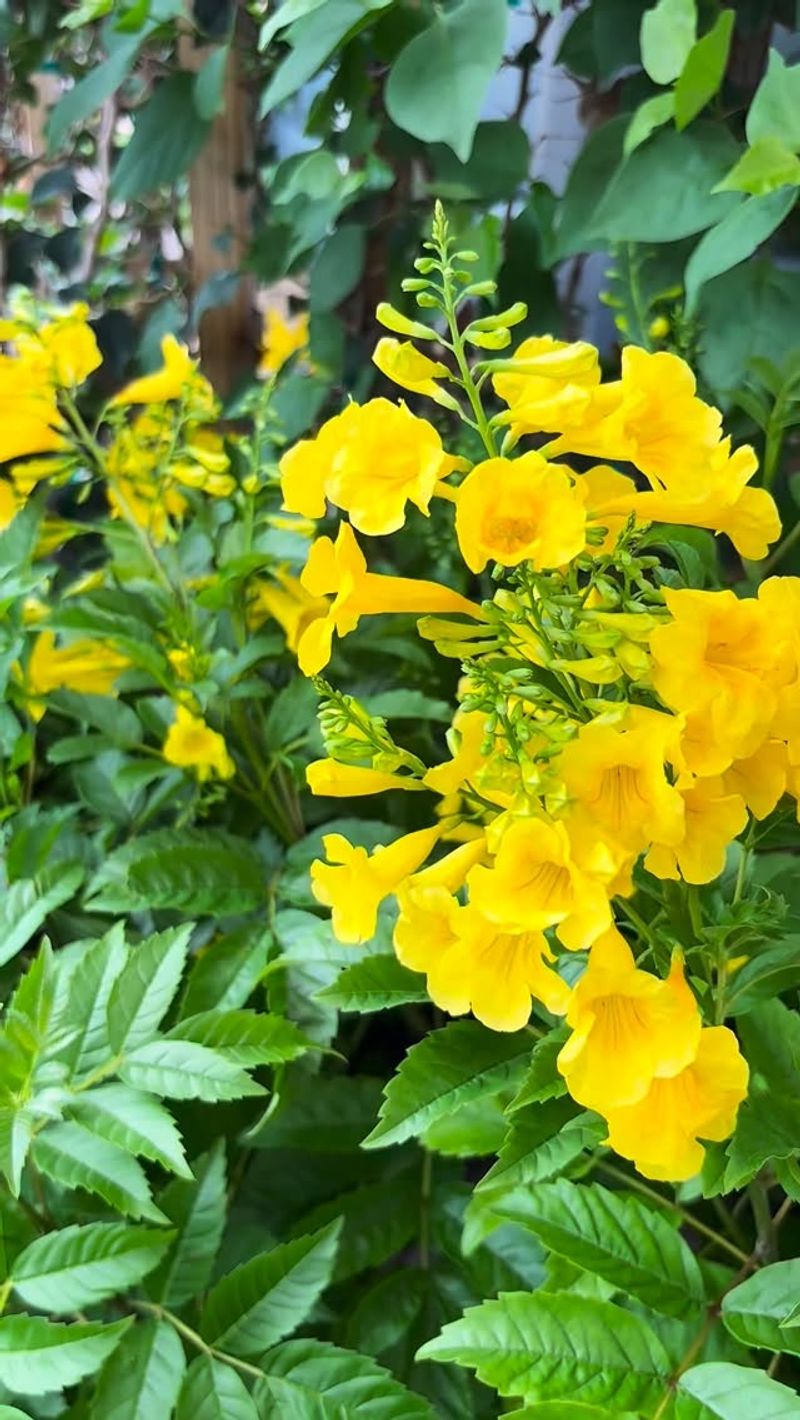
The name Esperanza means hope in Spanish, and one look at its sunny flowers tells you why. Bright yellow bells cover this shrub from late spring until frost.
Also known as yellow bells, it thrives in the hottest, sunniest parts of your yard. The more sun it gets, the more it blooms. Heat that wilts other plants only makes it happier.
Esperanza handles drought with ease once established. A deep watering during dry stretches keeps it looking fresh. Otherwise, it asks for very little attention.
Hummingbirds and butterflies zip in and out of the trumpet-shaped flowers. The steady stream of visitors turns your garden into a lively scene. Bees join the crowd too.
This shrub can reach three to six feet tall in a single season. In warmer parts of Texas it stays evergreen. In cooler areas it may fade back in winter and return in spring.
Plant Esperanza in well-drained soil for the best results. Soggy roots are the one thing it dislikes. A sunny bed or a large container both work great.
Trim off spent blooms and old stems to keep flowers coming. A cleanup in late winter gets it ready for a fresh season. It is a fast grower, so it fills space quickly.
The golden color pairs beautifully with red or purple neighbors. That mix makes a bold, cheerful display. For a shrub that shrugs off heat and blooms nonstop, Esperanza brings sunshine to any garden. Few plants spread this much warmth and joy.
6. Pride Of Barbados
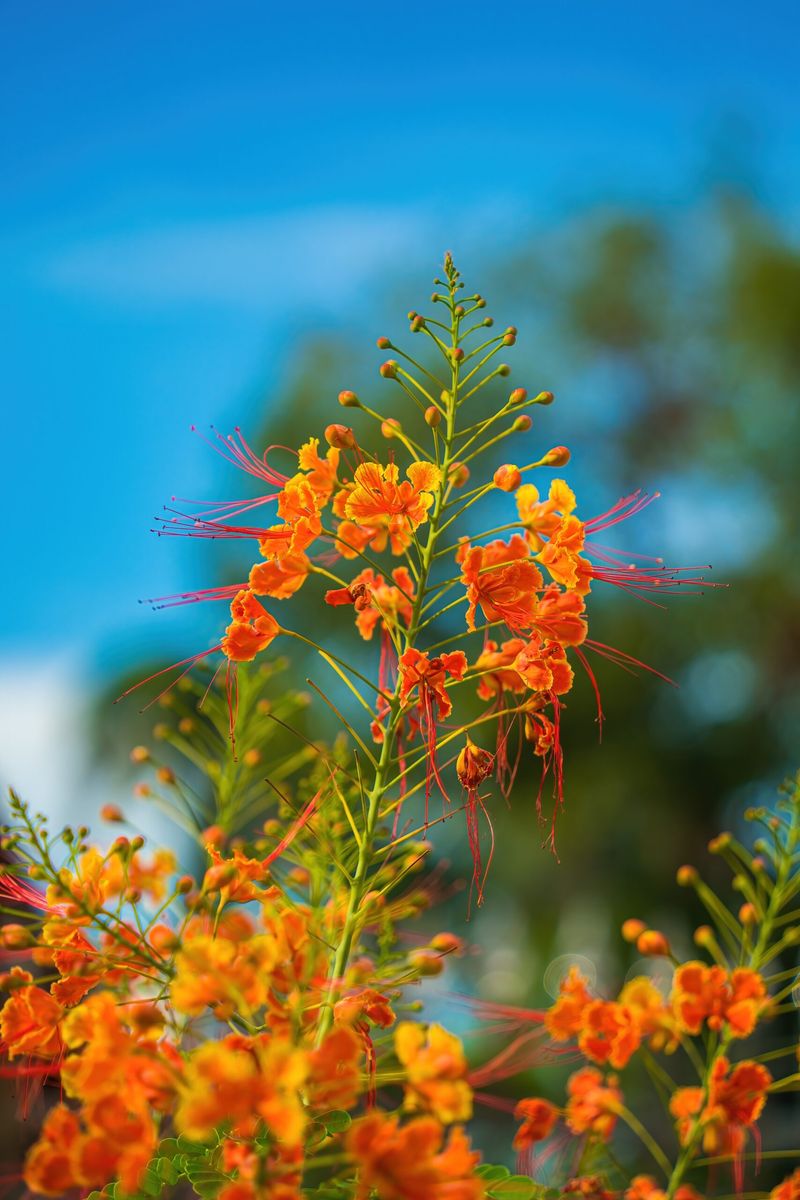
If you want your garden to look like a tropical getaway, meet Pride of Barbados. Its flame-colored flowers of orange, red, and yellow feel like a mini vacation.
This showstopper laughs at heat. The hotter it gets, the more it blooms through summer and fall. Drought barely slows it down once the roots are set.
Butterflies flock to the fiery blossoms, especially swallowtails. The garden practically comes alive with fluttering wings. Hummingbirds swing by for a taste as well.
The fern-like leaves add a light, feathery texture. That soft green sets off the bold flowers perfectly. Even without blooms, the plant looks graceful.
Pride of Barbados grows fast, often reaching six feet or more in one season. In South Texas it stays woody year-round. Farther north, it dies back in winter and springs up again when warmth returns.
Give it full sun and well-drained soil for the biggest show. Poor soil is no trouble at all. Skip the extra water once it is settled, since it prefers things on the dry side.
Cut it back in late winter to keep it tidy and strong. New growth will burst out quickly as the weather warms. It needs almost no fussing beyond that trim.
Do note the seeds are toxic, so keep them away from little ones and pets. With that small caution, this shrub is a safe stunner. For bold tropical flair that thrives in brutal heat, Pride of Barbados steals the show every time.
7. Flame Acanthus
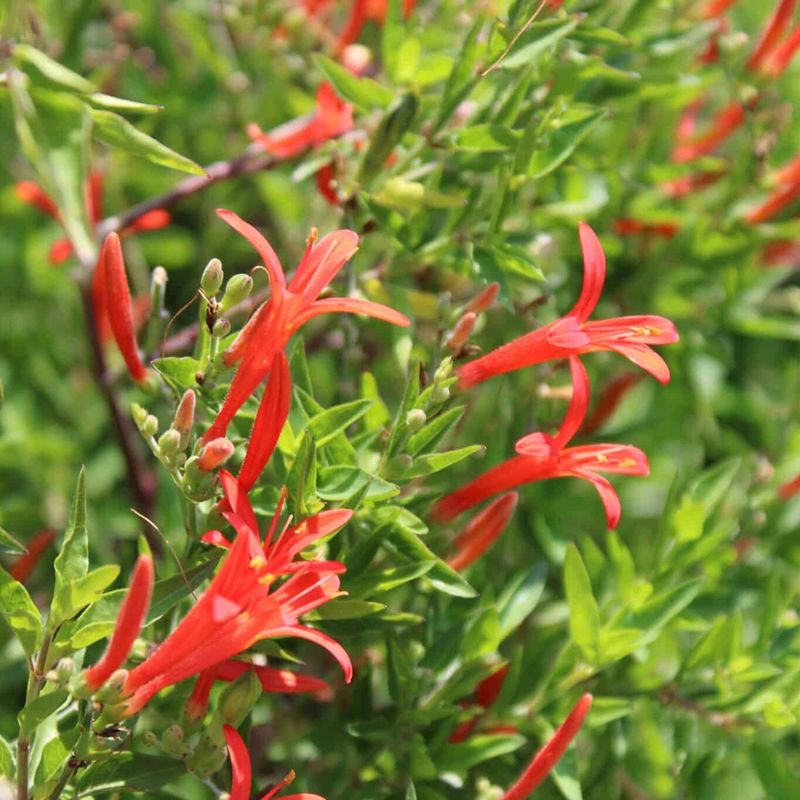
Small but mighty, Flame Acanthus proves great things come in modest packages. This tough Texas native lights up the garden with slim red-orange flowers.
Hummingbirds absolutely adore it. The tubular blooms are made for their long beaks, so they visit again and again. Watching them dart around is pure joy.
Flame Acanthus blooms from summer into fall, right when many plants slow down. That late show keeps your garden colorful for extra weeks. The flowers seem to glow in the evening light.
Heat and drought are no match for this plant. It thrives in dry, rocky soil where pampered shrubs would sulk. Once rooted, it needs hardly any water at all.
The plant stays compact, usually around three feet tall and wide. That size fits nicely in small beds and borders. It also does well in containers on a sunny patio.
Full sun brings out the most flowers. A little afternoon shade is fine in the hottest zones. Either way, it stays cheerful and full of blooms.
Care could not be simpler. A quick trim in late winter keeps it neat and encourages fresh growth. Skip the fertilizer, since it prefers lean soil.
Because it is native, Flame Acanthus supports local pollinators and needs little help to thrive. It fits right into a wildlife-friendly yard. Butterflies join the hummingbirds for the party.
For gardeners who want big color from a small, carefree plant, this one delivers. It brings movement, life, and warm tones to any landscape. Flame Acanthus is a quiet hero worth planting.