The Foam-Like Egg Case on Your New York Shrub Could Hatch 200 Praying Mantises, and Not All of Them Are Welcome
A lump of hardened foam the size of a walnut can hold a few hundred baby predators. I found one glued to my forsythia last winter and honestly mistook it for a bit of packing material.
It sat there through snow, sleet, and freezing wind without budging. That tough little shell is built to protect eggs until spring warms things up.
Let me be straight with you. I almost left it alone because I assumed everything inside was a garden hero. Then I learned that some of the tiny hunters waiting in there arrived here from overseas and have big appetites for bees and butterflies.
Here in New York, three different kinds of these insects leave their eggs on our shrubs, fences, and stems. Each one builds its case a little differently.
So which one is clinging to your bushes right now, and should it stay?
That Foamy Lump on Your Shrub Branch Is Hiding a Crowd
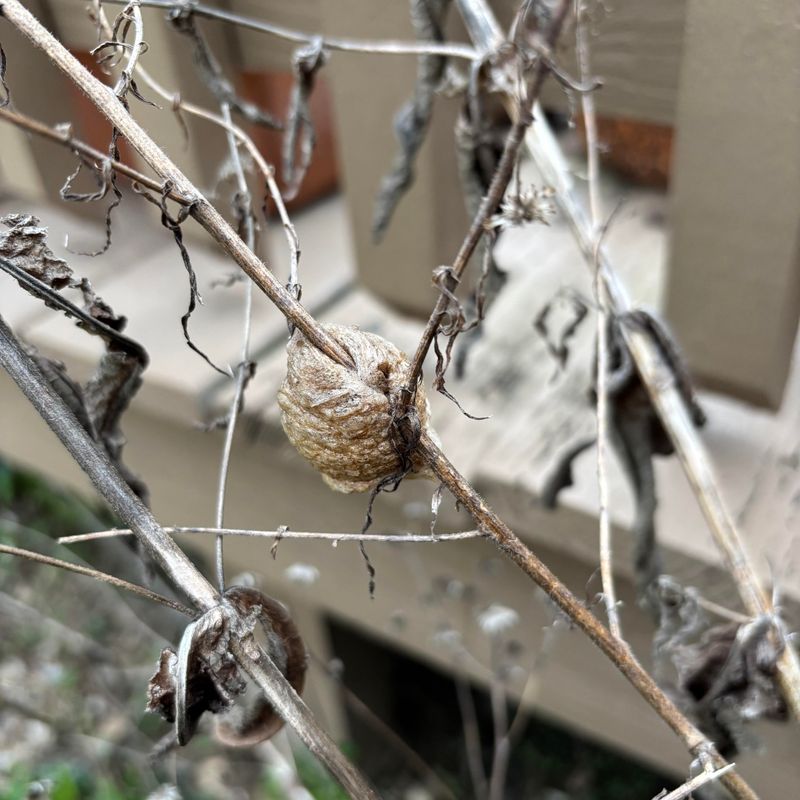
My first guess was wasp nest. A friend thought it looked like spray insulation that blew over from a construction site.
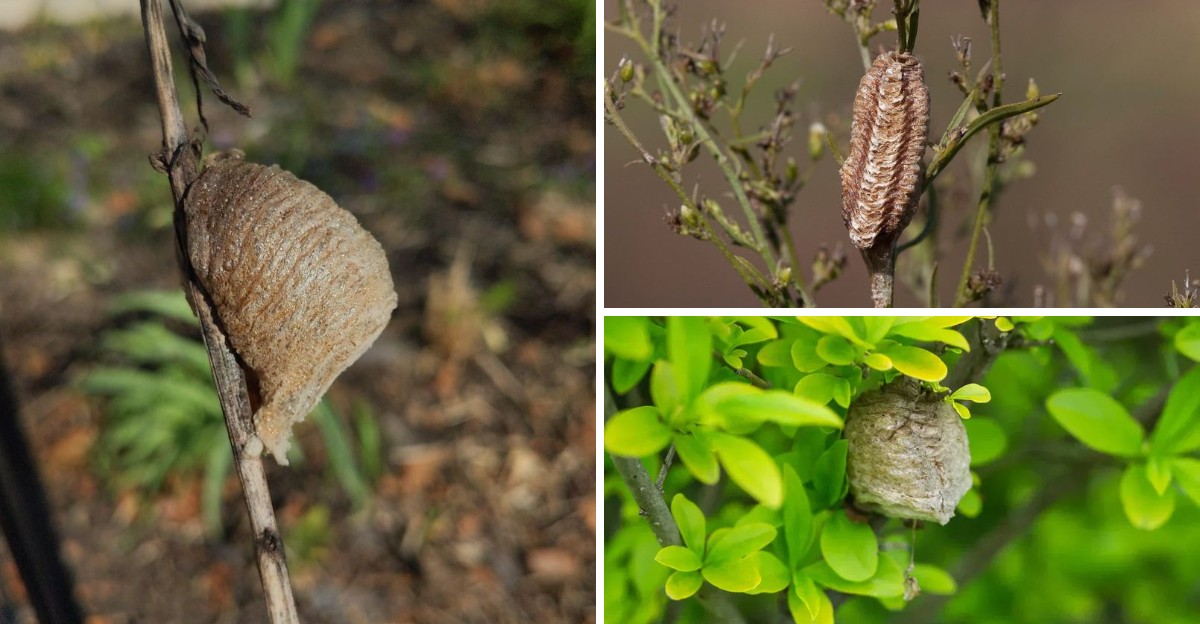
That beige, spongy blob is actually a praying mantis egg case, called an ootheca. A female mantis makes it in late summer or fall by whipping a frothy liquid around her eggs.
The froth hardens into a tough shell that guards the eggs all winter.
You can find these cases on shrub stems, tall flower stalks, twigs, fence posts, and even siding or patio furniture. They usually sit a foot or more off the ground.
Bare winter branches make them easy to spot, so now is a smart time to look.
The number of eggs inside varies a lot. Some cases hold only a few dozen, while larger ones can hold 200 or more.
Cases from the Chinese mantis may produce as many as 300 to 400 babies.
The mother does not return to watch over the case. She usually perishes when cold weather arrives, leaving the shell to do all the work.
When spring warms the air, tiny nymphs squeeze out and scatter to hunt. They look like miniature adults from the start.
So that odd lump is not trash or a fungus. It is a winter nursery, and knowing who built it matters a lot.
Three Different Mantises Leave Egg Cases Around New York
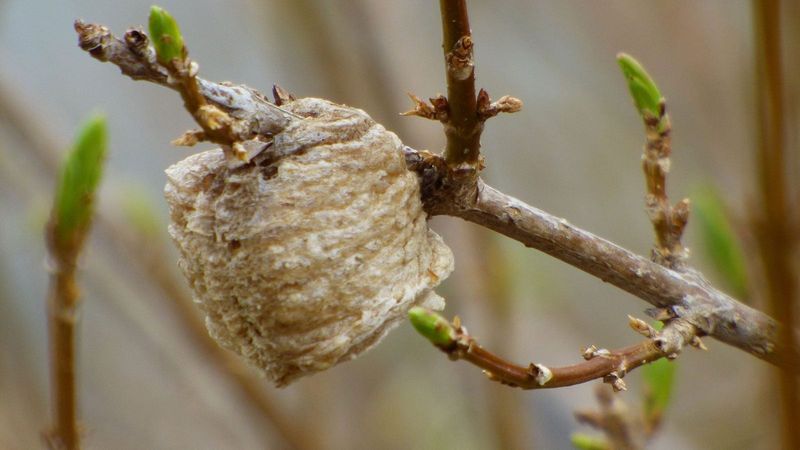
Most folks picture one generic green bug when they hear the word mantis. In reality, our region hosts three main species, and only one of them truly belongs here.
The Carolina mantis is the native one. It is fairly small, usually about two to two and a half inches long, with mottled gray, brown, or green coloring.
It blends beautifully into bark and dried leaves.
The Chinese mantis is the giant of the group. Adults can stretch four inches or more, and they often show tan and green shading.
This species arrived in the United States by accident around 1896, likely in plant shipments near Philadelphia.
The European mantis sits in the middle size range, often bright green or light brown. Look for a dark, bull’s-eye spot on the inner side of its front legs.
It arrived by accident in the late 1800s, likely in nursery stock near Rochester.
Both the Chinese and European species have spread widely across the state and much of the Northeast. Their egg cases now show up in suburban yards, city parks, and farm hedgerows.
Telling these three apart helps you make smart choices. You want the native Carolina mantis in your garden.
The two newcomers are a different story, and their egg cases are where you can make a real difference.
Chinese Mantis Egg Cases Look Like Toasted Marshmallows
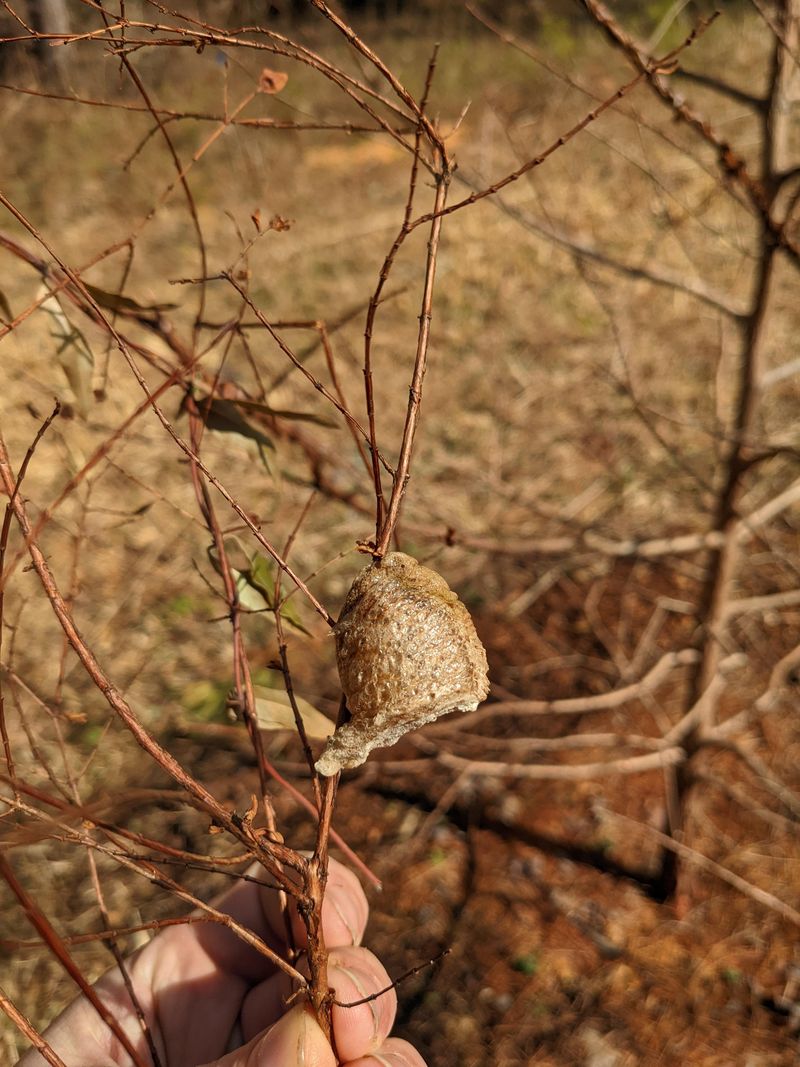
Honestly, the comparison makes me a little hungry. Extension experts often describe the Chinese mantis egg case as a tan toasted marshmallow, and once you see one, the name sticks.
These cases are large, roughly one to one and a half inches long. They look round, puffy, and almost square or cube-like.
The surface feels spongy and light tan, and the case usually wraps right around a twig or stem.
The Carolina mantis case is quite different. It looks long, narrow, and flatter, more like a little rectangle.
Many have a pale stripe or midrib running down the center, and they lean grayish brown.
The European mantis case falls in between. It is oval, pale brown, and solid in color, with visible layers stacked along it, a bit like a tiny rolled pastry.
Here is a quick cheat sheet:
Round and puffy marshmallow means Chinese. Long and flat with a stripe means Carolina.
Oval and layered brown means European.
Snap a phone photo before you do anything. Compare it against pictures from a university extension site or upload it to iNaturalist for a second opinion.
Taking ten seconds to check can save a native mantis family from an honest mistake.
Big Mantises Snack on Monarchs and Bumblebees
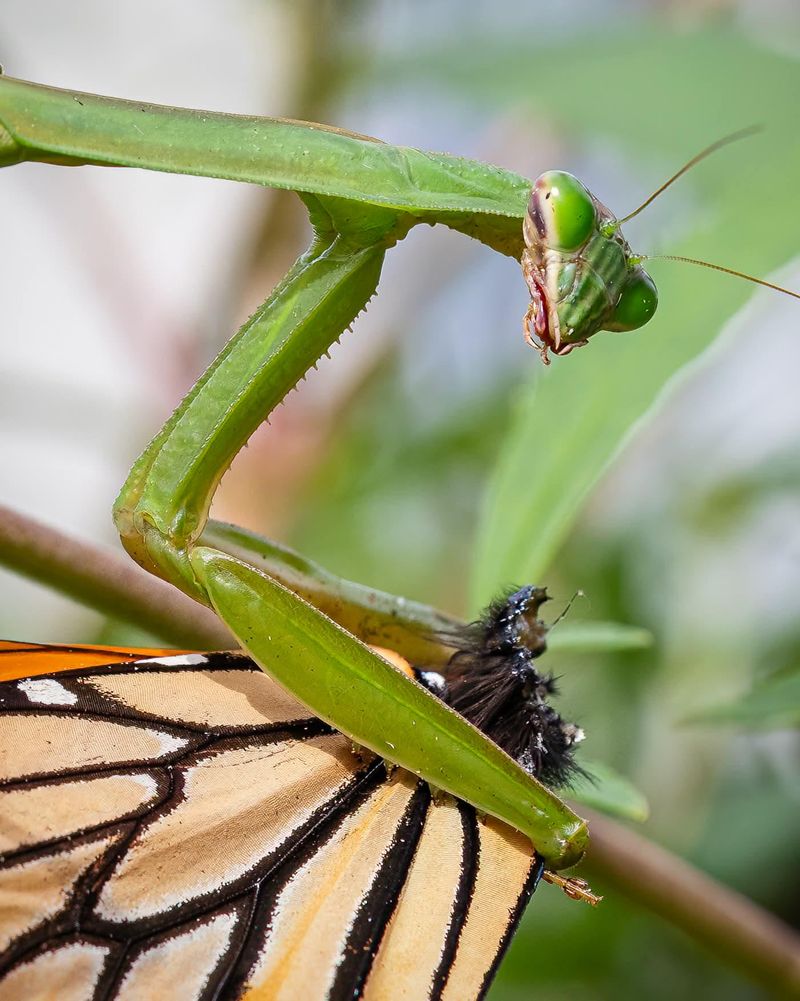
Many gardeners buy mantises hoping for free pest control. The catch is that mantises do not check a menu before they strike.
All mantises are generalist predators. They grab whatever moves within reach, whether it is an aphid, a beetle, a bee, or a butterfly.
Aphids are actually too small to interest the larger adults much.
The big Chinese mantis likes to perch on flowers where pollinators gather. Goldenrod, milkweed, and asters become hunting stations.
Observers in Brooklyn Bridge Park have watched Chinese mantises eating monarch butterflies and other helpful insects.
Bumblebees, native bees, and honeybees end up on the list too. So do other beneficial predators, like ladybugs and smaller native mantises.
Because the Chinese mantis is so large, it also targets things you might not expect.
There are documented reports of Chinese mantises catching small frogs, lizards, and even hummingbirds near feeders. Those cases are not common, but they show how bold this insect can be.
The smaller Carolina mantis eats insects too. Its size keeps it focused on smaller prey, so it has a lighter effect on butterflies and backyard birds.
If you have worked hard on a pollinator garden, this matters. A few huge non-native hunters lurking on your flowers can undo a lot of good effort.
Snip the Twig and Bag the Non-Native Egg Cases
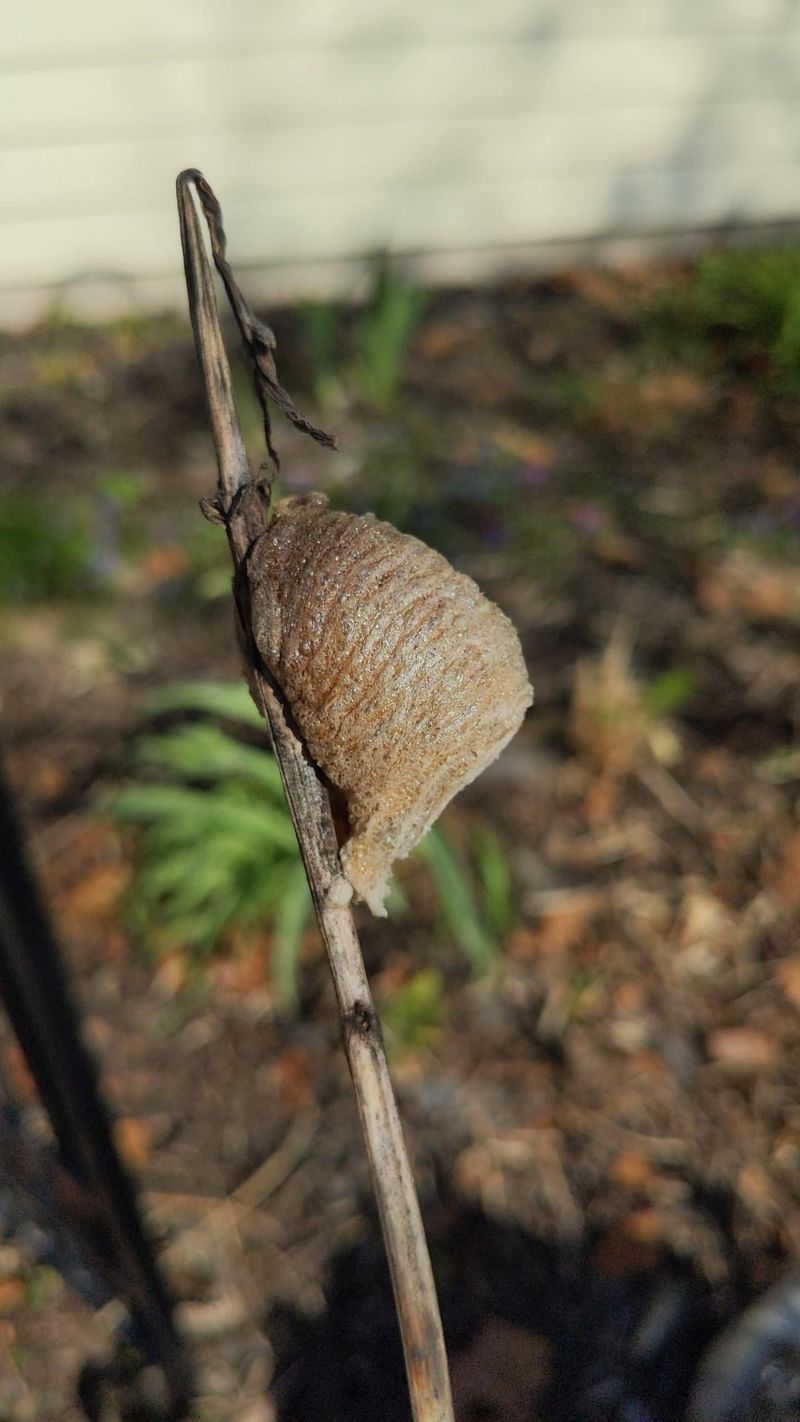
Removing a Chinese mantis egg case takes about one minute. Once you have confirmed what you are looking at, grab some pruners and a zip-top bag.
Clip the twig a little above and below the case. If it is stuck to a fence or wall, gently pry it off with a putty knife.
Try not to damage the shrub more than needed.
From there, you have a few common choices. Many extension sources suggest one of these methods:
Seal the case in a bag and place it in your freezer for several days. Drop it in a bucket of soapy water and let it soak.
Crush it firmly and toss it in the trash.
Skip the compost pile. A case left outside, even on the ground, may still hatch in spring.
Sealing and disposing of it is the surest route.
As a rule, I check my shrubs from December through March. The bare branches make cases easy to see, and nothing has hatched yet.
Waiting until April risks a surprise swarm of tiny nymphs.
Wear gloves if you like. The cases are harmless to people, but some are sticky or prickly to handle.
Bring kids along too, since spotting the cases makes a fun winter scavenger hunt.
Leave the Slim Carolina Mantis Egg Case Right Where It Is
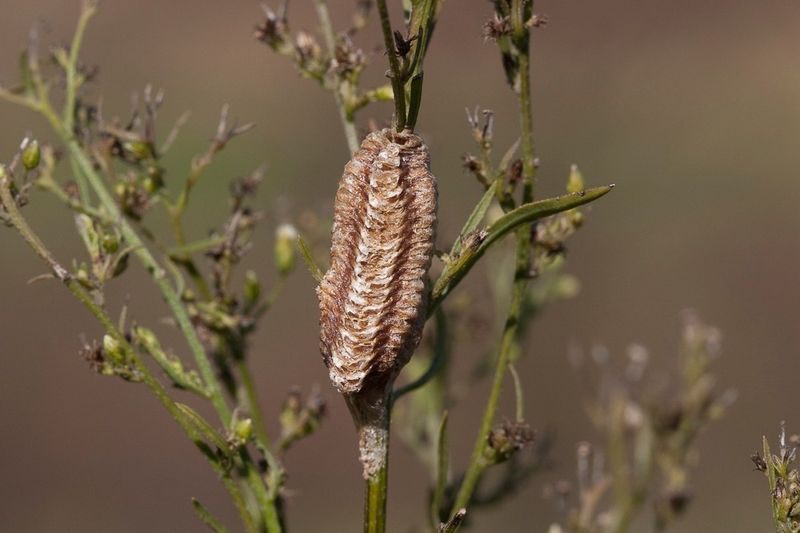
Found a long, flat case with a light stripe down the middle? Congratulations, a native neighbor picked your yard.
The Carolina mantis has lived in North America long before any imported cousins showed up. Its range reaches into southern New York, though sightings are less common here than farther south.
That makes each case a nice find.
Native mantises fit into the local food web in balanced ways. They help with plenty of insects, and in turn they feed birds, spiders, and other wildlife.
Their smaller size means they put far less pressure on butterflies and hummingbirds.
So give that case some space. Avoid pruning the branch it sits on until after the babies hatch in late spring or early summer.
If you must trim, cut around it and leave a short stub with the case attached.
Moving it is possible but risky. If you really need to relocate one, tie the stick to a similar spot outdoors at roughly the same height.
Keep it out of a warm house or garage, since early indoor hatching leaves nymphs with no food.
Now that I think about it, the native mantis may be the quiet winner of this whole story. Clearing out the larger invaders gives it more room and food to thrive.
Store-Bought Mantis Egg Cases Are Usually the Wrong Kind
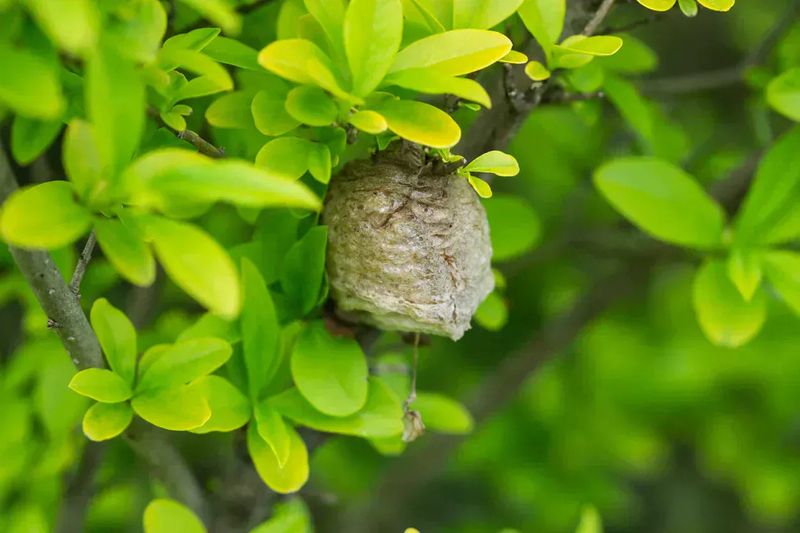
Garden catalogs and online shops love selling mantis egg cases as natural pest control. They often come in cute little boxes with promises of hundreds of bug-eating helpers.
Look closely at the label, though. Most commercial cases come from the Chinese mantis, because it is large and easy to collect.
Buying them adds more of the very species many experts suggest removing.
Researchers have also found that released mantises are not reliable pest managers. The babies scatter, eat each other, and become food for birds and spiders.
Only a small number survive to adulthood, and those adults eat helpful insects as often as pests.
Let me save you some trouble and a little money. Skip the mantis kits and invest in plants instead.
Native flowers like asters, mountain mint, goldenrod, and coneflower attract lacewings, ladybugs, hoverflies, and parasitic wasps.
Those smaller predators target aphids, caterpillars, and mites with far more focus. They stay longer and do steadier work in vegetable beds and flower borders.
For aphid flare-ups, a strong spray of water from the hose often does the job. Hand-picking larger pests also works well on small plantings.
Simple tools and healthy habitat tend to beat a box of mystery hatchlings.
A Winter Walk Past Your Shrubs Pays Off by Spring
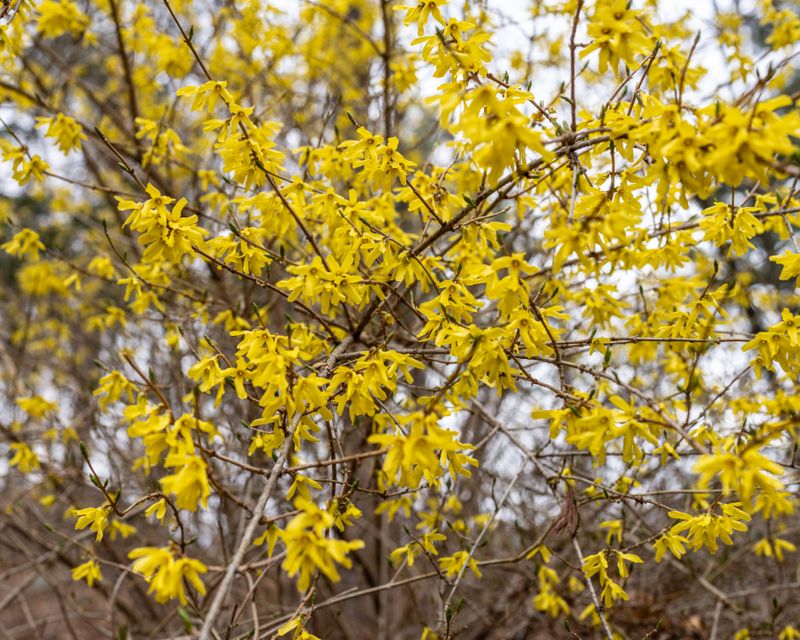
My favorite garden chore happens with a mug of cocoa in hand. Once the leaves drop, I wander the yard and give every shrub a slow once-over.
Start with forsythia, lilac, viburnum, roses, and any tall dried perennials you left standing. Check fence lines, trellises, deck railings, and the undersides of outdoor furniture.
Mantises love sturdy spots about knee to chest height.
Bring your phone and a small bag. Photograph each case, sort it into Chinese, European, or Carolina, and then act.
Remove the non-native cases and leave the slim striped ones alone.
Report what you find, too. Sharing photos on iNaturalist helps scientists track where each species shows up across the state.
Your backyard notes add real data to the bigger picture.
Keep some perspective along the way. Mantises are not villains, and they are fascinating to watch.
Pulling a few non-native cases each year simply helps tilt your yard back toward the bees, butterflies, and native insects that belong here.
One mistake I won’t repeat is ignoring that first foamy lump. Mark my words, a little winter attention means a friendlier, buzzier garden when spring finally rolls around in New York.