The Georgia Shrub That Brings Color When Summer Gardens Start Fading
By the time late summer arrives, many landscapes begin looking quieter than they did just a few weeks earlier.
Spring’s biggest display has faded, familiar shrubs have finished flowering, and it can feel like your garden has already reached its peak for the year. That is often when outdoor spaces start blending together instead of standing out.
Fortunately, not every shrub follows the same schedule. Some wait until the hottest weeks of the season to put on their best show, bringing fresh flowers just when color becomes harder to find.
Choosing one of those plants can keep your landscape looking lively long after many others have faded.
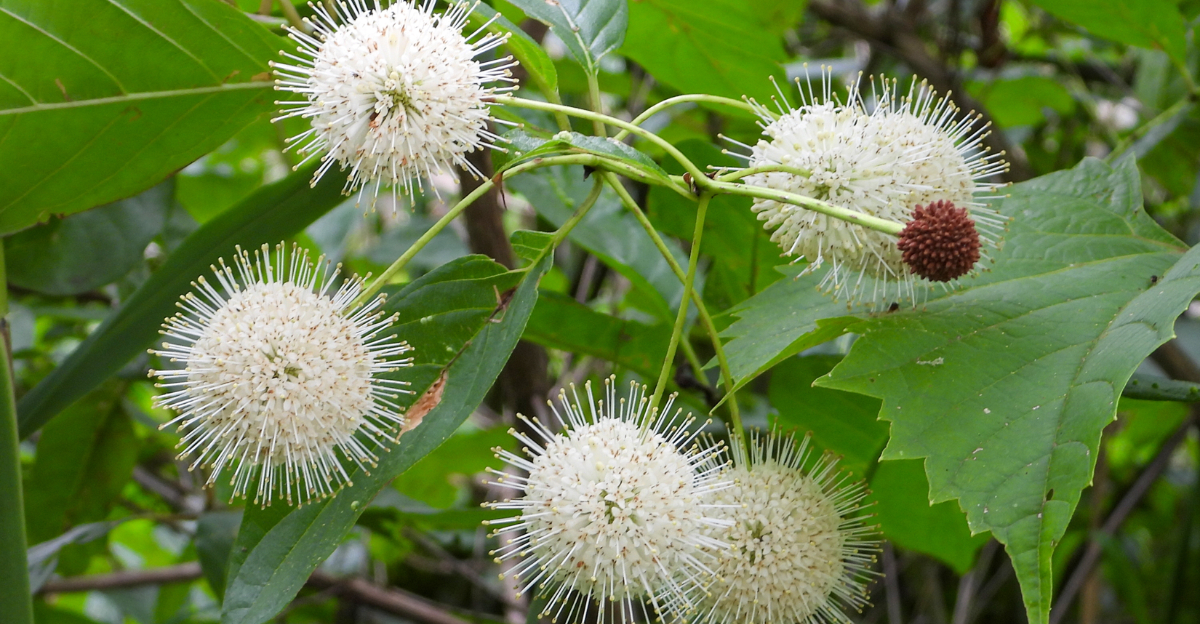
One Georgia native fits that role perfectly. Buttonbush produces unusual globe-shaped flowers through much of the summer, attracts countless pollinators, and thrives with surprisingly little maintenance.
If your landscape always feels like it loses its spark too soon, this is one shrub that can keep the season going.
1. Buttonbush Produces Unusual Globe-Shaped Summer Flowers
Late summer gardens often reach a point where fresh flowers become harder to find. Many shrubs have already finished blooming by early June, leaving plenty of green foliage but very little color.
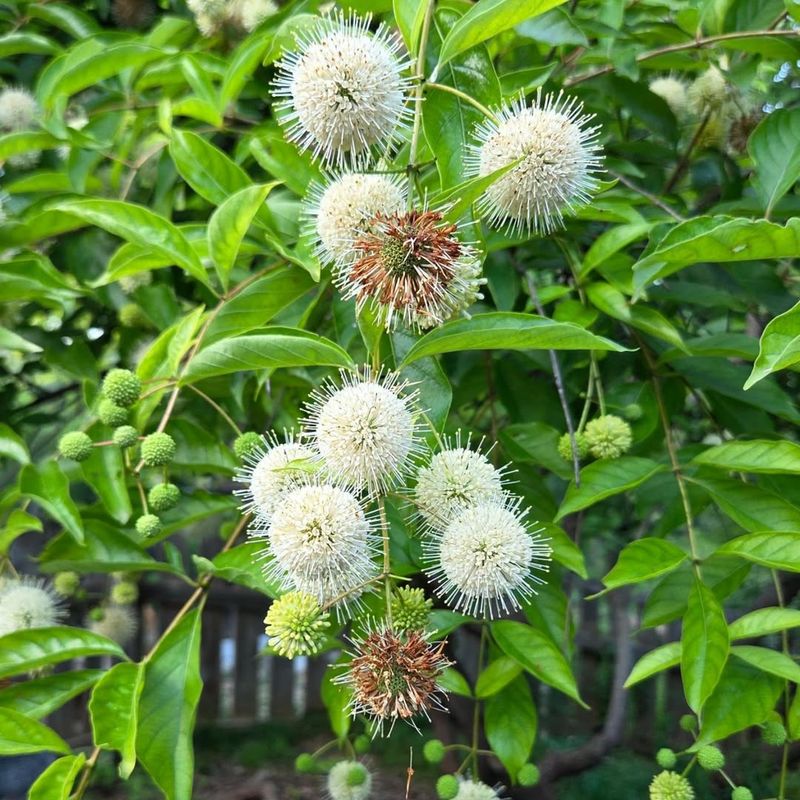
That is one reason buttonbush stands out so quickly once it begins flowering. Instead of producing the familiar clusters or spikes seen on many shrubs, it develops perfectly rounded flower heads that immediately catch your attention.
Each bloom is made up of dozens of tiny white flowers packed tightly together. Long styles extend from every blossom, giving each flower head a soft, pincushion-like appearance.
The blooms usually begin opening in early summer and continue well into July, with some plants flowering into August depending on local weather.
Seeing several of these white spheres scattered across the shrub creates a display unlike almost anything else growing in a Georgia landscape.
Buttonbush naturally grows along streams, ponds, and wetlands throughout much of the eastern United States, including Georgia.
It has evolved to thrive in the state’s warm summers and high humidity, so blooming during the hottest weeks is completely normal rather than a sign of stress.
The flowers also hold up well through heat that causes many other shrubs to slow down. Even during long stretches of hot weather, a healthy plant continues producing fresh blooms instead of fading quickly.
That dependable performance makes buttonbush a valuable addition to landscapes that often lose color as summer progresses.
2. Pollinators Flock To The Nectar-Rich Blooms
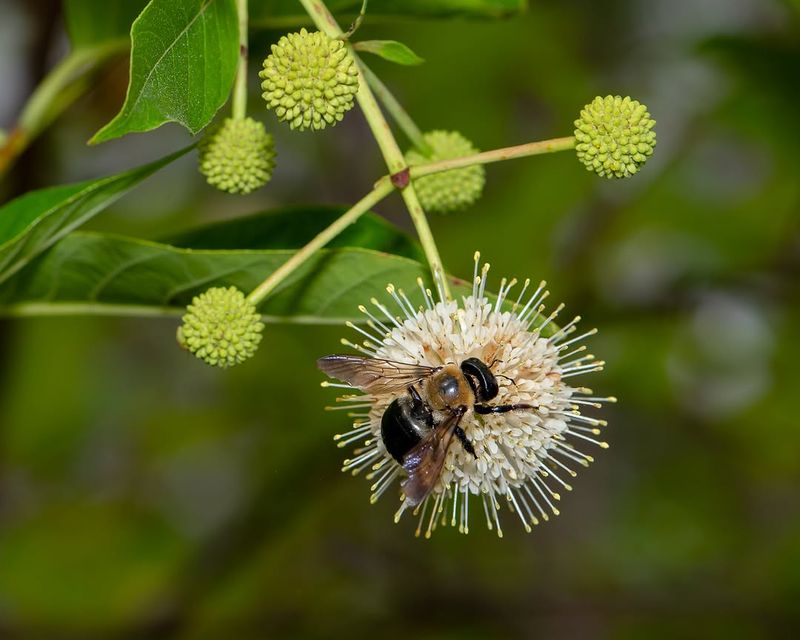
The flowers are not just attractive to people. They quickly become one of the busiest places in the yard once they open.
Every rounded bloom is made up of dozens of tiny flowers filled with nectar, giving insects plenty of places to feed.
Bumblebees are often the first visitors. Honeybees, carpenter bees, and many native bee species soon follow.
Butterflies also spend plenty of time on the flowers, especially swallowtails and skippers. Instead of landing for only a few seconds, many insects move slowly across the entire flower head before flying away.
Your Georgia Garden Changes Every Week. Your Plan Should Too.
Gardening in Georgia changes quickly throughout the season. Every Friday you’ll receive a simple weekly plan showing exactly what to plant, prune, fertilize, harvest, and protect so you never miss the right timing.
That activity becomes even more valuable during midsummer. By then, many spring-blooming shrubs have already finished flowering.
Buttonbush continues offering nectar while other food sources become less common. The result is a shrub that stays full of movement when many parts of the landscape grow quieter.
Each flower head contains dozens of small tubular blossoms. That design allows pollinators to feed from many flowers without leaving the same cluster.
It also explains why bees often remain on one bloom for several minutes.
Adding buttonbush benefits more than wildlife. Pollinators visiting the shrub also travel to nearby vegetables, fruit trees, and flowering plants.
Their daily visits help support better pollination throughout the landscape. A single mature shrub can become one of the most active spots in the yard during the hottest weeks of summer.
3. Wet Areas Become A Perfect Place To Grow It
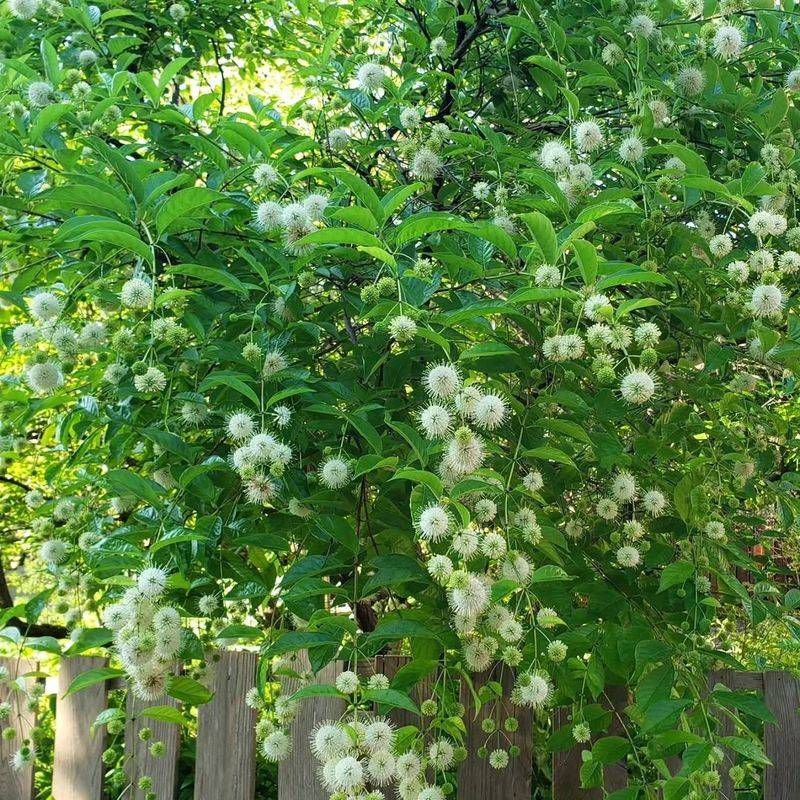
Not every part of the yard is easy to landscape. Low spots often stay damp long after it rains, while areas near ponds or drainage ditches can remain too wet for many shrubs.
Instead of struggling in those conditions, buttonbush naturally thrives there.
In the wild, it commonly grows along stream banks, marshes, ponds, and other moist habitats. Its roots are well adapted to soils that stay consistently damp.
Even occasional flooding is far less of a problem for buttonbush than it is for many ornamental shrubs.
That makes it an excellent choice for rain gardens or places where water tends to collect after heavy storms. Rather than trying to dry those areas out, you can plant something that actually appreciates the extra moisture.
Although buttonbush prefers moist soil, it is not limited to boggy locations. Once established, it also grows well in average garden soil as long as it receives enough water during long dry periods.
Adding mulch around the base helps the soil stay cooler and slows moisture loss during hot weather.
Avoid letting young plants dry out while their roots develop. Regular watering during the first growing season encourages stronger growth and better flowering later on.
4. Long Blooming Season Extends Summer Color
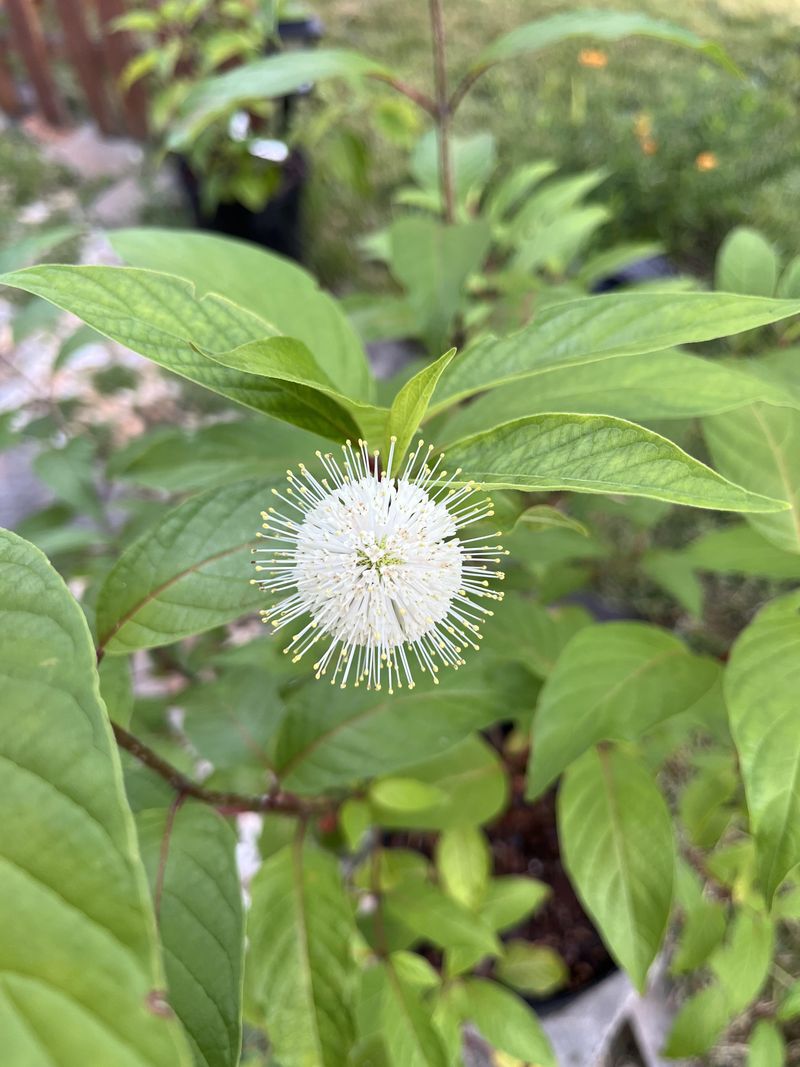
Many flowering shrubs put on a beautiful display, but it is over almost as quickly as it begins. Buttonbush takes a different approach.
Instead of finishing before summer reaches its hottest point, it keeps producing flowers for several weeks.
Blooming usually begins in early summer and continues well into July. In cooler seasons or favorable growing conditions, flowers may even last into August.
Because the blooms do not all open at once, fresh flower heads continue appearing while older ones are still on the plant.
That extended display helps keep the landscape from looking tired. When many spring shrubs have already faded, buttonbush is still covered with bright white flowers.
The rounded blooms stand out clearly against the rich green leaves, adding fresh contrast during the warmest part of the season.
Deadheading is not necessary to encourage more flowers. The shrub naturally moves through its blooming cycle without needing constant attention.
That makes it an easy choice if you want reliable color without adding another maintenance task to your schedule.
Planting buttonbush alongside spring-blooming shrubs also creates a longer season of interest. One group finishes just as the other begins.
Instead of having a noticeable gap between flowering seasons, your landscape continues changing and stays colorful for much longer. That steady transition is one of buttonbush’s biggest strengths.
5. Strong Growth Requires Very Little Maintenance
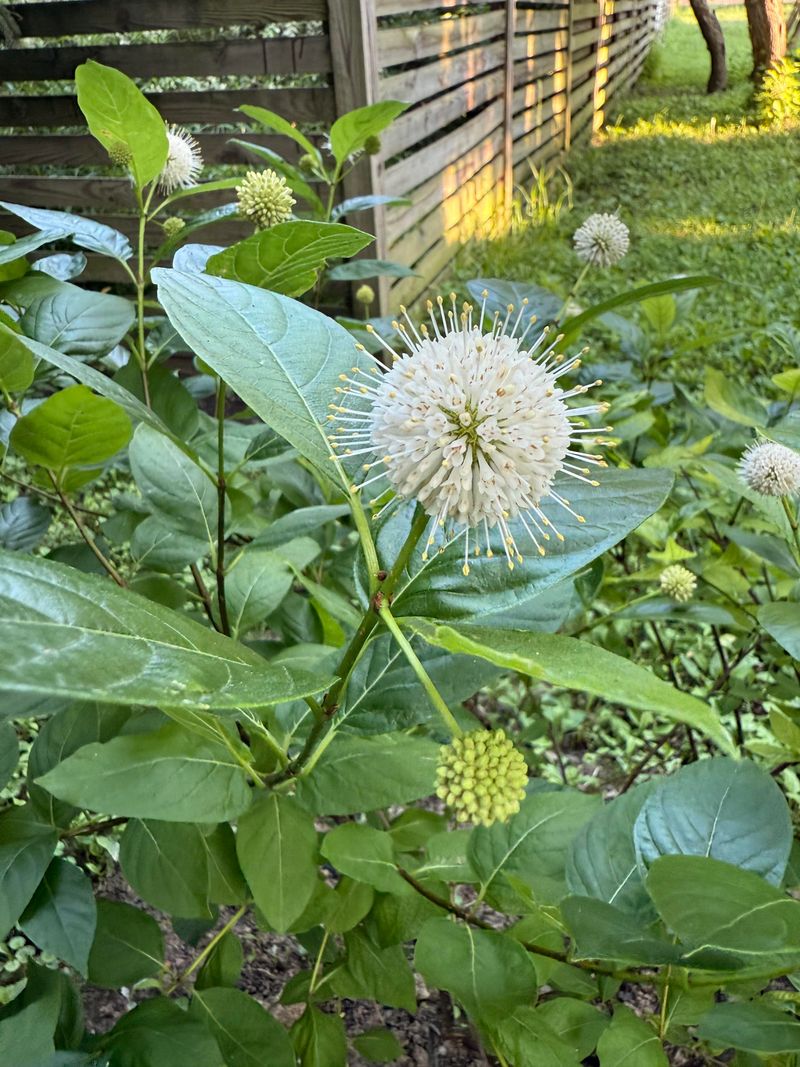
Some shrubs demand regular trimming to stay neat. Others need frequent feeding or constant attention just to look healthy.
Buttonbush is much easier to live with once it becomes established.
Its naturally rounded form requires very little shaping. Most plants develop an attractive structure without regular pruning.
If you decide to trim it, late winter or early spring is the best time. That gives the shrub plenty of time to produce new growth before flowering begins.
Removing broken, damaged, or crossing branches is usually all that is needed. A light cleanup once a year keeps the plant looking tidy without affecting its summer display.
Heavy pruning is rarely necessary unless you are trying to reduce the size of an older shrub.
Buttonbush also does not require frequent fertilizer applications. In most landscapes, healthy soil and a layer of organic mulch provide everything the plant needs to grow well.
Too much fertilizer can encourage excessive leafy growth instead of supporting strong flowering.
After the first growing season, watering becomes much less demanding.
6. Round Seed Heads Extend Seasonal Interest
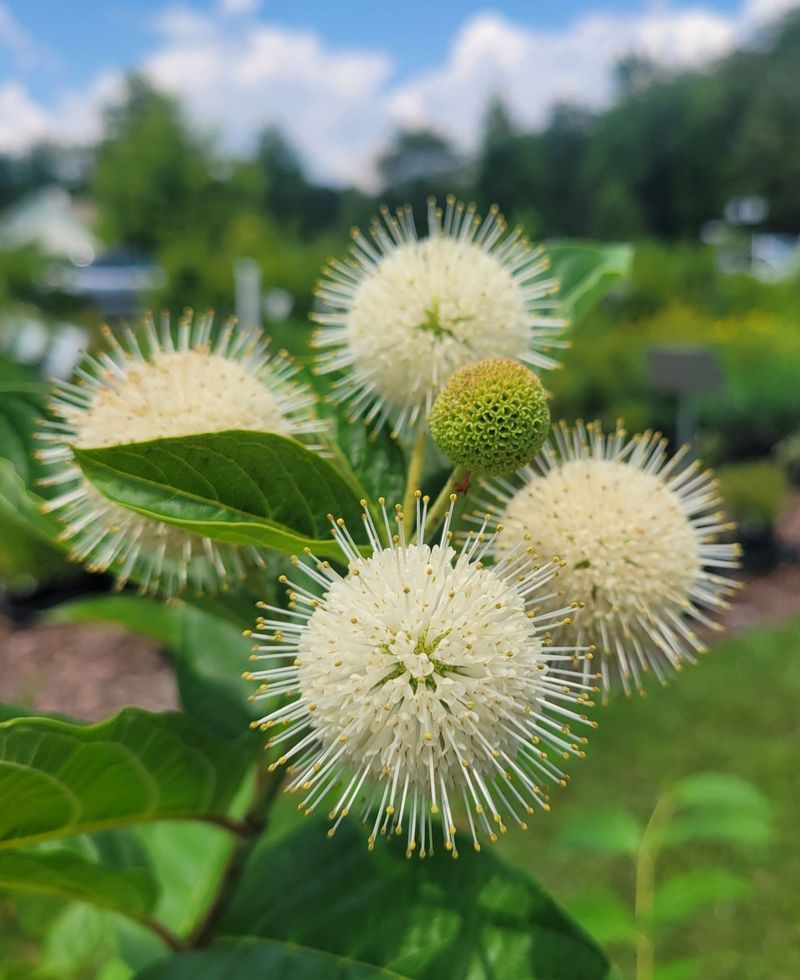
The flowers may steal the spotlight during summer, but buttonbush has another feature that keeps it interesting long after blooming ends. As the white flower clusters fade, they develop into round seed heads that remain on the branches for months.
These small brown spheres add texture when many other shrubs begin looking plain. They create a different kind of display, giving the plant character even after the last flowers disappear.
That extra season of interest is one reason buttonbush works well in naturalistic landscapes.
Many gardeners leave the seed heads in place through fall and winter instead of cutting them off. Besides looking attractive, they provide a food source for several bird species.
Goldfinches, sparrows, and other seed-eating birds may stop by to feed as colder weather arrives.
The sturdy branches also continue giving structure to the landscape after the leaves have dropped. Rather than becoming an empty space in the garden, buttonbush still adds shape until new growth appears the following spring.
If you prefer a tidier appearance, the seed heads can be removed during late winter before fresh growth begins. There is no need to deadhead them earlier, since doing so will not encourage another round of flowers.
Leaving them in place simply allows you to enjoy another feature of this native shrub for several more months.
7. Native Shrub Supports Pollinators And Wildlife
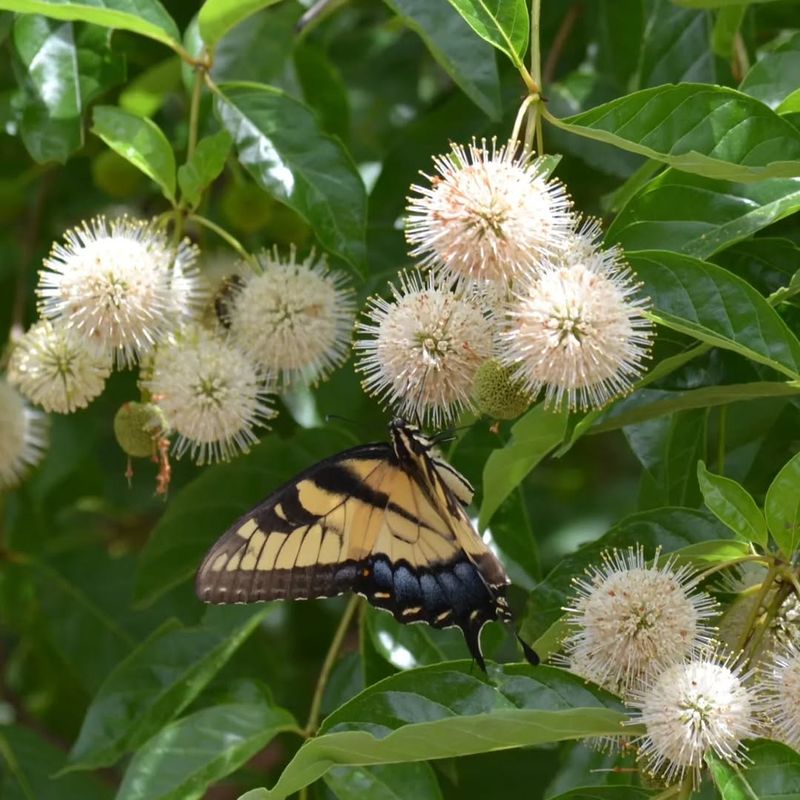
Adding a native shrub does more than fill an empty space in the landscape. It also helps support the wildlife that has evolved alongside it for generations.
Buttonbush is one of those plants that offers benefits well beyond its appearance.
Its nectar-rich flowers attract a wide range of pollinating insects throughout the summer. Bees, butterflies, and other beneficial insects rely on those blooms when many earlier flowers have already disappeared.
A shrub covered with blossoms often stays busy from morning until evening.
Once flowering ends, the plant continues serving a purpose. The seed heads provide food for birds later in the season, while the dense branching offers shelter for small wildlife.
Even when the shrub is no longer in bloom, it remains a useful part of the landscape.
Because buttonbush is native, it fits naturally into local ecosystems. It supports insects that many non-native shrubs do not, creating a healthier balance in the garden.
Those insects, in turn, become an important food source for songbirds and other wildlife.
You do not need a large property to see those benefits. Even a single buttonbush can attract plenty of activity throughout the growing season.
It is a simple way to add lasting summer color while creating a landscape that supports nature instead of simply decorating it.