The Giant Yellow Stranger Draping South Carolina Porches In Golden Webs Is Mostly Harmless
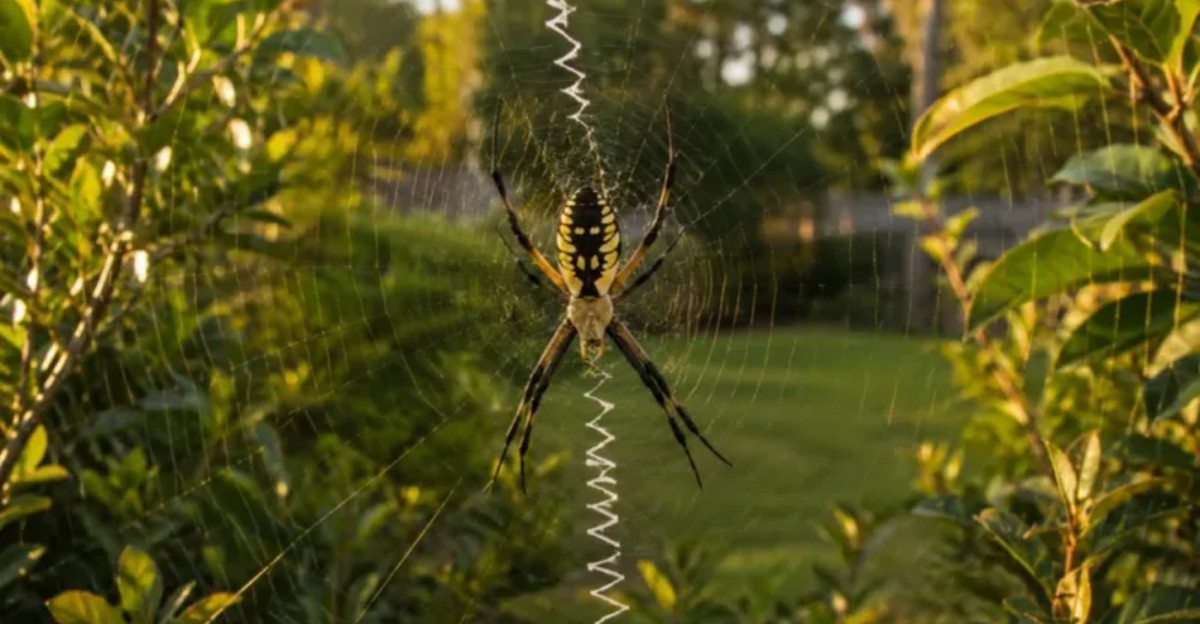
Some porch webs are so strong that scientists have tested the silk for use in medical research. The thread even glows a soft gold when the sun hits it right.
Every late summer, I walk out my back door and find a new curtain of shimmering silk stretched between the railing and the crepe myrtle. Sitting right in the middle is a long-legged creature bigger than my palm. Not going to lie, the first time I saw one, I backed up so fast I spilled my coffee.
You have probably met one too if you live anywhere in South Carolina. They show up on porches, mailboxes, and garden paths like uninvited houseguests who refuse to leave. They look fierce, with banded legs and a bold yellow body.
Truth is, I spent years swatting these webs down before I learned who was living in them. So who is this golden weaver, and should you actually worry?
That Big Yellow Spider In The Golden Web Has A Name You Might Know
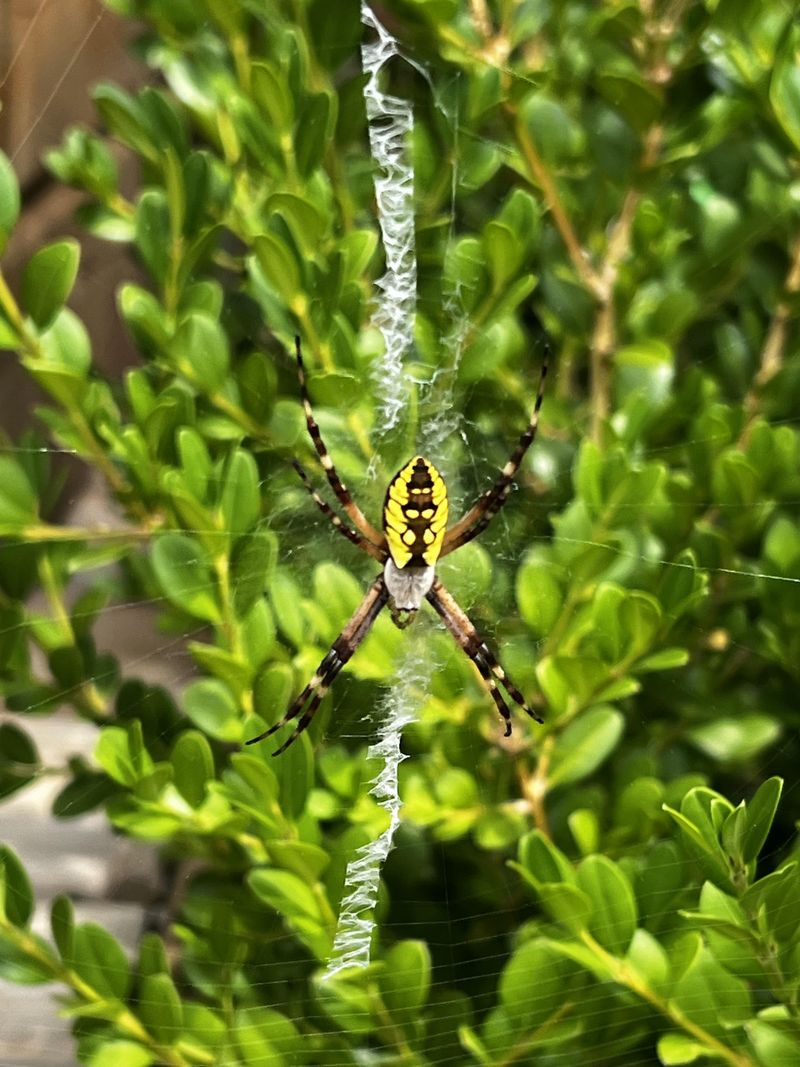
Most folks around here call her the banana spider. Her real name is the golden silk orbweaver, and scientists know her as Trichonephila clavipes.
She is a native spider that has lived across the Southeast for a very long time. Clemson Extension notes she is common in coastal areas and the Lowcountry, though she turns up farther inland too. The big one you see is almost certainly a female, since males are tiny and easy to miss.
Here comes the twist. A second golden weaver has moved into the state over the past several years. The Joro spider, Trichonephila clavata, is a cousin from East Asia that first appeared in Georgia around 2013 and has spread into the Upstate and other parts of South Carolina.
Both species spin yellowish silk and grow to an impressive size. Both also share one important trait for anyone holding a broom. Neither one is considered a real threat to people or pets.
So when you spot that golden curtain, you are most likely looking at one of these two. Knowing which one helps, and we will get to that. For now, take a breath and enjoy the view from a polite distance.
A Banana Spider Bite Is Usually No Worse Than A Bee Sting
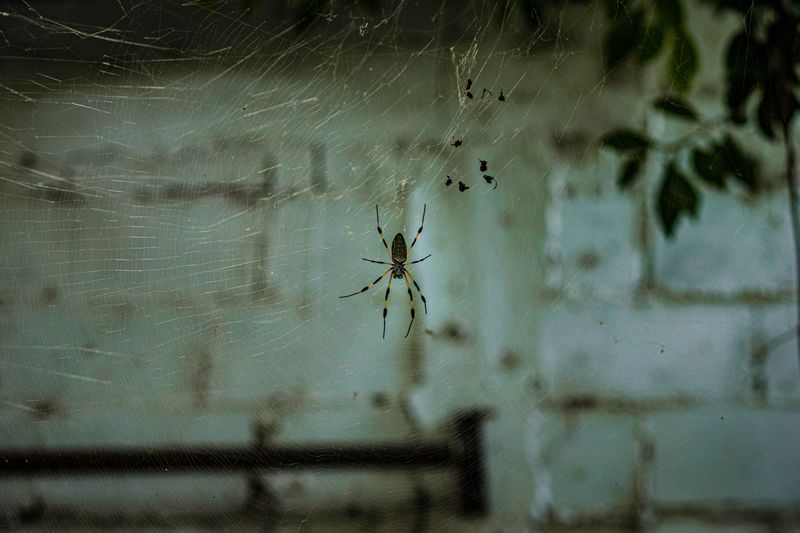
Call me cautious, but the first thing I wanted to know was whether these spiders bite. They can, but it almost never happens.
Golden silk orbweavers are shy, slow to react, and focused on their webs. A bite usually only occurs when someone grabs or pinches the spider. Even then, extension experts describe the venom as mild, with effects similar to or less than a bee sting.
Expect some redness, a little swelling, and short-lived soreness. Wash the spot with soap and water and add a cool compress. Most people feel fine within a day.
Of course, anyone with allergies to insect stings should keep an eye out for unusual reactions. Trouble breathing, spreading swelling, or hives deserve a quick call to a doctor. That rule applies to any bite or sting, not just spiders.
Part of the fear comes from a name mix-up. The Brazilian wandering spider is sometimes called a banana spider too, and that one carries a serious bite. It lives in Central and South America, though, not on porches here.
Joro spiders also have weak fangs and are known for being timid. Many freeze or drop away rather than fight.
Fuzzy Leg Tufts Or Silver Stripes Tell You Which Golden Weaver Moved In
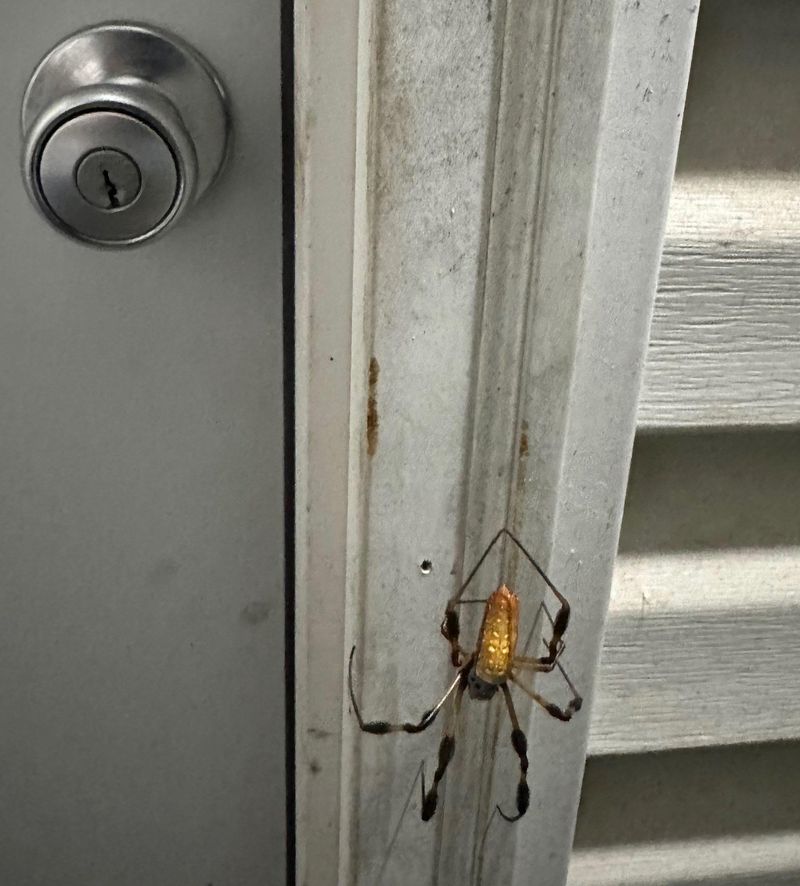
Grab a flashlight and take a closer look. The legs are the quickest giveaway.
The native golden silk orbweaver has long, banded legs with fuzzy black tufts that look like little bottle brushes. Her abdomen is long and yellowish to orange-tan, often with small pale spots. The front body section has a silvery sheen.
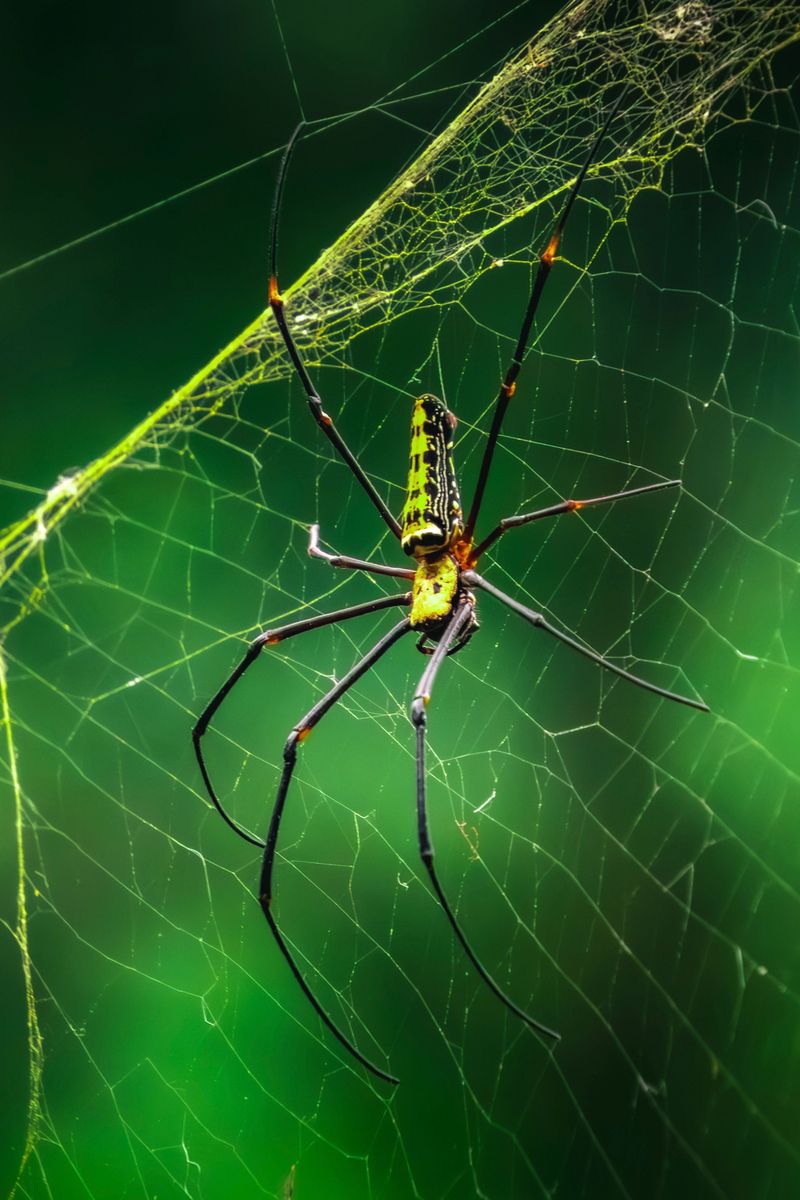
Joro spiders skip the leg tufts. Their abdomens show bold yellow and blue-gray bands, and many females have a bright red patch on the underside. Their legs are banded in yellow and black but look smooth.
Size is similar for both. With legs stretched out, an adult female of either type can span three to four inches, sometimes a bit more.
The webs look alike at first glance from the yard. Each builds a large orb web with extra tangled threads around it, and the golden tint shows up in both. Joro webs often appear in big clusters along power lines and fences.
Snap a clear photo if you are curious. Clemson Extension and local naturalist groups welcome sightings, and identifying your visitor makes summer evenings on the porch a lot more fun.
Those Shimmering Golden Webs Are Tougher Than They Look
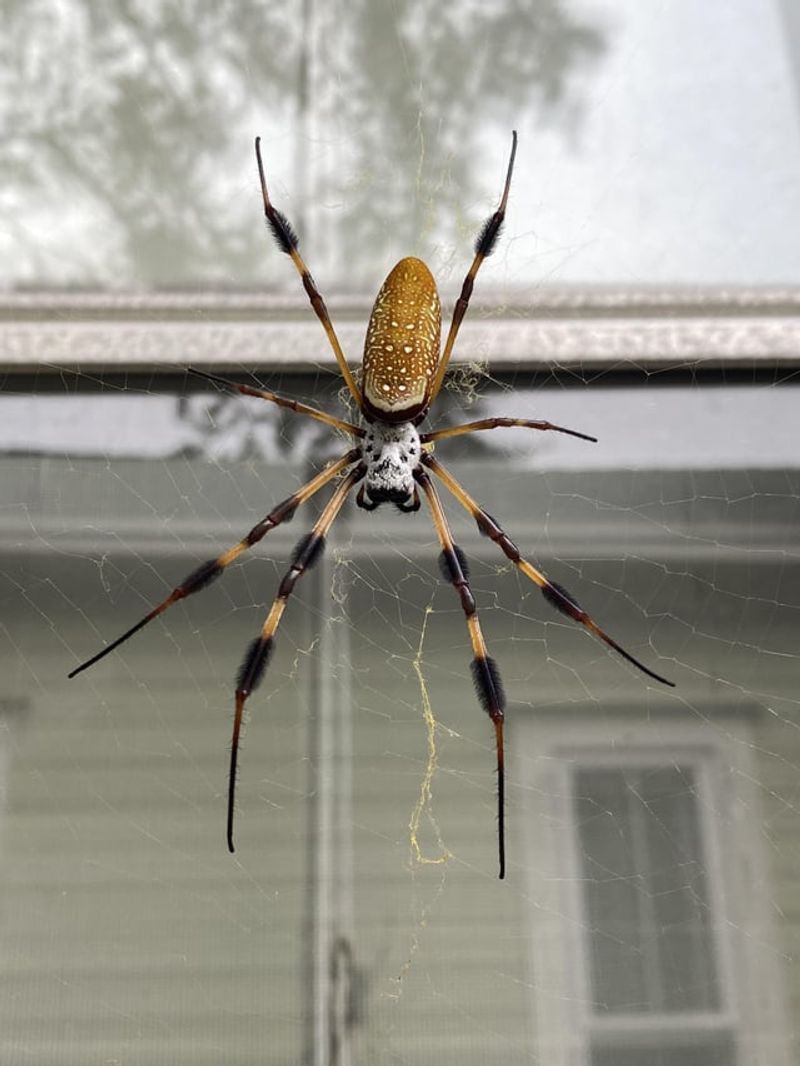
Walk through one of these webs and you will feel the difference right away. The silk is surprisingly strong and almost springy.
Golden silk orbweaver webs can stretch several feet across, with anchor lines running even farther. Researchers believe the yellow color may help attract insects that are drawn to bright tones while also blending into dappled sunlight. That idea is still being studied, so treat it as a likely explanation rather than a settled fact.
Scientists have tested this silk for its blend of strength and stretch. Some studies have even explored using spider silk for nerve repair and other medical projects. Not bad for something hanging off your gutter.
Many females do not tear down their whole web each day. Instead, they repair sections as needed, so a single web may stay up for a long stretch. That is why the same spider seems to live on your porch for weeks.
Look closely and you may spot leftover insect wrappings stored along one side. Tiny male spiders and small thief spiders often hang around too, sneaking bites of the catch.
Morning dew makes the whole structure sparkle. It is one of the prettiest free shows in the garden.
Your Mosquitoes And Garden Pests Meet Their Match In These Webs
I’m a sucker for any helper that works for free. These spiders put in long shifts catching bugs I would rather not have around.
Golden silk orbweavers trap a wide range of flying insects. Mosquitoes, flies, moths, small beetles, stink bugs, and even grasshoppers end up wrapped in silk. Large webs mean a large catch area.
That steady munching helps balance insect numbers in your yard. No spray bottle needed, and no harm to the bees visiting your zinnias in most cases. Larger insects like big wasps sometimes break free from the web anyway.
Spiders also become food for birds, lizards, and wasps that hunt them. So a yard with healthy spider numbers supports a busier, more diverse little ecosystem. Wrens and chickadees especially appreciate the protein.
Skipping broad insecticide treatments helps keep these helpers around. Sprays tend to hit beneficial creatures just as hard as pests. Spot treatments for true problems are a smarter choice.
Next time you notice a moth caught in a golden web, give the spider a small nod of thanks. She is quietly guarding your tomatoes while you sip iced tea on the steps.
Late Summer Is When These Orb Weavers Grow Into Porch Giants
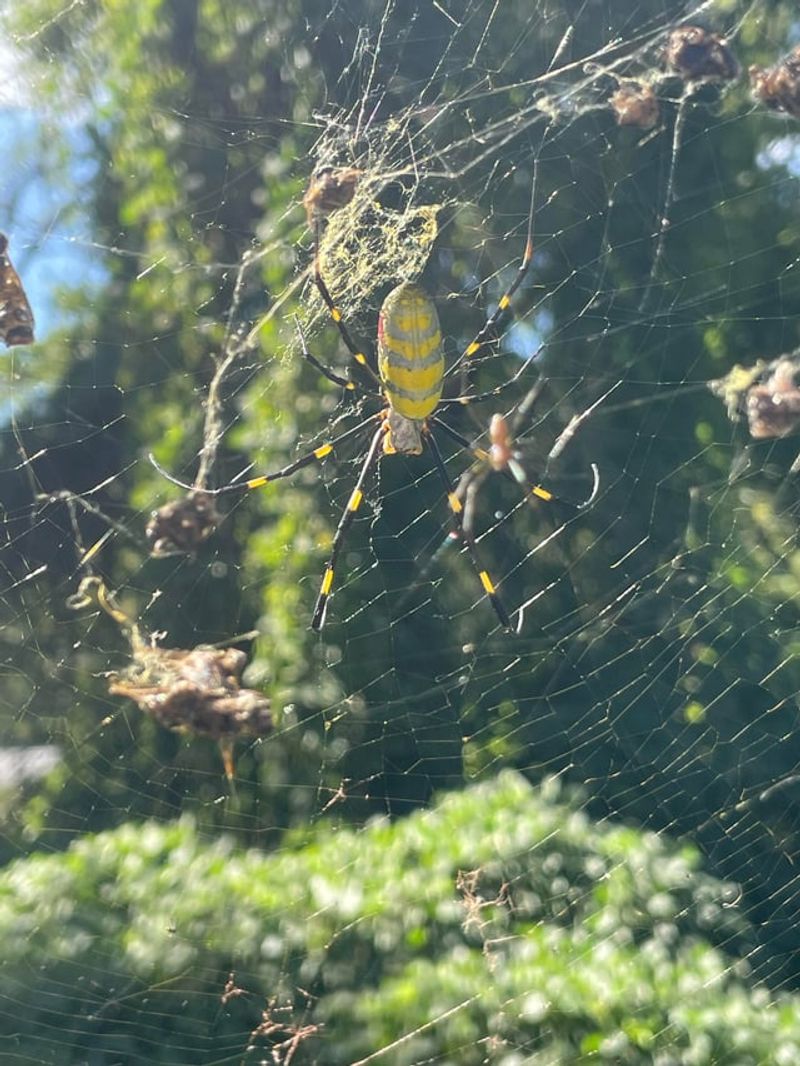
Here is something that fooled me for years. These spiders do not suddenly arrive in August. They were there all along, just very small.
Spiderlings hatch in spring from egg sacs left the previous fall. Through early summer they stay tiny and build modest webs that are easy to overlook. By late summer, the females have grown into the big golden giants that stop you in your tracks.
In much of South Carolina, sightings peak from August through October. Webs get larger as the spiders mature, and the females become more visible as they prepare to mate and lay eggs. Joro spiders follow a similar timeline.
Each spider lives roughly one season. Once cold weather settles in, adults decline and fade away, leaving egg sacs tucked on nearby bark, eaves, or leaves. Those sacs wait out winter and hatch when things warm up.
Coastal areas with mild temperatures may see spiders hang on a little longer into fall. Upstate yards usually see them disappear sooner after the first frosts.
So if your porch feels crowded right now, relax. The show is seasonal, and the cast changes every year.
Move That Doorway Web Gently And Let The Golden Weaver Rebuild Elsewhere
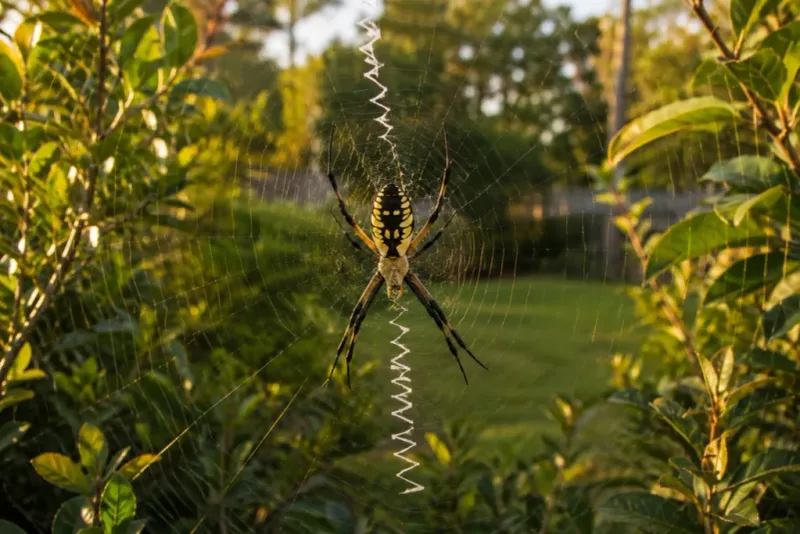
Fair warning, a web across your front steps is no fun at seven in the morning. Luckily, you have easy options that keep everyone happy.
Grab a long stick or broom handle. Gently let the spider climb onto it, then carry her to a shrub, tree, or fence corner away from foot traffic. She will usually spin a fresh web within a day or two.
Wearing gloves adds peace of mind, though bites are rare. Move slowly and avoid squeezing the spider. A calm transfer works far better than a frantic swat.
Porch lights draw insects, which draws spiders. Switching to yellow bug bulbs or turning lights off at night can make doorways less appealing. Trimming shrubs back from walkways helps too.
For Joro spiders, Clemson experts suggest no need for panic or spraying. Researchers are still studying how they affect native wildlife, so reporting sightings is more useful than reaching for chemicals.
My best advice is simple. Leave webs alone wherever they cause no trouble and enjoy the view. These golden weavers are temporary guests who leave your garden with fewer bugs and a lot more sparkle.