The Hidden Iris Borer Clue Michigan Gardeners Miss Until The Rhizomes Turn Mushy
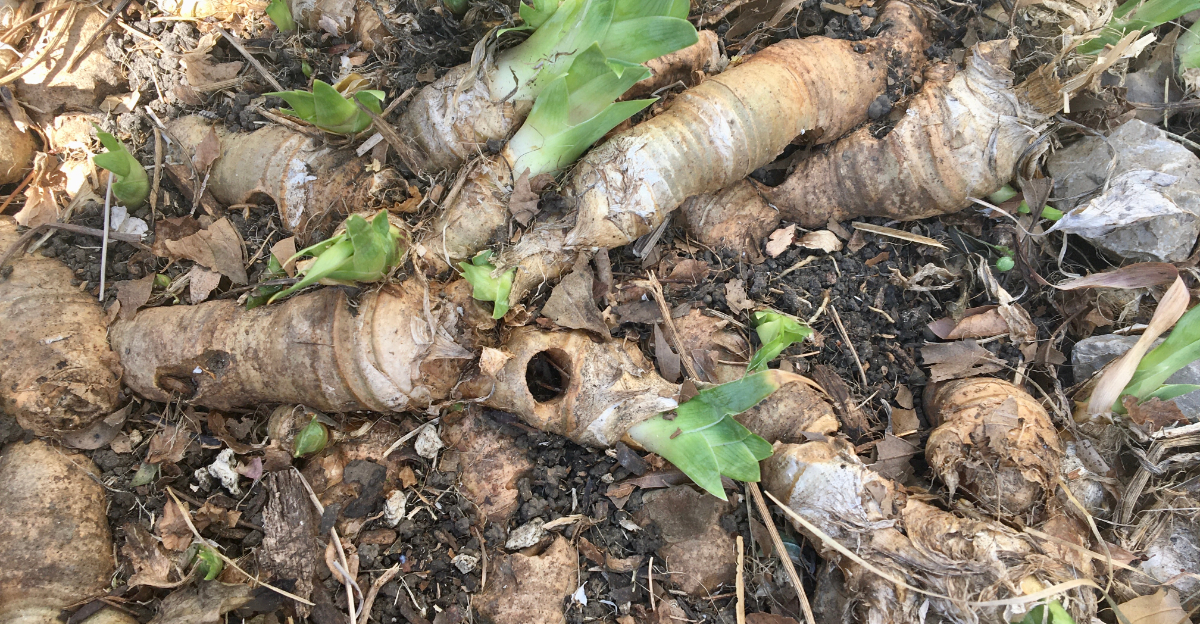
Every spring, Michigan gardeners watch their irises struggle and blame the usual suspects. Bad soil. Too much shade. A rough winter. Nobody suspects what’s really happening underground.
Something is already inside the plant. It moves slowly, quietly, working its way toward the rhizome long before anyone notices a problem.
By the time the damage shows on the surface, the rot has often already set in. What starts as a small mark on a single leaf can end with a soft, collapsing plant days later.
The warning signs are there from the very beginning. Most gardeners just don’t know where to look, and that first clue on the leaf blade is easy to miss.
A Faint Streak Along The Leaf Blade Signals Trouble Below
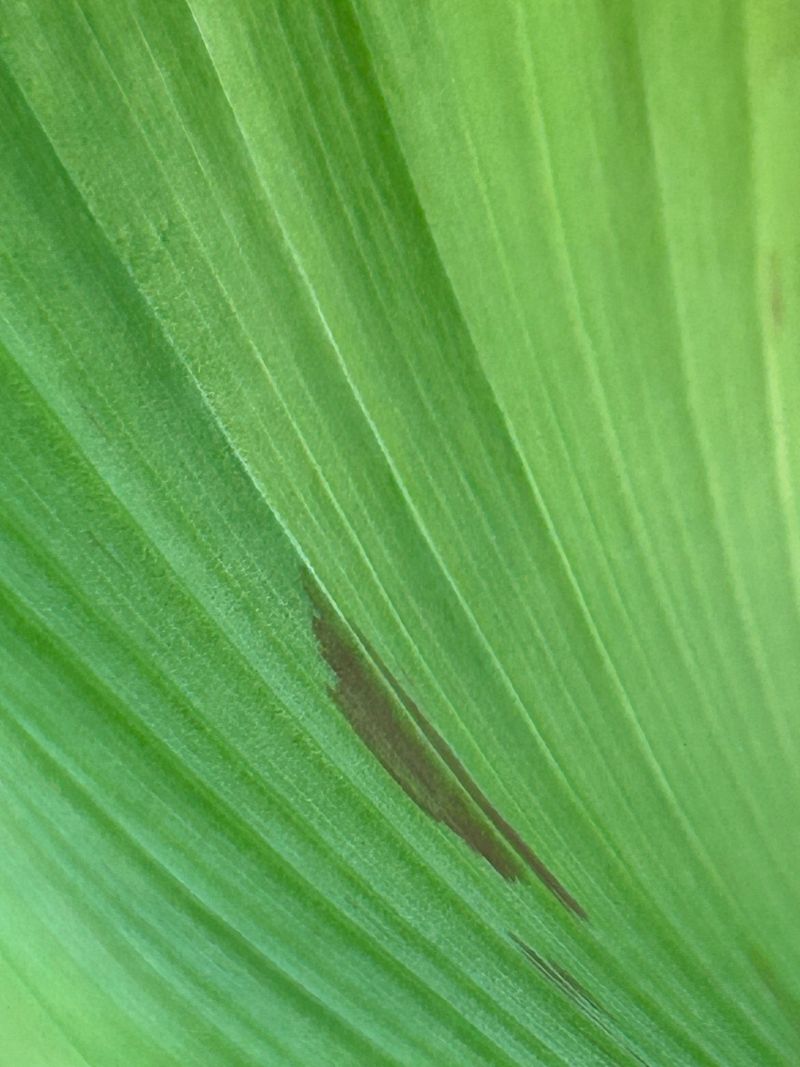
That pale streak on your iris leaf is not a water stain. It is the first clue that an iris borer has hatched and started tunneling inside the leaf tissue.
The streak looks almost like a thin, watery line running along the leaf edge. Michigan gardeners often mistake it for a splash mark from rain or irrigation.
Up close, you might notice the leaf edge looks slightly ragged or chewed. That damage is where a tiny caterpillar, barely the size of a grain of rice, chewed its way inside.
The larva moves downward through the leaf toward the base of the plant. As it travels, it leaves a trail of frass, which looks like dark, wet sawdust packed inside the leaf.
The tunnel widens slightly with every passing week. What began as a hairline mark can stretch several inches down the leaf by late spring.
Squeezing the leaf gently between your fingers can sometimes reveal a firm lump where the larva is hiding. Finding it this early gives you a real chance to stop the damage before it reaches the rhizome.
Catching this clue in April or early May, when iris borer eggs are hatching, is the smartest move a gardener can make. Most people walk right past this warning sign every single season.
Michigan Gardens See This Warning Sign Every Spring
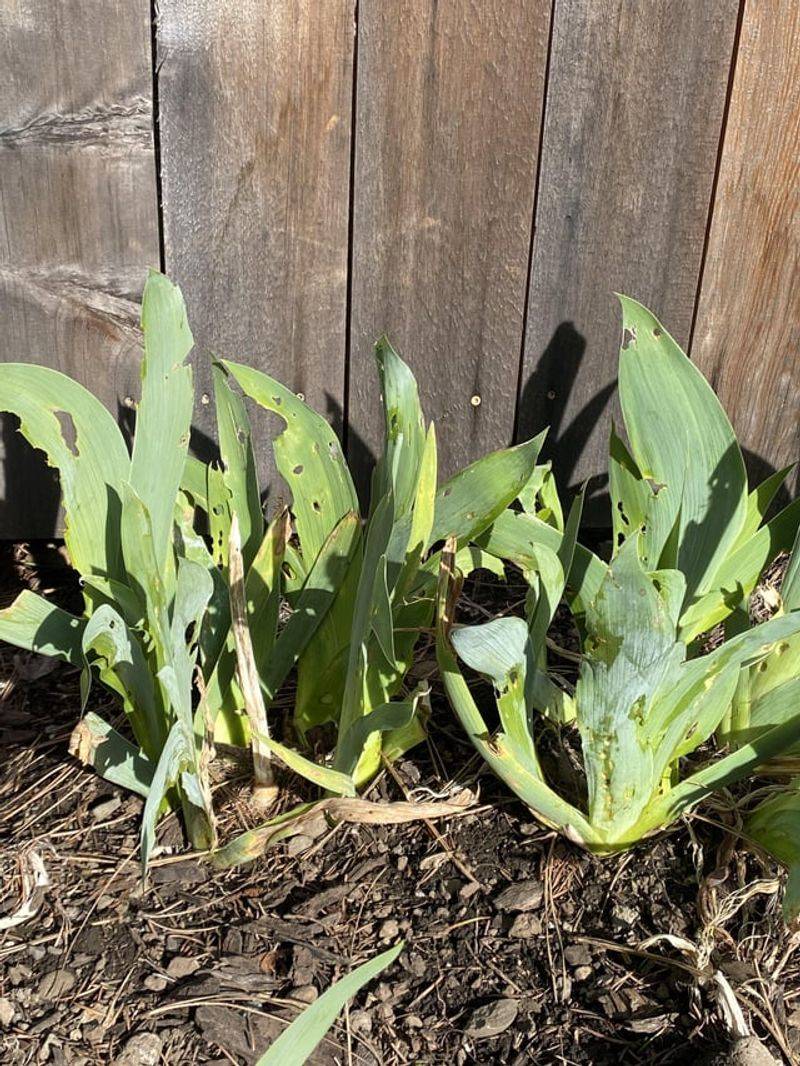
Spring in the Midwest arrives fast, and so does the iris borer. Eggs laid the previous fall begin hatching right as new iris leaves push up through the soil.
The timing is tricky because gardeners are usually focused on cleanup, not pest scouting. Raking out old leaves and debris feels productive, but the real threat is already unfolding above ground.
Newly hatched larvae are incredibly small, about two millimeters long. They crawl onto fresh foliage and chew through the leaf surface before disappearing inside the plant tissue.
This early stage is also the most fragile point in the pest’s life cycle. A larva this size has no real defense, which makes the next few weeks your best window to act.
The warning sign to watch for is a ragged, water-soaked edge along the outer leaf margin. It appears in April and can spread quickly if multiple larvae are feeding at once.
Your Michigan Garden Changes Every Week. Your Plan Should Too.
Gardening in Michigan changes quickly throughout the season. Every Friday you’ll receive a simple weekly plan showing exactly what to plant, prune, fertilize, harvest, and protect so you never miss the right timing.
Many Michigan gardeners in the region report noticing wilted or streaked leaves but assume frost damage is the cause. That assumption costs weeks of response time while the larva keeps moving downward.
Scouting your iris bed weekly from mid-April through late May puts you ahead of the problem. The iris borer does not take breaks, so neither should your inspections during peak hatching season.
Once you train your eye to spot this spring warning, protecting your plants becomes much more manageable. Awareness is the first tool in your pest control kit.
Fungal Sprays Rarely Stop The Real Culprit
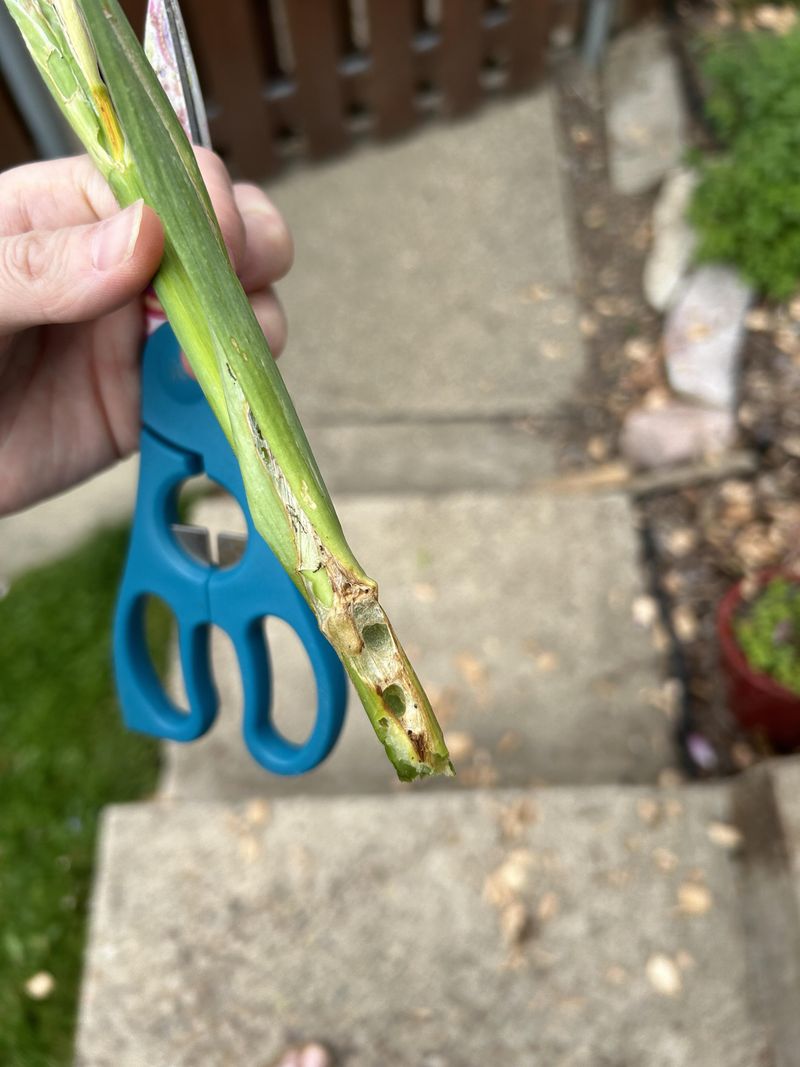
Soft rot on irises looks exactly like a fungal problem. The leaves yellow, the base turns mushy, and a foul smell rises from the soil.
It makes sense that gardeners reach for a fungicide first. The symptoms match what most plant disease guides describe as bacterial or fungal rot.
But spraying the foliage with antifungal products does almost nothing to address the actual source of the trouble. The real problem is a caterpillar tunneling through the rhizome below the surface.
Bacterial soft rot often follows borer damage because the chewed tissue creates an open wound. Pathogens enter through those wounds and spread rapidly in warm, wet conditions.
Treating the rot without removing the larva is like mopping a floor while the faucet is still running. The rot will keep coming back until the borer is gone.
Spinosad-based insecticides applied to the foliage in early spring can interrupt the larva before it reaches the rhizome. Timing matters more than the product itself.
Neem oil is another option that can slow feeding larvae on leaf surfaces. Neither solution works once the borer has already burrowed deep into the root system.
Understanding the iris borer life cycle helps you choose the right response at the right moment. Fungal sprays are not wrong, they are just aimed at the symptom, not the source.
Weeks Pass Before The Damage Becomes Visible

One of the cruelest parts of an iris borer infestation is how long it stays hidden. The caterpillar spends weeks feeding inside the plant before any visible collapse occurs.
By the time leaves start yellowing or falling over, the larva has likely reached the rhizome. At that stage, it can be as long as four centimeters and doing serious structural damage.
Michigan gardeners often notice trouble in late June or July, long after the borer hatched in April. That two-month gap is where most of the silent destruction happens.
Inside the rhizome, the larva hollows out the tissue and fills the space with frass. The plant above ground may look fine right up until the point it simply topples over.
Checking the base of iris leaves for mushy spots or a sour smell in early summer can reveal trouble before the whole plant collapses. A gentle tug on a wilted fan of leaves sometimes pulls free too easily.
That easy pull is a sign the base has been compromised. Healthy iris fans resist being pulled because the rhizome anchor is firm and intact.
Waiting for obvious visual cues means the iris borer has already finished most of its feeding. Acting on subtle clues weeks earlier gives your plants a fighting chance.
The Full Life Cycle Behind The Damage
Macronoctua onusta is the moth responsible for all this damage. Most gardeners have never heard the name, but their irises certainly know it well.
The adult moth is a brownish, unremarkable insect that flies in late summer and early fall. It lays eggs on iris foliage and nearby plant debris, then disappears before winter sets in.
Those eggs survive the cold and hatch the following spring when temperatures warm up. The timing lines up almost perfectly with new iris growth, giving the larvae a fresh food source right away.
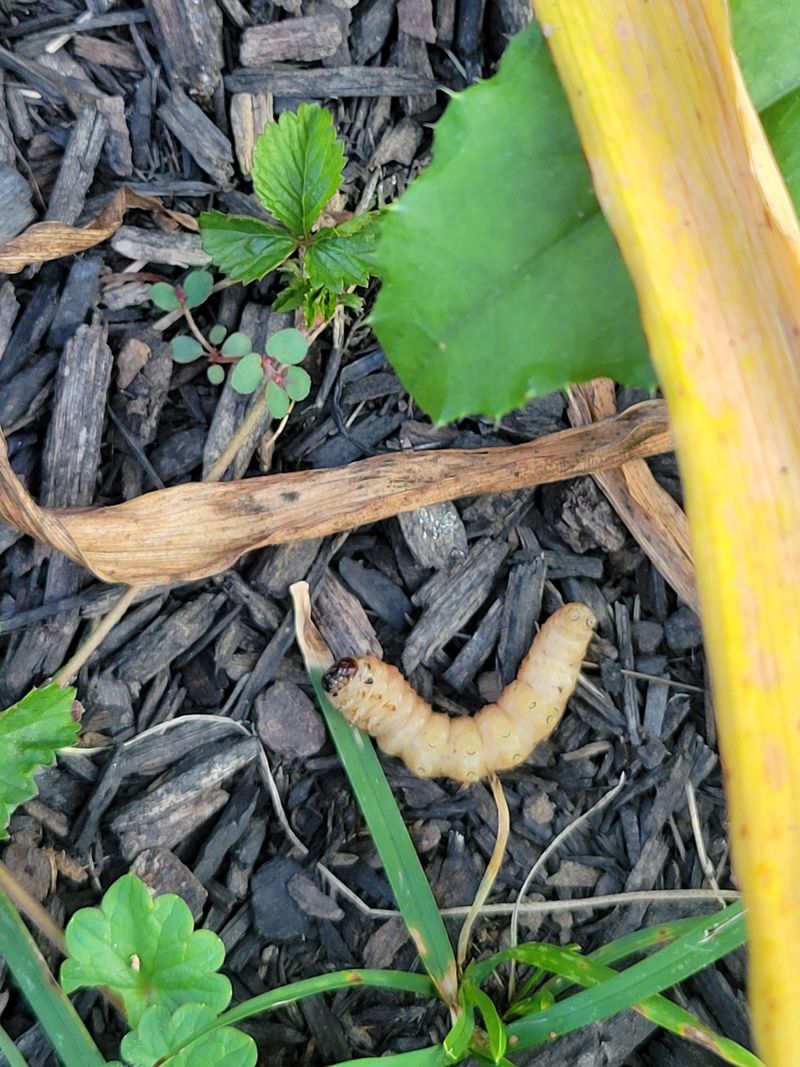
Young larvae are pale and easy to miss against the leaf surface. As they mature and move into the rhizome, they shift to a pinkish color with a darker head.
A fully grown larva can reach nearly two inches long by midsummer. At that size, it causes serious hollowing damage to the rhizome it has been feeding inside.
After finishing its feeding, the larva exits the rhizome and pupates in the surrounding soil. That pupal stage lasts through late summer before the adult moth finally emerges in fall.
The entire process runs on a strict one-year schedule, with no overlap between generations. That single yearly cycle is actually what makes this pest manageable once you know where to look.
Knowing this timeline helps you target the right stage at the right moment. Eggs and young larvae are far easier to manage than a full-grown larva already buried inside a rhizome.
Saving The Rhizome Before Rot Sets In
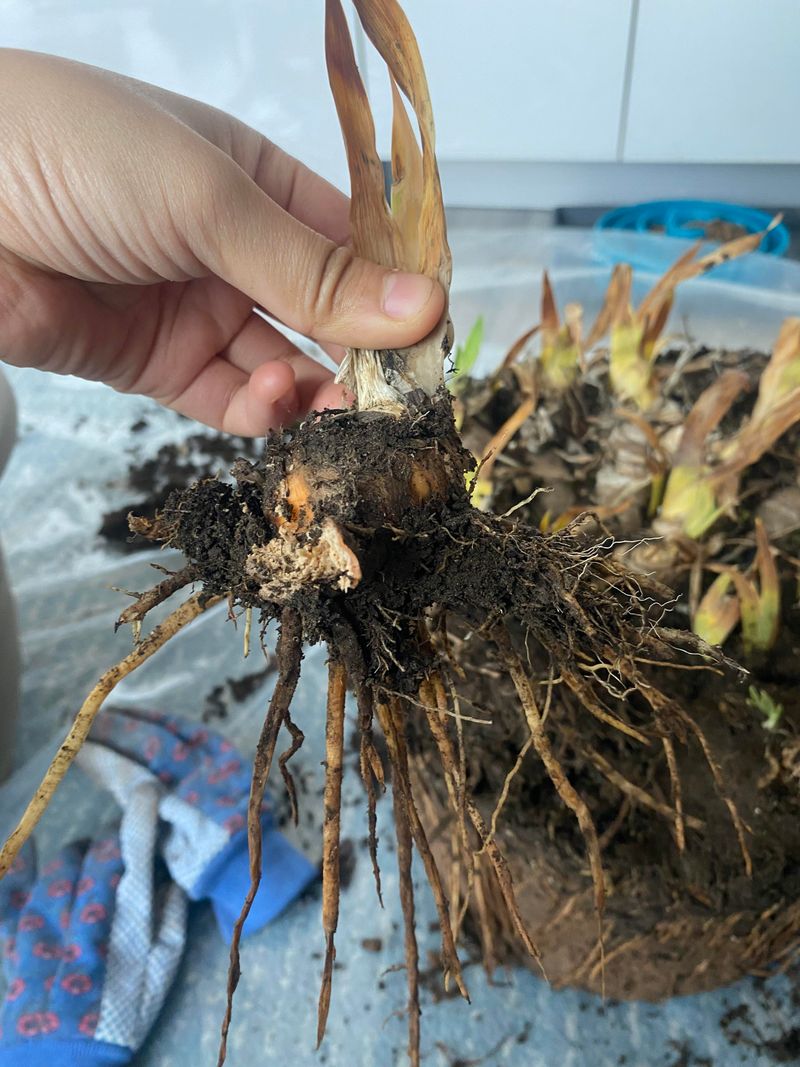
Finding a borer before the rhizome turns fully soft means you still have options. Quick action at this stage can save a plant that looks like it is already lost.
Start by digging up the affected rhizome carefully with a garden fork. Avoid slicing through it, since you want to keep the healthy sections intact for replanting.
Once the rhizome is out of the ground, look for entry holes, soft brown spots, or tunnels filled with dark frass. Any firm, cream-colored tissue is still viable and worth saving.
Use a clean, sharp knife to cut away all mushy or discolored sections. Each cut should go back to firm, healthy tissue before you stop trimming.
After cutting, let the trimmed rhizome dry in the sun for several hours. This drying period helps seal the wound and slows bacterial spread into the remaining tissue.
Some gardeners dust the cut surface with powdered sulfur before replanting. This added step creates a hostile environment for the bacteria that cause secondary soft rot.
Replant the salvaged rhizome in a fresh spot with good drainage and full sun. Avoid replanting in the same hole where the borer damage occurred.
Removing old iris foliage and leaf debris each fall disrupts the egg-laying cycle of the adult moth. That one cleanup habit goes a long way toward protecting your iris bed from the iris borer next spring.