What MDARD Is Warning Michigan Gardeners About This Invasive Tree
Michigan fence lines can hide trouble in plain sight.
One fast-growing tree shoots up behind the garage. Another appears along an alley edge.
A seedling pops through disturbed soil near the driveway, looking lush, harmless, and maybe even useful for filling an ugly gap. Then it grows like it has a secret.
That is the warning Michigan gardeners need to take seriously.
MDARD is asking residents to pay closer attention because one invasive backyard tree is closely tied to a sap-feeding pest that can stress grapes, fruit trees, hardwoods, patios, and whole neighborhoods.
This is not just a weed-tree problem.
It is a backyard detective assignment.
The clues show up in huge compound leaves, suspicious odor, fast root sprouts, papery seeds, and lookalikes that can fool even careful gardeners.
Spotting the tree early helps protect Michigan gardens, farms, parks, and wild edges before the problem gets too comfortable.
So what should Michigan gardeners look for first? Start with the strange tree growing where nobody planted it.
1. Tree-Of-Heaven Is The Warning
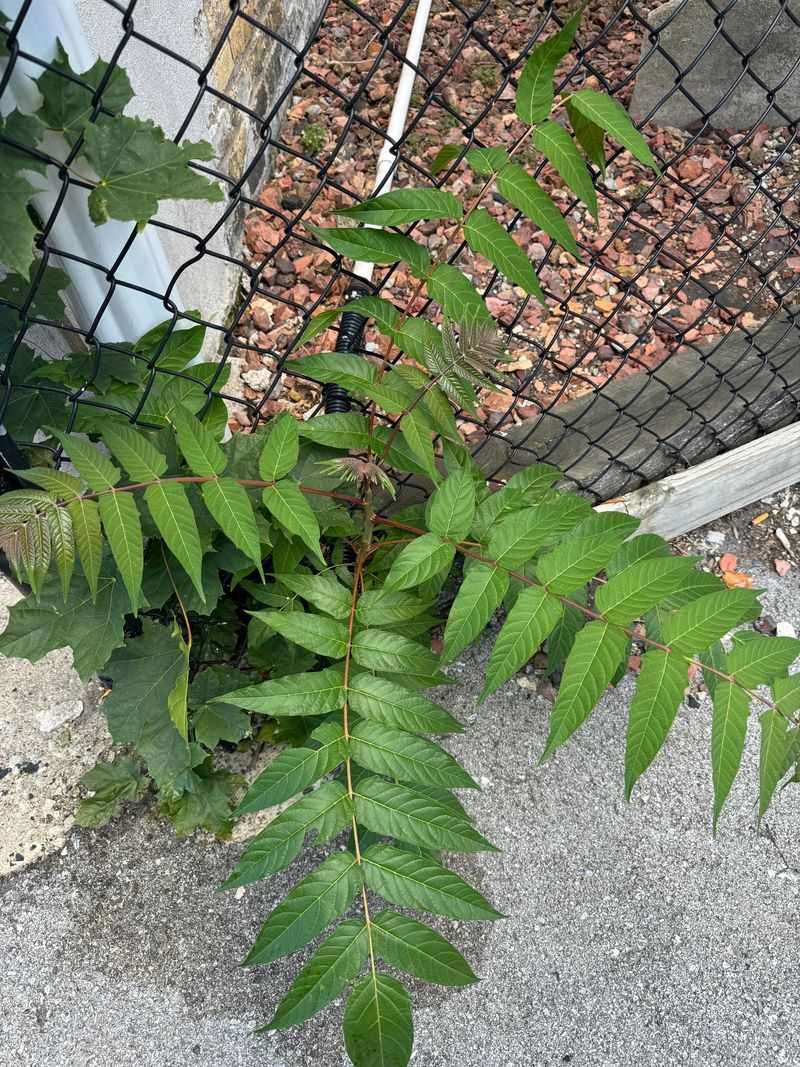
That fast seedling near the fence may not be an innocent volunteer.
Tree-of-heaven, Ailanthus altissima, is the invasive tree MDARD wants Michigan gardeners to recognize. The name sounds lovely, but the plant behaves more like a pushy guest that moves into the yard and starts rearranging the furniture.
It grows fast, often shooting up along alleys, roadsides, garage edges, vacant lots, fence lines, and disturbed soil.
Young trees can look smooth, green, and almost tropical, which makes them easy to ignore during the first season.
That is how they get ahead.
Tree-of-heaven has large compound leaves that can stretch several feet long, with many narrow leaflets arranged along a central stem.
Young bark is fairly smooth and grayish, while older bark becomes rougher with a pattern some people compare to pale cantaloupe skin.
The real concern goes beyond garden mess.
This tree is a preferred host for spotted lanternfly, a pest Michigan agencies are monitoring closely. A yard with tree-of-heaven can become a more inviting stop for that insect, especially when several trees grow unchecked nearby.
Small seedlings are easiest to handle.
Pull them early, while wearing gloves, and try to remove the root. Larger trees need more careful management because cutting alone can trigger aggressive resprouting.
Tree-of-heaven is not heavenly. It is the suspicious character at the edge of the property.
2. Spotted Lanternfly Likes It
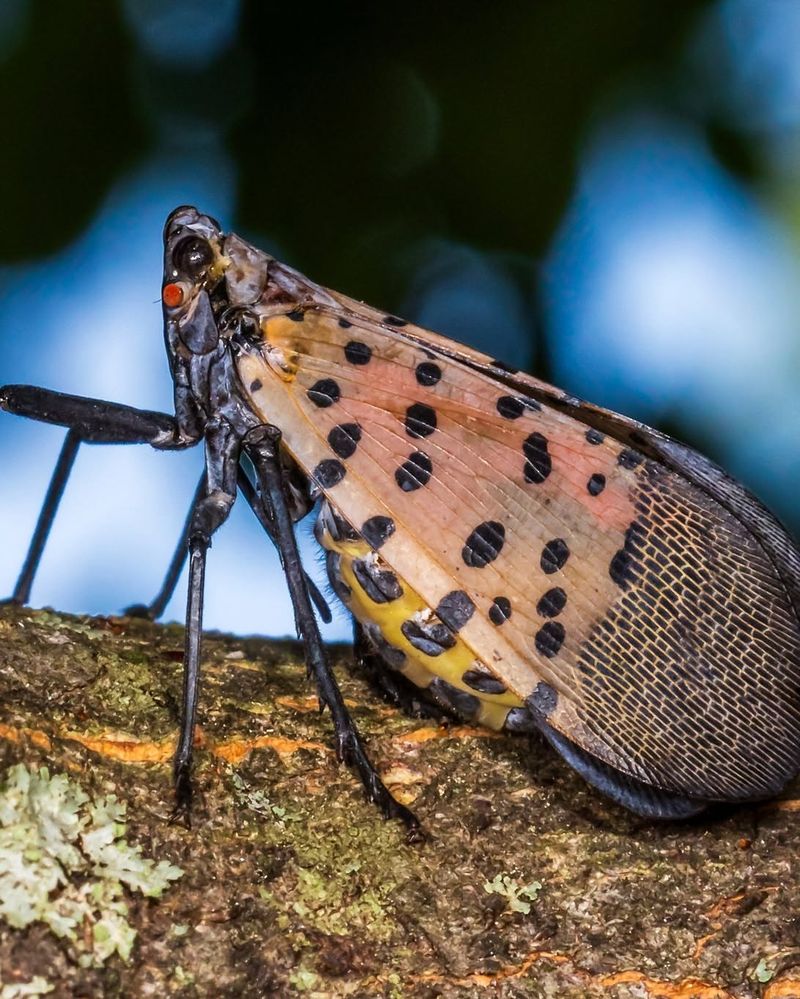
The tree matters because the insect likes it.
Spotted lanternfly, Lycorma delicatula, feeds on many plants, but tree-of-heaven is one of its favorite hosts.
That relationship makes the tree especially important for Michigan gardeners who want to reduce places where the pest can gather, feed, and build numbers.
Spotted lanternfly feeds by piercing stems and drawing sap.
Heavy activity can weaken plants and create sticky honeydew on leaves, trunks, patios, cars, decks, and outdoor furniture. That sugary mess can support black sooty mold, turning surfaces grimy and making affected plants look rough.
Grapes are a major concern.
Michigan has vineyards, orchards, hops, hardwoods, and landscape trees that could face added pressure as the pest spreads. For homeowners, the nuisance factor alone can be enough to make summer patios feel less pleasant.
Your Michigan Garden Changes Every Week. Your Plan Should Too.
Gardening in Michigan changes quickly throughout the season. Every Friday you’ll receive a simple weekly plan showing exactly what to plant, prune, fertilize, harvest, and protect so you never miss the right timing.
The insect has been confirmed in parts of Michigan, and state guidance now focuses on slowing spread, checking outdoor items, and reporting suspected populations in areas where the pest is not already known.
Tree-of-heaven works like a pest magnet.
Removing or managing it does not solve spotted lanternfly by itself, but it can make a property less welcoming.
That matters most along fence lines, vacant edges, commercial lots, rail corridors, and alleys where both invaders can hide in plain sight.
This is a two-part warning.
The tree sets the table. The insect knows exactly where to sit.
3. Leaves Smell Bad When Crushed
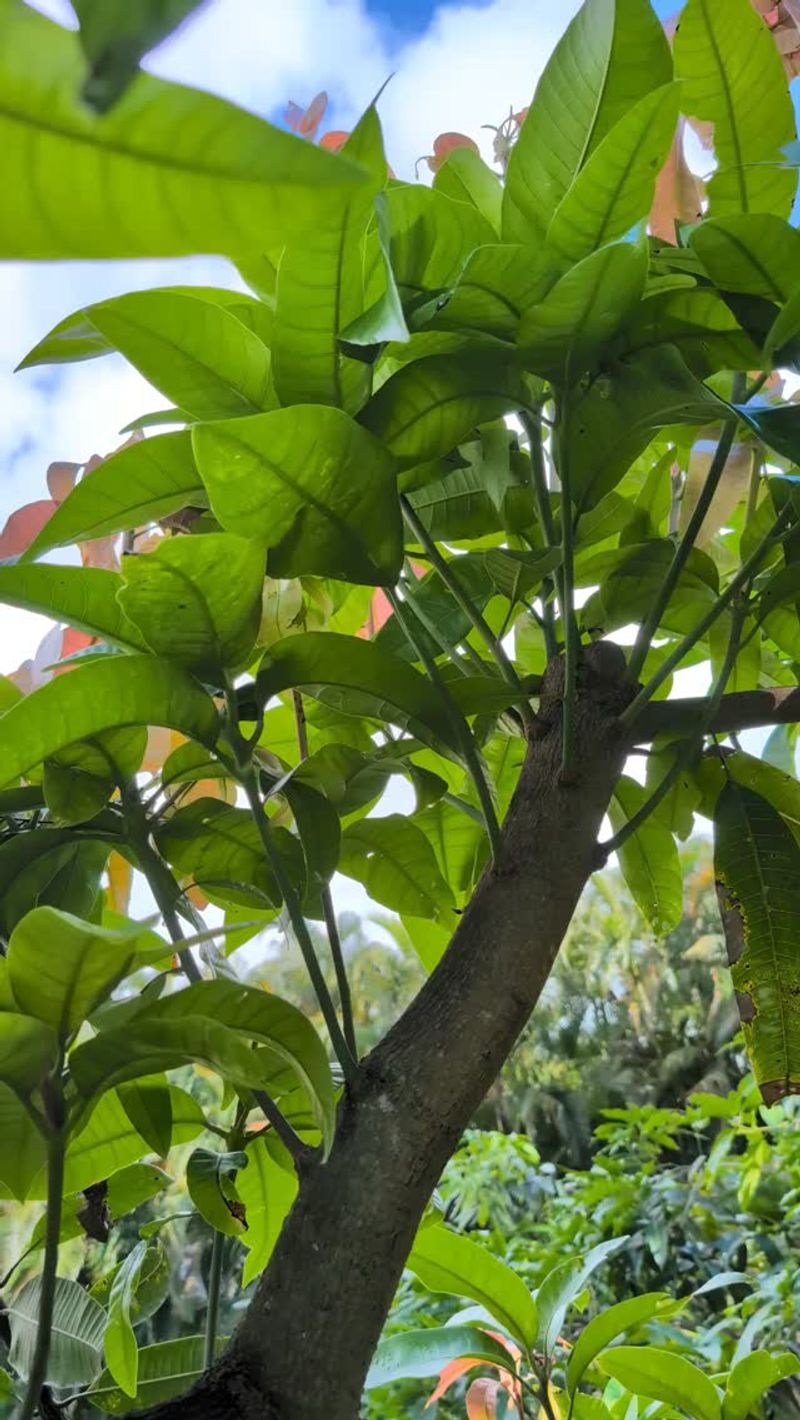
A bad smell can be one of the best clues.
Tree-of-heaven leaves and young stems release a strong odor when crushed or broken.
Gardeners describe it in many unflattering ways: rancid peanut butter, burnt rubber, stale gym socks, or something generally rude enough to make your nose file a complaint.
That odor is useful.
Many Michigan lookalikes have compound leaves, but they do not carry the same sour, unpleasant scent. A quick smell test can help narrow the identification when the leaves look confusing.
Wear gloves before checking.
Tree-of-heaven sap can bother some people’s skin, and mystery plants do not deserve bare-handed confidence. Break or crush a small leaflet between gloved fingers, hold it a few inches away, and take a brief sniff.
The smell usually shows up fast.
Use this clue with others, not by itself. Leaf shape, leaflet teeth, bark, seed clusters, and root sprouts all help confirm the plant. One smelly leaf is helpful, but a full set of clues gives a much stronger answer.
The odor also explains part of the tree’s weird reputation.
It looks green and vigorous, then immediately ruins the mood once handled. That is very on-brand for a plant causing this much trouble.
In a Michigan yard, a suspicious fast-growing tree with stinky crushed leaves deserves a closer look.
Your nose may solve the case before your eyes do.
4. Leaflets Have Tiny Teeth
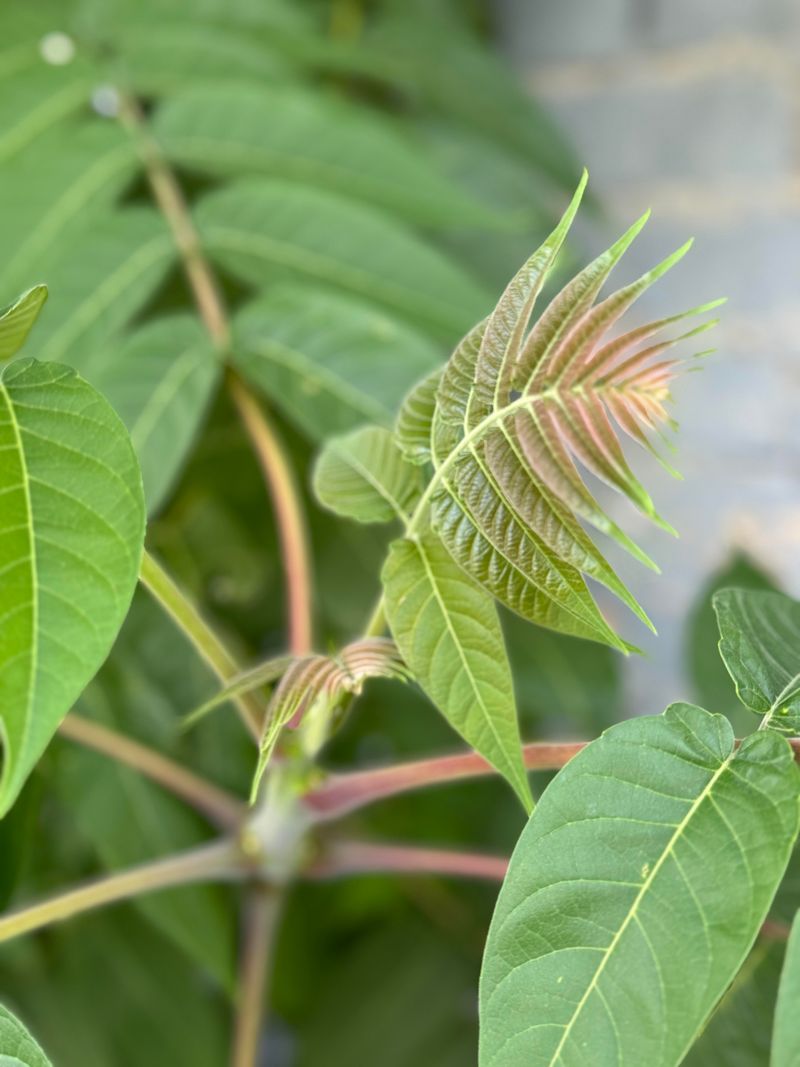
The leaflets hold a tiny giveaway near the base.
Tree-of-heaven leaves are compound, meaning one large leaf is made up of many smaller leaflets along a central stem. At first glance, that can resemble sumac, walnut, ash seedlings, or other familiar Michigan plants.
The difference sits near the bottom of each leaflet.
Tree-of-heaven leaflets are mostly smooth along the edges, but they usually have one to several small rounded teeth near the base. Those little bumps are called glandular teeth, and each one may have a tiny pore.
That detail matters.
Sumac leaflets usually have teeth all along the edges. Black walnut leaflets do not have the same glandular bumps near the base.
Ash leaves and hickory leaves have their own patterns, so careful checking keeps native or useful plants from being blamed unfairly.
Use a hand lens when possible.
The bumps can be subtle, especially on young growth. Turn the leaflet over, inspect the lower edge near the stem, and compare several leaflets from the same plant.
A single tree-of-heaven leaf can have many leaflets, sometimes dozens.
That huge, tropical-looking leaf is part of why the plant stands out once you learn it. It does not look like a small ordinary weed for long.
The tiny teeth are small, but they are not minor.
They are the plant’s little fingerprints, sitting right where most gardeners forget to look.
5. It Spreads By Roots And Seeds
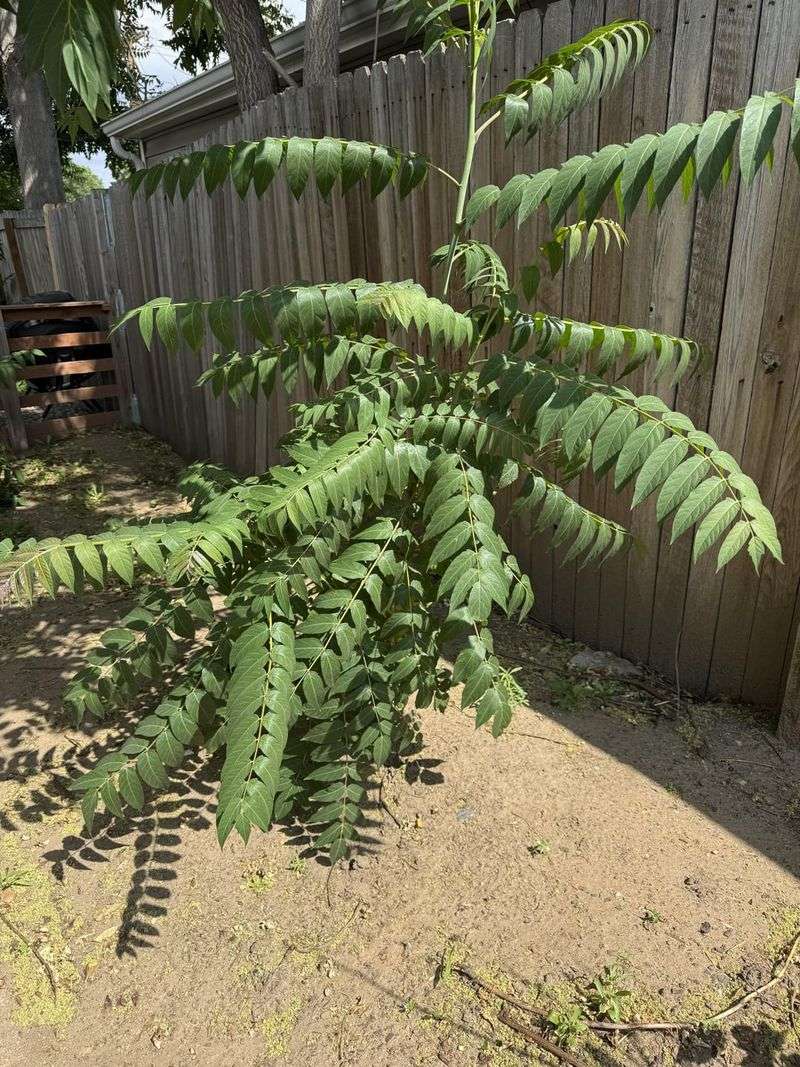
Tree-of-heaven does not rely on one trick.
It spreads above ground and below ground, which is why one tree can become a whole property-edge problem.
A gardener may cut one stem and feel productive, only to watch new shoots pop up nearby like the plant held a staff meeting underground.
The roots are part of the headache.
Tree-of-heaven sends out lateral roots that can sprout new shoots away from the main trunk.
These suckers may appear in lawns, garden beds, sidewalk cracks, fence lines, and disturbed soil. Cutting or mowing them can encourage more growth from the same root system.
Seeds add another layer.
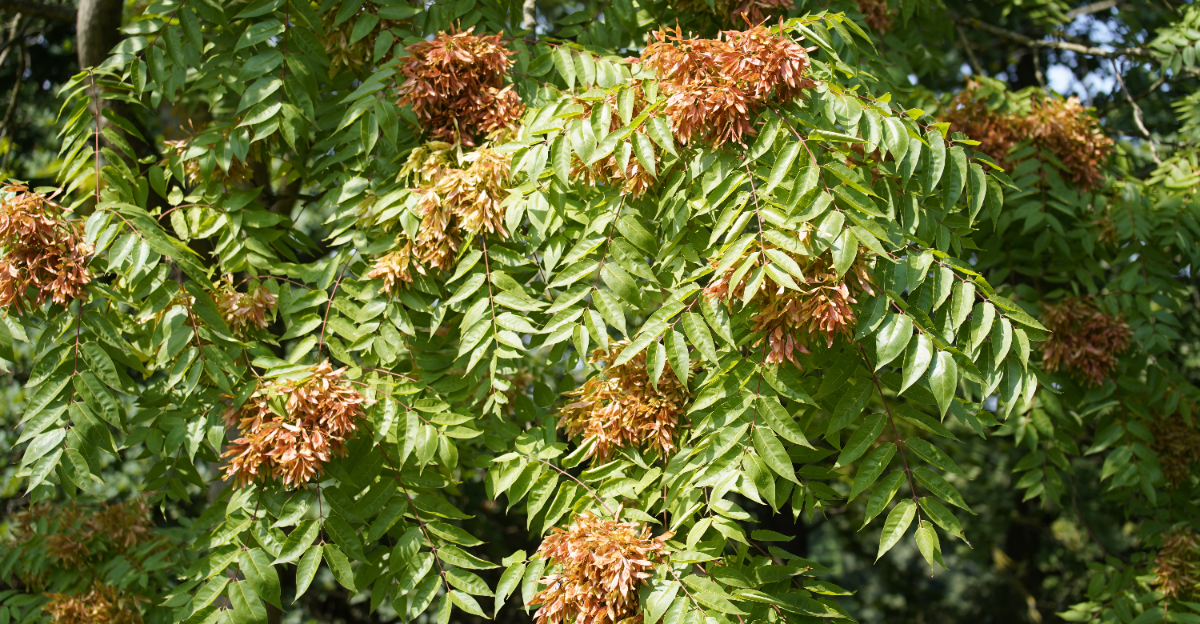
Female trees produce clusters of winged seeds called samaras. Wind can carry them away from the parent tree and scatter new seedlings into alleys, gutters, vacant lots, driveway edges, and garden corners.
That double strategy helps the tree move quickly through neighborhoods.
Disturbed soil makes it even easier. Construction edges, vacant lots, road shoulders, and neglected fence lines often provide the open space tree-of-heaven likes.
Small seedlings are the easiest stage to manage.
Pull them after rain when soil is softer, and work slowly to remove as much root as possible. Mark the area afterward and check it again through the season.
This tree rewards follow-up.
One pass rarely ends the story. Tree-of-heaven is persistent, dramatic, and annoyingly good at sequel production.
6. Female Trees Spread The Problem
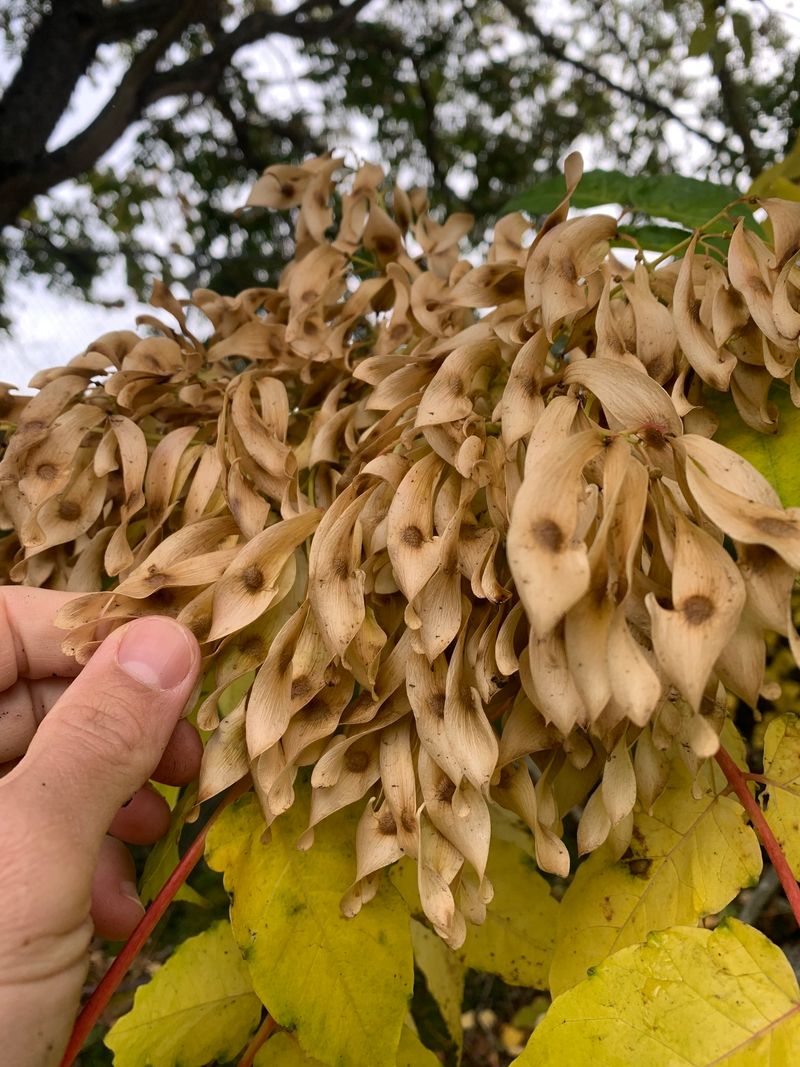
Female trees are the seed machines.
Tree-of-heaven has separate male and female trees, and female trees produce the large clusters of winged seeds that help spread the plant across Michigan landscapes.
Those seed clusters can look almost ornamental from a distance, which feels like a very sneaky design choice.
The seeds are samaras.
Each one has a papery wing that helps it spin and drift on wind. Fresh clusters may look greenish or yellowish, then shift toward tan, reddish, or light brown as they mature.
A mature female tree can produce an enormous number of seeds.
That is why one established tree near a fence line or vacant lot can lead to seedlings showing up in surprising places nearby.
The wind does not respect property lines, garden plans, or the fact that you just mulched that bed last weekend.
Male trees bring their own clue.
They do not produce seed clusters, but they can have an especially strong unpleasant odor during bloom. That smell may help with identification, though female trees are the bigger seed-spread concern.
Removing seed clusters from small trees can reduce local spread when reachable.
Large trees usually need professional help or a careful management plan. Climbing or cutting overhead branches without the right equipment is not worth the risk.
A tree loaded with papery seed clusters is not just making fall texture.
It is mailing future problems all over the neighborhood.
7. Lookalikes Need Careful Checking
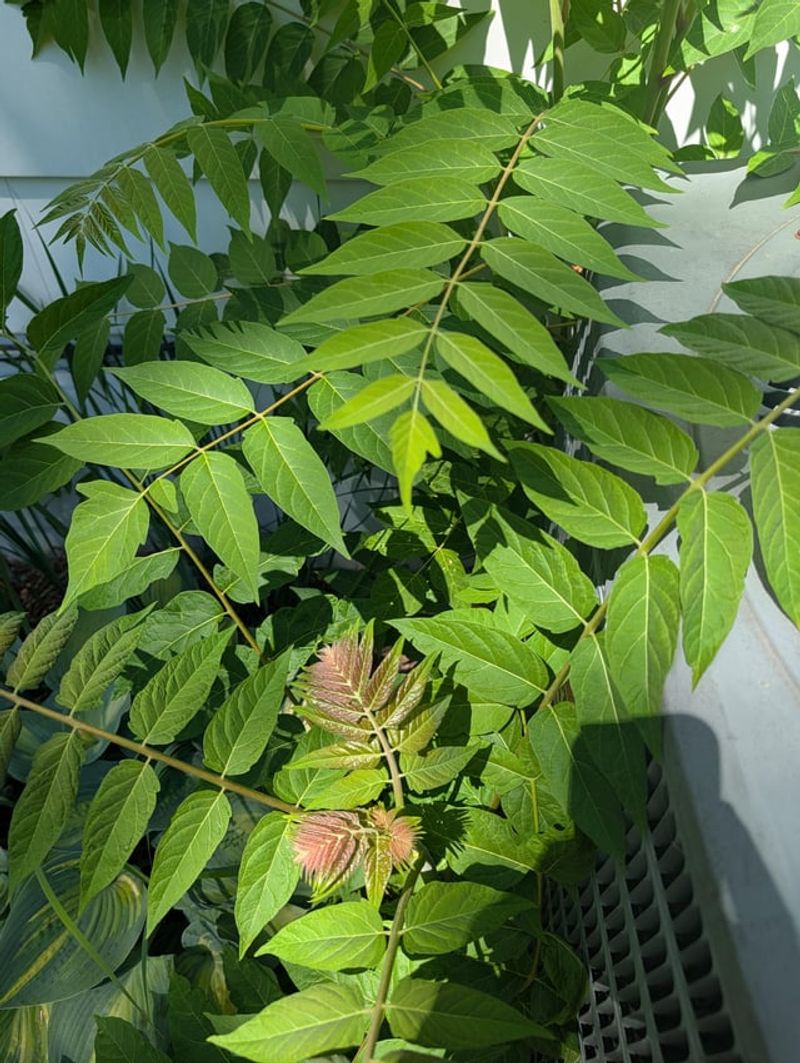
Tree-of-heaven has several lookalikes, and that is where gardeners need patience.
Michigan yards and wild edges can contain native or useful plants with large compound leaves. Removing the wrong plant helps nobody, especially when the lookalike supports wildlife or belongs in the local landscape.
Staghorn sumac causes frequent confusion.
Both plants can have long compound leaves, but sumac leaflets usually have serrated edges all the way around.
Sumac also produces upright fuzzy red fruit clusters, not hanging bunches of winged samaras. Its stems often look fuzzy too, which tree-of-heaven does not match.
Black walnut is another common lookalike.
Walnut leaves have many leaflets, but they lack the glandular teeth near the leaflet base. Mature walnut trees also produce round green-husked nuts and have darker, deeply furrowed bark.
Ash seedlings, elderberry, hickory, and other young woody plants can also complicate a quick backyard diagnosis.
That is why the full clue set matters. Check the odor. Look at leaflet edges and bases. Study the bark. Notice seed clusters. Watch the growth speed. Note root sprouts nearby.
Take photos before removing a mystery tree.
Get close-ups of leaflets, bark, seeds, and the whole plant. Those images can help local experts, conservation groups, or extension staff confirm what you found.
Garden detective work is slower than yank-and-regret gardening.
The goal is not just removing a problem plant. It is removing the right problem plant.
8. Report Suspect Lanternflies Promptly
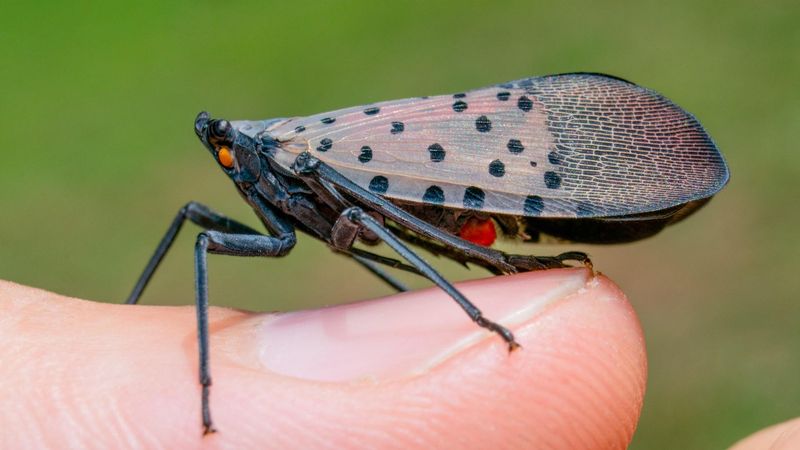
A suspected spotted lanternfly sighting deserves quick attention.
Adults are about an inch long, with grayish forewings marked by black spots. When their wings open, bright red hindwings with black spots and a pale band can flash underneath. The insect is hard to forget once seen clearly.
The younger stages look different.
Nymphs are black with white spots early on, then develop red patches as they mature. Egg masses can look like a smear of dried mud on bark, stones, outdoor furniture, vehicles, firewood, trailers, and other flat surfaces.
That hitchhiking habit matters.
Spotted lanternfly can move with outdoor items, not just by hopping or flying on its own. Gardeners, campers, landscapers, and homeowners can accidentally carry egg masses or insects to new places.
Follow current Michigan reporting guidance.
Areas with known populations may have different instructions than counties where the pest has not been confirmed. In new or uncertain areas, clear photos, exact location, date, and notes about the host plant are very useful.
Do not move suspicious material.
Avoid transporting firewood, branches, outdoor furniture, or equipment from a site with possible egg masses until items have been inspected carefully.
This is one place where ordinary gardeners can genuinely help.
A single good report from a sharp-eyed resident can help agencies track spread faster. Spotted lanternfly may be small, but community attention gives Michigan a much bigger net.
Backyard eyes matter.
9. Managing Tree-Of-Heaven On Your Property
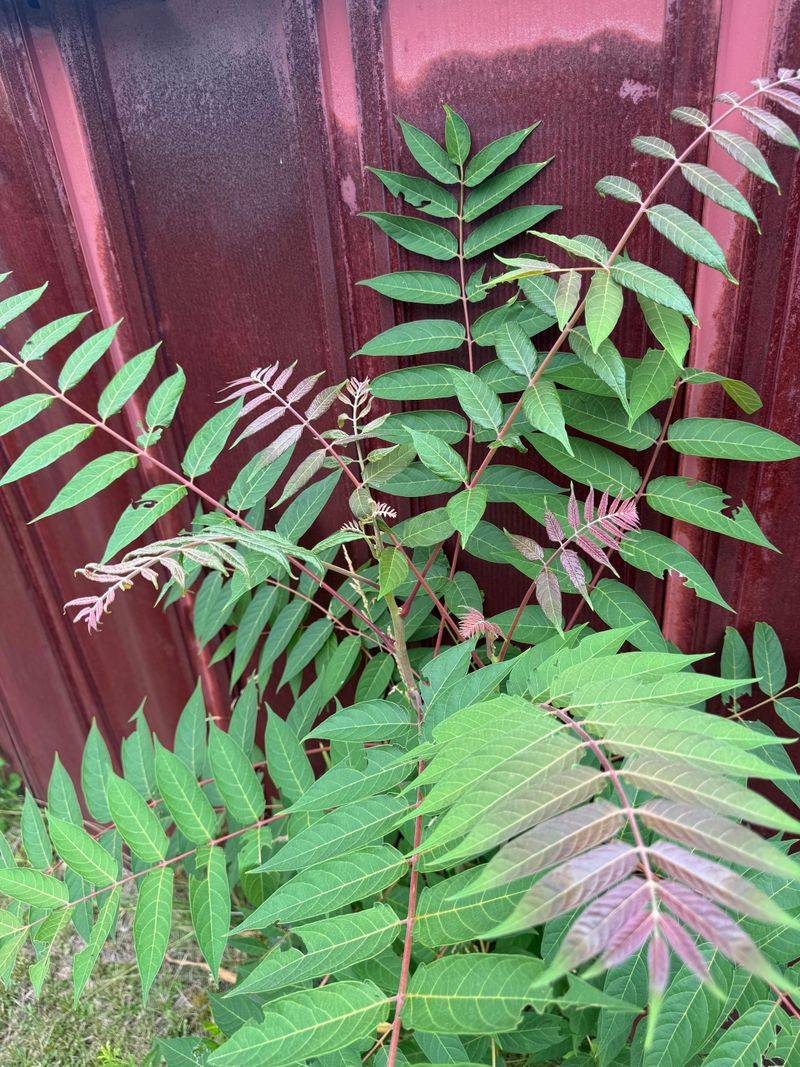
Finding tree-of-heaven does not mean the yard is doomed.
It does mean the removal plan needs to match the plant’s stubborn personality. Small seedlings are the best place to start because they have not built a large root system yet.
Pull seedlings by hand after rain when the soil is soft.
Wear gloves, grip low, and ease the root out slowly. A quick yank can snap the stem and leave enough root behind for another round of growth. Check the same spot again later because missed root pieces may resprout.
Larger trees need more care.
Cutting the trunk without follow-up often triggers root suckers. The tree responds by sending up new shoots, sometimes many at once. That turns one obvious stem into a wider, messier problem.
Professional help may be best for established trees.
Many invasive-plant managers use targeted cut-stump or similar treatments, where the tree is cut and an appropriate herbicide is applied carefully to the fresh cut surface according to the label.
That approach focuses on the root system and reduces unnecessary spread of product.
Timing matters. Late summer and early fall can be useful for some control methods because the tree is moving energy into the roots. Spring is excellent for catching seedlings before they toughen up.
Keep watching fence lines, alleys, garage edges, and disturbed corners.
Tree-of-heaven is not a one-weekend villain. It is a recurring character.
The good news is that steady attention works. One gardener, one yard, and one suspicious seedling at a time can make the neighborhood less welcoming to both the tree and the pest that favors it.